
Sausages in Dough (Würstchen im Schlafrock) – Step-by-Step Recipe
Back in my school days, my classmates and I used to buy sausages in dough with tomato juice at the canteen during the long break. It was cheap and tasty enough – edible, as they say. In those distant times the sausages were somehow special: very tasty, made of firm meat. They also differed in colour from today's ones and did not fall apart when boiled. The dough, though, was different every time for some reason – puff, enriched, even quite bland. Luckily, mustard and tomato saved the day.
Sausages and thick wieners are baked in a dough wrapping all over the world – it is common fast food in school and college canteens, small cafés and bistros. Most often this kind of sausage pastry comes as a roll, with the dough twisted and wound around the sausage in a spiral or a “herringbone” braid. Quite often, though, the dough has no decoration at all. That has practically no effect on the taste, so we simply stick to the classic standard.
I have read that sausages and other cold cuts baked in dough were invented in Germany, where they are called Würstchen im Schlafrock – sausages in a dressing gown or a nightshirt. Americans use a more cheerful name – pigs in a blanket – and the two look very much alike. By and large, this dish is dough stuffed with sausage. There are also all sorts of similar dishes – meatloaf in dough, sausage rolls and so on.
I like the dough airy and the sausages small and made of real meat. Puff pastry and stiff dough are not my favourites here. The best option is an enriched yeast dough made with milk and butter. You end up with buns with a sausage filling that can be a treat or replace bread at lunch. One of my friends said these are pampushky with sausage for a good borscht.
First, always read the label: the meat content and any “healthy” additives. Second, pay attention to how fresh the product is and its shelf life – a short sell-by period means a minimum of preservatives. And third, if you trust the producer and its products, there is no need to look for anything else. One more thing: a good product is never cheap.
Unlike a hot dog, a sausage in dough is baked whole – the dough together with the sausage. For the filling you can use chicken, pork or mixed-meat sausages, as well as long pieces of bologna-style cooked sausage, or thick wieners, whole or cut into pieces. The pastries can be baked ahead, kept in the fridge for a few days and reheated in the microwave as needed.

Ingredients
8–10 pieces
- Sausages (10–12 cm) 8–10 pieces
- Wheat flour 2.5 cups
- Milk 150 ml
- Butter 50 g
- Instant dry yeast 5 g
- Egg 1
- Vegetable oil 1 tsp
- Salt, sugar to taste
Step-by-step recipe
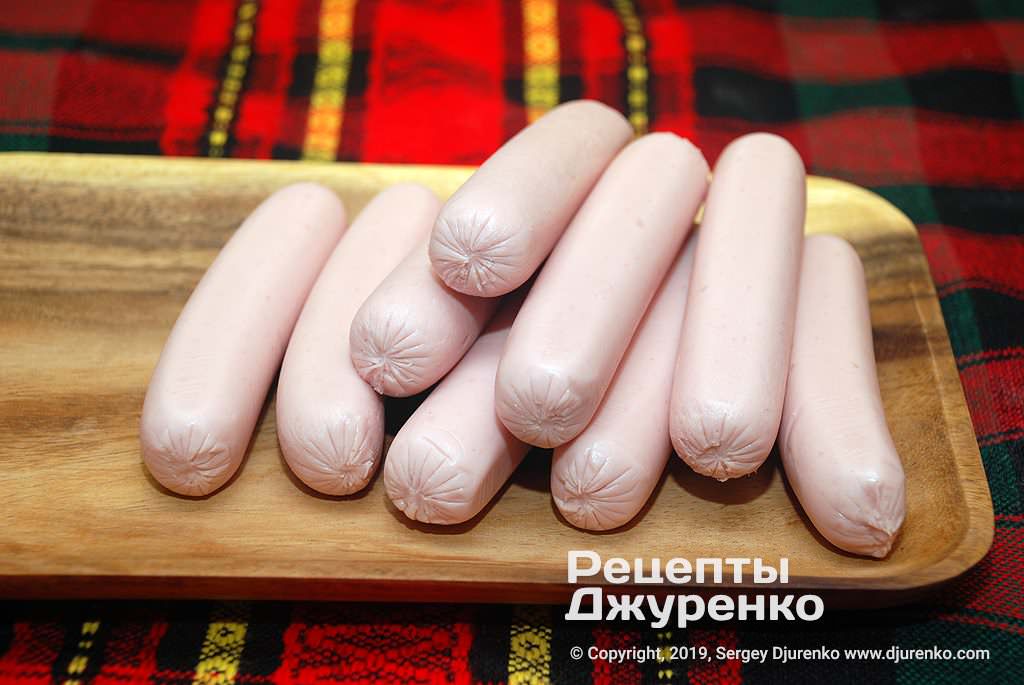
- Good-quality small “milk” sausages – mild frankfurters – work well for baking. I buy a pack of 10, each up to 12 cm long. The ingredients are calculated for this number and size. If the sausages have a casing, remove it. No other preparation is needed.

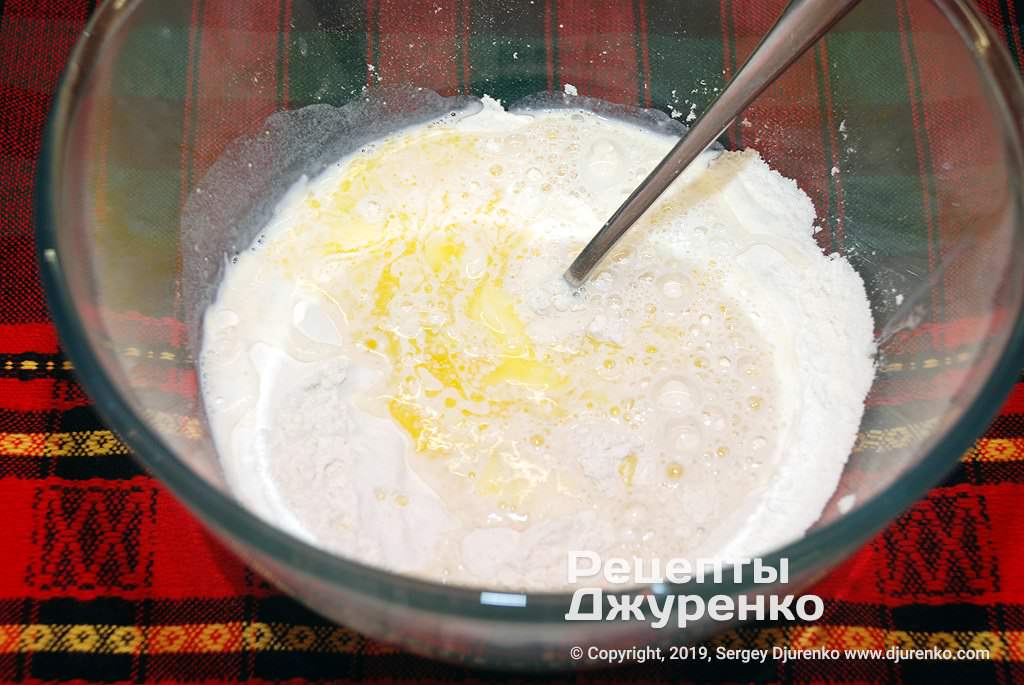
- The dough has to be made in advance. It is a yeast dough, so it takes time. As I said, we are making an enriched dough – with milk and butter. Sift the wheat flour. Put 2 cups of flour into a large bowl and keep the rest for kneading. Add 0.5 tsp of fine salt and 2–3 tsp of sugar. Add half a sachet of instant dry yeast – about 5–6 grams. Mix the flour thoroughly with the dry ingredients.
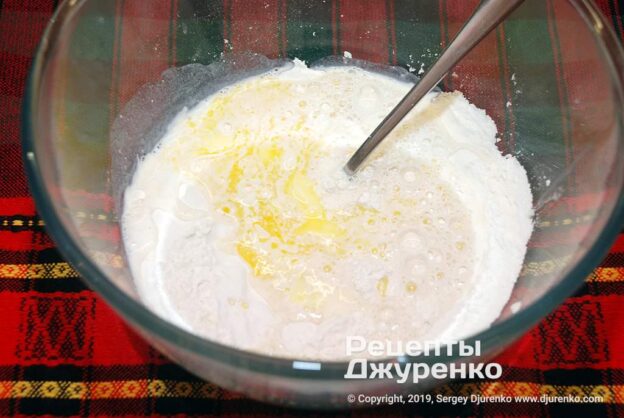
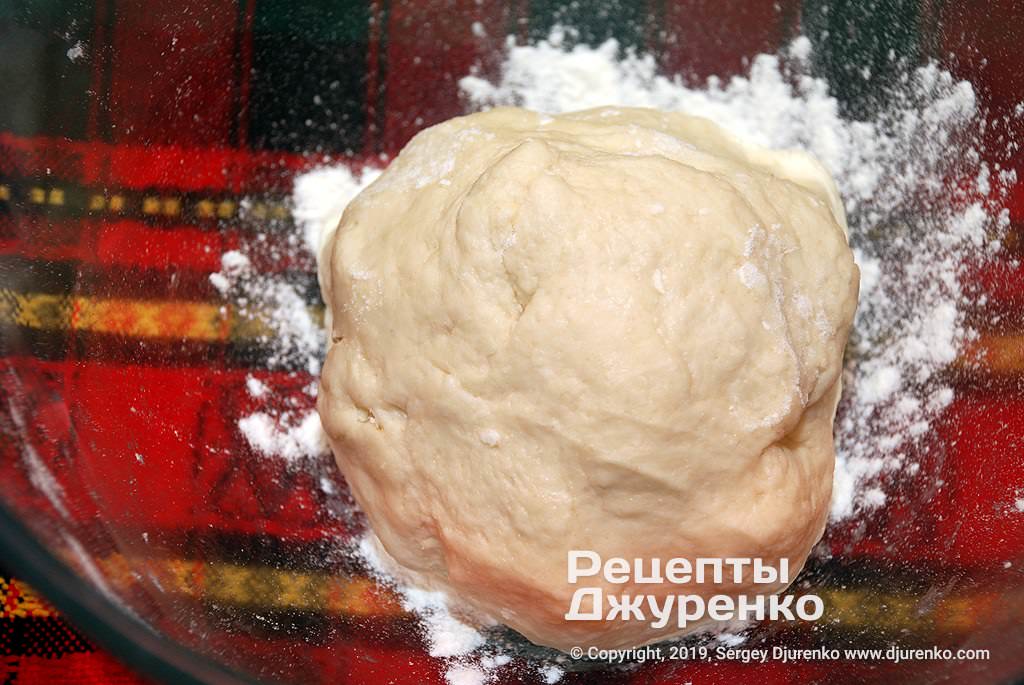
- Heat the milk – it should be noticeably warm. Melt the butter. Add the warm butter and milk (about 40°C) to the flour and start kneading right away. Gradually adding the remaining flour in small portions, knead a soft, smooth dough that does not stick to your hands. Cover the bowl with a cloth and put it in a warm place. In about 45 mins the dough will rise and grow in volume. Punch it down with your hands and leave it for another 45 mins to rise again.
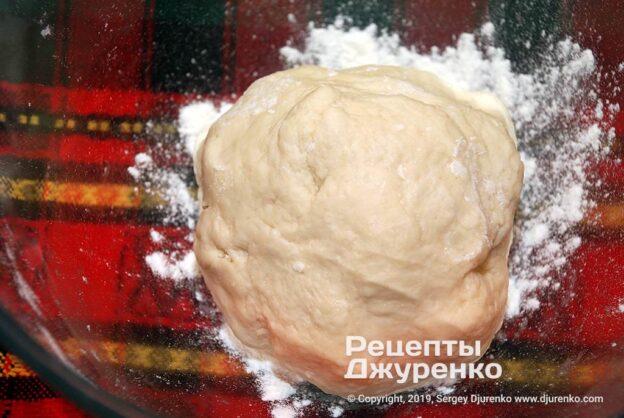
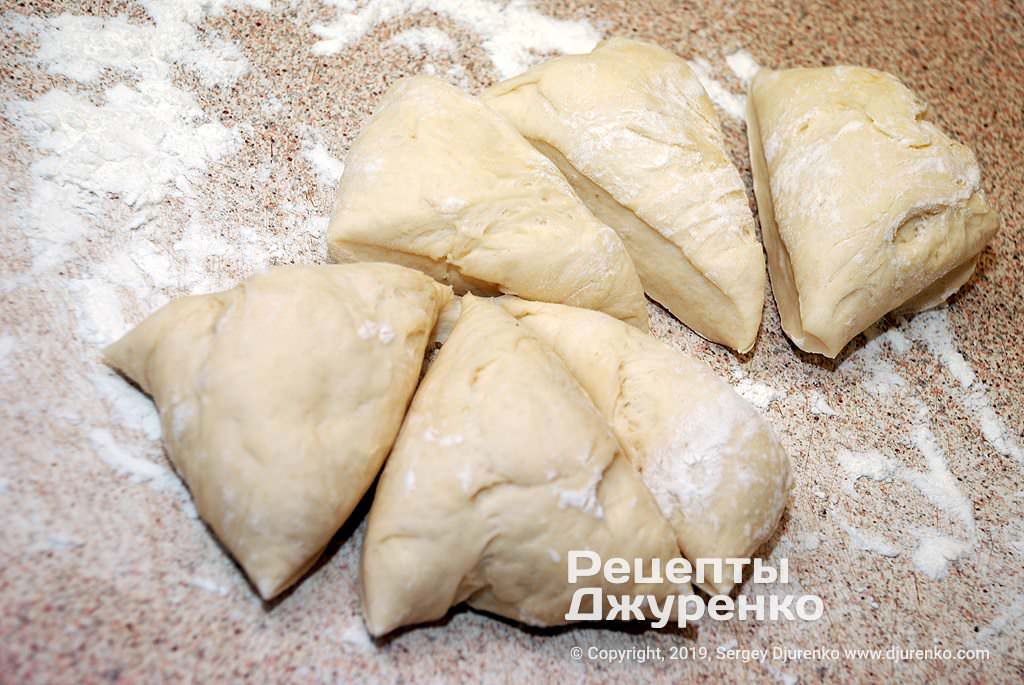
- When the dough has risen a second time, knead it lightly and divide it into pieces according to the number of sausages. By the way, if you need more or fewer, change all the ingredients proportionally. Dust the table with flour and lay out the pieces for rolling.
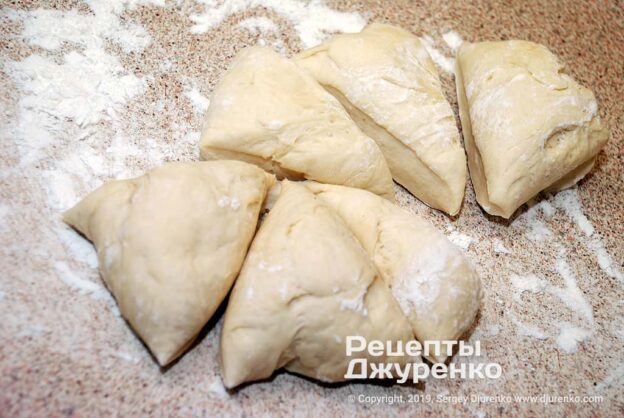
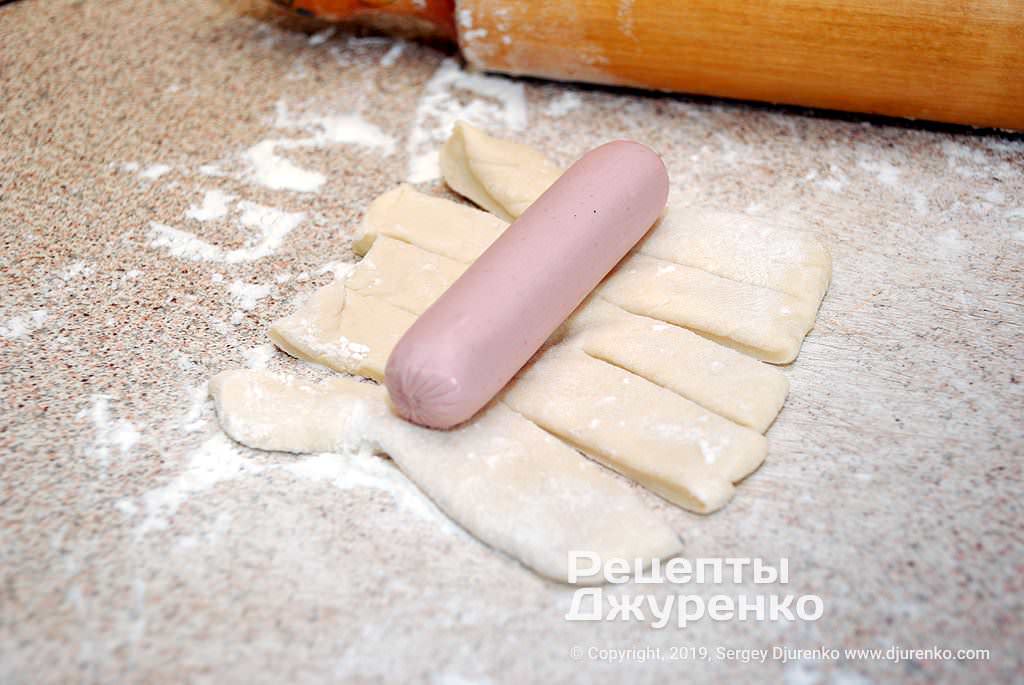
- You can use a rolling pin or stretch each piece with your hands. The dough is soft but elastic; it stretches easily and shapes into thin pieces of the right size and form. By and large, the shape of the rolled-out piece does not matter at all. It can be an oval or a rectangle. What matters is that the width in the middle is enough to hold a whole sausage with its tips sticking out slightly over the edge.
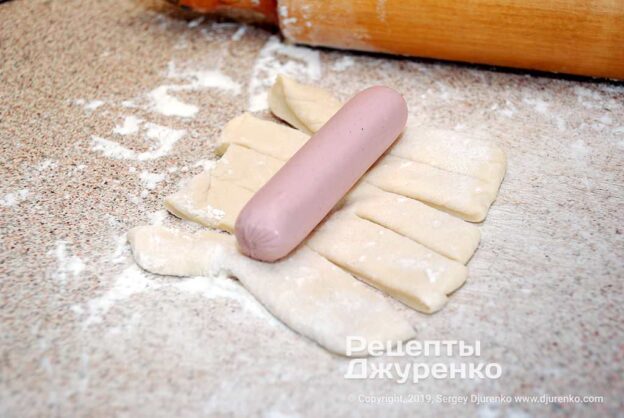
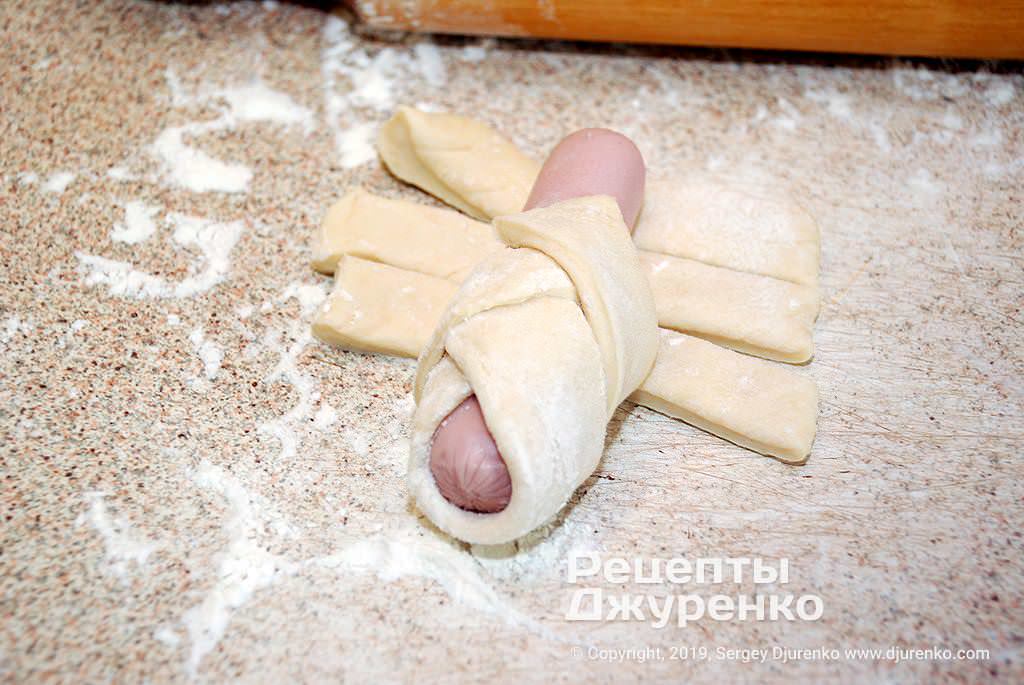
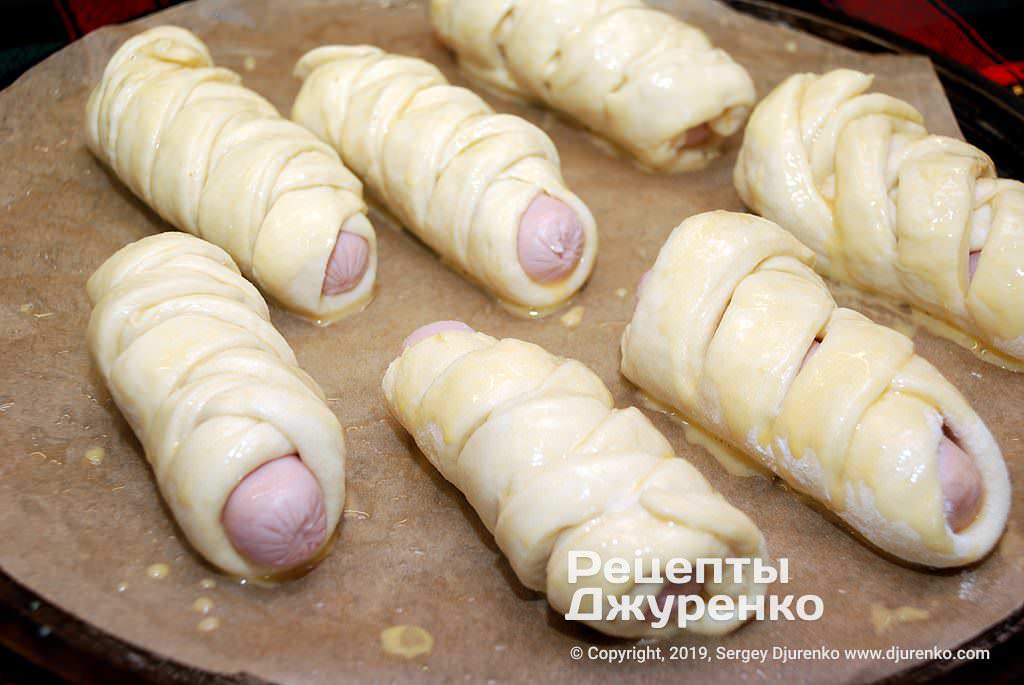
- With a knife, make 4–5 cuts on each side of the sausage, stopping short of the middle of the dough. This is needed for wrapping the sausage. Place one sausage in the middle of the piece of dough so that the strips are left on the sides. Wrap the strips over the sausage one by one, starting from one end, to form a “herringbone” braid. Keep folding the strips in turn – one from the right, one from the left and so on – until all the side strips are wrapped.
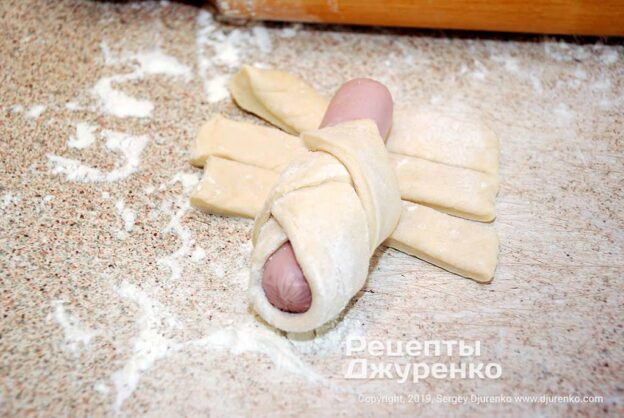
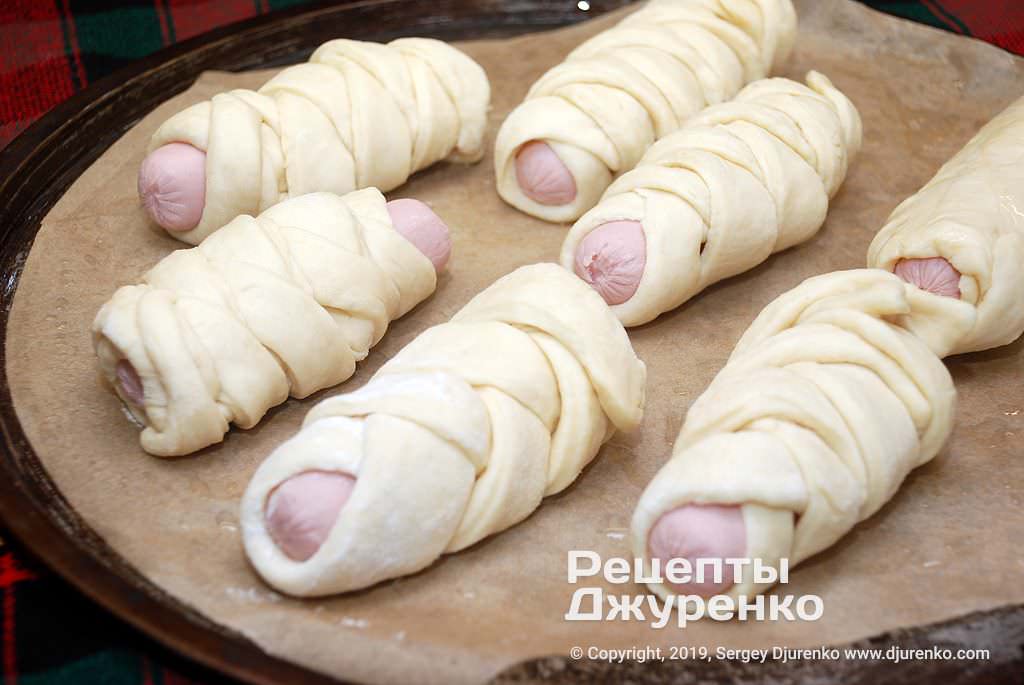
- The result looks (the Americans are right after all) like a piglet in a blanket or swaddling clothes. It is important that the tips of the sausages peek out at the ends, because the dough will rise a little more in the oven and cover these openings. Line a baking tray with baking paper and grease it with a little vegetable oil. Arrange all the wrapped sausages with some space between them. Let the tray stand for 10–15 mins.

- Preheat the oven to 200°C. In a small cup mix one egg with 2 tbsp of water and whisk well. Brush all the pastries on the tray. Do not pour out the egg wash – you will need it again. Put the tray in the oven.

- Bake for 10 mins, then take the tray out and brush the tops with egg wash once more. This gives the dough a deeper golden colour. Return the tray to the oven. If you can manage it, brush the dough with egg wash three times – my friends suggested this, thanks for the idea. Also, if you like, at the last brushing you can sprinkle the dough with a pinch of white or black sesame seeds, cumin or caraway. It is a matter of taste, but it is common in cuisines around the world.

- The total baking time can be more than half an hour. It depends a lot on your particular oven and on how golden you want the pastries. In any case, keep an eye on them. Take the finished pastries out of the oven and let them cool a little – hot dough is not very good for you.
- The sausage buns can sit on a plate or in a basket until the end of the day; just cover them with a napkin. In the fridge they will keep for 2–3 days. They are easy to reheat in the microwave – 20–30 sec at full power – and get almost all of their flavour back.

- By the way, instead of the “herringbone” you can cut a very long strip of dough 2.5–3 cm wide and wind it around the sausage in one continuous ribbon from end to end. Serve them at lunch, especially with soups, or as a treat – kids will be delighted. If you like, add ketchup or tomato sauce and homemade mustard. They are very good with broth or tomato juice – a taste of childhood.

| Yield: | 8–10 pieces |
| Calories: | 280 |
| Prep: | 2 h |
| Cook: | 30 mins |
| Total: | 2 h 30 mins |
| Category: | Baking |
| Cuisine: | European |
| Rating: |
⭐
⭐
⭐
⭐
⭐
4.7
(5)
|