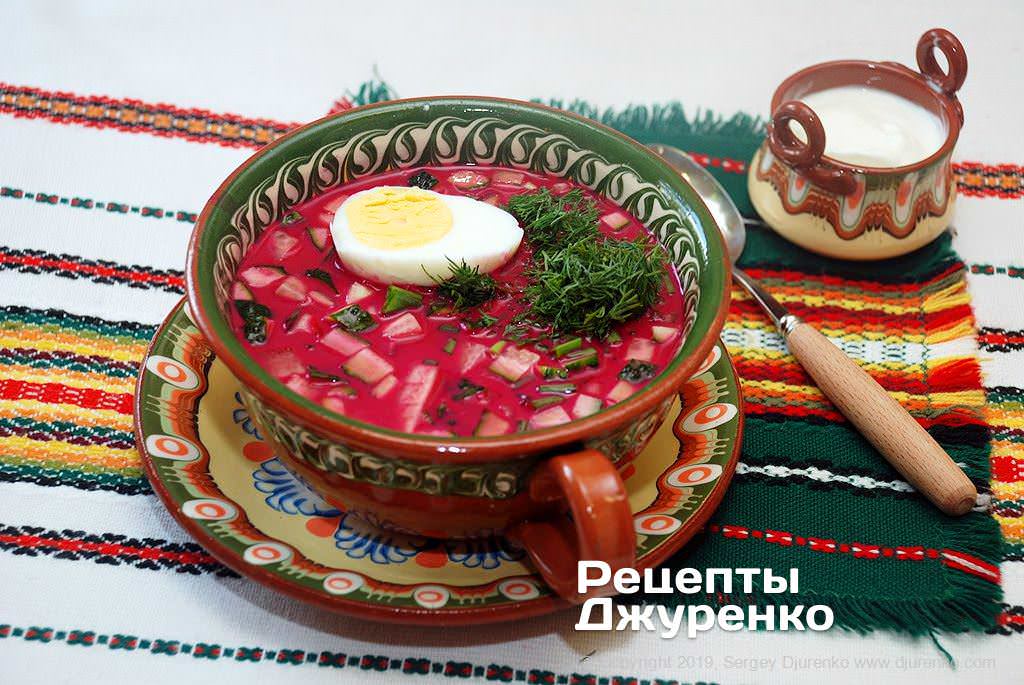
Kholodnik (Cold Borscht)
How do you make kholodnik?
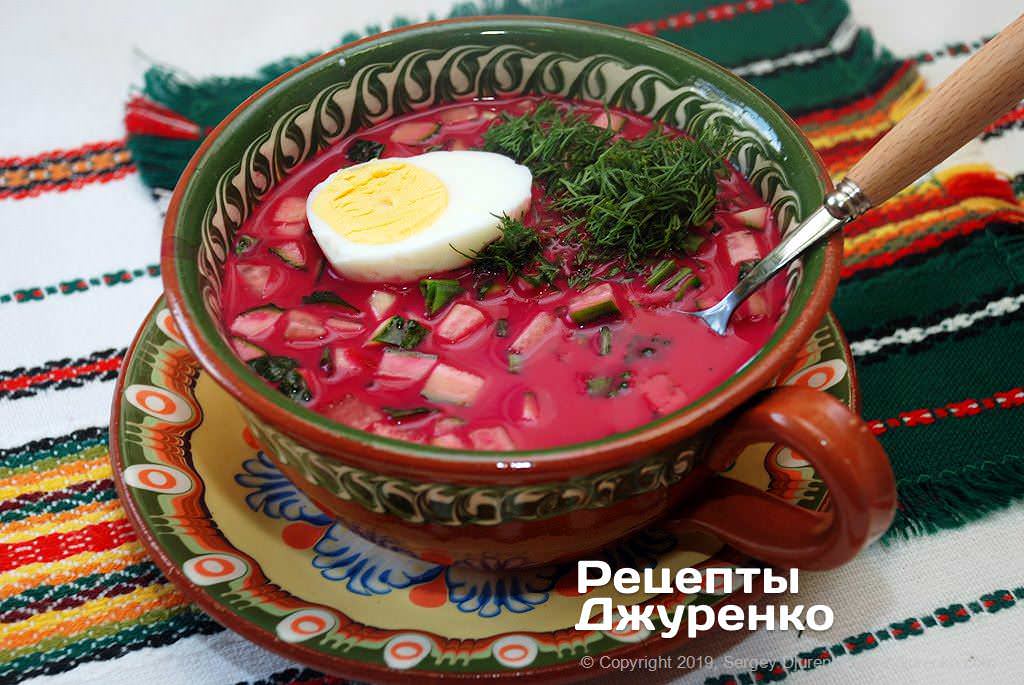
For kholodnik, a cold beet soup, 3 beets are simmered the day before in 1.5 l of water for 30–40 minutes, grated, covered with the broth and chilled. Before serving, the broth is mixed with soured milk: a cup each of soured milk and water, or 0.5 l of ayran, but not kefir. Each bowl gets a spoonful of the grated beets, cucumber, green onion and half an egg, then the broth, dill and sour cream.
Ingredients
4 servings
For the broth
- Red beets 3
- Cold water 1.5 l (the beet broth is the base of the soup)


For the broth mixture
- Soured milk 1 cup (200 ml)
- Boiled water 1 cup (to thin the soured milk) (200 ml)
- Or instead of both, non-carbonated ayran 0.5 l
- Salt to taste
- Grape vinegar a little (only if the broth has no soured milk or ayran)


For serving
- Eggs 2
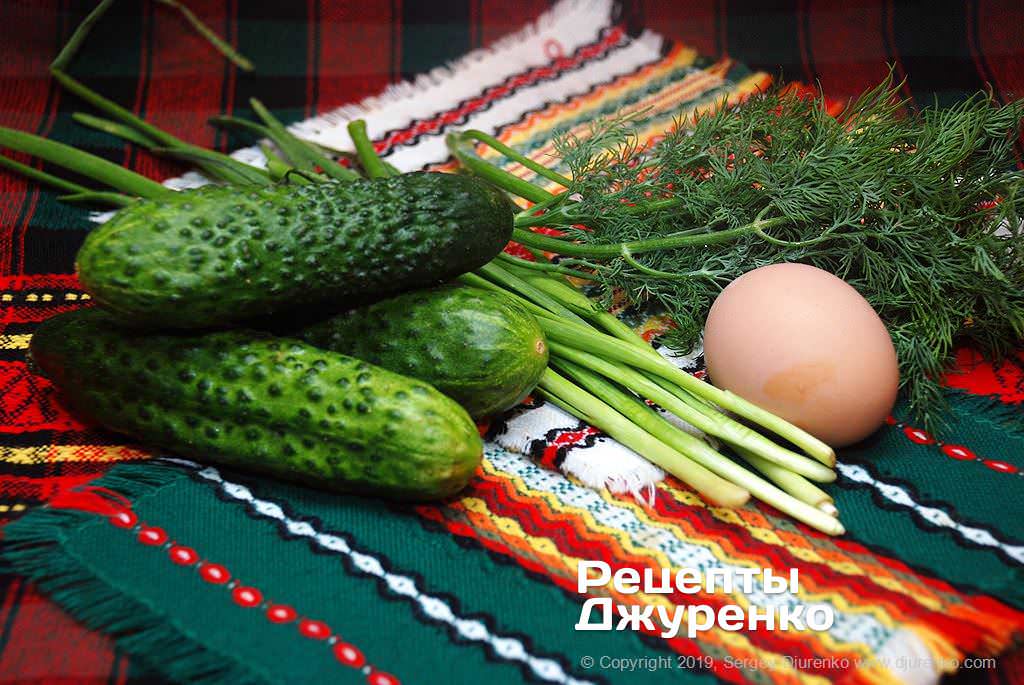
- Cucumbers 2-3
- Green onions 5-6 stalks
- Dill 0.5 bunch
- Sour cream to taste


Step-by-step recipe
Beet broth
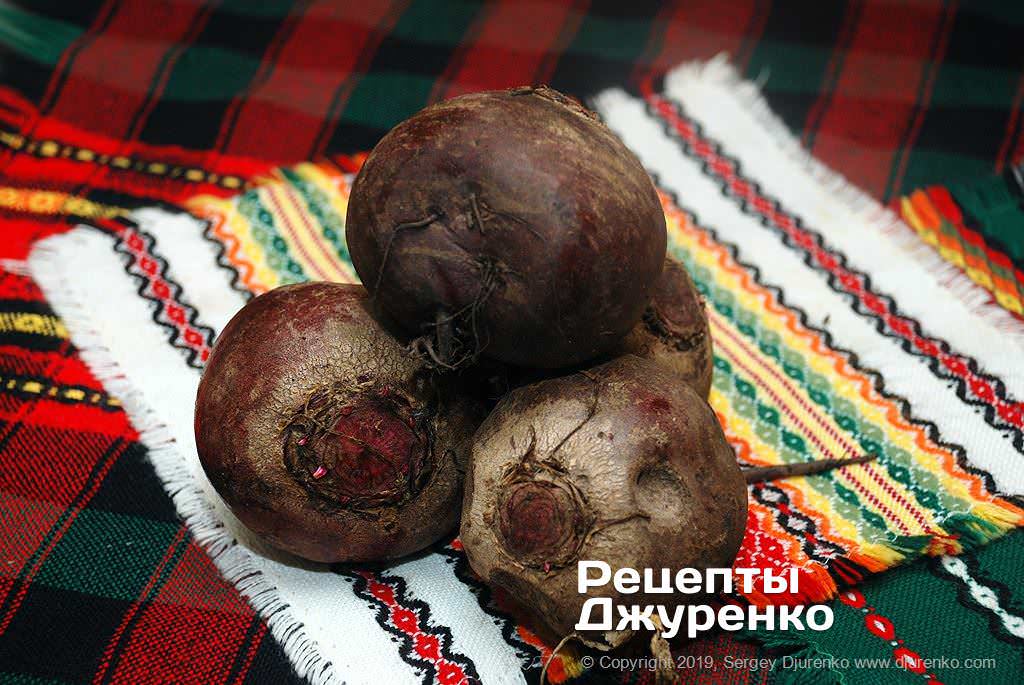
For the beet broth to turn out rich and cold, it’s worth making it the day before – it doesn’t take long. In early summer every market sells young beets – small, evenly colored and very dark. Pick small roots with a smooth surface: the fewer dents and little roots, the less chance of soil getting into the broth.
Prepare the beets. Wash the beets very thoroughly, cut off the tops and the root end with a knife, and scrape off the small rootlets. They need to be perfectly clean.

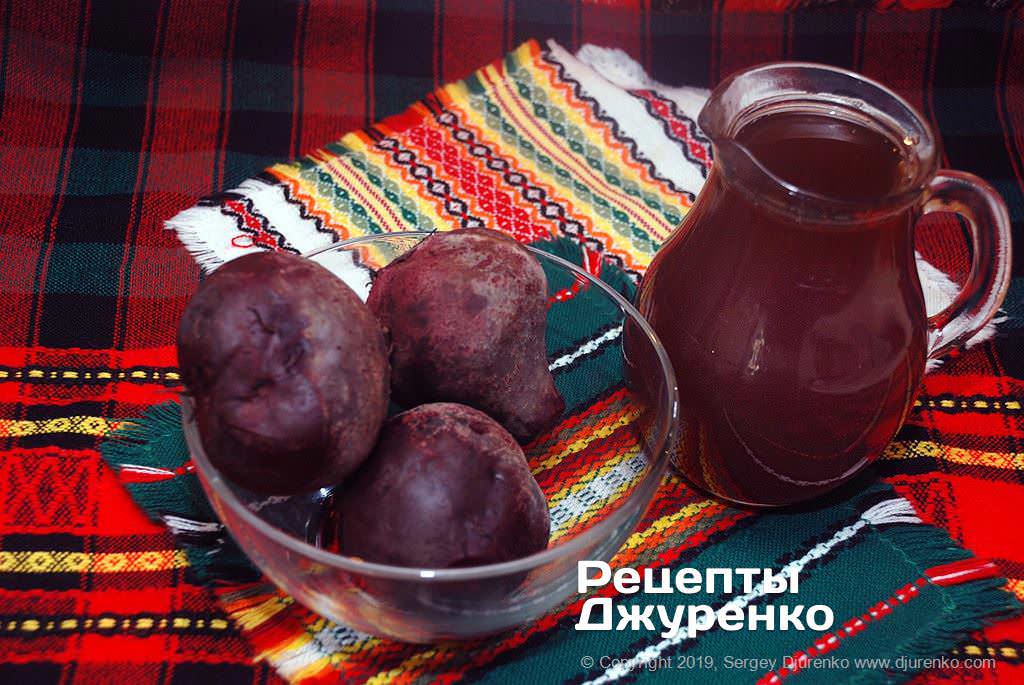
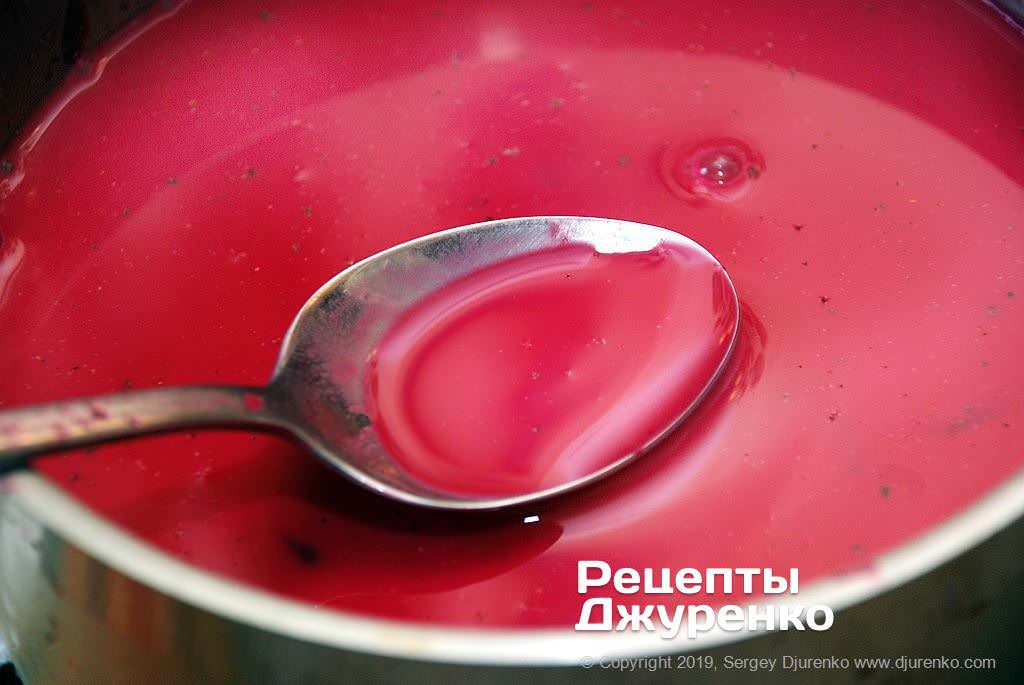
Boil the beets and strain the broth. Put the beets in a pot and cover with 1.5 l of cold water. Set the pot over high heat, bring to a boil and simmer the beets covered over medium-low heat for 30-40 mins. As soon as a thin knife goes through the roots with a little effort, they’re done. Take the beets out of the broth and strain it through a cloth. By the way, the broth will be more brownish than deep purple.

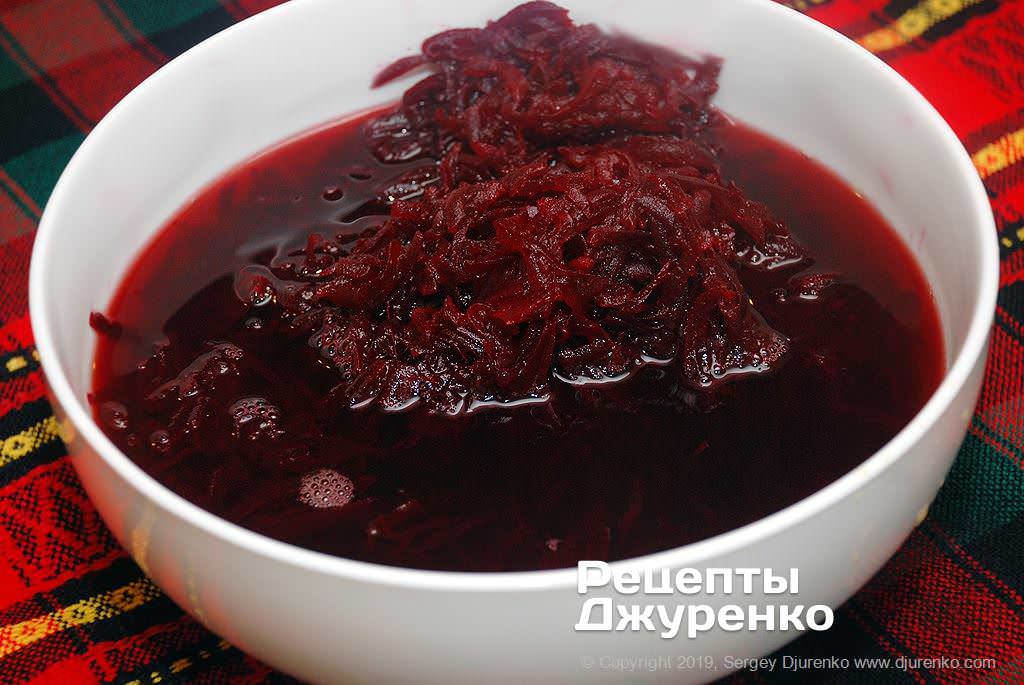
Grate the beets and steep the broth on them. You can cool the roots a little under cold running water so they don’t burn your hands. Peel the beets, grate them on a coarse grater and transfer to a container. Pour the beet broth over the beets and let cool to room temperature. Then put in the fridge for at least 4 hours, preferably overnight. While it chills, the broth steeps with the beets and takes on the color a good kholodnik is known for.

By the way, adding vinegar to the broth is often recommended – if you’re using soured milk or ayran, better skip it, the acidity will be just right.
Base and vegetables
When making kholodnik, people often get that unique pink hue by adding sour cream – more than necessary, and it also bumps up the calories. I prefer to mix the beet broth with natural soured milk thinned with water or, much more conveniently, with ayran – just not the carbonated kind. Oh, and don’t use kefir. Better to buy a liter of milk and make your own soured milk.
Boil the eggs – as usual, 8-10 mins from when the water boils, cool in cold water and peel. This can also be done in advance.
Mix the kholodnik base. Pour the broth into a jug, leaving the grated beets in a separate bowl. There are two options: mix the broth with 1 cup of soured milk (200 ml) and 1 cup of boiled water (200 ml), or add 0.5 l of ayran to it. Salt the mixture to taste and keep it in the fridge until serving: it must be ice-cold.

If the beet broth isn’t mixed with soured milk, it needs a little acidity. Grape vinegar is the best way to add it.
Chop the vegetables and eggs. In separate small bowls, finely chop the dill sprigs and green onions. Dice the cucumbers a little smaller than for Olivier salad. You don’t have to peel the cucumbers – up to you. Cut the eggs in half, one half per serving. You could chop the eggs into the kholodnik, but they’ll get stained by the beet broth.

Serving
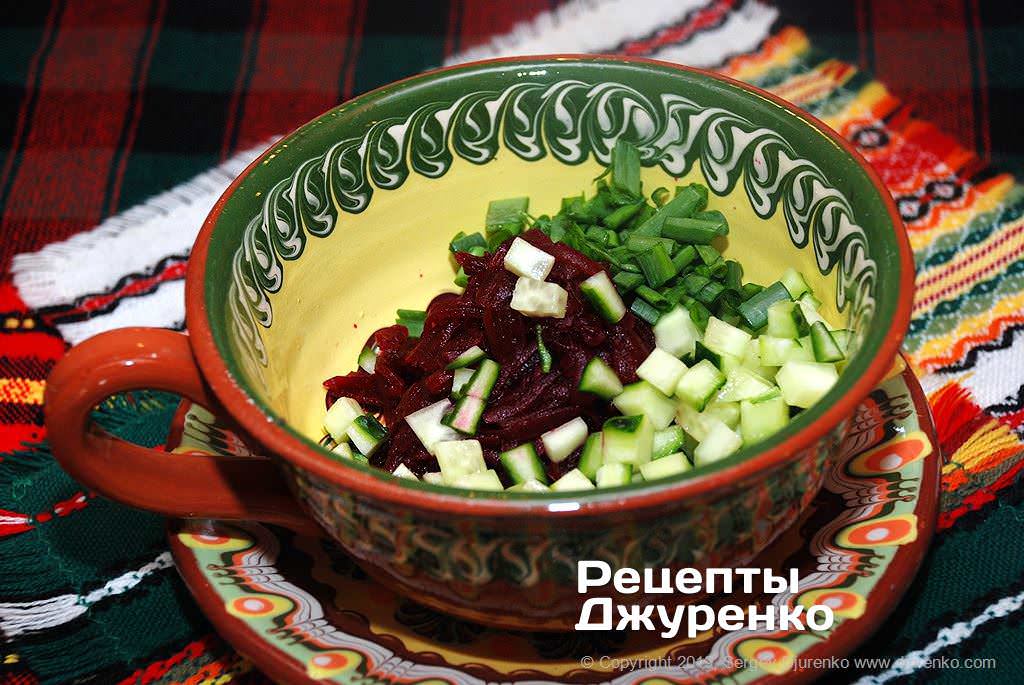
Divide the vegetables among the bowls. Spoon in the grated beets that the broth steeped with. A heaping tablespoon per bowl is enough. By the way, many people throw the beets away, and that’s a shame. Add the chopped cucumber and green onion.

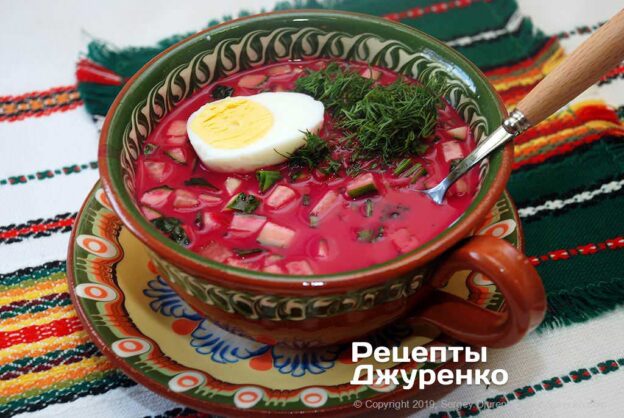
Pour over the broth and garnish. Pour the ice-cold beet broth with soured milk from the jug into the bowl over the vegetables. There’s no need to stir the vegetables into the broth. Don’t fill to the brim. Place half a boiled egg in the kholodnik. Sprinkle with dill and add sour cream – not the fattiest kind. Amounts to taste.
Usually, when it’s hot, a cold dish isn’t eaten with bread. This dish isn’t meant to fill you up, it’s meant to keep you from melting. I remember kholodnik being served with baked potatoes in Minsk – it’s very tasty. That said, potatoes are quite often added straight into the soup. But then, if you ask me, the dish gets overloaded with vegetables.
For the same reason, don’t add radishes, and meat would be superfluous too. If you want something filling, make Ukrainian borscht or meat okroshka with kvass – it’s much more substantial.

How did you like this recipe?
Rate it with one tap.
Calories and macros
145 kcal
Serving ≈ 690 g
- Protein8 g24% of kcal
- Fat4 g31% of kcal
- Carbs15 g46% of kcal
100 g21 kcalProtein 1.1 gFat 0.6 gCarbs 2.1 g
Calculated from the recipe ingredients, excluding salt and spices. Data: USDA and Matvaretabellen.