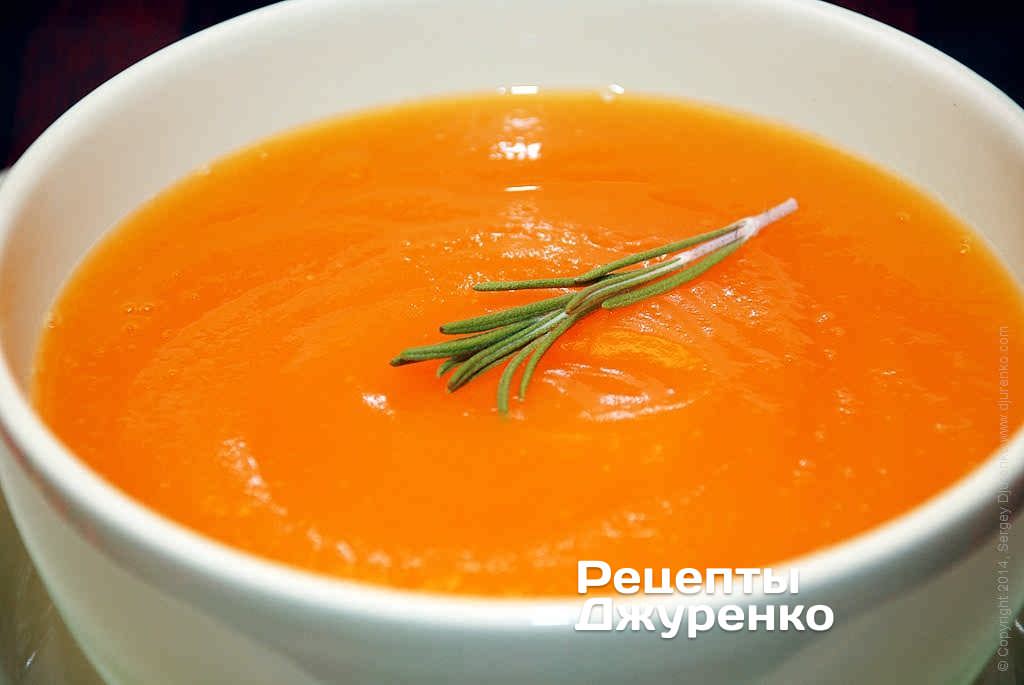
Pumpkin Soup Recipe: Easy Pureed or Creamy, Step by Step
I always thought pumpkin soup belonged somewhere in fairy tales or fantasy. As it turns out, it's a fairly popular dish. In fact, all sorts of soups made from pureed vegetables or boiled grains are often the calling card of a national cuisine. Whenever someone mentions a good pureed soup, two dishes come to mind: the Turkish red lentil soup ezogelin and New England clam chowder. Strictly speaking, they only count as pureed soups in a loose sense — purely because of their texture.
Pureed soups are usually made from vegetables: most often pumpkin, squash, zucchini, cauliflower or tomatoes. The process is simple. The vegetables are boiled until tender, blended and mixed with stock or the cooking water. A few spices, sometimes some chopped herbs — and the soup is ready. Quite often a thickener is added to make the soup denser, usually flour, less often starch. But adding flour is an acquired taste — a very acquired taste, I'd say.
Pureed vegetable soups are often thinned not with stock but with milk or cream. These are usually called cream soups. Given how much milk goes in, they sit somewhere between a vegetable soup and a milk soup. Pureed soups without milk often get a little fresh butter, which improves the flavor of the vegetables and makes the soup a bit more filling. I'll admit I don't do that, though: I make either a plain vegetable puree soup or a cream soup with cream.
Pureed vegetable soups are also ideal for children, especially little ones. You can always control where the vegetables come from — particularly if you have your own garden — as well as whether there are any spices and how much. Without cream, pureed vegetable soups are a great fit for all kinds of (often exhausting) diets, since vegetables are low in calories. Pumpkin, for example, has no more than 30 kcal per 100 g — 8–10 times less than meat, whereas a white bean soup is very high in calories.
For home cooking, people grew small pumpkins of 2–4 kg, brightly colored, fragrant and sweet. They made pumpkin porridge with rice or millet — always with milk. Pumpkins were baked with apples, nuts and raisins. Sometimes there were pumpkin pancakes, which were unbelievably good. And pumpkin with honey, if there was good honey around.
For light, healthy vegetable dishes, pumpkin is a perfect choice. When I was little, my grandmother planted pumpkins all over the garden, without setting aside a separate bed for them. They grew big and small, in every shade of yellow, green and orange. After the potato harvest, the pumpkins were simply gathered from the garden into a wheelbarrow and piled up under a shed. The ones meant for the animals my grandmother called “fodder pumpkins”, and we didn't eat them. They were pretty tasteless anyway, and simply enormous. Their seeds, though, were big and delicious. We dried them and roasted them in the stove.
Making a delicious pumpkin soup is very easy. In its simplest form, all you need is a good pumpkin. Add a few spices or some cream and you can make pumpkin soups with all kinds of flavors.
Ingredients
4 servings
- Pumpkin (2 kg) 1
- Rosemary (fresh) 2-3 sprigs
- Cream (optional) 100 ml
- Butter (optional) 1 tbsp
- Sugar to taste
Step-by-step recipe
- To make a tasty pumpkin soup or cream soup, you need a small ripe pumpkin. Choose a brightly colored one — orange or deep orange, with flesh of the same color.

- I remember we checked whether a pumpkin was ripe by scraping off a little of the skin with a fingernail: if the flesh underneath wasn't pale or greenish, the pumpkin was ripe. That said, don't try this in a shop or at the market. It's best if the pumpkin is sold already cut (or even peeled).

- Cut the pumpkin in half and scoop out the seeds. You can free the seeds from the stringy pulp, wash and dry them. Then roast them, and you'll have a long, absorbing pastime you won't be able to tear yourself away from.
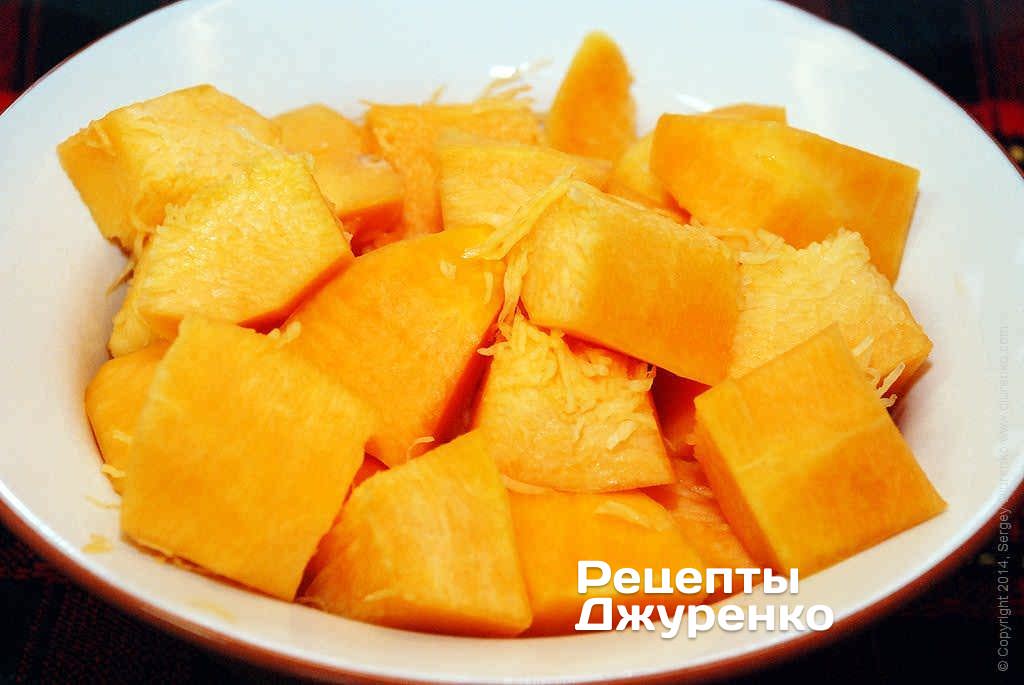
- To get the pumpkin ready for boiling, it's best to cut it lengthwise into wedges. The width of each wedge should be roughly equal to its thickness, giving a square cross-section — this just makes the pumpkin easier to work with later. Trim the remaining fibers inside the pumpkin with a knife down to the firm flesh. If a little of the stringy inner part is left, it's no big deal. You also need to peel off the skin, and do it thoroughly, so the soup comes out smooth and silky.
- A few words about this step. Pumpkin, and especially its skin, is quite hard. Over the years I've broken several knives on pumpkins, so don't repeat my mistakes. A ceramic knife won't do for peeling pumpkin — it's too brittle. Don't use thin knives with long blades either; they're too flexible. Use a small, sturdy paring knife with a short blade. Paring knives are usually the sharpest in the kitchen, and peeling a pumpkin with one is easy.
- Cut the peeled pumpkin wedges into cubes.
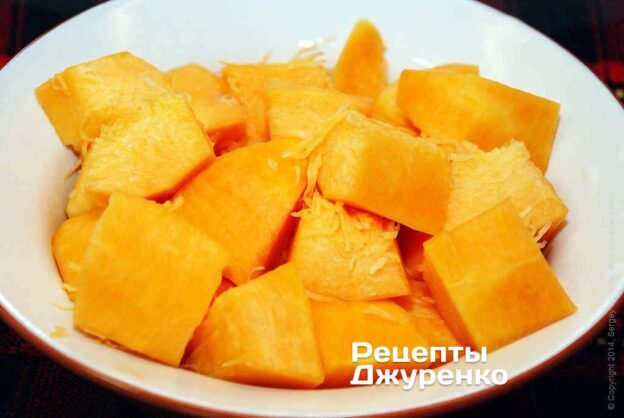
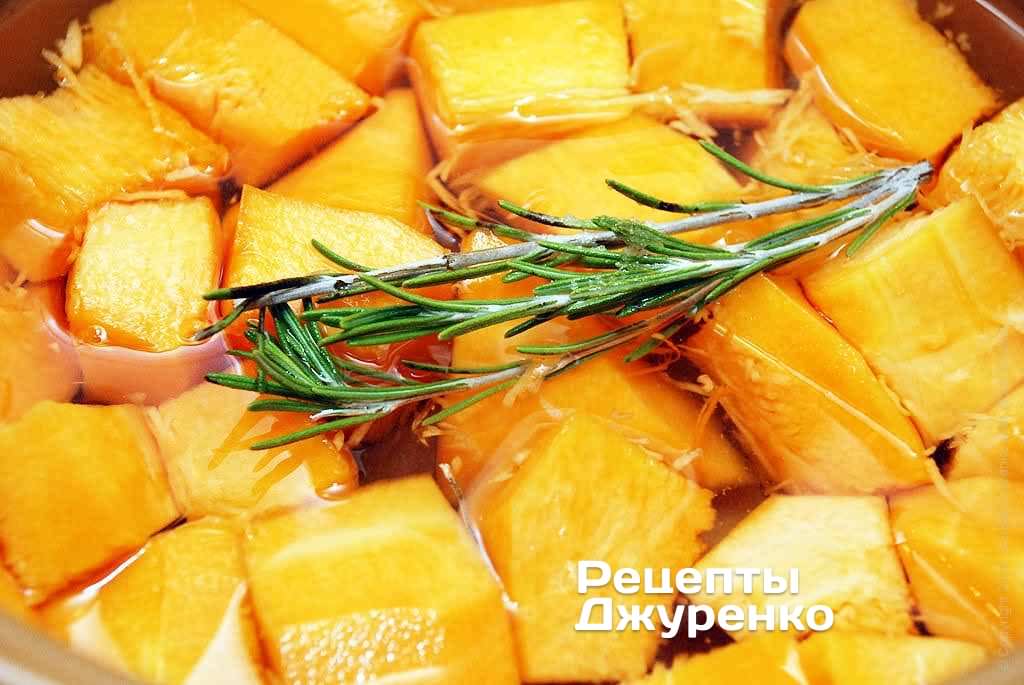
- Place the cubes of peeled pumpkin in a wide pot. Add 1 tsp of sugar and 1–2 sprigs of fresh rosemary. The rosemary will end up giving just the faintest hint of aroma and flavor — barely perceptible. Pour in cold water so the pumpkin is almost completely covered — just level with it. Put the pot on the heat and bring to a boil.
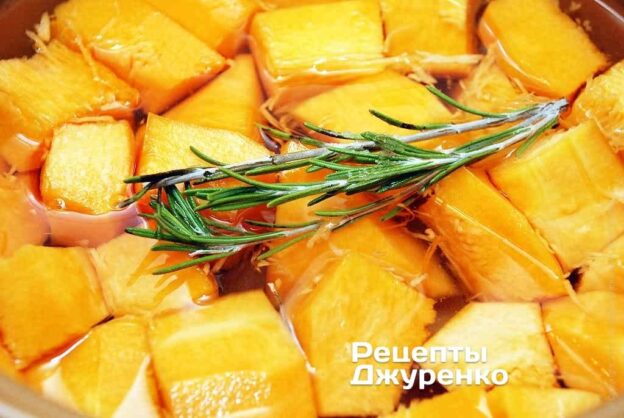
- There's a lot of debate about how long to boil pumpkin. Usually it's cooked for 15–20 minutes. I boil large cubes of pumpkin for 15 minutes from the moment the water boils. Then again, there are plenty of great dishes made from almost raw pumpkin, even pumpkin soup. So the cooking time is up to you, bearing in mind that after just 5–7 minutes a knife goes through the flesh easily.
- By the way, don't stir the pumpkin while it cooks. First, the softened outer layer of the cubes breaks up easily, and second, the leaves fall off the rosemary sprigs.
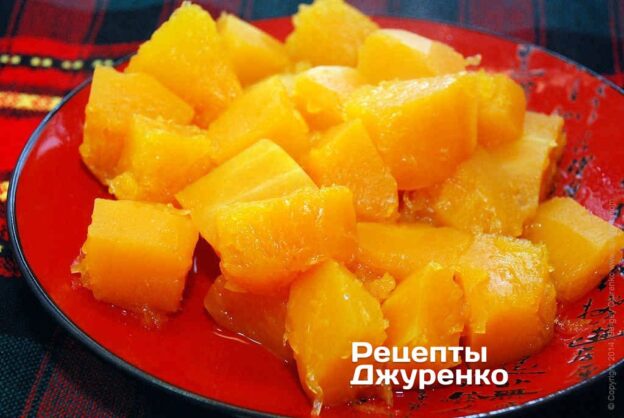
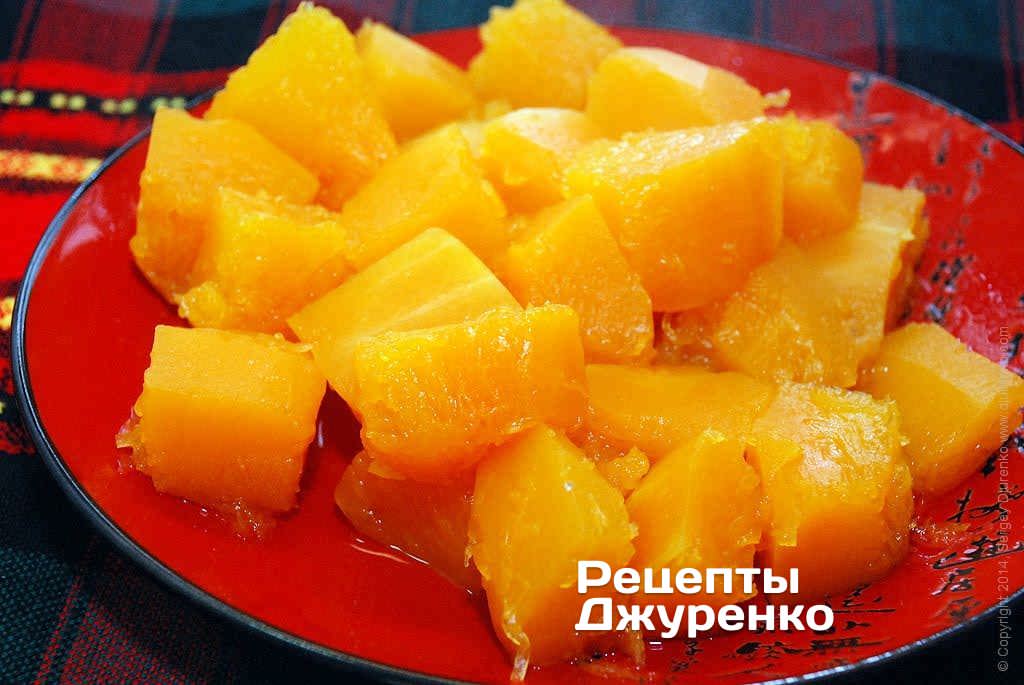
- After boiling, lift the pumpkin cubes out of the cooking water with a spoon and put them on a plate to cool slightly. Discard the rosemary sprigs and any loose leaves — they're large and easy to spot.

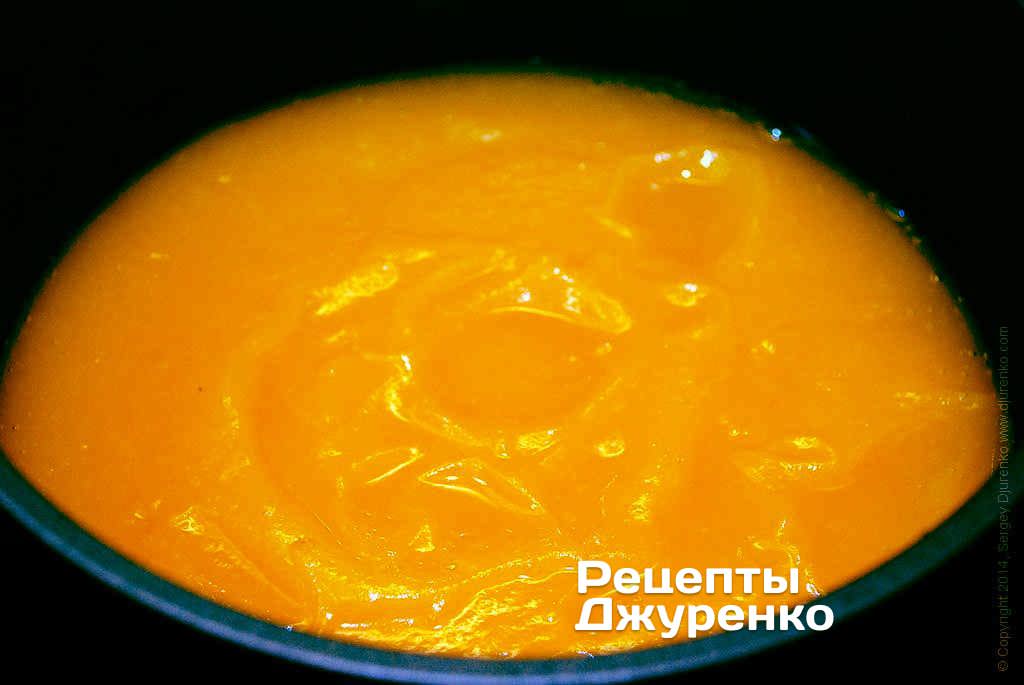
- Once the pumpkin has cooled a little, blend it into a puree. A food processor or blender works best — it's quick and convenient. If the puree is too thick and sticks to the sides of the blender, add a little of the water the pumpkin was cooked in.
- Pour the pumpkin puree into a pot and add sugar to taste. Don't overdo the sugar, though, or you'll end up with a dessert rather than a soup.
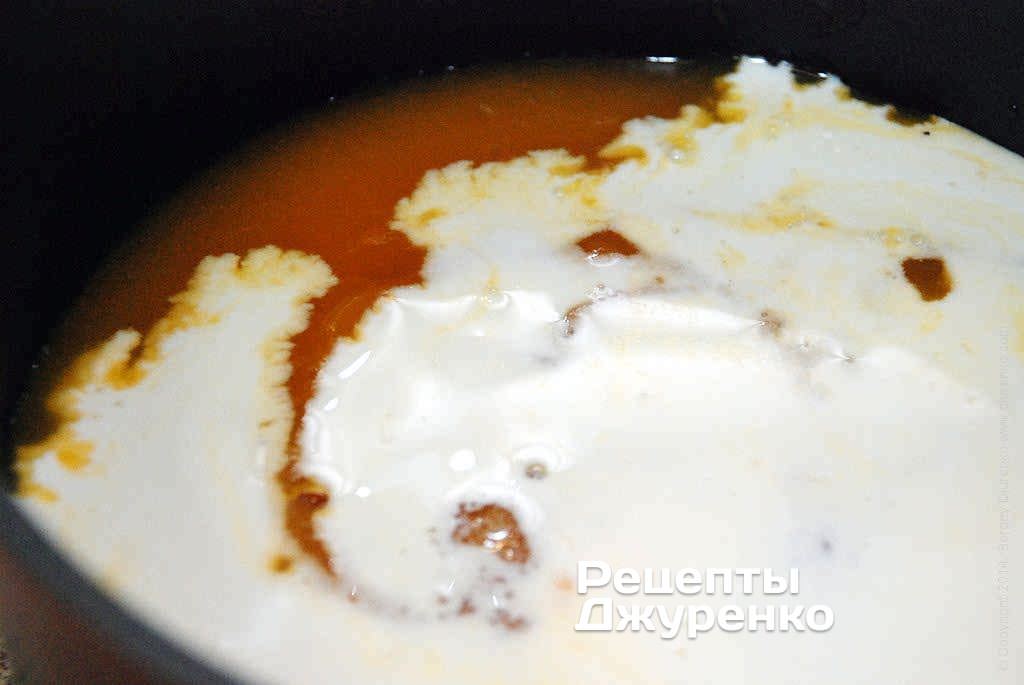
- From here there are two options. If you've decided to make a cream soup, thin the pumpkin puree with milk or cream. Use as much cream as it takes to get the soup as thick as you like.

- If you've decided to make a plain vegetable soup, thin the pumpkin puree with the water left over from cooking. In this version you can add a little fresh unsalted butter if you like.
- Put the soup on the heat and bring to a boil. Simmer over low heat for 3–5 minutes, stirring.

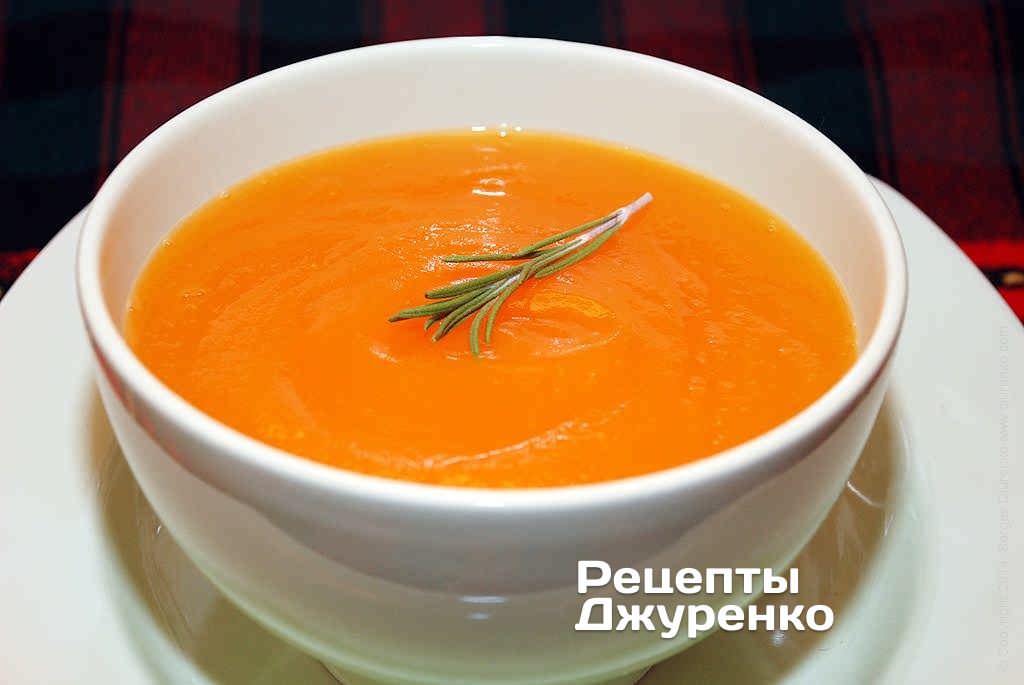
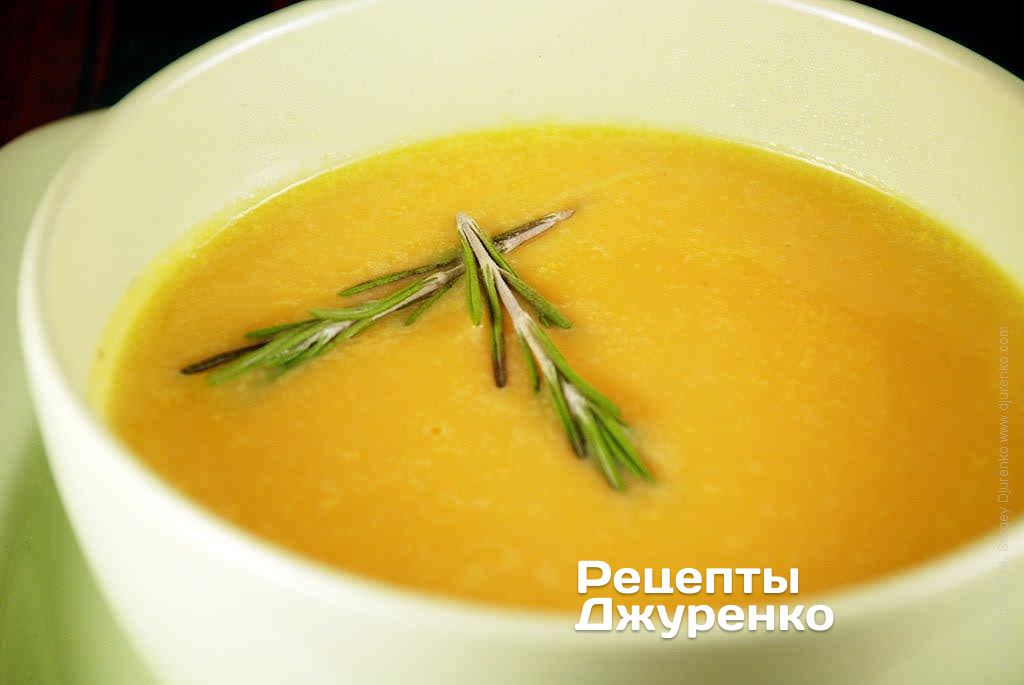
- Ladle the finished soup into bowls, garnish with a sprig of fresh rosemary and serve.
- Pumpkin soup with cream will be a bit paler in color, with a pronounced creamy flavor.

- Pumpkin soup owes its color to the pumpkin itself and is usually a bright, cheerful orange.

- Pumpkin soup goes very well with unsalted crackers. Or, my favorite, a fresh poppy seed or cinnamon bun — but it has to be fresh.



| Yield: | 4 servings |
| Calories: | 31 |
| Prep: | 15 mins |
| Cooking: | 30 mins |
| Ready in: | 45 mins |
| Category: | Soups |
| Cuisine: | European |
| Rating: |
⭐
⭐
⭐
⭐
⭐
5
(5)
|