

Beef Tongue in Aspic
How much gelatin do you need for tongue in aspic?
Beef tongue in aspic takes 25 g of instant gelatin per 2 l of broth, and that is enough even for more liquid, since the tongue has its own gelling substances. First, a 3–4 mm layer of broth with gelatin goes into the dish and is chilled for 30 minutes to set. Before that, the tongue simmers very gently for about 2 hours.
I remember when I was little, my grandmother and mother would make tongue in aspic and kholodets for the holidays. No family celebration was complete without them.
Kholodets always came with grated horseradish. No other way! Sometimes, usually for a special occasion, they made aspic.
So what exactly is aspic? Aspic is a jellied cold dish made from meat stock with pieces of meat. If the meat is rich enough in gelling substances – beef hooves or shank, for example – the aspic sets without any extra help. Otherwise, food gelatin is always added.
Making tongue in aspic seems like a whole science, and the process takes a lot of time. But that is only the first time. In fact, there is nothing difficult about the dish. You boil the tongue just as you would for a meat salad, prepare the stock for the jelly and pour it over the meat.
Ingredients
2 servings
- Beef tongue up to 1.5 kg
- Onion 1
- Carrot 1
- Parsnip and parsley root 1
- Black peppercorns 6-8
- Allspice berries 4-5
- Cloves 1-2
- Bay leaves 2-3
- Salt 1/4 tsp plus to taste
- Water for soaking and cooking
- Instant food gelatin 25 g (for 2 l of stock)
- Hard-boiled egg 1
- Raw egg white 1 per 1 l of stock (for clarifying, optional)
- Fresh parsley 2-3 sprigs


Step-by-step recipe
Cooking the tongue
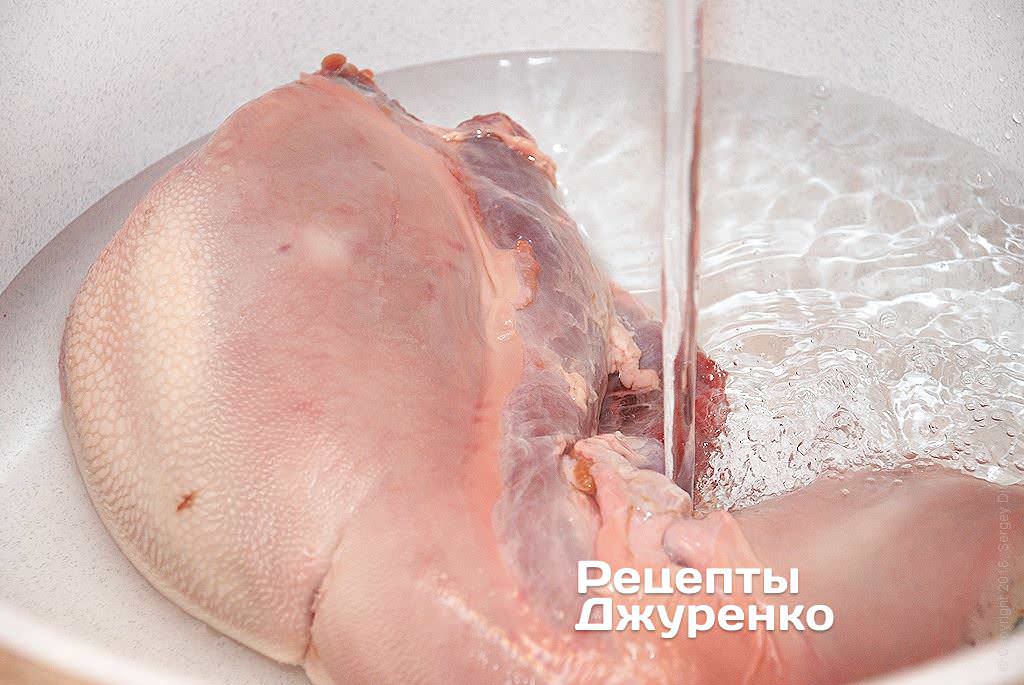
Prepare the tongue. Thaw the beef tongue and wash it thoroughly under running water.

Place the meat in a large bowl or basin and cover with cold water. Leave the tongue to soak overnight so that the mucus and blood clots come away from the meat.
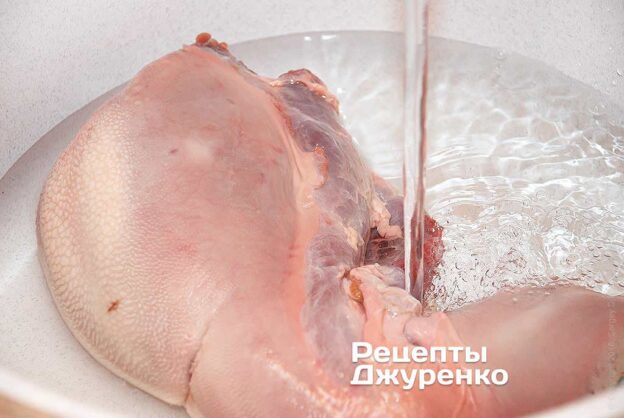
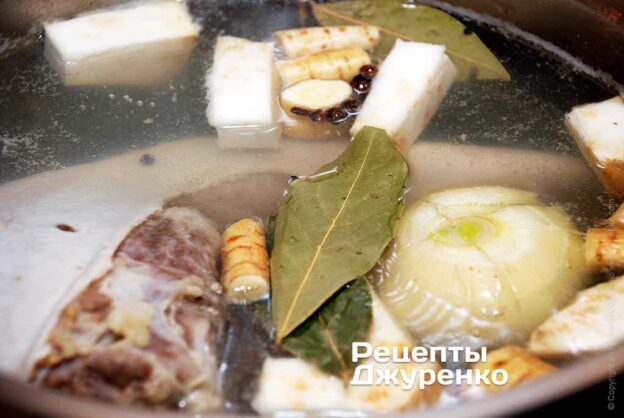
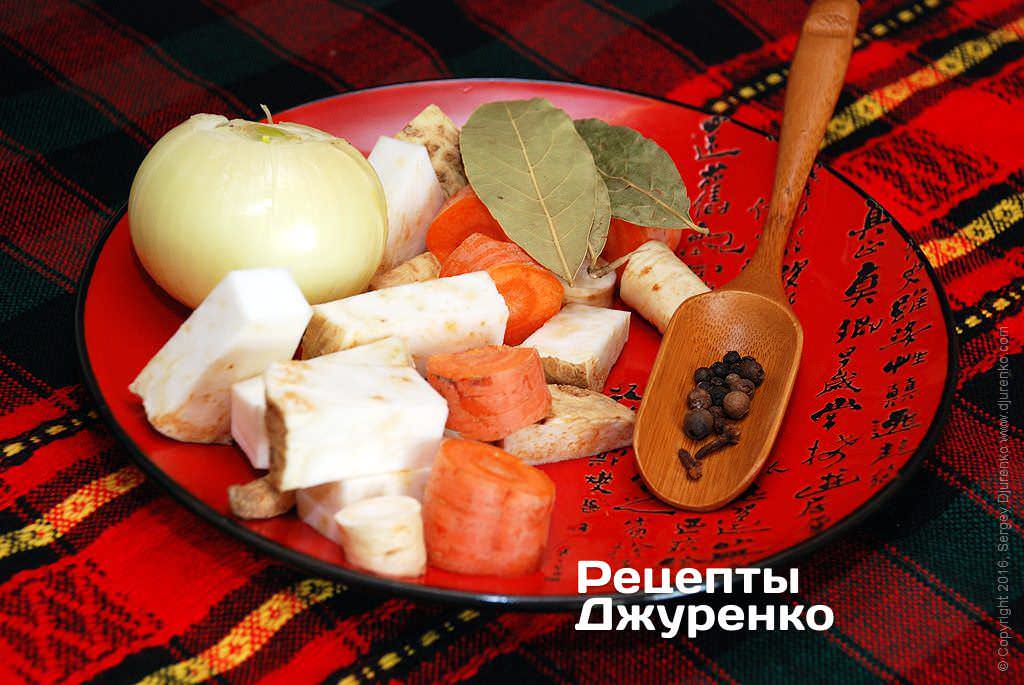
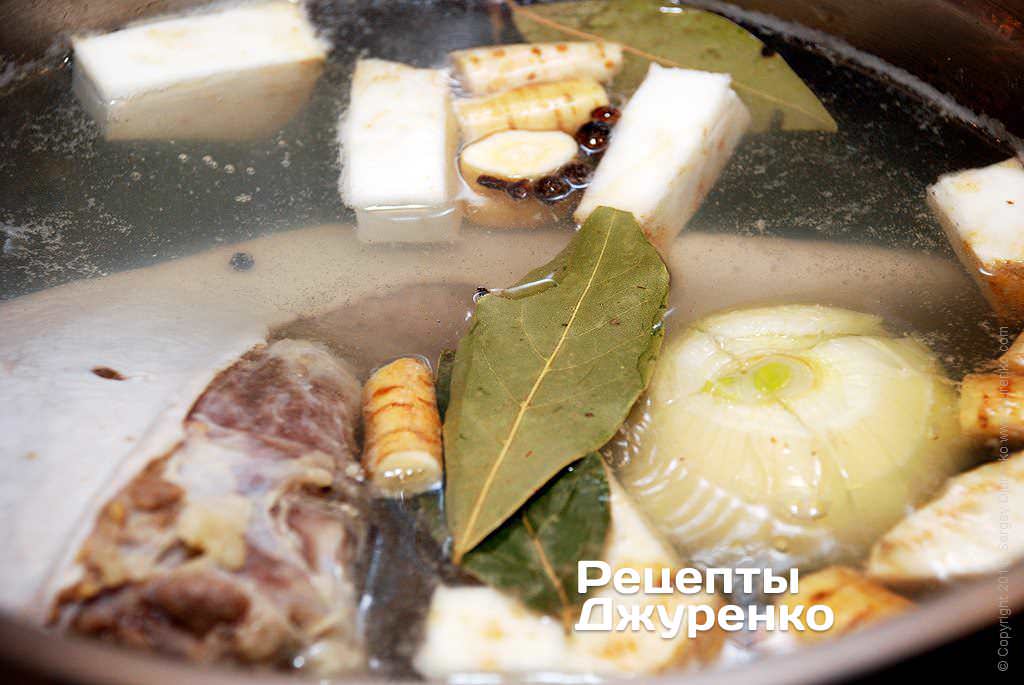
Start cooking. Rinse the tongue again and put it in a large pot. Add enough cold water to cover. Put the pot over high heat and bring to a boil. Be sure to skim off the foam that forms as it comes to a boil. Peel the onion, carrot, parsnip and parsley roots.

Once the water boils and no more foam appears, add the whole onion, the carrot, parsnip and parsley roots, 6–8 black peppercorns, 4–5 allspice berries, 1–2 cloves, 2–3 bay leaves and a quarter teaspoon of salt.

After 10 mins of boiling, take out the bay leaves and discard them.
Turn the heat down to low and cook the tongue for about 2 hours. The liquid should barely simmer and never boil hard – this is important, otherwise the stock turns cloudy.
The cooked tongue is easy to pierce with a knife or fork.
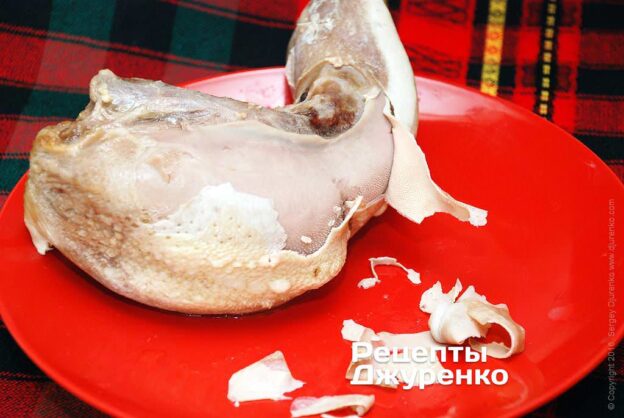
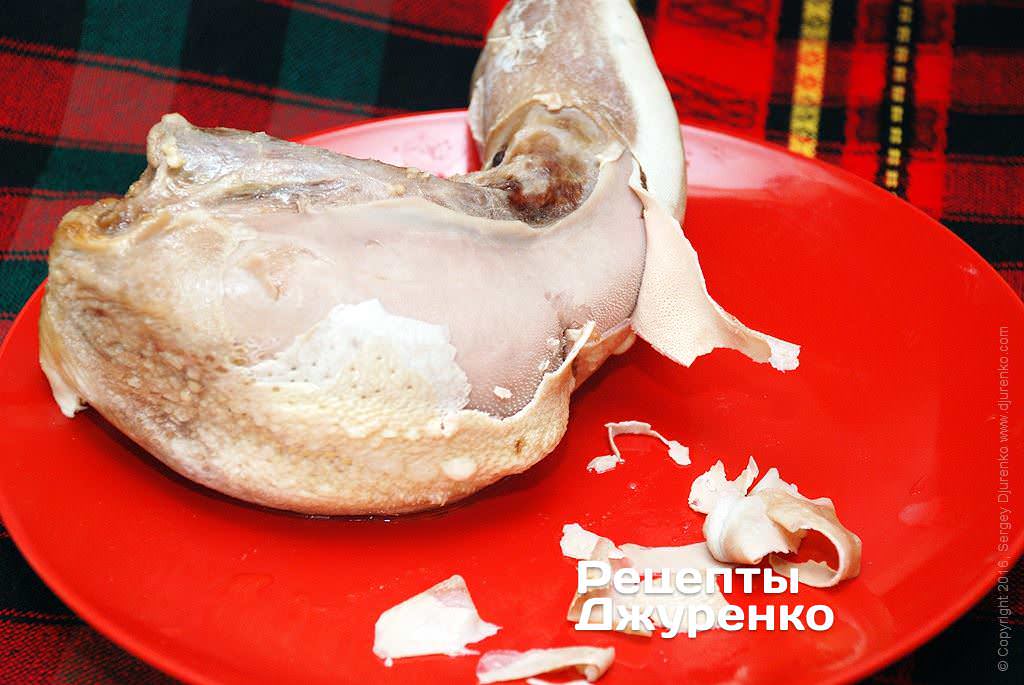
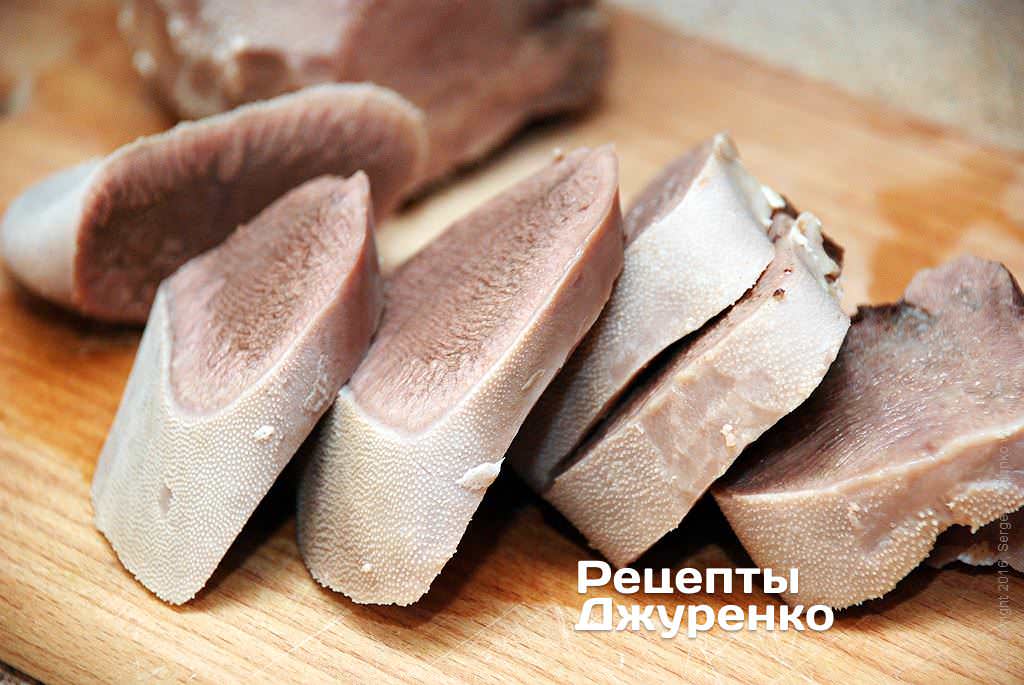
Peel the tongue. Take the cooked tongue out of the stock and rinse it under cold running water. Peel off the skin right away. It comes off beautifully, like tangerine peel.
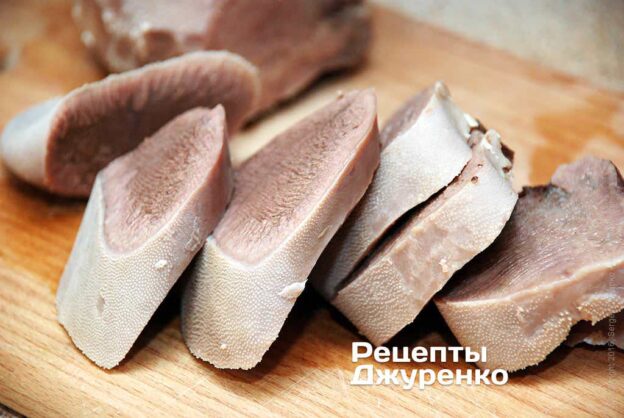
Cut the tongue across the grain into slices no thicker than 2–2.5 cm.


Stock for the jelly
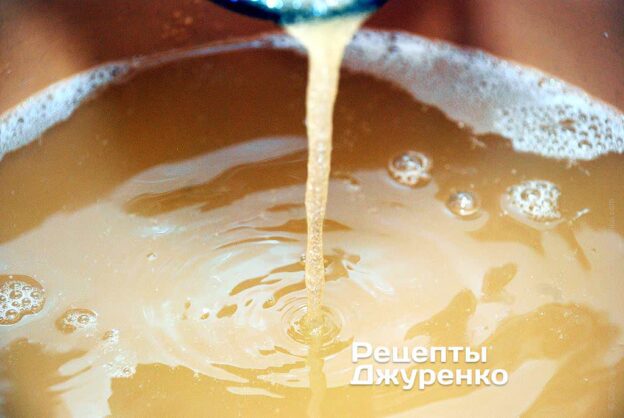
Remove the onion and roots from the stock. Cut the carrot into thin rounds to decorate the dish. Strain the stock through a clean, tightly woven cloth.
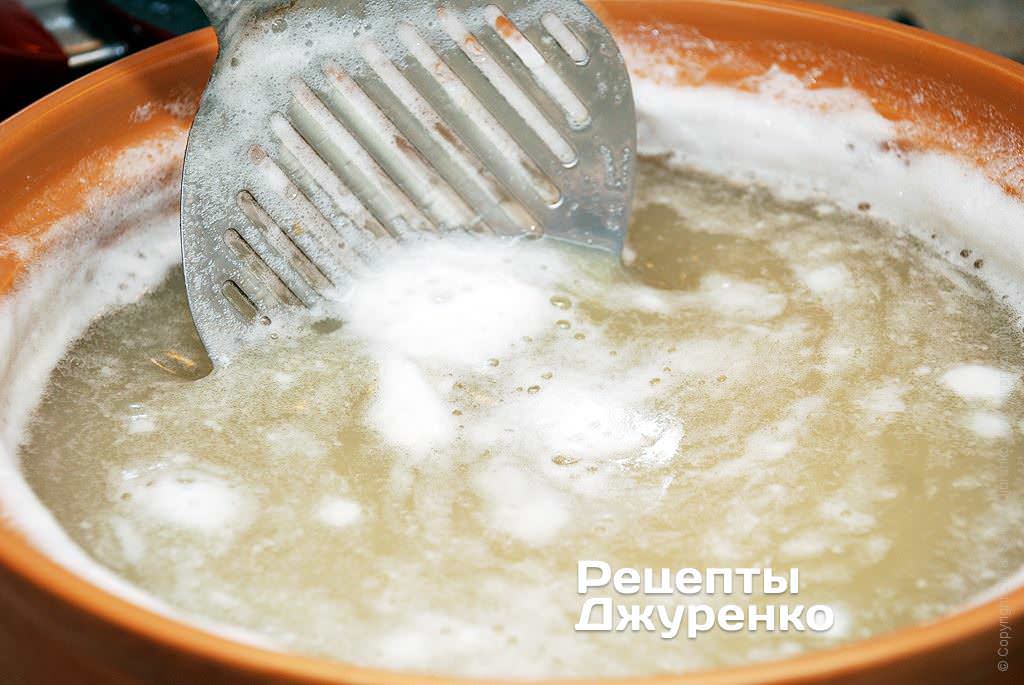
If you want the jelly to be light and clear, you can clarify the stock. For every liter of cooled stock, take the white of one raw egg. Whisk the white and add a cup of chilled stock (200 ml) to it. Pour the mixture into the stock and heat over medium heat, stirring constantly, until the egg white sets. Strain the stock through the cloth again and use it to make the aspic.
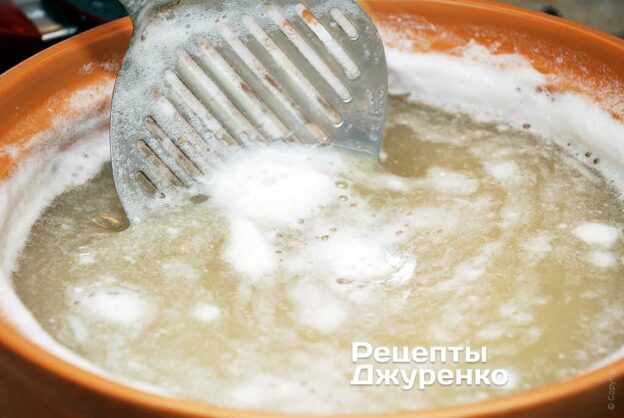
Season the stock with salt and pepper to taste. Dissolve the instant gelatin in a cup of warm stock (200 ml) and add it to the rest of the stock. Do not boil the stock once the gelatin is in.
25 g of gelatin is enough for 2 liters of stock or more – the tongue has its own gelling substances too.
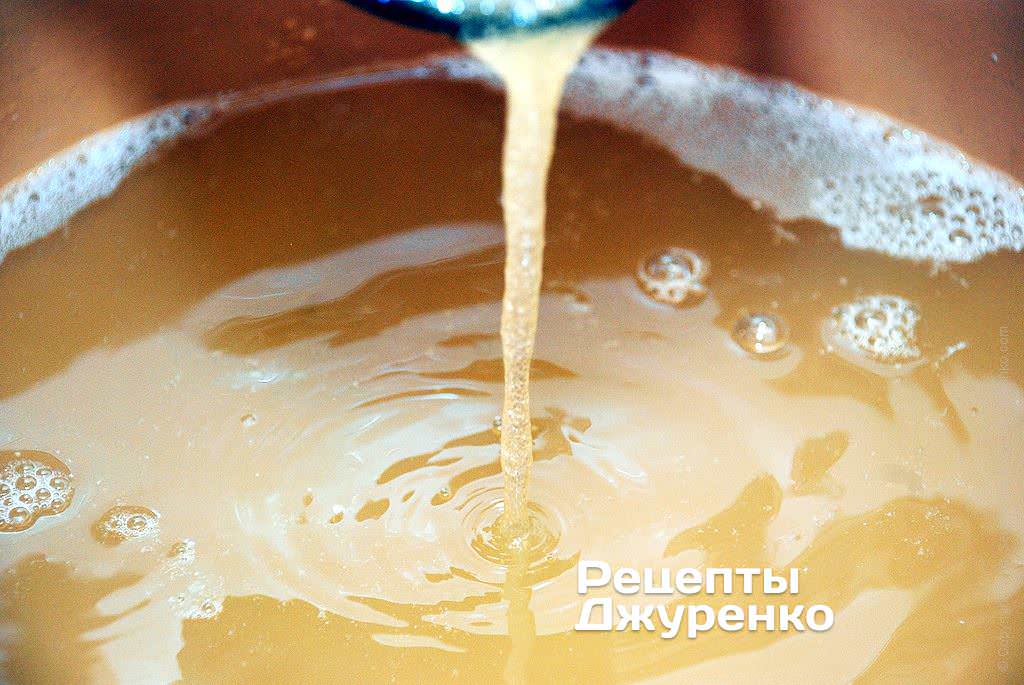
Assembling the aspic
Pour a little of the stock with gelatin into a large, deep-sided dish – just 3–4 mm – and put it somewhere cold for about 30 minutes so that the stock sets. This gives you the bottom layer on which the tongue in aspic is assembled. Arrange the tongue slices and carrot rounds on the set layer, add rounds of hard-boiled egg for looks and finish with parsley leaves.
Pour stock over the tongue to cover it completely.
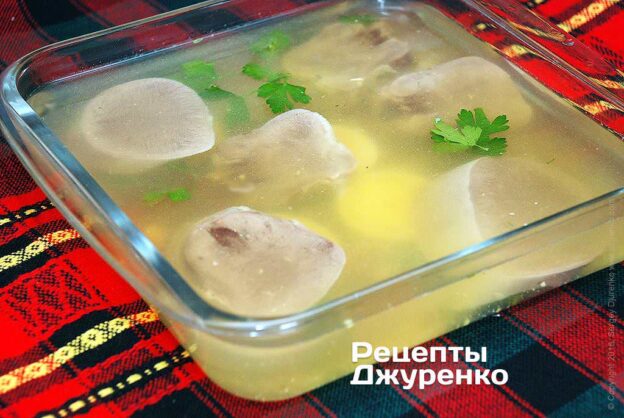
Put the aspic somewhere cold for a few hours, or better still overnight. By morning the aspic will be ready to serve for a festive lunch.

Serving
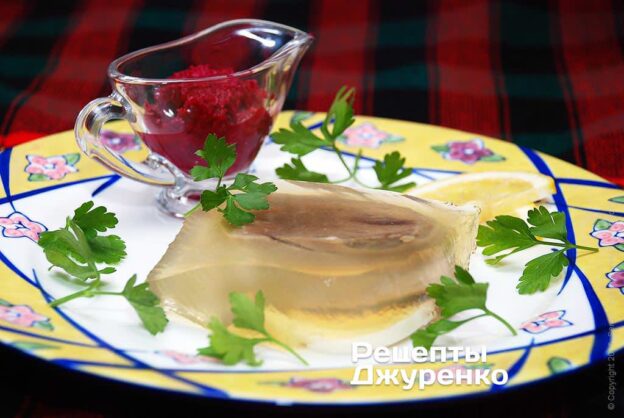
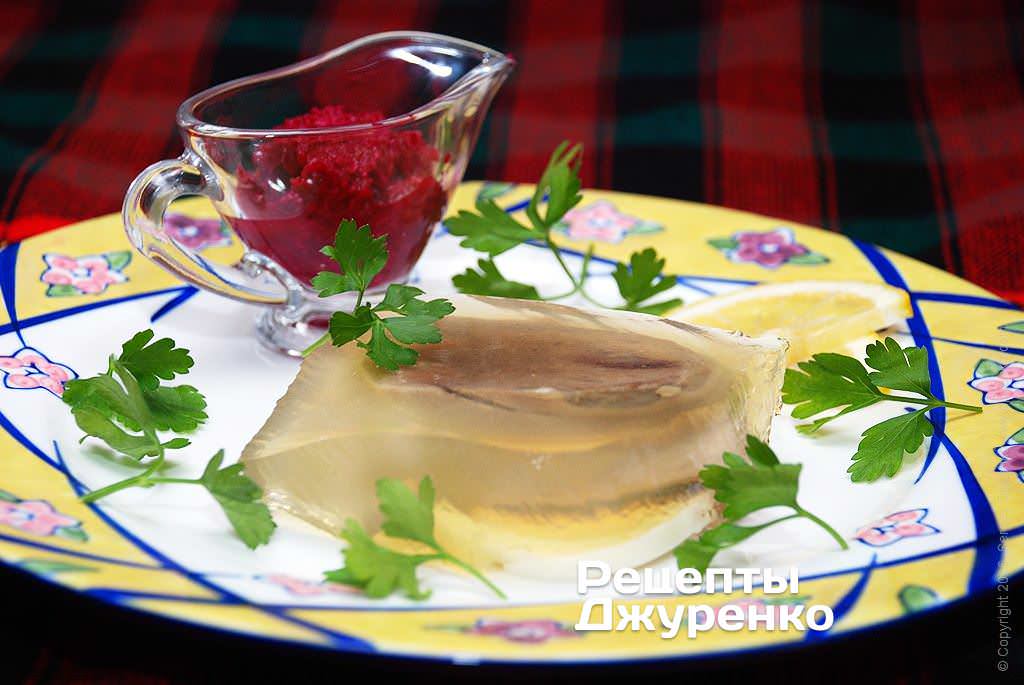
With the sharp tip of a knife, cut around the tongue slices in jelly right down to the bottom of the dish and use a spatula to lift the pieces onto plates.

Always serve it with grated horseradish and mustard. Perfectly boiled potatoes or mash make a great side, but even better is a tasty, chilled egg salad.


How did you like this recipe?
Rate it with one tap.
Calories and macros
1855 kcal
Serving ≈ 960 g
- Protein128 g28% of kcal
- Fat124 g62% of kcal
- Carbs45 g10% of kcal
100 g194 kcalProtein 13.3 gFat 12.9 gCarbs 4.7 g
Calculated from the recipe ingredients, excluding salt and spices. Data: USDA and Matvaretabellen.
To Get It Right
Which tongue to buy
This recipe needs a whole beef tongue, up to 1.5 kg. Veal tongue is smaller and more tender and cooks faster — test it with a knife. A frozen tongue is no worse than a fresh one: thaw it, wash it and soak it overnight as in the recipe.
Salt and spices
Only a little salt goes in while the tongue cooks — a quarter teaspoon; the real seasoning is done on the finished stock, before the gelatin. Salt it a touch more than you would a soup: in cold jelly, salt comes through more weakly. Take the bay leaves out after 10 minutes, or they will overpower the stock.
Make ahead and storage
Tongue in aspic is a dish for tomorrow: pour it in the evening and it sets overnight in the fridge. You can make it two days before the holiday — covered with a lid or cling film, it keeps in the fridge for 2–3 days. Take it out just before serving: in a warm room the jelly softens quickly. Do not freeze it — after thawing, the jelly weeps.
How to decorate
Carrot rounds, hard-boiled egg and parsley sprigs are the classics; green peas, thin lemon slices and cranberries work too. Lay the decorations and the tongue on a bottom layer that has already set — then they stay in place instead of floating up. You can slice the tongue thinner than in the recipe: thin slices look prettier through the jelly.
If there is tongue left over
Boiled tongue is good without the jelly: slice it thinly and serve with horseradish and mustard as a cold appetizer, or put it in a meat salad in place of the meat. And if you also want kholodets on the holiday table, it is made from beef shank with no gelatin at all.
Have your own trick for this recipe?
Questions and answers
How do you make tongue aspic clear?
Clarity is decided while the tongue cooks: it is soaked overnight, the foam is skimmed before the vegetables go in, and after that the stock never boils hard, only barely simmers. Then it is strained through a tightly woven cloth, and for a really light jelly it is clarified with whisked egg white and strained once more. Once the gelatin is in, only warm the stock — never boil it.
How long do you boil beef tongue for aspic?
A tongue of up to 1.5 kg takes about 2 hours at a very gentle simmer. It is done when a knife or fork goes in easily; if not, keep cooking — the time depends on the size and age of the animal.
How do you peel beef tongue quickly?
Right after cooking, rinse the tongue under cold running water — the skin comes off a hot tongue like tangerine peel. A cooled tongue is much harder to peel. If the skin will not come away, the tongue is not done yet: put it back in the stock.
Can you make tongue in aspic without gelatin?
The tongue has some gelling substances of its own, but without gelatin this aspic will not set properly. If you would rather not use gelatin, cook the tongue together with beef shank or hooves: then the stock sets by itself, as it does for kholodets.
Can I use pork tongue instead?
Yes, everything stays the same. Pork tongue is several times smaller than beef, so it cooks faster — test it with a knife. The slices come out small, so it is easier to set them in individual portions.
How do you make tongue in aspic in individual molds?
The same way, only in small molds or bowls: a thin layer of stock, let it set, then a slice of tongue with its garnish, fill to the top and chill. Before serving, dip the bottom of the mold in hot water for a few seconds and turn it out onto a plate.
Is tongue in aspic good for you?
Beef tongue is tender meat with plenty of protein and iron, and it is easy to digest. There is no frying and no oil in aspic, and the stock with gelatin is collagen too. It makes a filling but light cold appetizer.