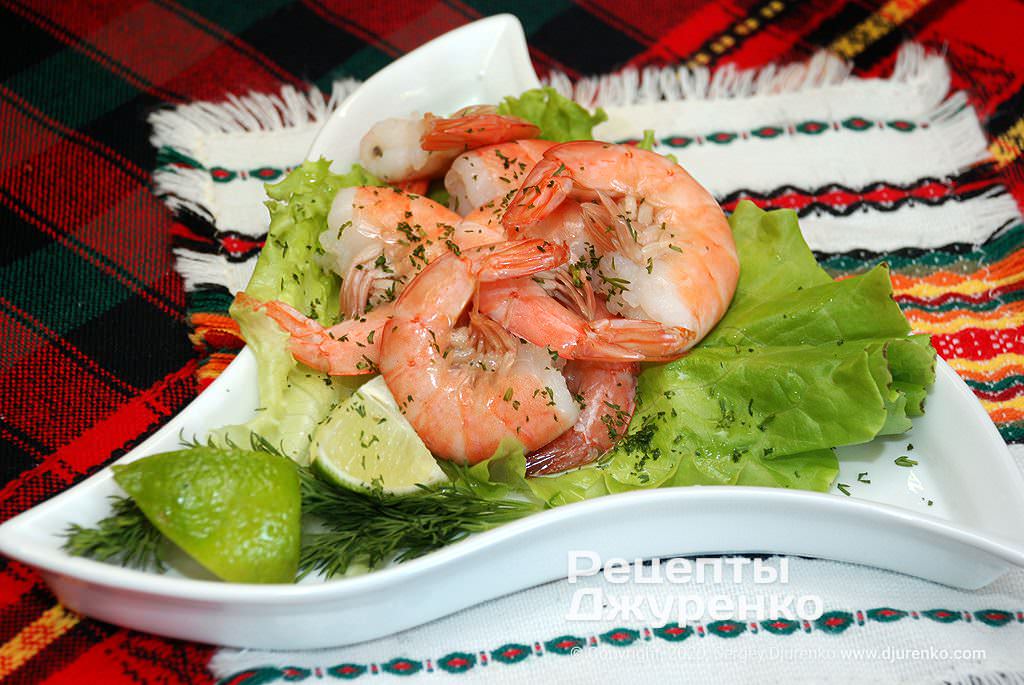
How to Boil Shrimp: Raw Shrimp Tails in 5 Minutes
If you like cooking seafood, it's worth learning how to boil shrimp. It's not hard, although there are a few rules to follow. Boiled shrimp make a superb appetizer for get-togethers, a treat on their own and the base for many interesting dishes. I use this method for lots of fresh seafood: mussels, small clams and even crayfish.
Shrimp, decapod crustaceans of the infraorder Caridea, live in almost every sea, and there are freshwater species too. They're both fished and farmed. In stores you'll find anything from tiny ones to real giants. That said, “shrimp farms” often raise not true shrimp but other decapods that are closer to crayfish.
In the vast majority of cases, stores sell cooked shrimp, packaged or loose, coral red in color. They're boiled in seawater right after being caught, then flash-frozen, because they spoil very quickly. That's how they end up in supermarket freezers. In many cultures around the world, eating shrimp is forbidden or very limited for religious reasons.
Shrimp meat is rich in protein, trace elements and, importantly, cholesterol. When buying red shrimp, remember that they're already cooked and don't need boiling again. The package almost always shows the size of the seafood. Two numbers give the count per kilogram (per pound in English-speaking countries). Large shrimp have their own marking, U (under) plus the approximate count per pound; this is also called the “size” or “count.” In reality, the marking system is much more complicated.
Cooked shrimp should be a pleasant coral red. A dull shell most likely means they've been refrozen. Also check the amount of ice and “frost”: ideally there shouldn't be any at all. Dark spots under the shell and a smell of ammonia are bad signs too.
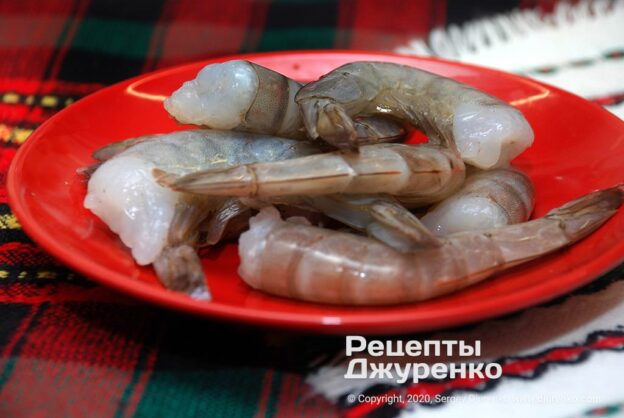
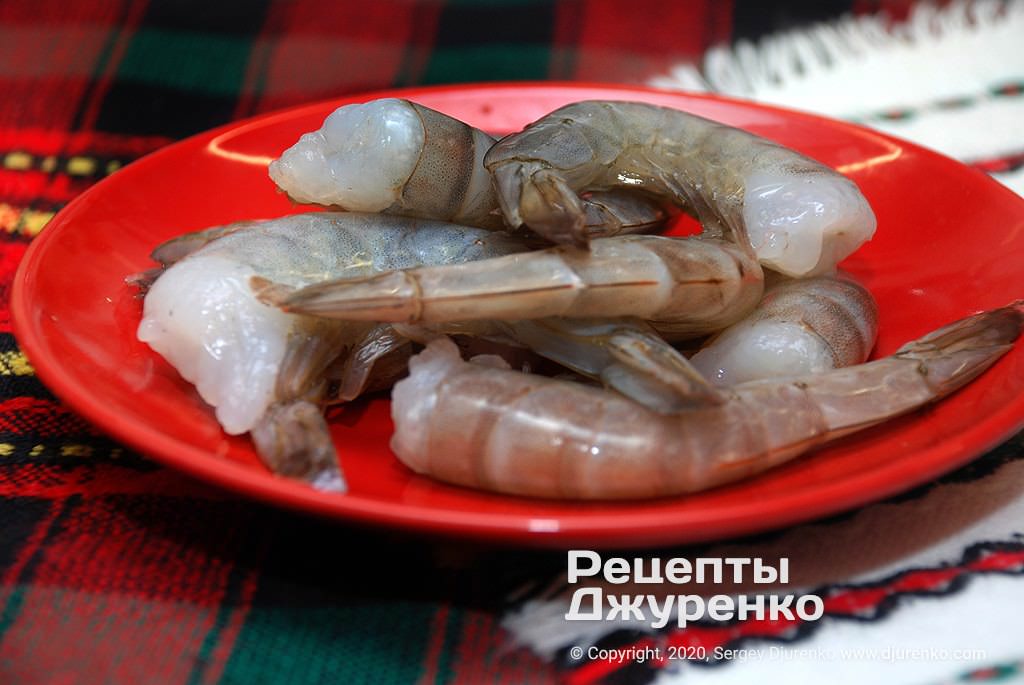
Whenever we bought a bag of cooked shrimp, we'd put them in a large bowl and pour boiling water from the kettle over them. In 10 minutes they were completely thawed and the water had cooled. All that was left was to rinse them and put them on a plate. I'll tell you how to boil raw shrimp, the kind frozen right after catching without any processing. As a rule, they're sold not whole but as meaty tails in the shell with the tail fan.
Ingredients
1 serving
- Large raw shrimp or shrimp tails 8
- Dill 2-3 sprigs
- Garlic 1-2 cloves
- Ginger 1 small piece
- Ice 0.5 kg
- Salt, bay leaf, allspice, lemon juice to taste
- Lemon or lime, sauce, herbs, drinks for serving
Step-by-step recipe
- Before you boil shrimp, you need to thaw them. Sometimes you come across so-called “chilled” seafood. Given that the nearest suitable sea is thousands of kilometers away, that product is either thawed or from a local farm. Frozen shrimp are less risky. So don't rush the thawing with a microwave, hot water and so on. And don't thaw them at room temperature either: it's a perishable product. In my opinion, the ideal way is to put the frozen raw shrimp under cold running water. In 10 minutes they're thawed.
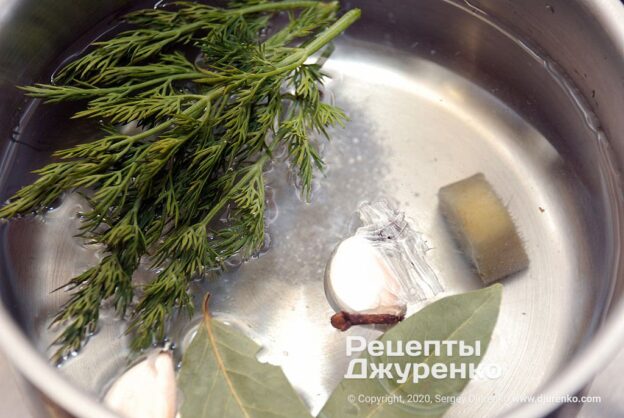
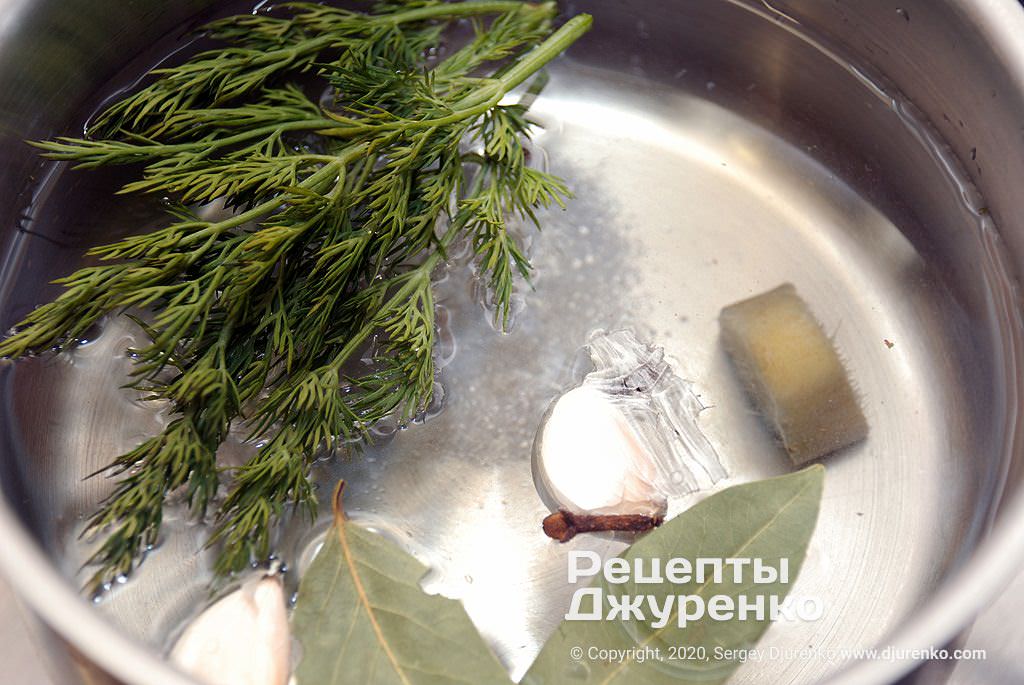
- Take a small pot and pour in 1 liter of water. Add a scant 0.5 tsp of sea salt. Add a small peeled piece of ginger. Add a few sprigs of dill, unpeeled garlic cloves, 2-3 allspice berries and 2-3 bay leaves. People often suggest adding dry white wine. It's better saved for drinking with the seafood; add 1 tsp of lemon juice to the water instead, and only if you like.
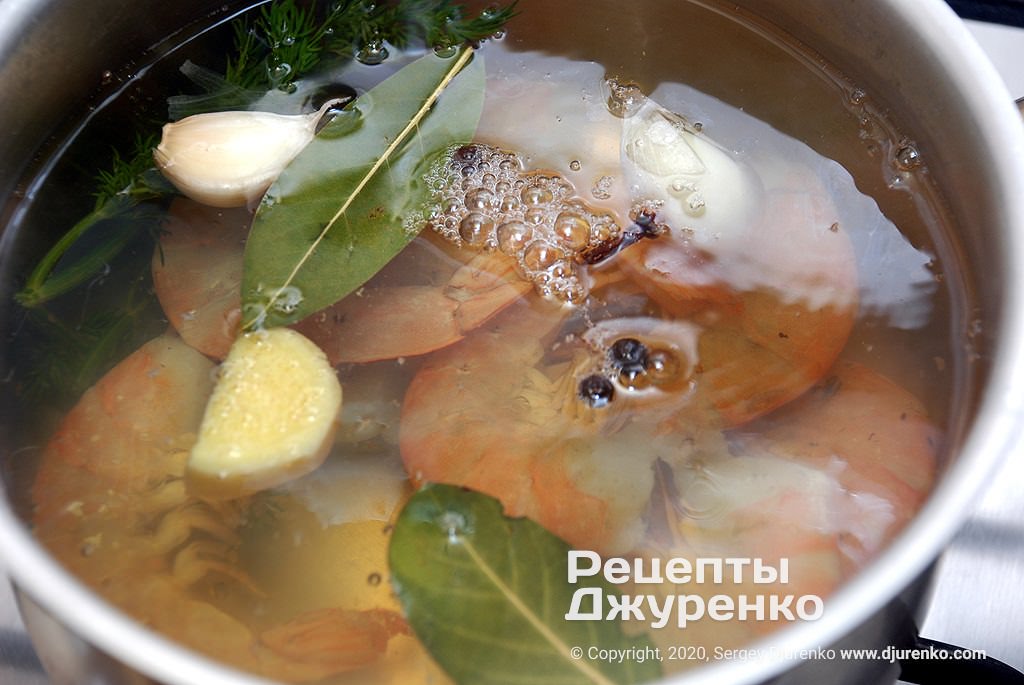
- You'll find lots of advice about removing the vein before boiling. That's hard to do without damaging the shell. So I do it after boiling, right before serving. Bring the water to a boil and simmer the spices and herbs for 5 minutes over medium heat. The water should take on the flavor and aroma of all the additions. Drop the raw shrimp into the boiling water and turn the heat up to maximum.
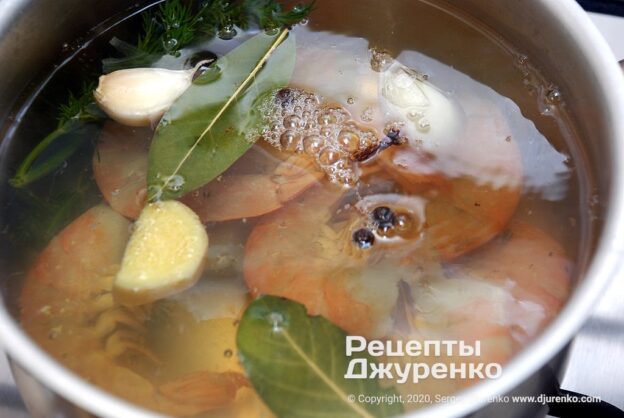
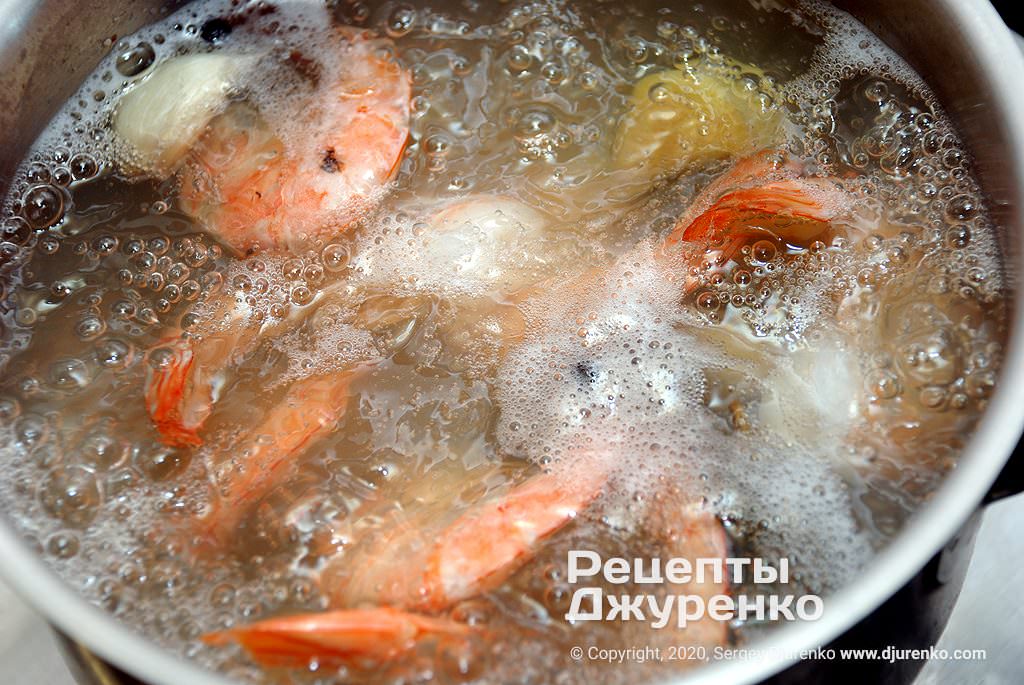
- The water should come back to a boil. That will happen fast, because we thawed the shrimp before boiling them, so the water temperature won't drop much. The shells will turn orange-red almost immediately. Shrimp meat is high in protein, so when overcooked it becomes rubbery and quite tough. As soon as the shrimp float to the surface, count 30 seconds and take them out of the pot right away.
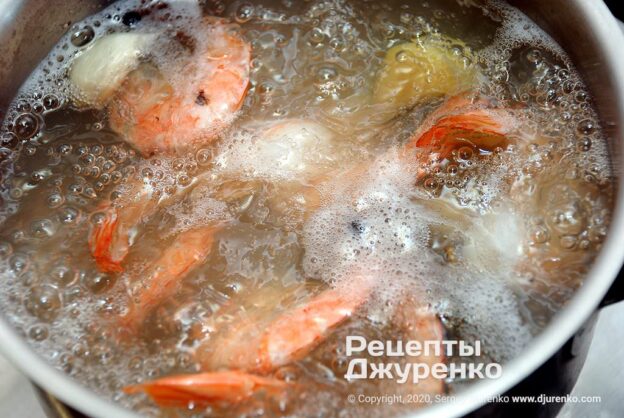
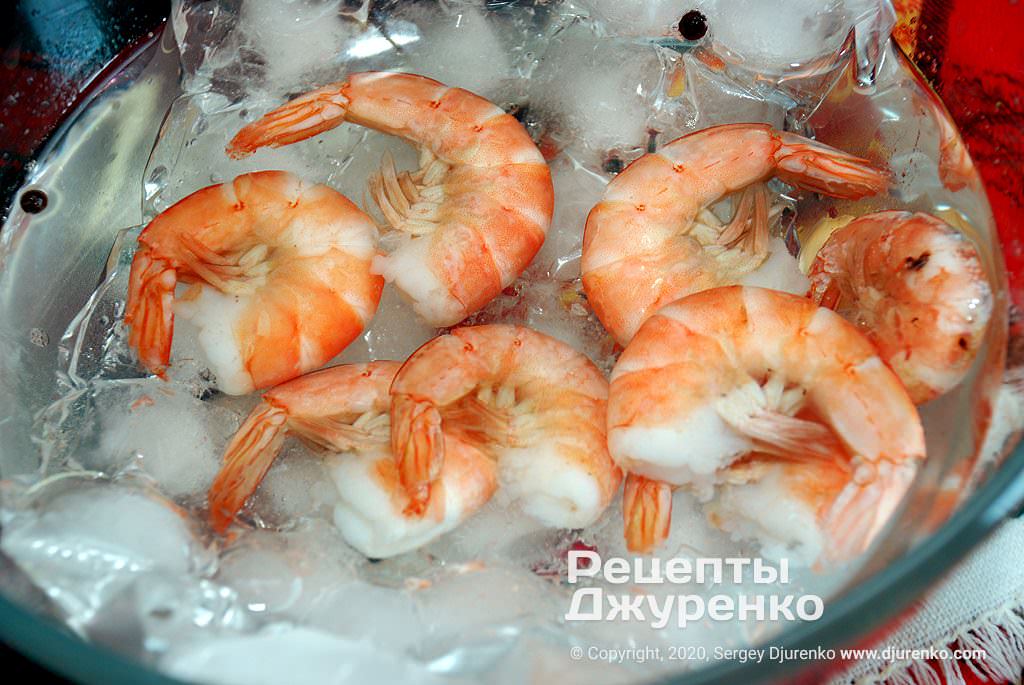
- A perfectly cooked shrimp is shaped like a crescent; an undercooked one is straight, and an overcooked one curls into a ring. Even after you take the pot off the heat and scoop the shrimp out, they keep cooking from their own heat. That process has to be stopped instantly. Fill a large bowl with cold water and ice in advance. Very quickly transfer the shrimp to the ice water for 2-3 minutes.
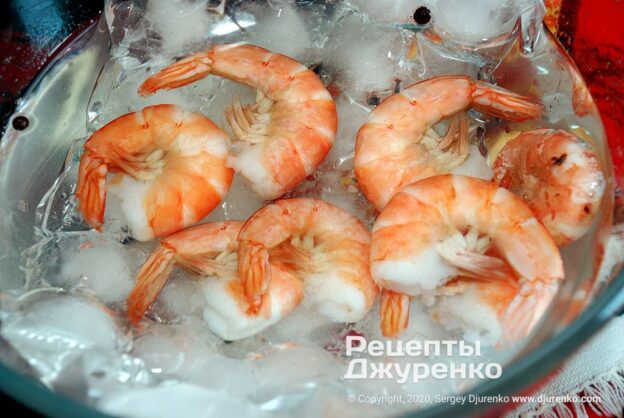
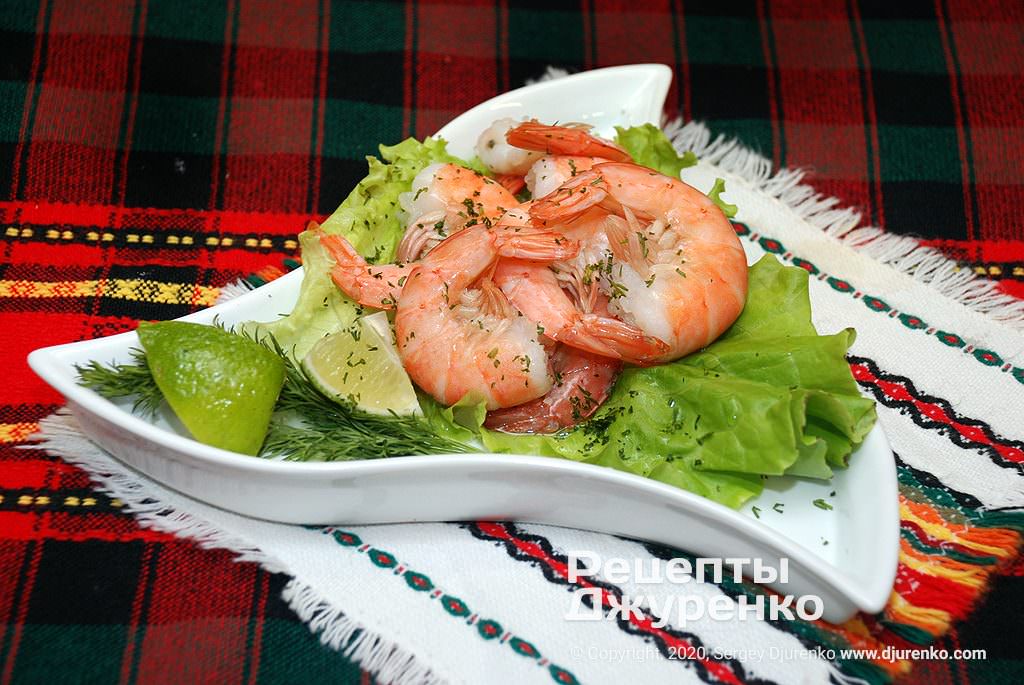
- Next, set up the serving plate with herbs and lemon or lime. I suggest using a very sharp knife or kitchen scissors to cut along the tail and carefully remove the dark vein. Or just make the cut and remove the vein while peeling. Arrange the shrimp on the plate and serve right away.
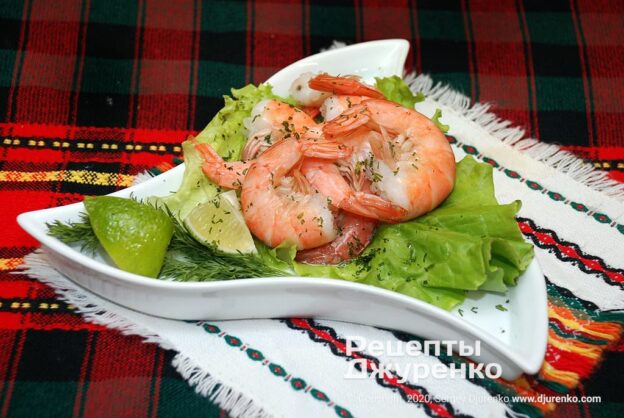
- How do you boil shrimp with the heads on? Exactly the same way. They'll be even tastier. Shrimp taste better when boiled unpeeled. Plus, if you oversalt the water, the shell will protect the meat from too much salt. You can use the cooking liquid to make soup afterwards.
| Serves: | 1 serving |
| Calories: | 95 |
| Prep: | 15 mins |
| Cook: | 5 mins |
| Total: | 20 mins |
| Category: | Snacks and Sauces |
| Cuisine: | European |
| Rating: |
⭐
⭐
⭐
⭐
⭐
5
(3)
|