
Ratatouille from Fresh Young Vegetables with Herbes de Provence
Ratatouille is a vegetable dish typical of the cuisine of poor peasants in French Provence. It just so happens that at the mention of this word almost everyone remembers the popular cartoon about a rat who cooks, not the recipe itself. I don’t know, maybe the title of the cartoon somehow echoes the French rat (rat), or rata, which in slang means a jumble of food, slop. But the second part of the word, touiller, means to stir.
By and large, ratatouille is similar to bell pepper lecho or to other dishes made by stewing various vegetables. They say the first ratatouille recipe ever published and recorded dates back to the 18th century and comes from the area around Nice. The original recipe was hardly standardized and used fresh vegetables grown in one’s own garden. There is nothing exotic in it, only zucchini (courgettes), tomatoes, various peppers, onion and garlic, plus the spices and herbs typical of the region, and olive oil. Much later, people added eggplants.
Provençal ratatouille is a stew, a stewed mix of vegetables. Although in restaurants the dish is very often served as thin sliced rounds, every chef has his own signature recipe, differing less in the method than in the spices and the varieties of vegetables used. And, of course, in completely original and fantastic presentations.
If you think about it, eggplant dishes common in the East are often similar to ratatouille. For example, the famous imam bayildi in Egypt is often cooked not as stuffed eggplants but as stewed pieces of vegetables. The taste is amazing, special and pleasant.
Hungarian lecho with eggplant is similar to ratatouille, although, to my taste, a bit more liquid. Sicilian caponata, an eggplant appetizer, is a very tasty dish. In any case, eggplant with zucchini and tomatoes is always delicious.
Making ratatouille from young vegetables and Provençal herbs certainly takes time and some effort. But the taste of this wonderful vegetable dish will be your reward. It’s worth trying!
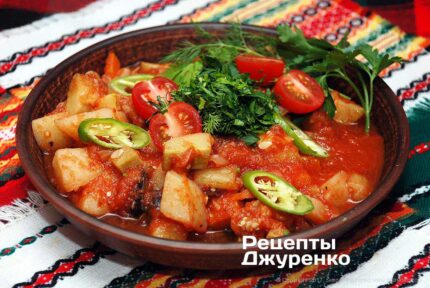


Ingredients
6 servings
- Bell pepper 4-5
- Light green squash 2-3
- Zucchini (courgette) 1-2
- Young eggplants 4-5
- Ripe tomatoes 4-5
- Large plum tomatoes 2-3
- Onion 1
- Garlic 1-2 cloves
- Parsley, thyme, basil to taste
- Olive oil to taste
- Salt, black pepper, dried herbes de Provence, nutmeg, sugar, balsamic vinegar to taste
Step-by-step recipe
If you’re going to make ratatouille at home, regardless of the recipe and personal preferences, you need to understand that all the vegetables without exception must be fresh, literally just picked. Ideally, if you can, go to the garden and pick the set you need right from the beds. This is important! I admit, when I read about a frozen set of ingredients for this recipe, I couldn’t sleep.
The proportion of vegetables (squash, zucchini, eggplant, pepper, tomatoes) by volume should be roughly equal. By and large, ratatouille can do without eggplant: you can use multicolored zucchini, yellow and green, as well as squash. But the sweet peppers are worth choosing in different colors, motley and bright.
The vegetables can be loosely divided into two baskets. The first is for the sauce, which is poured over the ratatouille before baking in the dish. It includes various sweet and fleshy peppers. By the way, if you want to add a piquant heat to the sauce, add a hot pepper, first removing the seeds and the inner white membranes (they give most of the heat). The sauce needs very ripe, fleshy tomatoes. Homegrown, sharp garlic is important; it’s best to buy a local variety at the market rather than an imported one. Amazingly, local villagers don’t grow bad garlic. It’s a kind of competition over whose garlic is better.

The second basket holds young squash, multicolored zucchini and young dark eggplants. It’s important that they are all cylindrical, with no curve, and of roughly the same diameter. Even more important is that no seeds have formed in them. You also need large tomatoes with an elongated shape. They are also called “plum” tomatoes, and preferably they should not be overripe, otherwise they will be very hard to cut into slices.

Spices and herbs are a subject of endless debate. “Herbes de Provence” are absolutely necessary. They are the highlight, the calling card of the dish. Without a mix of herbes de Provence it’s better not to make it at all. A mix of dried herbs including rosemary, basil, thyme, sage, mint, savory and so on is perfectly fine. Such mixes are sold in stores and, by the way, are of very decent quality. In addition to the dried mix, it’s worth getting fresh sprigs of parsley, basil and thyme. These are strong, aromatic herbs that give the dish its main taste and aroma. Tie the fresh herbs with cotton thread and use them as a bouquet.
The first thing to do is roast the peppers. There are options. The first and preferred one is to roast the peppers in embers or over an open flame. Roast the pepper until the outer skin is charred, then scrape it off with a knife. You can also roast the peppers in the oven, after removing the seeds. Immediately after roasting, put the peppers in an airtight plastic bag until completely cool. The outer skin peels off beautifully and comes away easily.

Choose whichever way suits you. Still, peppers roasted in embers or over a flame give the dish a note of special flavor. In any case, roast the peppers until soft and the outer skin comes away, and immediately remove the seeds and stem. Chop the fleshy roasted pepper pulp very finely with a knife. It’s better not to use a blender: let very small pieces of pepper end up in the sauce.

Scald the large ripe tomatoes with boiling water and peel them. Remove the seeds and the central core, which is tough and clearly visible. Puree the remaining flesh with a blender.

Peel a large onion and chop it very finely with a knife. Heat 2 tbsp of olive oil in a saucepan and let it warm for 1-2 minutes to get rid of the specific smell natural olive oil has. Fry the chopped onion until soft. Don’t brown the onion.

Add the finely chopped roasted pepper pulp and a garlic clove, finely chopped with a knife, to the onion. Fry everything together over medium heat for 4-5 minutes, stirring.

Now an important moment: add all the spices. Season with salt and black pepper to taste, add 1-2 tsp of sugar (5–9 g) and grated nutmeg on the tip of a knife. Add the dried herbes de Provence mix. The amount is strictly to taste; I added about 1 tsp. You can rub the herb mix between your fingers to crush it.

Stew the pepper with the spices, covered, for 5 minutes. The sauce mixture should be thick and very aromatic.

Pour all the tomato puree into the saucepan and stir gently. If the puree is too thick, you can add a little boiled water, but as a rule this isn’t needed. Stew the pepper and tomato sauce, covered, for 3-4 minutes.

Add the bouquet of fresh herbs: basil, thyme and parsley. Ratatouille should be aromatic. Simmer over low heat, covered, for 10 minutes. Then you can take the herb bouquet out of the sauce; the herbs are very aromatic and have already done their job.

The finished sauce should have a consistency similar to pepper lecho — quite thick. By the way, I read somewhere that in a simplified version of ratatouille, ready-made lecho is used instead of the sauce.
You will need a ceramic or heatproof glass dish with high sides. It can be oval or round, so that it’s convenient to lay out the vegetables. Pour all the sauce into a suitable dish and spread it over the bottom. The sauce should fill the dish to about a third of its height.

Next comes an exciting task: slicing the vegetables into thin slices. As they say, fear has big eyes. At first glance, cutting a lot of vegetables into thin rounds seems an impossible task, which, by the way, stops many people. Believe me, it’s the easiest part of the recipe.
You can use kitchen graters, which mostly do a good job with zucchini and squash. But, unfortunately, the tough skin of eggplants may be too much for such graters, and a fairly soft tomato grates badly. It’s better to take an ordinary cutting board and a sharp chef’s knife. Even if you cut the first half of a squash unevenly, the rest of the process will go almost perfectly. The thickness of all the vegetables is 2-3 mm, no more.
Slice almost all the prepared vegetables, leaving one of each kind; you may not need them. If you run short, you can always slice more.

Next, arrange all the sliced vegetables, alternating them. For convenience, you can lay 1-2 stacks of vegetables in a separate smaller dish first, then transfer them onto the sauce in the baking dish.

The way and direction of laying them out is completely up to you. Usually people advise laying the slices in a spiral, starting from the center. In a small dish that’s rather problematic, so there’s no point in complicating things unnecessarily. The pattern is at your discretion. Parallel stripes or a spiral, it doesn’t matter much. It’s much more important that the whole surface of the dish is covered with sliced vegetables.

On top of the vegetables, lay a few sprigs of fresh thyme and sprinkle with a peeled garlic clove, finely chopped. If you like, salt and pepper to taste. Brush all the vegetables with olive oil, leaving no gaps.

Cover the dish with foil, tightly and fairly airtight. Put it in an oven preheated to 180°C. Under foil the vegetables can cook for up to 2 hours. But, as experts say, modern cuisine prefers vegetables cooked al dente, so don’t turn them into puree. It’s enough to keep the vegetables under foil for 15 minutes from the moment steam begins to form. A good deal of time is needed to heat the vegetables and the sauce. You can check that steam has started by piercing the foil: a thin stream of steam will appear. Count the required time from that moment.

Then remove the foil, take out the thyme sprigs and keep cooking until the vegetables are lightly browned. This takes up to 30 minutes. After that the dish is ready.

On a large plate, arrange the vegetables in columns and pour the sauce over them. You can lay them out in a pattern, for example a heart or a flower, with the sauce poured in the middle. When plating and preparing the dish for serving, let your imagination run. Be sure to drizzle the served ratatouille with a little olive oil mixed with 2-3 drops of balsamic vinegar, trying to get some of the mixture around the arranged vegetables.

If the ratatouille is for a festive table, it can be served in the large dish, with the sauce on the side for pouring. If you like, garnish with sprigs of herbs.

The dish is usually served hot, right after cooking. But they say it’s even tastier cold. Ratatouille is usually a vegetarian main dish on its own, although it can be a side dish for meat or fish.


Calories and macros
230 kcal
Serving ≈ 480 g
- Protein7 g13% of kcal
- Fat12 g50% of kcal
- Carbs19 g37% of kcal
100 g48 kcalProtein 1.4 gFat 2.4 gCarbs 4 g
Calculated from the recipe ingredients, excluding salt and spices. Data: USDA and Matvaretabellen.
 Pull chopper for garlic and onionAliExpress
 Oil sprayerAliExpress
 Kitchen scale up to 5 kgAliExpress
 Vegetable chopper with handleAliExpress
 Measuring cups and spoonsAliExpress
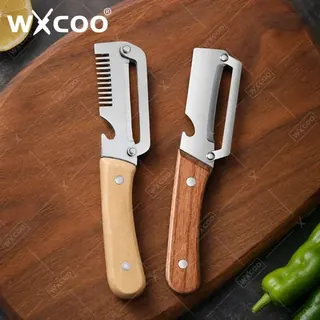 Peeler with wooden handleAliExpress