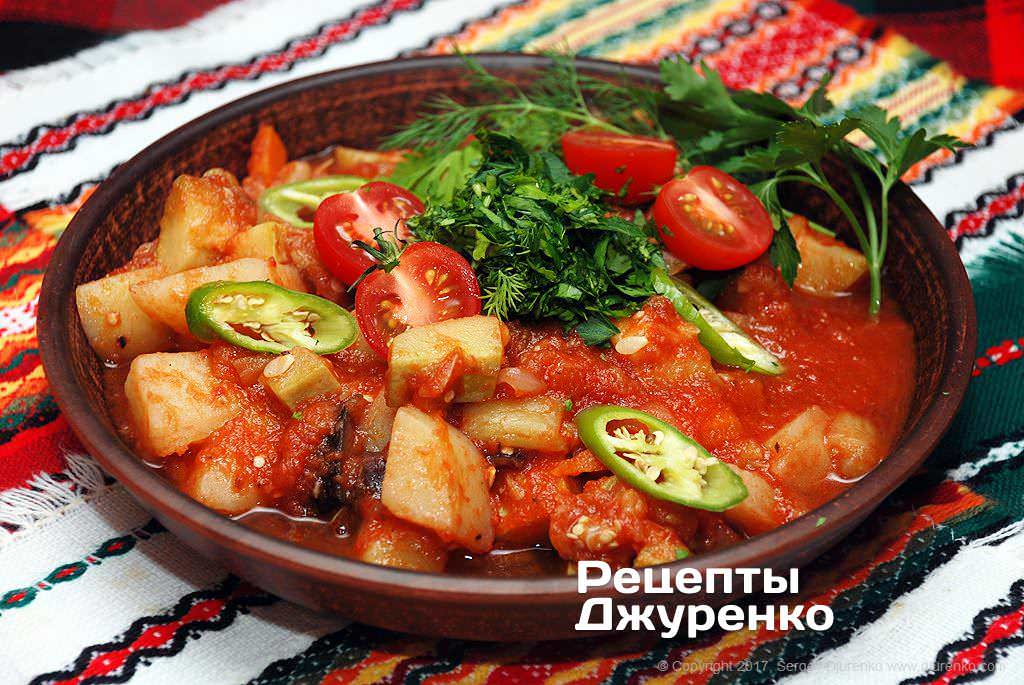
Vegetable Stew
Ingredients
2 servings
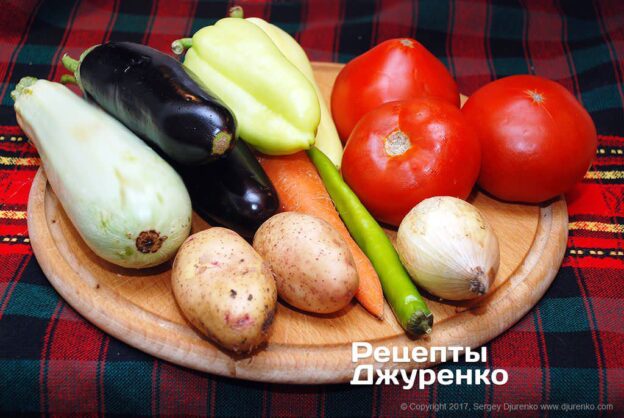
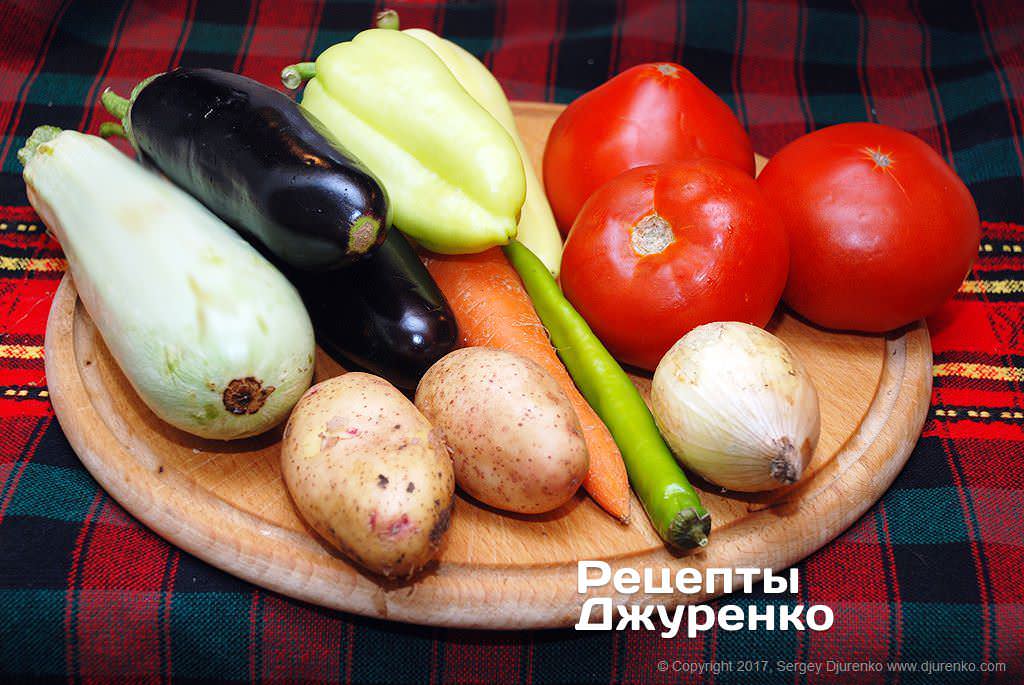
- Zucchini 1
- Eggplant 2
- Bell pepper 2
- Chili pepper 1
- Onion 1
- Carrot 1
- New potatoes 2
- Ripe tomatoes 4–5
- Mixed herbs (dill, parsley, cilantro) to taste
- Olive oil 50 ml
- Sugar ½ tsp (2 g)
- Ground coriander ½ tsp
- Salt, black pepper to taste
- Water up to ½ cup, as needed (100 ml)
- Cherry tomatoes 2–3, optional
Step-by-step recipe
Roasting the eggplant and peppers
If you like, you can add other vegetables to the recipe: garlic, root vegetables, celery stalks, pattypan squash, courgettes and so on. The vegetable stew will be even tastier. I strongly recommend using young zucchini, which don’t need peeling yet, and young eggplants with shiny dark skin and immature seeds. The tomatoes for the sauce should be as ripe and juicy as possible, so you don’t have to add water to the stew.
All the vegetables need to be browned or roasted first. Since eggplant soaks up oil like a sponge when fried, and I don’t want to add calories to the stew, I suggest roasting the eggplant.
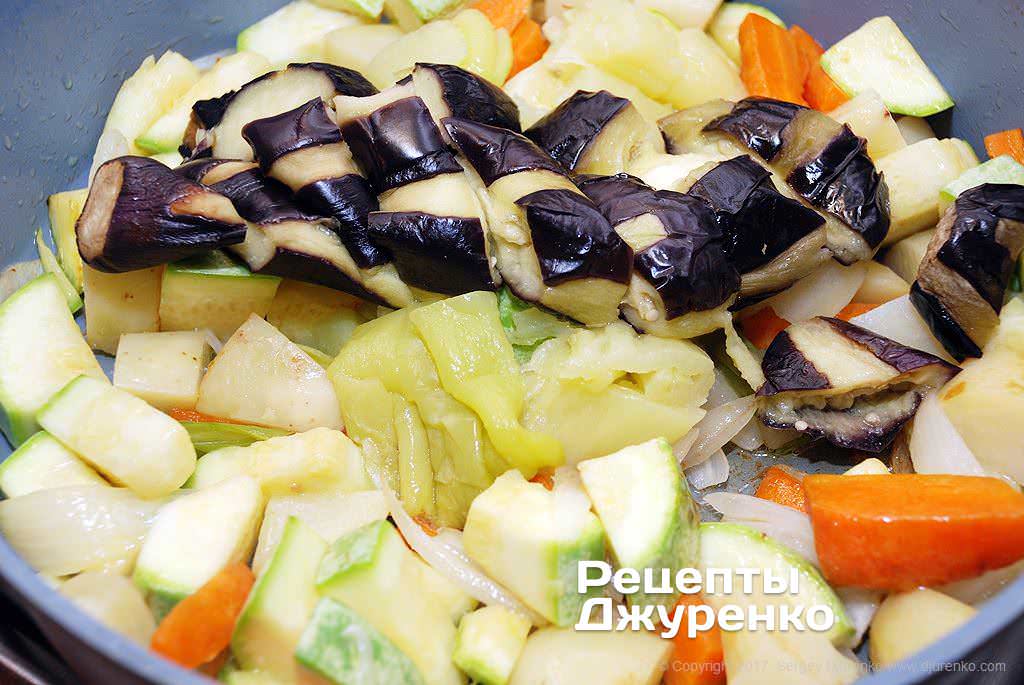
Roast the eggplants. Wash the young eggplants and use a sharp knife to peel off the skin in strips.
Put the eggplants on a plate and microwave them for 7–8 minutes. They’ll roast perfectly.
Prepare the bell pepper the same way: seed it and microwave for 5–6 minutes. Put the hot pepper in a plastic bag until it cools a little and the outer skin loosens; that skin needs to be removed.
Browning the vegetables
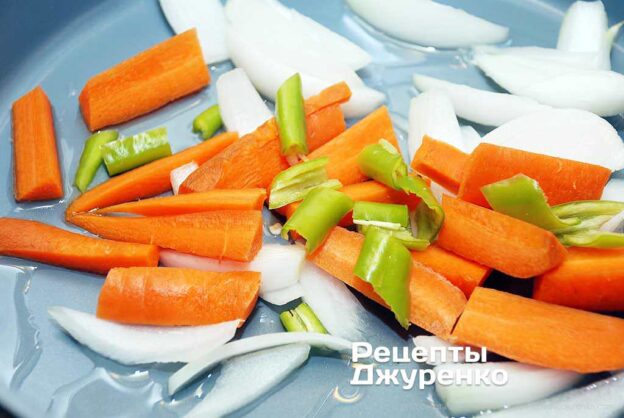
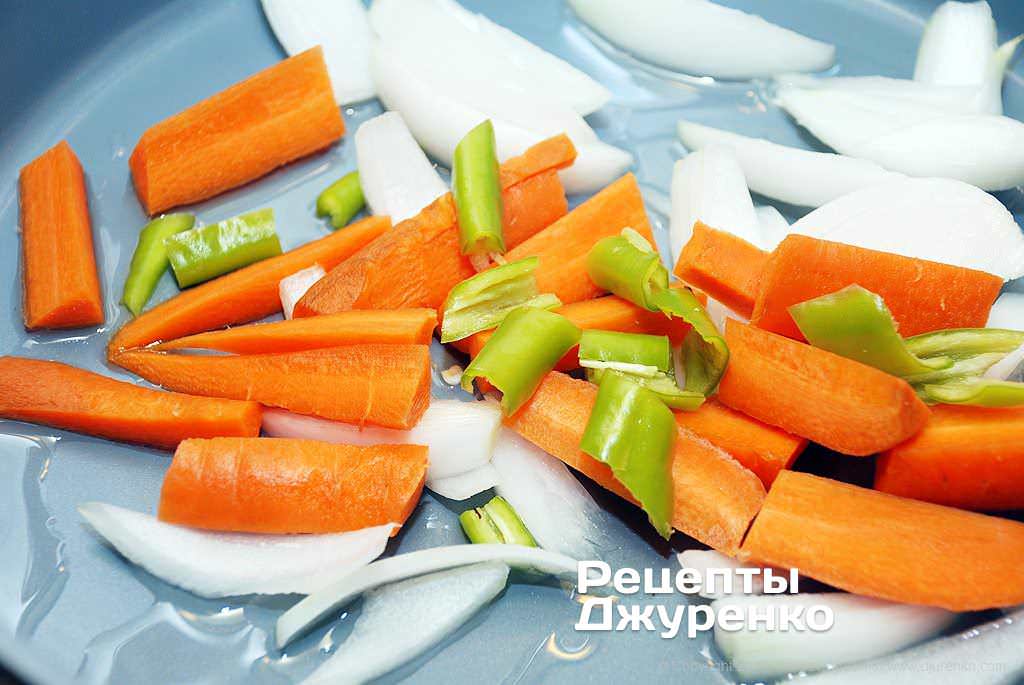
Peel the onion and carrot and chop them coarsely. Remove the seeds and white inner ribs from the chili pepper and cut it into small pieces, or better, thin strips. Heat the olive oil in a sauté pan or deep skillet and fry the onion, carrot and chili in it for 4–5 minutes.
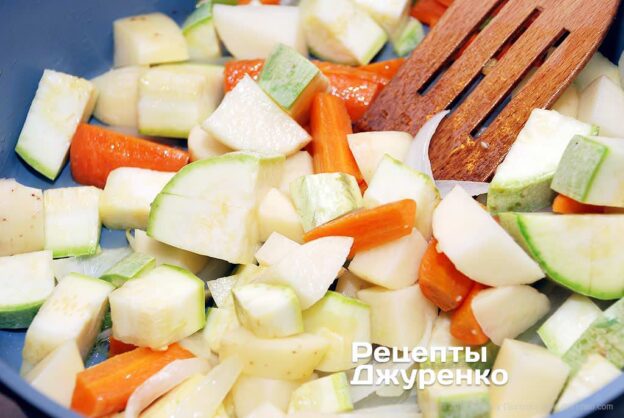
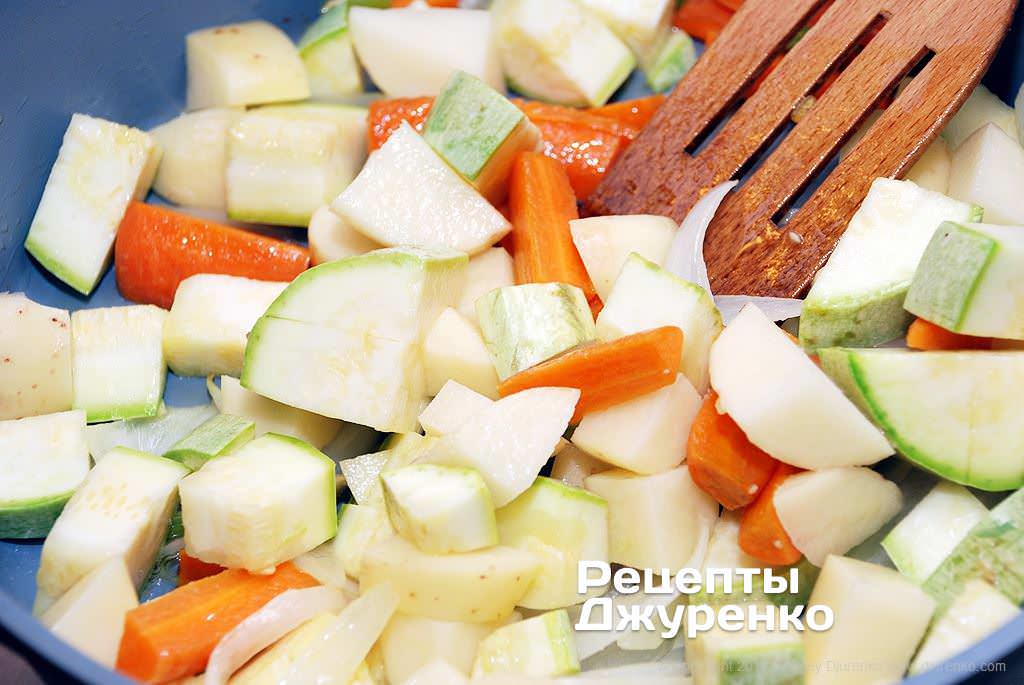
Cut the young zucchini, unpeeled, into large cubes. Peel a few new potatoes and cut them into cubes too, about half the size of the zucchini. Add the zucchini and potatoes to the fried vegetables. Stirring from time to time, fry them over medium heat, uncovered, until half cooked.
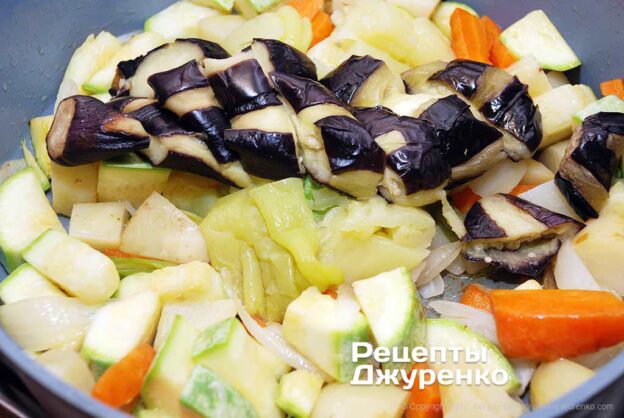
Cut the cooled, peeled bell pepper into strips and add it to the fried vegetables. Halve the eggplant, cut it into pieces and add it to the stew. Add ½ tsp of sugar (2 g), ½ tsp of ground coriander, and salt and black pepper to taste. Stir the vegetables, lower the heat and cover the sauté pan. Simmer the vegetables in their own juices for 5–10 minutes.
Tomato purée and simmering
While the vegetables simmer, make a purée from fresh ripe tomatoes.
Put the tomatoes in a deep bowl and cover with boiling water for 1–2 minutes, then cool them under cold running water. The skin will slip off easily. Peel and seed the tomatoes and cut out the white core.
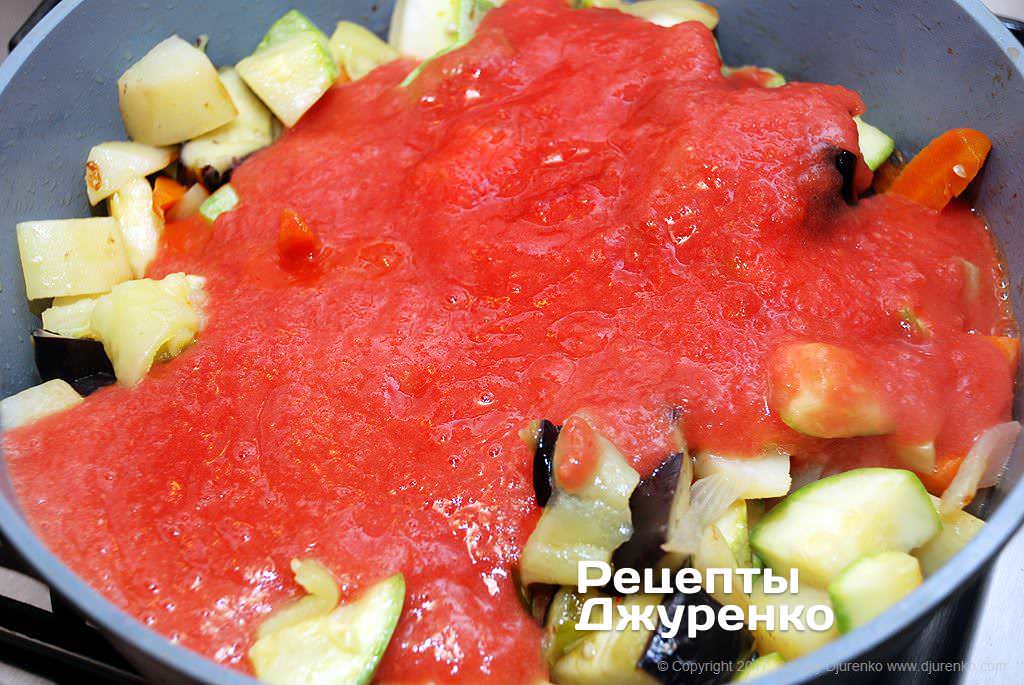
Put the tomato flesh in a blender and purée it. If there are hard bits in the purée, such as leftover seeds or white parts, it’s best to rub it through a sieve as well. Add the prepared tomato purée to the fried vegetables.
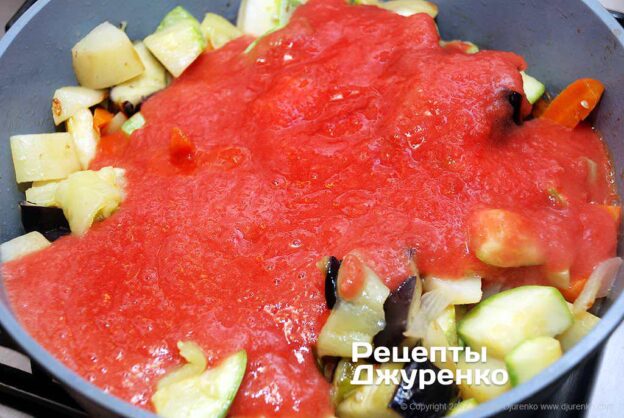
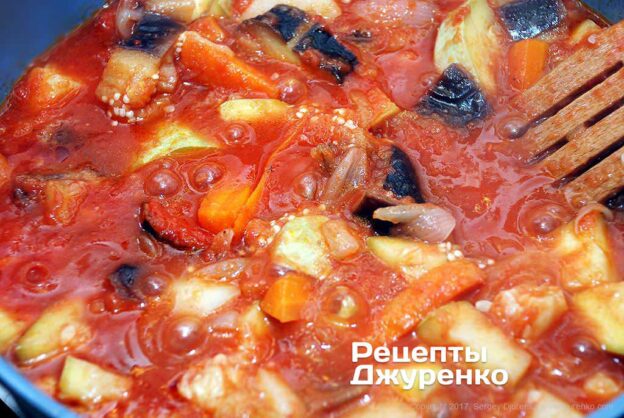
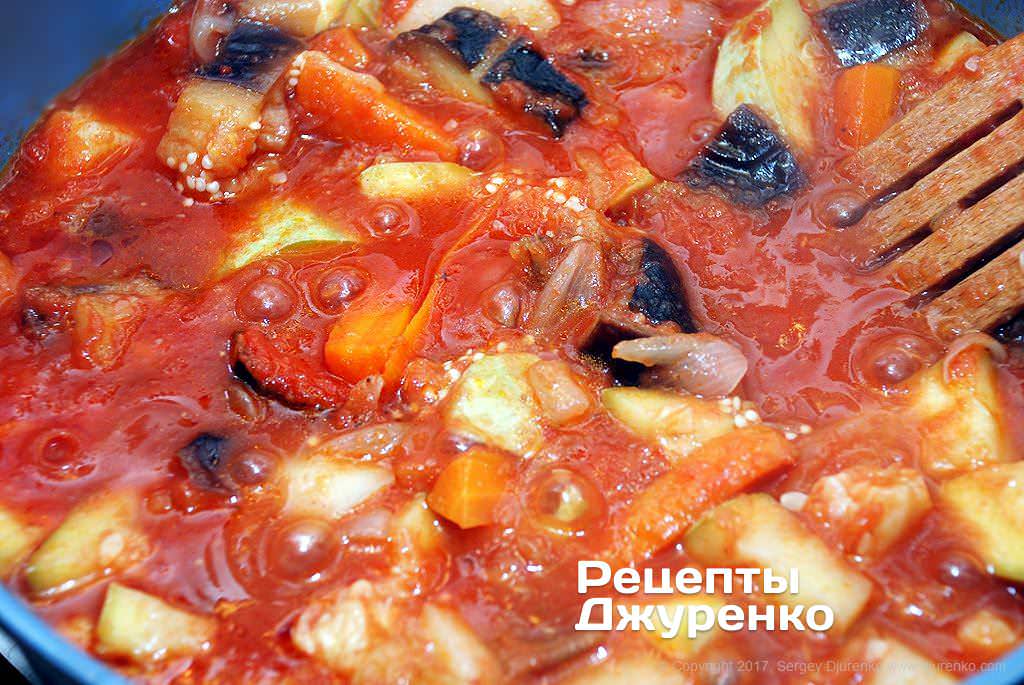
Bring the stew to a boil and simmer, covered, over low heat for at least 20 minutes. Vegetable stew usually cooks for up to 1 hour, but if the vegetables are young and well browned, 30 minutes is quite enough. If there seems to be too little liquid, you can add a little water, but no more than half a cup. Simmer the dish until fully cooked. It’s best not to stir the stew while it simmers, so the vegetables stay whole.
Then you have options. You can make the vegetable stew fairly thin and soup-like, the way goulash is made, or closer to a main course, like chili con carne. Everything should be just the way you like it. You can reduce any excess liquid by taking the lid off the sauté pan.
Serving
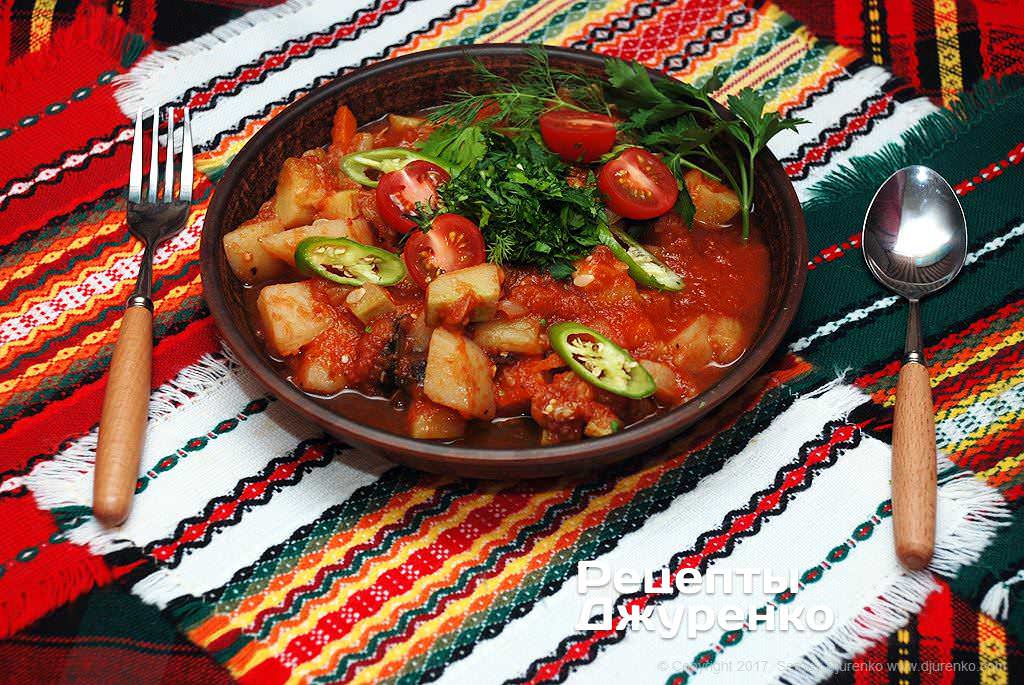
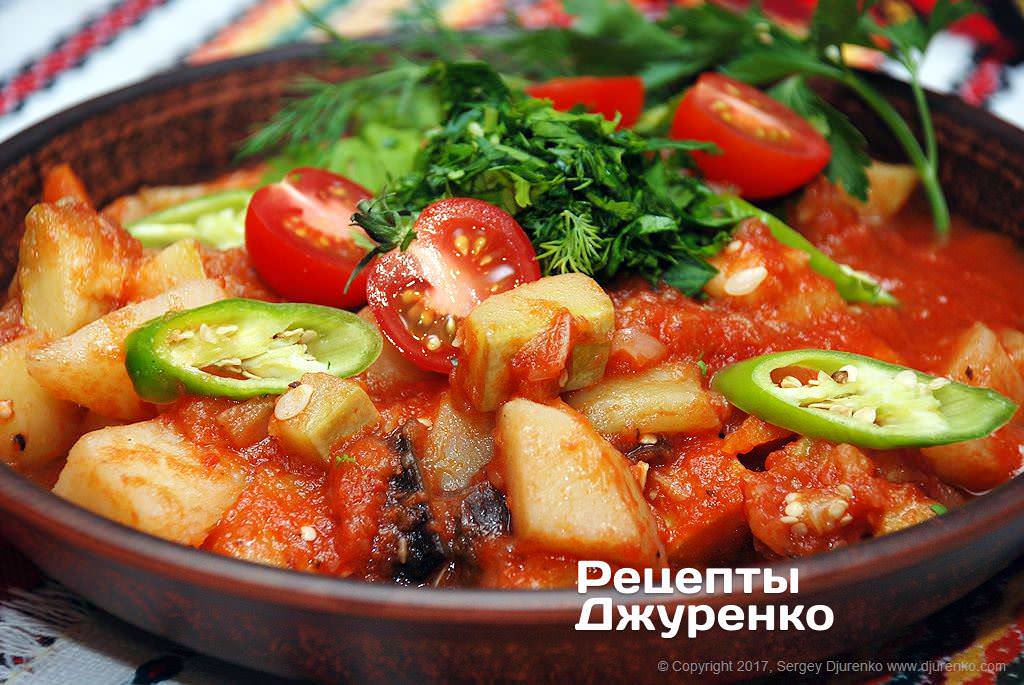
Ladle the finished vegetable stew into deep bowls. If you like it spicy, sprinkle the stew with a pinch of coarsely ground chili or slice a little fresh chili pepper over it. Be sure to sprinkle the stew with finely chopped mixed herbs.

Hot vegetable stew is a very tasty main course, and it can even be a thick soup if you leave a good part of the vegetable liquid in it. Since the stew contains no meat, it’s perfect for vegetarians. I should say that thanks to the tomato purée, the stew has quite an intense flavor, much stronger than lecso.
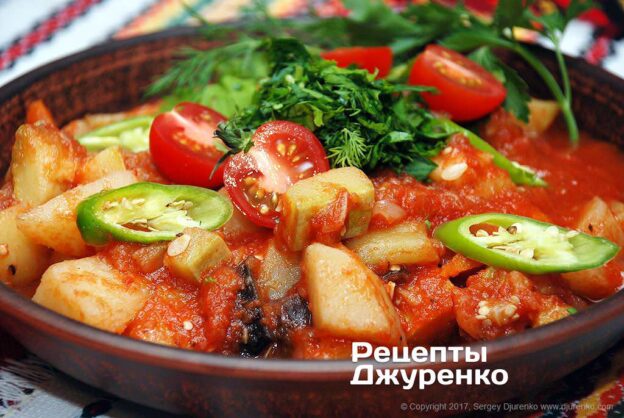
Vegetable stew should only be served hot. As a bonus, I suggest adding 2–3 halved cherry tomatoes.
Calories and macros
525 kcal
Serving ≈ 960 g
- Protein12 g10% of kcal
- Fat25 g47% of kcal
- Carbs52 g43% of kcal
100 g55 kcalProtein 1.2 gFat 2.6 gCarbs 5.4 g
Calculated from the recipe ingredients, excluding salt and spices. Data: USDA and Matvaretabellen.
How did you like this recipe?
To Get It Right
For browned potatoes
If you add the potatoes to the stew together with the zucchini, they stew rather than fry. To brown them, fry them for about 5 minutes before adding the zucchini.
Without eggplant or potatoes
The stew is tasty without eggplant too — readers have tried it. Without potatoes it comes out lighter.
With garlic
Readers add 3–4 garlic cloves to the stew along with the onion and carrot.
Out of season
Fresh tomatoes for the stew can be replaced with canned whole tomatoes, puréed. Readers roast peppers ahead and freeze them.
Have your own trick for this recipe?
Questions and answers
How long to simmer vegetable stew?
Once the tomato purée is in, at least 20 minutes over low heat, covered. Young, well-browned vegetables need about half an hour; others, up to an hour.
Can you make stew from zucchini alone?
If you cook it from zucchini alone, you’ll get something closer to zucchini caviar. For stew, the more different vegetables, the tastier and richer the dish.
How do you make vegetable stew with meat?
I showed how to stew vegetables with meat so they don’t fall apart in my vegetable stew with pork. Readers also add chicken thighs: they fry them for about 15 minutes over low heat and add them to the vegetables to simmer.
How do you make vegetable stew in a slow cooker?
Fry the vegetables on the Fry setting in the same order as in the sauté pan, then add the tomato purée and cook on the Stew setting for 30–40 minutes.
Can you add cabbage to vegetable stew?
Yes. Shred white cabbage and add it together with the zucchini and potatoes; it needs about the same time.