
Stewed Zucchini and Eggplant in Tomato Sauce
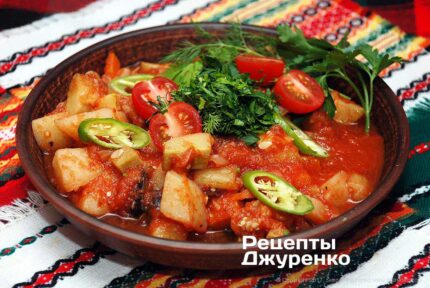
Stewed vegetables are a tasty, easy dish. It works as a main course, a side dish, or even an appetizer. In summer, when young vegetables are everywhere, it’s worth cooking chunky zucchini, eggplant, and peppers and letting them simmer in tomato pulp with spices. It’s delicious and healthy, a bit like a meatless stew with plenty of sauce.
In cooking, stewing is used in lots of dishes. What sets it apart from boiling and frying is that the food is heated in a very small amount of liquid. If the ingredients include juicy vegetables, you may not need to add any liquid at all. Then we say the food stews in its own juices.
In fact, stewing is something between boiling and frying. Moreover, before stewing meat or vegetables, they are often browned first, which is called braising. Food is stewed over low heat under a lid, usually for about half an hour. Though stewed meat can take several hours, especially if it’s old and tough.
When different foods stew together, over a long time their aromas and flavors blend into something wonderful and unique. It’s best to stew many ingredients at once, because the finished dish will taste richer. If you need to add liquid, don’t just reach for plain water. In most cases the dish will taste much better with broth, dry wine, or a ready-made sauce. Browning is worth doing too: it creates a crust, or a denser layer, on the surface of the pieces that holds the juices in.
Decide in advance that some of the vegetables will stay in whole pieces, while others will melt into the juices and form a sauce. Tomato pulp and onion are good for the sauce. Pieces of zucchini, eggplant, and pepper will stay whole.
In season there are always young zucchini and eggplants, and sweet, fleshy peppers. That’s the best set of vegetables for this dish. If you have young potatoes with small tubers, you can certainly use them. For aroma, add a few chopped garlic cloves, and for heat, a little fresh hot pepper. The ideal liquid for stewing is a puree of very ripe tomatoes, which forms the base of a thick sauce.
A simple recipe for stewing vegetables in their own juices with spices and tomato.


Ingredients
2 servings
- Vegetables
- Zucchini 1
- Young eggplant 2–3
- Sweet pepper 2
- Onion 1
- Ripe red tomatoes 2–3
- Garlic 1–2 cloves
- Hot pepper to taste
- Oil and spices
- Vegetable oil 4 tbsp
- Sweet ground paprika 0.5 tsp
- Sugar 1 tsp
(5 g) - Salt, black pepper to taste
- Water a few tbsp, if needed
- For serving
- Parsley, dill, green onion to taste
Step-by-step recipe
Fry the vegetables
I made these stewed vegetables from seasonal young zucchini, eggplants, and sweet peppers, and the sauce came from onion and the pulp of very ripe tomatoes. The nice thing is that the whole set can be bought at a local market or picked from the garden. The dish turns out very tasty, a bit like a more elaborate lecho with eggplant, peppers, and zucchini. You can eat it warm or let it cool, as you like.
Peel the onion and cut it into very thick strips, almost wedges. This is how apples are cut for charlotte.

Heat 1 tbsp vegetable oil in a skillet and fry the sliced onion until it just starts to turn golden.
Peel the sweet pepper and cut it into large pieces. You can use any pepper that’s available at that time of year.
Add the pepper slices to the onion and keep frying the vegetables.

I recommend making the stewed vegetables slightly spicy. Add a hot pepper pod cut into rings, to taste.
Fry until the onion is soft and nicely browned and the pepper is lightly fried but keeps the shape of its pieces. Transfer the vegetables to a separate plate.

Add 1 tbsp oil to the skillet.
Wash and dry the zucchini and trim the ends. Cut it crosswise into rounds 1.5–2 cm thick.
Fry the zucchini pieces on both sides until golden. Don’t cook the zucchini until soft, or it will fall apart in the finished dish. When served, the zucchini pieces should be al dente. Transfer the fried zucchini to a plate.

Wash the eggplants and trim the ends. Cut them crosswise into pieces 2–2.5 cm thick.
Drizzle the eggplant pieces with 2 tbsp vegetable oil and toss. I do this because eggplant soaks up oil like a sponge when frying. Sometimes frying a couple of eggplants can use up a whole cup of oil, which makes stewed vegetables far too high in calories.
Fry the eggplant on both sides until golden. You can stir the pieces with a spatula, like fried potatoes.


Stew in tomatoes
Now add the fried onion with pepper back to the skillet.
Cut the zucchini rounds into a few pieces so their size isn’t too different from the other vegetables. Add the zucchini to the skillet.
Season the vegetables with pepper and a little salt. I recommend adding 0.5 tsp sweet ground paprika and 1 tsp sugar (5 g).

While the vegetables are frying, scald a few very ripe tomatoes with boiling water. Then peel off the skin.
Remove the seeds and any white inner parts. Blend the tomato pulp into a puree.
Finely chop 1–2 garlic cloves and add them to the fried vegetables.
Pour the tomato puree over the vegetables and stir.

Put the skillet on the heat and warm it until the liquid starts to show signs of simmering.
Cover the skillet with a lid and reduce the heat. Stir occasionally and stew the vegetables under the lid for about 40 mins. Most likely you won’t need to add any liquid, but if necessary you can pour in a few tablespoons of water.
At the very end, taste the sauce. You may need a little more salt and pepper.
When the stewed vegetables are done, you can clearly see the zucchini, pepper, and eggplant standing out in the mix. The pieces have kept their shape perfectly. The tomato pulp and onion have formed a thick, very fragrant sauce. Inside the larger pieces there’s still a barely noticeable firmness.


Serving
Arrange the vegetables on plates and spoon the sauce over them.
Finely chop the dill and parsley and slice the green onion. Sprinkle the herbs over the vegetables on the plate and serve right away. They’re very good with fresh bread.
Calories and macros
450 kcal
Serving ≈ 840 g
- Protein8 g8% of kcal
- Fat30 g64% of kcal
- Carbs29 g28% of kcal
100 g53 kcalProtein 1 gFat 3.5 gCarbs 3.5 g
Calculated from the recipe ingredients, excluding salt and spices. Data: USDA and Matvaretabellen.
To Get It Right
Tomatoes for the sauce
The ideal liquid for stewing is a puree of very ripe tomatoes, which forms the base of a thick sauce. Out of season, canned tomatoes in their own juice work well. Just blend them.
With potatoes
If you have young potatoes with small tubers, you can add them to the zucchini and eggplant.
How long they keep
In a closed container in the refrigerator, 2–3 days. The next day the vegetables are even better, as the flavors have had time to blend.
Have your own trick for this recipe?
 Pull chopper for garlic and onionAliExpress
 Oil sprayerAliExpress
 Kitchen scale up to 5 kgAliExpress
 Vegetable chopper with handleAliExpress
 Measuring cups and spoonsAliExpress
 Peeler with wooden handleAliExpress
Questions and answers
How long should you stew vegetables?
About 40 minutes under a lid over low heat, counting from when the sauce starts to simmer. In that time large pieces keep their shape, and inside there’s still a barely noticeable firmness.
Which vegetables go well together for stewing?
The best set is young zucchini, eggplant, and sweet fleshy pepper, which stay as whole pieces. The tomato pulp and onion blend with the juices and form the sauce. Add garlic for aroma and a little hot pepper for heat.
Should you fry the vegetables before stewing?
Yes. Browning creates a crust on the surface of the pieces that holds the juices in, so the vegetables don’t fall apart. It’s easier to fry each kind separately.
Do you need to add water when stewing vegetables?
Most likely not: juicy vegetables and tomato puree stew in their own juices. If you do need liquid, use broth or a little dry wine instead of water.