
Glass Noodles with Vegetables
Recently we made a very tasty meatless dish: funchoza (glass noodles) with vegetables. We used store-bought dried noodles. We also chose vegetables that are available regardless of the season, plus shiitake mushrooms, which you can replace with button or oyster mushrooms.
When my daughter and I were cooking dinner, we bought sweet peppers, a red one and a yellow one. You can use any color, it doesn’t matter. For a little heat we added hot red pepper to the dish; whether to use it and how much is entirely up to you. Carrot and green onion worked very well to flavor the vegetable oil.
We fried the vegetables in sesame oil. It’s pressed from sesame seeds. If the oil is cold-pressed, it is very fragrant and pleasant in taste. Refined kinds usually have a faint sweetish, nutty smell. Sometimes you find oil from toasted sesame, which is dark.
Store-bought glass noodles have long been a common sight in shops. They are mistakenly called rice noodles, although rice is very rarely used to make them. The main ingredient is the starch of mung beans. Much less often, cheaper starches from corn, potato and so on are used. Good noodles are white and become transparent after boiling.
Buy dried noodles in large stores, checking the reviews first. They say the best producers are in the city of Longkou, Shandong province, so there is hope they are well controlled. Buy thin white noodles, wound into a tight skein. They are quite stiff but cook easily.
Springy, transparent “glass” noodles are an excellent base for main dishes. Sometimes we make glass noodles with chicken, a hearty, simple dish with only easy-to-find ingredients. Good noodles, strictly speaking, don’t need boiling; it’s enough to soak them in hot water. You can do that while the vegetables are frying. In the last step the noodles are stir-fried with the vegetables and sauce in the wok, and this wonderful dish of glass noodles with vegetables is ready to serve.
A tasty, filling Chinese main dish: stir-fried vegetables with glass noodles.


Ingredients
2 servings
- Noodles and vegetables
- Glass noodles (dried) 120 g
- Carrot 1
- Sweet pepper 2
- Hot red pepper 0.5–1
- Shiitake mushrooms 100 g
- Green onion 2–3
- Oil, sauces and serving
- Sesame oil 3–4 tbsp
- Light soy sauce 2 tbsp
- Mushroom sauce 1 tbsp
- Lime juice of 1/4 and a slice for serving
- Sesame seeds for serving
Step-by-step recipe
Preparation
Since the vegetables are cooked quickly and aren’t heated for long, buy the best-quality carrots, peppers and mushrooms. If you like, you can use other store-bought mushrooms instead of shiitake: oyster mushrooms, button mushrooms, or preserved wild mushrooms.
Prepare all the ingredients in advance.

Remove the seeds from the sweet pepper and cut it into strips.
Peel the carrot and grate it, preferably into strips too.
The hot pepper is optional, but with it the dish gets a subtle, piquant taste. Peel the hot pepper and cut it into thin, short strips.
The mushrooms can be soaked first and then cut in half.
The green onion can be used with the white part: just cut it lengthwise into 4-5 pieces.


Stir-frying the vegetables
A Chinese cast-iron wok without a lid is handy for this. Pour sesame oil into the wok, 3-4 tbsp is enough. Heat the oil.
Then add the cut hot pepper and green onion. Stirring, fry the onion and chili for 2-3 mins. The point of these is to flavor the sesame oil for frying: the dish should be very fragrant and slightly spicy.

Then add the cut carrot to the wok. Fry the carrot until soft. Stir the vegetables fairly often so they don’t burn and fry evenly.
By the way, a wok is designed so that the heat goes into a small, thick bottom while the sloping, spherical sides stay relatively cool. So for better frying, keep the food in the center, where the hot oil collects.

Add the sweet pepper cut into strips to the fried carrot. It is usually quite juicy, and liquid may appear while it fries in the wok. That’s normal, it evaporates fairly quickly. Fry the pepper until soft and the first signs of browning appear.

Next, add the mushrooms to the vegetables. A mushroom can hold a lot of moisture, and once frying starts it will run out into the dish. But it also evaporates well. Mushrooms fry quickly, and 5-6 mins is enough for them to be fully cooked.

After this you can add the sauces to the wok. We added 2 tbsp light soy sauce and 1 tbsp mushroom sauce.
We also squeezed in the juice of a quarter of a lime, which gives the glass noodles with vegetables an original and very pleasant taste. Fry the vegetables in the sauce for 3-4 mins.


Noodles and serving
Boil the noodles 5-6 mins before the vegetables are done, as for glass noodle salad. For this dish we boiled the noodles in plenty of water for 3 mins.
Then we drained them in a colander and rinsed them under cold running water. If you skip this, the noodles stick into a lump and can’t be mixed with the fried vegetables.

Put the boiled noodles into the wok with the vegetables. They are quite hard to mix; this is usually done with chopsticks. But we managed fine with two forks, which turned out to be quite convenient.
Carefully and unhurriedly mix the noodles and vegetables. All the ingredients should be evenly distributed.
By the way, if you think the dish needs more heat, go ahead. Chinese dishes are often at their best when they’re noticeably spicy.

Fry the vegetables and glass noodles for another 4-5 mins, stirring constantly. After that the dish is ready. Serve it right away, while it’s hot.

Glass noodles with vegetables are usually served on an ordinary plate or in a large hemispherical bowl. Put the noodles and vegetables on a serving plate and sprinkle with sesame seeds. This dish is traditionally eaten with chopsticks, but given the circumstances, a fork will do. Before serving, add a slice of lime to the plate.


Calories and macros
285 kcal
Serving ≈ 310 g
- Protein3 g5% of kcal
- Fat1 g3% of kcal
- Carbs63 g92% of kcal
100 g94 kcalProtein 1.1 gFat 0.3 gCarbs 20.5 g
Calculated from the recipe ingredients, excluding salt and spices. Data: USDA and Matvaretabellen.
To Get It Right
Vegetables and mushrooms
The vegetables are barely cooked, so take the freshest ones. Instead of shiitake you can use oyster mushrooms, button mushrooms or preserved wild mushrooms. You can also add zucchini, Chinese cabbage or green beans, cut into strips the same way.
Which sesame oil to use
The most fragrant is unrefined, cold-pressed oil. Refined oil has a faint smell with a slight nutty note, while dark oil from toasted sesame is very aromatic, so you need less of it. If you have no sesame oil, fry in refined sunflower oil; the sesame seeds at serving will give the sesame flavor.
Dried shiitake
Cover dried mushrooms with warm water for about 30 minutes until soft, squeeze lightly and cut in half. It’s best to cut off the tough stems.
To make the noodles easier to mix
After rinsing, long glass noodles are easy to cut into 2-3 pieces with scissors. If the noodles have stuck together anyway, pour boiling water over them and rinse again with cold water.
Have your own trick for this recipe?
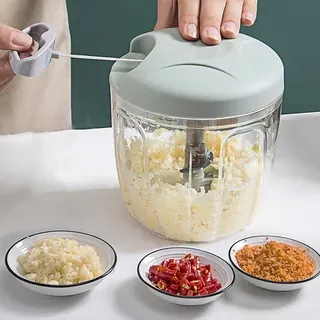 Pull chopper for garlic and onionAliExpress
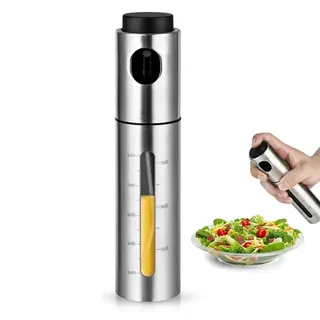 Oil sprayerAliExpress
 Kitchen scale up to 5 kgAliExpress
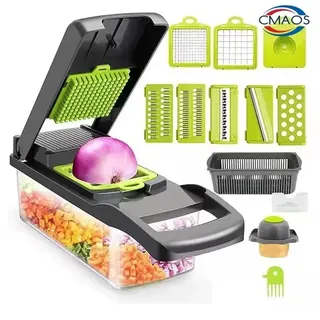 Vegetable chopper with handleAliExpress
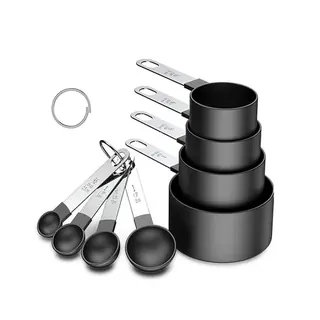 Measuring cups and spoonsAliExpress
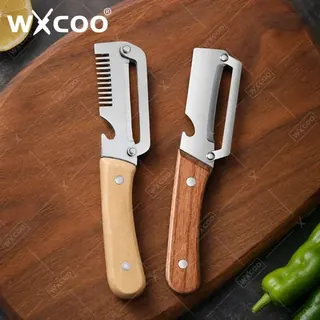 Peeler with wooden handleAliExpress
Questions and answers
How long should you boil glass noodles?
For this dish we boiled the noodles for 3 minutes in plenty of water. Good noodles don’t need boiling at all: just cover them with hot water while the vegetables fry, usually for 5-7 minutes. Either way, they are rinsed with cold water afterwards.
How do you choose good glass noodles?
Take thin white noodles wound into a tight skein, from large stores, checking the reviews. They say the best producers are in the city of Longkou, Shandong province. Good noodles become transparent after boiling.
Which sauce is best for glass noodles with vegetables?
We use 2 tbsp light soy sauce, 1 tbsp mushroom sauce and the juice of a quarter of a lime. If you have no mushroom sauce, replace it with oyster sauce or add another spoonful of soy sauce.
Can you make glass noodles with vegetables in a frying pan?
Yes, if you have no wok: take a wide, thick-bottomed pan and fry over high heat, stirring often, so the vegetables fry rather than stew.