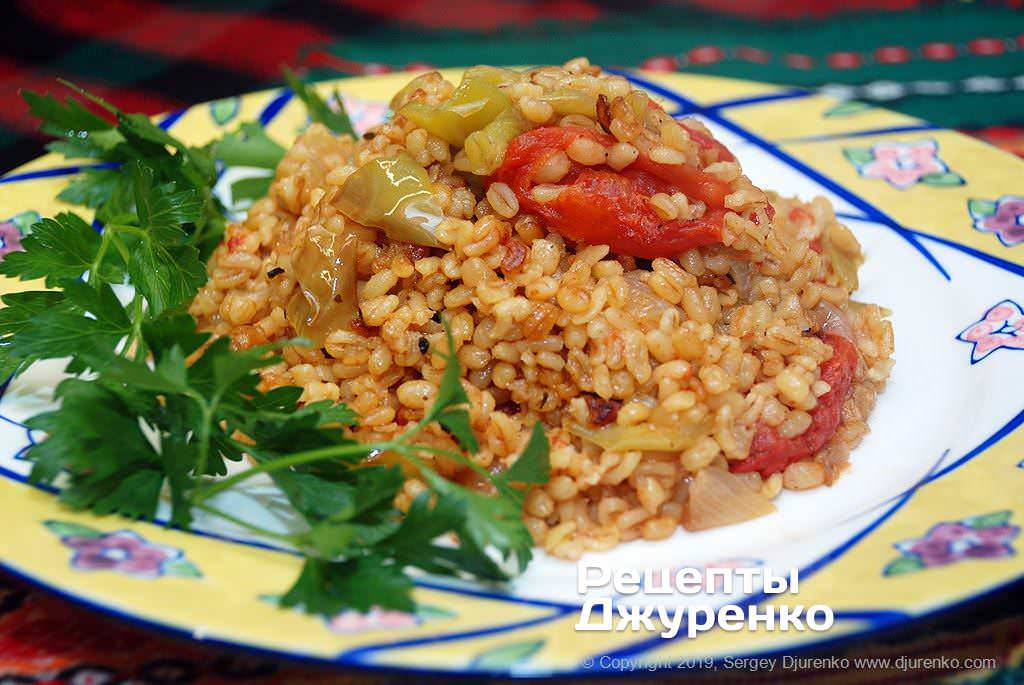
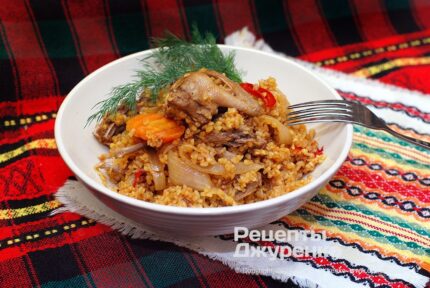
Vegetable Bulgur Pilaf
In the East, pilafs are as varied as borscht is for us. A pilaf made from bulgur, barley, other grains, or even pasta is quite common, though dishes made from rice are still far more frequent. Wheat bulgur is widespread and turns up in many dishes across the Middle East: soups, side dishes, pilafs. I read somewhere that the richness of a feast table used to be judged by how many kinds of pilaf were served.
The name pilaf, or pilav, comes from a Sanskrit word meaning cooked rice. Put simply, it is a staple food. Traditionally, pilafs are dishes of boiled grain, not only rice, common across Asia. The main and defining quality of a pilaf is that it is fluffy. Whatever it is made with, what matters is that the grain isn’t sticky and that the added fat keeps the grains from clumping.
In Turkey, bulgur pilaf is cooked often. It is frequently made without meat, with fresh tomatoes and other vegetables. It probably can’t be called strictly vegetarian, since it is cooked in real butter. Unlike rice, it is usually very hard to say in advance how much water bulgur will absorb. So it’s best to cook the grain until done, then get rid of any leftover moisture by steaming the finished dish and letting it rest.
For pilaf it’s better to use whole grains treated with hot water rather than cracked bulgur. Grains prepared by the traditional method are already cooked and then dried, so for bulgur pilaf you only need to restore the moisture. For fluffy grain dishes I add roughly 1.5 times more water than grain by volume. With the steaming at the end, it all turns out great.
Make bulgur pilaf with coarse grains. In Turkey you can find Başbaşı Bulgur, whole uncracked grain. It is the ideal choice for pilaf. Coarse-ground bulgur, İri Pilavlık Bulgur, is also suitable. Sometimes you can find bulgur made from “dark” wheat, or unpolished.
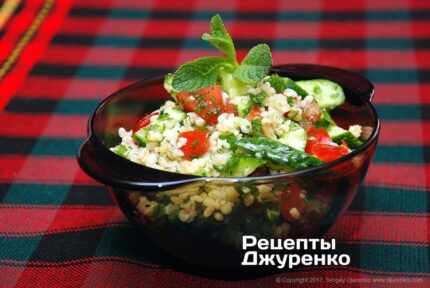
From a nutritional point of view, bulgur is a “poor” grain: low in calories, with a low glycemic index. It is high in fiber and trace elements; in other words, it’s healthy. It is an important part of everyday eating, added to tabbouleh salad, ezogelin lentil soup and so on. By the way, when bulgur appeared in our stores, it pushed rice aside quite a bit in our home cooking. Bulgur with vegetables became our “go-to” dish for a quick breakfast.
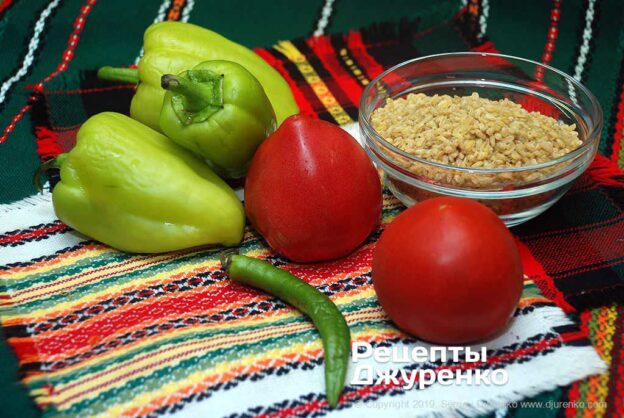
Ingredients
2 servings
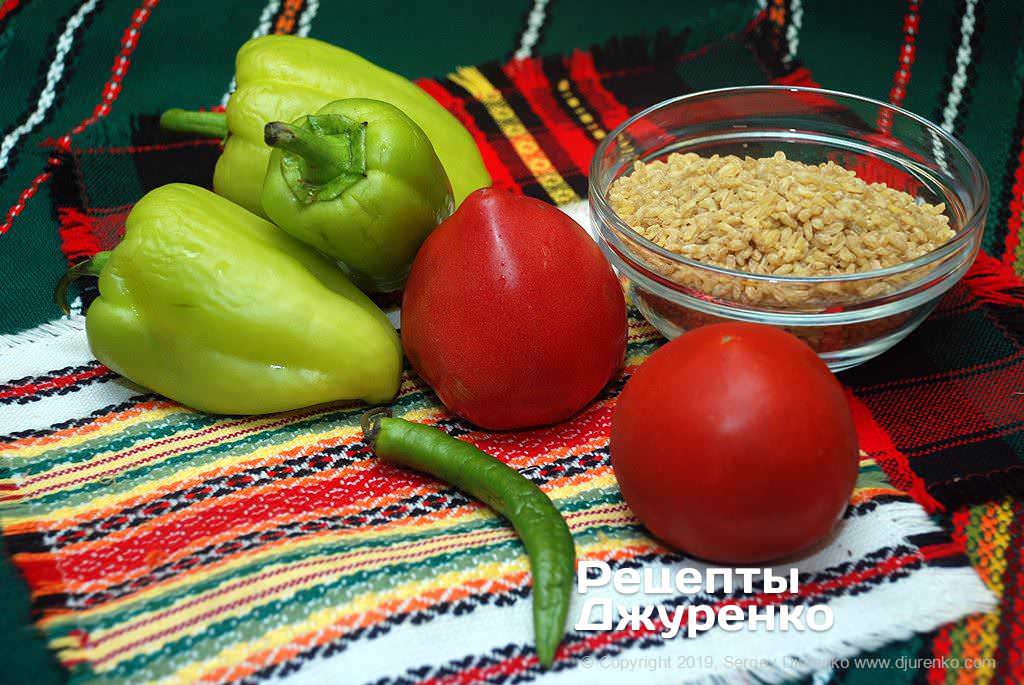
- Whole-grain bulgur 1 cup
(170 g) - Large ripe tomatoes 2
- Green bell pepper 2-3
- Hot pepper 1
- Large onion 1
- Butter 50 g
- Salt, black pepper to taste
Step-by-step recipe
For a tasty, fluffy pilaf, buy the best-quality bulgur you can, and there is plenty to choose from. Look for large, uncracked wheat grains of an amber color, with no impurities and very low moisture. Use fresh, firm green peppers and ripe tomatoes, ideally with few seeds and not too juicy. I recommend adding hot pepper, even more than usual.
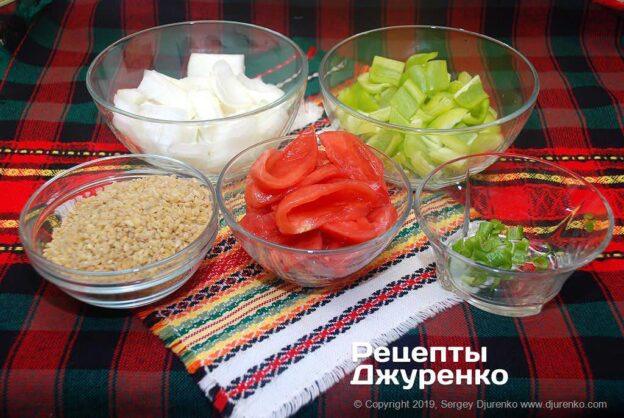
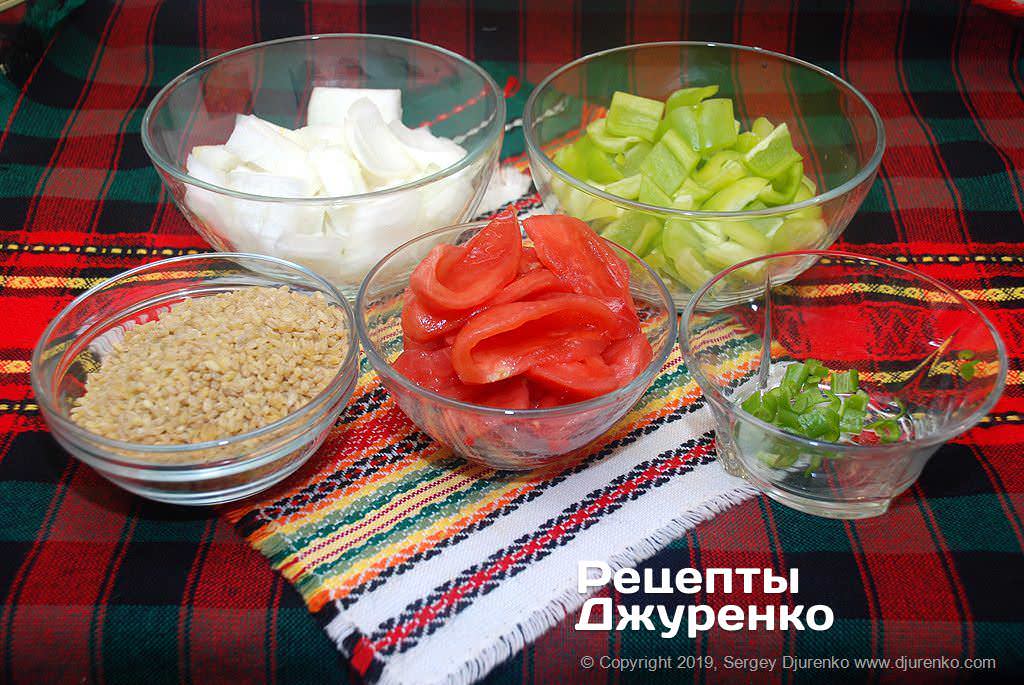
Vegetables fry quickly, so it’s best to cut them all up beforehand and set them out in separate bowls. Peel the onion and cut it into large cubes. Seed the green pepper and cut it into fairly large pieces. Peel the tomatoes with a knife, cut them into wedges and scrape out the seeds thoroughly, as they release a lot of moisture. Remove the seeds and white inner membranes from the hot pepper and chop it with a knife.
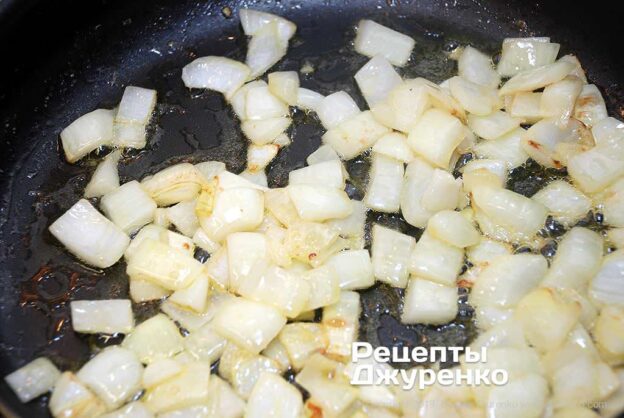
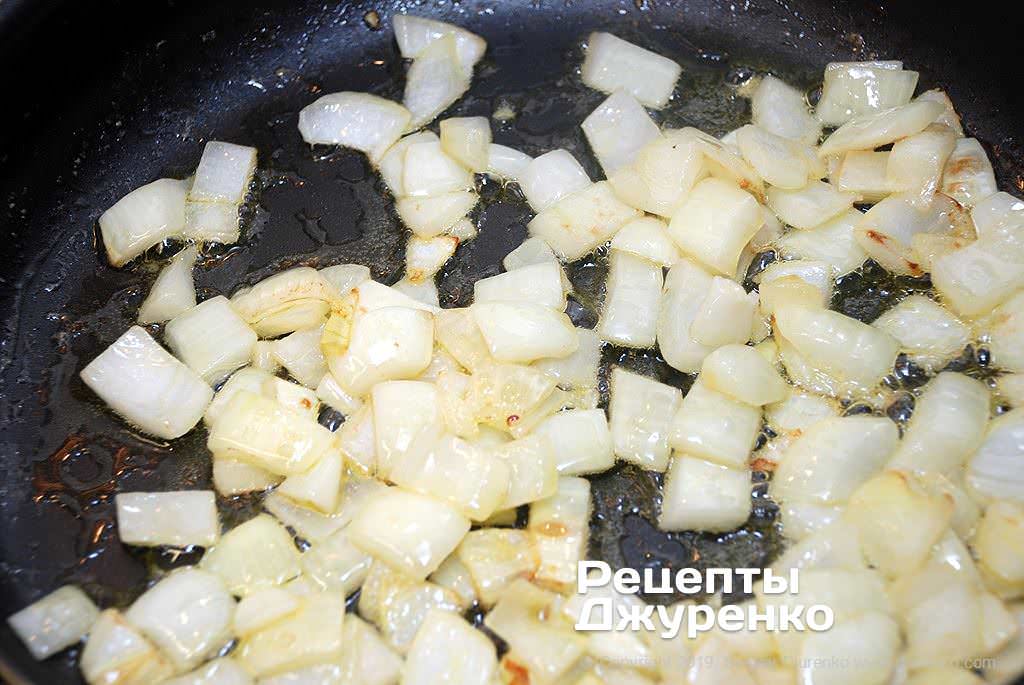
Melt the butter in a frying pan or a small kazan. Add the chopped onion and fry over medium heat until it starts to turn a nice golden color and softens. Stir the onion as it fries: butter tends to burn onion a little, and you can miss the moment.
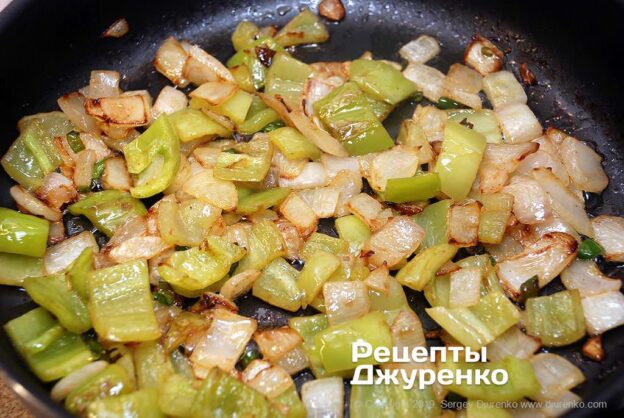
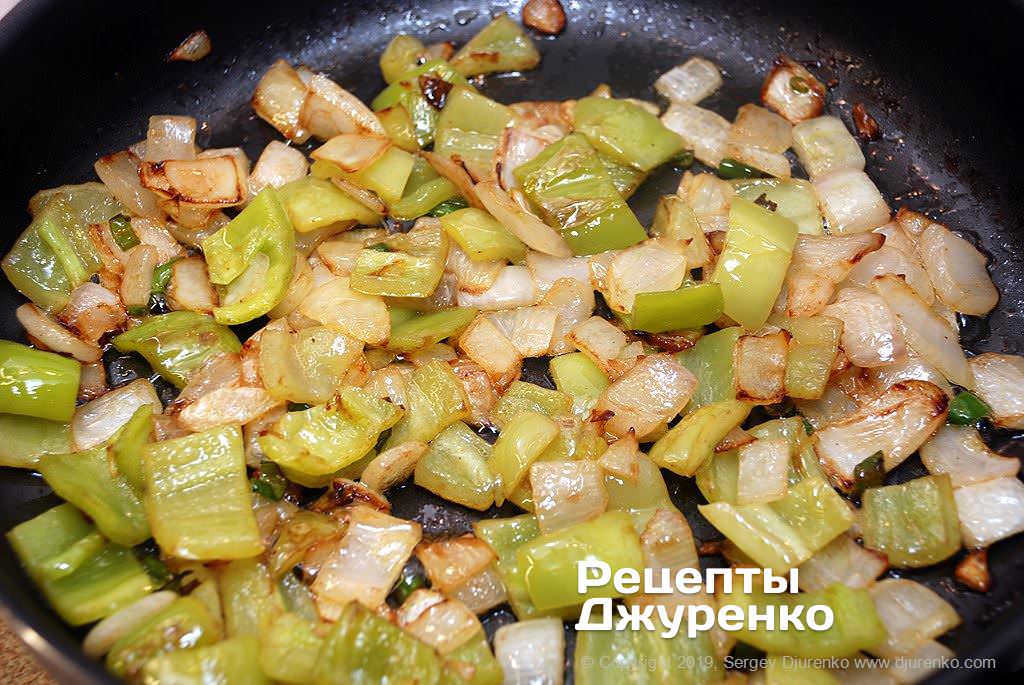
Add the chopped green bell pepper and the finely chopped hot pepper. Keep frying the vegetables. Don’t rush. The pepper and onion should be well fried and start to brown. If the vegetables fry too fast, lower the heat further. As a result, the pepper and onion will turn golden brown and shrink a little as they lose moisture.
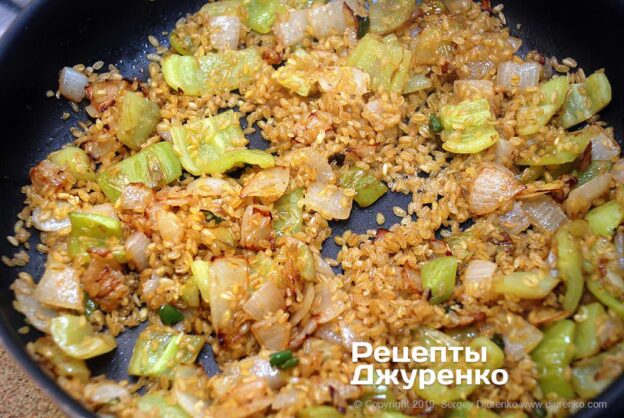
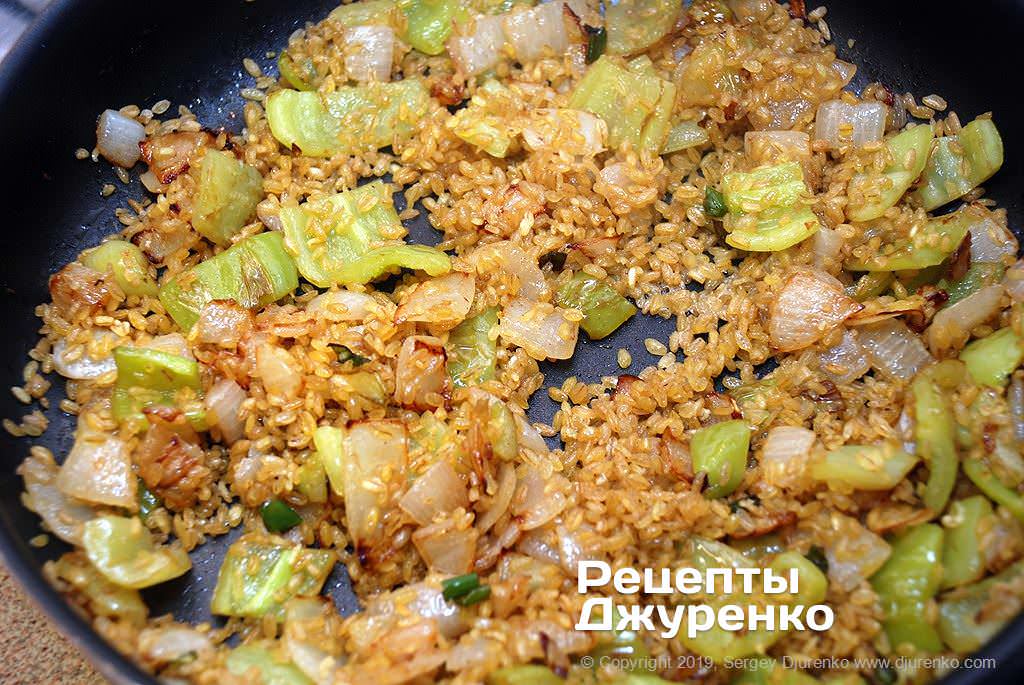
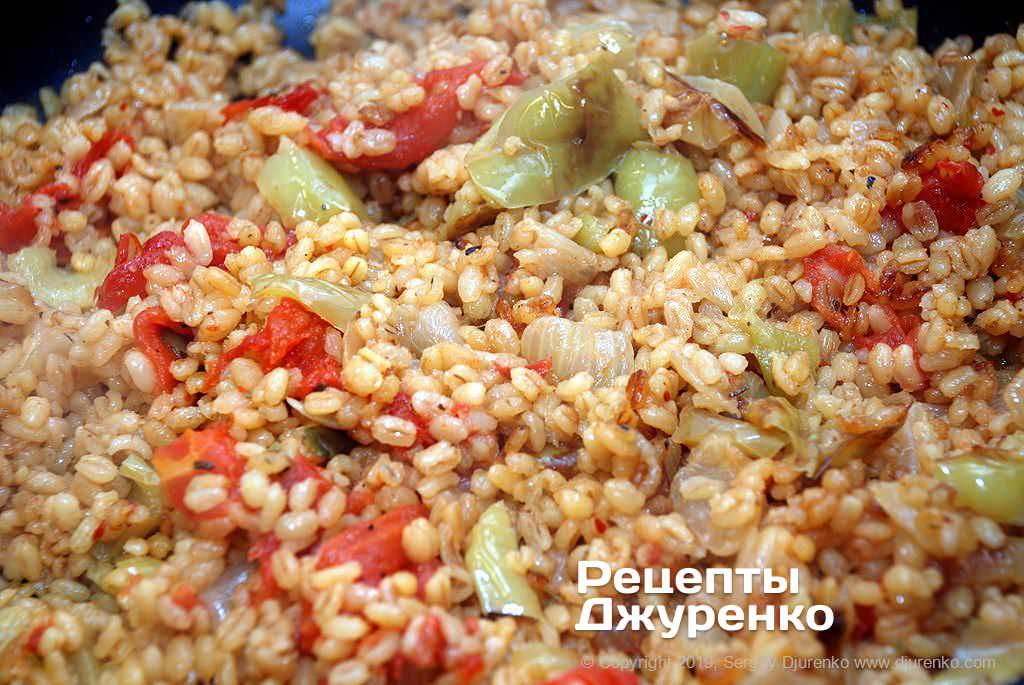
Next comes a very important step: toasting the bulgur. Add the grain to the onion and peppers, stir, and fry for 4-5 mins, stirring the mixture. A pleasant nutty aroma appears, and the grains become coated in a film of oil.
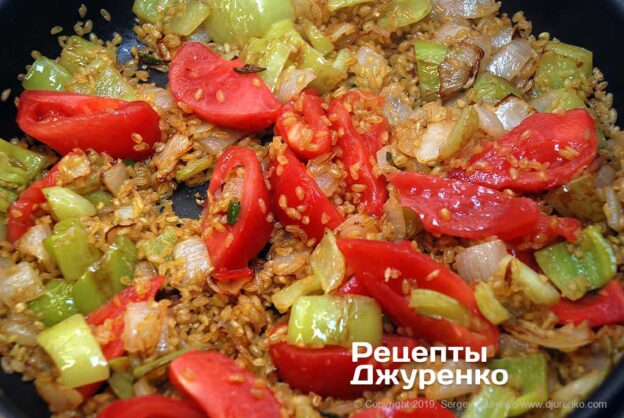
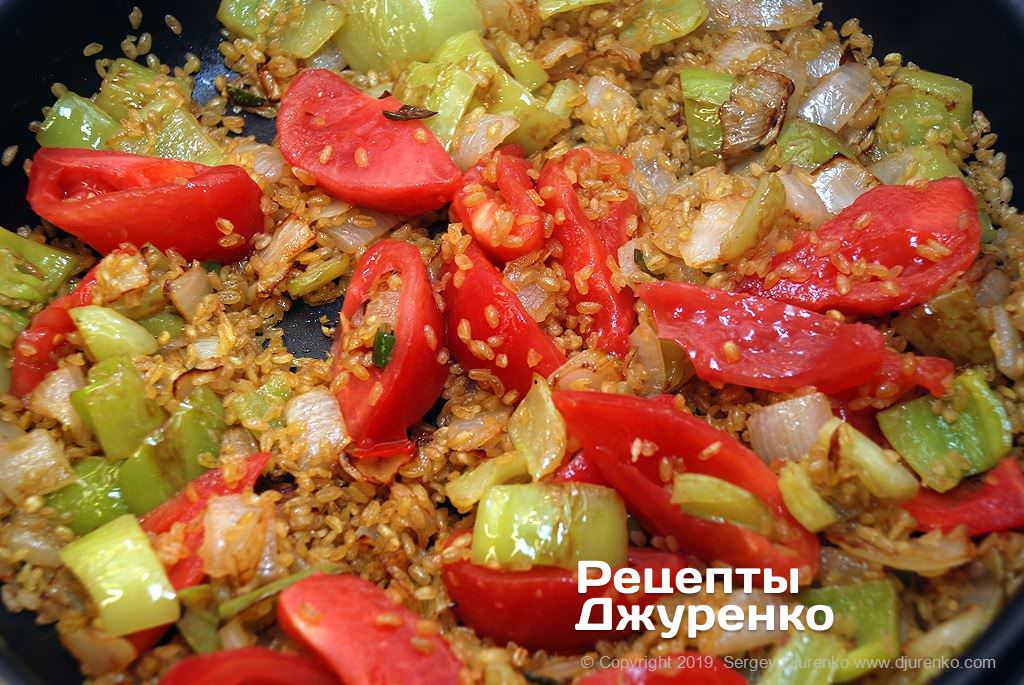
Add the tomato wedges, fry for 2-3 mins, then immediately add 1.5 cups of water (300 ml). Season with salt and pepper, stir and cover with a lid. Cook the grain with the vegetables at a very gentle simmer. After 15-20 mins the grain will have absorbed almost all the moisture.
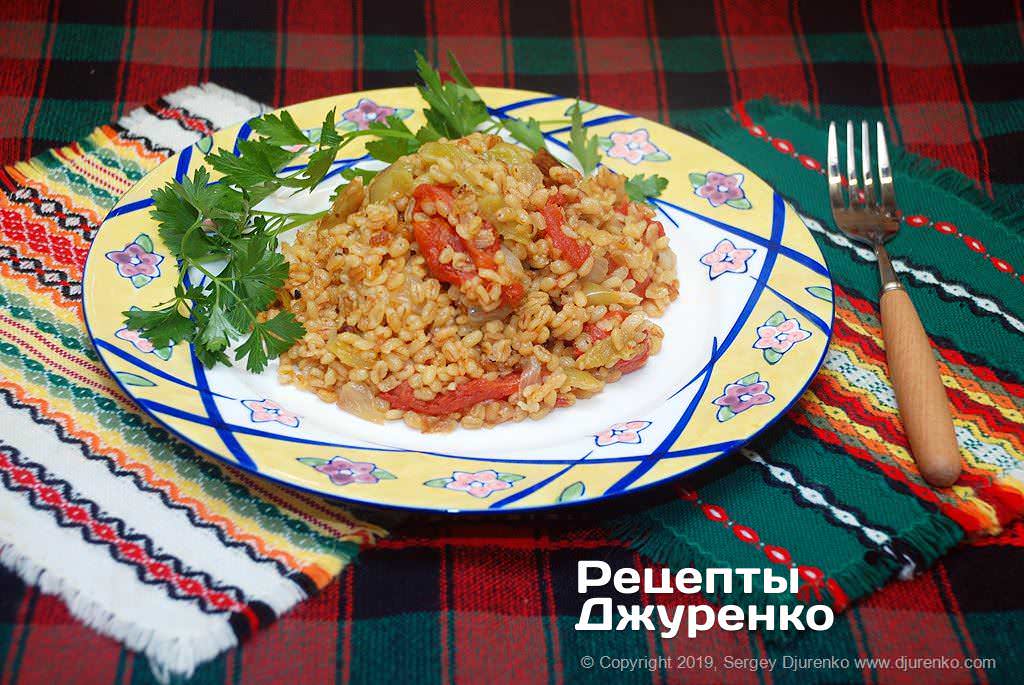
Stir the pilaf and shape it into a mound. Keep heating the bulgur and vegetables. Gradually the remaining moisture will be absorbed, the grain will steam through, and the grains will stop sticking together. Take the pan or kazan off the heat, wrap it in a blanket and let it stand for 10 mins. This is an important step, as it makes the pilaf perfectly fluffy. Then stir the pilaf and serve on plates or a platter.
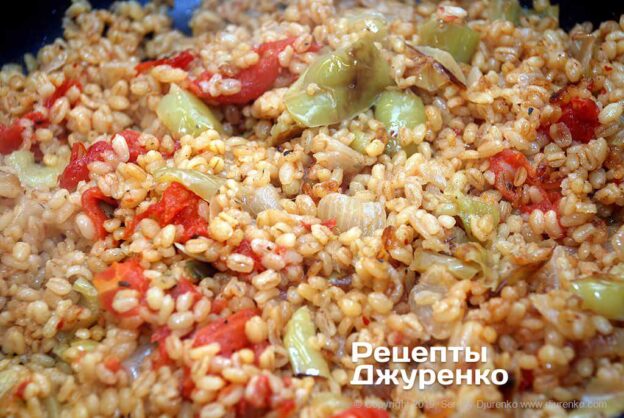
Serve the pilaf hot. It loses its flavor as it cools, and it shouldn’t be reheated either. Pilaf can be eaten as a dish on its own or served as a side for meat or poultry.
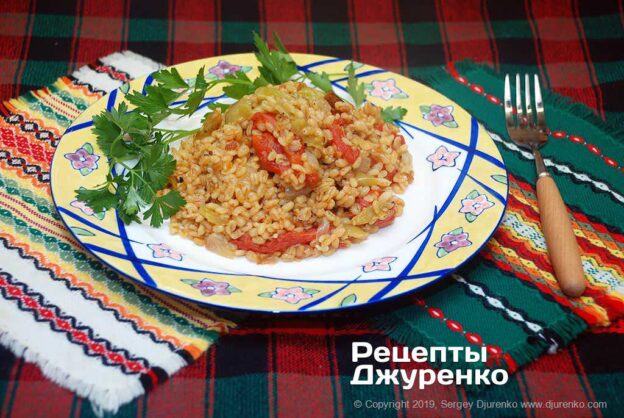
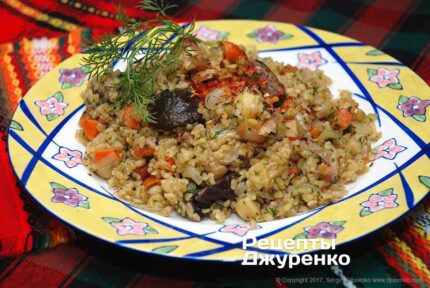
If you like, you can add other vegetables to the dish: carrot, eggplant, green peas and beans, corn. This only adds variety to the flavor, but don’t overload the bulgur with too many additions.
Calories and macros
575 kcal
Serving ≈ 520 g
- Protein15 g11% of kcal
- Fat22 g37% of kcal
- Carbs71 g52% of kcal
100 g110 kcalProtein 2.8 gFat 4.3 gCarbs 13.6 g
Calculated from the recipe ingredients, excluding salt and spices. Data: USDA and Matvaretabellen.
 Pull chopper for garlic and onionAliExpress
 Oil sprayerAliExpress
 Kitchen scale up to 5 kgAliExpress
 Vegetable chopper with handleAliExpress
 Measuring cups and spoonsAliExpress
 Peeler with wooden handleAliExpress