
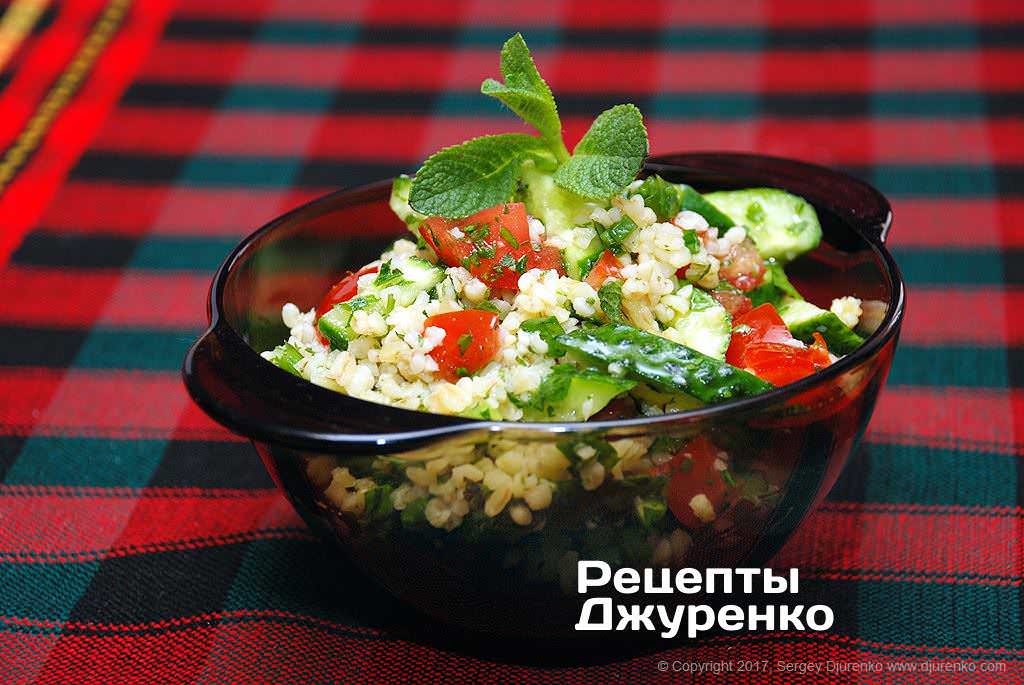
Tabbouleh
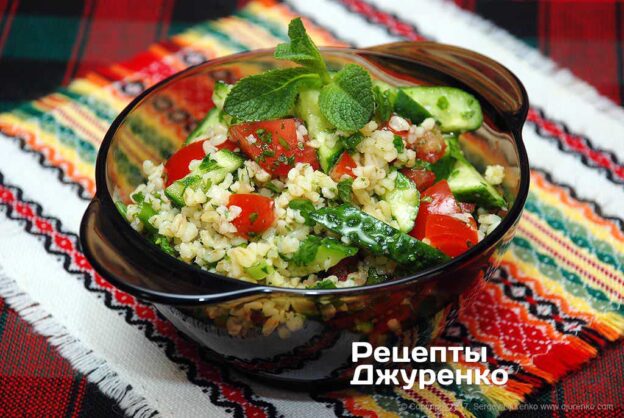
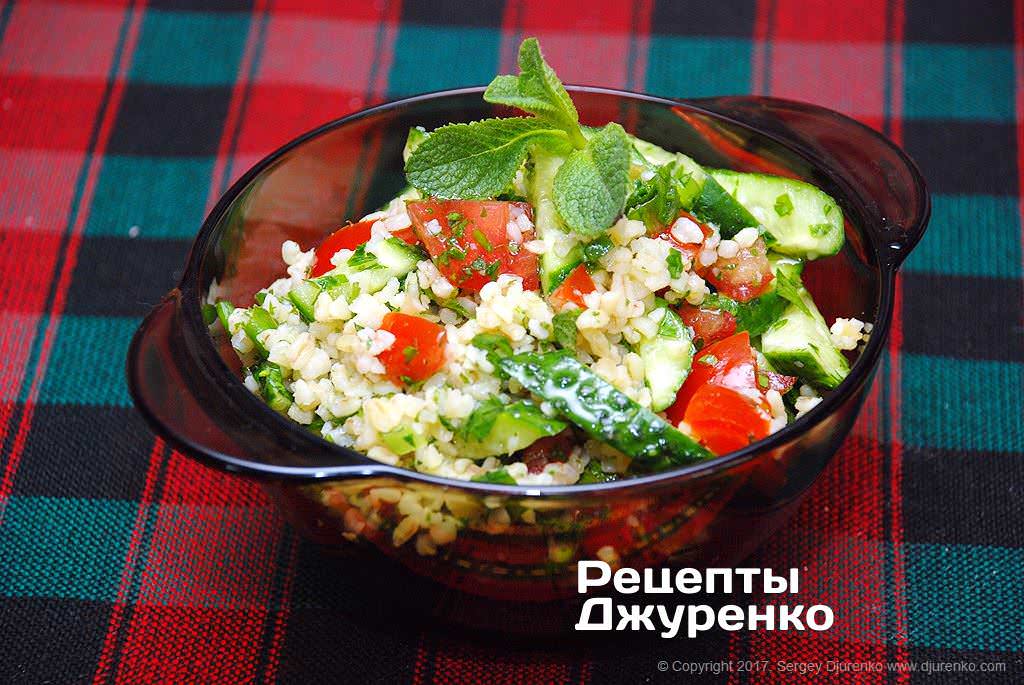
Tabbouleh comes together quickly: I pour boiling water over the bulgur for 10–15 minutes and then drizzle it with 1–2 tbsp of lemon juice. To the parsley and mint leaves I add ripe seeded tomatoes, young cucumbers and a small garlic clove, and dress the salad with 3–4 tbsp of olive oil and lemon juice.
Tabbouleh, a vegetable salad hugely popular around the Mediterranean, is really just bulgur, lots of parsley, a little mint and a dressing of lemon juice and olive oil. It is a simple appetizer typical of the Middle East, and most of the time it includes extra ingredients that add plenty of variety.
The most common additions are fresh tomatoes, cucumbers, green onions, various aromatic herbs and spices, and even hard-boiled eggs. Lebanon and Syria are considered the birthplace of tabbouleh. It is an easy salad made from everyday ingredients, and it is vegetarian. Depending on taste and local tradition, couscous can replace the bulgur, and garlic, boiled chickpeas and green lettuce leaves can be added.
An interesting fact: the world’s largest salad, weighing about one and a half tonnes, made it into the Guinness Book of Records. Depending on the region, it may contain more or less of certain ingredients. The Lebanese version, for example, has more greens, while in Turkey the very similar Kısır is served as a side dish and is made with fine bulgur or cracked wheat, parsley and tomato paste.
Along with chickpea hummus, lavash bread and imam bayildi, this salad has long been part of the Middle Eastern cuisine so widespread around the world. I read somewhere that the word tabbouleh comes from the Lebanese dialect of Arabic and means “slightly spicy”. In the East they grow special wheat varieties for bulgur that is best suited to dishes like this. It differs from the bulgur that is convenient for making pilaf or bulgur with vegetables.
We will make a salad of fresh herbs, bulgur and fresh vegetables available in spring. It is not as high in calories as egg salad. I should say that this salad is very quick to make and can serve not only as an appetizer but also as a great side dish for grilled pork chops, or as the base of a good, filling breakfast. On top of that, every component is very healthy.
Ingredients


Step-by-step recipe
Bulgur
As I said, tabbouleh is easy and quick to make. For extra ingredients I added ripe tomatoes, young green cucumbers and a small clove of garlic. Everything else is always in the kitchen: bulgur, fresh parsley and mint, onion. By the way, all the vegetables and herbs must be very fresh.
The bulgur should not be the coarsest kind. If need be, you can crush it a little to make the grains smaller. If you have trouble finding bulgur, you can replace it with couscous, the same kind used for chicken couscous or slightly larger.
Soak the cucumbers and all the herbs in cold water first, which makes them crisp.
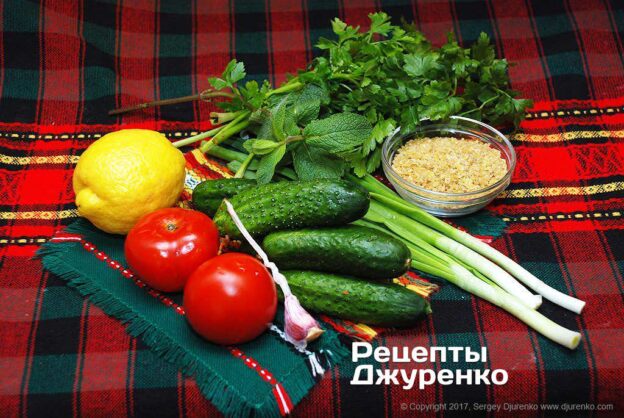
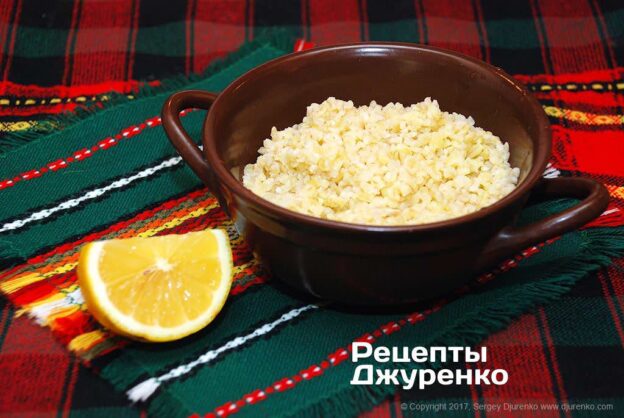
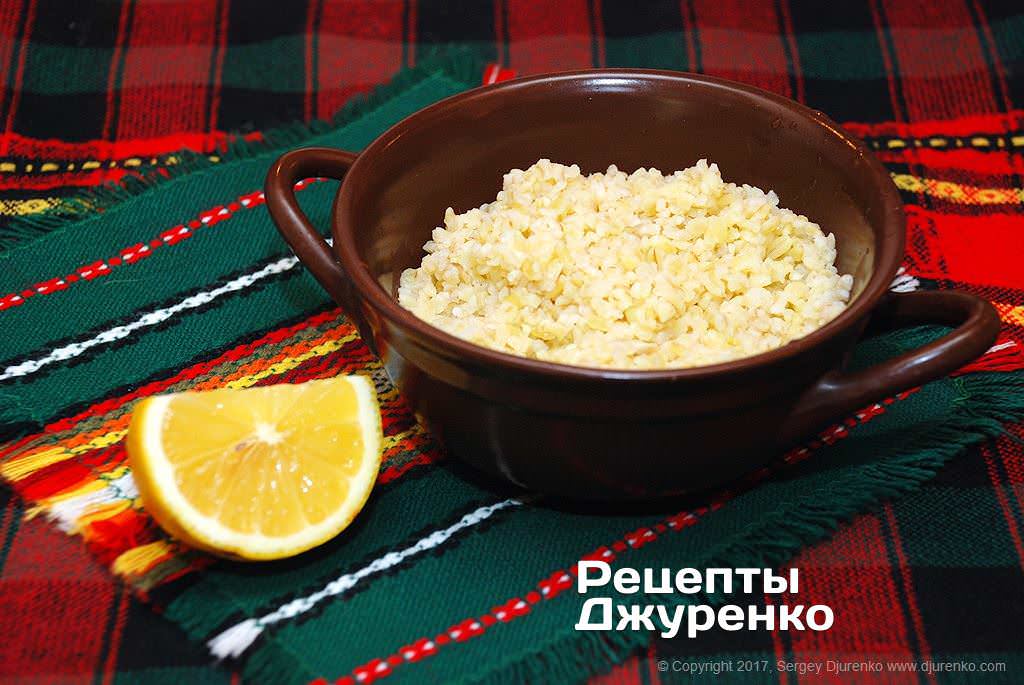
Pour freshly boiled water from the kettle over the bulgur and leave for 10-15 minutes.
There is no need to boil it: wheat bulgur is already cooked and dried during production, so it only needs to soften a little.
Drain the steamed bulgur in a colander and squeeze it lightly to remove excess moisture. Transfer the grains to a bowl and sprinkle with 1-2 tbsp freshly squeezed lemon juice. Stir and leave until completely cool.
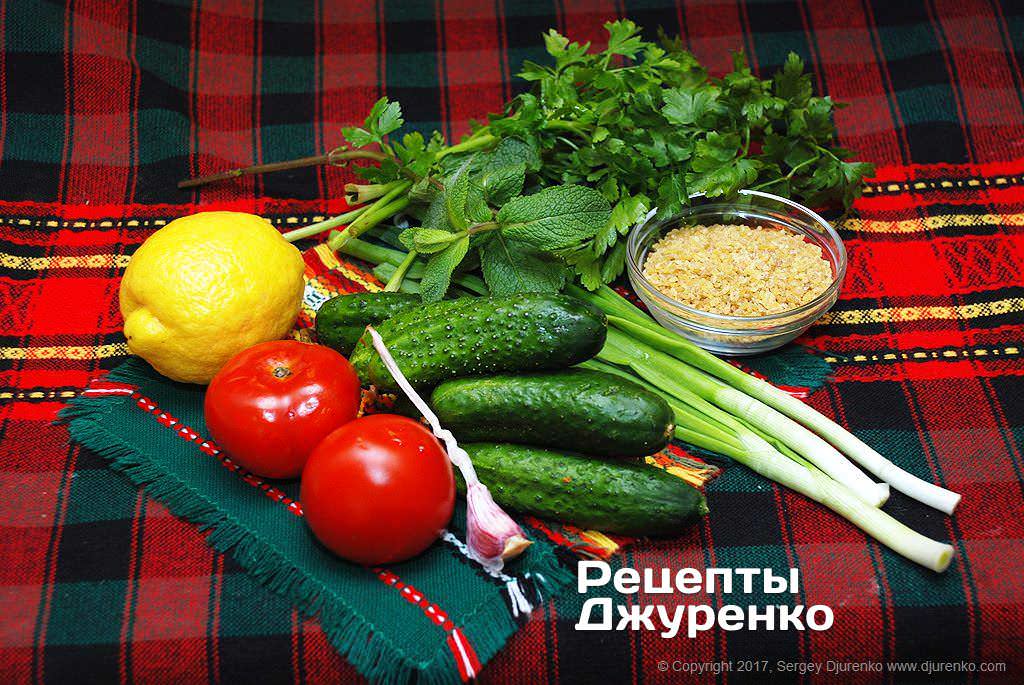
Vegetables and herbs
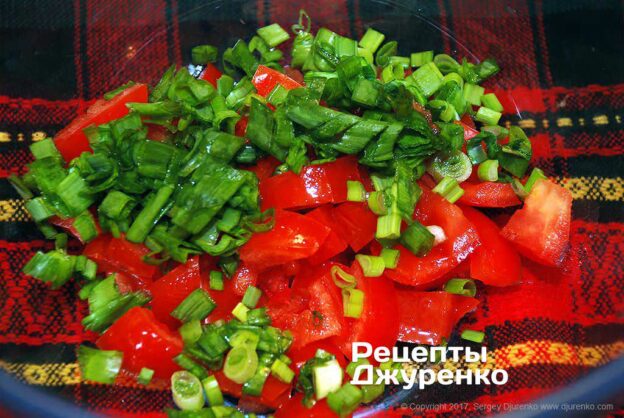
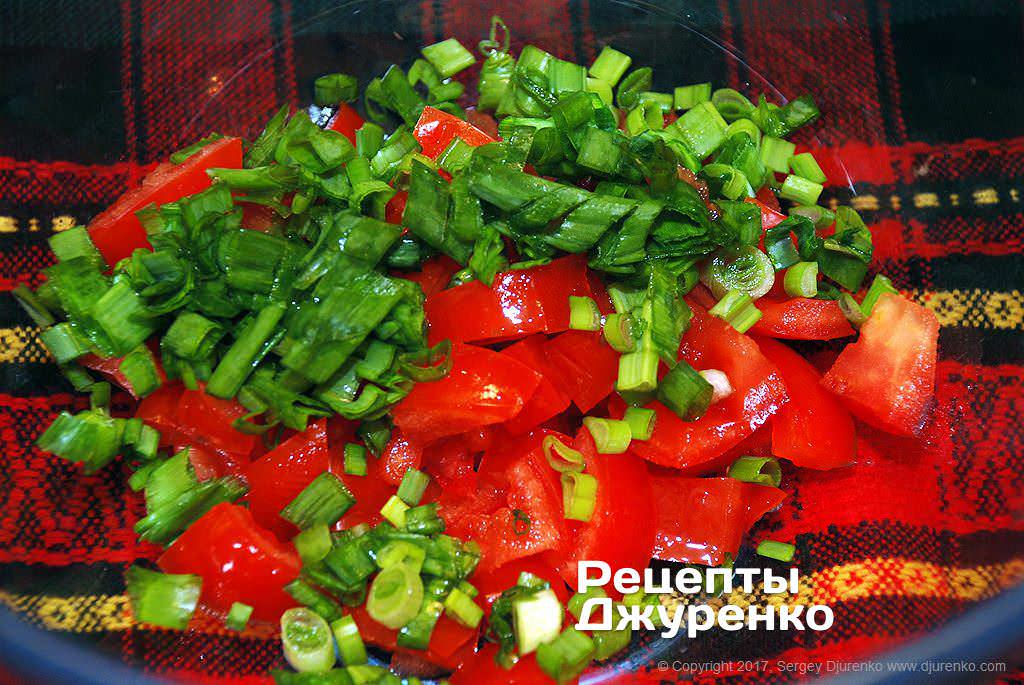
Cut the ripe tomatoes in half and remove all the seeds. The skin can stay. Dice the tomatoes and cucumbers a little larger than you would for Olivier salad. Finely chop only the green part of the green onions with a knife and add it to the tomatoes.
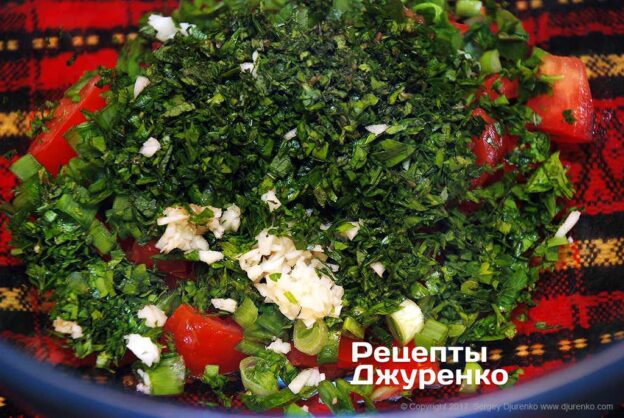
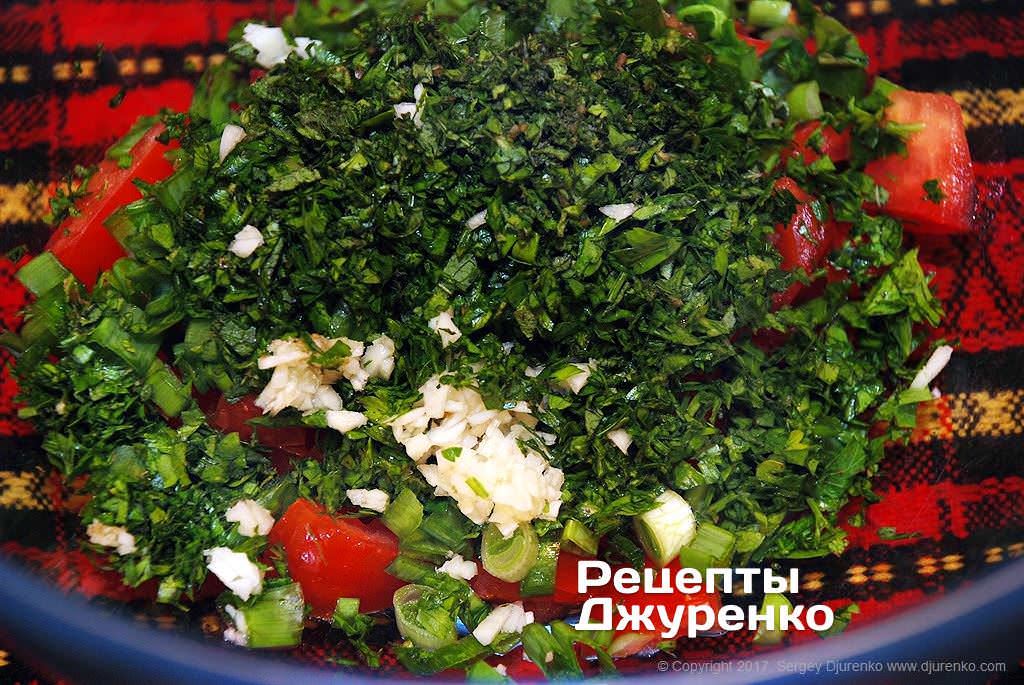
Pick all the leaves off the parsley and mint sprigs and discard the stems. Chop all the herbs with a knife as finely as you can. If you decide to add garlic, peel one clove and chop it finely too. Add the chopped herbs and garlic to the tomatoes.
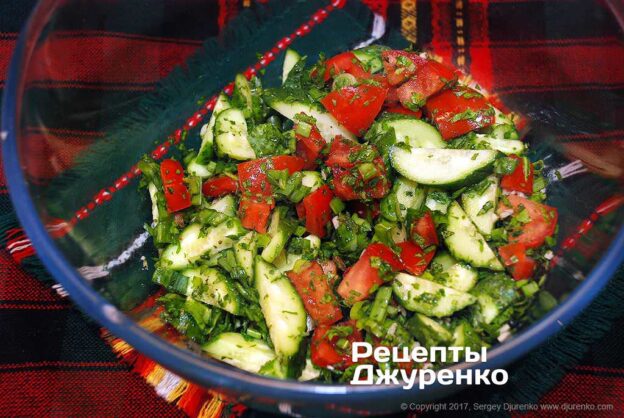
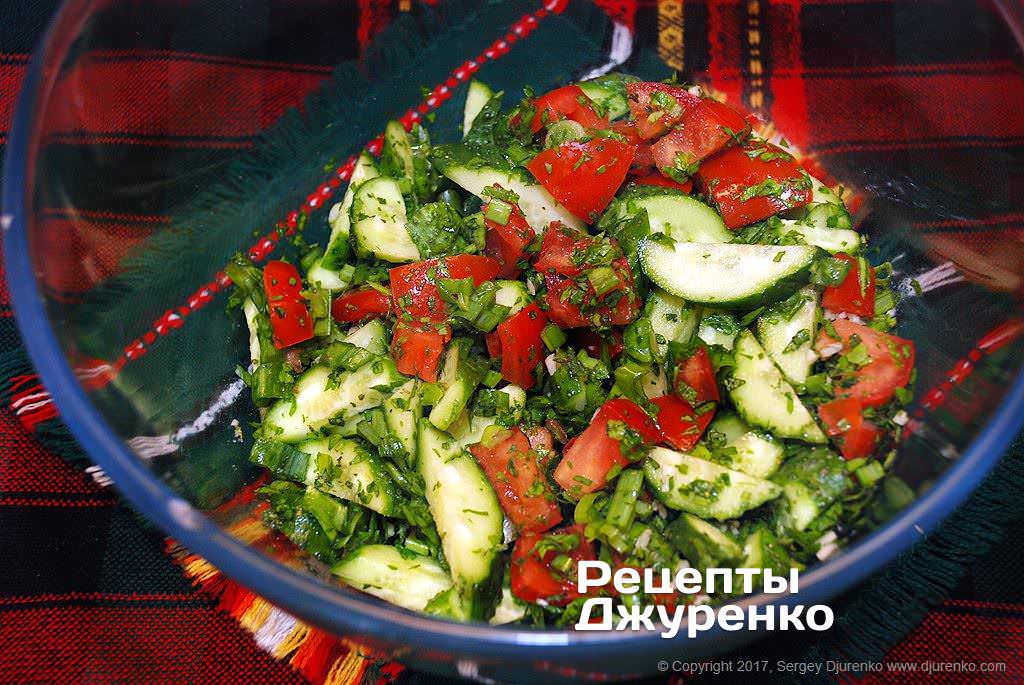
Crush a pinch of cumin between your fingers or in a mortar and sprinkle it over the vegetables, then add a little salt. Gently toss the salad so the vegetables mix and the salt dissolves.
Dressing
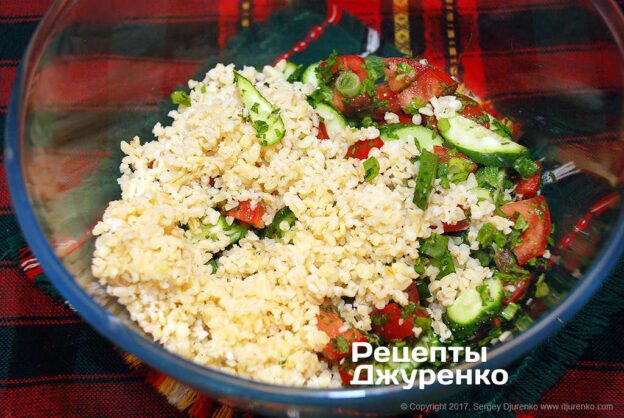
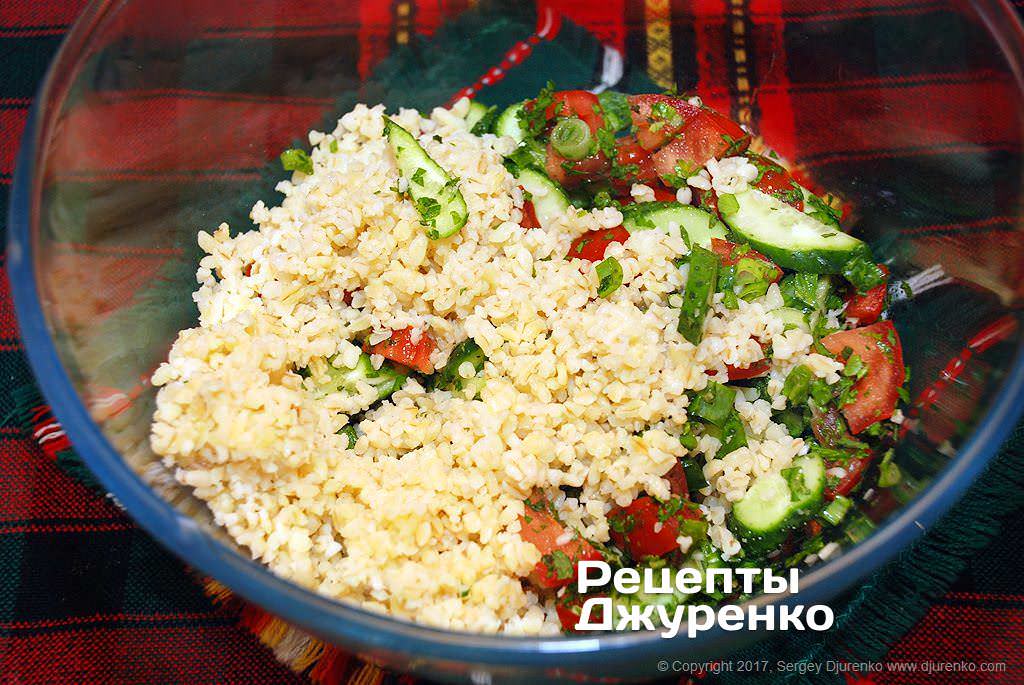
Add the prepared bulgur, cooled to room temperature, with its lemon juice to the salad. Mix well so the grains are evenly distributed and there are no clumps.
In a small bowl, mix 3-4 tbsp of the best olive oil with 1 tsp lemon juice. Whisk the oil with a fork and it will emulsify slightly.
This mix of oil and acid is, in fact, known as vinaigrette.
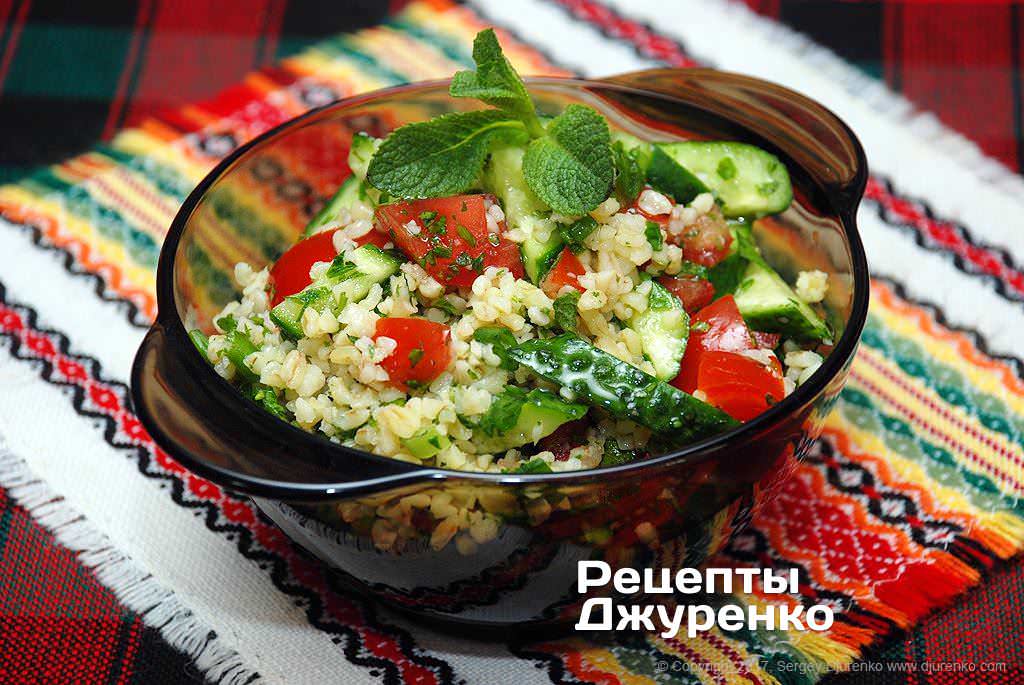
Pour the dressing over the tabbouleh and stir.
Serving
Divide the salad among bowls or pile it on a large platter. Garnish with sprigs of mint and parsley.
If you like, season the dish with hot red pepper. I have seen sliced hot chili rings added as well. Don’t forget that the salad is meant to be “slightly spicy”.
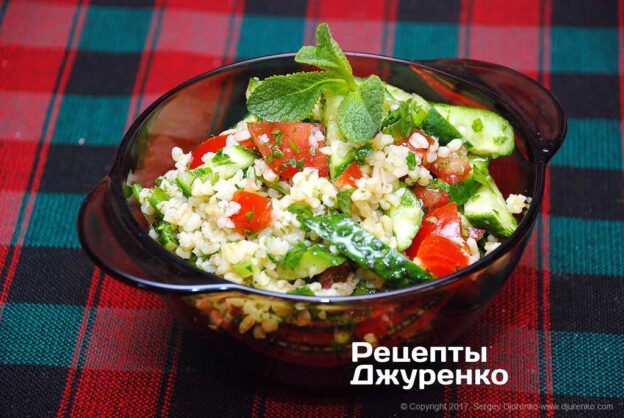
Serve at room temperature, as a standalone appetizer or as part of an assortment of appetizers.
If you want to use tabbouleh as a side dish, put it on a plate next to meat or homemade kebabs.

How did you like this recipe?
Rate it with one tap.
Calories and macros
420 kcal
Serving ≈ 380 g
- Protein8 g8% of kcal
- Fat25 g55% of kcal
- Carbs38 g37% of kcal
100 g111 kcalProtein 2.2 gFat 6.6 gCarbs 10 g
Calculated from the recipe ingredients, excluding salt and spices. Data: USDA and Matvaretabellen.