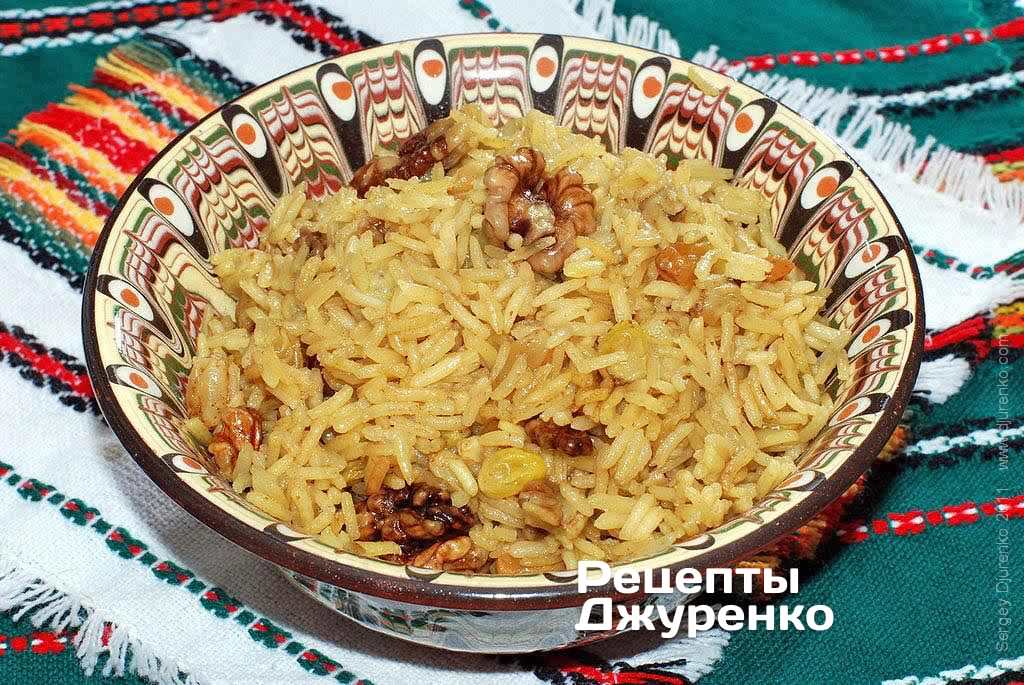
Sweet Pilaf with Butter, Raisins and Nuts (Tereyağlı Pilav)
Sweet pilaf is easy to make at home, even without a special kazan. The word “pilaf” comes from the Persian پلو (polov) or the Hindi “पुलाव” (palau). Literally it means “boiled rice”. In practice the dish goes by almost the same name nearly everywhere: plov, pilau, pilav, pilaf, paloo, pilâv, palow. Wherever you are, ask for plov and you will never go wrong, as they will understand you.
It's hardly possible to establish for certain where pilaf came to the world from. Presumably, and almost surely, it came from the Middle East or India, although rice, the base of pilaf, had been known in China long before that.
Pilaf is a fairly complex composite dish. In the vast majority of cases the base is rice, although there are versions with other grains: wheat, barley, corn grits and so on. It is generally believed that pilaf is a meat dish. That's not quite true. In Turkey, for example, a version with chicken giblets, pistachios and raisins is very popular: “iç pilav”, Iç Pilav.
Making pilaf is a science. It easily turns into rice porridge, and it's nearly impossible to catch the moment of the change. For all the abundance of pilaf recipes, making a really good one is far from easy. Though from my own experience, cooking pilaf is like your first parachute jump: do it once and the skill stays with you for good. Chicken pilaf isn't hard to make, but sweet pilaf often clumps together and takes skill and experience.
I have always been interested in pilaf without meat. I have seen magnificent pilafs with fruit, vegetables, nuts, various seeds, and even rose petals. It was something. In the East, sweet pilaf is not that rare. Let's try making a tasty sweet pilaf with butter, with raisins and nuts added.
More with nuts
 Baked Pumpkin with Nuts, Honey and Prunes
 Homemade Shortbread Cookies
 Oatmeal Cookies with Raisins and Nuts
 Waldorf Salad with Celery Stalks
 Pecan pie
Ingredients
2 servings
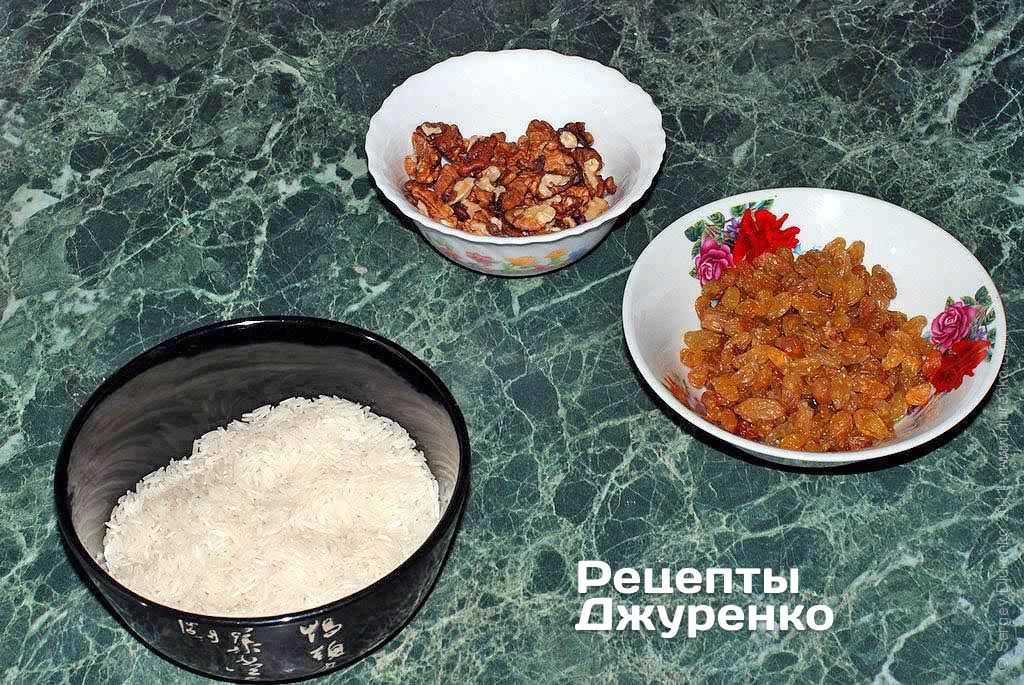
- Basmati rice 1 cup
- Walnuts 100 g
- Raisins 100 g
- Butter 50 g
- Curry powder, sugar, salt to taste
Step-by-step recipe
- In the East there are special people called ashpaz, pilaf masters, real aces! They travel nonstop from one celebration to the next and cook pilaf all the time. What matters is not so much the combination or presence of particular ingredients as a steady cooking technique, where the rice isn't boiled, as many think, but stewed. The rice and the meat (zirvak) are often not stewed together but combined only on the dish. I remember a Tajik acquaintance making such a pilaf, and it was incomparable. It matters that the grains of rice don't stick to each other, otherwise you get porridge. For that it is important to choose the right rice.
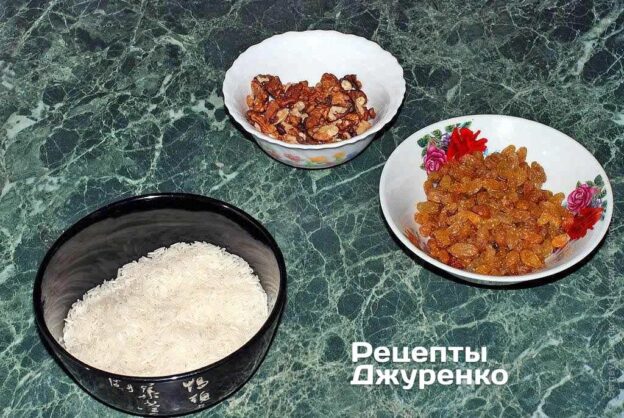
- Rice is always tricky. The most suitable variety for Central Asian pilaf is considered to be the red Uzgen rice, “devzira”. For obvious reasons it isn't always available, so other varieties are used. In Turkey they use “baldo” rice, a long-grain rice that is fairly fluffy and quite suitable for pilaf. In India the traditional choice is basmati, the most aromatic rice, with thin, long grains.
- In general, it occurs to me that the stores are full of mystery rice, and our choice of rice for proper cooking isn't very big. Most often the pack just says “Rice”. Rarely it adds “fluffy”, “round” or something quite unique like “snow-white”. And cook it however you can. In the vast majority of cases you end up with mush. I try to buy rice whose package states the variety: jasmine, basmati, arborio, carnaroli and so on. At least then it's clear what rice it is and how to cook it to get a dish rather than porridge.
- For sweet pilaf I chose basmati. This rice is very fluffy and very aromatic, and goes beautifully with various foods, sweet ones included.
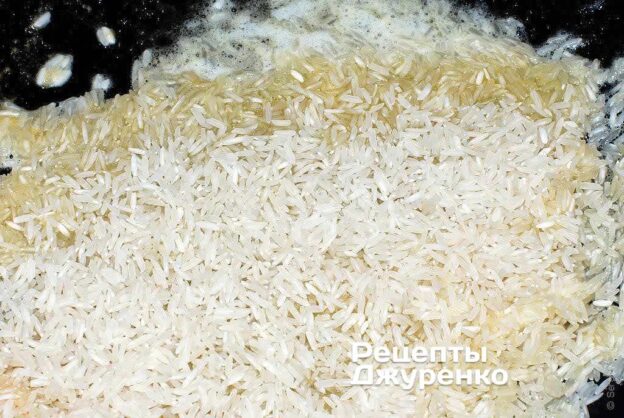
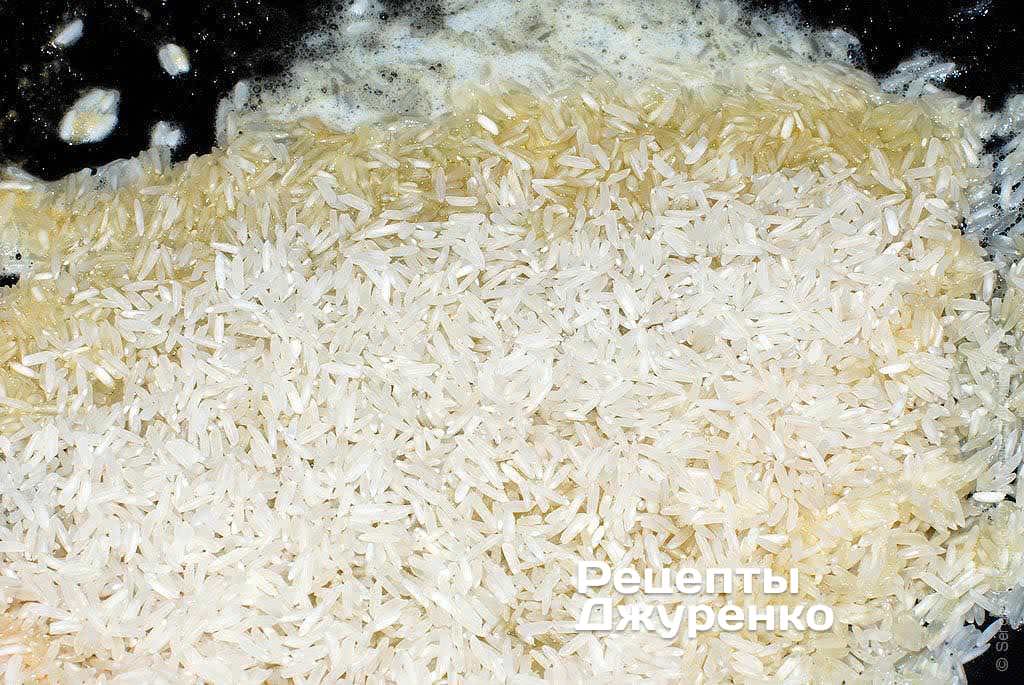
- Melt the butter in a kazan or deep saucepan, heat it for 5-6 mins, then add the rice. Stirring constantly, fry the rice in the butter until the grains start to turn translucent at the edges.
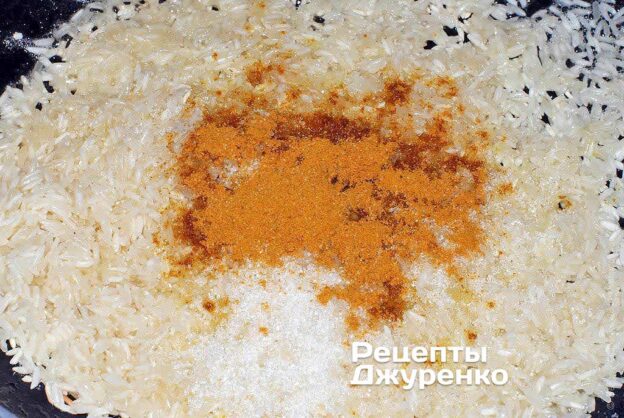
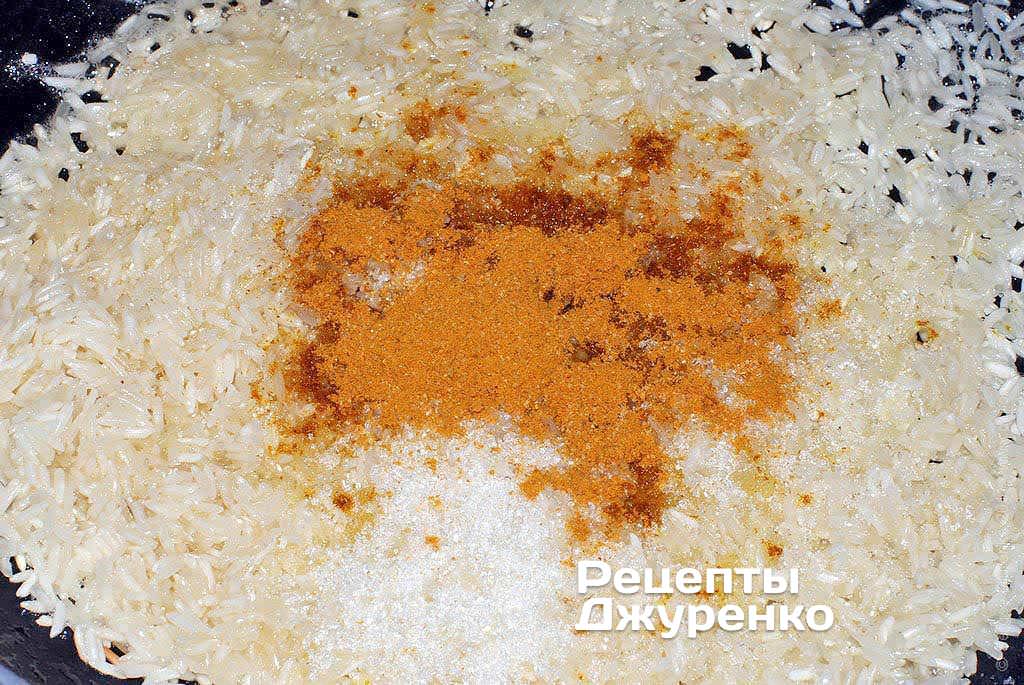
- Add 1 tsp of curry powder. Curry always contains turmeric, which gives an incomparable yellowish color, plus coriander, red pepper, fenugreek, ginger, cloves, nutmeg and many other ingredients. Curry blend is one of the staples in the East and is used everywhere.
- Add 3 tsp of sugar (honey works too) and a pinch of salt. Stir. Heat the rice with the spices under a lid over low heat for 2-3 mins.
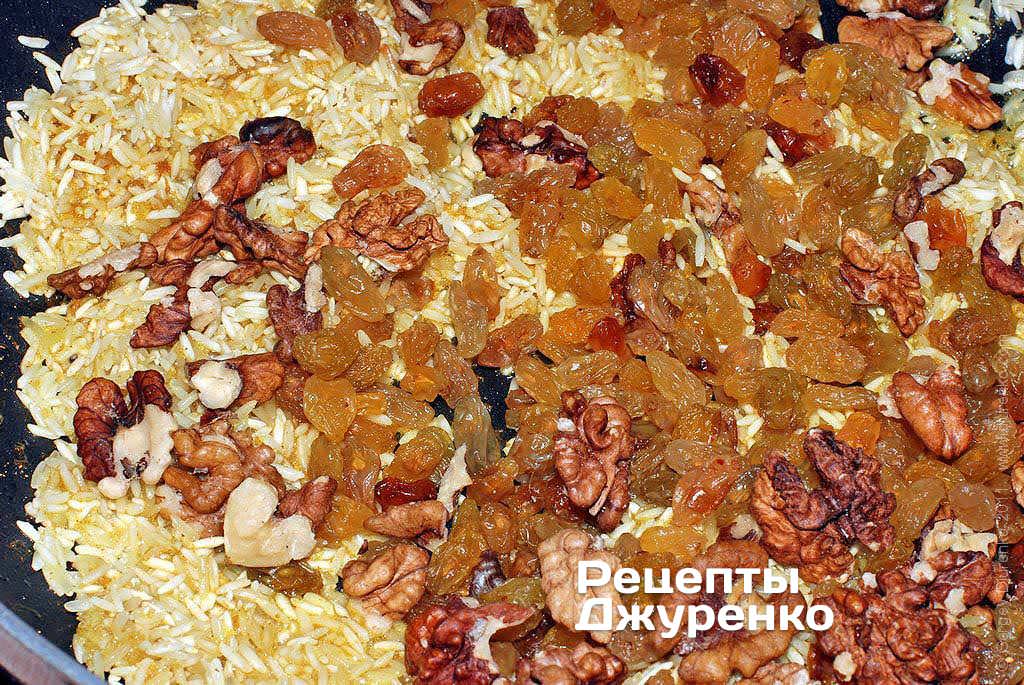
- Add the rinsed raisins and nuts.
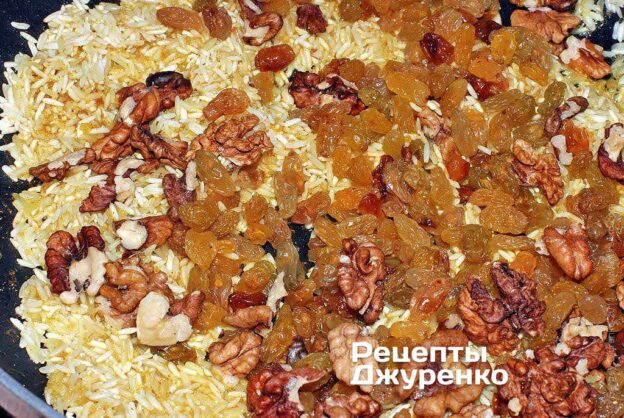
- Next, add broth or water. Usually water is used, since broth has to be made first. So don't make things hard for yourself. When cooking rice it is quite hard to “guess” the amount of liquid. Italians cooking risotto add the liquid in portions. But you can do it more simply. Usually 1 part rice by volume needs 2 parts liquid. That holds almost always, except perhaps for very starchy varieties like arborio and carnaroli. So add 2 cups of boiling water.
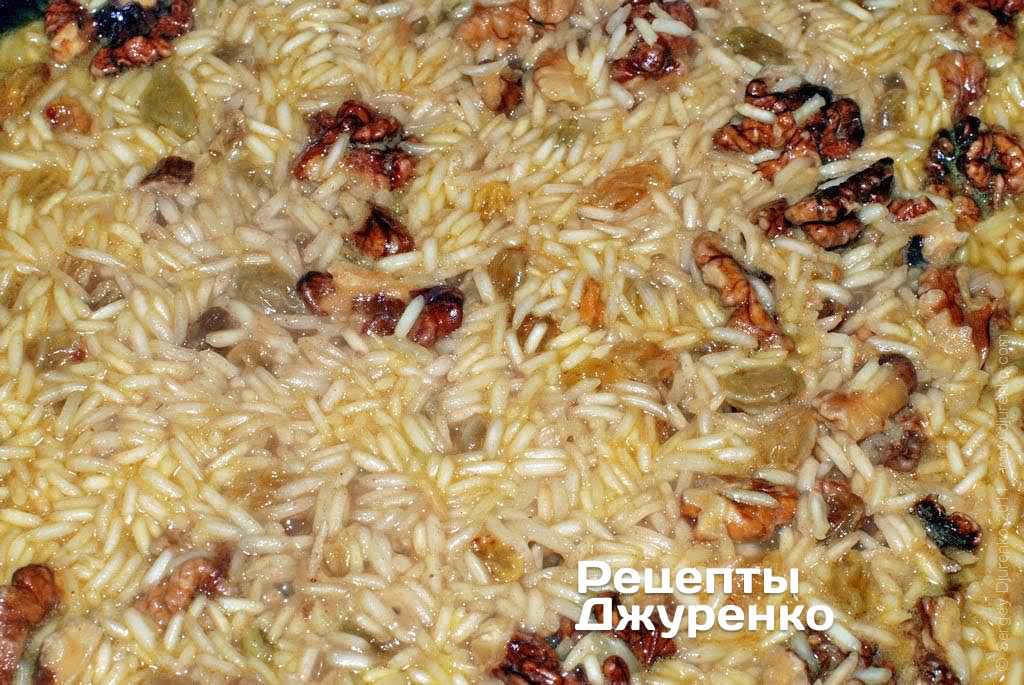
- Stir, and turn the heat down to the minimum. Cover with a lid. The liquid should barely simmer, with no bubbling at all. Ideally the surface should hardly move. Leave the sweet pilaf alone for 15 mins. During this time the rice absorbs almost all the liquid, and the grains start to separate from each other.
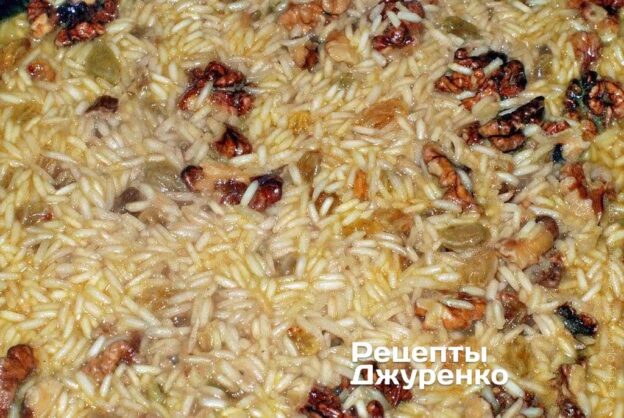
- Stir the sweet pilaf gently, ideally with a wooden spatula.
- Then cover the sweet pilaf with the lid and leave it over very low heat, or even off the heat, wrapping the pot in something woolen so the pilaf can “steam”. Don't rush, let it stand for 10 or even 20 mins. During this time the rice absorbs the remaining moisture and steam and becomes perfectly fluffy. You can simply spoon it out.
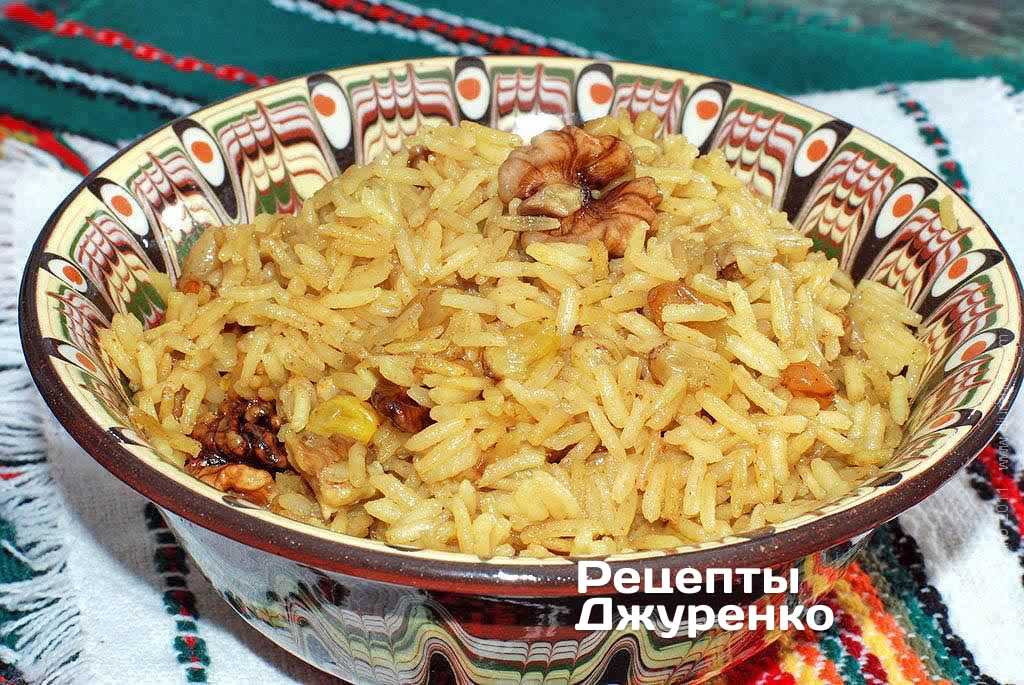
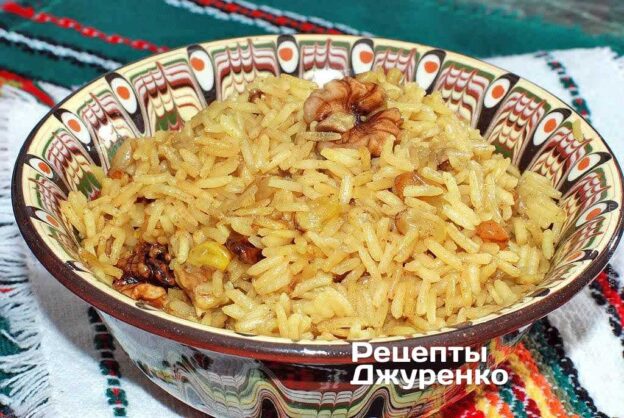
- You get a perfect, fluffy sweet pilaf. This is how it is made in Turkey, where it is called butter pilaf, or buttery pilaf: Tereyağlı pilav.
 Pull chopper for garlic and onionAliExpress
 Oil sprayerAliExpress
 Kitchen scale up to 5 kgAliExpress
 Vegetable chopper with handleAliExpress
 Measuring cups and spoonsAliExpress
 Peeler with wooden handleAliExpress
| Yield: | 2 servings |
| Calories: | 319 kcal per 100 g |
| Prep: | 20 mins |
| Cook: | 30 mins |
| Total: | 50 mins |
| Cuisine: | Middle Eastern |
| Rating: |