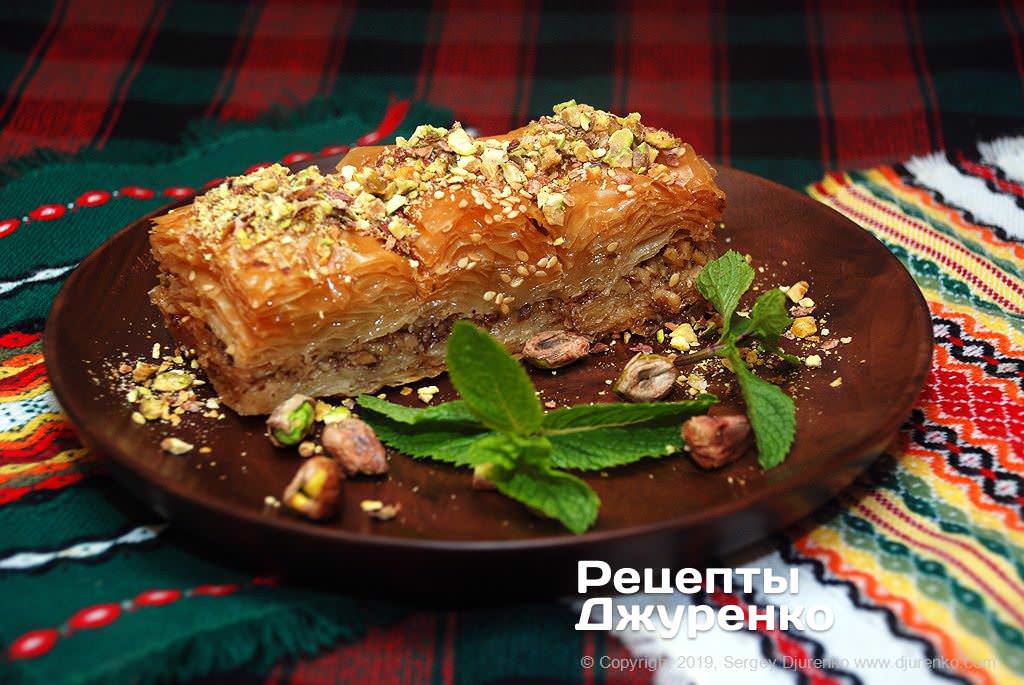
Homemade Baklava with Walnuts and Pistachios
Ingredients
10-15 servings
For the baklava
- Phyllo dough 1 package (400 g)
- Walnuts (shelled) 100 g
- Pistachios (unsalted, shelled) 100 g
- Butter 100 g
- Sugar 1 tbsp (optional, mixed into the nuts) (14 g)
For the syrup
- Water 150 ml
- White sugar 0.5 cup (90 g)
- Brown cane sugar 0.5 cup (90 g)
- Cointreau liqueur 1-2 tbsp
- Rose or orange blossom water 2-3 tbsp
- Ground cardamom a pinch
- Lemon juice optional
For sprinkling
- Ground nuts and pistachios set aside from the filling
- Powdered sugar, almonds, shredded coconut, mint optional
Step-by-step recipe
Preparing the nuts and dough
Do not forget that baklava is very high in calories, so it is a dessert to enjoy in small amounts. Honey and sugar, butter, nuts and pistachios are very nourishing, energy-dense foods. If you like, you can add other nuts, almonds, even raisins and coconut flakes.
Dry and chop the nuts. All the additions should be dried out a little before use, then peeled if they have skins. Almonds need to be soaked in boiling water for 5-10 minutes so they peel easily.
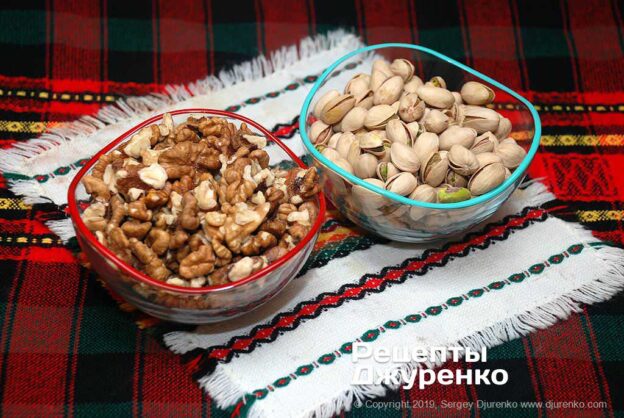
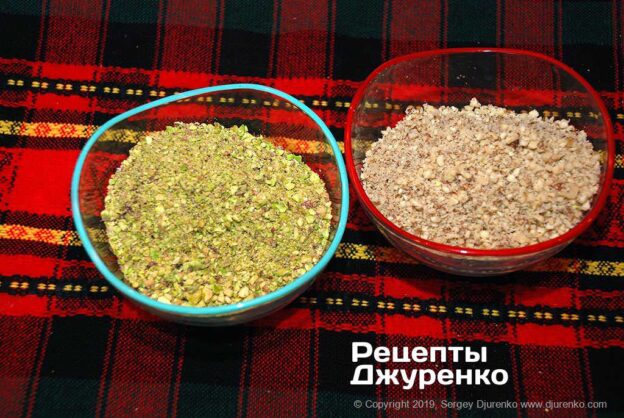
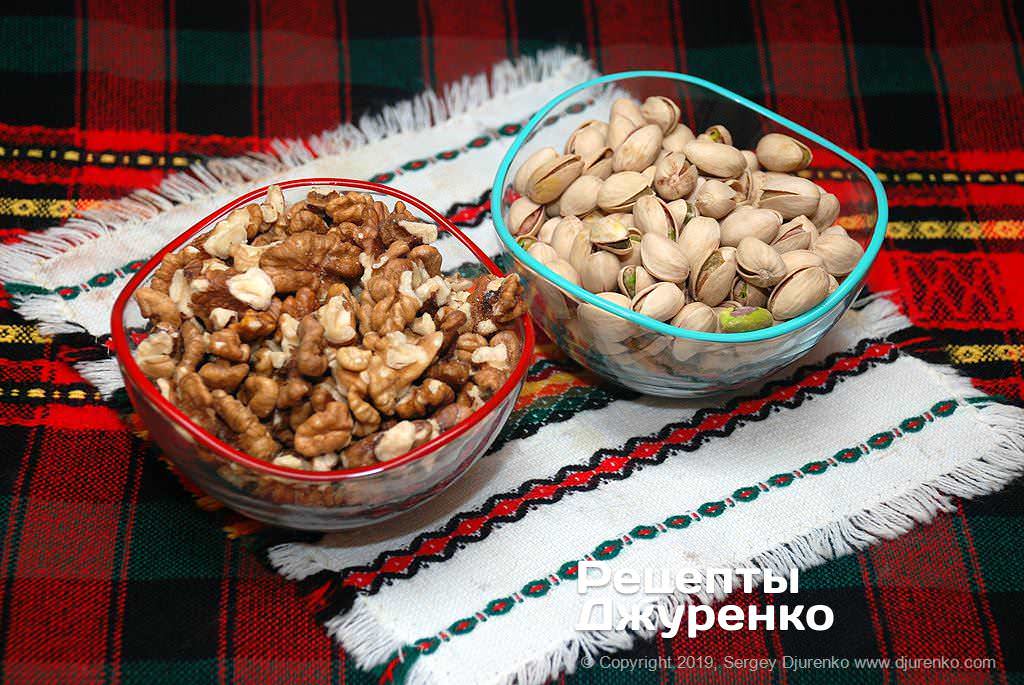
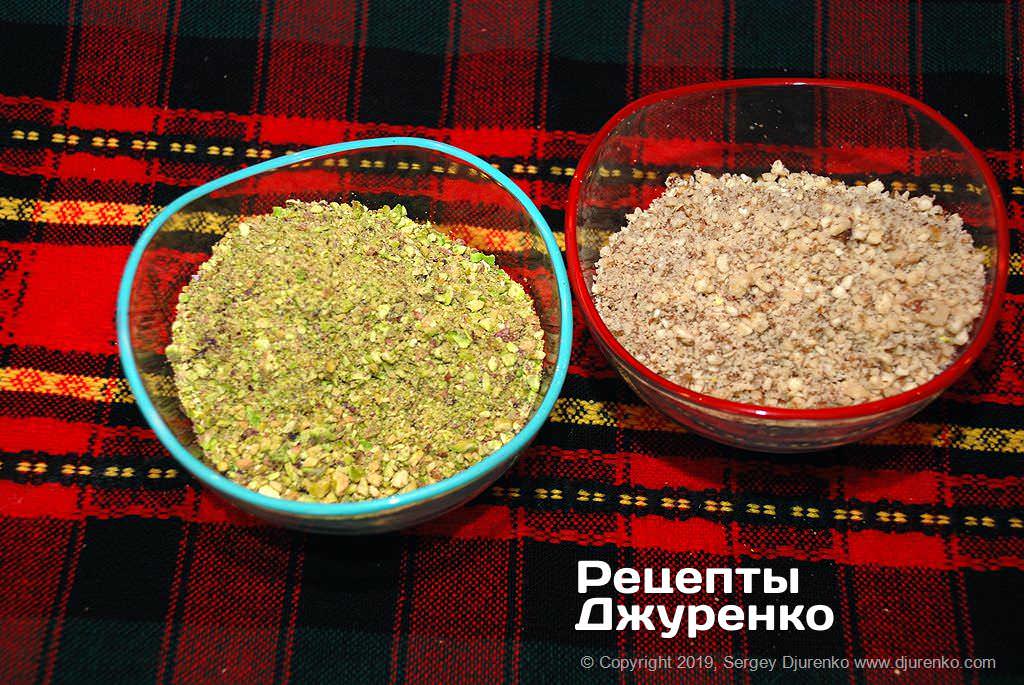
Shell the dried pistachios, and if possible also remove the inner brown skins. Shell the walnuts and toast the kernels in a dry frying pan over medium heat for a few minutes, stirring. Chop the pistachios and walnuts separately with a chopper or blender. Not too finely, as there should be clearly visible pieces. Set aside a few chopped pistachios and walnuts for sprinkling over the finished baklava.
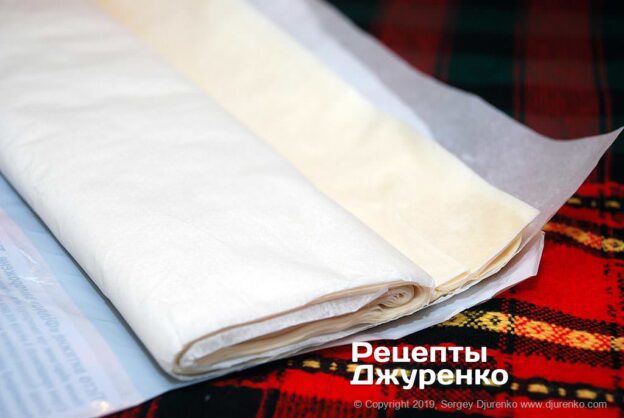
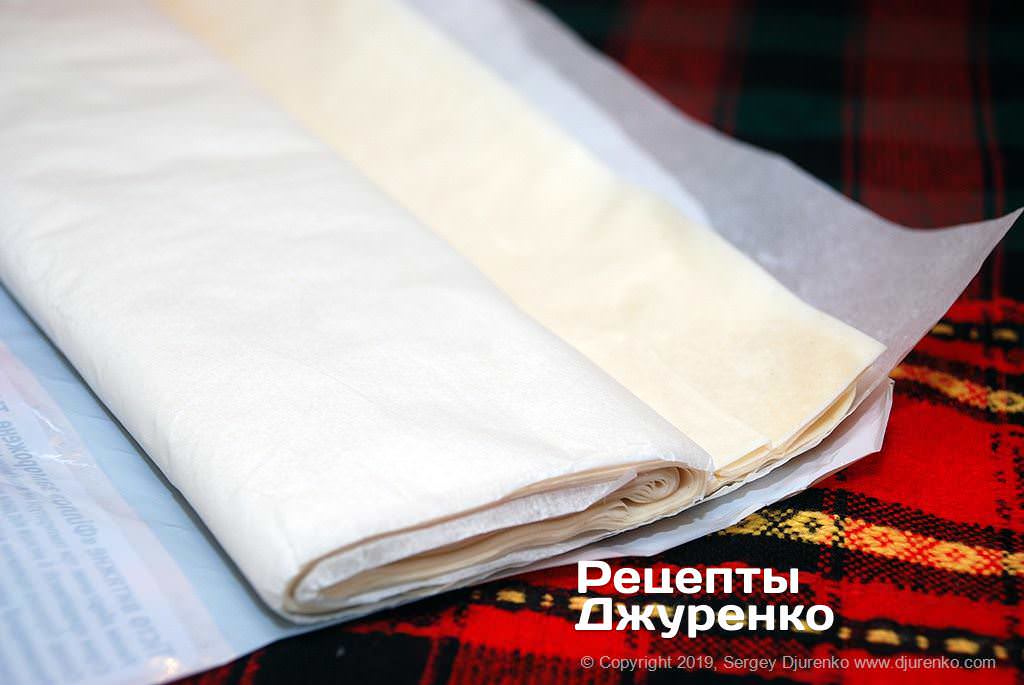
Thaw the phyllo dough. Phyllo dough is now sold in many large stores, so look for containers of frozen dough of all kinds. It is usually packed in oblong 400 g packages and feels hard to the touch because it is frozen. The package has instructions for thawing the dough, and it is worth following them. If the dough has been frozen twice, it may stick together and tear. The very thin sheets are rolled up and must be handled very carefully, exactly as when making Bulgarian banitsa. While the sheets wait their turn, keep them under a damp towel so they do not dry out.
Assembling the baklava
Baklava is traditionally baked in a metal pan with a rim. That is not always possible, so a ceramic dish will do just as well. There is a lot of dough in a package, so you can make 4-6 small dishes at once, using different fillings between the layers and cutting the baklava in different ways. You can bake the dessert to different degrees and use different syrups.
Melt the butter and cut the dough. Melt the butter in a bowl, but do not let it get hot. You will also need a brush for buttering the dough. Without shifting the layers against each other, cut the dough to the size of the dishes with a knife or scissors. Remember that the dough must fit snugly in the dish.
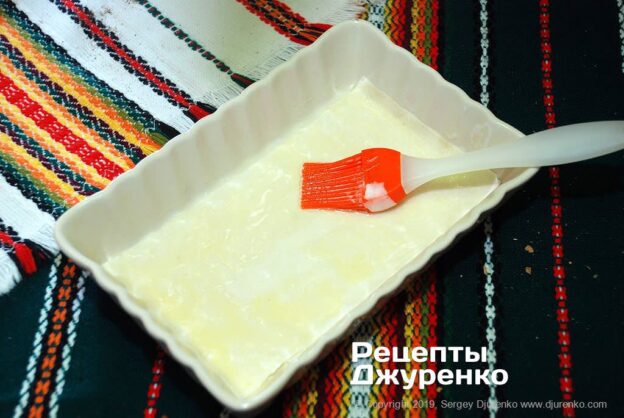
Lay the bottom layers of dough and brush with butter. Lay several layers of dough on the bottom of the dish (about a third of the sheets) and brush the top with melted butter. You can butter every layer of dough or every few layers, as you prefer.
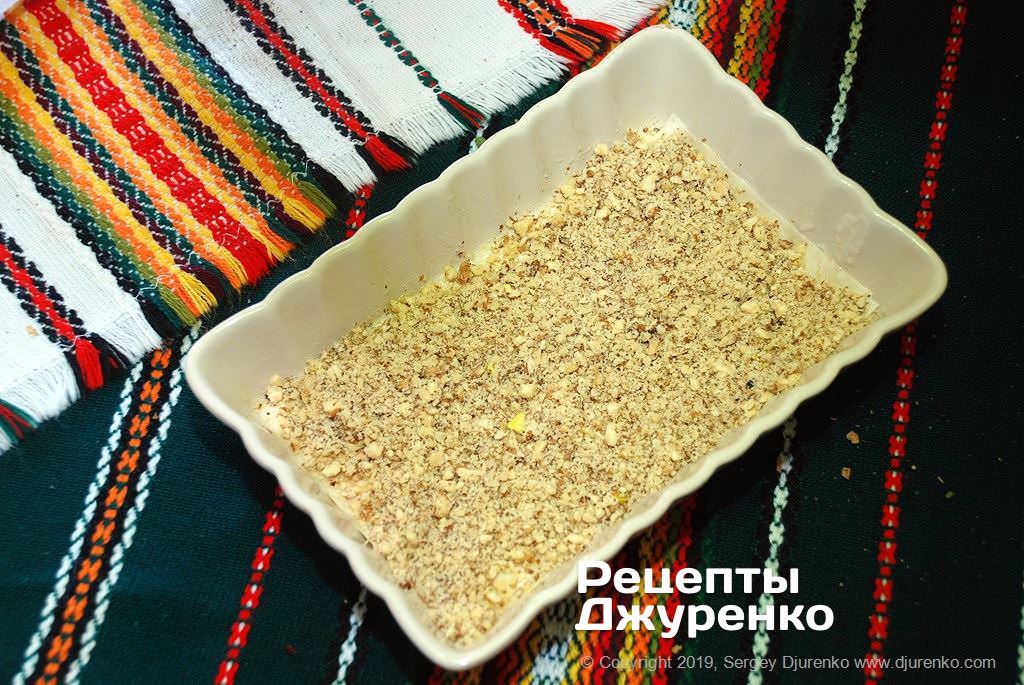
Add the nuts and the next layers of dough. Sprinkle nuts or pistachios over the buttered dough without gaps, level them with your hands and spread evenly. If you like, the nuts can be mixed with 1 tbsp of sugar (14 g).
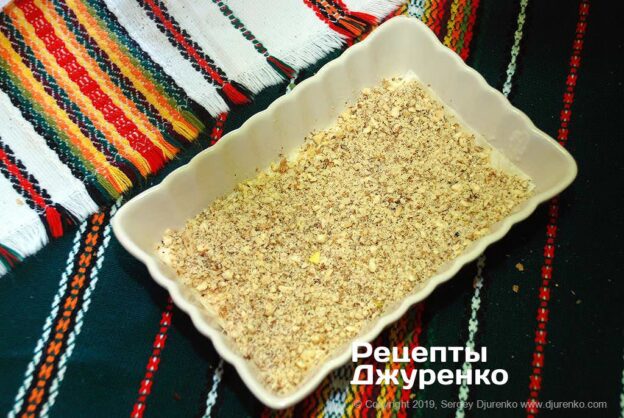
Lay a few more layers of dough and brush them with butter. Then sprinkle on another layer of ground nuts or pistachios. The number of nut layers is up to you, but two layers are quite enough.
Lay the top layers of dough and brush well with butter. Press down the last sheet of phyllo a little so the baklava is dense and sealed, and brush generously with butter. Keep a little butter back, as you will need it during baking.
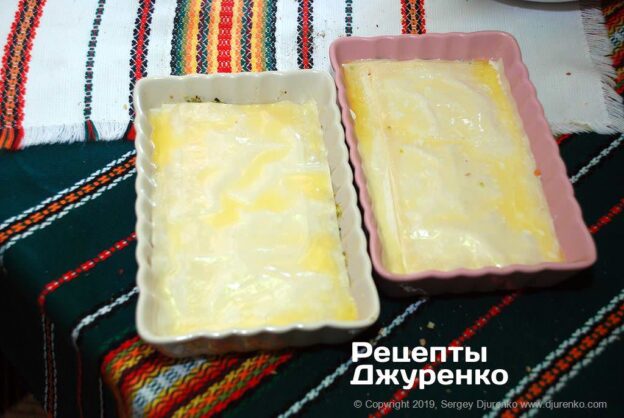
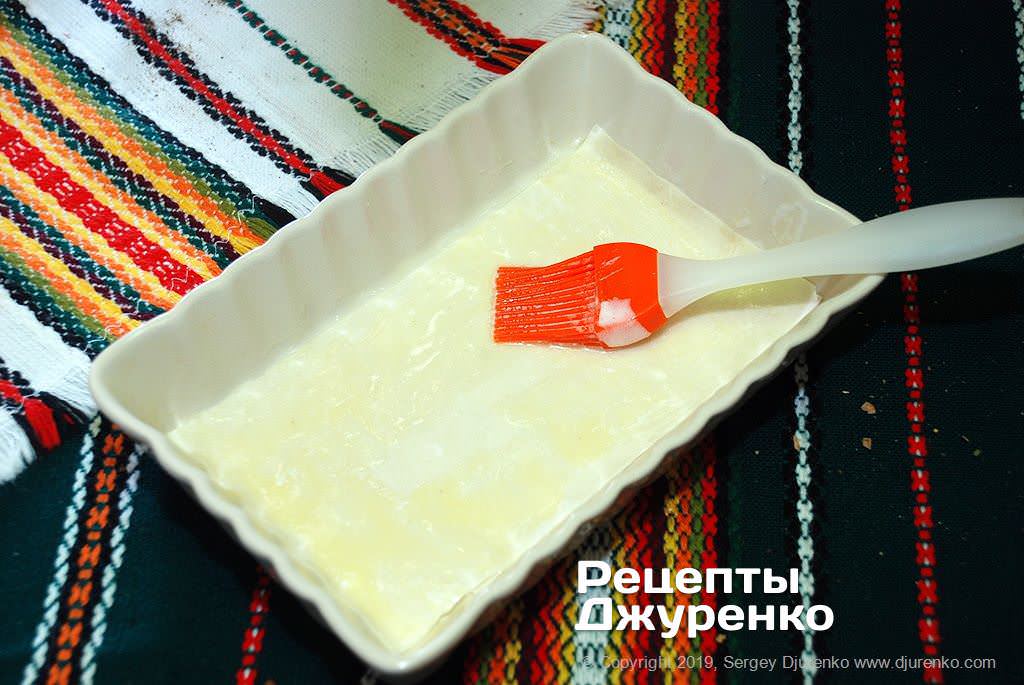
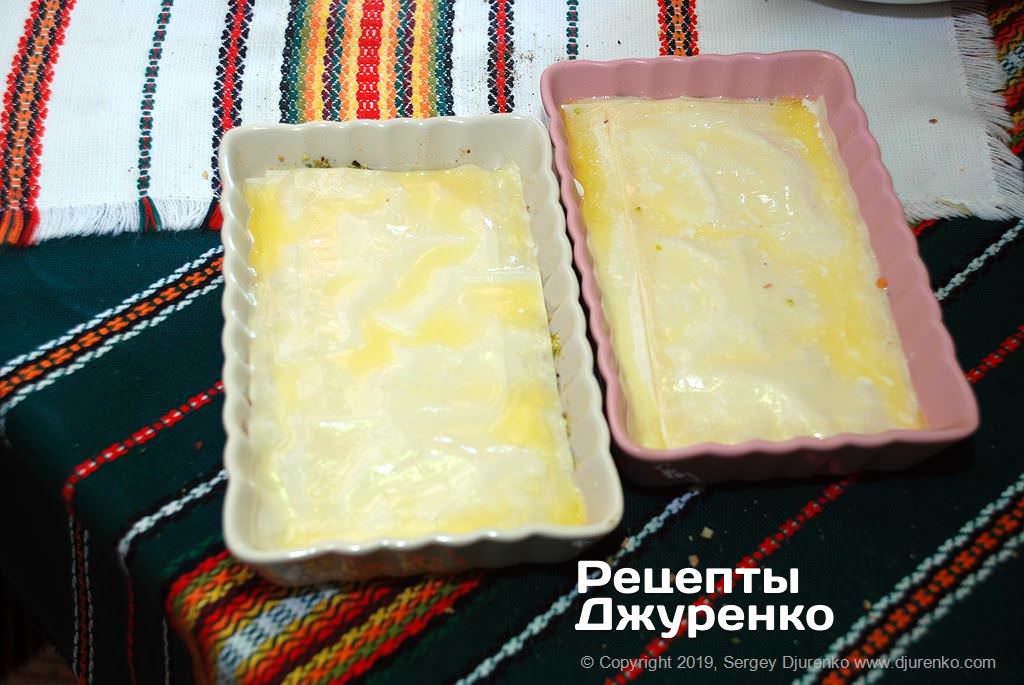
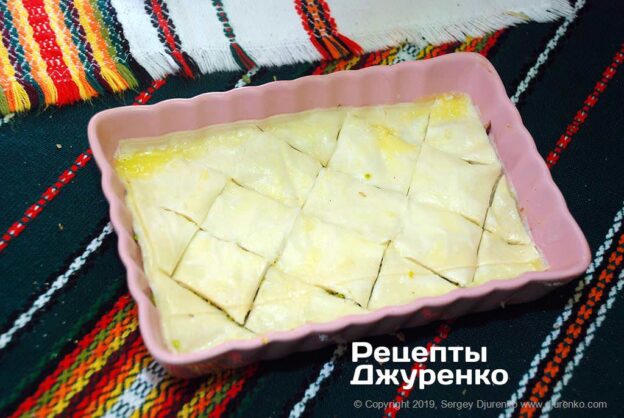
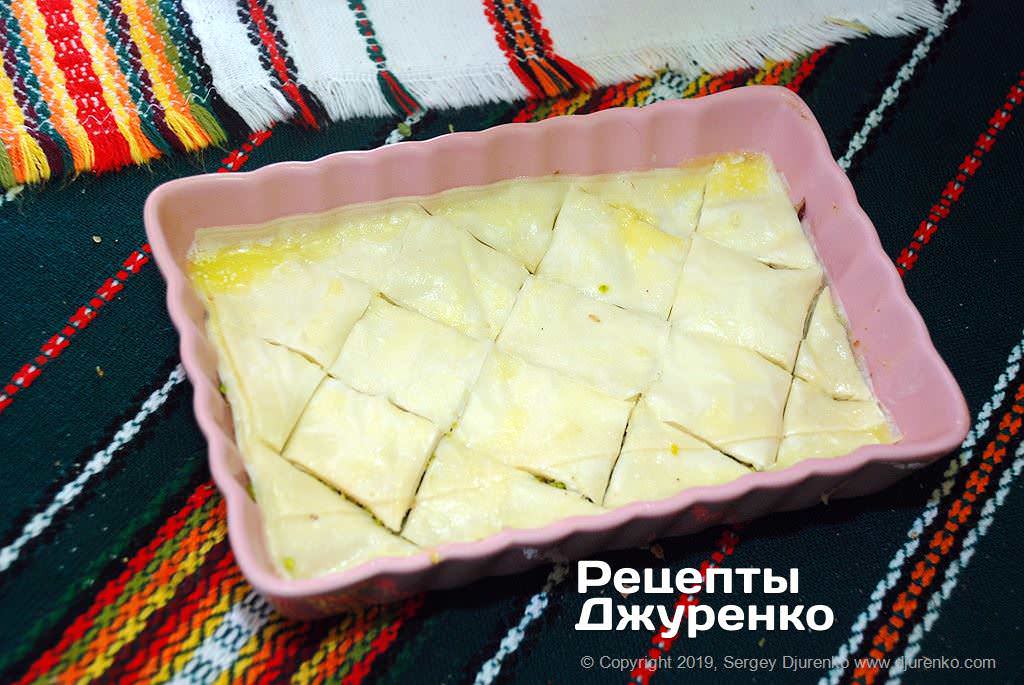
Cut the baklava before baking. Cutting the dough after baking is very awkward: phyllo is very thin and becomes very brittle once baked. So before putting the dish in the oven, cut the dough with a very sharp knife. It is best to hold the knife vertically, cutting through all the layers at once right down to the bottom of the dish. The shape of the pieces is up to you. As a rule, I cut half into diamonds and half into squares. The distance between the cuts is 3-4 cm. Do not go bigger, or the baklava may not soak up the syrup. If needed, cut a template out of cardboard or use a ruler.
Baking and soaking
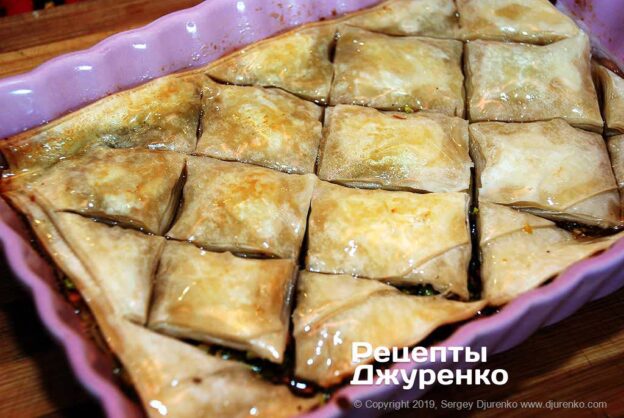
Bake the baklava until dark golden. Put the dishes with the baklava into an oven preheated to 180°C. After 10-15 minutes take the dishes out of the oven and pour over the remaining butter. Then return them to the oven, this time raising the temperature to 200°C. Phyllo dough bakes in 30-45 minutes, and you should go by the color of the surface. As soon as the top of the baklava starts to brown and turns dark golden, it is done.
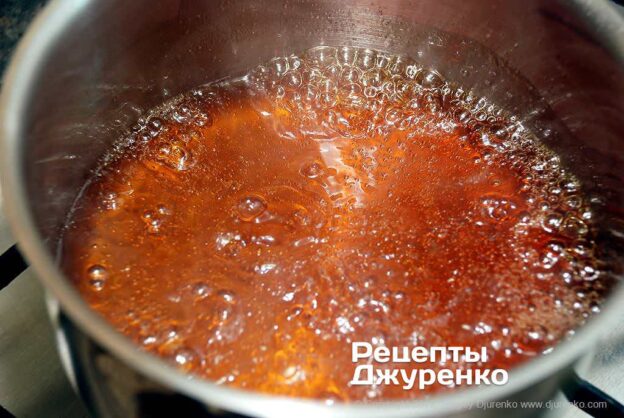
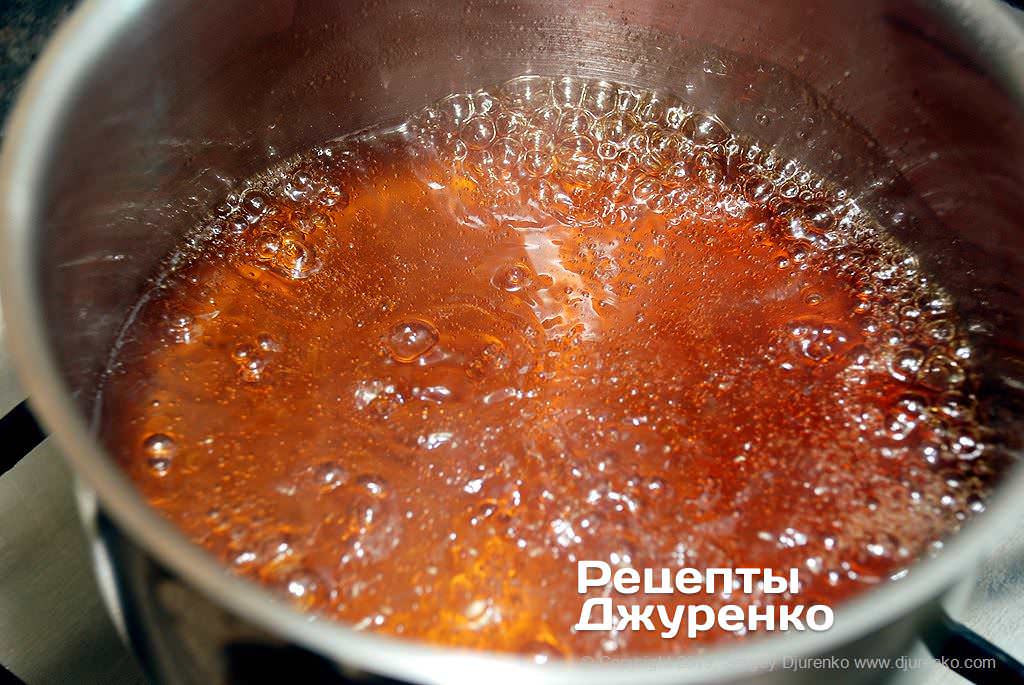
Make the syrup. While the baklava bakes, prepare the sweet syrup, which is in essence a complex syrup. Bring 150 ml of water to a boil in a small pot and add 0.5 cup each of regular white sugar (90 g) and brown cane sugar. I did not use honey, because it does not like heat. Add 1-2 tbsp of Cointreau liqueur, 2-3 tbsp of rose or orange blossom water and a pinch of ground cardamom. If you like, you can add lemon juice. Heat the syrup over medium heat, stirring so the sugar dissolves, and take the pot off the heat. The syrup should cool a little.
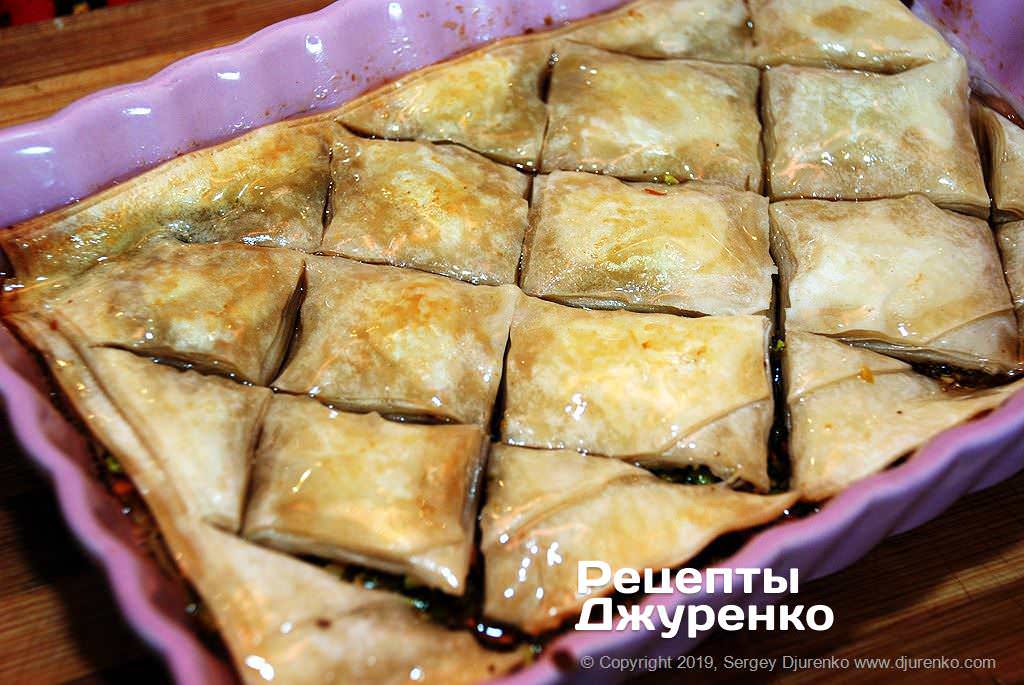
Soak the baklava in the syrup. Take the baklava out of the oven and, while it is still hot, carefully pour the syrup over it. The sweet syrup should soak into the layered dough. You can also run a knife along the cut lines so the syrup flows into the slits. If the syrup has no honey, it is worth returning the dishes to the oven for 10 minutes afterwards. This helps the soaking, the sugar caramelizes slightly and the top of the dessert gets darker. You can also put the dishes under a preheated grill for a few minutes. Often, though, people just use the syrup with no extra heating.
Serving
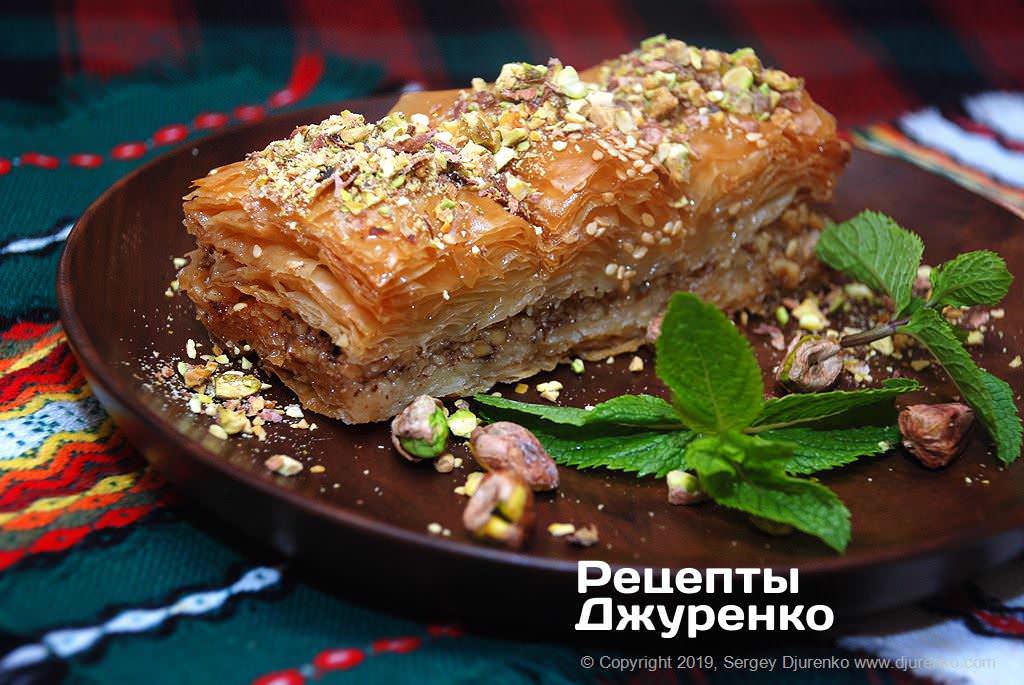
Cool the baklava and sprinkle with nuts. The finished baklava should cool completely at room temperature, ideally for a few hours so the syrup soaks in. After that, transfer it to a platter or a box. Sprinkle the top of the dessert generously with the ground nuts and pistachios you set aside. You can also use powdered sugar, almonds, shredded coconut and so on. For serving, you can move the baklava to dessert plates and add whole nut halves, almonds and sprigs of mint.
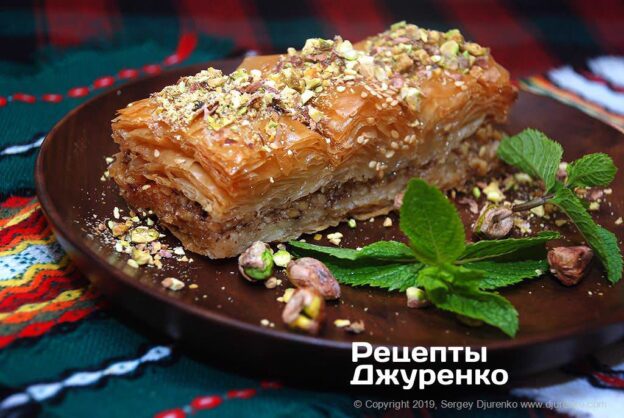
Remember that this is not a meal but a high-calorie dessert. It is a treat, and it is best served at the end of lunch with a cup of fragrant coffee (200 ml) or tea.
Calories and macros
395 kcal
Serving ≈ 100 g
- Protein6 g7% of kcal
- Fat22 g50% of kcal
- Carbs43 g44% of kcal
100 g406 kcalProtein 6.7 gFat 22.2 gCarbs 44.2 g
Calculated from the recipe ingredients, excluding salt and spices. Data: USDA and Matvaretabellen.