Buzhenina – Pork Roast Baked in Foil, Step-by-Step Recipe

Buzhenina – Pork Roast Baked in Foil

☆ 5

Buzhenina, an oven-baked pork roast: a 2–2.5 kg piece of pork is studded with garlic, rubbed with salt and spices, marinated in dark beer for up to a day and baked in foil for 2–3 hours at 220°C.

Around here, as usual, the year is one holiday after another. Almost non-stop. New Year, Christmas, Epiphany, Easter… and so on. And what is a holiday without a feast? By tradition, nearly everyone mixes up countless basins of salad, roasts kilos of buzhenina and distils a good supply of moonshine. Our people like to rest until they drop.

Nobody will argue that a big piece of roast meat is the centrepiece of any festive table. There are plenty of ways to cook meat in one large piece. In Ukrainian, Moldovan and other cuisines it is buzhenina – pork baked as a large joint. It was mentioned in chronicles more than 400 years ago.

Pork buzhenina is usually a large boneless piece of meat (leg), always with a layer or an edge of fat, rubbed with salt and spices. The meat is rubbed with oil, basted with meat juices and put in the oven.

When I was little, really very little, my grandmother had a huge stove in her village house. It took up most of the kitchen. Before Christmas, by village tradition, a pig was sentenced to become sausage. Buzhenina was a must among the ways of using up the pork. They cooked not just a piece of meat but the entire hind leg – whole. The bone was removed, the meat was salted, peppered, sprinkled with crushed spices and studded with garlic cloves. Then the big piece of pork was wrapped in unleavened dough and baked in the hot stove – and that was how buzhenina was made.

A modern flat has no such stove, unfortunately, but it does have an oven. For various reasons, pork is not usually baked in dough at home. Dough means quite a lot of fuss. To make buzhenina for Christmas, a roll of ordinary kitchen foil is quite enough, and it is sold even in the smallest shops.

Ingredients

10-15 servings

  • Pork (shoulder or leg) 2-2.5 kg
  • Garlic 1 head
  • Fresh dark beer 1-1.5 l
  • Vegetable oil a little, if the meat is lean

Spice mix (about 1 heaped tbsp per 2.5 kg of meat)

  • Rock salt (or sea salt) 2 parts
  • Coriander seeds, oregano, thyme, black peppercorns 1 part each
  • Bay leaves 4-5

Step-by-step recipe

Meat and spices

Buzhenina needs a large piece of pork – 2–2.5 kg. Leg or shoulder with a layer of fat is ideal. You can try beef, using the most tender cut, but it may turn out a little dry. To have the dish ready for Christmas, it is best to start a day ahead – allowing for the long marinating – and to bake it in the morning or the evening before.

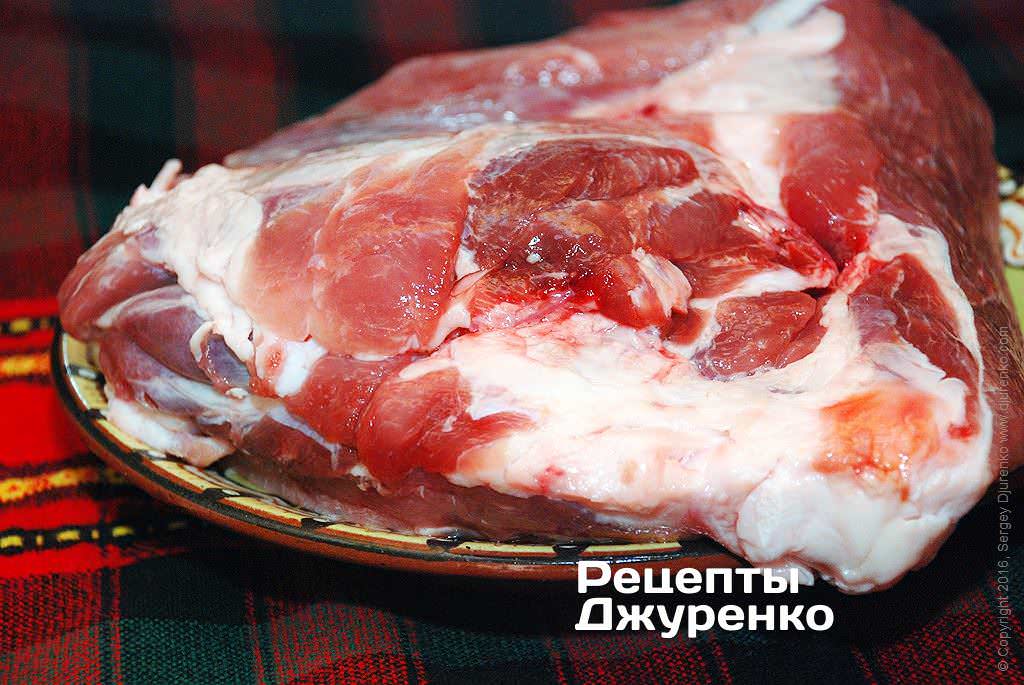
  1. Prepare the meat. Carefully remove all the bones from the meat, especially any splinters that may be left after butchering. Trim off the sinews and membranes. Wash the meat and pat it dry with paper towels.
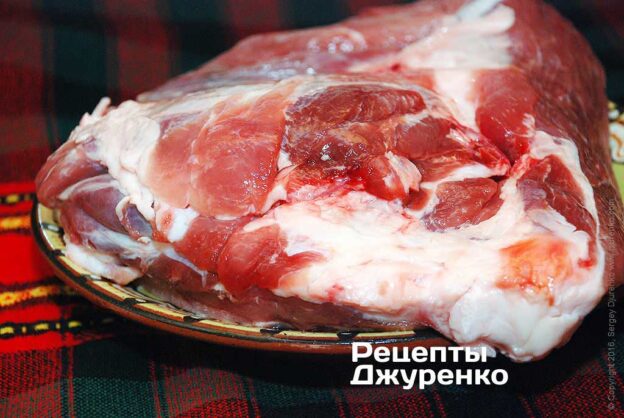
    A piece of pork.
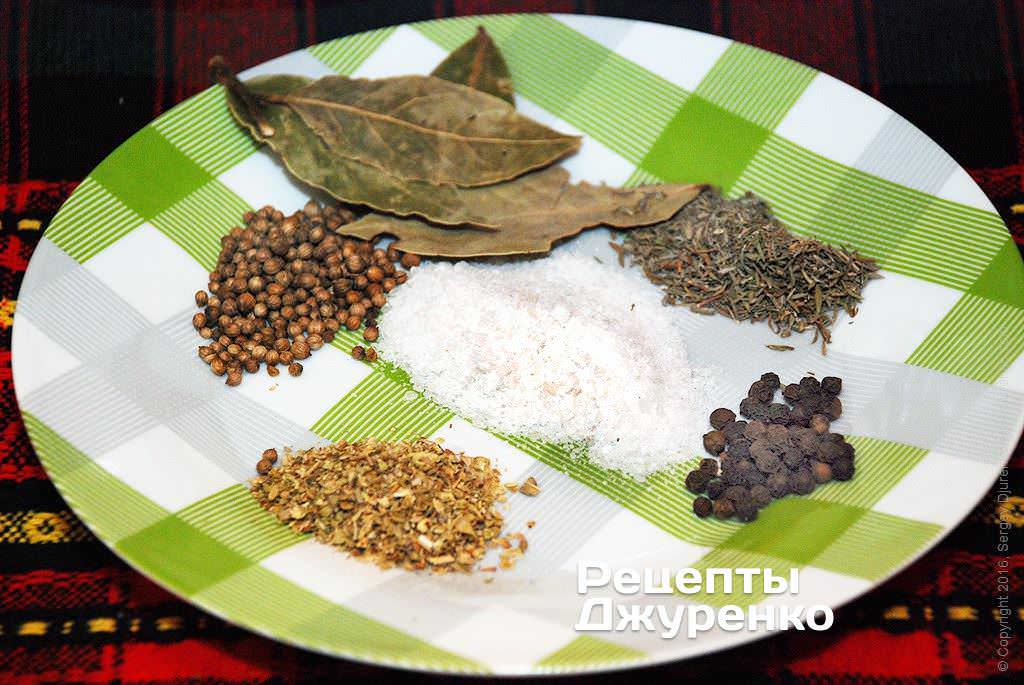
  2. Make the spice mix. Put all the spices – rock salt (or sea salt), coriander seeds, oregano, thyme, black peppercorns and bay leaf – in a mortar and crush them coarsely. The spices go in roughly equal amounts by volume, with two parts of salt and 4–5 bay leaves. The total amount of spice mix for a 2.5 kg piece of meat is about one heaped tablespoon. Keep in mind that some of the spices will stay in the marinade.
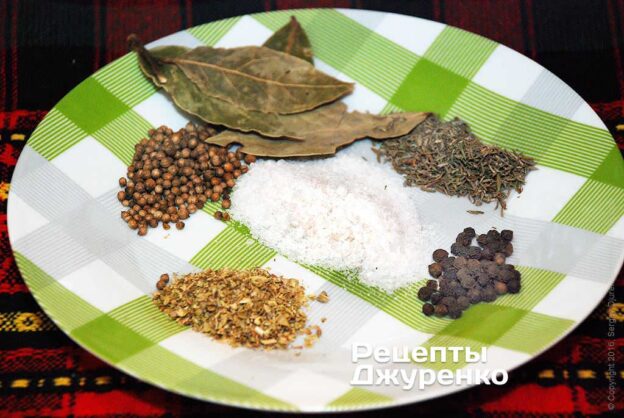
    Spices for buzhenina.
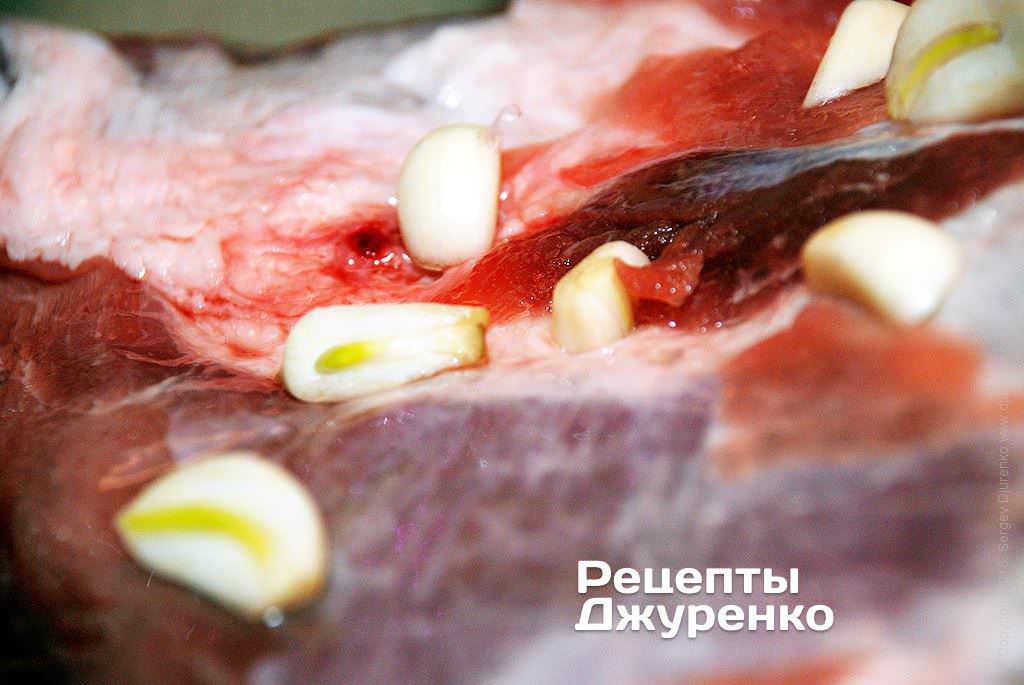
  3. Stud the meat with garlic. Separate the head of garlic into cloves and peel them. Cut the large cloves in half lengthwise. Put the pork on a cutting board and, with a thin knife (or ideally a special larding needle), make lots of cuts in the meat, half its thickness deep. Push a garlic clove, or half a large one, into each cut. I will say it straight away – buzhenina cannot be spoiled by too many garlic cloves.
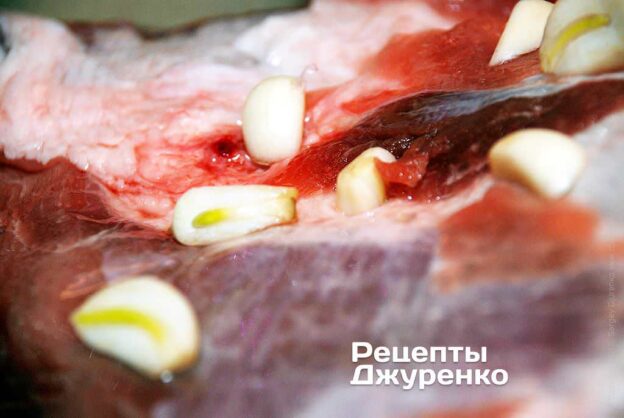
    Pork studded with garlic.
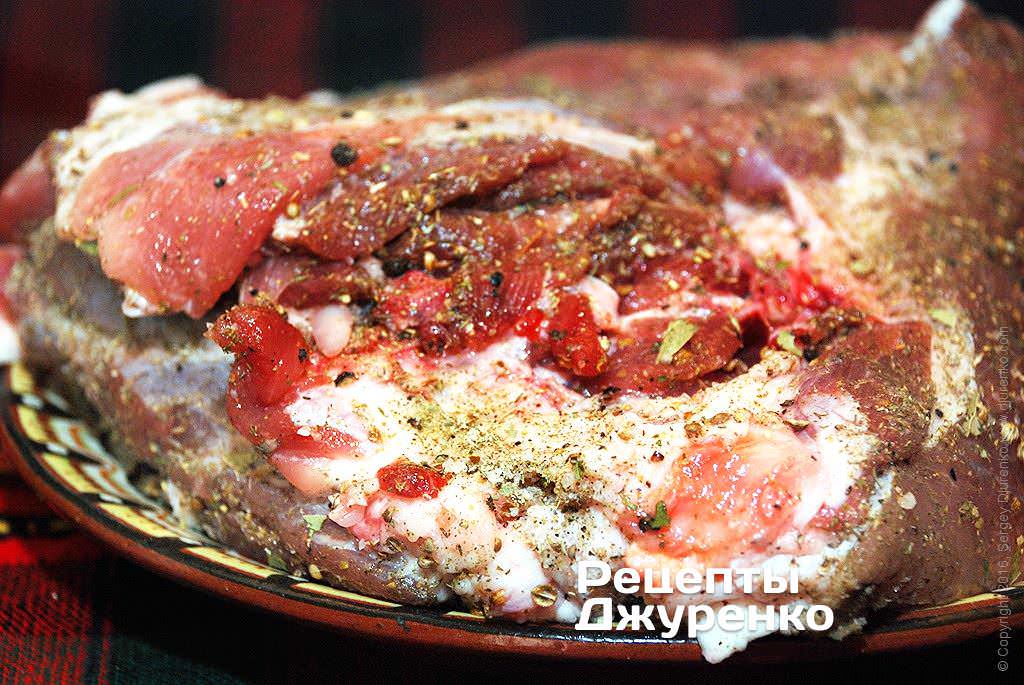
  4. Rub the whole piece of meat with the salt and spice mix on all sides. Thoroughly, without missing a spot.
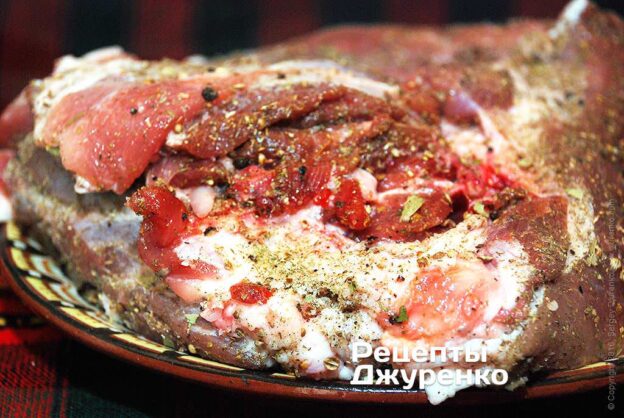
    Meat rubbed with spices.

Marinating

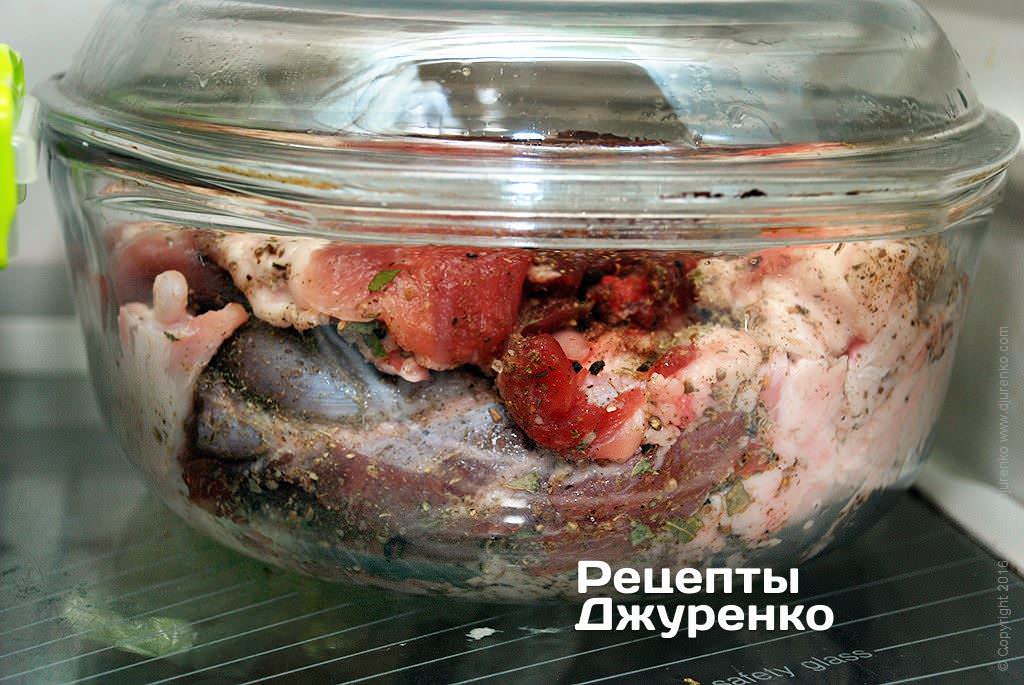
  1. Put the pork in a plastic or glass dish – a lidded roasting dish is ideal. Put it in the fridge for 3–4 hours to dry-marinate.
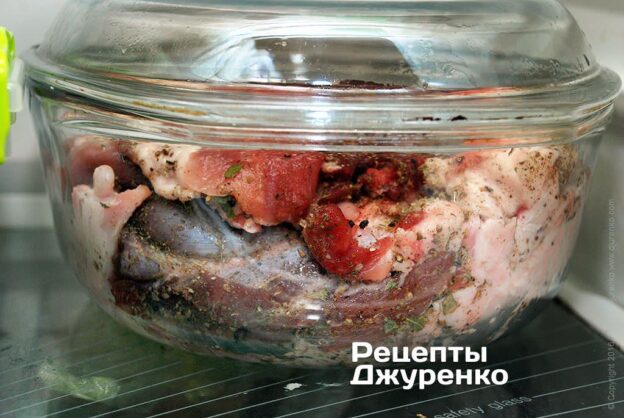
    Pork left in a cold place for 3–4 hours.
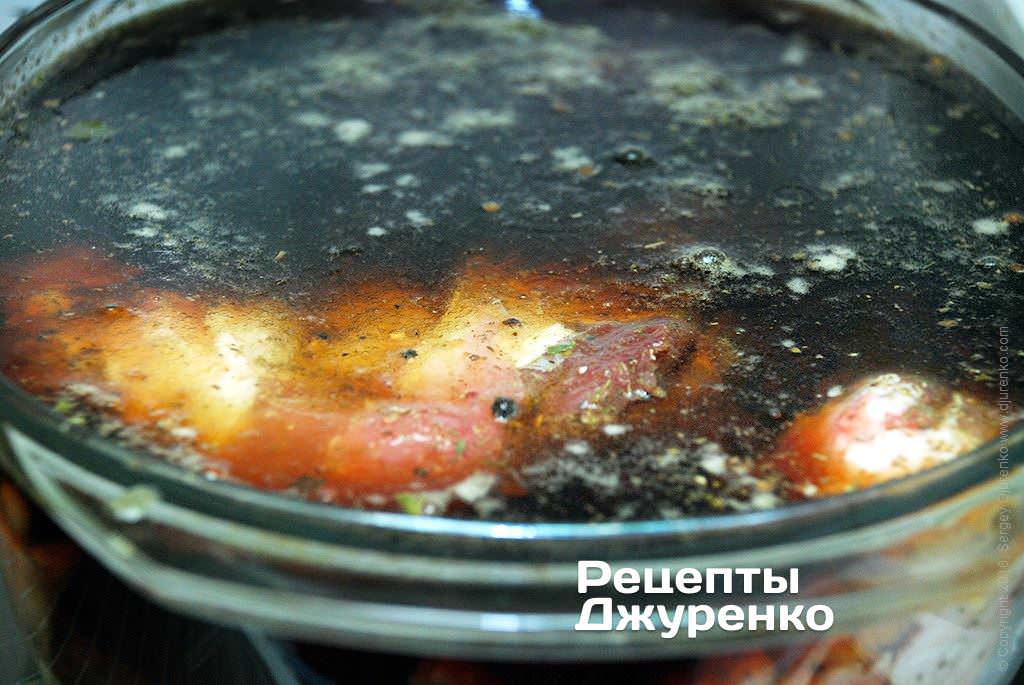
  2. When the dry marinating is over, pour fresh dark beer over the meat. The kind of beer is up to you; all that matters is that the beer covers the piece completely. Put the meat in the marinade in the fridge for at least 12 hours, ideally up to a day – then the buzhenina will turn out tender and juicy. From time to time, though not too often, turn it over in the marinade.
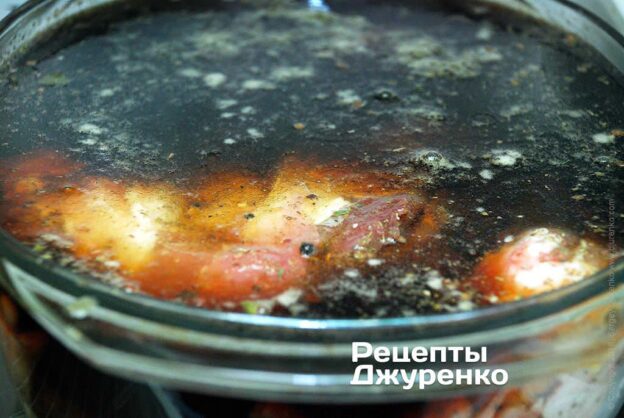
    Pork marinating in dark beer.

Baking in foil

  1. On the day of baking, pour off the marinade and pat the meat dry with a paper towel. The less moisture is left on the piece, the better. If the pork is very lean, or rather there is no pork fat on its surface, coat it lightly with vegetable oil or – though I do not like this at all – with mayonnaise.

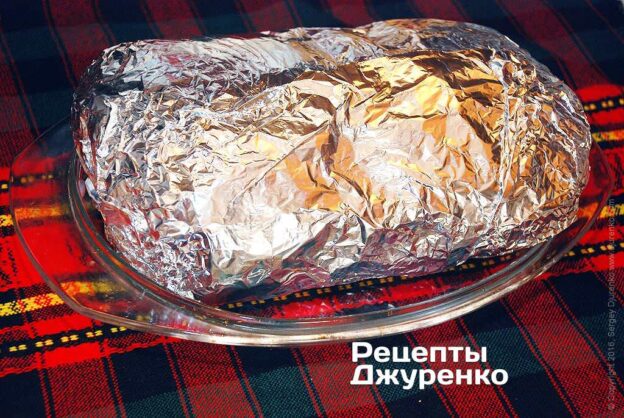
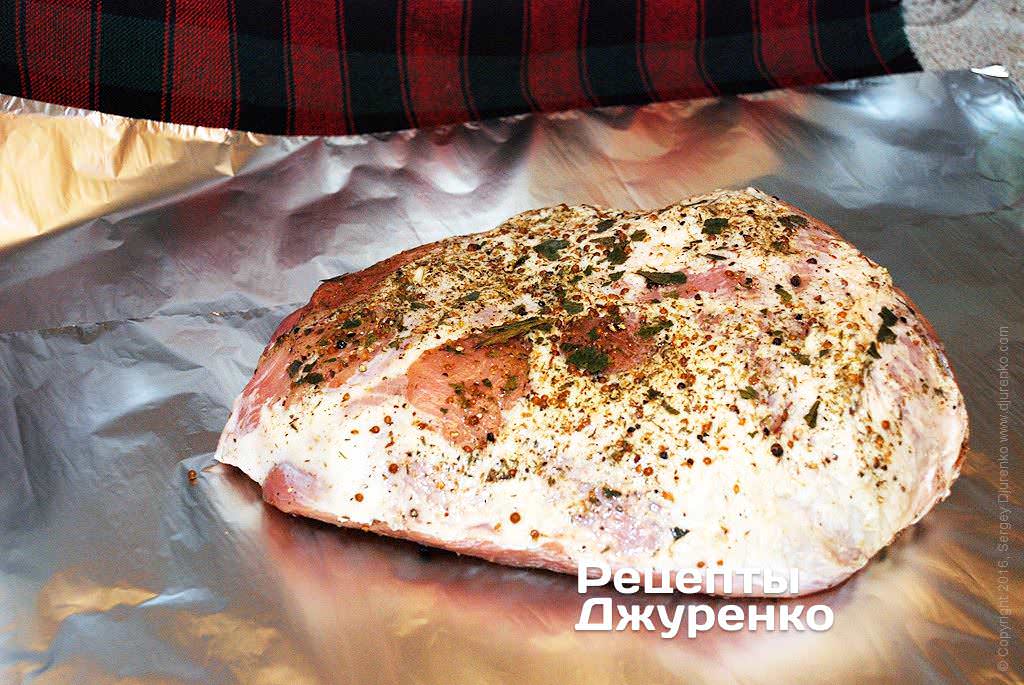
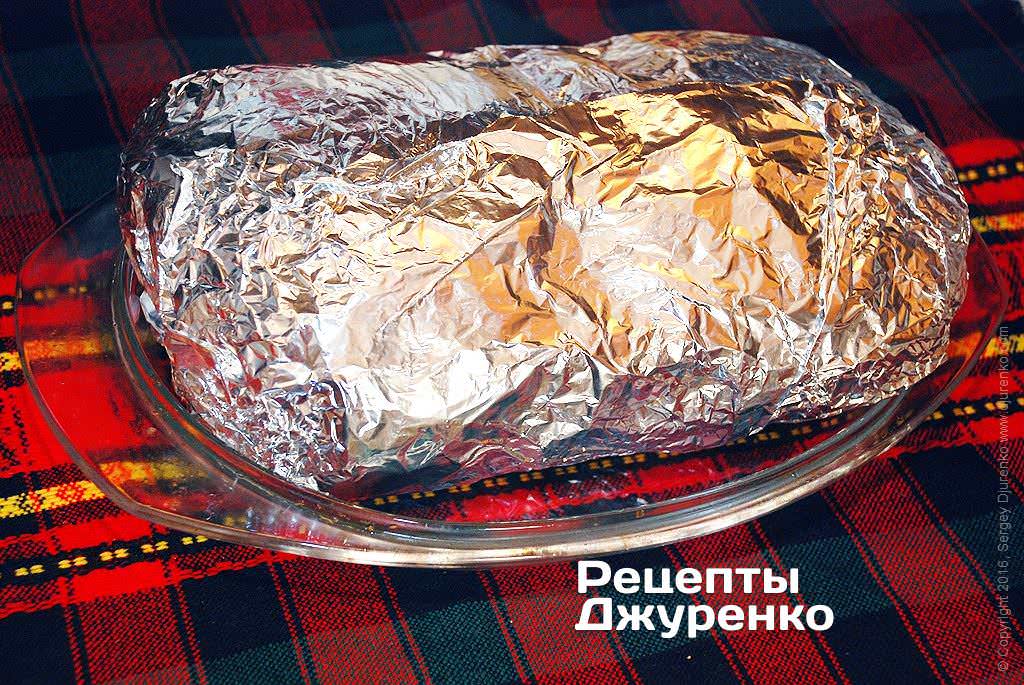
  2. Spread the kitchen foil on the table and wrap the meat in it tightly in 3–4 layers, trying not to leave any gaps. Make a hole on one side of the foil parcel – simply pierce the foil with a knife so the liquid can run out during cooking.

    People often argue about which side of the foil the meat should go on: shiny or matt. I have done it both ways. No difference. But I have read in clever books that the shiny side should face inwards – supposedly the heat reflects off the shiny surface and stays inside. Perhaps.
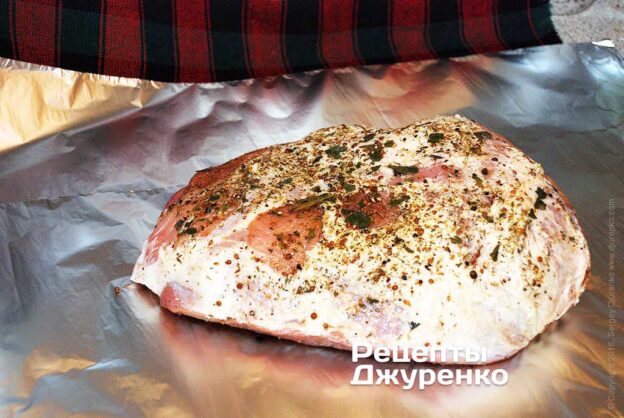
    Meat wrapped in foil.
  3. Put the wrapped meat on a baking tray (or in the same roasting dish it was marinated in) and place it in an oven preheated to 220°C. The temperature depends on the oven: mine is gas, and I bake at 200–220°C.
    Wrapped meat in an oven preheated to 220°C.
  4. Bake for 2–3 hours. There is no need to turn the pork; what matters is that the liquid runs out of it. The cooking time varies a lot: judge by the colour of the liquid and the colour of the meat (the juice runs clear, with no pink).

    It is often advised to remove or cut open the foil at the end of baking so that the meat dries out a little and browns. Do not do it. Buzhenina is not fried meat; it should be closer to meat baked in its own juices than to meat roasted in fat with a crust.
Serving

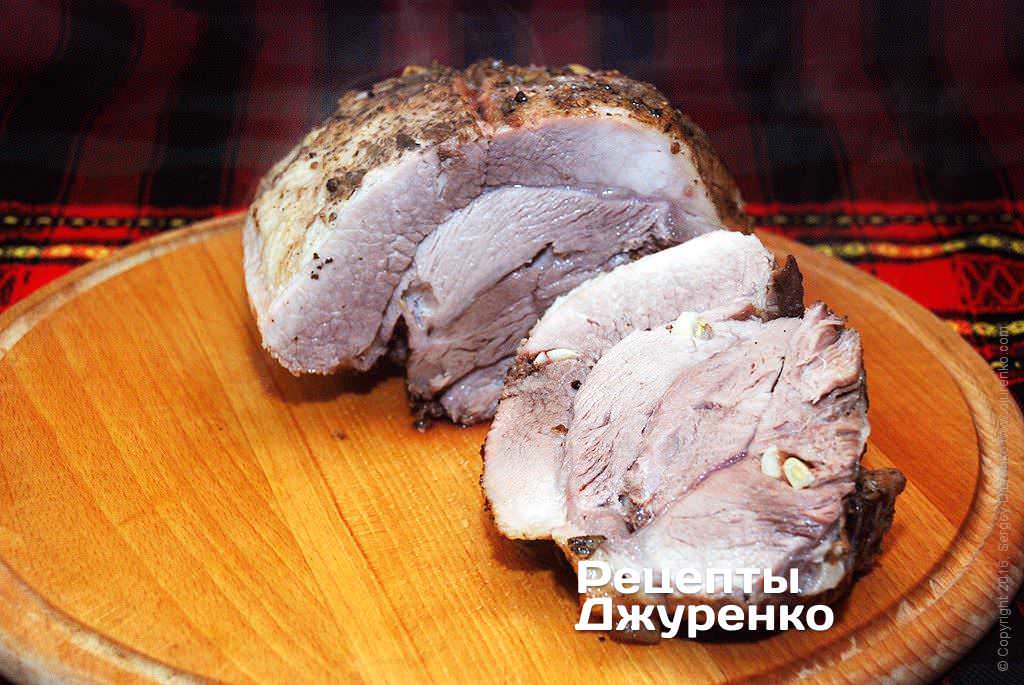
  1. When the cooking is over, remove the foil and throw it away. Let the buzhenina cool to room temperature.
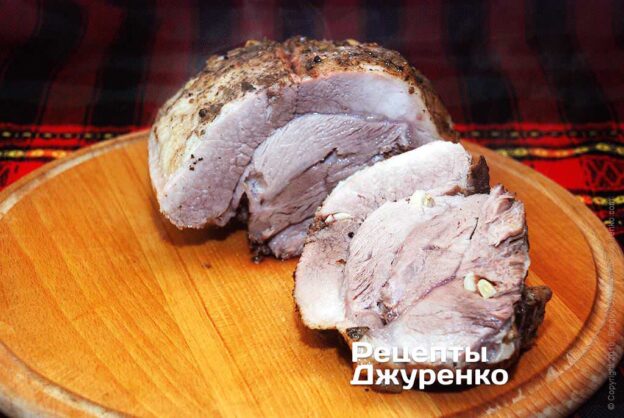
    Buzhenina cooling down.
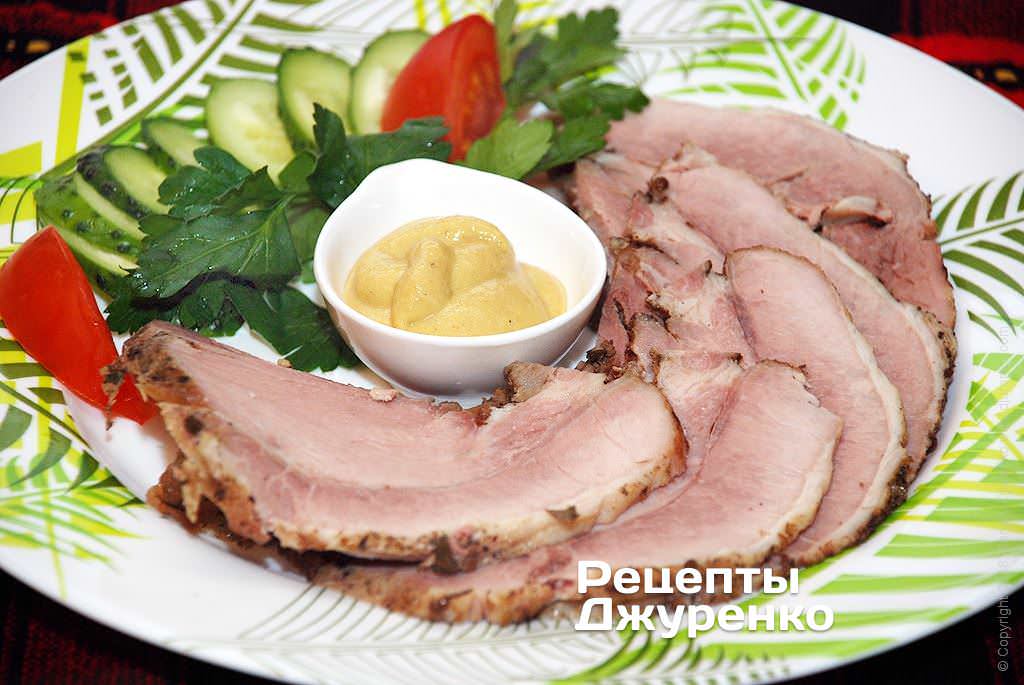
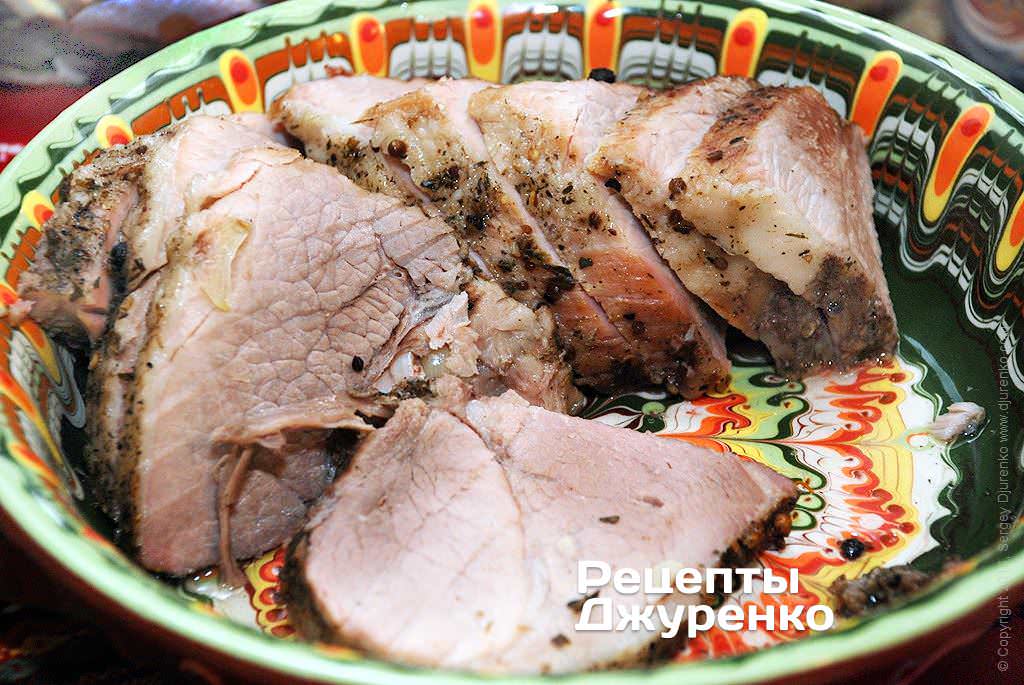
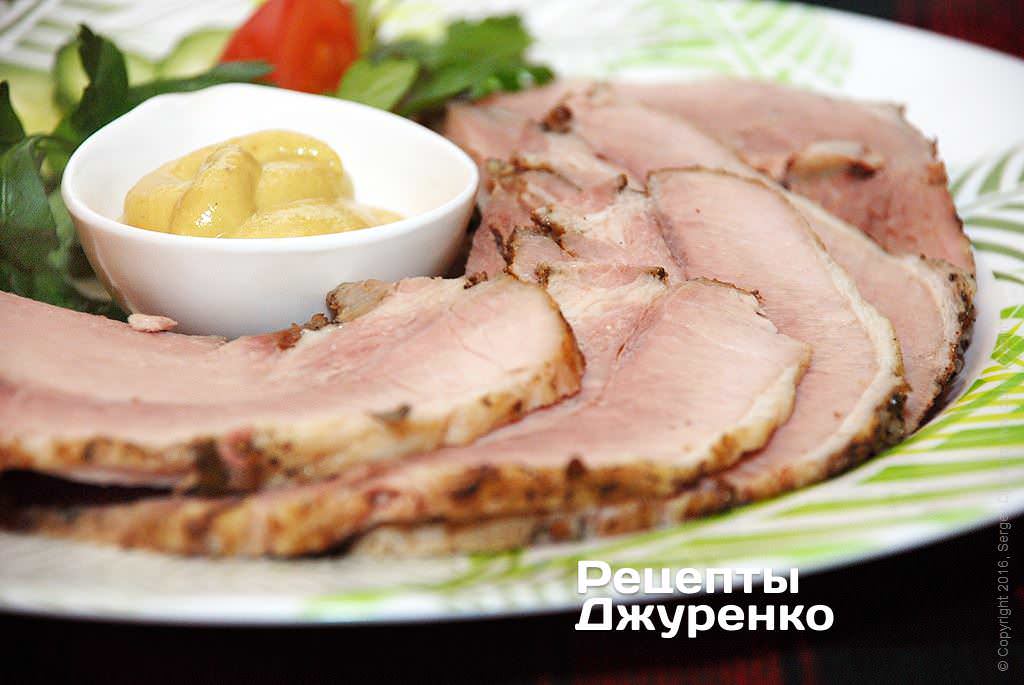
  2. Slice the cooled meat across the grain. Thin or thick – as you like. I prefer a proper piece of meat. Arrange the sliced buzhenina on a large platter and garnish with fresh vegetables: cucumbers, tomatoes. And also with fresh dill or parsley.
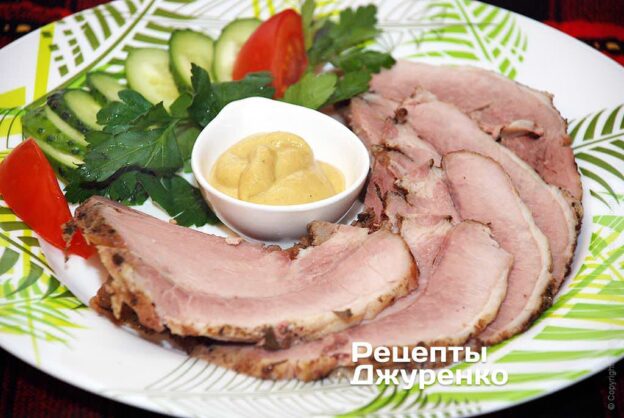
    Sliced buzhenina arranged on a large platter.
  3. Buzhenina is served at the Christmas table sliced or as a whole piece. Exceptionally good with mustard or homemade horseradish, the freshest you can get.

    Do not make sandwiches out of it, but do try making a salad with buzhenina.
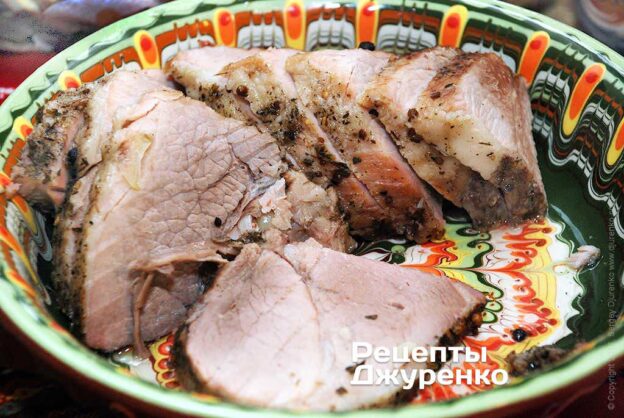
    Buzhenina

How did you like this recipe?

Rate it with one tap.

Thanks for rating!
Sorry you didn't like it

Leave your email and I'll write to find out what went wrong. A 1–2 rating counts only with an email. I won't publish it.

Tell us how it turned out

Calories and macros

540 kcal

Serving ≈ 170 g

  • Protein39 g30% of kcal
  • Fat41 g69% of kcal
  • Carbs1 g1% of kcal

100 g313 kcalProtein 22.7 gFat 23.6 gCarbs 0.8 g

Calculated from the recipe ingredients, excluding salt and spices. Data: USDA and Matvaretabellen.

Made it? Tell me how it turned out — I read every review

The maximum upload file size: 10 MB. You can upload: image. Links to YouTube, Facebook, Twitter and other services inserted in the comment text will be automatically embedded. Drop file here

To Get It Right

For juicy buzhenina

  • The beer must cover the piece completely, and the meat needs a long marinating: at least 12 hours, better a full day.
  • Pat the meat dry before wrapping: the less moisture on the piece, the better. Wrap it tightly, in 3–4 layers, with no gaps.
  • Do not open the foil at the end of baking to “brown” the meat: buzhenina is meat baked in its own juices, not roasted with a crust.
  • Slice only the cooled meat, across the grain.

Variations

You can try beef – the most tender cut – but it may turn out a little dry. My grandmother baked buzhenina not in foil but in unleavened dough, and not a piece but the whole hind leg. There is no need to sear the meat before wrapping, as restaurants do: that is a different dish, closer to Florentine-style pork.

Making ahead and storing

Buzhenina is best baked the day before: a day for marinating and 2–3 hours of baking – start a day before the holiday and bake it in the morning or the evening before. It is served cold, sliced, though you can also serve it hot, as a whole piece straight from the oven. Store the leftovers in the fridge, wrapped in foil or parchment, for 3–4 days.

What to serve it with

Buzhenina goes with mustard or homemade horseradish, the freshest you can get, and fresh vegetables with herbs. Do not make sandwiches out of it, but a salad with buzhenina is a must. For Christmas in the village, my grandmother also made homemade sausage from the same pig.

Have your own trick for this recipe?

Questions and answers

How long to bake buzhenina in foil?

2–3 hours at 220 °C for a 2–2.5 kg piece. The time depends a lot on the oven and the meat, so judge by the juice running out through the hole in the foil: it should run clear, with no pink.

At what temperature to bake buzhenina?

In an oven preheated to 220 °C. The temperature depends on the oven: mine is gas, and I bake at 200–220 °C. There is no need to turn the meat.

Which cut of pork is used for buzhenina?

A large boneless piece of 2–2.5 kg – leg or shoulder, always with a layer of fat. Pork neck works too: it is fattier, and the buzhenina comes out juicy.

What marinade for buzhenina in foil?

A double one. First dry: the meat, studded with garlic, is rubbed with salt and spices and kept in the fridge for 3–4 hours. Then it is covered with fresh dark beer and marinated for at least another 12 hours, better a full day. The kind of beer is up to you; the main thing is that it covers the whole piece.

What to coat buzhenina with before baking?

Usually nothing: salt with spices and garlic are enough, and the foil keeps the juices in. If the piece is very lean, with no fat on the surface, coat it lightly with vegetable oil or – though I do not like it – with mayonnaise. Readers also bake pork in Dijon mustard or in mustard with honey and red pepper.

Which side of the foil should the meat go on?

No difference – I have done it both ways. Clever books say the shiny side should face inwards: the heat reflects and stays inside. Perhaps. What matters more is to wrap it tightly and pierce the foil on one side so the juice can run out.

Didn't find an answer? Ask your question