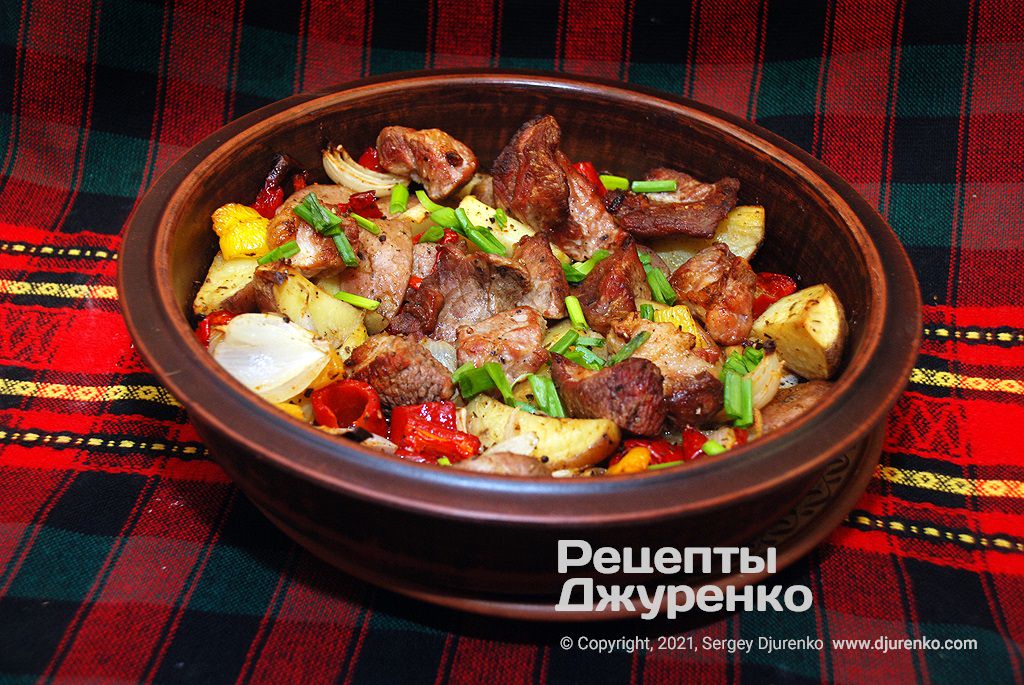
Ojakhuri: Georgian Potatoes with Pork and Veal in a Clay Pan
Ojakhuri is a national Georgian dish – at its simplest, potatoes fried with meat. The Georgian word ოჯახური means “family”, which hints that it's cooked at home for a family dinner or a feast. As a rule, several kinds of meat go into the pan with the potatoes – veal, pork, poultry and even offal. Vegetables make up the rest: onions, bell and chili peppers, tomatoes and so on.
My favorite combination is pork neck and veal shoulder. Both cook in the same amount of time – the dish comes out fragrant and the pieces never turn tough.
Traditionally the dish is cooked in a ketsi (კეცი) – a very handy pan made of fired red clay or, sometimes, black stone. A ketsi resembles the Bulgarian sach – a similar clay platter with handles on which food is laid out and baked in an oven or over a fire. The general principle is simple: the meat is lightly browned, the vegetables go in raw or briefly fried in a little oil, everything is tossed with spices and moved into the clay pan. From there it's easy – the clay pan with the food goes into the oven, often heating up together with the oven to avoid sudden temperature changes.
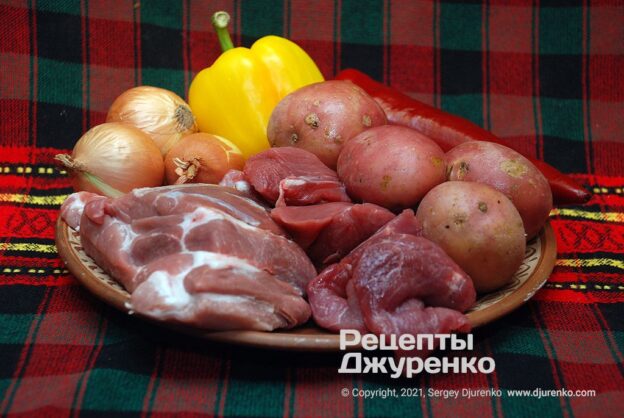
Ingredients
2 servings
- Pork neck 350 g
- Veal (shoulder meat) 350 g
- Potatoes 5-7
- Bell peppers 2
- Chili pepper 1
- Garlic 1 clove
- Vegetable oil 2 tbsp
- Salt, black pepper, sweet paprika to taste
- Cilantro, green onions, adjika, lavash for serving
- Coriander, savory, Svan salt optional
Step-by-step recipe
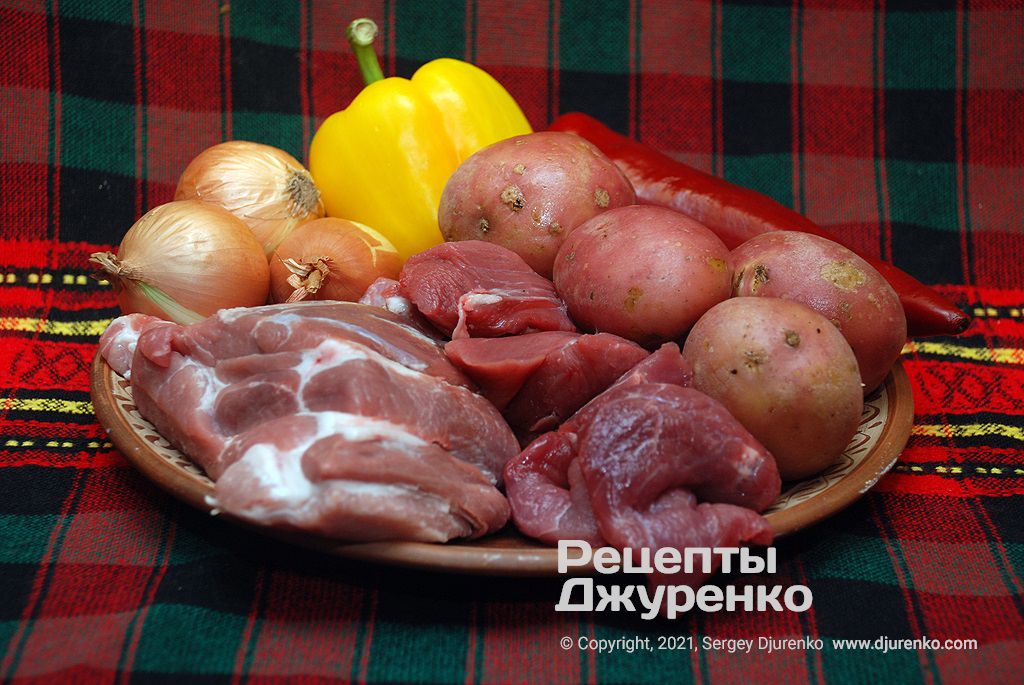
- For homemade ojakhuri we use raw vegetables – medium potatoes, onions, bell and chili peppers. The pork neck and veal are cut into pieces and always browned first to get a crust. All the vegetables are tossed with spices and laid in a ketsi together with the meat, or in a similar unglazed clay dish. The roasting time depends a lot on your oven and the size of the pieces.
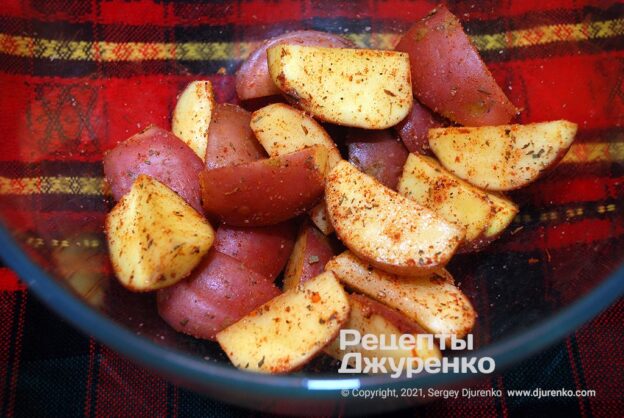
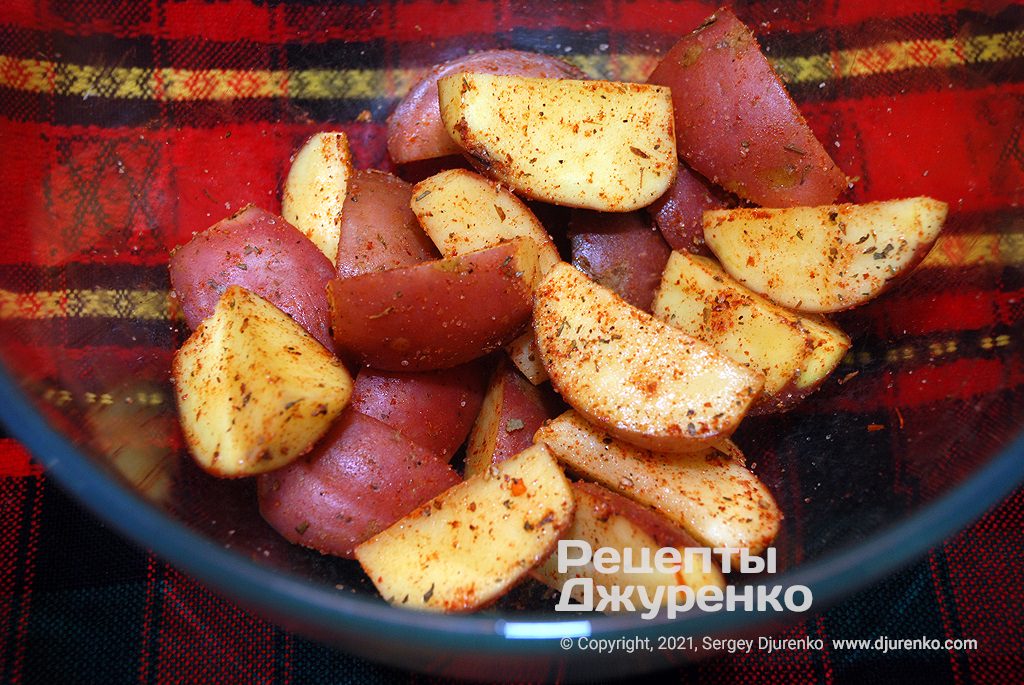
- Potatoes slightly bigger than a chicken egg work best. You can peel them, but the dish is at its best when the potatoes roast unpeeled. For that, scrub them very thoroughly with a sponge. Pat the potatoes dry and cut each into 4–6 wedges, just like for country-style potatoes. Put the wedges in a bowl, season with salt and freshly ground black pepper and add 0.5 tsp sweet paprika. By the way, Svan salt – salt crystals mixed with herbs and spices – gives an excellent result instead of regular salt. Toss the potatoes with the spices and leave for 5–10 minutes.
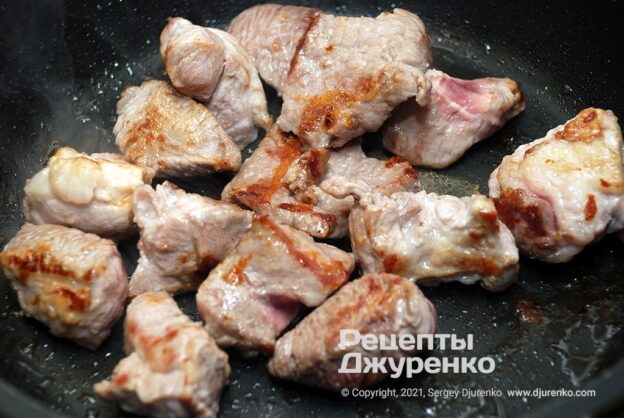
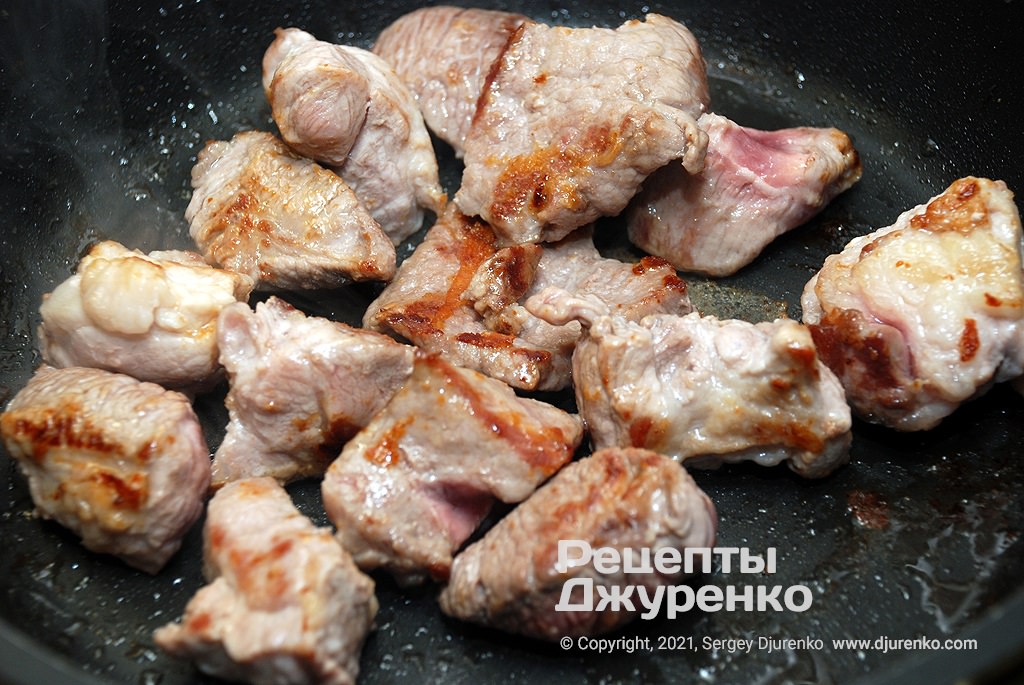
- Carefully clean the pork neck and veal of any bone fragments. Cut the meat into pieces about the size of the potato wedges – ojakhuri is often eaten with your hands or scooped up with bread, so this makes the pieces easier to pick up. Pour 1 tbsp vegetable oil into a regular frying pan. Once the oil is hot, fry the meat, turning it often. The meat will stay half-raw inside – the goal is a clearly browned crust.
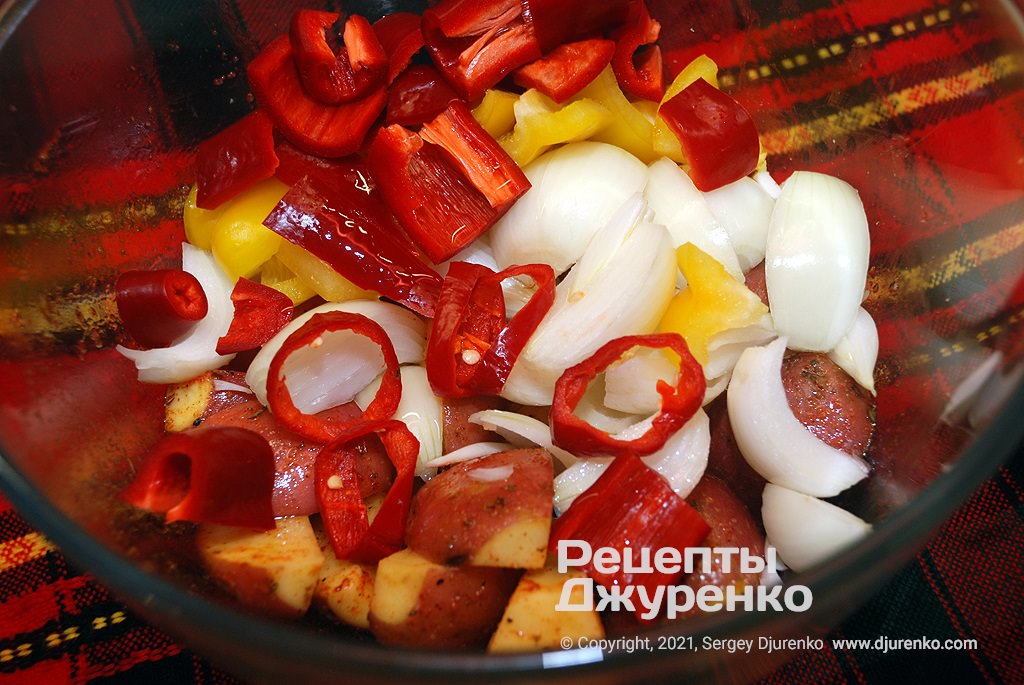
- While the meat is frying and the potato wedges are “resting” with the spices, peel the rest of the vegetables. Cut the onions into wedges or thick strips. Cut the bell peppers fairly large – into chunks or strips – and the chili pepper into rings. Roughly chop the garlic clove. Combine all the raw vegetables in a bowl.
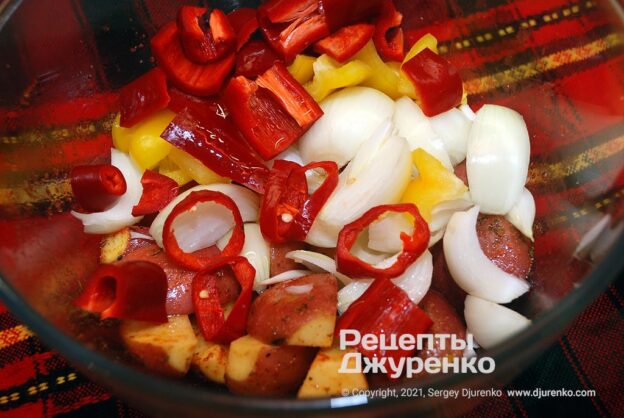
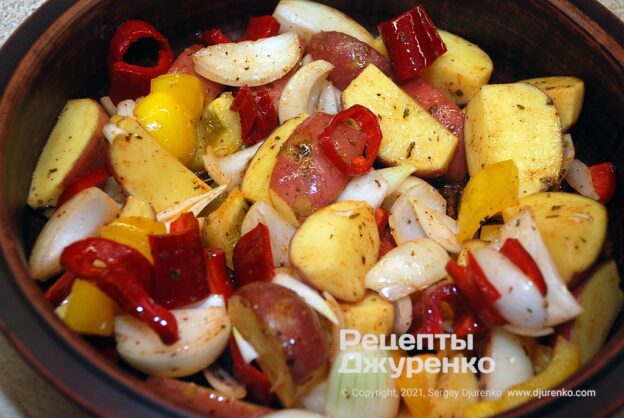
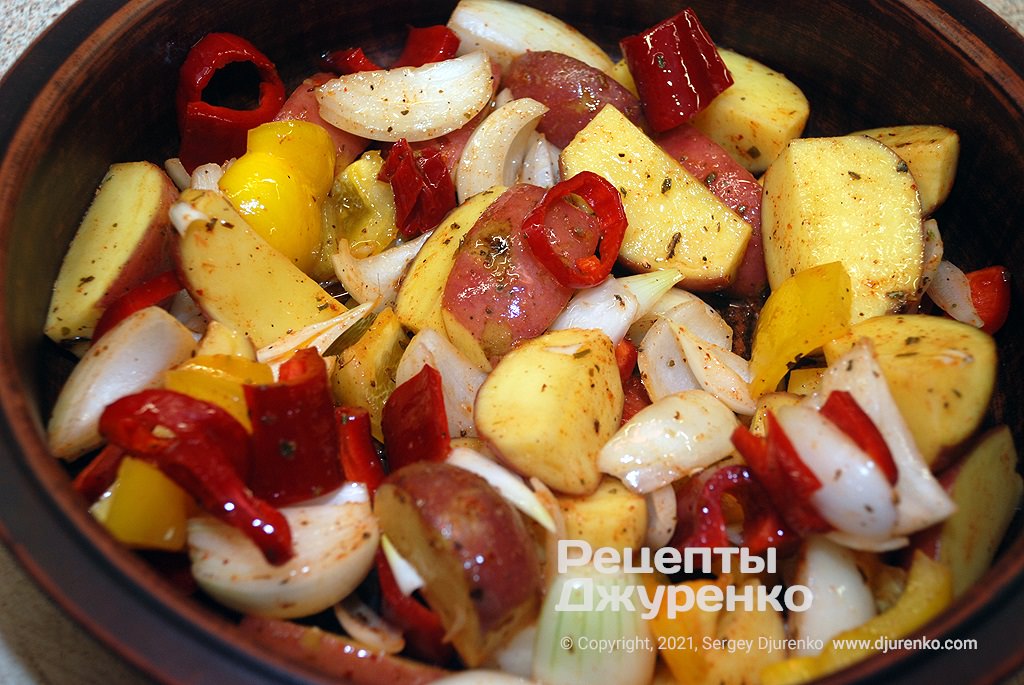
- Drizzle the spiced potato wedges with 1 tbsp vegetable oil and toss. Add all the other vegetables to the potatoes and toss again. This way the paprika barely colors anything except the potatoes. Prepare the clay pan: fill it with warm water beforehand, pour the water out after 10–15 minutes and wipe the clay dry. Put the vegetables into the ketsi.
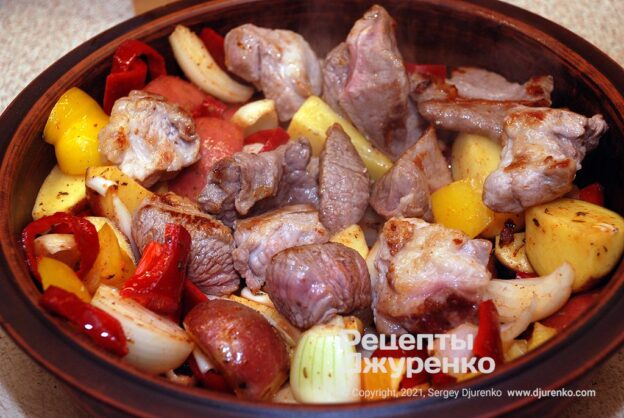
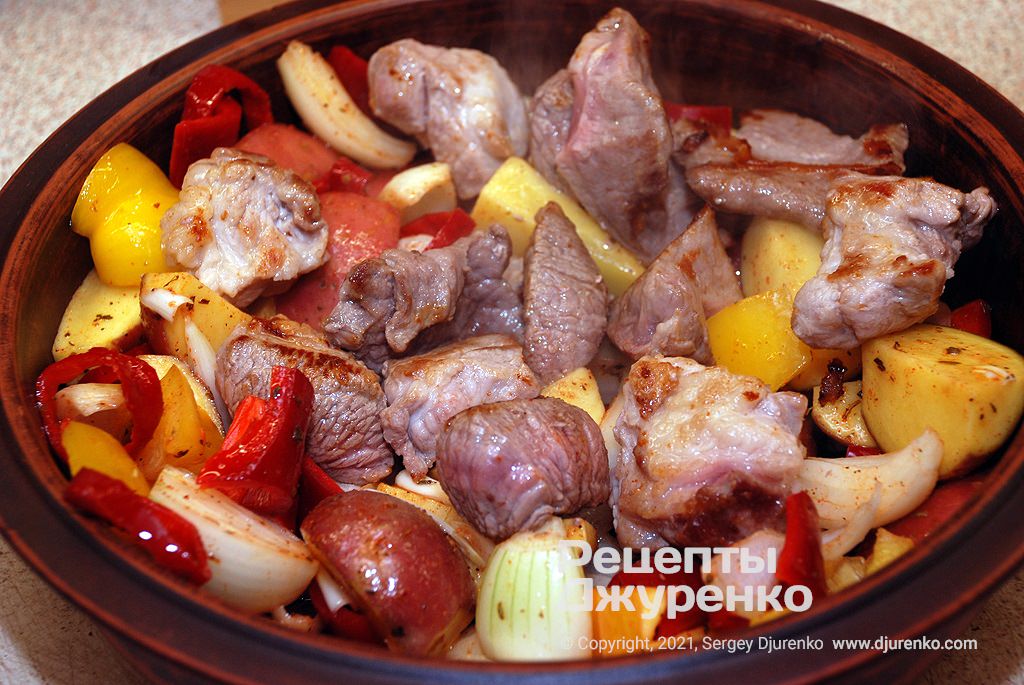
- Lay the browned meat on top of the vegetables. Pour the fat left in the frying pan over everything. Now the ketsi goes into the oven. To avoid sudden temperature changes, I put clay and ceramic dishes into a cold oven and heat them up together. Don't stir the ojakhuri while it cooks – everything browns perfectly on its own.
- I usually heat the oven to 200–220°C. At this temperature all the vegetables are done in 45–60 minutes. I check doneness by the potato wedges – if a toothpick goes in easily, they're ready. The vegetables roast without any liquid, so they may seem slightly underdone – remember potatoes baked in embers?
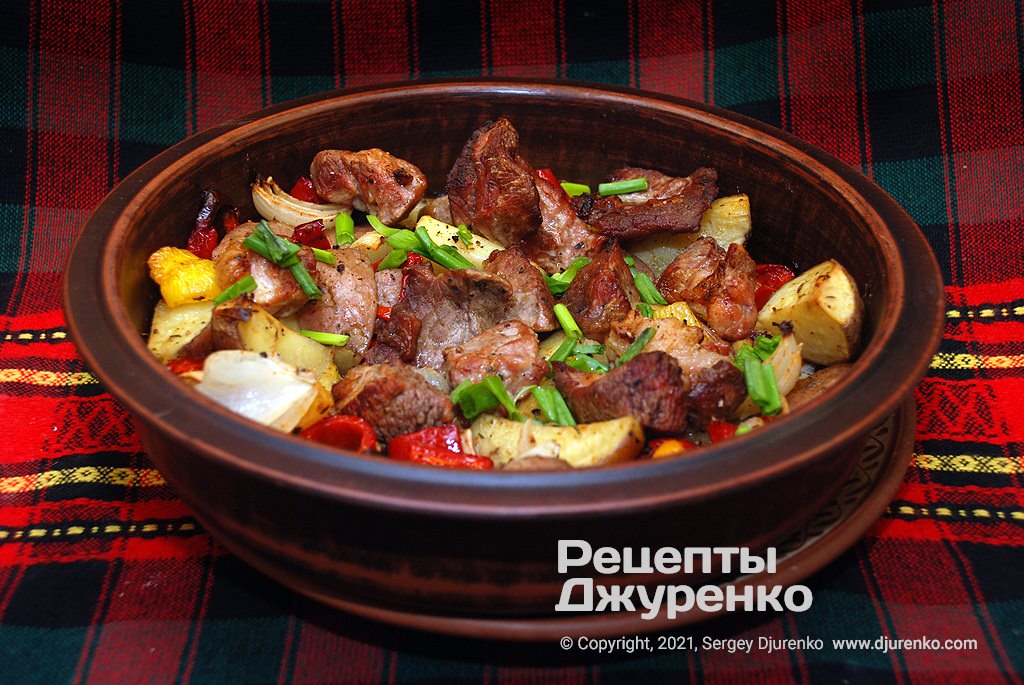
- When everything is done, take the ketsi out of the oven and set it on a clay plate. That's how the dish goes to the table – you can add individual plates if you like. Just before serving, sprinkle the roasted potatoes, meat and vegetables with finely chopped green onions and cilantro. Serve with a hot sauce – adjika or salsa – and fresh lavash.
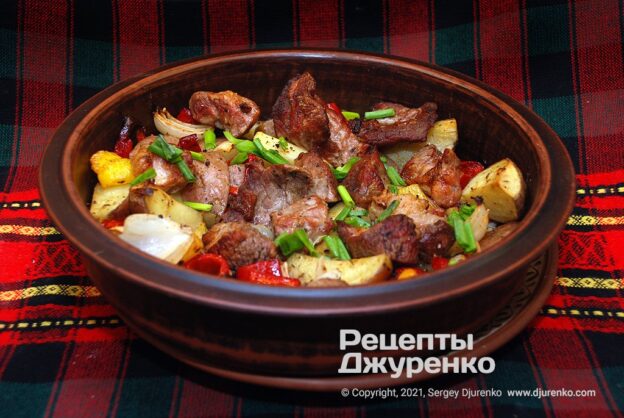
- You can add other vegetables too – tomato wedges, carrots, eggplant, zucchini. Ojakhuri is delicious with slices of liver, beef tongue or tripe. Coriander and savory (kondari) are common additions. Sulguni cheese is often added as well – the taste is amazing. You can quickly sear the meat on a grill instead of in a pan, and put the ketsi into a wood-fired oven rather than a regular one. This dish leaves plenty of room for experiments – and they always turn out well.
Yield: 2 servings Calories: 180 Prep: 30 mins Cook: 1 h Ready in: 1 h 30 mins Category: Main Dishes Cuisine: Caucasian cuisine Rating: