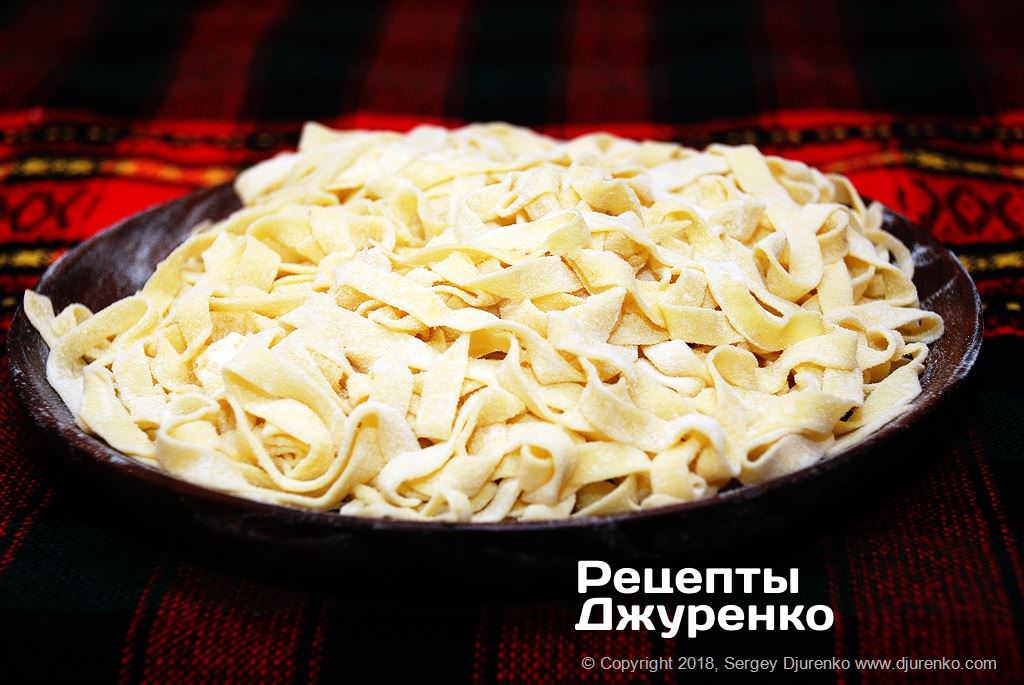
Homemade Noodles with Creamy Feta Sauce
Ingredients
2 servings
For the sauce
- Cream or homemade milk 0.5 cup (100 ml)
- Feta or brynza 100 g
- Salt, black pepper, nutmeg to taste
For the dough
- Durum wheat flour 1 cup (130 g)
- Wheat flour (regular) 1-2 tbsp (plus extra for dusting the dough) (10–20 g)
- Egg 1
- Water about 40 ml (80-90 ml together with the egg)
- Salt a pinch
For boiling
- Water for boiling 3 l
- Salt for boiling 15 g (5 g per 1 l of water)
Step-by-step recipe
Creamy sauce
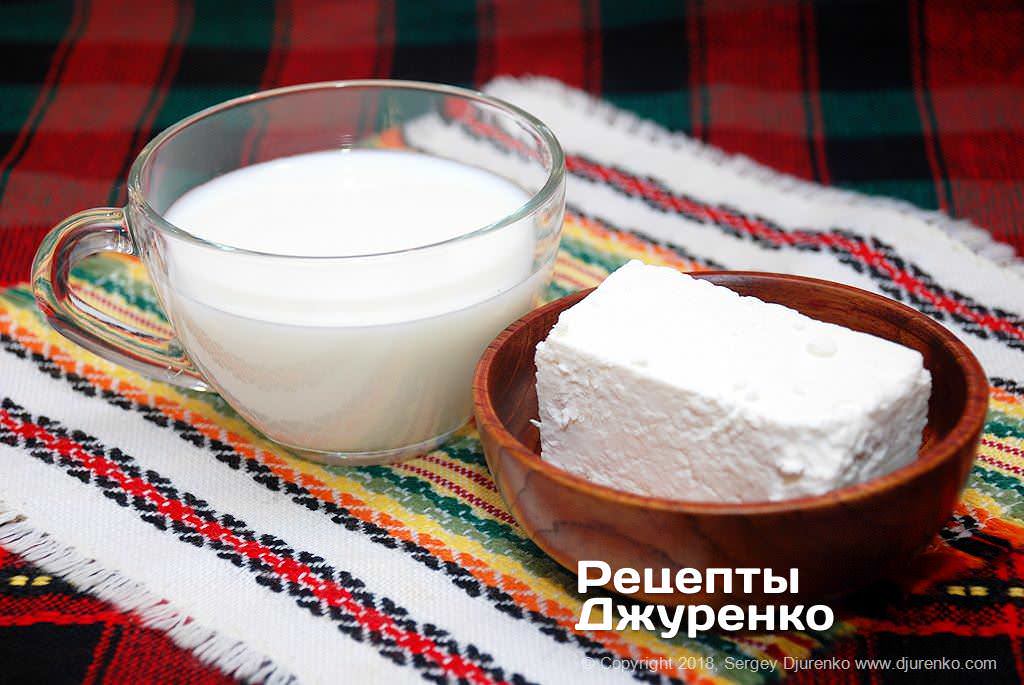
For the cheese sauce you need a little homemade full-fat milk or cream with 10-12% fat. It’s better if the cream is natural, otherwise it’s likely to curdle when heated or look like cottage cheese in milk. Take a piece of soft cheese of your choice: feta, brined brynza, or even blue cheese, since homemade noodles are delicious with any cheese.
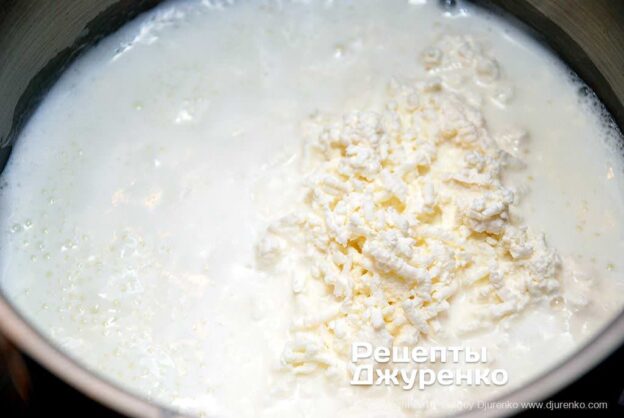
Melt the cheese in the milk. In a small saucepan bring the milk or cream to a boil, then reduce the heat. Grate the chosen cheese or crumble it by hand. Add half the cheese to the boiling milk and stir with a spoon until the cheese melts completely into the milk.
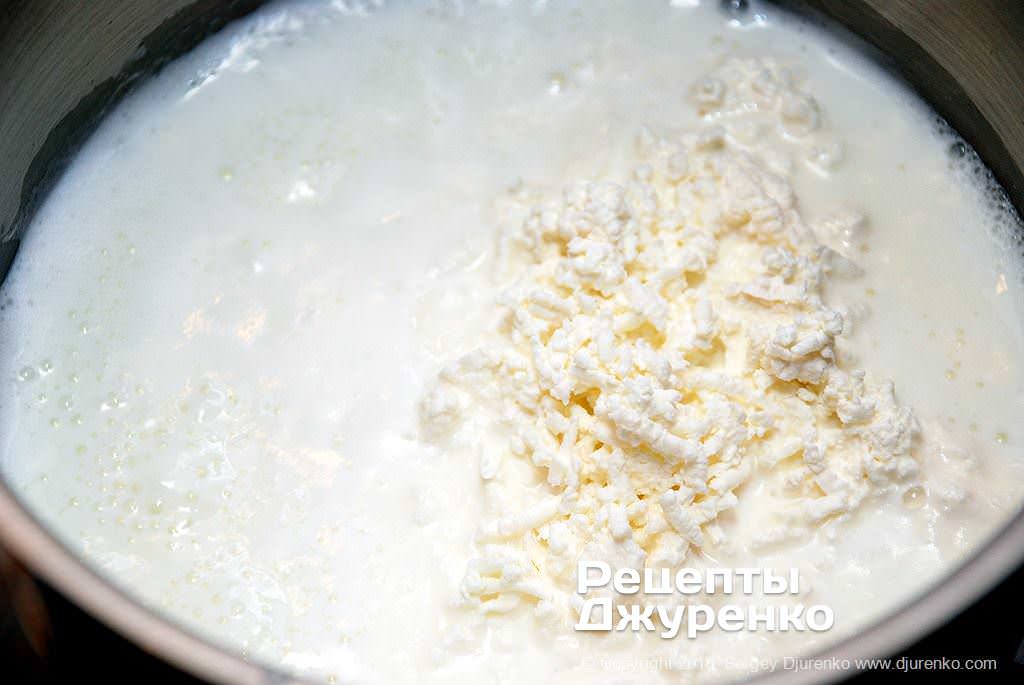
Season the sauce and thicken it. Add a pinch of salt and ground nutmeg and, if you like, a little black pepper. Then add the remaining cheese in small portions: the sauce should become as thick as heavy sour cream. Let the sauce simmer for 2-3 mins over low heat, then take the saucepan off the heat and cover it with a lid.
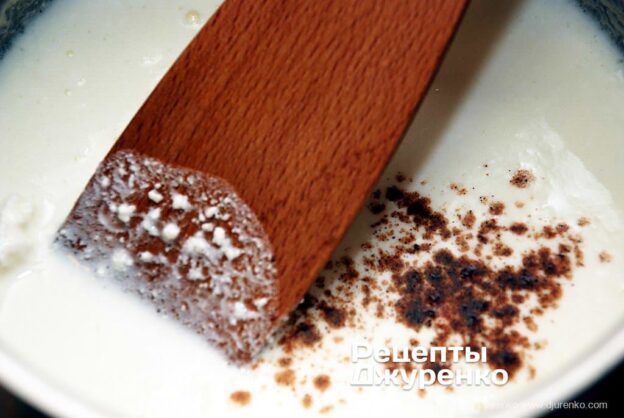
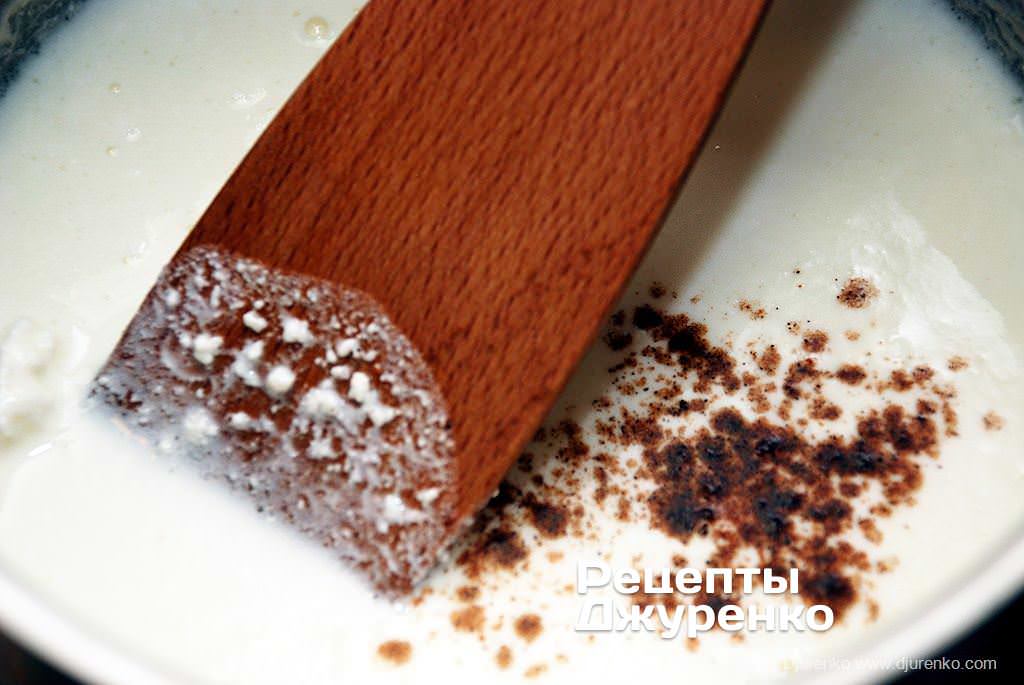
Dough for homemade noodles
If you want to make the pasta with cream sauce from store-bought noodles, just boil 160-180 g of fettuccine in salted water. We made the noodles ourselves and learned to use the pasta machine along the way. It turned out not to be that hard. The first rolling of the dough showed the quirks of the process, so we kneaded the dough again by hand, and the second time the noodles came out great.
So that egg noodles don’t swell while boiling and keep their shape, they need durum wheat flour that is fairly coarsely ground. It looks like very fine semolina. I don’t know whether such flour is made here. I bought Italian flour, the package says Semola di Grano Duro. As I was told later, this is exactly the flour noodles need.
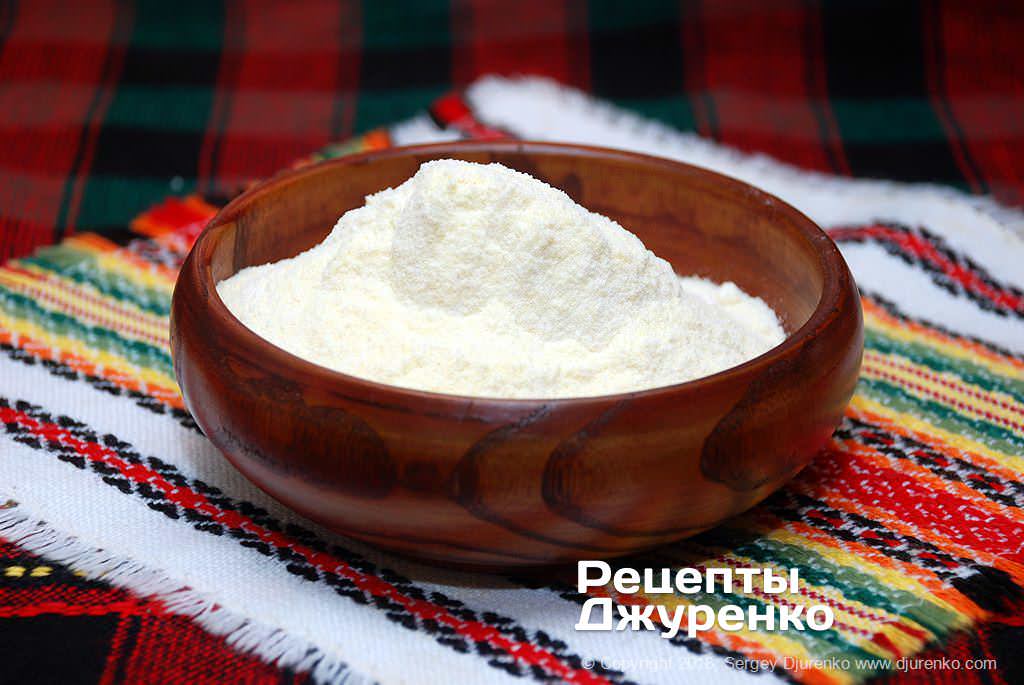
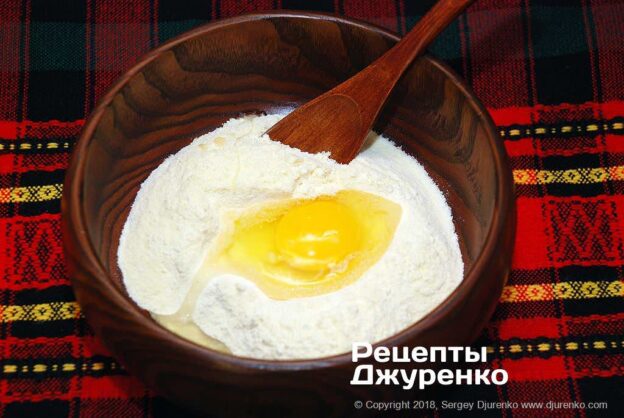
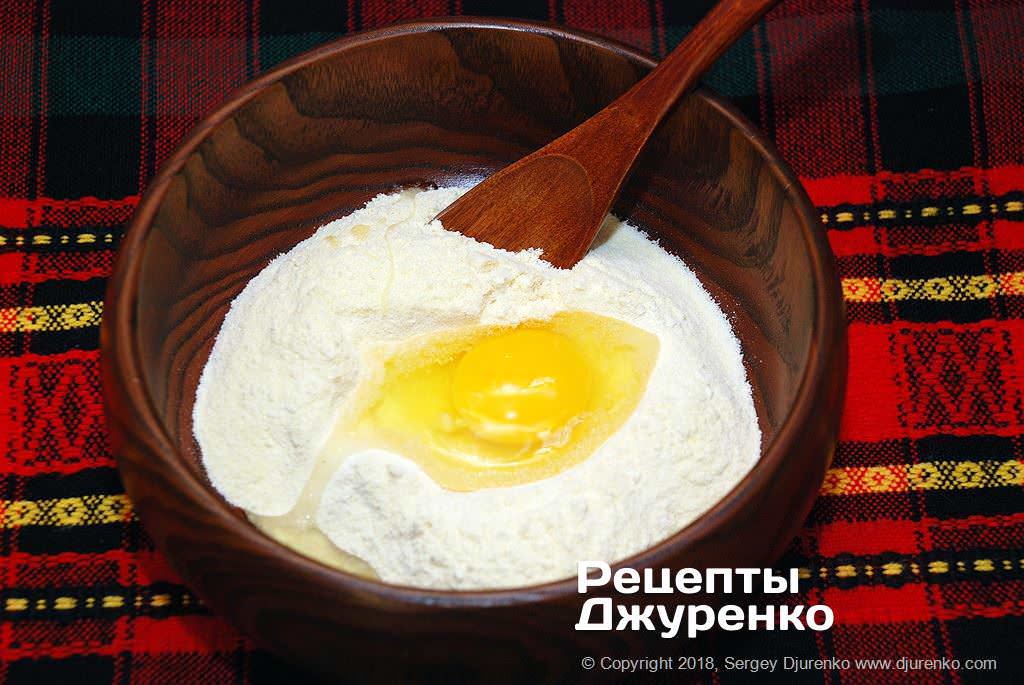
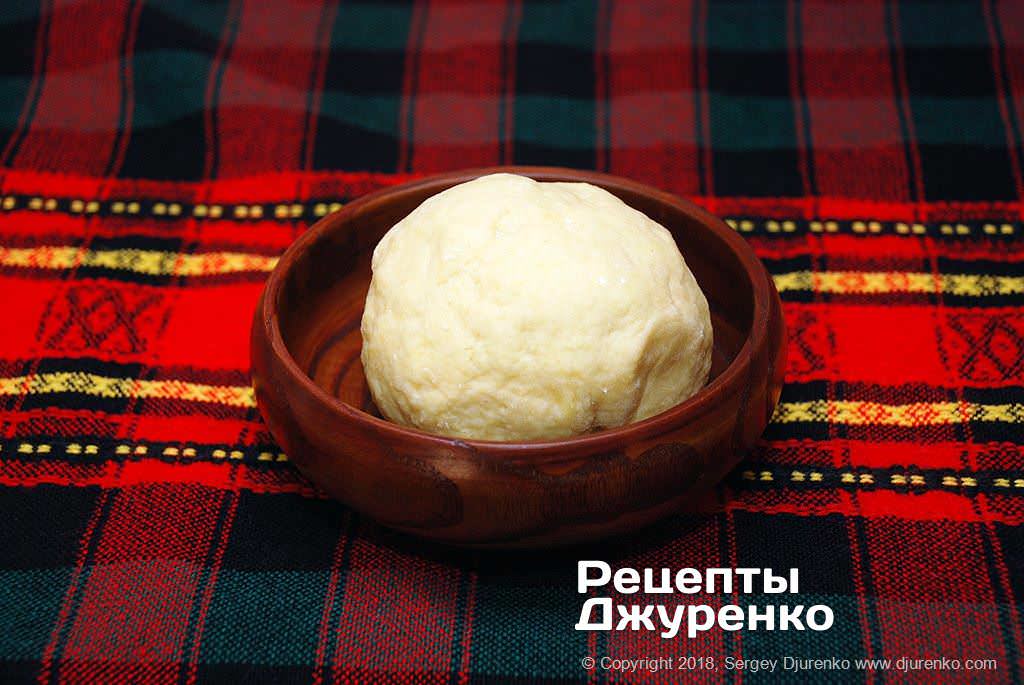
Combine the flour with the egg and water. Sift the flour into a bowl, add a pinch of fine salt and a whole chicken egg, without the shell, in case anyone doesn’t know. For 1 cup of flour (130 g), to get good dough, you need 80-90 ml of liquid. I always keep to this ratio when I make pizza dough. The dough turns out slightly softer than it should, and it’s easy to bring it to the right state by adding flour in small pinches.
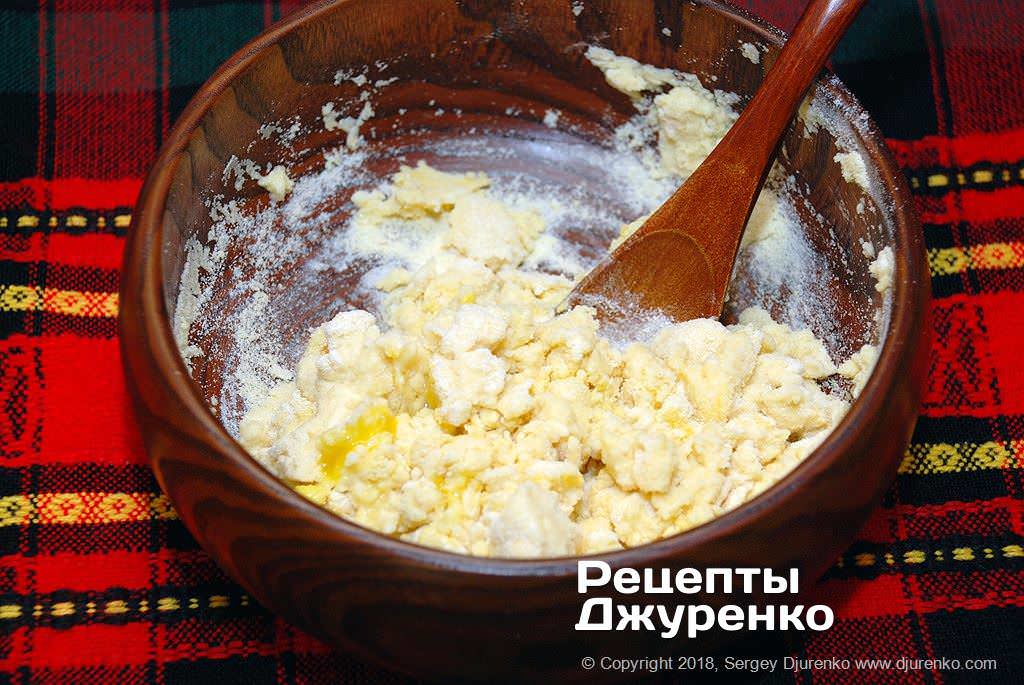
The volume of a medium chicken egg is a little over 40 ml, so you need to add about 40 ml of water to the egg. To avoid experimenting, you can crack the egg into a measuring cup and top up with water to the total volume. Then simply stir the flour with the egg and water using a wooden spatula.
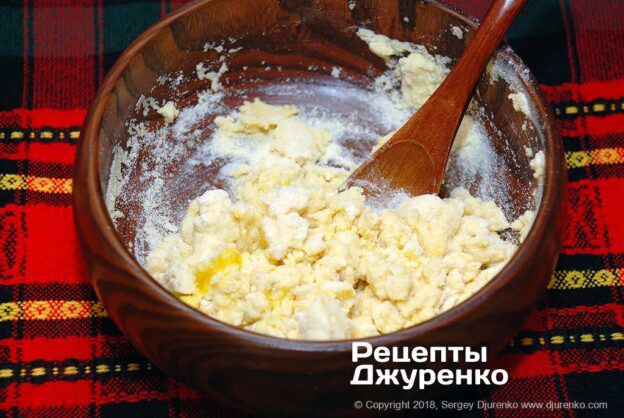
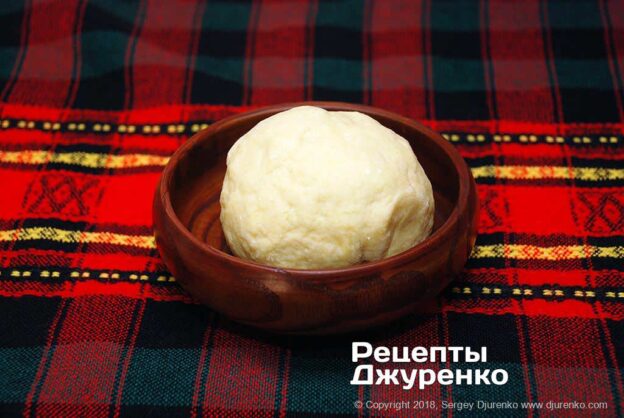
Knead the dough thoroughly, adding regular soft flour in small pinches. The dough needs only a very little soft flour. Knead it well, it should be elastic and shouldn’t stick to your hands, not at all. This matters so that the homemade noodles don’t stick together or turn out like cardboard.
Rolling and cutting
The instructions for the pasta machine explain in great detail how to use it. It’s worth reading.
Divide the dough into four parts and prepare a place for rolling. Four parts are enough to get about 50 cm of homemade noodles from each piece. Clamp the pasta machine to the table. I’ll add from myself that it turned out very convenient to roll the noodles not on the table but on a thick linen towel lightly dusted with flour. That’s how we stretch the dough for apple strudel, directly on the cloth. The dough doesn’t stick, and the cloth washes perfectly. I recommend it: put the cloth on the table and do all the work with the dough on it.
Roll each part of the dough into a sheet. Start with the widest gap between the rollers and gradually reduce it to the minimum. After each pass, lay the dough on the cloth, sprinkle with a pinch of soft flour and rub it over the surface. Then turn the sheet of dough over and dust the other side with flour.
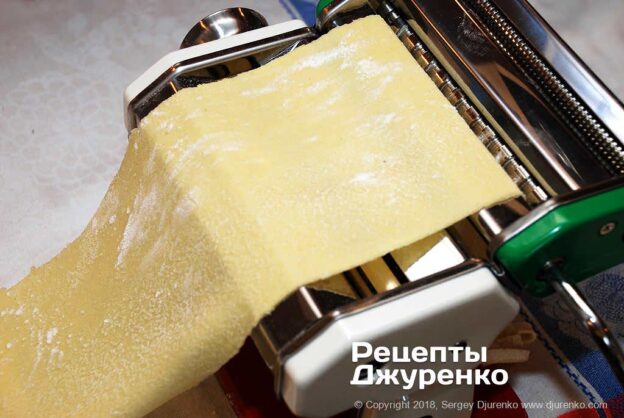
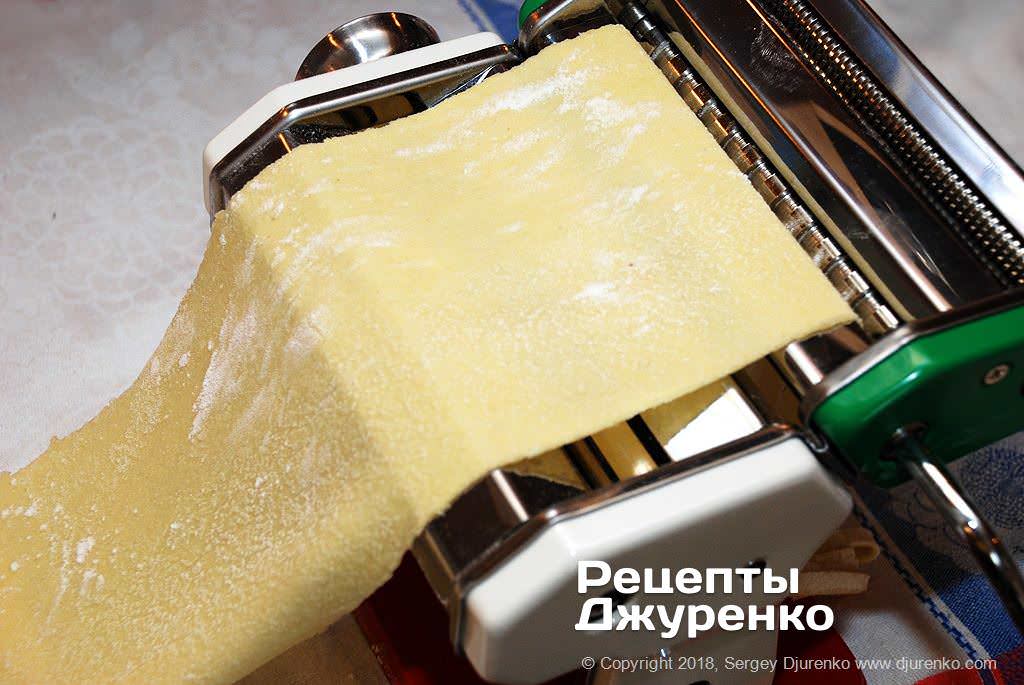
When the dough is rolled to the minimum thickness, cut it into strips. Noodles are considered to be 6-7 mm wide. Usually pasta machines can cut the sheet into strips 6 mm and 2 mm wide. Hold the strips with your hand and carefully lay them on the cloth. Sprinkle the cut homemade noodles with a pinch of flour and toss gently. It’s important that the pasta doesn’t stick together.
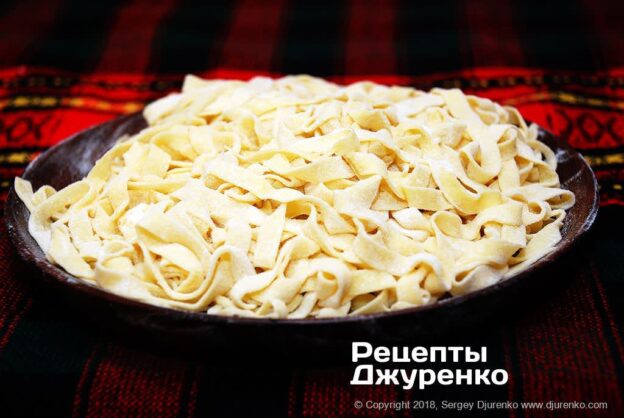
Alternatively, you can roll the dough with a rolling pin, dust the sheet well with flour and roll it up like a scroll about a palm wide. Then with a sharp knife cut the dough across the roll into pieces 5-7 mm wide.
Roll the noodles into nests. In both cases, wind the long strips of dough around your palm 2-3 at a time and lay them out on the cloth. People often advise drying the pasta before boiling. There may even be special racks for it. But the pasta won’t dry in a short time, and in factories it’s dried with hot air. So just let the noodles lie while the water comes to a boil.
Boiling
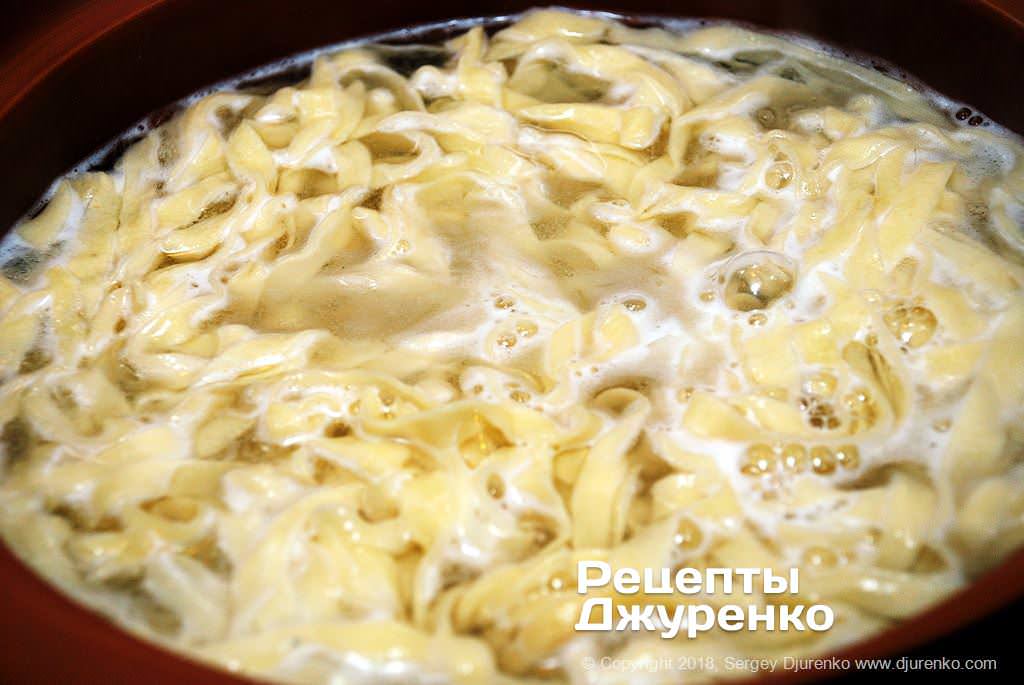
Bring 3 l of water to a boil over high heat and salt it with 15 g of salt (5 g per 1 l, since the brynza sauce is salty). Carefully lower the rolled noodle “nests” into the boiling water. Stir the pasta lightly, trying not to let the ribbons tangle too much. The flour on the strips is what keeps the noodles from sticking. Dry pasta cooks for 5-7 mins. Fresh pasta cooks less. Start tasting the dough for doneness after 3 mins, the noodles should be al dente: tender but with a slight resistance to the bite. Mine cooked perfectly in 4 mins, though in the future I’ll cook it for 3.5 mins, just for the record.
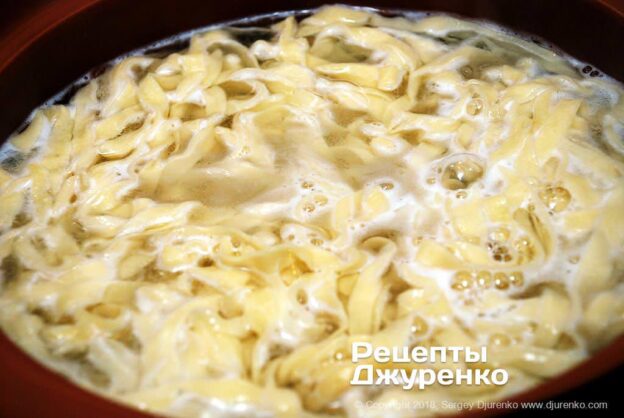
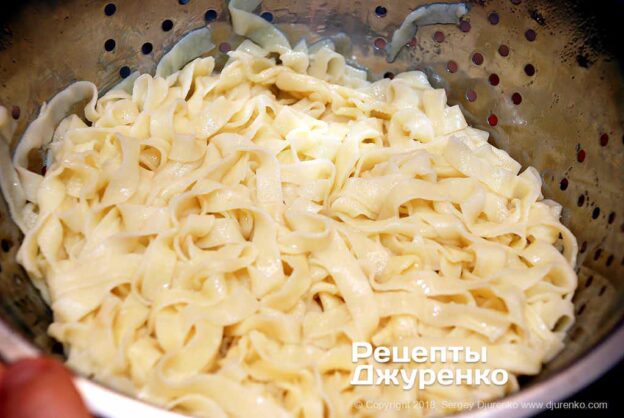
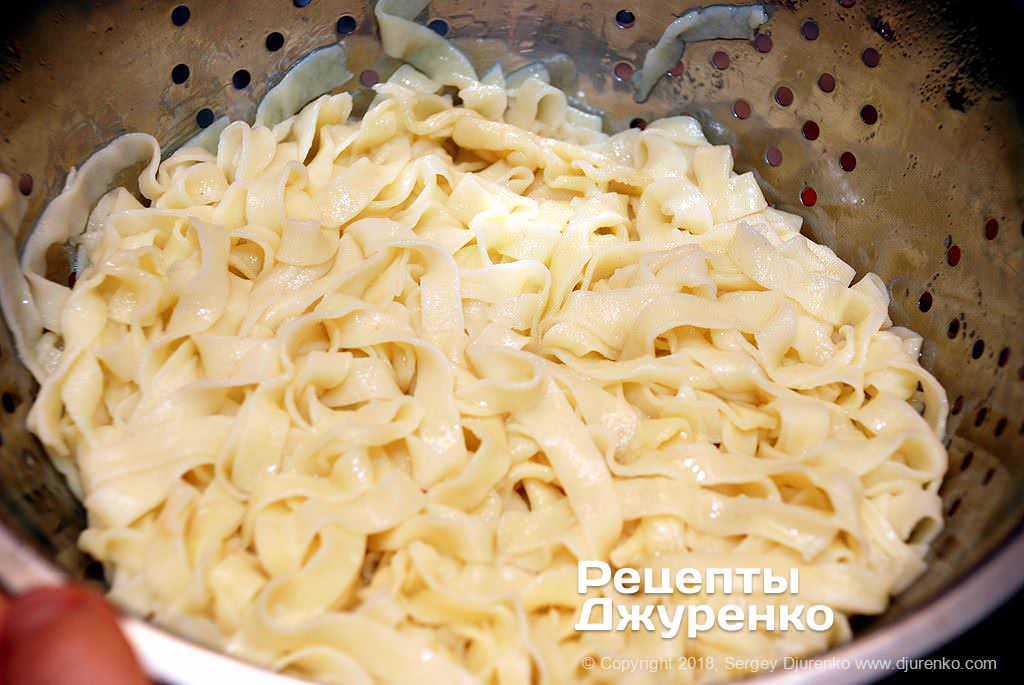
Drain the homemade noodles in a colander, first setting aside a cup of the water (200 ml) the pasta cooked in, as it may come in handy. The strips didn’t overcook at all, and their thickness stayed the same. Probably, keeping the shape does depend a lot on the quality of the durum wheat flour. I always remember the pasta of my childhood, made from baking flour: it exactly doubled in size when cooked and stuck together into a huge dumpling without meat.
Serving
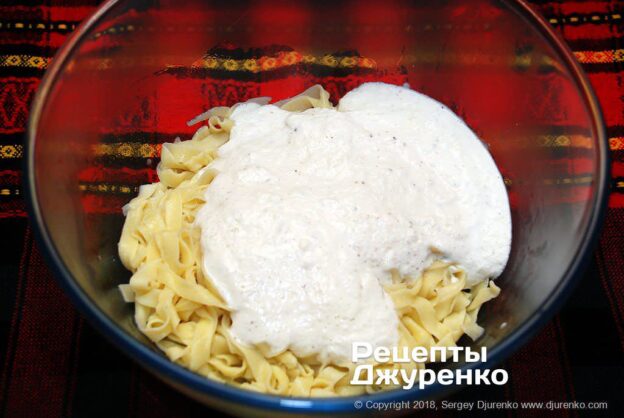
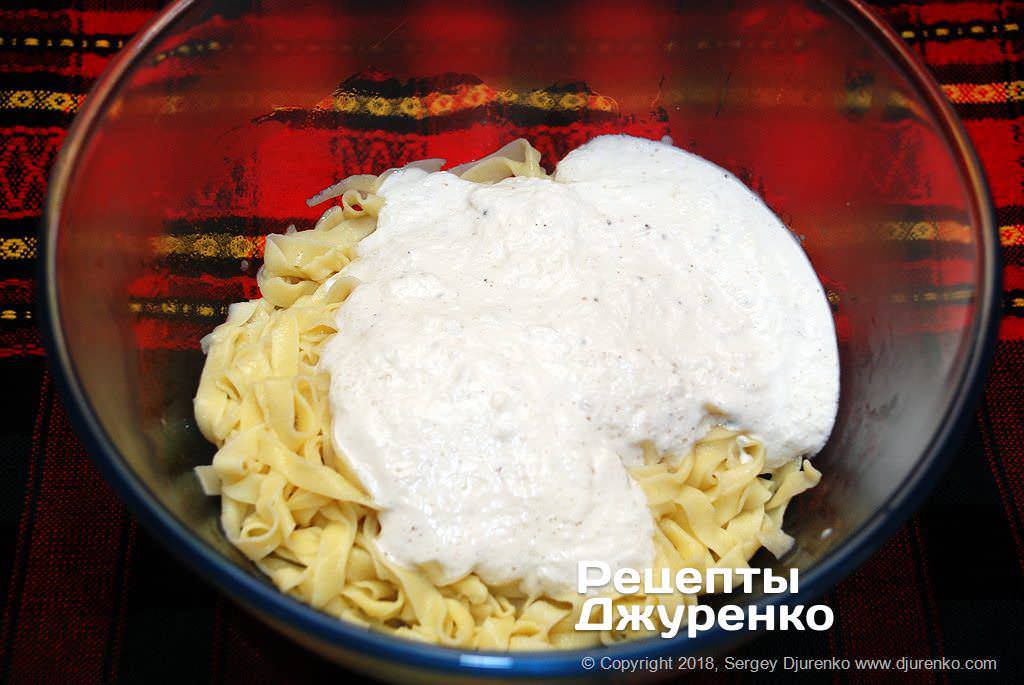
Toss the noodles with the sauce. Put the boiled noodles in a large bowl. The cheese and cream sauce should be slightly warm, not cold. If it has cooled, warm it up just a little. Gently toss the pasta and sauce so the homemade pasta and sauce are evenly combined. The sauce is thick enough and clings to the pasta perfectly. If for some reason the pasta with cream sauce seems a bit “dry”, feel free to add a quarter ladle of the water the noodles cooked in.
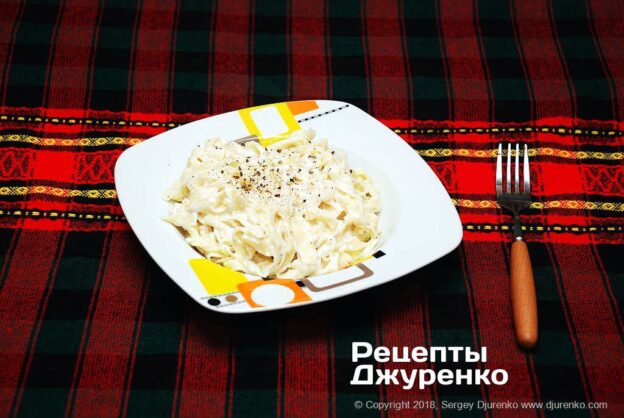
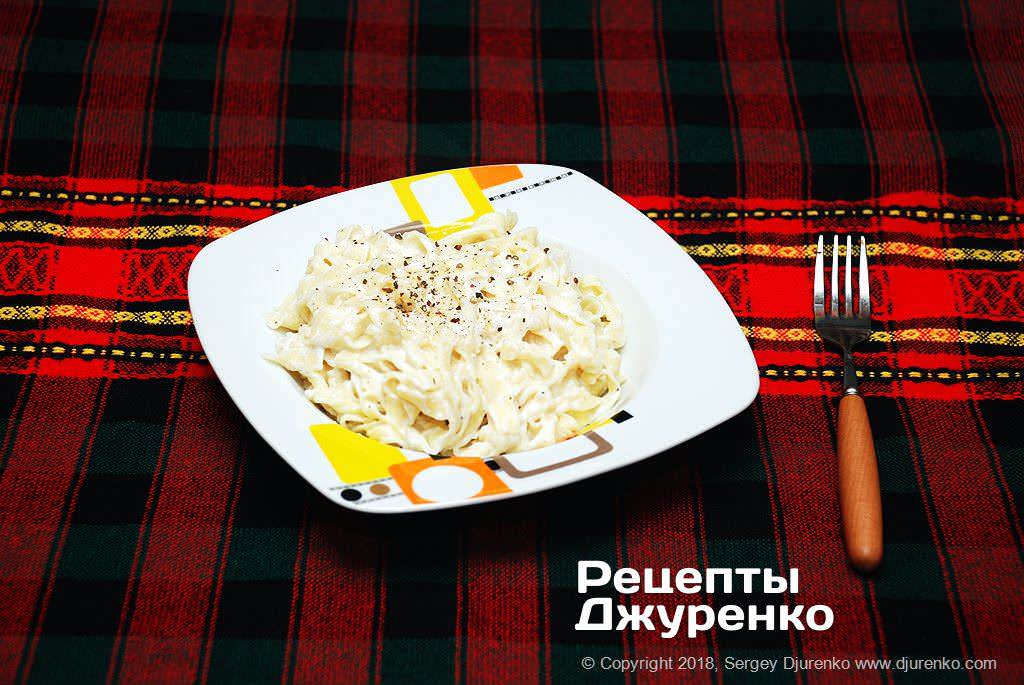
Divide the homemade noodles among plates. I barely stopped myself from sprinkling the pasta with Parmesan. As a bonus I just added a little pepper to the dish to boost the aroma. Serve the pasta right away while it’s hot. As it cools, the cheese sauce gets sticky and the noodle strips can stick together.
Calories and macros
530 kcal
Serving ≈ 220 g
- Protein19 g15% of kcal
- Fat23 g41% of kcal
- Carbs57 g44% of kcal
100 g243 kcalProtein 8.8 gFat 10.8 gCarbs 26.3 g
Calculated from the recipe ingredients, excluding salt and spices. Data: USDA and Matvaretabellen.