
Eggplant Lasagna with Béchamel Sauce




Ingredients
2 servings
- Base
- Young eggplants 4
- Lemon juice 1 tbsp
- Lasagna sheets, no pre-boiling 6-7
- Water a little (0.5 tsp per pasta sheet)
- For the béchamel
- Butter 50 g (plus extra for greasing the dish)
- All-purpose flour 1 tbsp (scant) (10 g)
- Milk, cold 2 cups (400 ml)
- Salt to taste
- Ground nutmeg a knife tip
- Ground black pepper to taste
- Dried hot chili, coarsely ground 1-2 pinches
- Sugar a pinch, optional
- For serving
- Grated Parmesan (or pecorino, grana padano) 1 tbsp (7 g)
- Fresh vegetables, parsley for serving
Step-by-step recipe
Eggplants and pasta
Choose young eggplants, so the lasagna has a delicate taste and no hard seeds. They still have seeds, but they are white and soft and unnoticeable in the dish. Make sure the fruits are not rotten, or there will be an off taste. In season, buying good vegetables is not a problem.

Prepare the pasta. I advise buying pasta that needs no boiling before layering – subito il forno: the sheets go into the dish dry. A pack usually has 20-24 sheets, which is enough for several batches.
If you decide to make the pasta yourself, use Italian durum wheat flour, coarsely ground – simply put, semolina. The package says semola di grano duro.

Roast the eggplants by any available method until soft and the skin is wrinkled. If the fruit is pierced by a knife easily and without resistance, it is done.
The best result comes from roasting the eggplants on the burning coals of a grill, or in a Bulgarian electric pepper and vegetable roaster, a chushkopek – the casserole will be very aromatic. In the simplest case, an ordinary oven will do.

Put the roasted eggplants in a pot and cover with a lid until cool.
Peel off the burnt skin with your fingers.
Cut the fruits in half lengthwise and, if needed, remove the seeds.
Chop the flesh very finely with a knife – you should feel only tiny pieces.
Pour 1 tbsp of lemon juice over the flesh and mix. This keeps the flesh from darkening.


Béchamel with eggplant
The base of the sauce is the ordinary, familiar béchamel: butter, flour and cold milk.
In a saucepan, melt a piece of butter, then add a scant 1 tbsp of flour (10 g) and stir.
When the fat is mixed with the flour, add cold milk in small portions, stirring. That, in fact, is how béchamel is made. The sauce should end up the consistency of sour cream – slightly runny.

Add all the chopped flesh of the roasted eggplant to the sauce and stir until smooth.
If the sauce is too thick, add a little milk or water. If it is thin, you can add flour, but better to dilute it in water first, or it will form lumps.

For a lasagna with a pronounced flavor, add aromatic spices: salt the sauce to taste, add a knife tip of ground nutmeg, season with black pepper, preferably freshly ground, and add 1-2 pinches of coarsely ground dried chili.
When the sauce comes to a boil, taste it. Add more spices if you like, and if the eggplant is bitter, which almost never happens, a pinch of sugar.
Let the sauce simmer on low heat for 3-4 mins.


Assembling and baking
Eggplant lasagna bakes well in a disposable aluminum pan of a suitable size. The usual size of pasta sheets is 10×20 cm, and pans of that size, about 1 l in volume, are sold. Their main advantage is that you do not have to wash them – you throw them away.
Lightly grease the bottom and sides of the pan with butter.
Spread 1-1.5 tbsp of the béchamel with eggplant flesh evenly over the bottom of the pan. This keeps the casserole from burning and sticking to the bottom.
Lay the first pasta sheet and moisten it slightly with water – literally 0.5 tsp.

Spread the eggplant sauce over it with a spoon. It does not hurt to estimate in advance roughly how much sauce each layer needs, so that it is enough.
Keep layering pasta, moistening it with water, and sauce until the pan is full. It is best to leave 1-1.5 cm of space to the top edge, since the lasagna rises during baking.
Depending on the volume of the pan and the amount of sauce, you will need a different number of pasta sheets. Usually it is 6-7, but not fewer.
Spread the top sheet generously with sauce, even if a lot is left.

Place the pan in an oven preheated to 180°C. The container is soft and may deform – set it on a ceramic or glass plate.
If the aluminum container comes with a removable lid, you can leave it on while the dish heats.
Pasta cooks quickly, so watch for the moment the sauce starts to boil and steam appears – take off the lid and, from that moment, time about 20 mins. The pasta will surely be cooked.
Carefully take the pan with the lasagna out of the oven – the aluminum is very hot.


Serving
Finely grate the cheese – Parmesan, pecorino, grana padano.
Sprinkle the cheese over the lasagna and cut it into portions.
Use a spatula to transfer the casserole to plates. The lasagna is especially good served with sour milk or cucumber sauce. In the Balkans, moussaka with potatoes and minced meat is served this way, and in Turkey, moussaka with eggplant.

Add a plate of sliced fresh vegetables and parsley. Eggplant lasagna is served hot; it can be reheated, though that is not recommended.
A snack of sour milk or yogurt with fried croutons rubbed with garlic goes very well with eggplant.

Calories and macros
645 kcal
Serving ≈ 640 g
- Protein19 g13% of kcal
- Fat29 g43% of kcal
- Carbs65 g44% of kcal
100 g101 kcalProtein 3 gFat 4.5 gCarbs 10.2 g
Calculated from the recipe ingredients, excluding salt and spices. Data: USDA and Matvaretabellen.
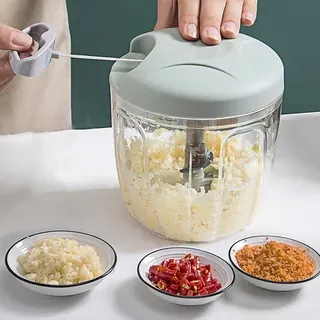 Pull chopper for garlic and onionAliExpress
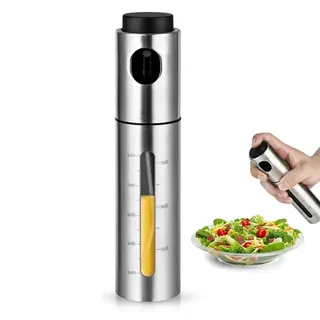 Oil sprayerAliExpress
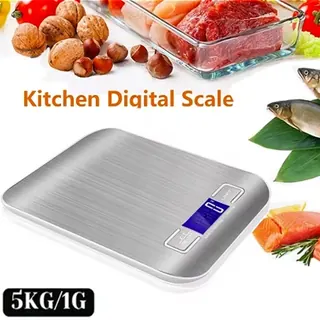 Kitchen scale up to 5 kgAliExpress
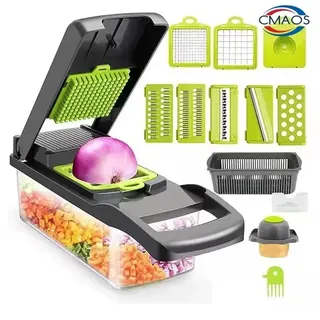 Vegetable chopper with handleAliExpress
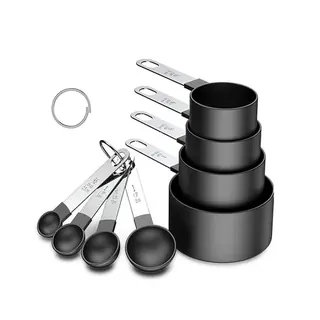 Measuring cups and spoonsAliExpress
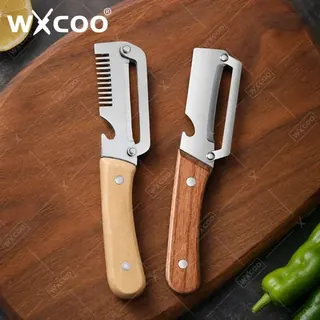 Peeler with wooden handleAliExpress