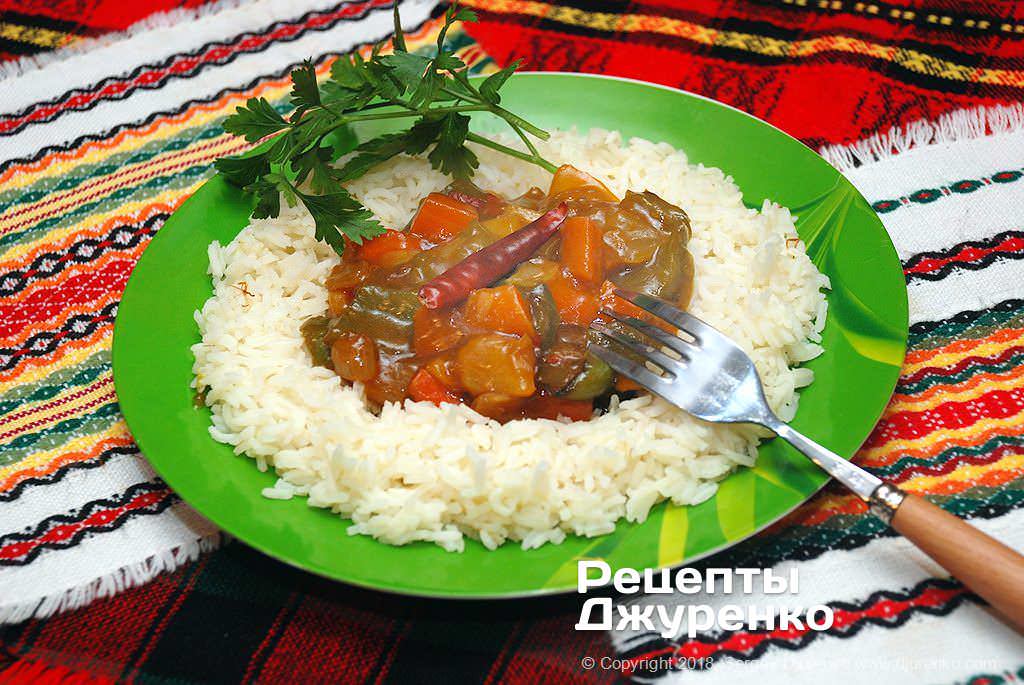
Vegetable Sauté with Curry and Rice
Ingredients
2 servings
- For the rice
- Basmati rice 1 cup (180 g)
- Water for the rice about 1.5 cups (300 ml)
- Salt a pinch
- Saffron (marigold petals) or turmeric a pinch
- For the sauté
- Bell pepper 2
- Chili pepper 1
- Onion 2
- Carrot 1
- Curry paste 1-2 tsp (6–11 g)
- Hot water 0.5 cup (100 ml)
- Vegetable oil 3 tbsp
- Soy sauce 1-2 tbsp
- For serving
- Coarsely ground hot pepper a pinch (optional)
- Parsley a sprig
Step-by-step recipe
How to cook fluffy rice
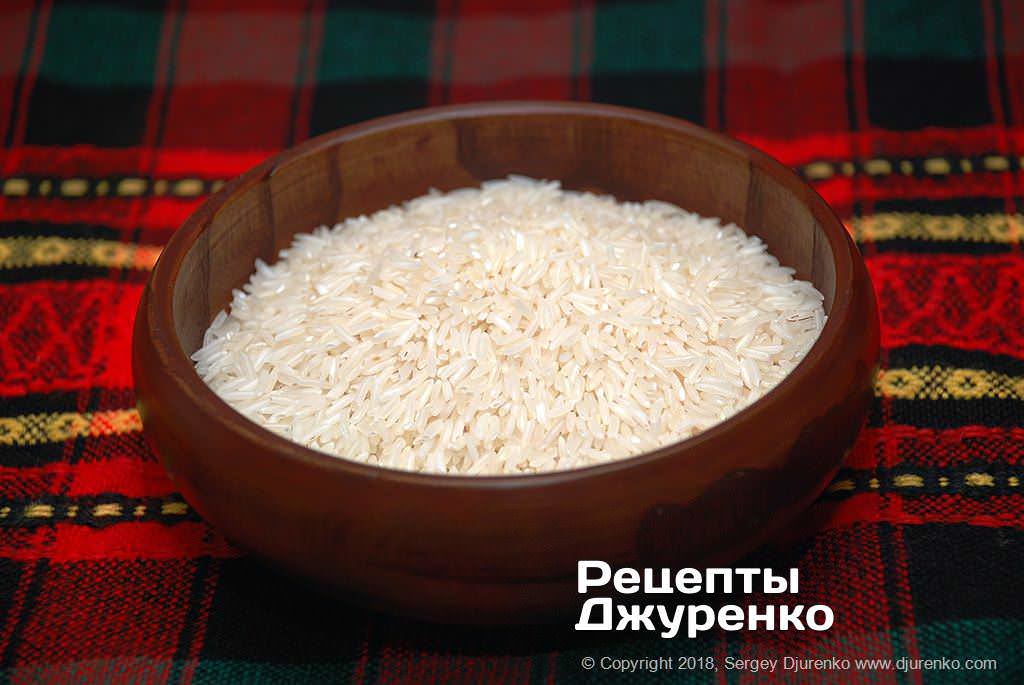
Fluffy rice is ideal as a side dish for a vegetable sauté. I really like basmati, a thin, pale, long-grain rice with an incredible aroma. It makes good pilaf and dishes with meat, poultry and vegetables. We often make chicken with rice using basmati. This rice comes from India, and its name means fragrant or aromatic.
Cook the rice so that it stays fluffy. Rice is usually cooked in a set amount of water or broth, which it absorbs: cook over low heat, covered, until all the liquid is absorbed. Basmati absorbs more than 1.5 times its own volume of liquid.
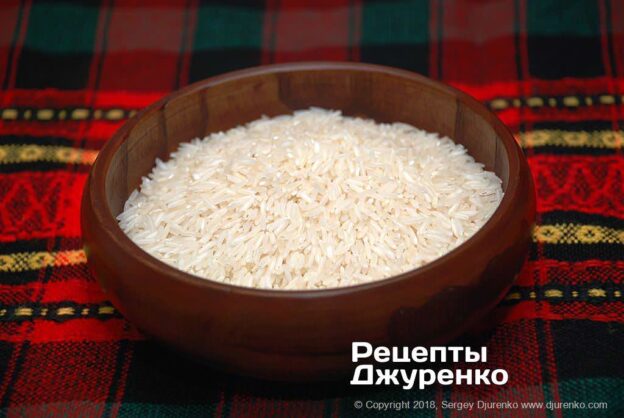
Add a pinch of salt and some natural coloring to the rice cooking water: saffron, marigold petals, a pinch of turmeric or the same curry blend.
If you have trouble getting fluffy rice, boil it in a large amount of water, drain it in a colander and keep it in a warm place.
How to fry the vegetables
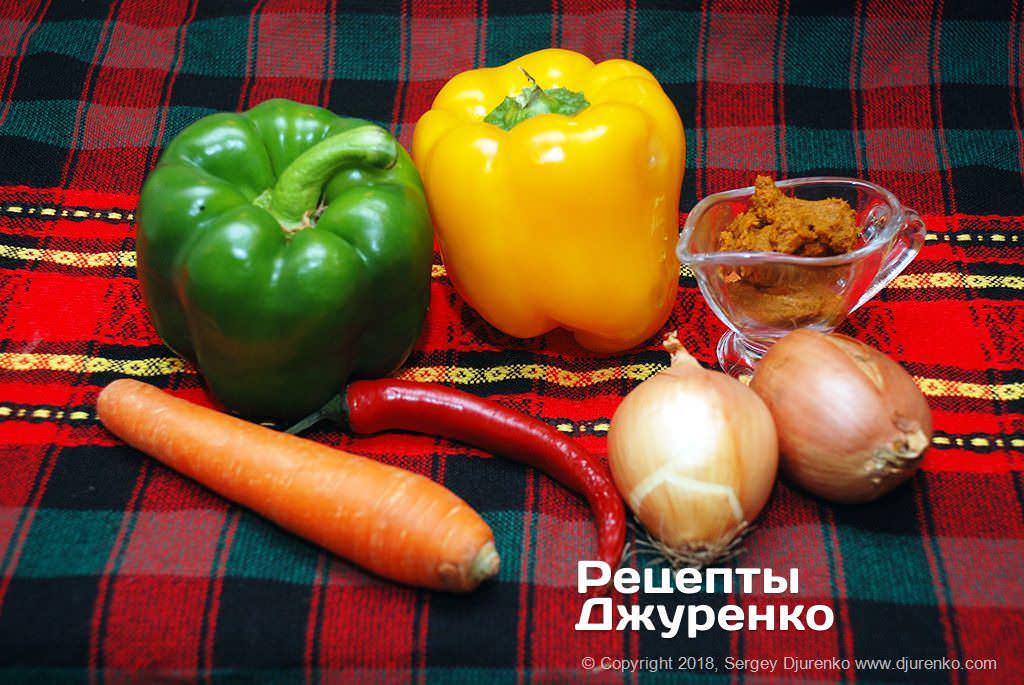
As I said, vegetable sauté can be made from any vegetables you have. I chose sweet bell peppers, a hot chili pod, onion and carrot. You can use dry curry powder, sold in any shop. Curry is often quite hot, so watch out for that. It is better to use a so-called “mild” blend and add heat to your taste as you cook. I used a mild-hot curry paste and added dry hot pepper to the finished dish.
Prepare the vegetables: peel the onion and carrot.
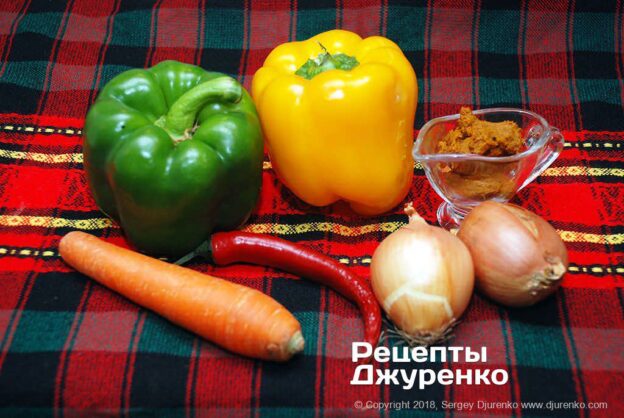
Cut the onion into thick strips. Dice the carrot. Remove the seeds and white inner membranes from the hot pepper, as they give the dish most of its heat. Remove the seeds from the sweet pepper and cut it into large dice.
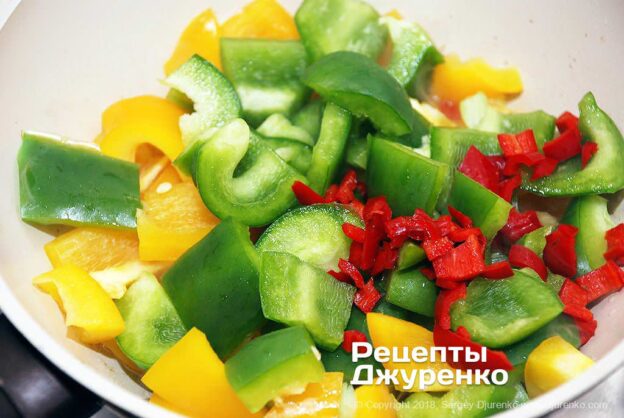
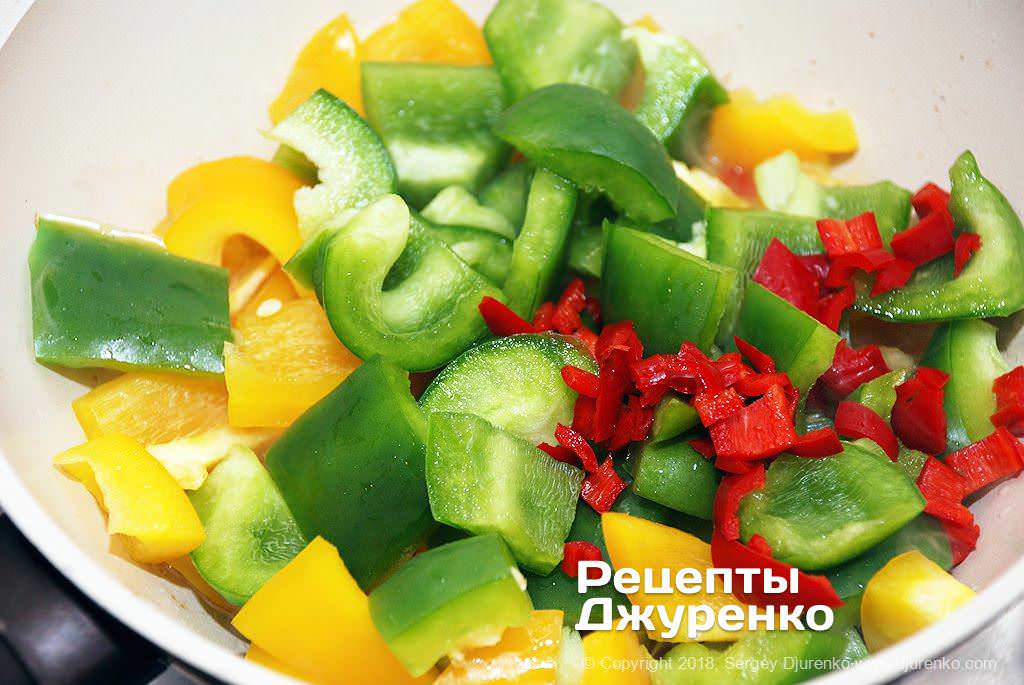
Fry the peppers: heat vegetable oil, sunflower or olive, in a sauté pan and let it warm up for a few minutes. Carefully add the cut bell and hot peppers to the hot oil. Fry the peppers over medium heat for 5 mins, shaking the pan from time to time so the vegetables mix and fry evenly.
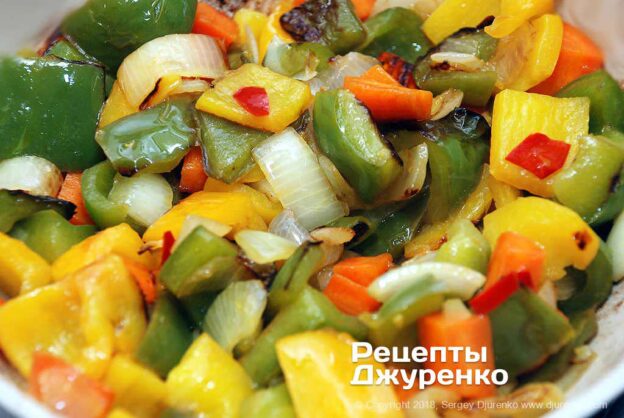
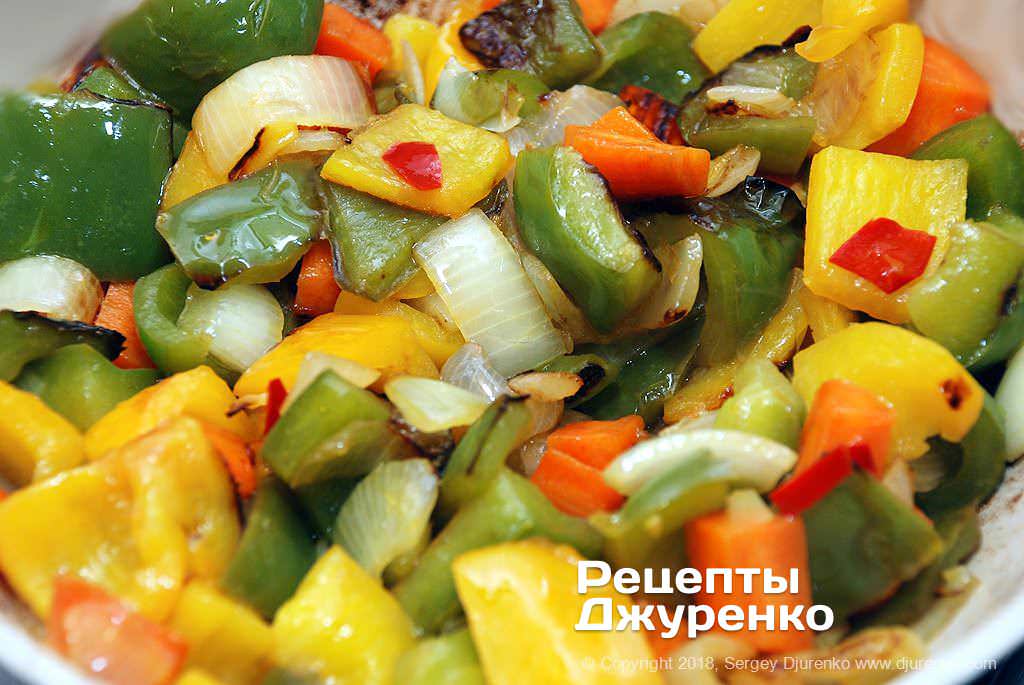
Add the prepared onion and carrot to the pan and fry all the vegetables over medium heat until they soften and, having lost some moisture, start to brown and shrink. By then the onion will have a pleasant golden color. To keep the vegetables from burning and to fry them evenly, stir fairly often, shaking the pan gently.
How to stew the vegetables with curry
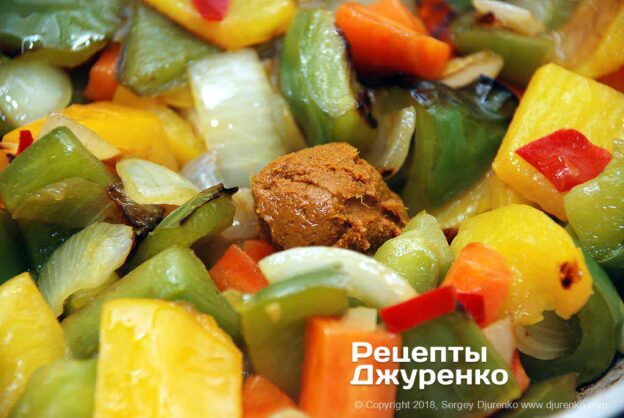
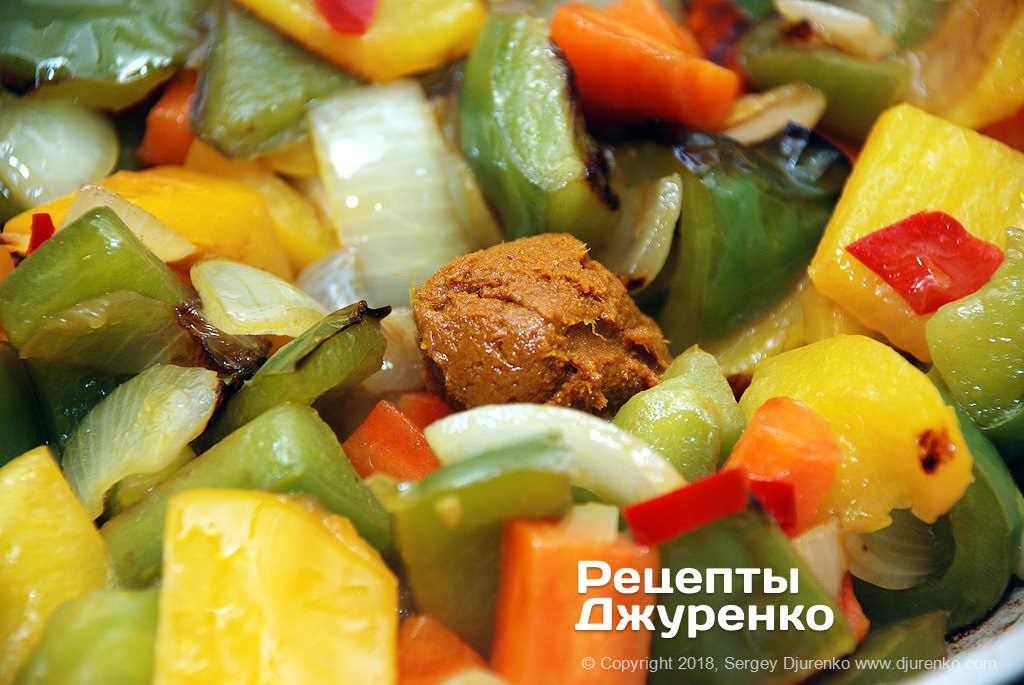
Add the curry paste, hot water and soy sauce: add the curry paste to the dish (if the curry is noticeably hot you can use less; it is all to taste, but remember that a curry dish is fairly spicy and hot). Add half a cup of hot water (100 ml) to the vegetables and stir well until the curry paste dissolves completely. Add 1-2 tbsp soy sauce to the vegetable sauté.
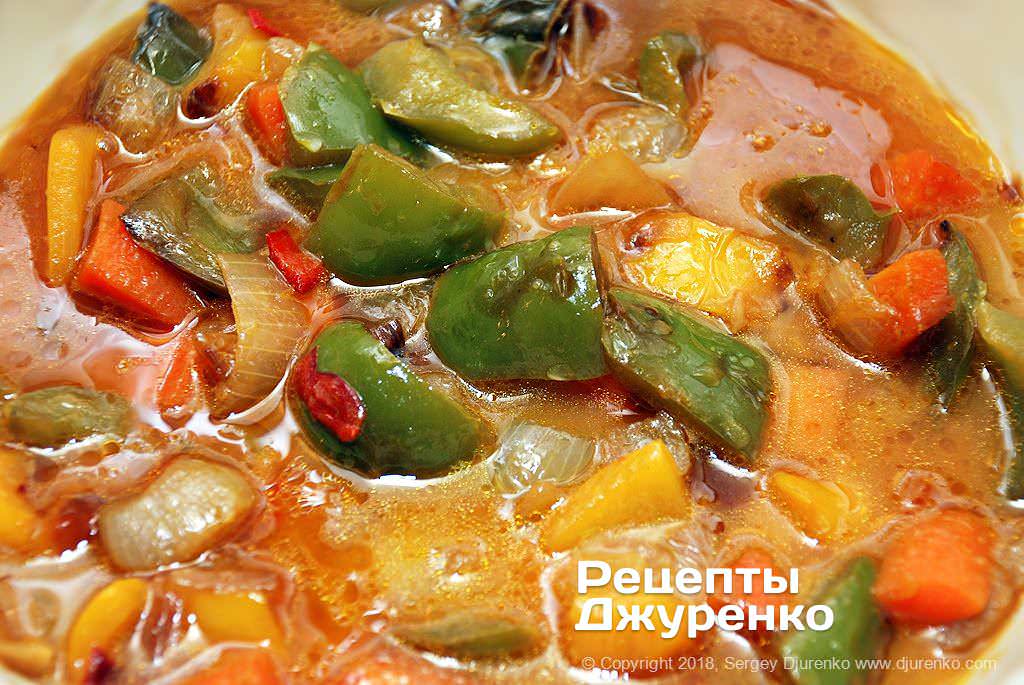
Stew the vegetables covered: as soon as the liquid boils, reduce the heat to low and stew for 15 mins.
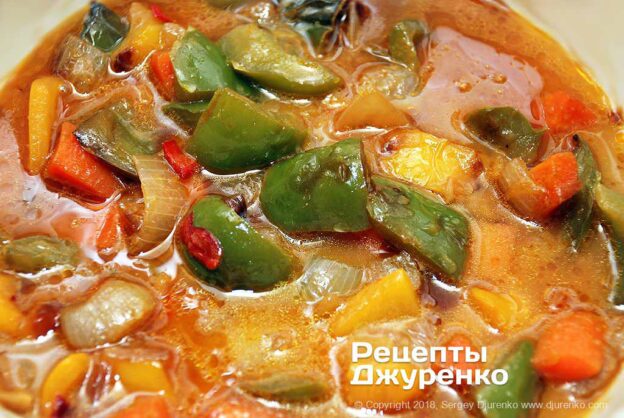
The consistency of the sauté is like a slightly thick sauce with plenty of vegetables. If you like, you can make it thicker, or even like a vegetable pasta sauce, as for pasta with eggplant. But don’t make the vegetable curry too thin and soup-like: once it meets the rice, the liquid will spread.
Serving
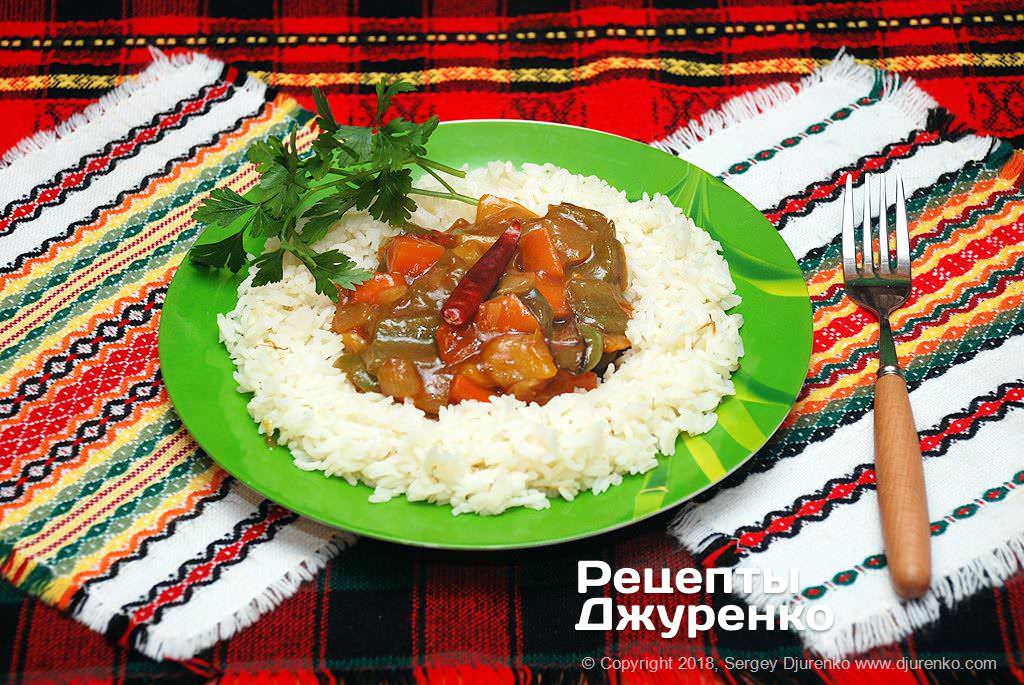
Put out the rice and the sauté: the boiled rice and vegetable sauté can be served on separate plates, as they do in China. Or you can arrange the rice around the edge of the plate to form a well and put the vegetables with curry in it. If you want the vegetables hotter, sprinkle the finished sauté with a pinch of coarsely ground hot pepper. Garnish the dish with a sprig of parsley.
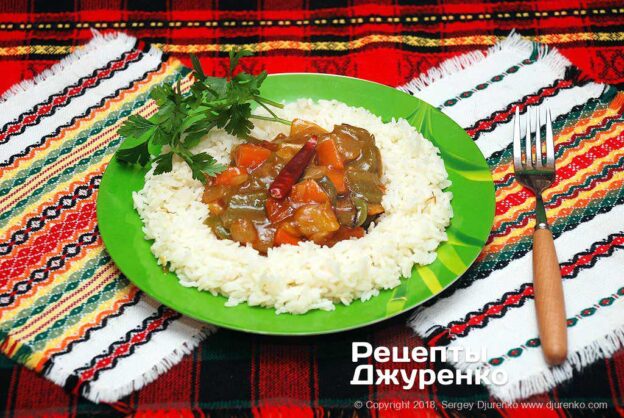
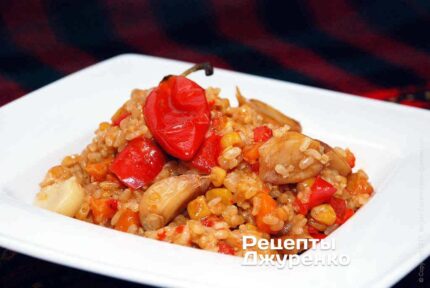
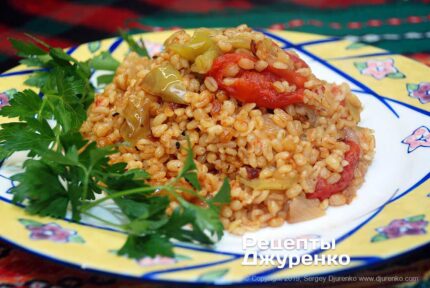
Vegetable sauté with boiled rice is served hot. Instead of rice, you can serve mashed potatoes or bulgur with vegetables. As an extra appetizer I suggest pickled peppers and fresh white bread, or better still, fresh sesame buns.
Calories and macros
615 kcal
Serving ≈ 530 g
- Protein10 g7% of kcal
- Fat22 g34% of kcal
- Carbs88 g59% of kcal
100 g116 kcalProtein 2 gFat 4.2 gCarbs 16.5 g
Calculated from the recipe ingredients, excluding salt and spices. Data: USDA and Matvaretabellen.