
Vegetable Caviar with Eggplants and Peppers
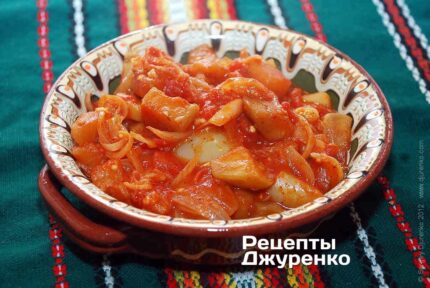
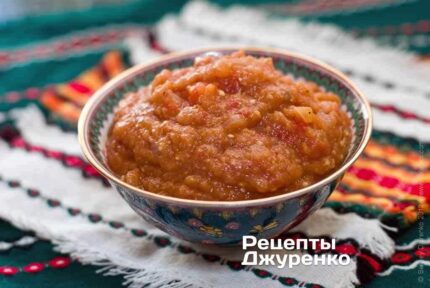
Vegetable caviar is hugely popular here in summer, made from all sorts of vegetables and following all kinds of recipes. It can be served cold, warm or hot, and it looks like a thick salad of small pieces of vegetables or a smooth paste. The vegetables cook very quickly, so you can make vegetable caviar in under an hour.
Ask older people what “caviar” means and they will most likely picture the humble appetizer everyone could buy in a jar. Eggplant caviar was a hit of the Soviet food industry, and zucchini caviar for winter was often made with pumpkin, which turned it bright orange. In the simplest version, these appetizers were made from fried zucchini and eggplants with a little carrot, onion, vegetable oil and spices, and generously seasoned with vinegar.
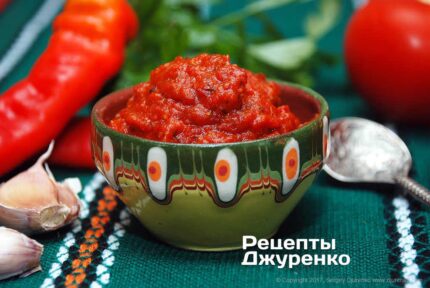
In the Balkans, a very popular variation of this appetizer is ajvar, a vegetable caviar made from fried or roasted sweet red peppers. I have tried Serbian ajvar (ajvar) and it is exceptionally good: moderately spicy, and perfect as an appetizer or as a side dish for meat. In Bulgaria you can find vegetable khaivar, which is close in composition to most similar appetizers. The word itself was most likely borrowed from the Turkish havyar, meaning caviar.
Almost every complex vegetable caviar contains sweet and hot peppers, and is served as a side dish, a sauce or a stand-alone appetizer. The heat is entirely up to you, though Serbian ajvar can be quite fiery. This appetizer is somewhat reminiscent of Bulgarian lyutenitsa, although the proportions of vegetables can differ a lot. In season we make green vegetable caviar called kyopolou, a tasty mix of fried vegetables, most of which are eggplants.
Any vegetable caviar, whether it is ajvar with or without eggplants, the Greek eggplant appetizer melitzanosalata, or Italian caponata, always calls for fresh, young vegetables. That is the only way to get a tasty, uniform appetizer.
The tastiest caviar comes from vegetables baked over coals. To make ajvar, peppers and eggplants are thrown straight onto hot coals and cooked until the skin is charred. After peeling, the flesh is ground or finely chopped with a knife, then mixed with spices, tomatoes and garlic. By the way, you can prepare vegetables for lecho this way too, and the result is incredibly tasty.


Ingredients
6 servings
- Eggplants 2-3
- Red bell peppers 4-5
- Hot peppers 1-2
- Tomatoes 2-3
- Garlic 2-3 cloves
- Vegetable oil 50 ml
- White wine vinegar 1 tbsp + to taste
- Salt, black pepper, dried chili to taste
- Bread, brynza cheese, black olives, herbs, tomatoes, etc. for serving
Step-by-step recipe
Roast and peel the vegetables
Good vegetable caviar starts with young vegetables whose seeds have not yet formed. Choose large, young eggplants with dark, glossy skin. Large red sweet Bulgarian peppers are what you use when making Serbian ajvar from peppers alone, and they provide the color. The amount of fresh hot pepper is up to you. You can also make the finished caviar spicier with dried chili. The tomatoes should be fleshy and ripe so that the caviar has a deep red color.

Roast the eggplants and peppers until the skin is charred. If you have a grill with hot coals, simply lay the vegetables on the coals and turn them a few times — they will be done in 4-5 mins.
Vegetable caviar made this way, as well as ajvar, Bulgarian pepper salad and other dishes, will turn out incredibly aromatic. A more accessible way is to bake them in the oven (at 220°C for about 30 mins, turning, until the skin blackens and blisters) or in an electric Bulgarian chushkopek.

Put the hot roasted eggplants and peppers in a pot right away, cover with a lid and leave until they are cool enough to handle. As they cool, the vegetables soften from their own inner heat and peel very easily.
Peel the burnt skin off the eggplants and peppers. Peeling the peppers for ajvar is quite laborious because of the large number of roasted pods, but when you cook at home in small quantities, it doesn’t take long.


Chop the vegetables
We are used to caviar with small pieces of vegetables rather than a smooth paste, so we don’t use a blender or chopper. Everything is cut or finely chopped with a knife.
Cut the peeled eggplants in half lengthwise and remove as many seeds as you can, if there are any.
Chop the eggplants quite finely with a knife.
Put the flesh in a bowl, pour 1 tbsp of wine vinegar over it and spread the vinegar with a spoon to form a film — this helps keep the eggplant from darkening.
I use white wine vinegar; I think apple cider vinegar won’t spoil it either.

Cut the peeled peppers in half and remove the seeds carefully. Chop the flesh with a knife and put it in a bowl.
Meanwhile, pour boiling water over the tomatoes for 1-2 mins and peel off the thin skin.
Remove the seeds and the white core from the tomatoes, and chop the flesh with a knife.
Remove the seeds from the fresh hot pepper and chop it very finely.
Mix the sweet and hot peppers with the tomatoes.


Simmer and combine
Pour the vegetable oil into a saucepan and add the pepper and tomato mixture. Don’t drain the liquid from the vegetables.

Heat and simmer uncovered over medium heat, stirring constantly with a spatula, until most of the liquid evaporates and the mixture becomes thick.
To check the thickness, run a spatula across the bottom of the saucepan: if the mixture doesn’t fill the gap right away but takes a few seconds, it is thick enough. The mixture shouldn’t run off the spoon, so there should be very little liquid.
Add salt, black pepper and, if you like, chili. Stir and simmer for another 2-3 mins.

Remove from the heat and let it cool to room temperature.
Peel 2-3 cloves of garlic and chop them finely with a knife. It’s best not to grate the garlic, as it releases a lot of juice.
In a large bowl or salad bowl, combine the chopped eggplants, the cooled pepper and tomato mixture and the garlic. Mix thoroughly so that the caviar is as uniform as possible.

Taste the caviar and add more salt and spices if needed. You may want to add a little more wine vinegar — ajvar with eggplants, for example, can be noticeably sour and spicy.
Transfer the vegetable caviar to a salad bowl and chill in the refrigerator for 30 mins.


Serving and canning
Serve the caviar as a cold side dish for vegetable and meat dishes or as an appetizer.
Mixtures like this are often used for serving complex salads made of many components. In Turkey, khaivar is served as part of meze, an assortment of appetizers. The caviar goes wonderfully with pieces of brynza cheese, black olives, sliced herbs and fresh vegetables. You can simply arrange everything on a large tray or platter and serve it as an appetizer with a glass of grape rakia.

To keep the caviar in airtight jars, stew all the vegetables, including the eggplants, minimize the liquid and add a little more vinegar.
Pour the boiling mixture into sterilized jars and heat the jars further before sealing, or alternatively sterilize the jars of caviar in an autoclave.
The jars must cool slowly, ideally under a woolen blanket.

Calories and macros
135 kcal
Serving ≈ 280 g
- Protein3 g9% of kcal
- Fat8 g61% of kcal
- Carbs9 g30% of kcal
100 g48 kcalProtein 1 gFat 3 gCarbs 3.4 g
Calculated from the recipe ingredients, excluding salt and spices. Data: USDA and Matvaretabellen.
 Pull chopper for garlic and onionAliExpress
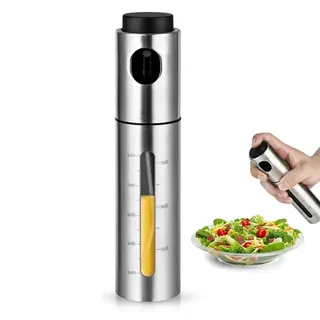 Oil sprayerAliExpress
 Kitchen scale up to 5 kgAliExpress
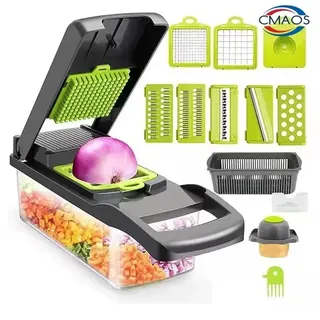 Vegetable chopper with handleAliExpress
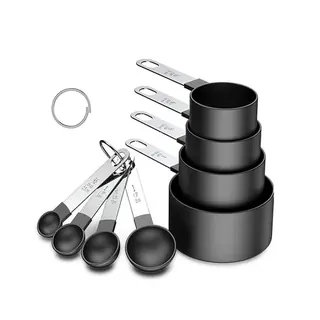 Measuring cups and spoonsAliExpress
 Peeler with wooden handleAliExpress