
Bulgur with Vegetables and Mushrooms: A Fluffy Butter Side Dish
You can make a homemade pilaf or a vegetable side dish without rice. For example, bulgur with vegetables, as a side dish or a pilaf, is easy to make and follows the same principle as rice with vegetables or any other fluffy grain side dish. But there are a few subtleties in cooking these dishes that you need to keep in mind.
Bulgur is a wheat grain made from dried wheat kernels that are first steamed or parboiled and then cracked. It is very popular in the East, in Asia and in the Mediterranean countries. It is mentioned in the Bible and on Assyrian tablets, and its history is probably even older, at least 8,000 years.
People often confuse bulgur with ordinary cracked wheat that has not been steamed or boiled, or even with couscous. All of them are key ingredients of the Eastern tabbouleh salad. By and large, all these grains come from ordinary wheat. But the way they are prepared and processed is completely different, and so are their uses and the way they are cooked.
In traditional farm production, ripe wheat kernels are sorted by hand, then boiled in water and dried naturally for several days, with the grain stirred from time to time. The kernels darken and shrivel. After hulling, the grain is dried again and winnowed to separate the husks. Only then is the wheat cracked by hand between stone millstones. Sifting through a sieve then separates several grades of bulgur by size. It is believed that, because of the way it is ground and sifted, the grades differ not only in size but also in taste.
You can also find whole grain, meaning uncracked kernels. It is used for stuffed vegetables, pilaf and soups, and bulgur with vegetables turns out excellent with it. Coarse bulgur is ideal for pilaf or fluffy side dishes. Regular pilaf bulgur, as the name says, is for pilaf. Fine bulgur is for pilafs, salads, stuffed peppers and other stuffed vegetables. There is also a very fine, dark bulgur for kofta. In the East, though, the classification is most likely even more complex.
When you are about to cook bulgur with vegetables as a side dish or a pilaf, follow a few simple rules. Since it has already been treated with water or steam, bulgur cooks in about 20 mins, with one part grain to two parts water by volume. It is the same as for most kinds of rice. And one more thing: fry it without rinsing it with water.


Ingredients
2 servings
- Coarse or whole bulgur 1 cup
- Boiling water or mushroom stock 1½ cups
(300 ml) - Boiled wild mushrooms or button mushrooms 5-6
- Onion 1
- Carrot 1
- Parsnip 0.5
- Garlic 1 head
- Butter 50 g
- Tomato 1
- Mixed herbs (dill, parsley, cilantro) 5-6 sprigs
- Salt, black pepper, allspice, hot red pepper to taste
Step-by-step recipe
If you decide to cook bulgur with vegetables, choose coarse bulgur or, if you can find it, whole grain. Such grain is now sold in stores, although the label often does not tell you which grade is in the package. Ideally, look at the grain yourself before you choose. You do not need to rinse it: bulgur is already washed and dried during production.

Prepare some pre-boiled wild mushrooms or ordinary button mushrooms for the dish. Be sure to squeeze the excess liquid out of the mushrooms lightly. Cut the mushrooms into large pieces or, if they are small, leave them whole. Peel the onion and the roots. Separate the garlic into cloves without peeling them.

Cut the carrot and parsnip into large cubes. Melt the butter in a saucepan. Fry the cut vegetables over medium heat until soft, which takes 5-6 mins. Be sure to stir them, because butter browns vegetables too fast and they can start to burn.

Add the onion, cut into thick strips, and the unpeeled garlic cloves. Fry all the vegetables, stirring often, until the onion starts to turn golden.

Add the cut mushrooms and fry them with the vegetables for 2-3 mins. It is important that the mushrooms do not release a lot of liquid while frying.

Add the bulgur and stir. If there is very little fat left in the pan, the vegetables, especially the parsnip, can soak it up like a sponge, so add an extra 1 tbsp of butter. The bulgur needs to be fried. This slightly shortens the cooking time, makes the grain even and more fluffy. Fry the grain with the vegetables only briefly, 1-2 mins, stirring.

Next, pour boiling water or the mushroom stock left from boiling the mushrooms over the bulgur and vegetables. Salt the dish with 1-2 pinches of salt, add pepper and 1-2 crushed allspice berries. Usually the advice is to add twice as much water by volume as grain. Since we want the bulgur to be more fluffy, take a little less water, about 1.5 cups of water (300 ml) per cup of grain. If needed, you can add a little boiling liquid if there is too little.

It is often written that bulgur does not need cooking and can simply be covered with boiling water and kept warm. That applies to finely cracked grain, while larger pieces are hard to prepare without cooking.

Cook the bulgur, covered, over the lowest heat you can get. The grain absorbs water quite actively and grows considerably in volume. When the bulgur has absorbed almost all the liquid, stir it and pile it up in the saucepan. In this form it should heat through in the steam so that no trace of liquid is left and the bulgur becomes fluffy. You can take the saucepan off the heat and wrap it in a thick blanket, leaving it to warm through for 10-15 mins.

Scald a ripe tomato with boiling water, then remove the seeds and skin. Dice the flesh. Pick the leaves off the herb sprigs and chop them with a knife. Mix the herbs with the tomato flesh. When the bulgur is ready, mix it with the tomato and herbs, and if you like, sprinkle with a pinch of ground red pepper and stir.

Right away, put the bulgur on a platter or plates and serve. By the way, the grain and dishes made from it have a very low glycemic index, which greatly slows the release of energy to the body and stretches out the effect of the meal. This is very good for a diet, and, as they write, makes bulgur the main competitor of rice in side dishes and pilafs.

Maybe bulgur with vegetables should not be called a pilaf. But this homemade side dish of grain, mushrooms and vegetables is very tasty and aromatic. It can be a dish on its own or a side dish for meat or fish.


Calories and macros
620 kcal
Serving ≈ 560 g
- Protein16 g11% of kcal
- Fat23 g35% of kcal
- Carbs78 g54% of kcal
100 g112 kcalProtein 2.9 gFat 4.1 gCarbs 14 g
Calculated from the recipe ingredients, excluding salt and spices. Data: USDA and Matvaretabellen.
 Pull chopper for garlic and onionAliExpress
 Oil sprayerAliExpress
 Kitchen scale up to 5 kgAliExpress
 Vegetable chopper with handleAliExpress
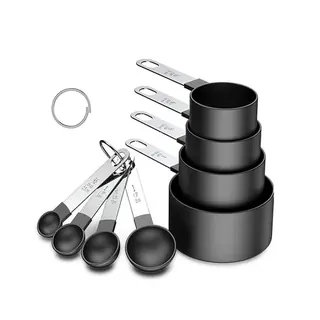 Measuring cups and spoonsAliExpress
 Peeler with wooden handleAliExpress