

Prosciutto Pizza
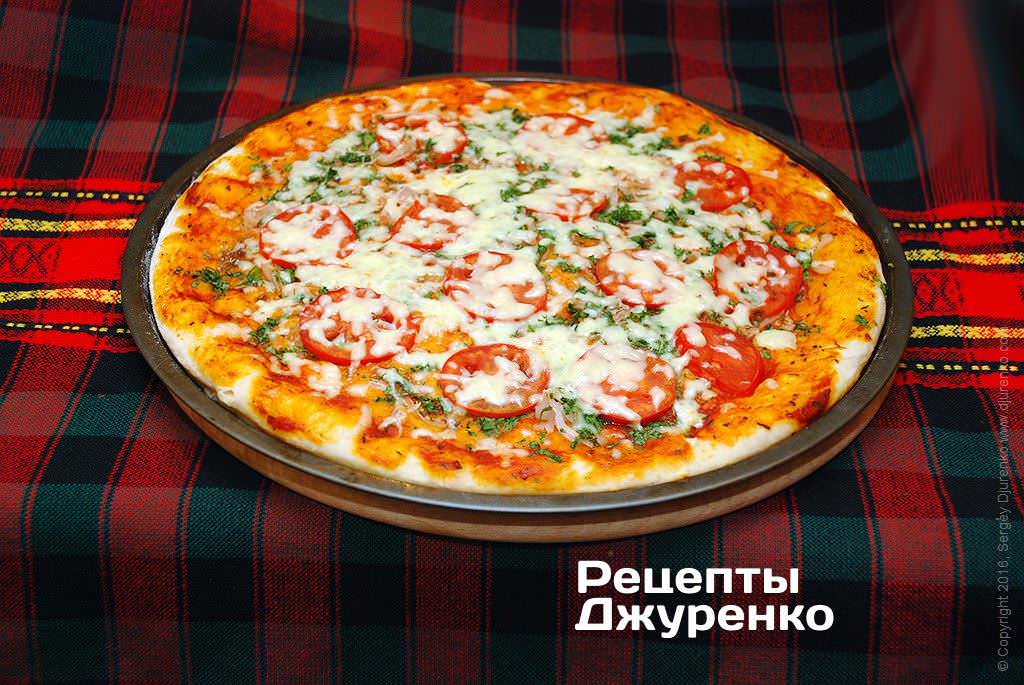
The prosciutto goes on later: the pizza with tomatoes and pickled onion first bakes 15–17 minutes at 200°C, and only then go on 75 g of Parma ham, capers and Parmesan. That keeps the ham from turning tough. The onion marinates half an hour in 2 tbsp of wine vinegar.
Most of my friends are fans of pizza with sausage, meat and anything else that looks like meat. And, unsurprisingly, they believe there should be plenty of it – at least half a kilo. In such cases I offer them prosciutto pizza: the topping has several times less meat, yet the pizza turns out delicious and properly “meaty”.
In one book on Italian cooking I read that making pizza takes no effort at all. That made me smile, given how many people I know who can’t even fry an egg on their own. I won’t say pizza is an art only seasoned veterans of kitchen battles can master, and I won’t say it’s “as easy as pie” either. Speaking for myself: the hardest part of making pizza is waiting for it to be ready.
I have a friend who never bakes pizza. He either tries to get his wife to make it or orders by phone. Once I happened to hear one of those orders. It went roughly like this: dough, cheese, meat, meat, meat, and on top, spell out my name in sausage. What can you do – a true carnivore.
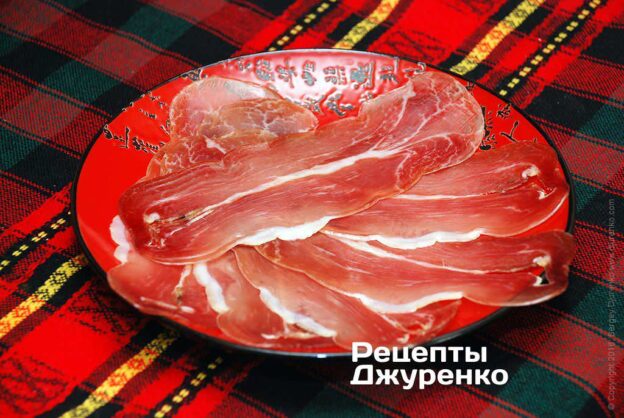
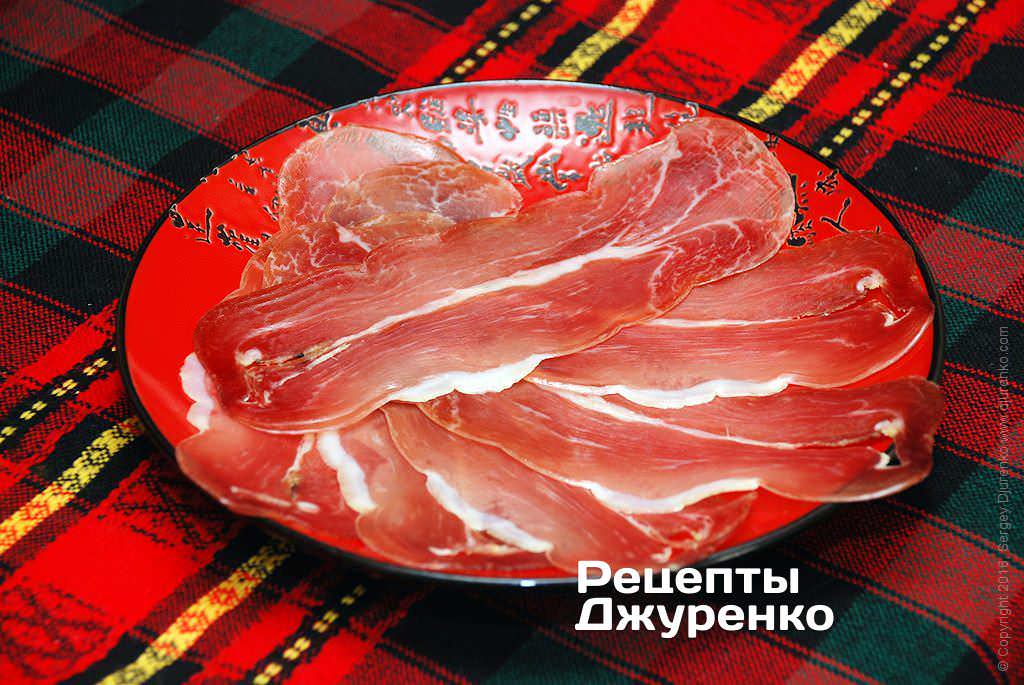
Prosciutto is an Italian dry-cured ham. Parma ham contains nothing but pork leg and sea salt; spices are added only very rarely. Prosciutto is pale pink and glossy.
Prosciutto pizza isn’t made quite the usual way. The catch is that Parma ham turns tough and curls up when cooked, losing the elegant shape of its thin slices. So we add the prosciutto at the very end of baking, or even lay it over the finished pizza.
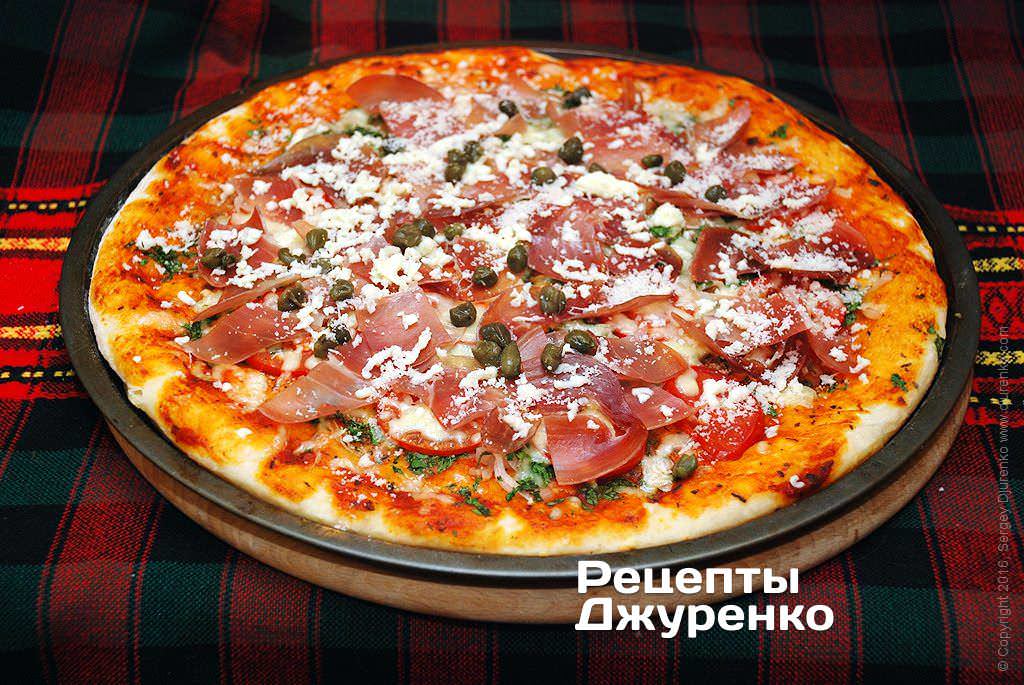
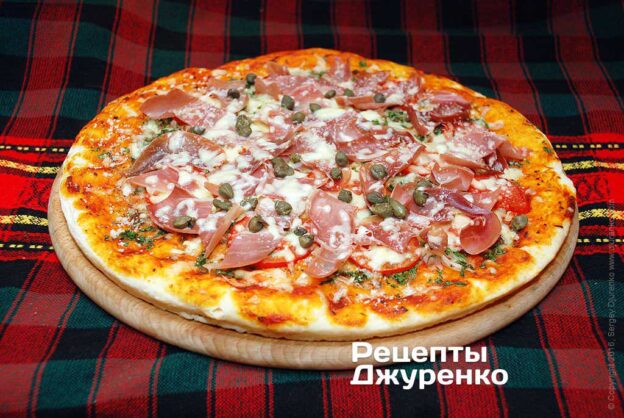
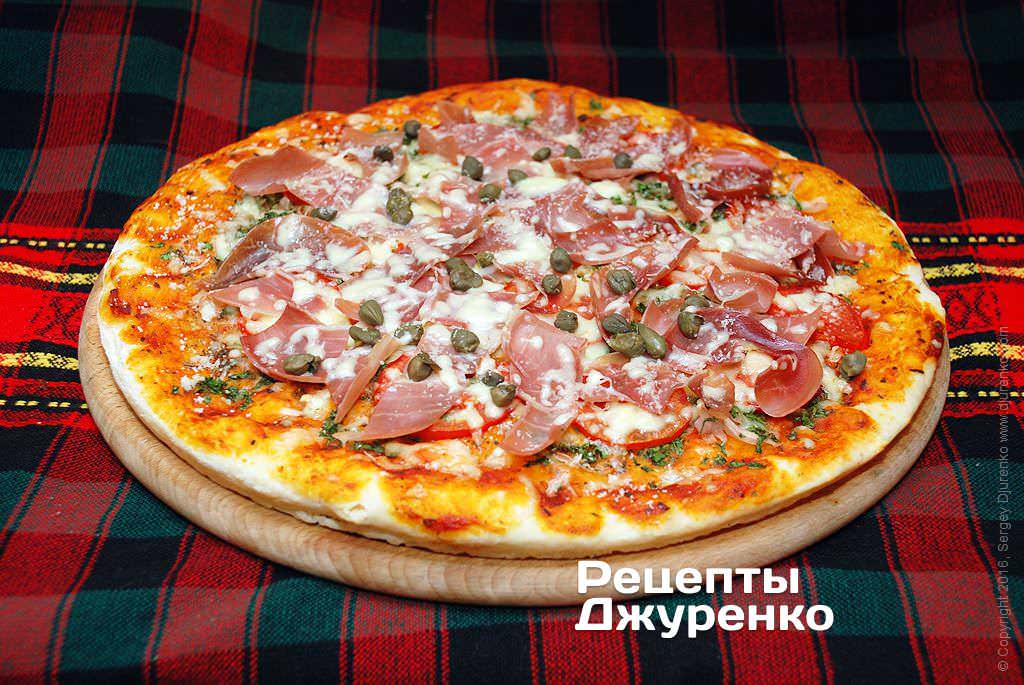
Prosciutto pizza with tomatoes, mozzarella and capers. An easy recipe for a meat pizza with Parma ham.
Ingredients
one 34 cm pizza
Base
- Pizza dough 400 g
- Homemade tomato sauce 2 tbsp
- Olive oil for greasing the pan


Topping
- Prosciutto 75 g
- Mozzarella 100 g
- Tomatoes 1
- Onion 1
- Wine vinegar 2 tbsp
- Salt, black pepper, sugar a pinch each
- Capers 1 tbsp (10 g)
- Parmesan (grated) 1 tbsp (7 g)
- Chopped mixed herbs 1 tbsp (4 g)
- Dried oregano 1–2 pinches
- Basil leaves optional


Step-by-step recipe
Dough and onion
Get the ingredients ready. This pizza is made with genuine Parma ham, which is easy to buy ready-sliced and packaged.
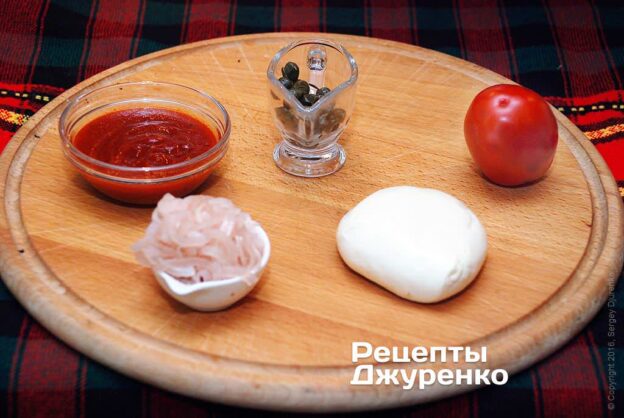
For the topping you’ll also need fresh mozzarella, a ripe tomato, a few mixed herbs (basil, parsley, dill) and a little homemade tomato sauce. If you have no sauce, don’t use ketchup.
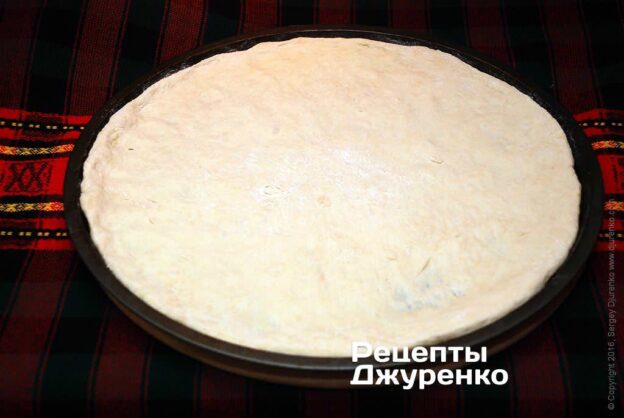
Make a yeast or yeast-free dough. We always make yeast pizza dough – it works out great for us. Once the dough has risen, knead it briefly and stretch it into a round 5–7 mm thick. Lightly grease a pizza pan with olive oil and lay the dough on it. Be sure to prick the dough with a fork in several places.
If you prefer a thin, crispy crust, you can add the topping right away. If you cover the dough with a cloth and let it rest for 15–30 mins, it will rise a little more and the pizza will have a soft, fluffy base.
Marinate the onion. Peel the onion and cut it into very thin strips. Season with salt, pepper and a pinch of sugar. Mix, add 2 tbsp of wine vinegar and leave the onion to marinate for half an hour.
If it’s still a bit sharp, pour boiling water over it for 10 mins, then rinse and squeeze dry.
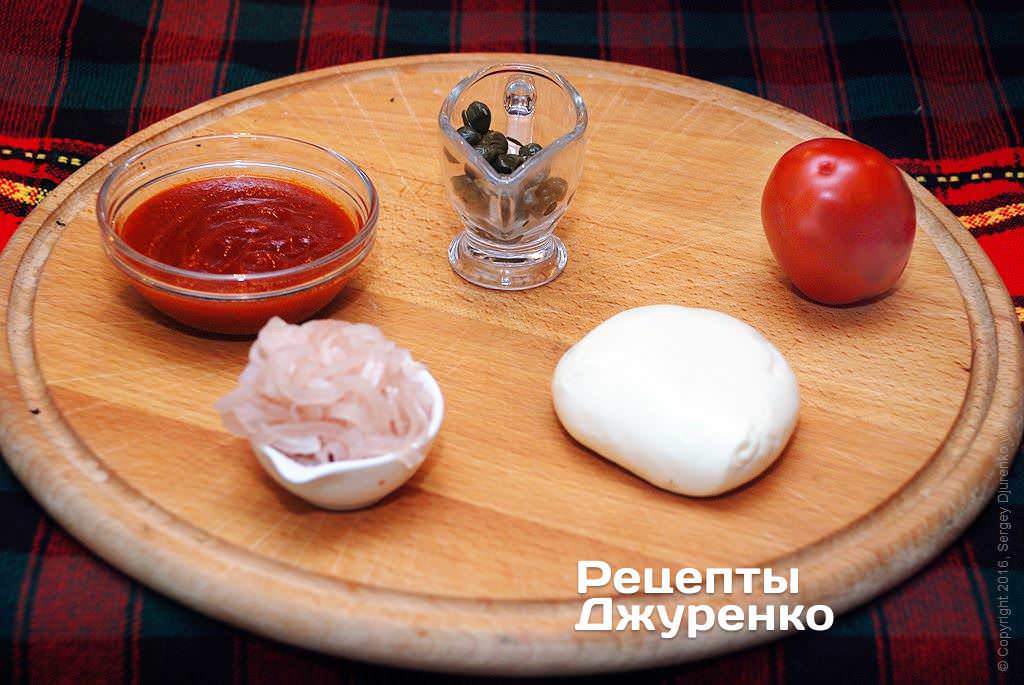
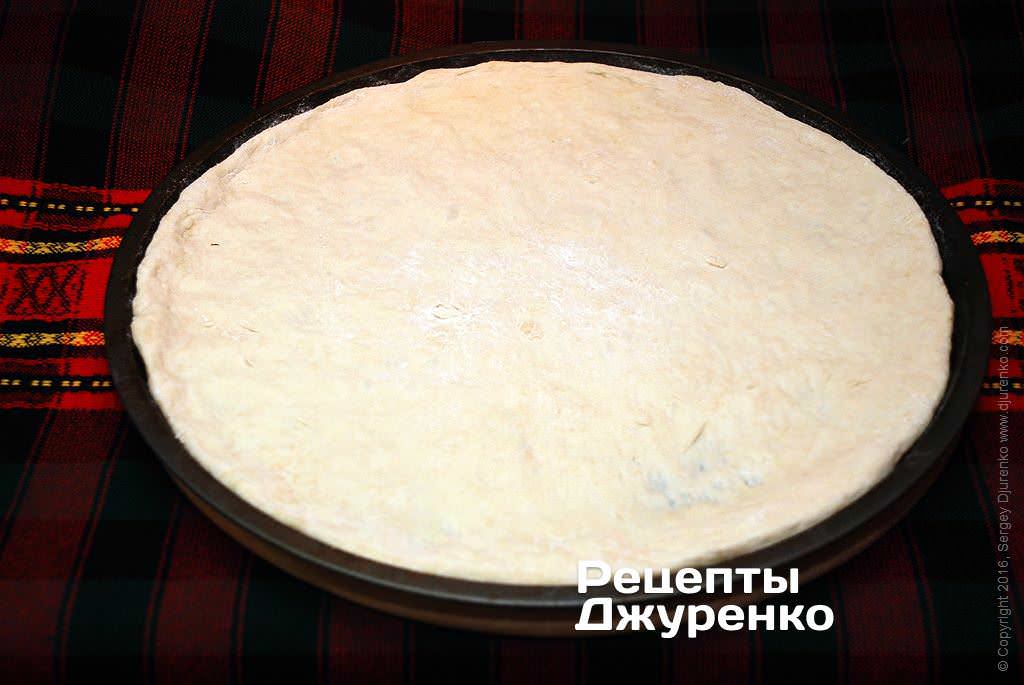
Topping
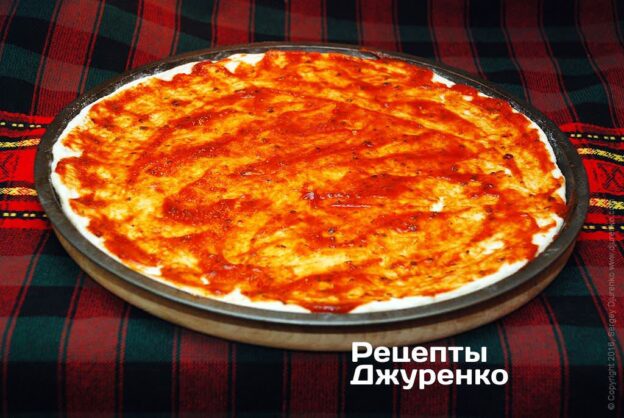
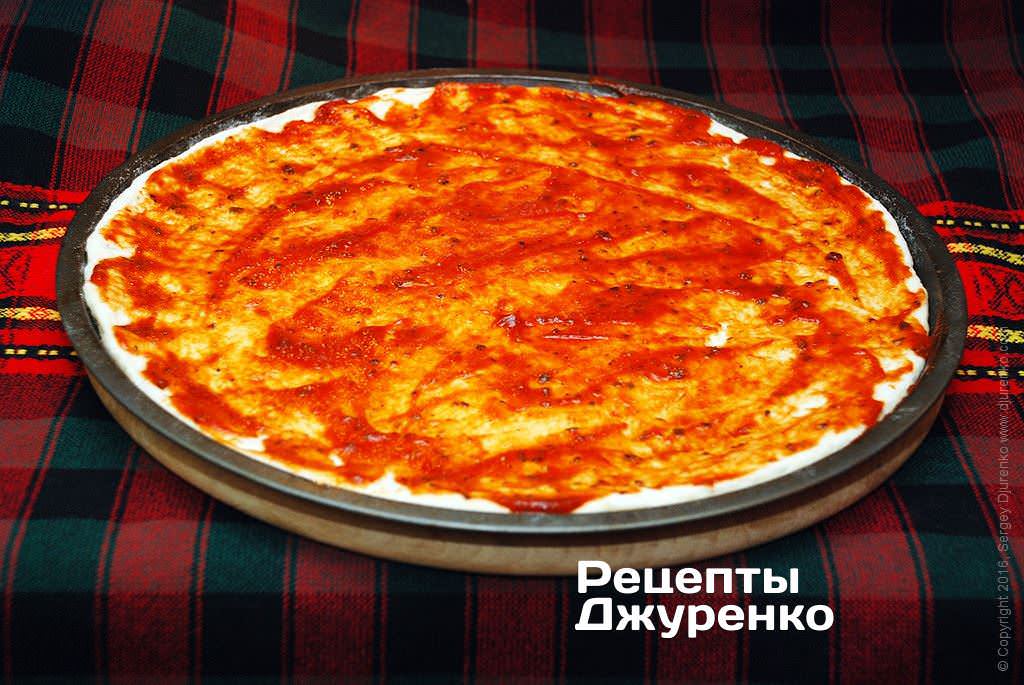
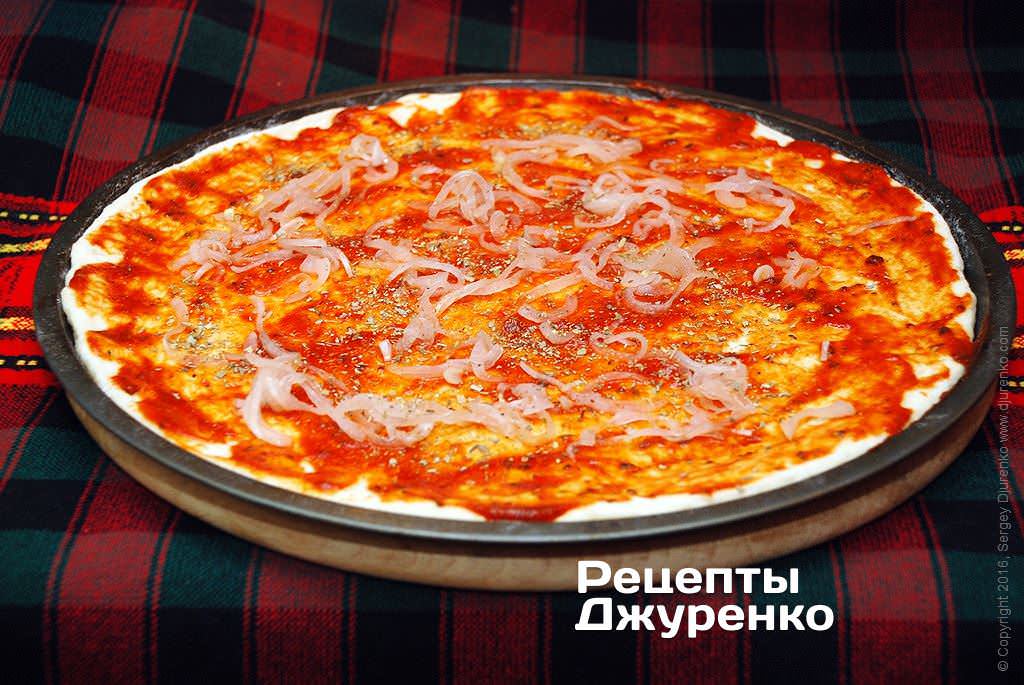
Spread the tomato sauce over the dough – evenly, with no gaps. Avoid puddles of sauce, or the pizza won’t bake through.
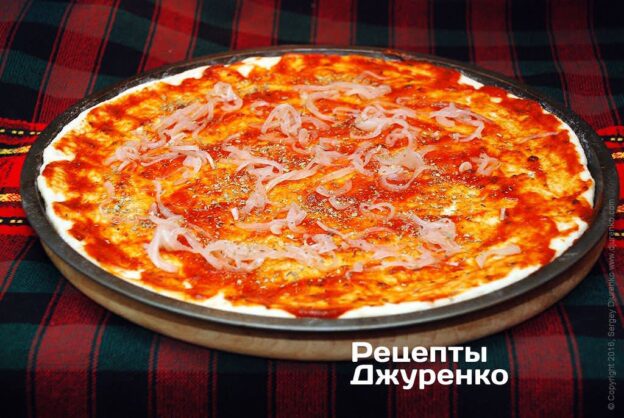
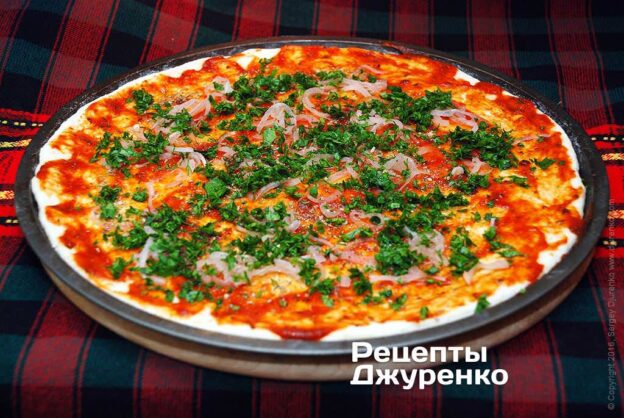
Arrange the marinated onion over the sauce-covered dough. Sprinkle with 1–2 pinches of dried oregano.
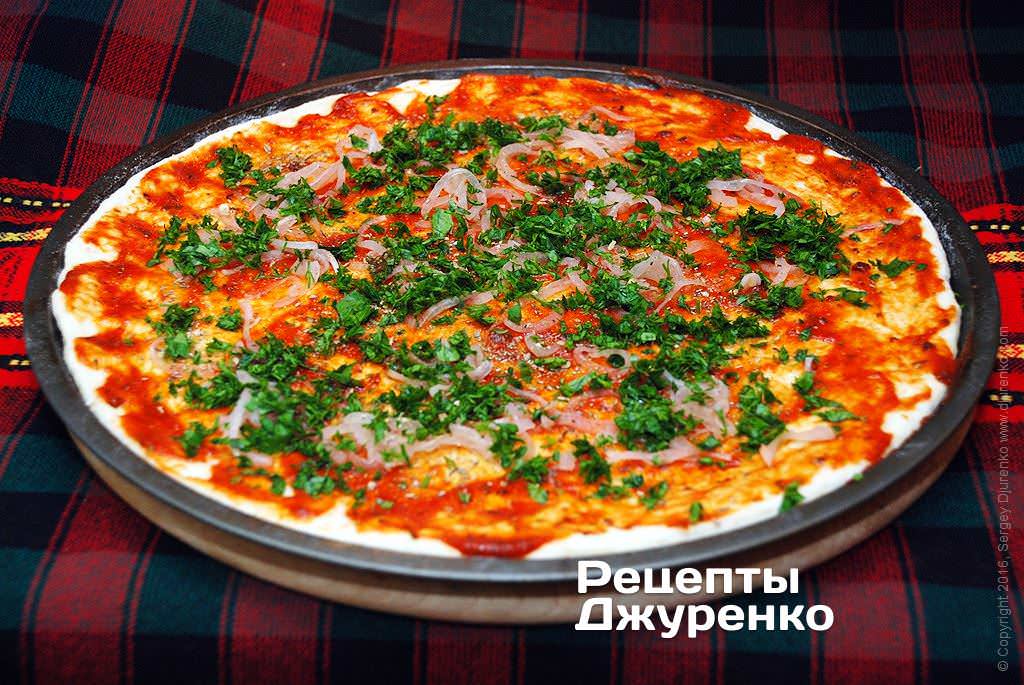
Chop the mixed herbs with a knife and sprinkle them all over the pizza.
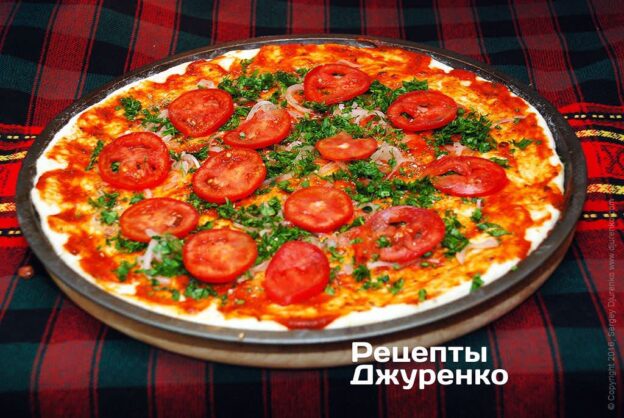
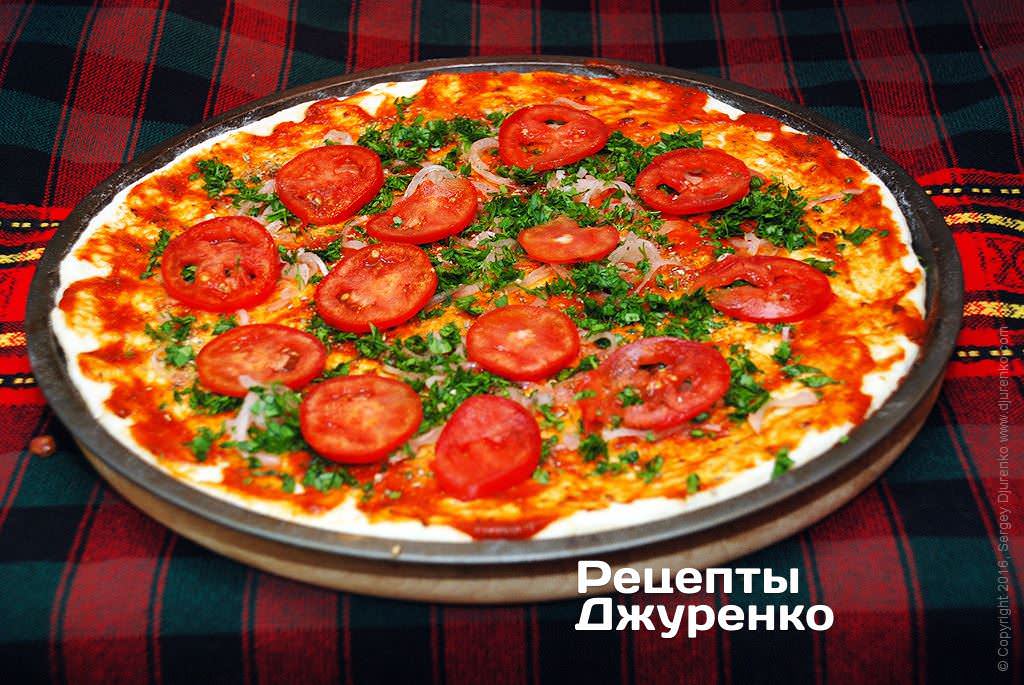
Cut the tomatoes into very thin slices and spread them evenly over the sauce and onion.
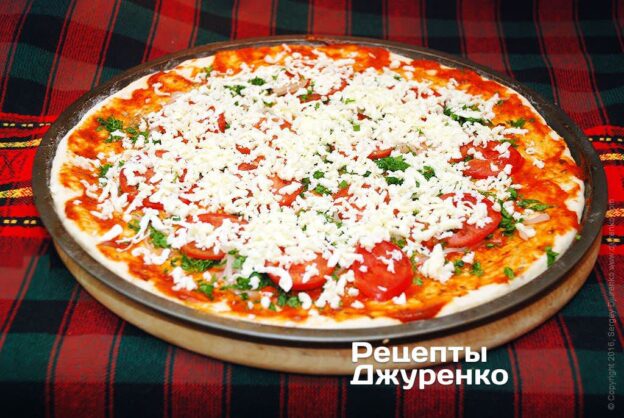
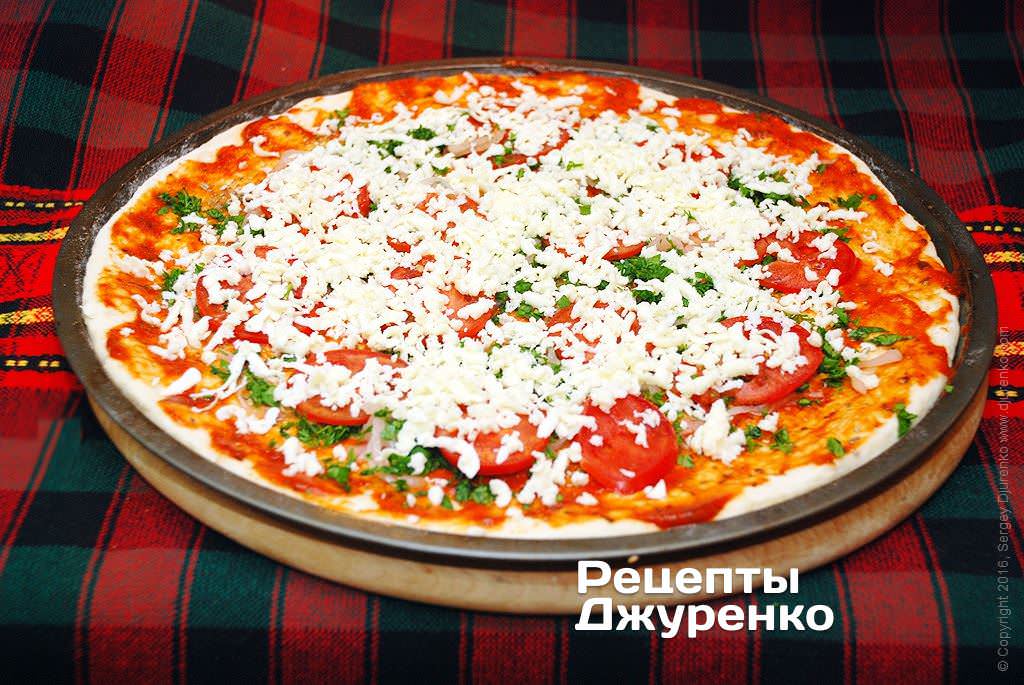
Sprinkle the whole pizza with coarsely grated mozzarella. Set aside 1 tbsp of mozzarella to sprinkle over the prosciutto later.
Baking and adding the prosciutto
Put the pizza into an oven preheated to 200°C for 15–17 mins. In that time the base will bake through completely.
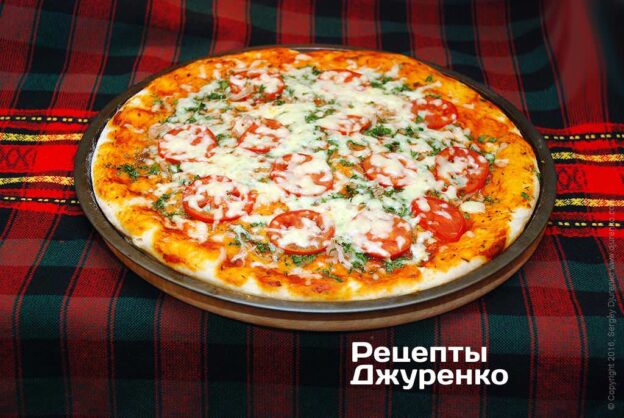
Take the pizza out of the oven and lay the prosciutto, cut into small pieces, over it. Sprinkle with a little grated Parmesan and the remaining mozzarella, and scatter over the capers.
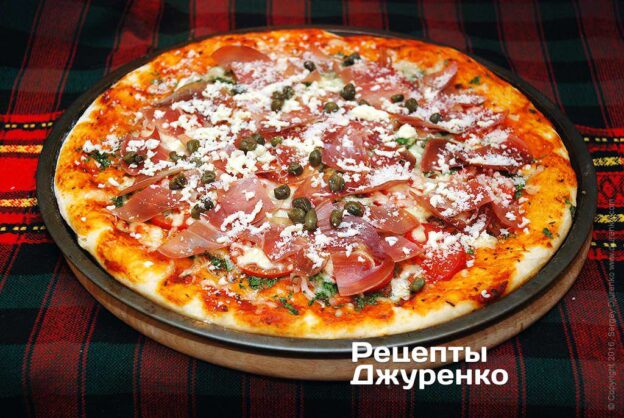
Return the pizza to the oven for 2–3 mins, no longer. Otherwise the delicate ham will start curling up and drying out.
Serving
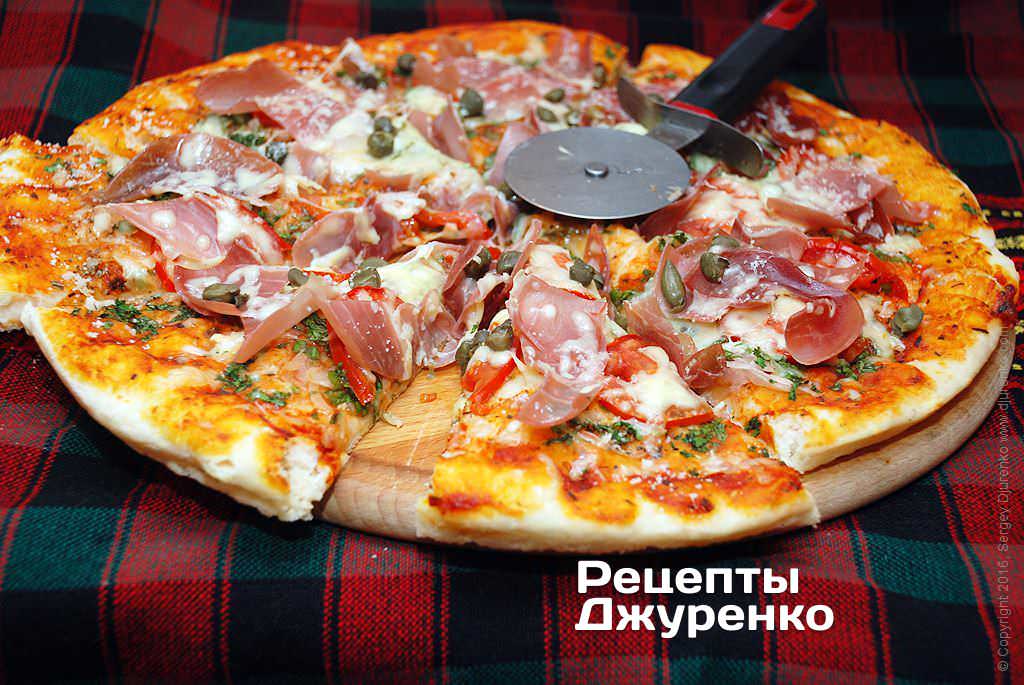
If you like, sprinkle the finished pizza with whole leaves of young green basil. Cut the pizza into 6–8 slices.
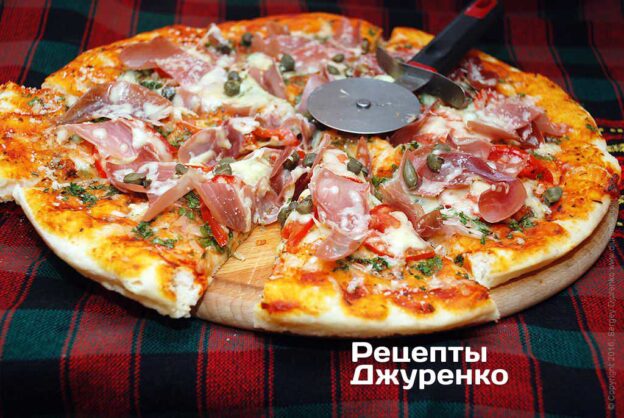
Serve it right away, without waiting for it to cool. Prosciutto pizza is wonderfully fragrant and tastes truly “meaty”. Don’t save it for later to reheat.

How did you like this recipe?
Rate it with one tap.
Calories and macros
205 kcal
100 g
- Protein9.3 g19% of kcal
- Fat6.9 g31% of kcal
- Carbs24.7 g50% of kcal
Calculated from the recipe ingredients, excluding salt and spices. Data: USDA and Matvaretabellen.
To Get It Right
Sauce, not ketchup
Homemade tomato sauce is best. If you have none, mix half a cup of homemade tomato juice (100 ml) with a pinch each of salt, sugar and black pepper. Pour it into a frying pan with 1 tbsp of olive oil and simmer until the sauce is thick enough.
If it isn’t eaten right away
Reheated prosciutto pizza is never the same: the ham dries out. If you need to bake the pizza ahead, set the prosciutto and capers aside and add them after reheating, returning the pizza to the oven for 2–3 minutes.
Have your own trick for this recipe?
Questions and answers
What goes on a prosciutto pizza?
The basics are dough, tomato sauce, mozzarella and prosciutto. This recipe adds marinated onion, thin tomato slices, mixed herbs, oregano, capers and a little Parmesan.
What is prosciutto?
Prosciutto is an Italian dry-cured ham. Parma ham contains nothing but pork leg and sea salt; spices are added only very rarely. For pizza you want prosciutto crudo (dry-cured), not prosciutto cotto (cooked ham).
Can I make this pizza with jamón instead of prosciutto?
Yes: jamón or thinly sliced dry-cured pork loin, even a local one, will do just fine. Prosciutto is Italian ham and jamón is Spanish, both dry-cured, so jamón also goes on the pizza only at the very end of baking.
Can you eat prosciutto raw?
Yes, dry-cured ham is ready to eat. That’s why it goes on the pizza at the very end and is warmed for just 2–3 minutes – only enough to take the chill off before it can dry out.
How do I make prosciutto pizza with stracciatella?
Bake the pizza as in this recipe and spoon the stracciatella over the hot finished pizza together with the prosciutto, without baking it: in the oven the delicate cheese would melt away and lose its flavor.