
Wiener Schnitzel: Made Only from Tender Veal
A real Wiener schnitzel, made the way it should be, is eaten easily and with pleasure despite its size, and it never stays on the plate. Alf, the hero of the famous TV series, once said: “They are all the same size: XXL.”
Emperor Ferdinand I opened a school of culinary art for members of the royal family at the imperial court some 500 years ago. But the famous Wiener schnitzel appeared much later.
Schnitzel (from the German schnitzen, to cut) is a thin piece of well-pounded veal, pork, lamb, or chicken or turkey breast, breaded and fried in hot butter. A properly made schnitzel is golden with a crispy crust. The word “schnitzel”, like the dish itself, comes to us from Germany. In German, “Schnitzel” means a “cut” of meat, nothing more.
What really caught a soldier’s imagination was the “cotoletta alla milanese”, which the Italians “borrowed” from the Spanish, who in turn “borrowed” it from the Arabs. The basic recipe is pork schnitzel, and another variation is chicken schnitzel.



Ingredients
2 servings
- Veal (cutlet, up to 250 g) 2 pieces
- Egg 1
- Milk 1 tbsp
- Vegetable oil 1 tsp
- Flour 2 tbsp (20 g)
- Stale white bread (for breadcrumbs) 100 g
- Butter (for frying) 50 g
- Salt, pepper to taste
- Lemon 2 slices
Step-by-step recipe
The meat
To make a proper Wiener schnitzel, first of all you need the right meat. That is veal. Not pork, not lamb, not chicken. Only veal. The more tender, the better. In a decent restaurant, if a schnitzel is not made from veal, the menu always says so: “not classic”.
Slice the veal across the grain into pieces a couple of centimeters thick; a piece can weigh up to 250 grams.
The ideal cut is veal shoulder. Ideally a piece consists of two identical halves joined together and is rectangular.

Pound the meat hard until the schnitzel is 3-5 mm thick. It is easier to pound it through plastic wrap so the meat doesn’t tear or splatter.

Salt the pounded piece of meat lightly, and pepper it if you like.
Dust it with flour on both sides.


Breading
Grate a piece of stale white bread or white loaf: that is your breading.
Ordinary dry breadcrumbs are hardly suitable: store-bought ones are rarely made from plain white bread, they are often not fresh, and they turn dark when fried. In Austria they use crumbs of a fresh bread roll. At home it is easy to dry a loaf: cut off the crust and put it in a no-frost fridge, and in a couple of days it will be stale.
Break the egg into a bowl, add salt, 1 tbsp of milk and 1 tsp of vegetable oil, and beat.
Dip the meat well in the egg and coat it in the breadcrumbs.

Shake the schnitzel lightly to knock off the excess crumbs.

Frying
Usually vegetable oil is used for frying, olive oil. But many masters consider that bad form and use only fresh, real butter. Just, for heaven’s sake, not those “cocktails” that fill most of the shelves in supermarkets.
Heat the pan over medium heat and melt the butter in it.
Fry the meat on both sides until a golden, crispy crust forms, about 2-3 mins per side.

Blot the excess fat with a napkin.
Right away, immediately, put the schnitzel onto an individual plate. It is even better to warm the plate.
The ideal schnitzel is golden-orange, with a crispy crust that easily separates from the meat.


Serving
In Vienna, schnitzel is served only with a slice of lemon. You squeeze the lemon over the schnitzel. No sauces, no gravies, and certainly no ketchup.

Serve a special potato salad separately, on another plate. The recipe varies, but the essence is warm boiled potatoes, red onion and green leaf lettuce. It is all dressed with a mixture of beef broth, wine vinegar and oil.
A dish like schnitzel calls for wine. Or beer. Probably even better, beer. In Austria there is the “G’spritzter” for this, a mix of wine and mineral water.


Calories and macros
625 kcal
Serving ≈ 210 g
- Protein38 g25% of kcal
- Fat37 g54% of kcal
- Carbs32 g21% of kcal
100 g299 kcalProtein 18.2 gFat 17.7 gCarbs 15.1 g
Calculated from the recipe ingredients, excluding salt and spices. Data: USDA and Matvaretabellen.
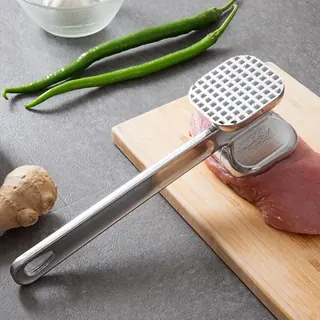 Meat tenderizerAliExpress
 Kitchen probe thermometerAliExpress
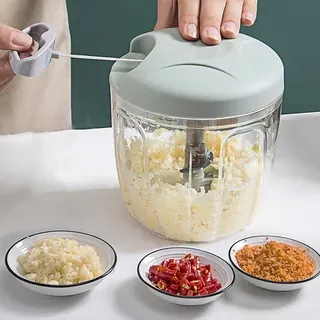 Pull chopper for garlic and onionAliExpress
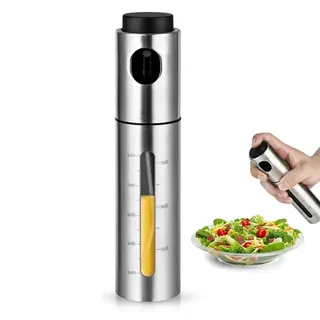 Oil sprayerAliExpress
 Kitchen scale up to 5 kgAliExpress
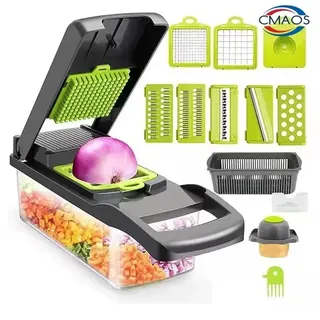 Vegetable chopper with handleAliExpress