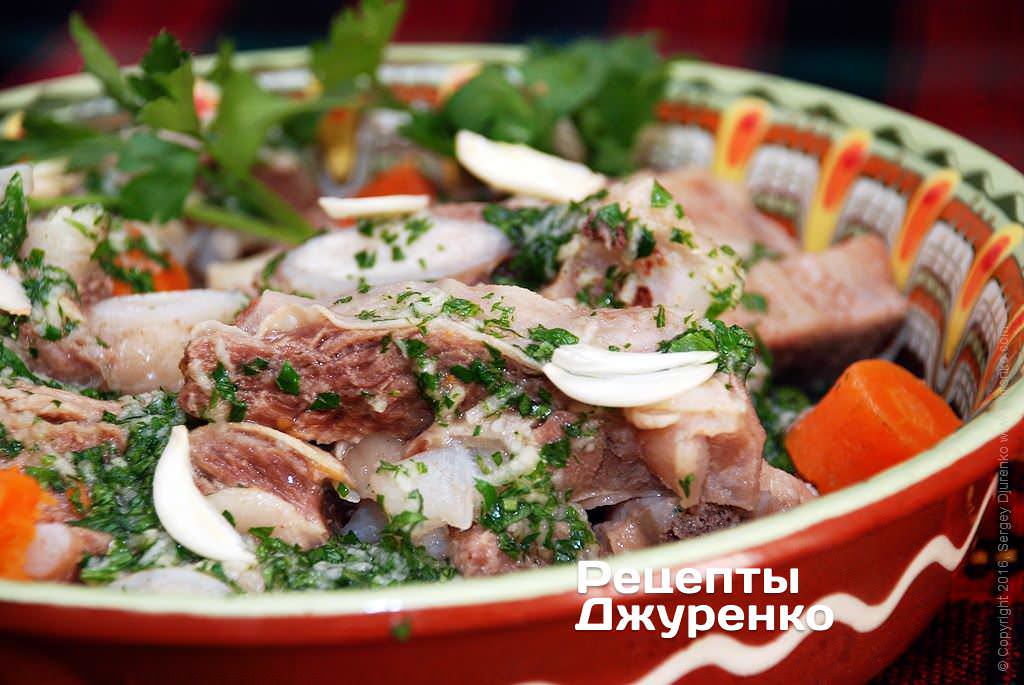
Khashlama with Veal Brisket
Ingredients
4 servings
- Veal brisket 1 kg
- Garlic 1 head
- Parsley, cilantro 1 bunch
- Celery root, parsnip, parsley root, carrot 1 each
- Onion 1 (optional)
- Bay leaves 2–3
- Cold water enough to cover the meat
- Coarse rock salt to taste
Step-by-step recipe
Meat and roots
The simplest khashlama, and probably the tastiest, is made in Kakheti. People there know a thing or two about cooking meat simply. A minimum of ingredients, a maximum of soul. Properly boiled meat needs nothing on the side except wine.
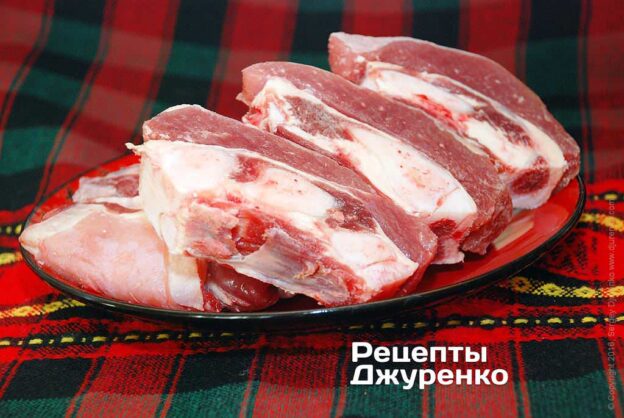
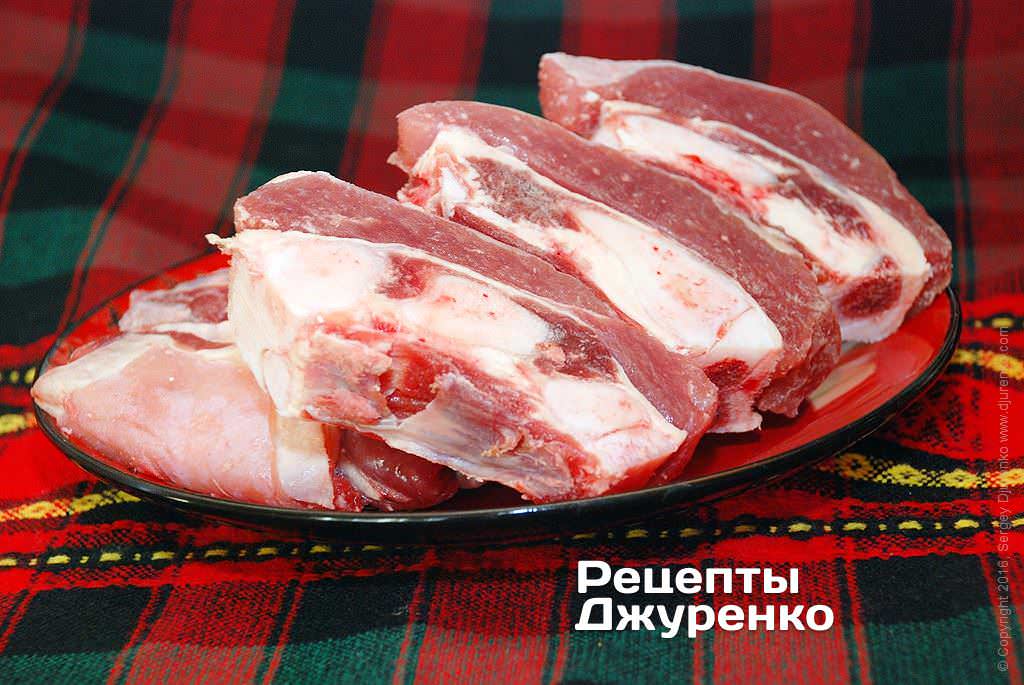
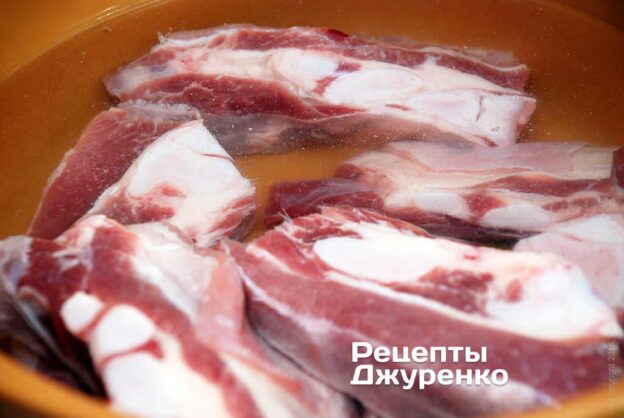
Choose the meat — this is the most important thing. You need lamb or veal brisket — meat on the rib with bits of cartilage. Lamb is hard to find here, but veal brisket is always available, though sadly not many people buy it.
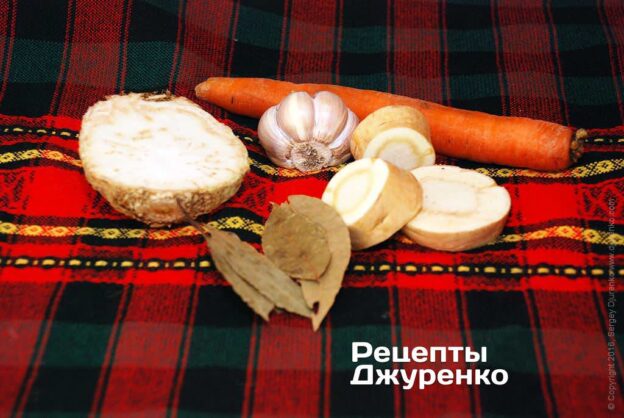
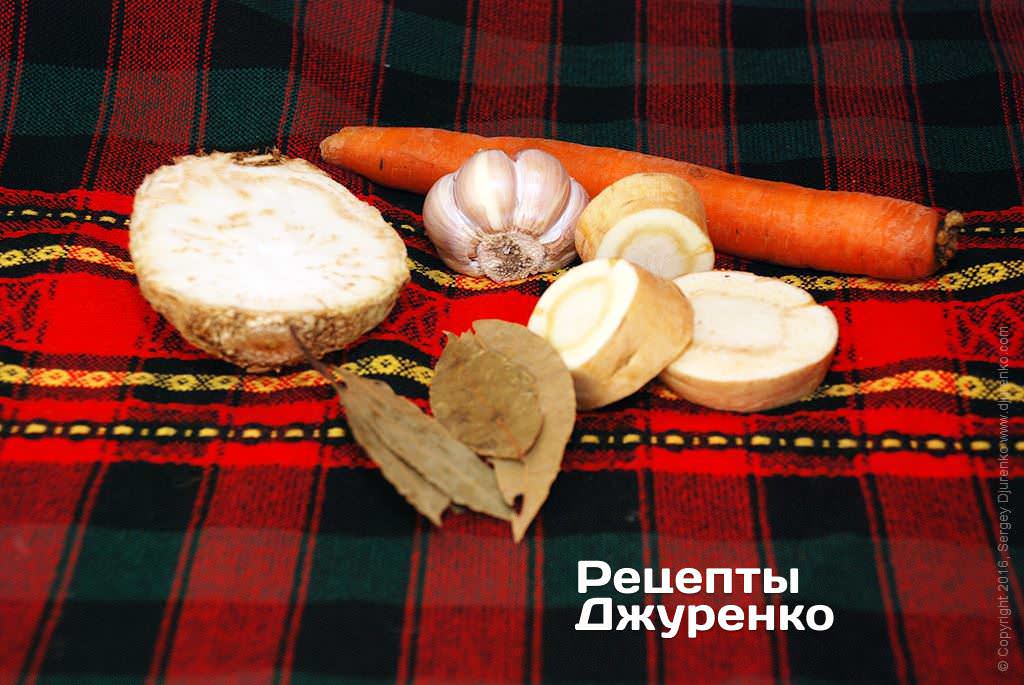
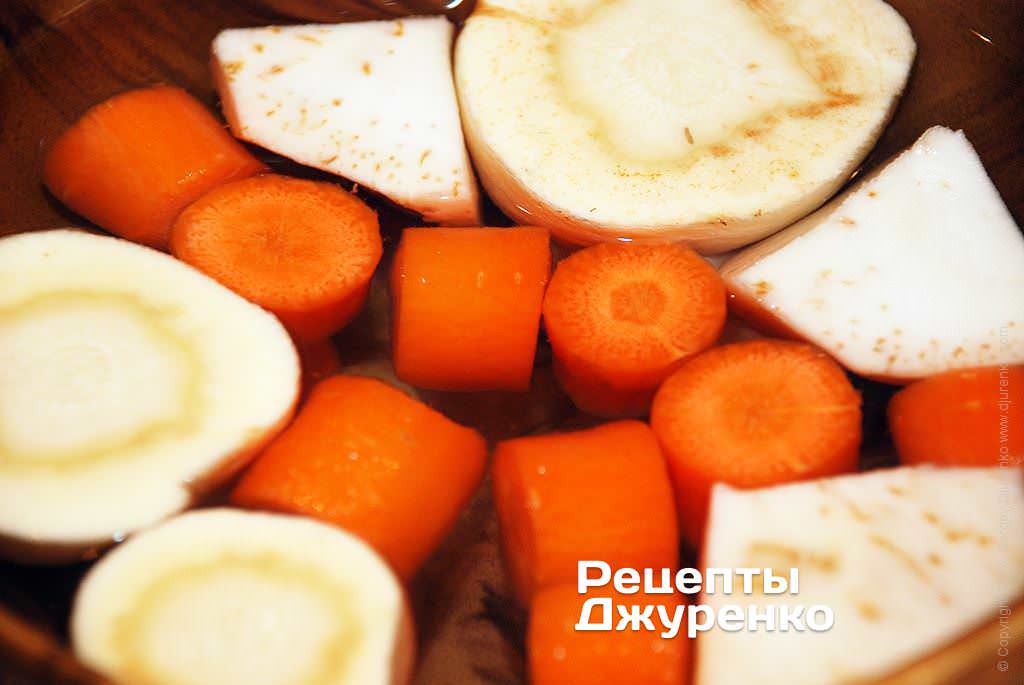
Get the roots ready — parsley root, celery root, parsnip and carrot — along with the garlic and bay leaves.
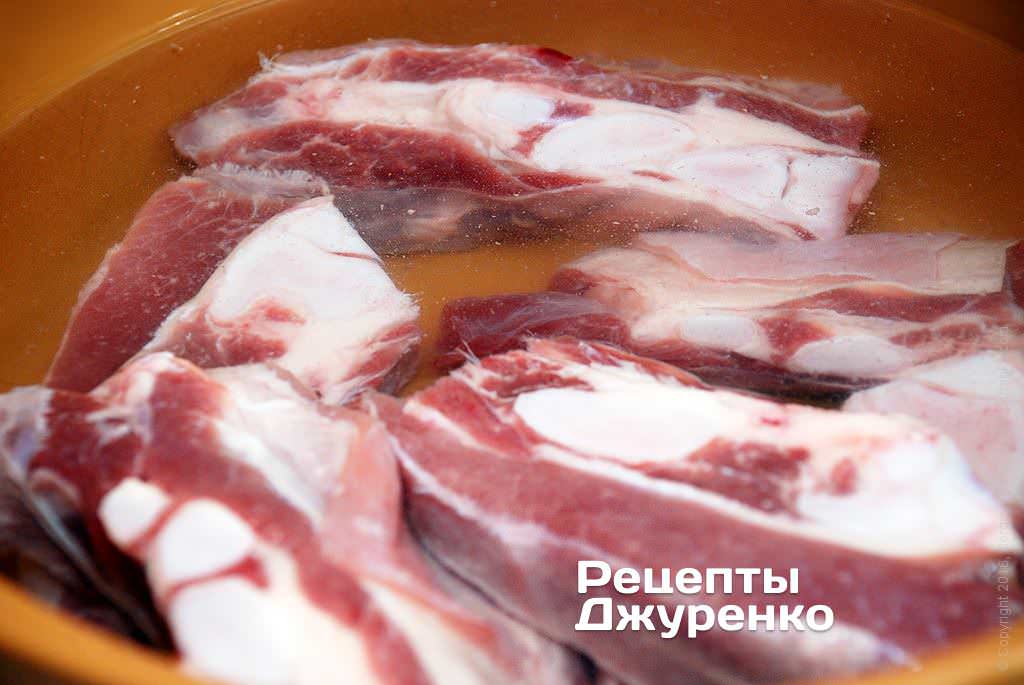
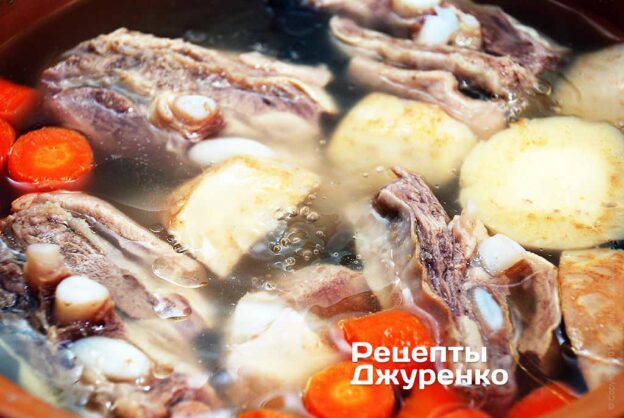
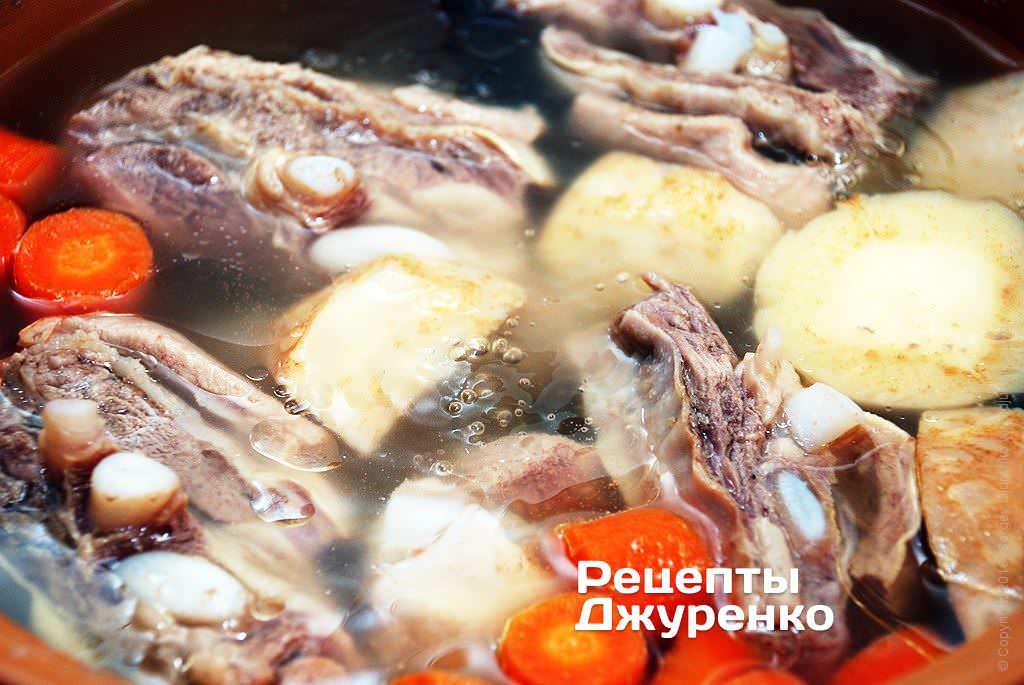
Cut the brisket into large pieces, ideally with a bit of bone or cartilage in each one. Put the meat in a cauldron or pot, cover with cold water and put on the heat.
Simmering
When the water comes to a boil, skim off the foam. Add the parsley root, celery root and carrot cut into large chunks and, if you like, a whole unpeeled onion. Add 2–3 bay leaves.
After 15–20 minutes of boiling, remove the bay leaves.
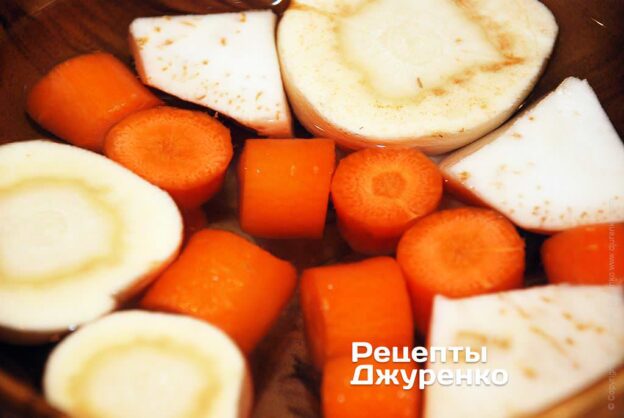
Cook the khashlama over low heat for 2–4 hours at a very gentle simmer.
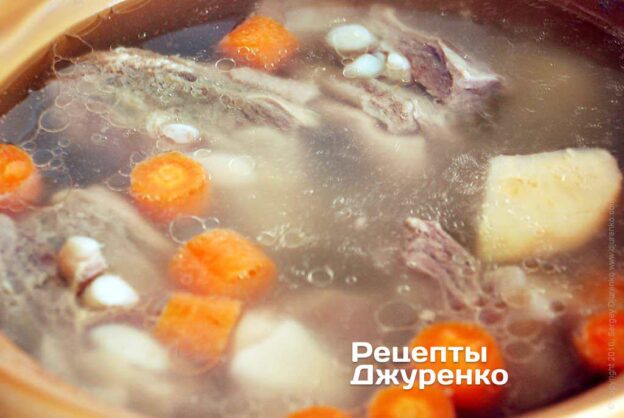
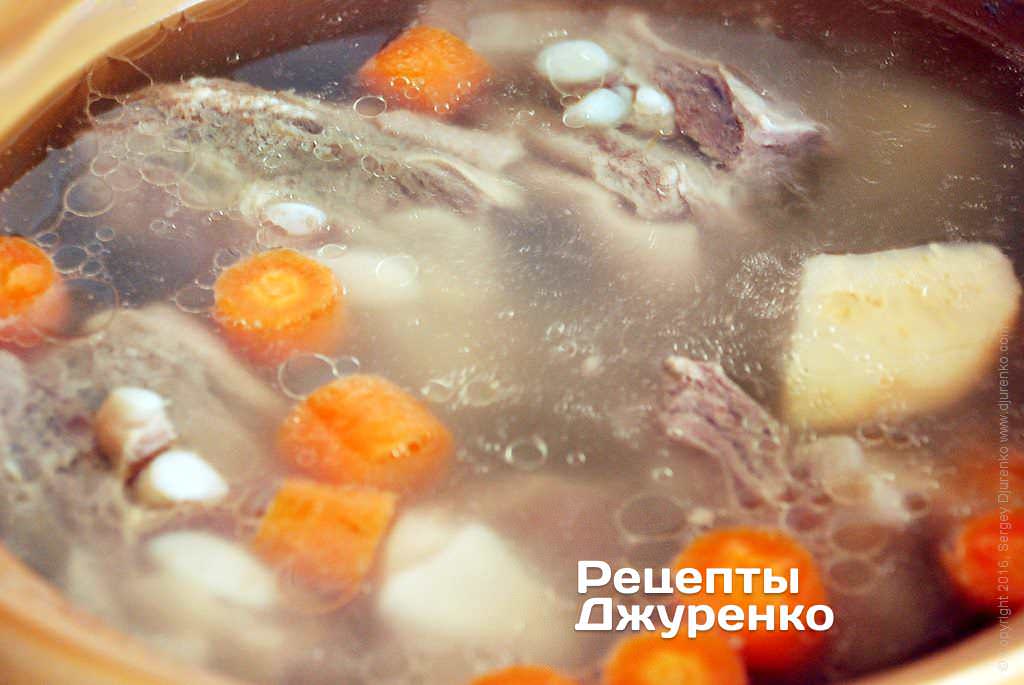
When the cooking is done, take the roots out of the broth and serve them with the meat as a side dish or simply throw them away. Pour off the broth and keep it “for later”. The broth can be served with the meat in cups or bowls.
But best of all, especially if the khashlama was made for a feast, drop the leftover meat into the broth in the morning, bring it to a boil and serve it to your friends as a morning remedy. Tried and tested — it revives even the most hopeless cases.
Serving
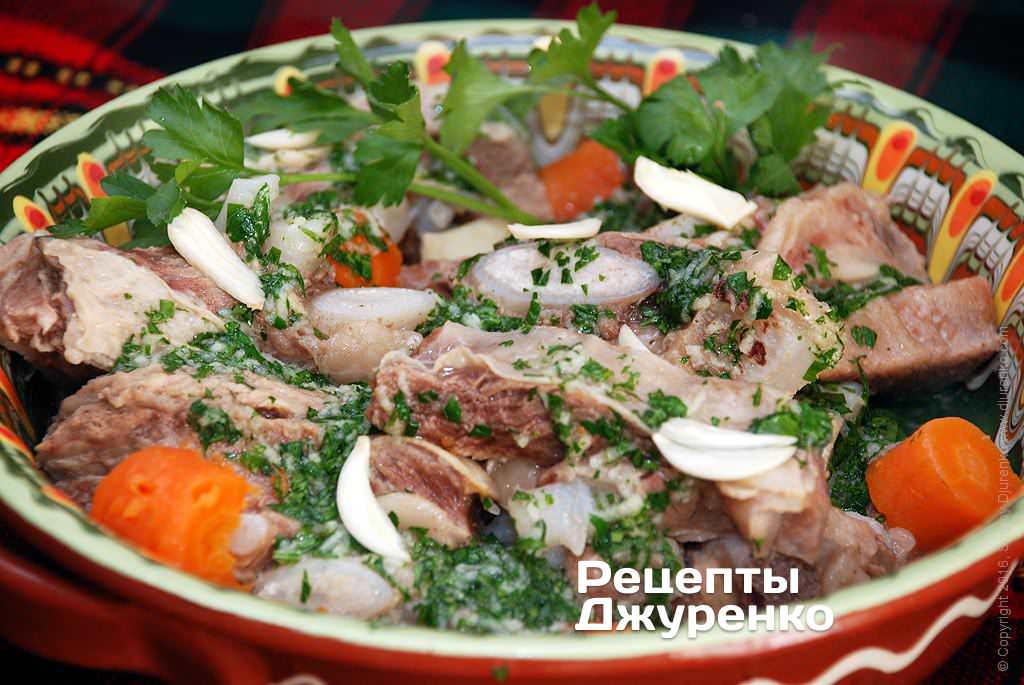
Place the boiled pieces of meat on a platter and season with coarse rock salt to taste.
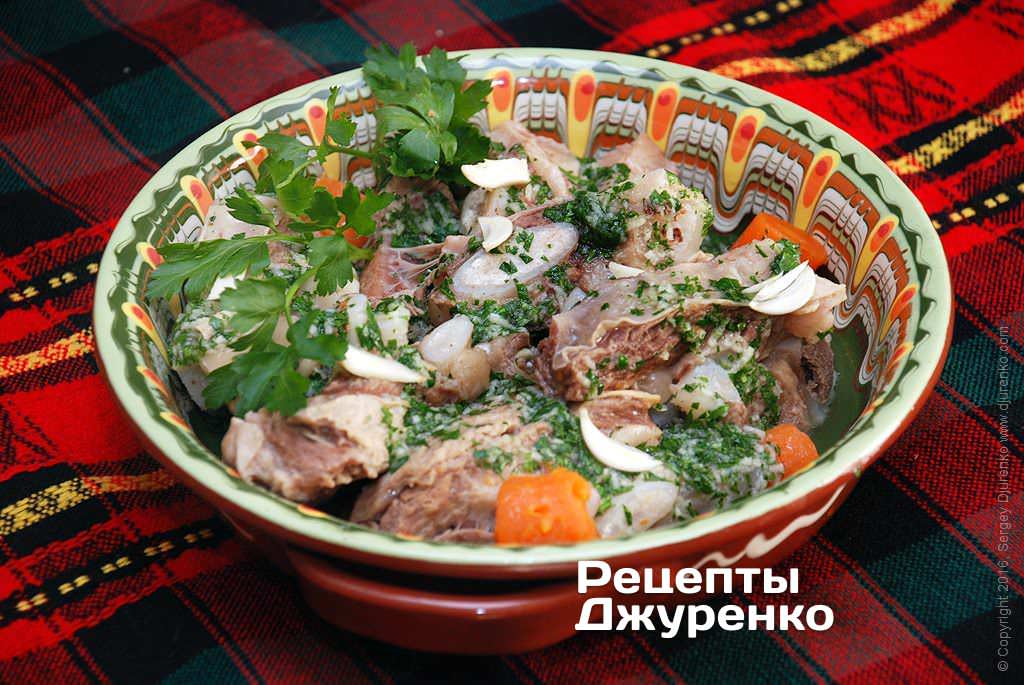
Peel the garlic and crush it in a mortar or grate it. The amount of garlic is up to you, but khashlama should be spicy and garlicky. Mix the garlic with 2–3 spoonfuls of broth and pour the mixture over the meat.
Be sure to sprinkle with finely chopped parsley and, if you like, cilantro.
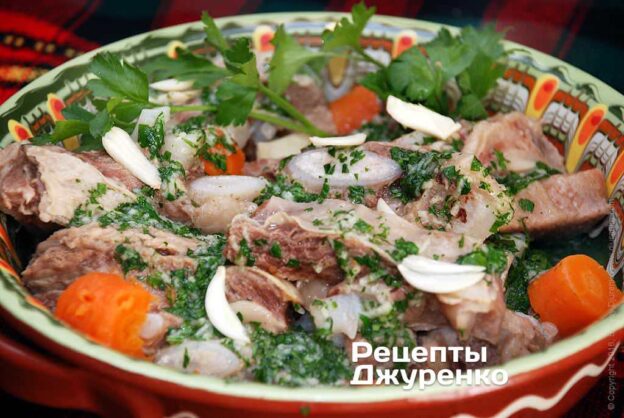
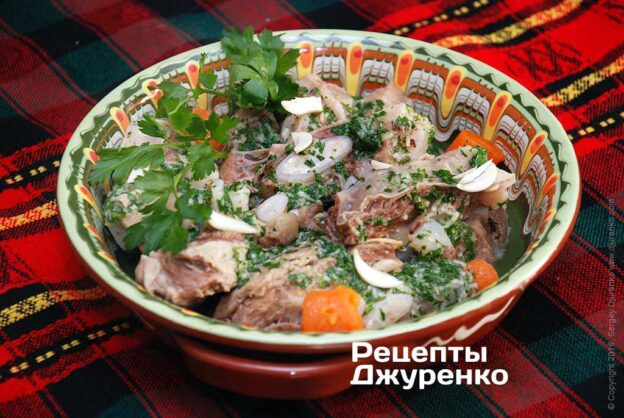
That’s really all there is to it. A superb appetizer, especially with a good Caucasian red wine and good hearty toasts!
Calories and macros
465 kcal
Serving ≈ 300 g
- Protein54 g49% of kcal
- Fat19 g38% of kcal
- Carbs14 g13% of kcal
100 g156 kcalProtein 18.4 gFat 6.4 gCarbs 4.8 g
Calculated from the recipe ingredients, excluding salt and spices. Data: USDA and Matvaretabellen.
How did you like this recipe?
To Get It Right
An appetizer for a feast
With plenty of drinks and toasts, khashlama is the perfect appetizer. Shashlik is great too, but someone has to stand and grill it, which means someone misses the party. Khashlama, once cooked, can be eaten all the time and needs no further attention.
Enough for several days
You can make a huge cauldron of khashlama and sit at the table for several days. The finished dish is cooled and, if you like, reheated in the broth in the morning.
Herbs to taste
Readers advise adding more herbs. I agree, but my family is “suspicious” of lots of herbs — so go by your own crowd.
Have your own trick for this recipe?
Questions and answers
What is khashlama?
A dish from the cuisines of the Caucasus: large pieces of meat on the bone, simmered for a long time at a very gentle boil and served with garlic, herbs and broth.
Is khashlama a soup or a main dish?
Both; it is sometimes made as a soup. In this recipe the meat is served on a platter with garlic, and the broth separately, in cups or bowls.
What is Georgian khashlama?
It’s Kakhetian khashlama, like in this recipe: just meat, roots, garlic and herbs, with no potatoes or other vegetables.
Can you make khashlama with pork?
Yes, the method is the same: use pork belly or ribs so that each piece has a bit of bone. But classic khashlama is made with lamb or veal.
How long do you cook khashlama?
2–4 hours over low heat at a very gentle simmer. The meat is done when it comes away from the bone easily.