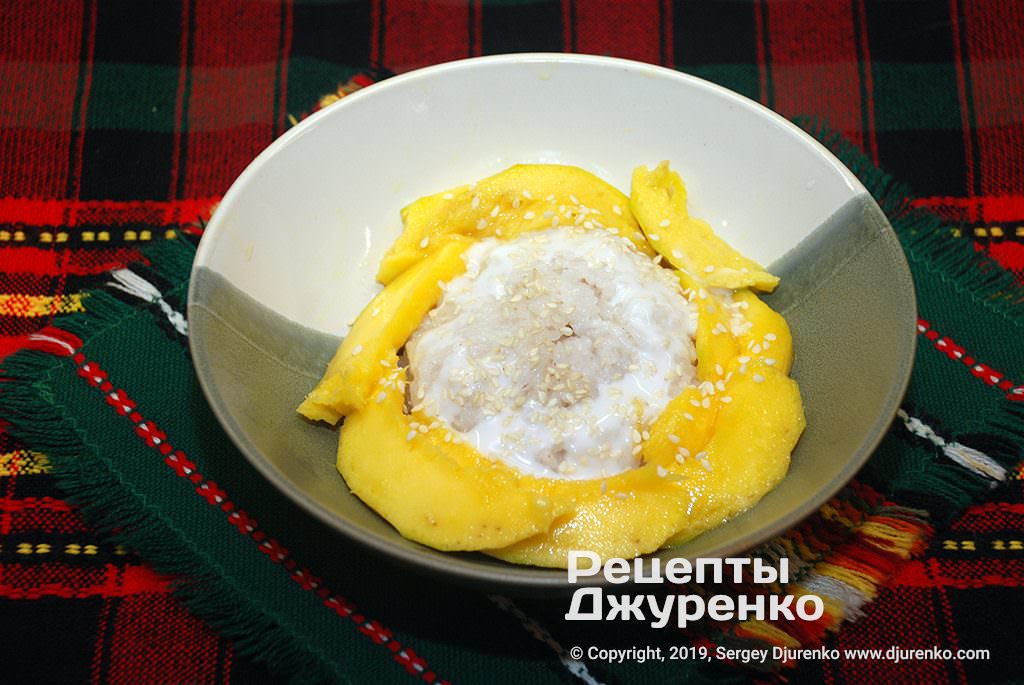
Thai Mango Sticky Rice
Anyone who has been to Thailand has surely tried this local treat, cooked right on the street and served in small bowls: Thai rice with mango and coconut milk. It is wonderfully tasty and costs next to nothing. This popular Thai dessert can be found on the streets of many cities across Southeast Asia. It is always delicious, though made a little differently everywhere.
The local name of the sweet is ข้าวเหนียวมะม่วง (khao niao mamuang), and in English-speaking countries it is called mango sticky rice. In its most common form it is Thai glutinous rice, steamed or boiled, served with pieces of peeled, very ripe yellow mango and topped with a coconut milk sauce. The dessert is usually eaten with the hands and served cold or slightly warm.
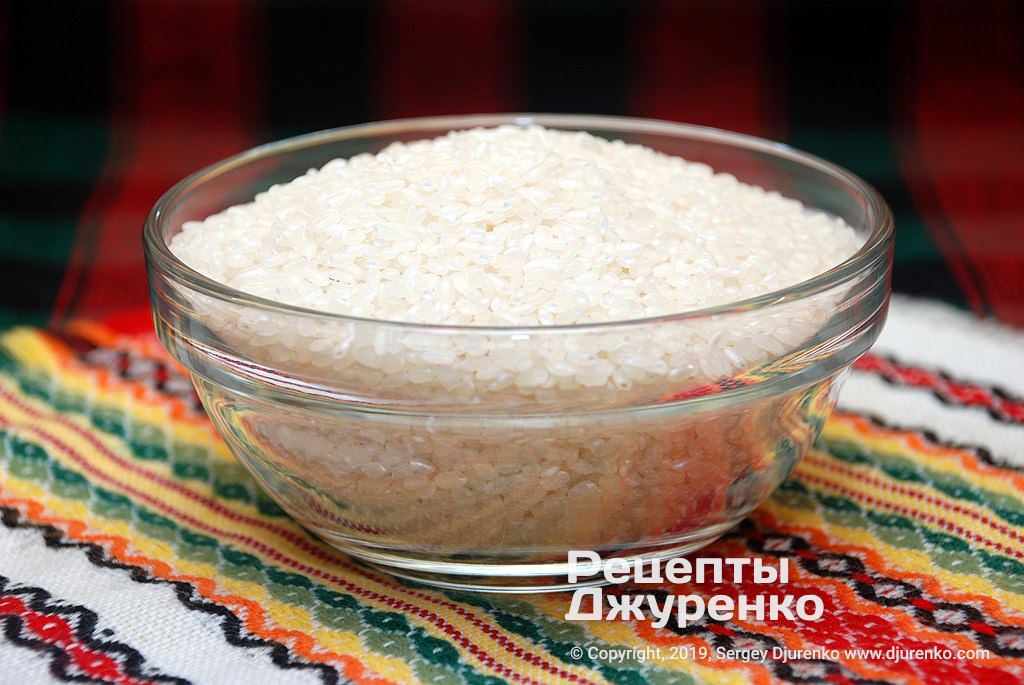
To make this treat you need Thai rice with sticky properties, white or black. Jasmine rice or short round-grain rice is often used: it cooks down well and then lets you roll balls that hold their shape. Here it is a fairly rare find in the shops, but it can be successfully replaced with sushi rice or ordinary round-grain rice, the kind sold with no brand name. We buy it for milk rice porridge.
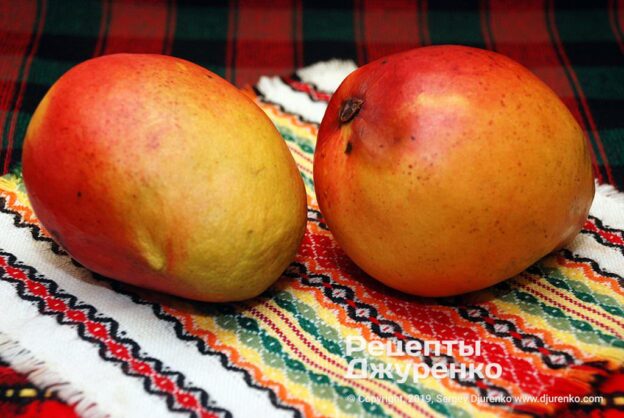
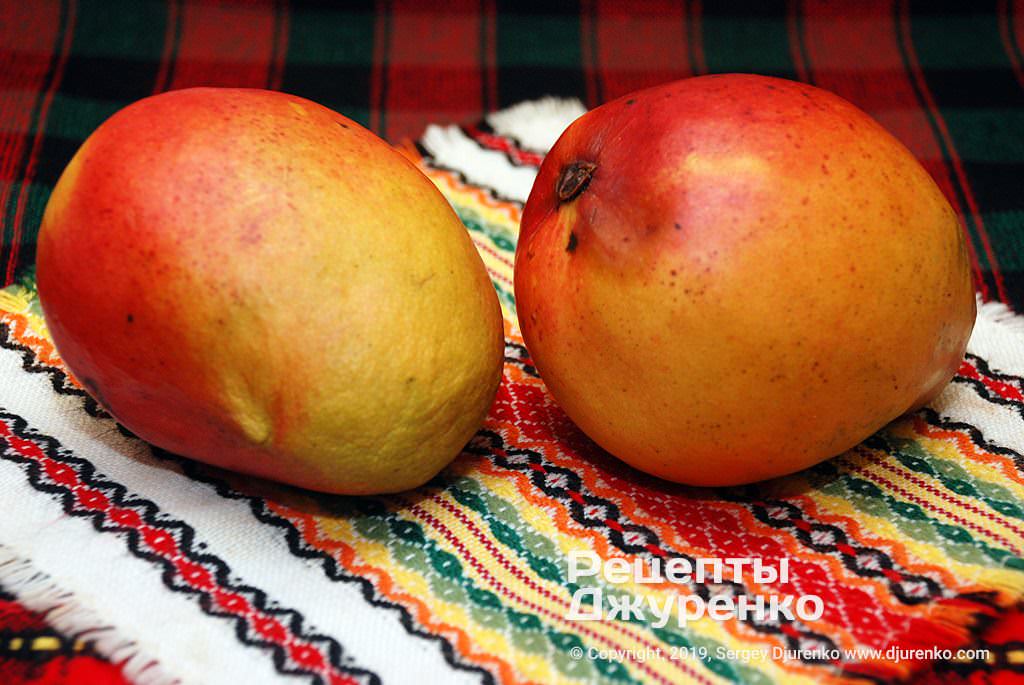
Thai mango dessert is mostly made with “yellow” fruit, and if I am not mistaken, Nam Dok Mai is the most common and available variety. Here the shops sell mangoes with red-yellow skin and yellow flesh. They are very fragrant and tasty, the flesh is slightly fibrous with a pronounced flavor, and they are great for cooking.
If you are unsure about plain round-grain rice, buy sushi rice. The fruit must be very ripe, so let it ripen on a windowsill. Coconut milk is sold in tins, most often 400 ml each.
In Asia you can come across quite unusual versions of this dish. The rice may be replaced with mung beans, bananas used instead of mango, and even, almost unbelievably, durian. But these are local variations rather than traditional dishes. Dishes made with “black” sticky rice, or a mix of it with ordinary rice, look especially beautiful: the mango dessert turns purple. My daughter made this dish for us, thanks to her, and the sweet treat has become part of our home.


Ingredients
4 servings
- Round Thai glutinous rice (or sushi rice) 200 g
- Water for the rice twice the volume of the rice, about 2 cups
(400 ml) - Large ripe mango 2
- Coconut milk (400 ml) 1 can
- Sugar 120 g
- Cornstarch 3 tsp
(10 g) - Salt, sesame seeds to taste
Step-by-step recipe
Yellow mangoes are very rare here. But there are almost always red-green or red ones, and they work well if very ripe. Just smell the fruit: a ripe mango has an intense, pleasant aroma. Slightly underripe fruit quickly ripens on a windowsill. The Thais most often make mango sticky rice in bulk at the end of spring, when these fruits are in season.
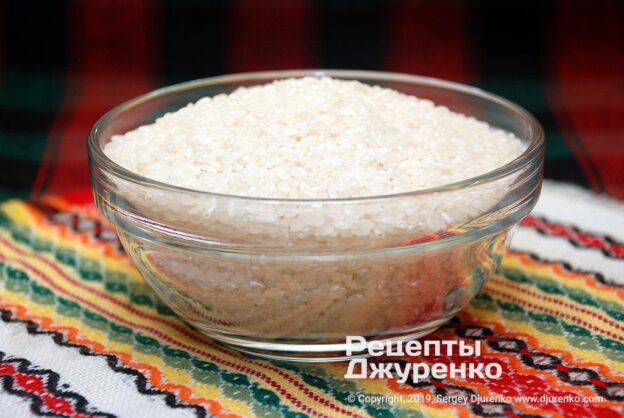
The rice must be rinsed in advance and then soaked in water. This is an important step in preparing it for cooking. One heaped cup is enough for four servings of dessert. Rinse the rice well until the water is almost clear. Cover it with clean water and leave for 1-2 hours. Often it is soaked overnight, which is fine too.
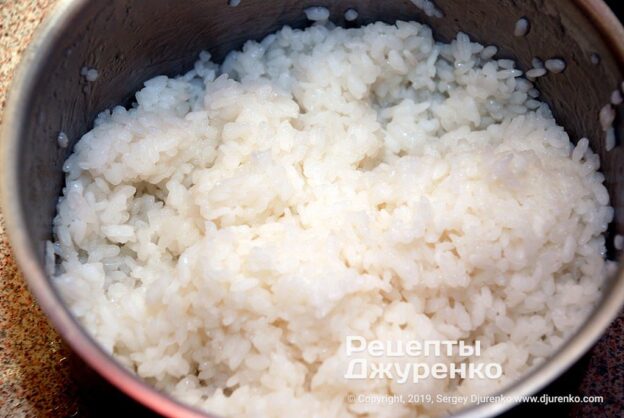
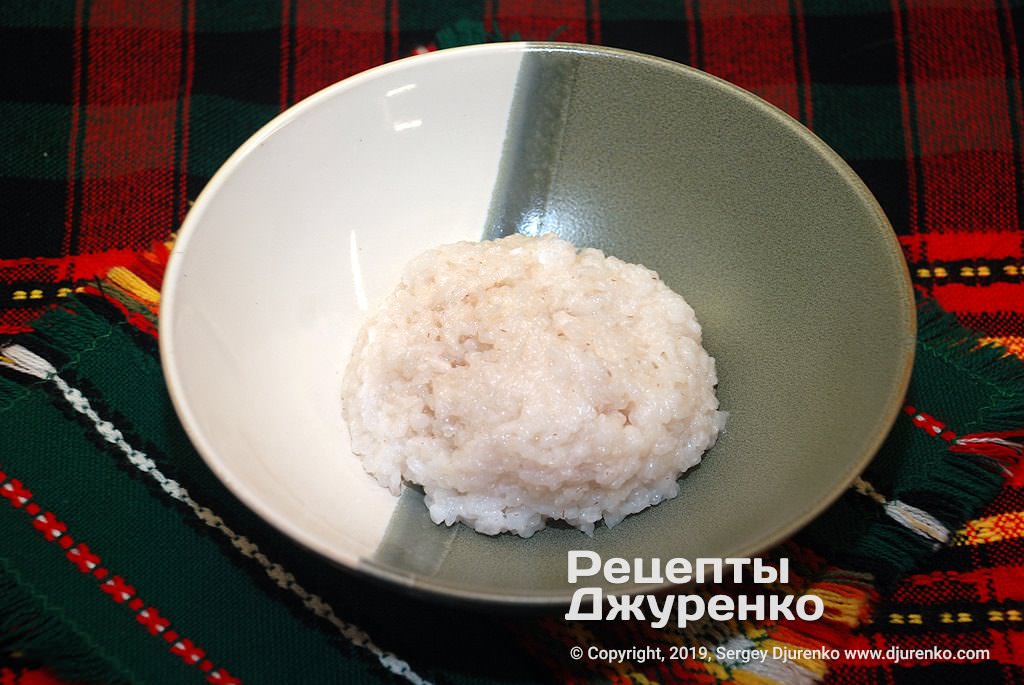
The rice needs to be cooked. Ideally you have a steamer or rice cooker: sticky rice turns out very well after steaming for 20 mins. At home you can simply boil it in a saucepan with two volumes of water for up to 20 mins, until the water is fully absorbed. After that, leave the pan to cool.
Pour the can of coconut milk into a bowl and stir very thoroughly, since it tends to settle and separate. By the way, what is often sold is not coconut milk but coconut cream, which is high in fat and raises the overall calories of the dish.
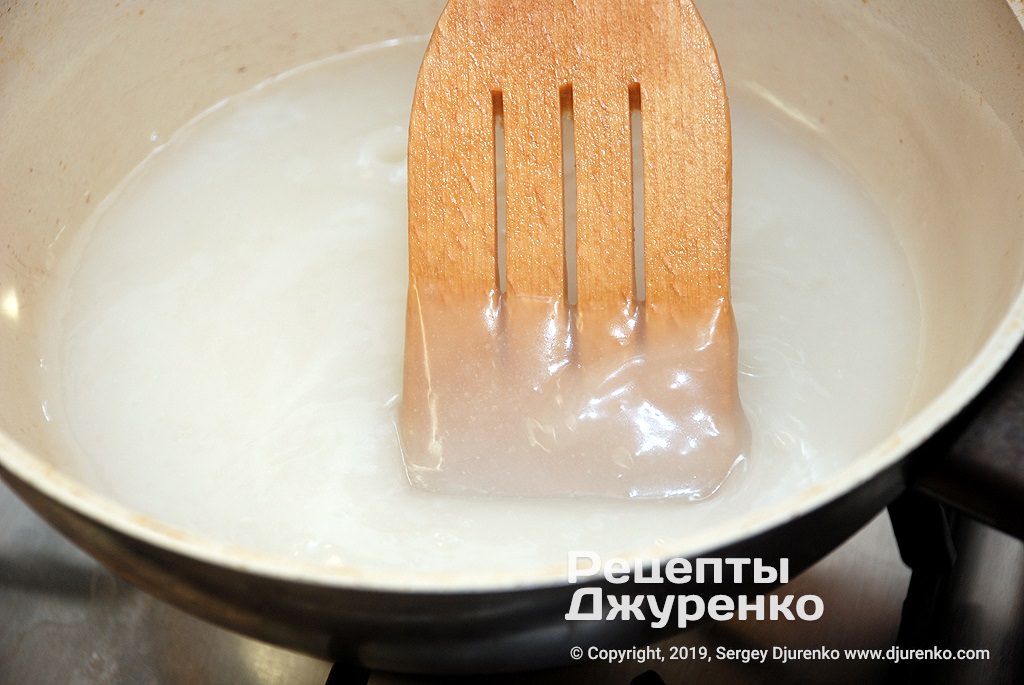
Pour the smooth, well-mixed milk into a small saucepan, add a pinch of salt and set over the heat. Do not bring the milk to a boil, it only needs warming. Add ordinary white sugar. The Thais often use their local kinds of sugar, but it makes little difference to the taste. Stir and heat the milk until it is quite hot. Set aside 1-2 ladles of the mixture, and add cornstarch to the remaining milk: it will thicken and become a sweet sauce. Turn off the heat.
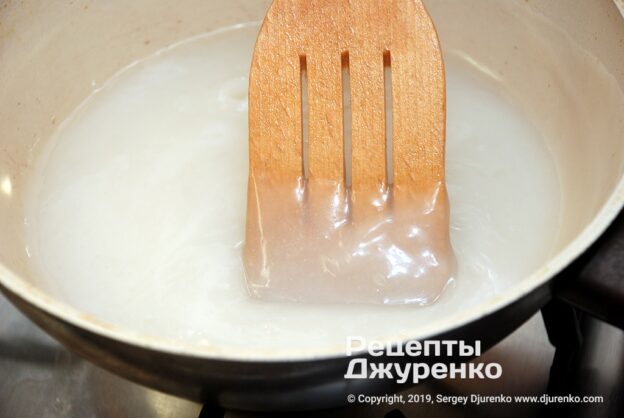
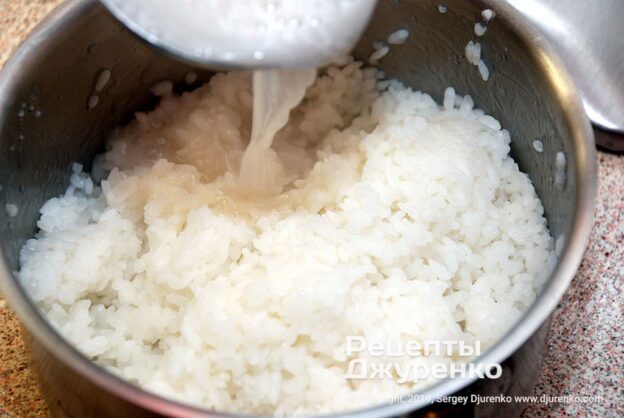
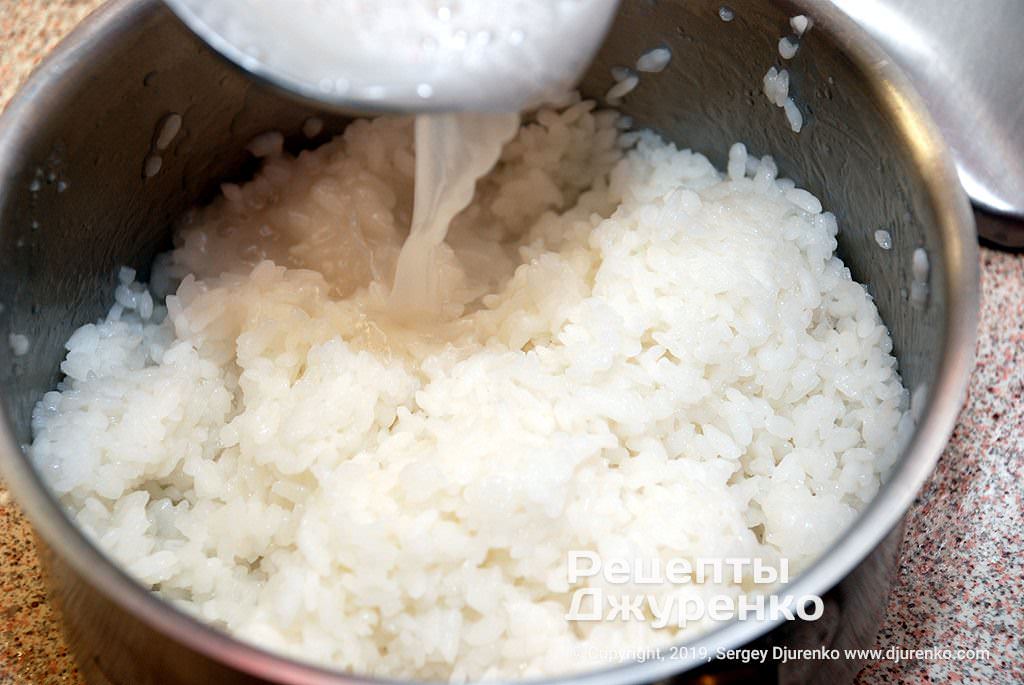
Pour the reserved 1-2 ladles of coconut milk into the saucepan with the rice and stir. The cooked rice will become softer and stickier. It will also become sweet, which matters for a dessert, since the rice itself has a completely neutral taste. It absorbs the sweet coconut milk well.
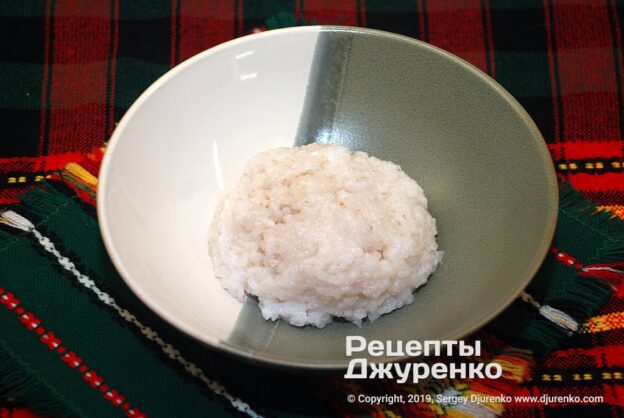
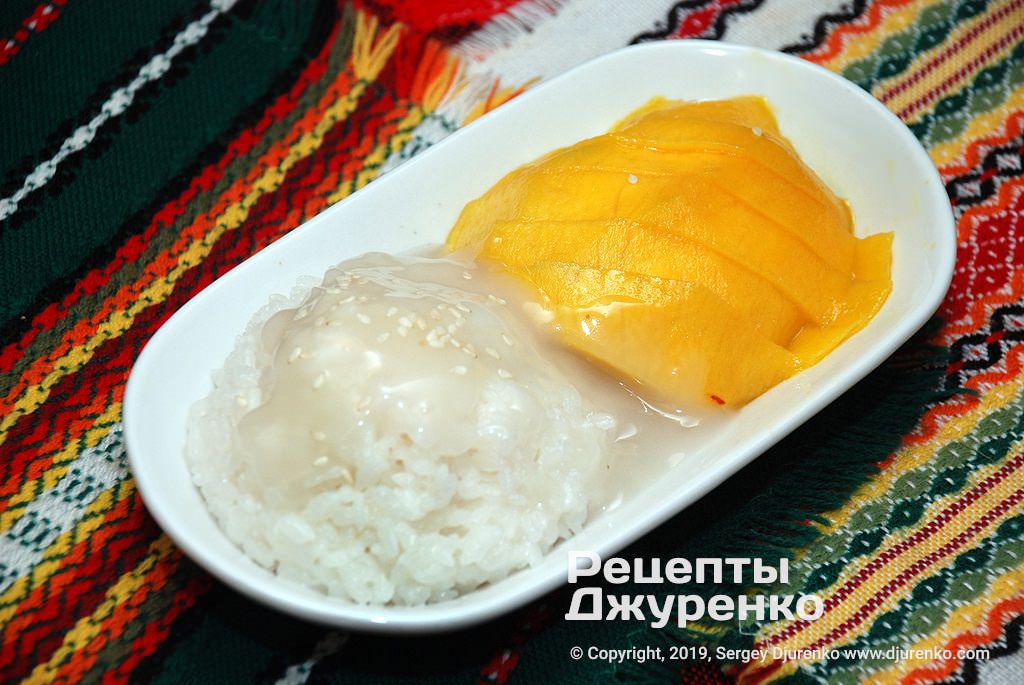
Small plates or saucers are the base for serving mango sticky rice. Divide the cooked rice into four parts and shape into balls. It is not essential, but you can also shape each portion neatly using pastry molds. This is often done in cafes rather than on the street.
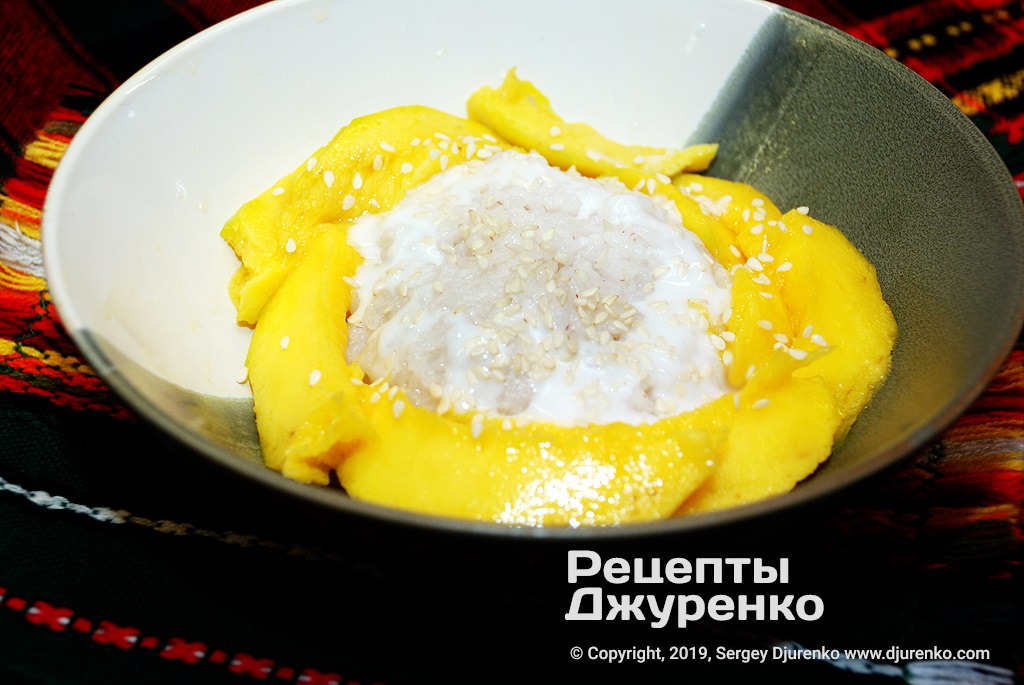
Peel the fruit, cut it in half and remove the pit. The way you slice the fruit does not matter much, and it is often cubed. But I prefer large thin slices, so that the mango half keeps the shape of the fruit. It is purely for looks, it is simply nicer to the eye.
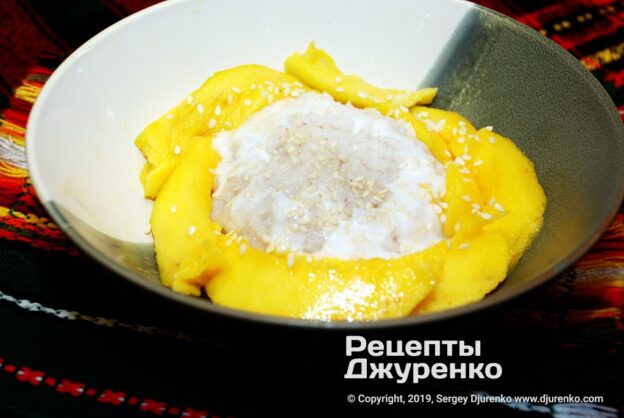
Place the sliced fruit next to the rice ball. Pour the sweet coconut milk sauce over the mango sticky rice and sprinkle a pinch of sesame seeds on top to serve. The Thais often add yellow beans or crispy mung beans on top as well. The dessert is served at room temperature, but it is often chilled further, which is a matter of taste.
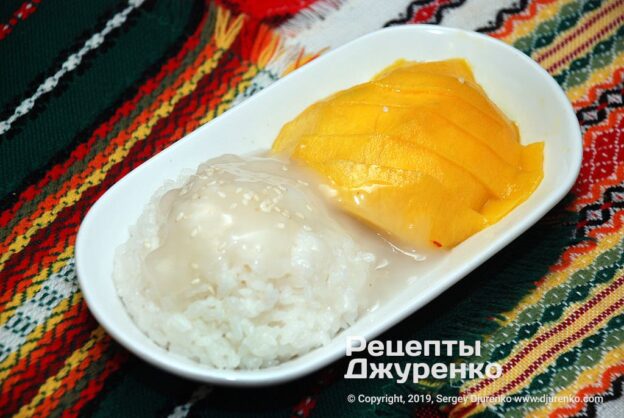
If you can, mix white Thai sticky rice with black, and the treat will come out a wonderful, almost purple shade. The dessert is very tasty and filling, and can be either a sweet treat or the finish to a great lunch.

Calories and macros
610 kcal
Serving ≈ 460 g
- Protein7 g4% of kcal
- Fat22 g32% of kcal
- Carbs98 g63% of kcal
100 g134 kcalProtein 1.5 gFat 4.9 gCarbs 21.4 g
Calculated from the recipe ingredients, excluding salt and spices. Data: USDA and Matvaretabellen.
 Pull chopper for garlic and onionAliExpress
 Oil sprayerAliExpress
 Kitchen scale up to 5 kgAliExpress
 Vegetable chopper with handleAliExpress
 Measuring cups and spoonsAliExpress
 Peeler with wooden handleAliExpress