
Yeast-Free Easter Bread with Almond Flour and Candied Fruit




Ingredients
3-4 (about 2 kg in total)
- For the dough
- Eggs 10 (5 whole and 5 yolks)
- Margarine or butter 200 g
- Milk 1.5 cups (300 ml)
- Sugar (white) 1 cup (180 g)
- Sugar (brown) 1 cup (180 g)
- Flour 3 cups (2 for the dough, the rest to adjust the thickness and to toss the candied fruit) (390 g)
- Almond flour 2 cups (200 g)
- Baking powder 1-1.5 sachets
- Candied fruit (pineapple, kiwi, mango, etc.) 400 g
- Orange (zest) 1
- Ground dried ginger, nutmeg, cinnamon 1 tsp each (3 g)
- Salt a pinch
- Liquid vanilla to taste
- Warm water, brandy for soaking the candied fruit
- Vegetable oil for greasing the paper
- Nuts, raisins, sliced almonds optional
- For the icing and decoration
- Powdered sugar 150 g
- Lemon juice 1 tbsp
- Milk 1 tbsp (and a little more to adjust the thickness)
- Candied fruit, ready-made icing decorations, sprinkles, nuts, almonds for garnish
Step-by-step recipe
Preparation
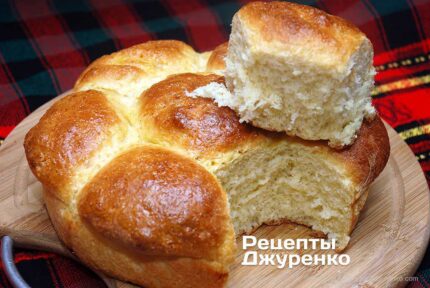
Yeast-free Easter bread turns out fluffy, with a denser texture than traditional bakes. It vaguely resembles a very good homemade fruitcake with lots of candied fruit. All the ingredients should be at room temperature.
Soak the candied fruit and mix the spices. 1-2 hours before cooking, cover the candied fruit with warm water with a little brandy added. Mix all the spices in a cup: 1 tsp each of ground dried ginger (2 g), nutmeg and cinnamon.

Prepare the molds and the oven. Line the cylindrical molds with baking paper generously greased with vegetable oil. Heat the oven to 180°C.

Dough
It is better to mix the dough in a large bowl, because the mixer bowl may not be big enough. The bowl should be large enough to hold all the liquid and the candied fruit as well.
Mix the dry ingredients. In a large bowl, mix 2 cups of wheat flour (260 g), sifted without fail, and two cups of almond flour (200 g). Add the baking powder, the spices and a pinch of salt, and stir everything with a fork until uniform.

Melt the fat. Put the margarine or butter in a cup and microwave for 1-1.5 mins, so the fat melts but stays slightly warm. Set it aside for now.
Beat the eggs with the sugar. Break 5 eggs into the mixer bowl and add 5 yolks. The whites can go into cookie dough or be whipped for meringue. Add one cup each of regular white sugar (180 g) and brown sugar. Or, if brown sugar is hard to find, add 2 cups of regular sugar (360 g).

Beat the eggs with the sugar until it becomes a thick foam. When you finish beating, add liquid vanilla to taste. We added a lot, so the yeast-free Easter bread would be aromatic. Then grate the orange zest and mix it into the egg foam.

Pour in the fat and the milk. Keep mixing the egg foam and pour in the melted margarine or butter in a thin stream. Make sure the fat has cooled, otherwise the eggs will curdle. The foam will settle a little when the fat goes in, which is normal. Then, still mixing, pour in the milk in a thin stream. The liquid mixture should be smooth and fragrant.

Combine the flour with the egg mixture. Mixing the flour on low speed, slowly pour the egg mixture into the bowl. The dough will be thick but pourable. It is close to the dough used for biscotti. Feel free to add more flour from the remaining cup if the dough is runny.

Add the candied fruit. Drain all the liquid from the candied fruit in a colander. The less moisture left on them, the better. Toss the candied fruit with 1 level tbsp of flour (10 g) so the dough holds onto them better. Add the candied fruit to the dough and fold in gently with a spatula or spoon so they are evenly distributed. If you like, add nuts, raisins and sliced almonds to the dough.


Baking
Divide the dough among the molds. Fill the molds to half their height, because the dough rises well, 1.5-2 times or even more. Spoon the dough into the mold with a spatula or spoon.

Rock the mold or tap its sides until the surface of the dough levels out. This also reduces the chance of air pockets. Quite often the top of the dough is slashed lightly before baking.

Bake in an oven heated to 180°C for more than an hour. It is very hard to give the exact time in advance, so have a long thin skewer ready, like the ones for homemade kebabs. After an hour, test the bake from time to time. If dough sticks to the wood, it needs more time. Ours took about 1 h 20 mins, and we gave it another 10 mins to make sure all the loaves were baked through. The top usually cracks, which is normal.

Take the molds out of the oven, remove the finished loaves and let them cool completely. On hot bread the icing will run.


Icing and decoration
You can buy ready-made decorations, which is what we did: sugar sprinkles in the form of tiny grains and pieces, sugar flowers and even figures of birds and animals.
Make the sugar icing and cover the bread. Put 150 g of powdered sugar in a bowl, add 1 tbsp of lemon juice and 1 tbsp of milk. Stir everything together. If the mixture is too thick, add a little more milk, but not much. Spread the icing over the top of the bread. The icing sets very quickly, so don’t get distracted.

Decorate while the icing is still soft: sprinkle it with ready-made decorations and arrange figures, flowers and candied fruit. If you like, decorate the top with nuts and almonds. Let your imagination run.

Serving
Let the icing set, and now the yeast-free Easter bread is completely ready. You can start eating it or, if it was baked for a particular occasion, present it according to tradition.

This bake stays fresh for several days, but it is still worth covering it with a napkin.

Calories and macros
364 kcal
100 g
- Protein7.5 g8% of kcal
- Fat15.7 g39% of kcal
- Carbs48.3 g53% of kcal
Calculated from the recipe ingredients, excluding salt and spices. Data: USDA and Matvaretabellen.