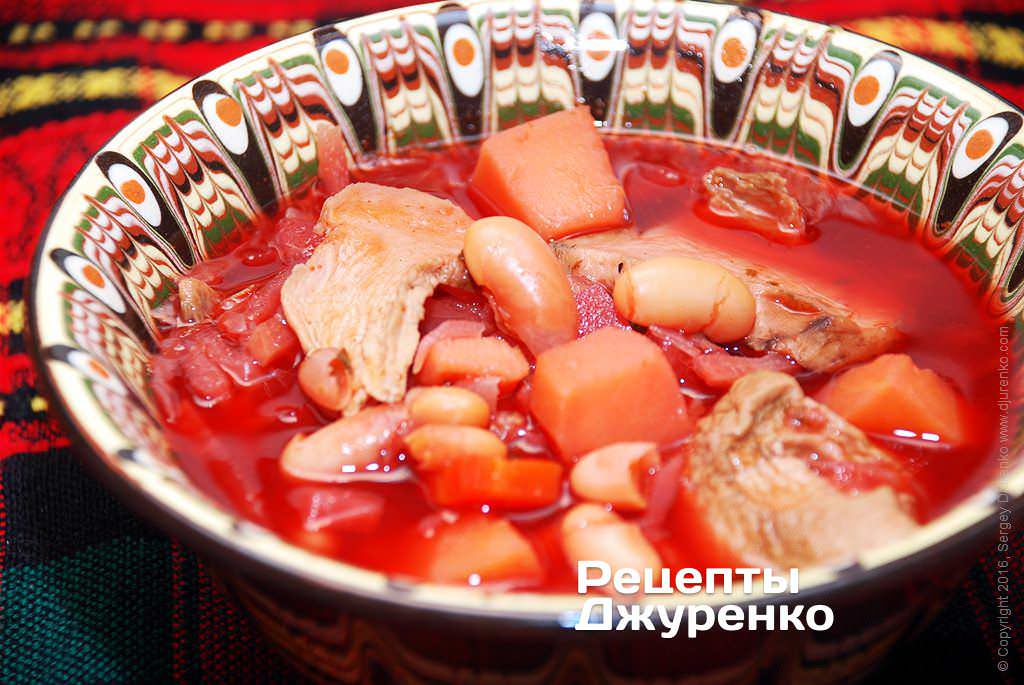
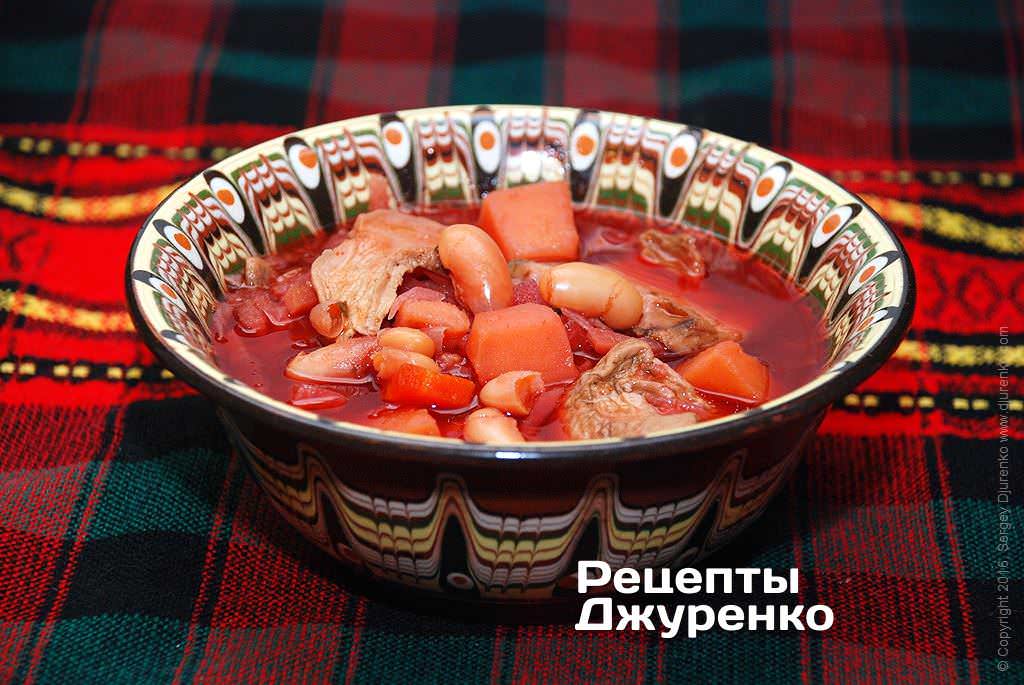
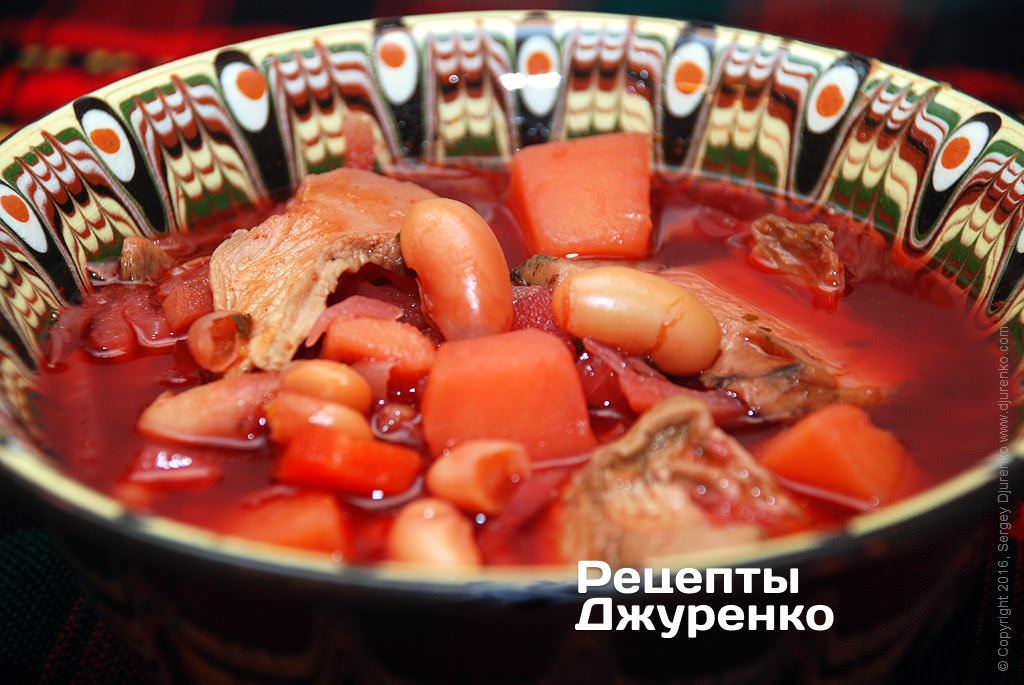
Lenten Borscht with Mushrooms and Beans (Vegan Recipe)
We made a Lenten borscht with mushrooms. When Great Lent begins, the most important fast of the year in the life of an Orthodox Christian, certain food restrictions come into play.
Great Lent is the most significant of all fasts. Sadly, for a great many people a fast is just a diet, a nod to fashion. Yet a fast carries a much deeper meaning than simply eating less. Without going into detail, the food restrictions are above all a form of self-discipline for spiritual cleansing. “The true fast is the avoidance of evil, the bridling of the tongue, the setting aside of anger, the taming of lusts, the ending of slander, lies and perjury.”
Then again, if you think about it, moderation at the table will do most people nothing but good. But only sensible moderation, if you are not ill, not elderly and nobody is forcing you. Remember that harming your own health, for example by wearing yourself out with diets, is a mortal sin. During the fast, meat, fish, eggs and milk are off the table, and so are smoking and alcohol. What is allowed: plant foods, vegetables and fruit, pickles, mushrooms, rye bread and nuts.
But as my grandmother used to say: “Sauerkraut alone won't fill you up; you need something hearty, with bread.”
I remember that during the fast we cooked Lenten borscht at home when I was a child. Given their “meaty” nature, Ukrainian red borscht and green borscht are quite hard to adapt to Lenten cooking. But on reflection it's easy to see that if you replace the meat with mushrooms, the familiar borscht becomes a Lenten one.
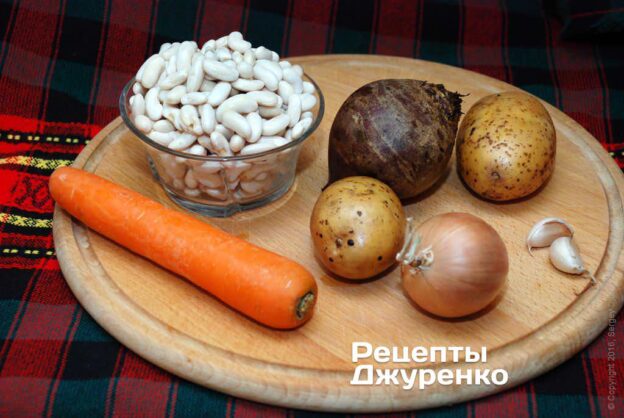
Ingredients
3 l pot
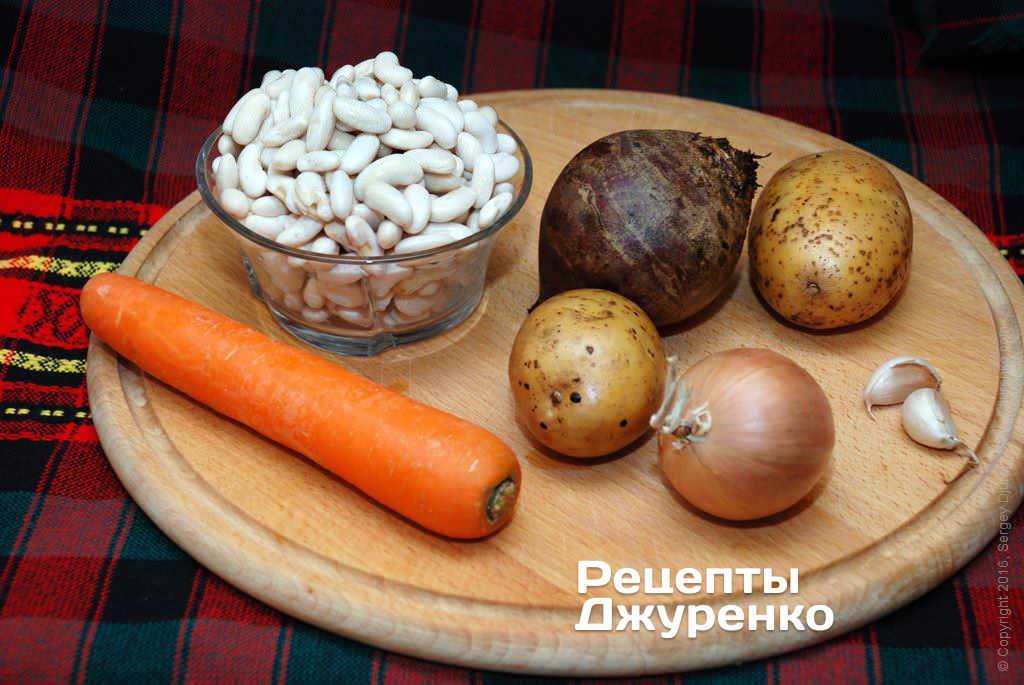
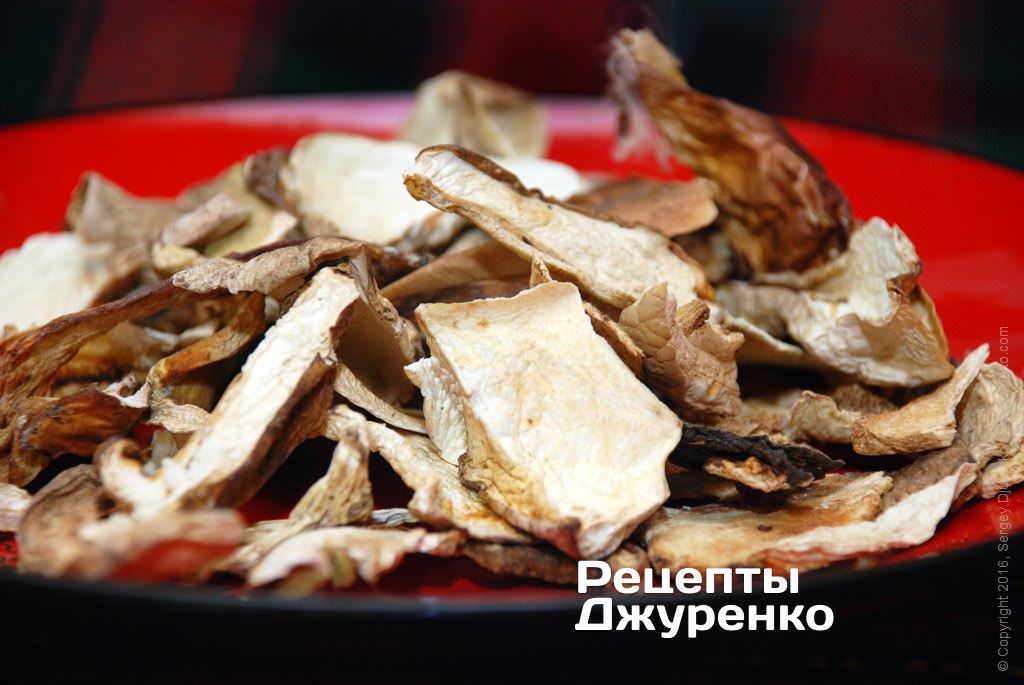
- Dried porcini mushrooms 50 g
- White cabbage 150 g
- Potatoes 2
- Onion 1
- Beetroot 1
- Carrot 1
- Beans (dry) 0.5 cup
- Garlic 1-2 cloves
- Tomato paste 1-2 tbsp
- Salt, ground black pepper, hot pepper, bay leaf to taste
Step-by-step recipe
- If you approach any dish with imagination, even a borscht without meat, it will turn out tasty, original and very healthy. There are plenty of recipes for delicious borscht.
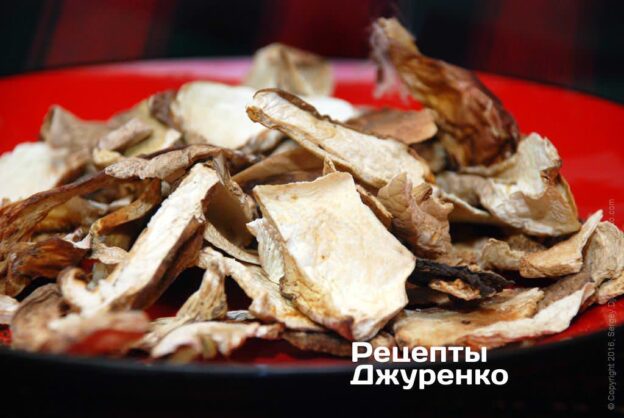
- Any mushrooms will do, as long as they are edible. Remember: all mushrooms can be eaten, but some only once in a lifetime, the last time. So keep that in mind when choosing mushrooms for borscht. In the old days mushrooms were put up in season: dried, salted, soaked and preserved.
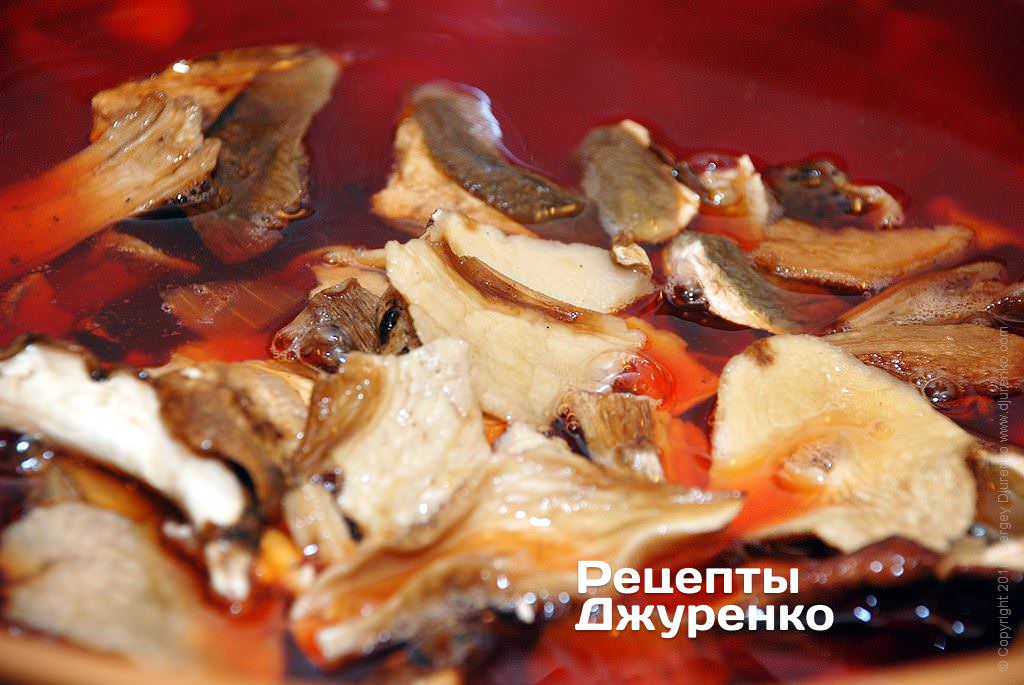
- Porcini dried in season are ideal for Lenten borscht. Soak the dried mushrooms an hour to an hour and a half before cooking.
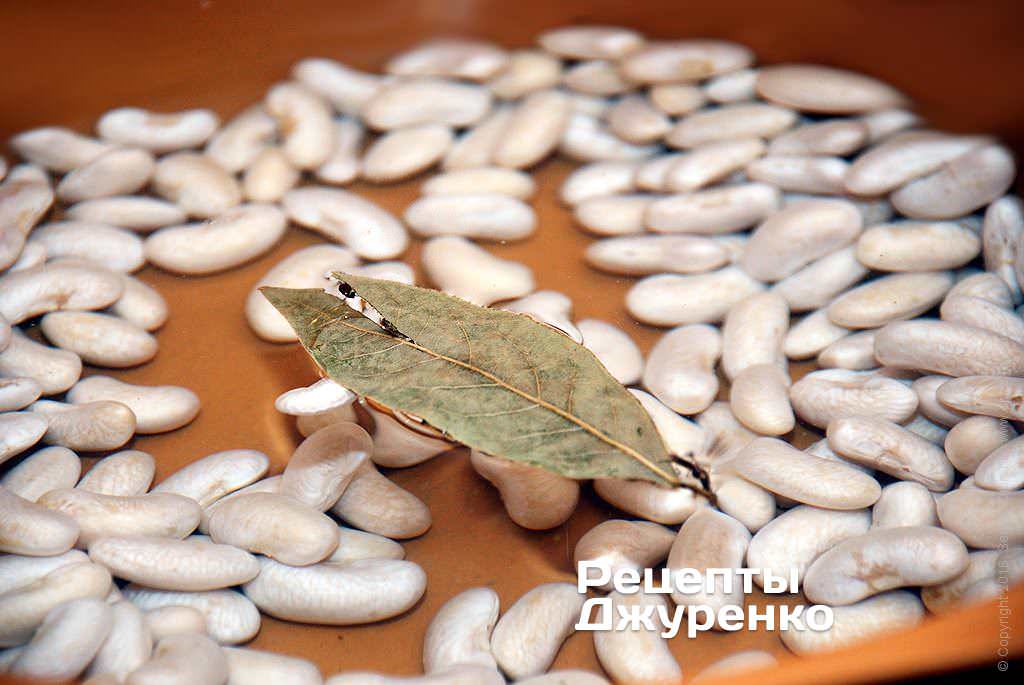
- Soak the beans in water in advance, preferably overnight, otherwise it's simply impossible to cook them until tender. Pour 2 l of cold water into a pot and add the soaked beans. Add a pinch of salt and one bay leaf.
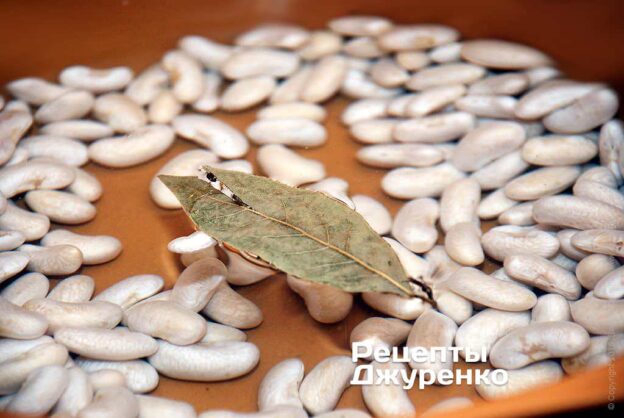
- Bring to a boil, then turn the heat down to minimum and leave to simmer under a lid. The beans need to be half-cooked. The cooking time depends a lot on the beans and can range from 30 mins to 1 hour. But usually soaked beans reach the right stage after 30 minutes and finish cooking nicely later on.
- While the beans are cooking, peel all the vegetables and keep them in cold water.
- Crush whole garlic cloves with the handle of a knife, just flatten them, and chop coarsely. Cut the onion into thick strips. Cut the carrot lengthwise into 4 and slice thinly.
- We usually don't fry the vegetables for borscht, but if you like, you can fry the onion and carrot in vegetable oil to your liking.
- Cut the beetroot into strips. Strictly speaking, the size is up to you. But don't grate it; slicing is better.
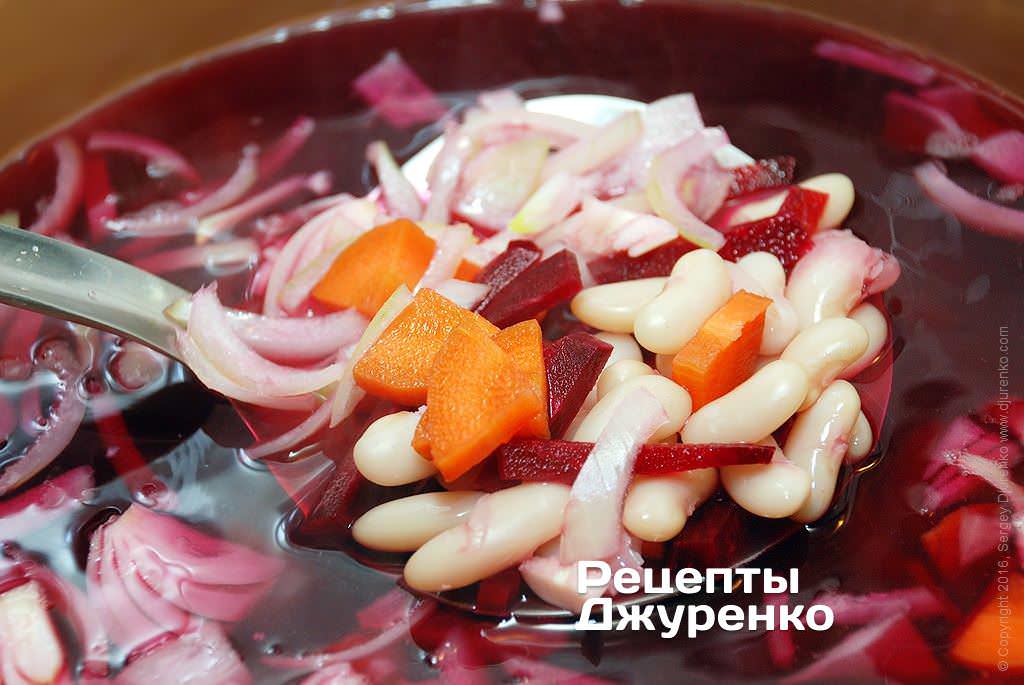
- Add the beetroot, garlic, onion and carrot to the borscht. Season with salt and pepper to taste. Discard the bay leaf: it has done its job, and the soup has taken on its aroma and flavor.
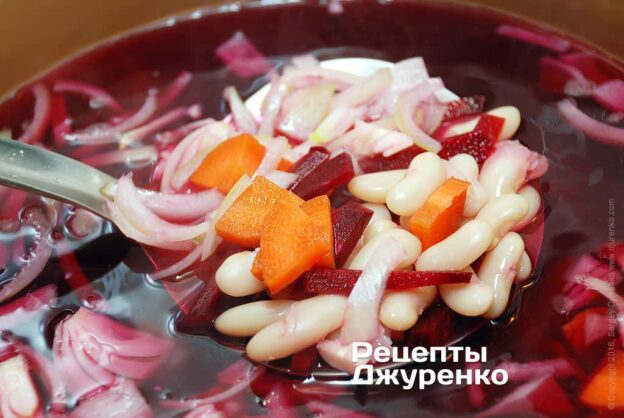
- Simmer the beans with the vegetables for 15 minutes over a gentle boil.
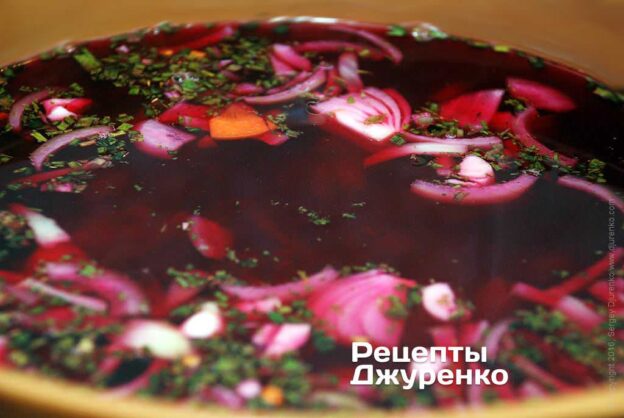
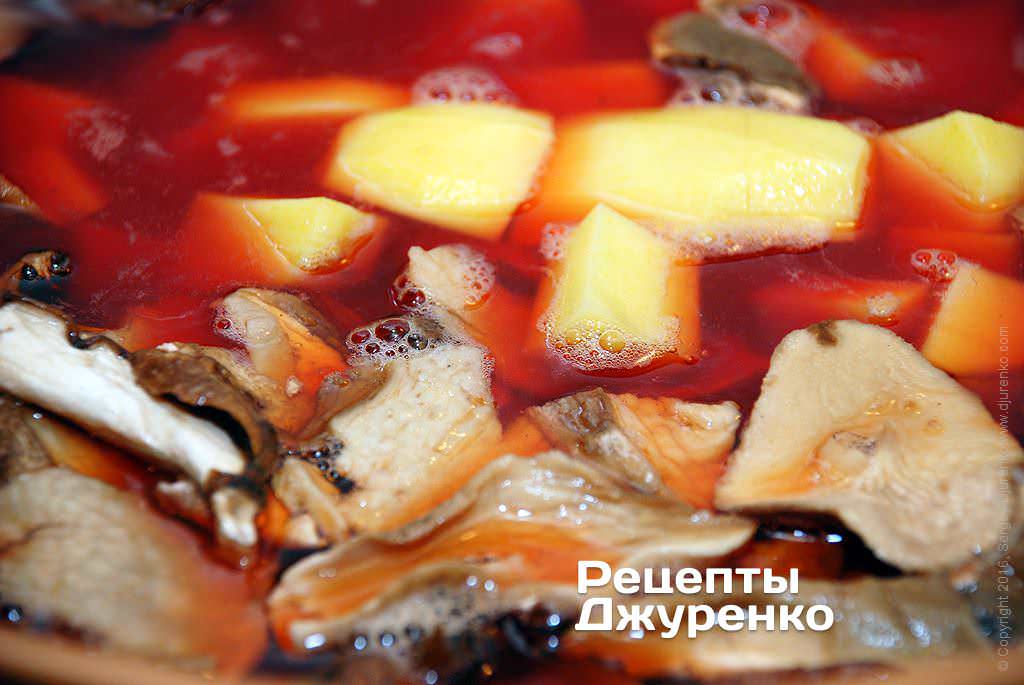
- Add the soaked porcini. If the mushrooms are large, you can cut them into pieces.
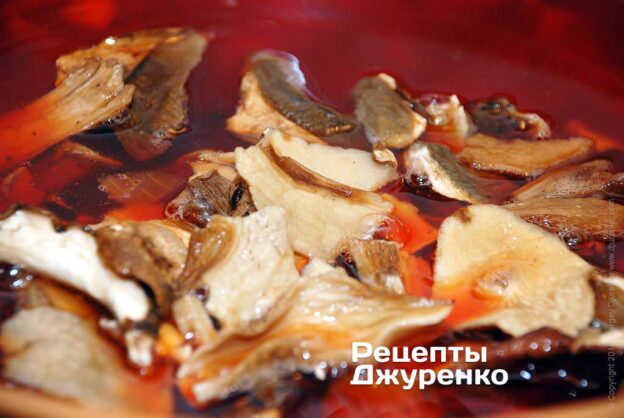
- Cut the peeled potatoes into cubes and add them to the borscht. My grandmother never cut potatoes for borscht at all; she cooked them whole and then mashed the boiled potatoes with a spoon right in the borscht.
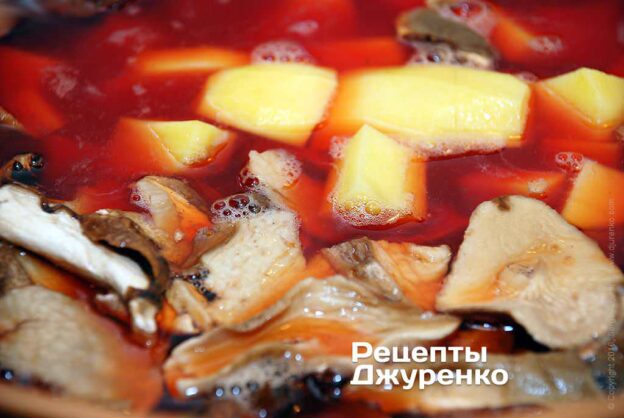
- Bring to a boil and cook over low heat for another 15 mins, until the potatoes are done.
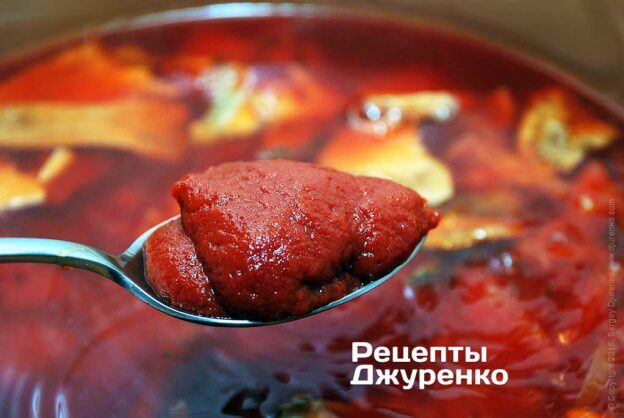
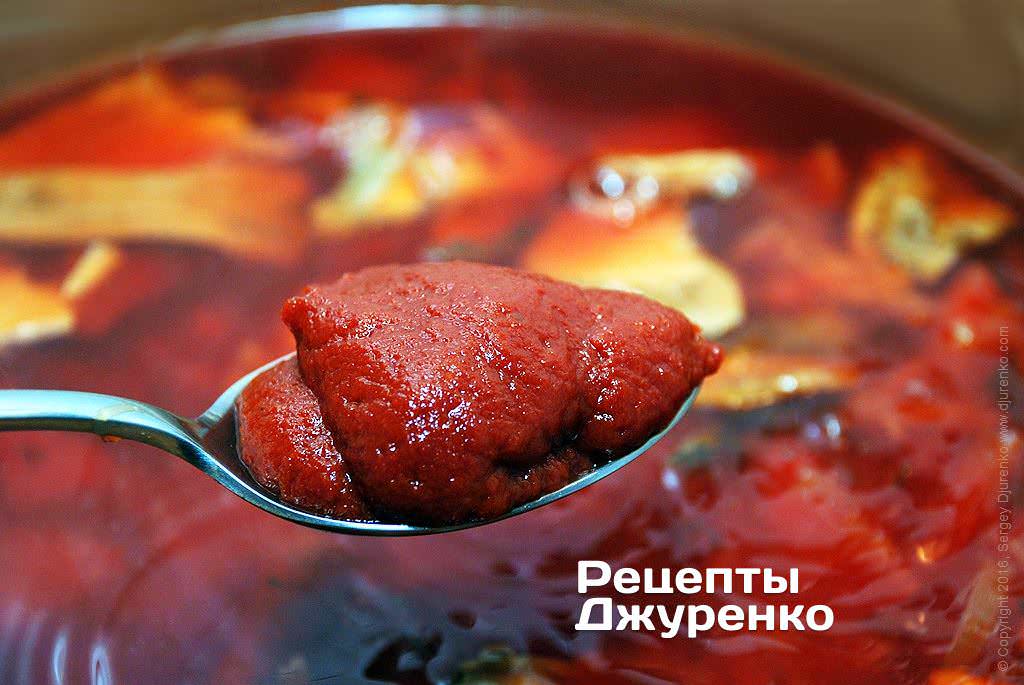
- Next add the tomato paste. You could just as well use tomatoes if you have them. But it's not tomato season now, so paste is better. Stir until the paste dissolves. Let it simmer for 5 mins.
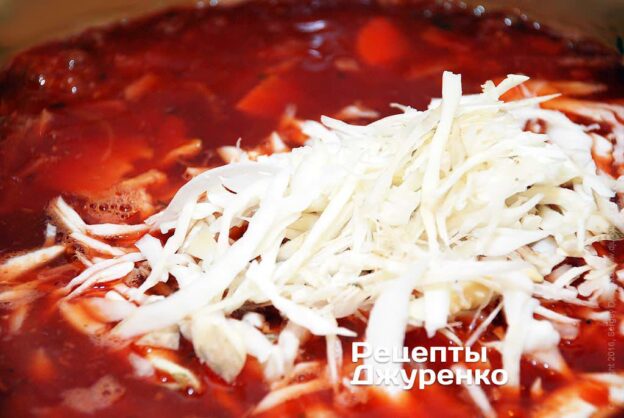
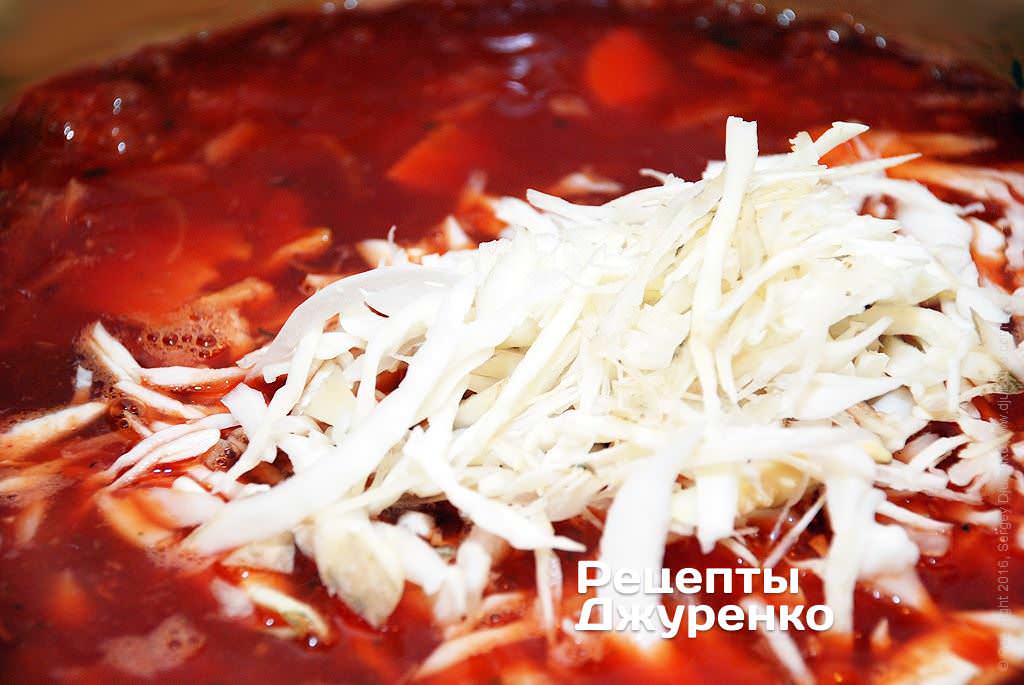
- Shred the cabbage with a knife into strips, very thin strips. The thinner, the better. Sauerkraut is often added, but I confess I'm no fan of boiled sauerkraut. I like fresh white cabbage in borscht.
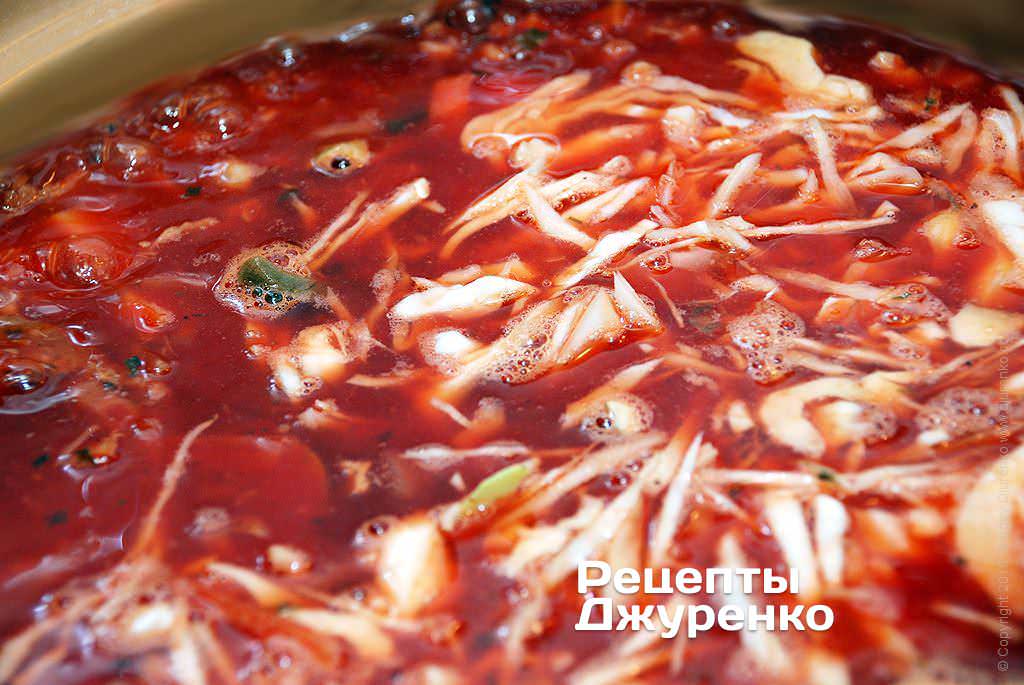
- Add the shredded cabbage. Keep in mind that cabbage “absorbs” salt, so taste the borscht and add salt if needed. Any borscht tastes better with some hot pepper. It can be either a fresh pod or a pinch of dried hot pepper ground together with its seeds.
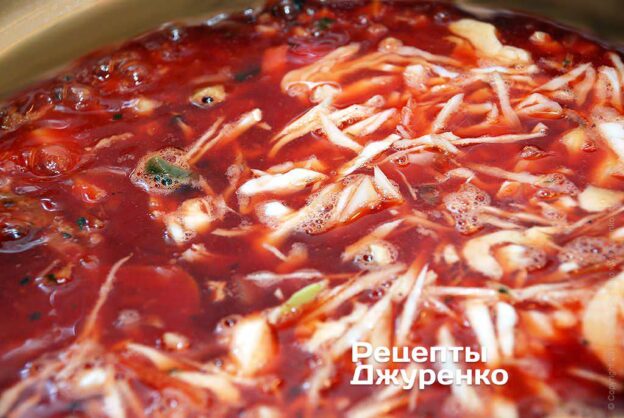
- If the soup is going to be eaten right away, cook it for another 10 minutes after adding the cabbage. If the borscht is going to “rest”, as is customary here, cook it for 1–2 minutes, then turn off the heat and let it stand under a lid. While it rests, the cabbage cooks perfectly in the hot borscht.
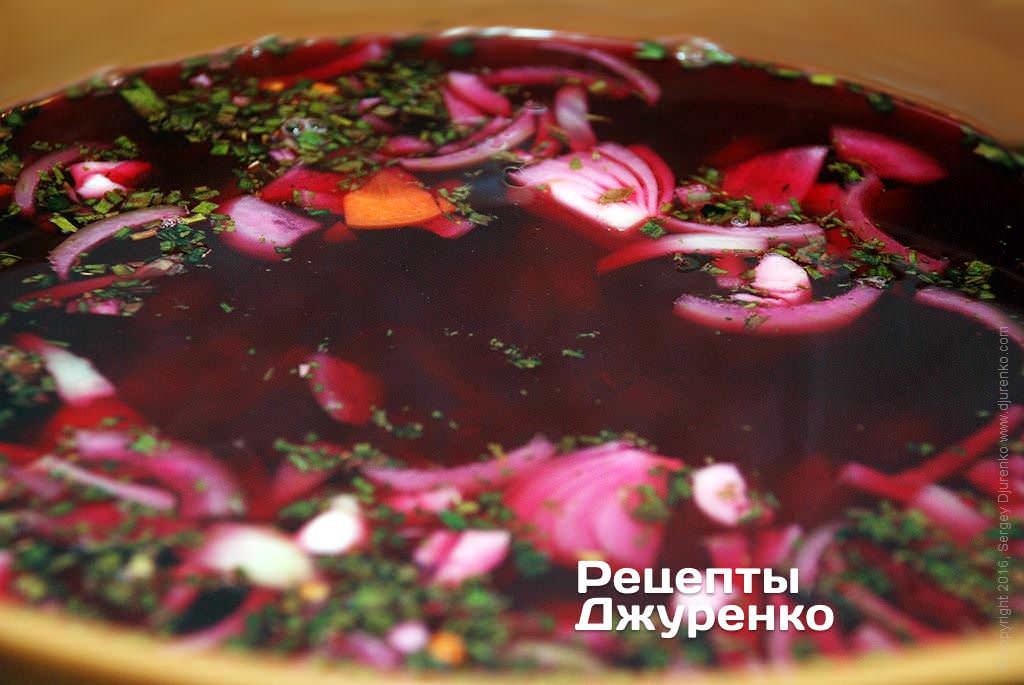
- Be sure to add finely chopped parsley and dill when serving.
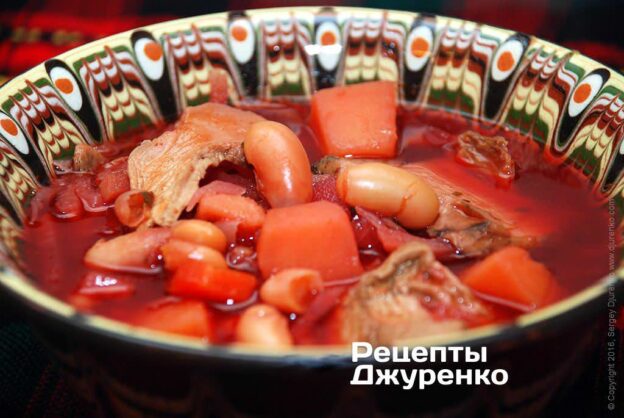
- Ukrainian red borscht is eaten with sour cream. As far as I understand, sour cream is forbidden during the fast, so we'll do without it and it will be vegetarian.
- But a fresh onion, garlic cloves and pampushky are a must with borscht. So don't deny yourself the pleasure.
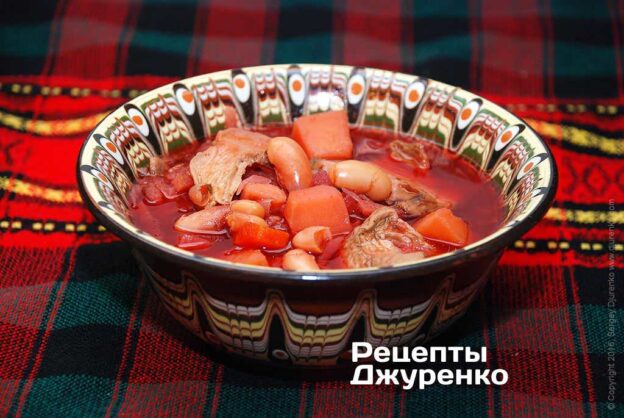
- By the way, ever since childhood I've loved green onions with borscht.
| Yield: | 3 l pot |
| Calories: | 39 |
| Prep: | 60 mins |
| Cooking: | 60 mins |
| Ready in: | 2 hours or more |
| Category: | Soups |
| Cuisine: | Ukrainian cuisine |
| Rating: |
⭐
⭐
⭐
⭐
⭐
4.7
(1)
|