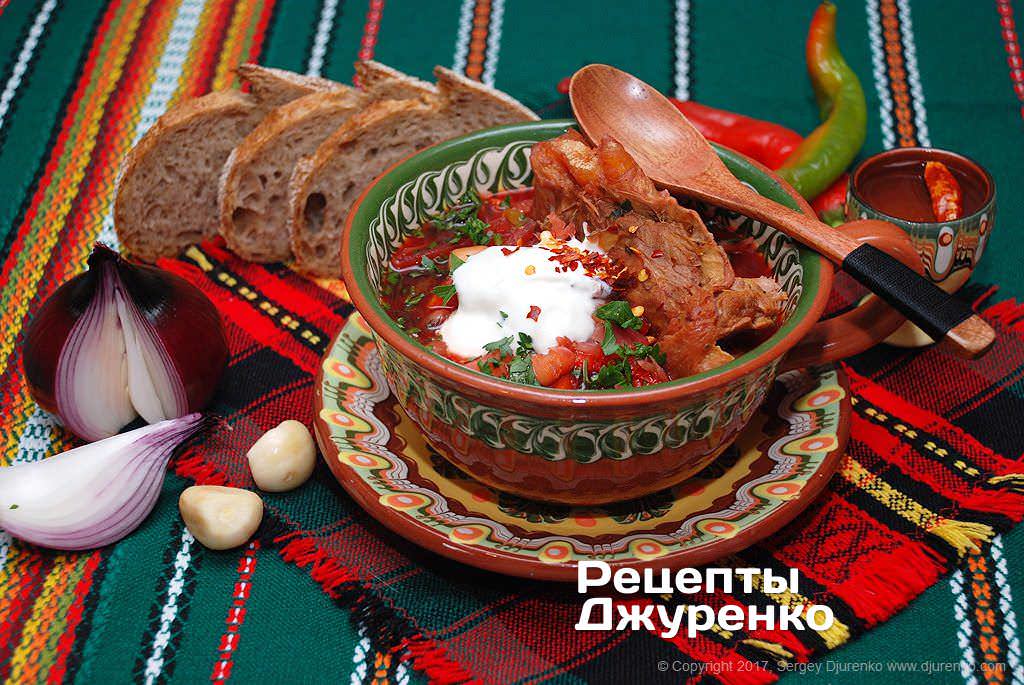
Ukrainian Borscht
How long does it take to cook borscht?
Ukrainian borscht takes about 2.5 hours: at least an hour for a strong broth from pork and beef ribs, then about another hour for the beans and vegetables added one after another. The cabbage goes in last and cooks for no more than 5 minutes so it stays slightly firm, and the finished borscht should rest until the next morning.
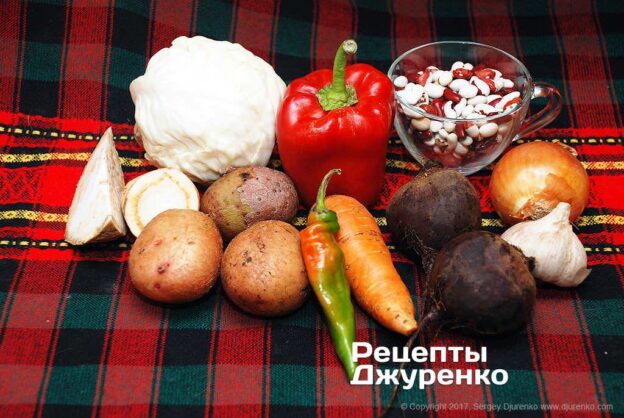
Ingredients
6–8 servings
- For the broth
- Pork and beef (ribs are best) up to 1 kg
- Water about 3–3.5 l
- Parsley root, celery root to taste
- Bay leaves 2–3
- Vegetables
- Beans 1 cup (170 g)
- Carrot 1 (80 g)
- Onion 1 (100 g)
- Red bell pepper 1 (130 g)
- Garlic 2–3 cloves (8–12 g)
- Chili pepper to taste
- Red beets 1–2 (200–400 g)
- Potatoes 2–3 (260–390 g)
- Tomato paste 2–3 tbsp (33–50 g)
- White cabbage ½ head (750 g)
- For seasoning and serving
- Salt, black pepper to taste
- Parsley and dill to taste
- Sour cream to taste
Step-by-step recipe
Meat broth
Buy the meat. It’s best to use different kinds of meat; the borscht will be richer. A little pork, ideally ribs. A little beef, also ribs if possible. In the villages, cooks add a small piece of old yellow salo. There’s always an old parcel box of it in the pantry. And be sure to add a marrow bone for richness.
Take a 5–6 liter pot and fill it with cold water, a little more than halfway, but no more than two-thirds. Put the pot on the heat. Meanwhile, wash the meat. Cut it into fairly large pieces, 40–50 g each. Leave the bone whole. Separate the ribs one by one and chop them into pieces 5–6 cm long.
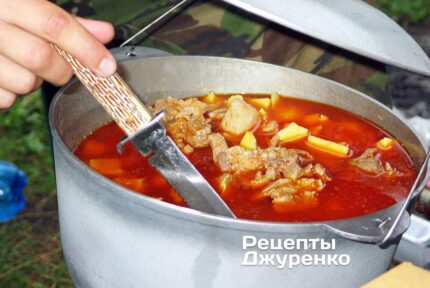
Put the meat into the water and bring it to a boil. Be sure to skim off the foam. Drop in 2–3 bay leaves and the parsley and celery roots in whole pieces, whatever size you like. Season lightly with salt and pepper. You can add a spice blend for aroma, but not much. The borscht will be spicy and fragrant as it is. Cook a strong meat broth, for at least an hour. The meat should become tender and come away from the bones. When the broth is ready, remove the parsley root and bay leaves.
Beans and vegetables
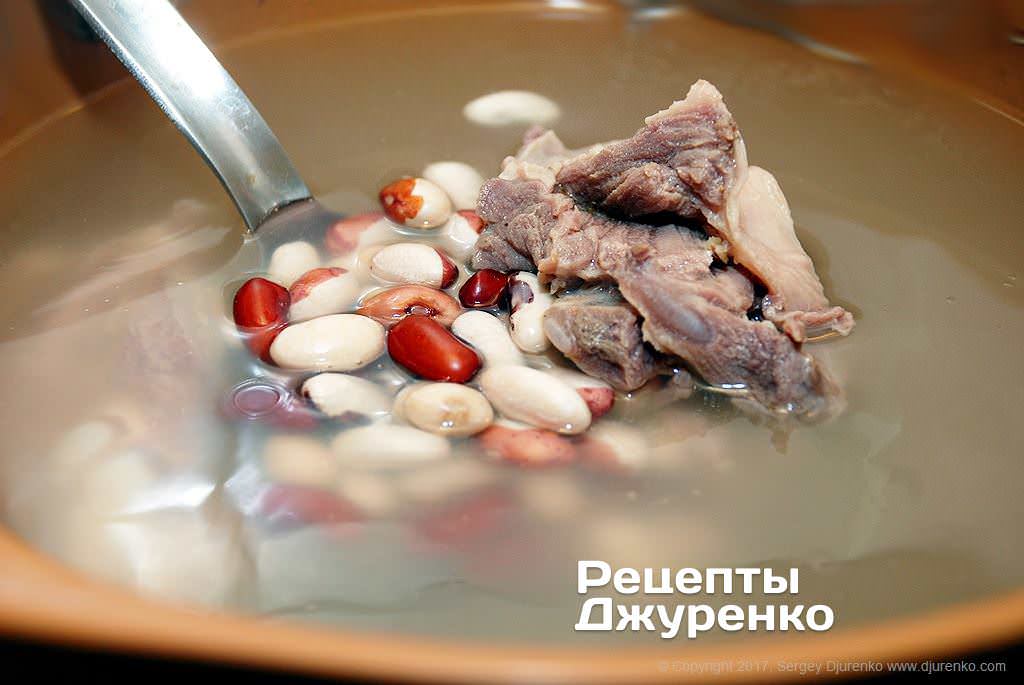
Add the beans, soaked in water beforehand, to the broth.
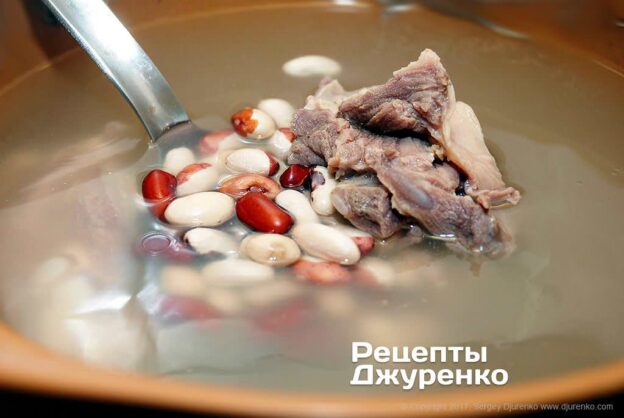
Wait for the water to come back to a boil, reduce the heat and cook for 20 minutes. The beans should still be slightly underdone.
Most recipes call for frying the vegetables before adding them to the broth. That’s fine, but far from everyone does it. For example, in the region where my relatives lived, borscht was rarely made with fried vegetables. The exception is beets, if they aren’t dark and deep red enough.
Add the carrot, onion and bell pepper, cut into pieces, to the broth. The size of the pieces is up to you.
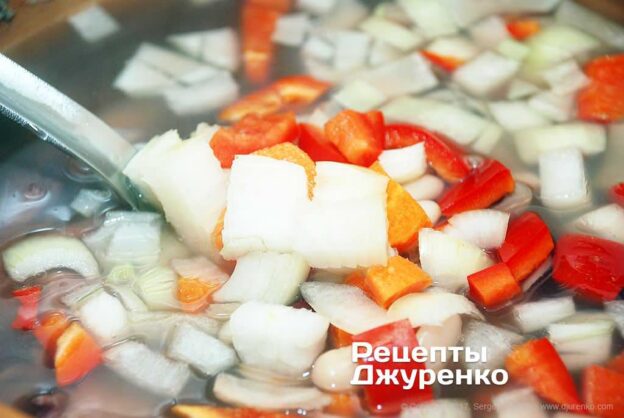
Add the crushed garlic cloves and a finely chopped, seeded fresh chili, or a couple of pinches of dried chili flakes.
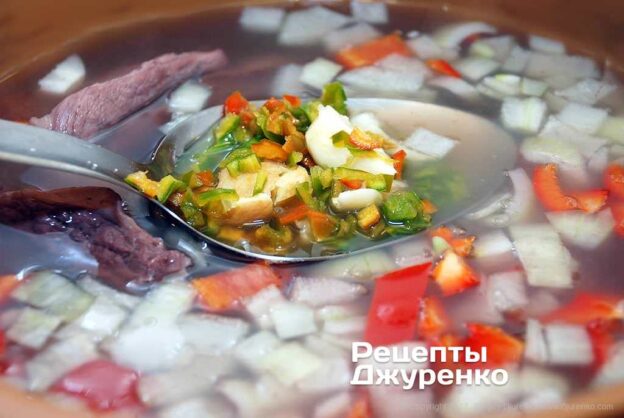
Cook for 15 minutes.
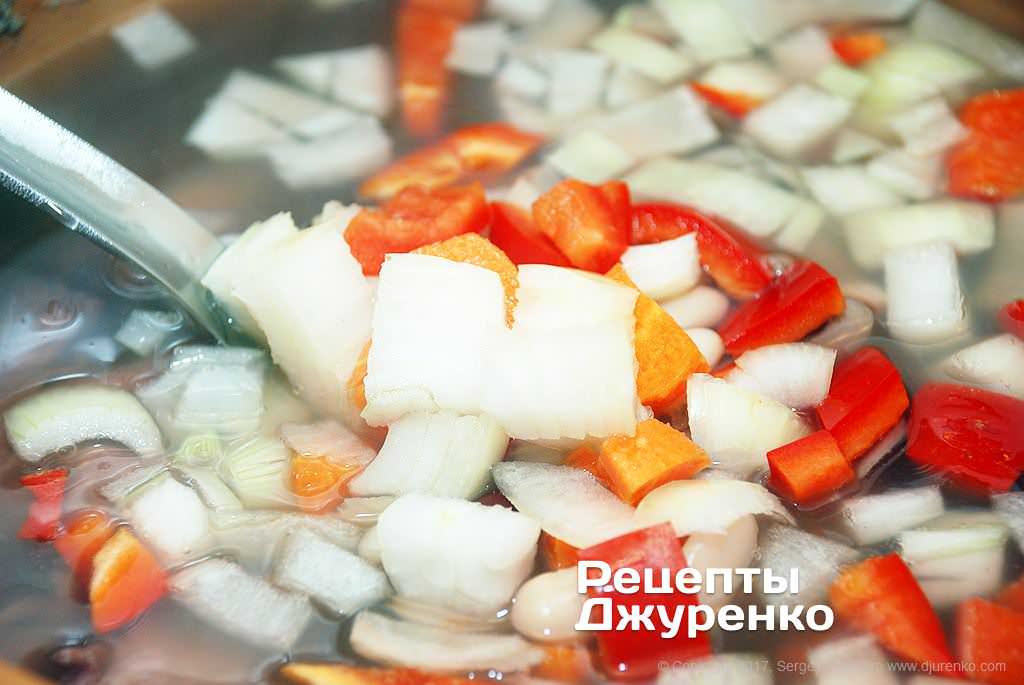
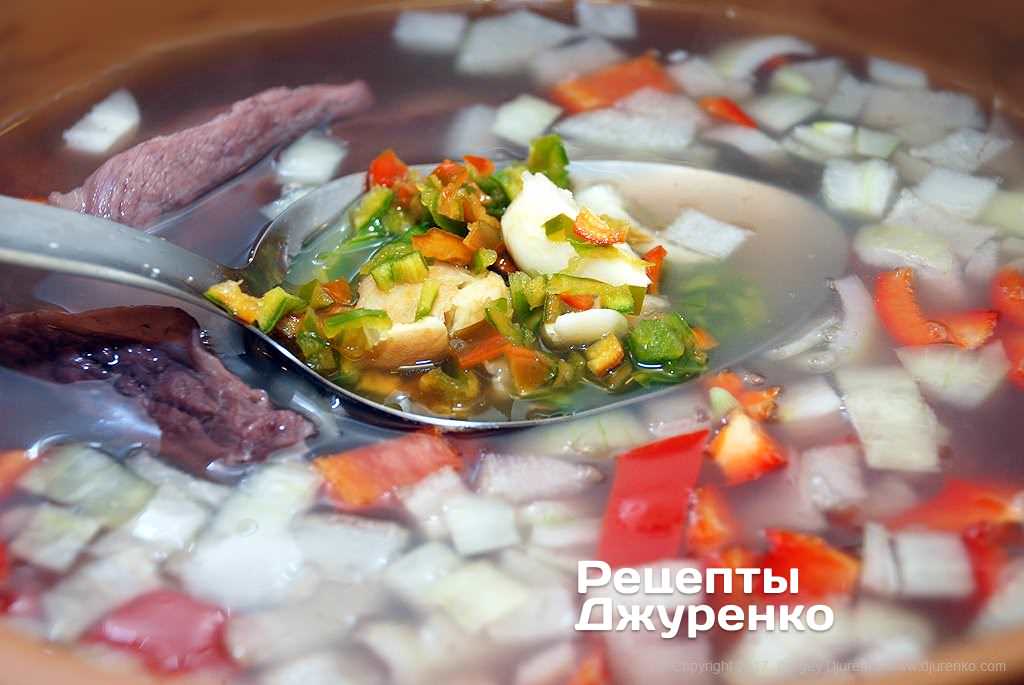
Beets, potatoes and tomato
Peel the beets.
Many cooks fry the beets in butter or salo. My grandmother did. But back then you didn’t always get beets with real color; they were usually cross-pollinated and whitish as a result. Now beets are deep, dark purple, and you could dye wallpaper with them. How do you keep the borscht’s color? For that signature red, I add the beets raw. And the color they give is something else!
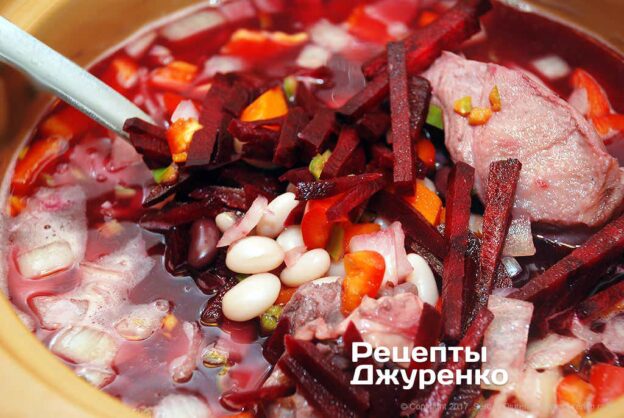
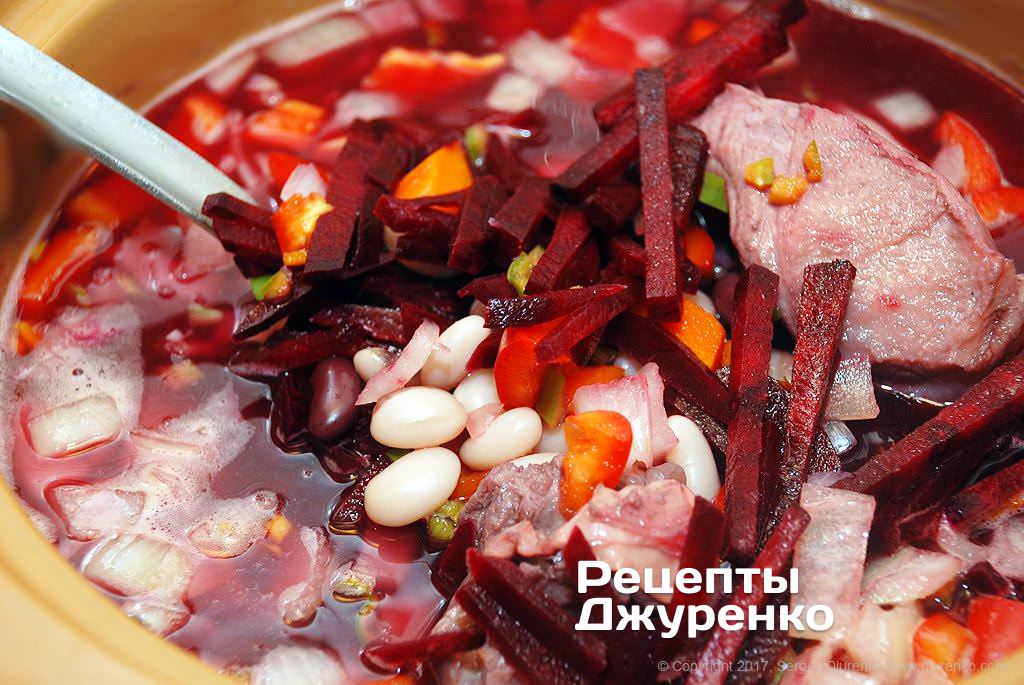
Grate the beets coarsely or cut them into matchsticks. Matchsticks look nicer.
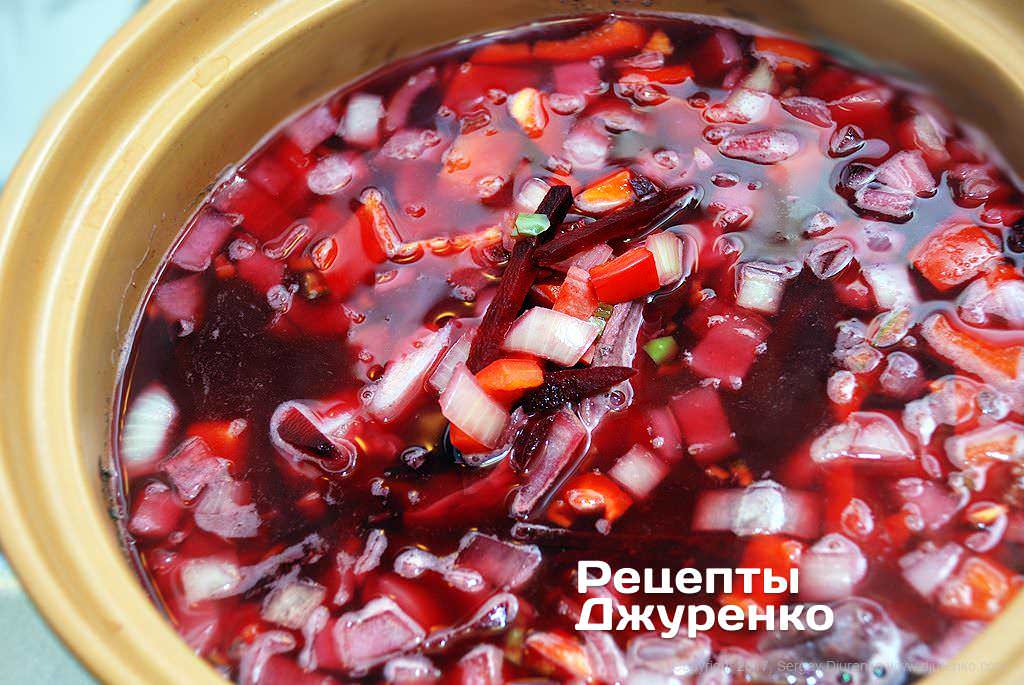
Add the beets, stir well and admire the color! The beets are what give borscht its fiery color.
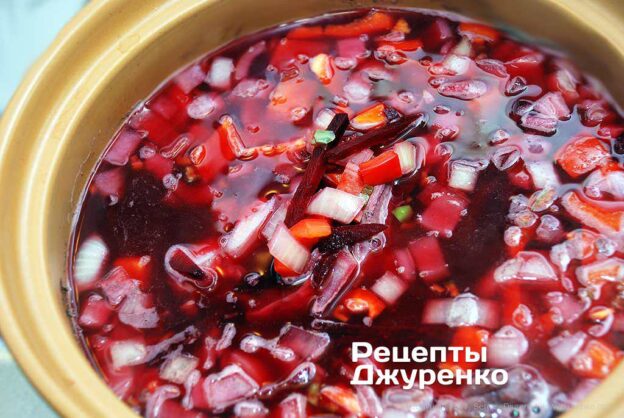
Cook for another 10 minutes.
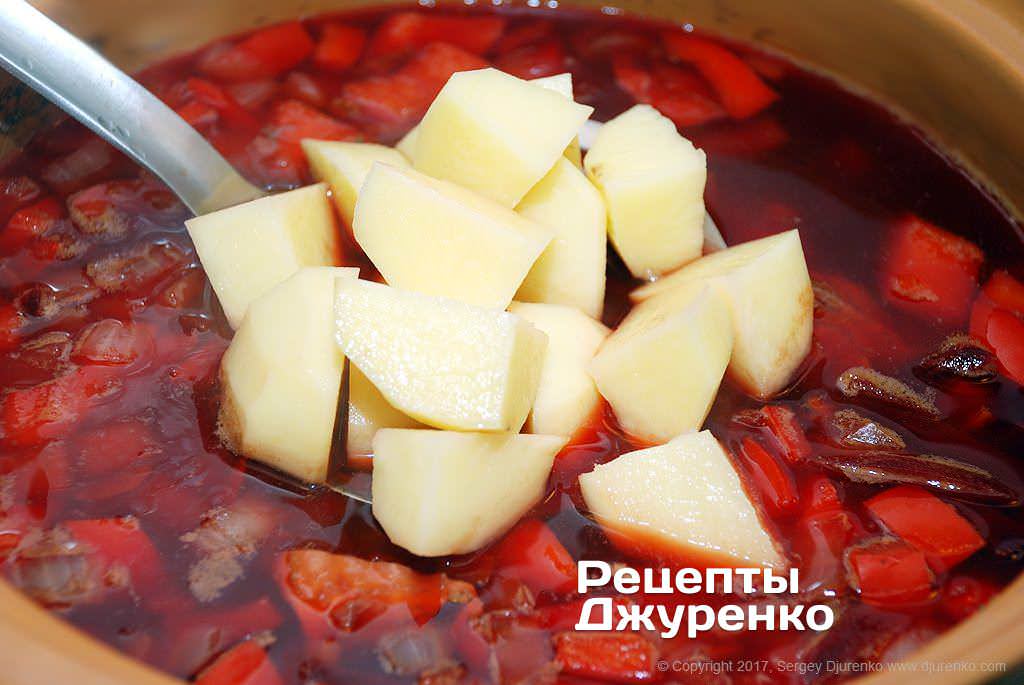
Right away, add the potatoes, cut into large cubes. You can also drop the potatoes in whole and mash them right in the pot.
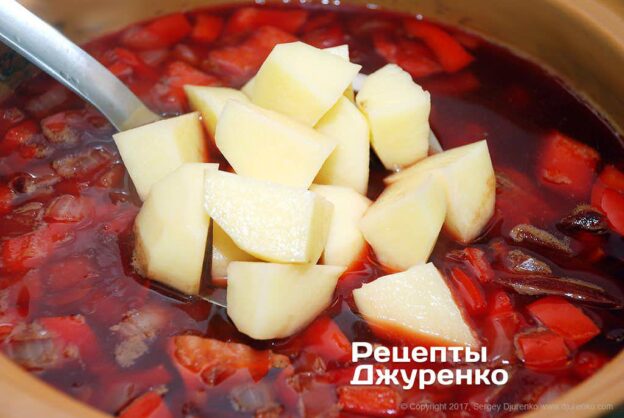
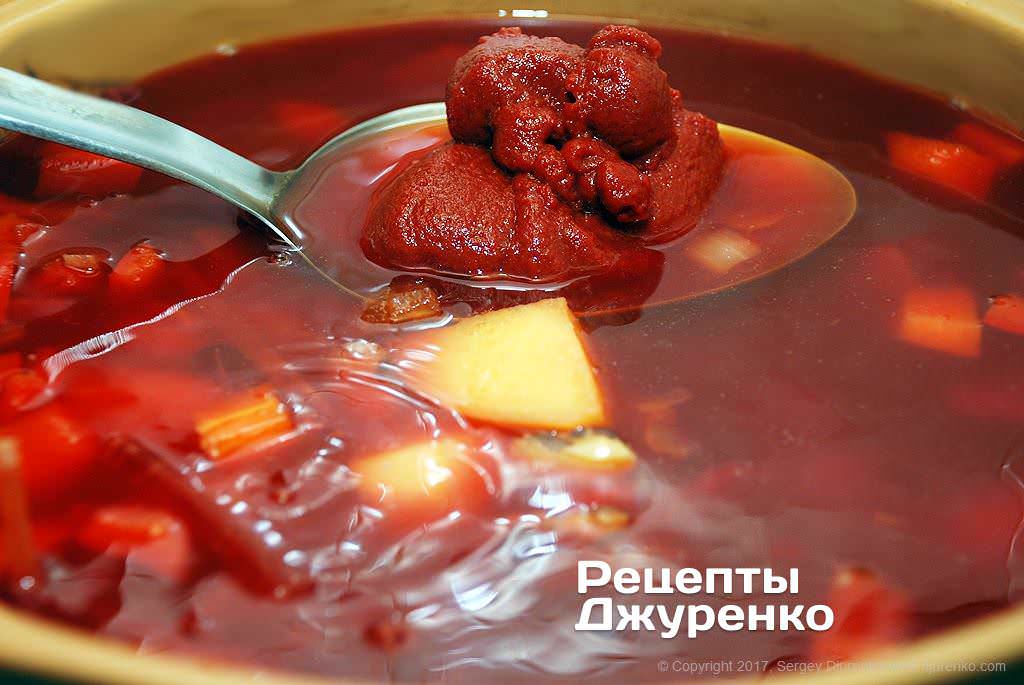
When the potatoes are cooked, usually after 15 minutes or a bit longer, add the tomato paste. This is strictly to taste! For 6 liters I add 3 heaping tablespoons, then taste. It should give just a hint of tang.
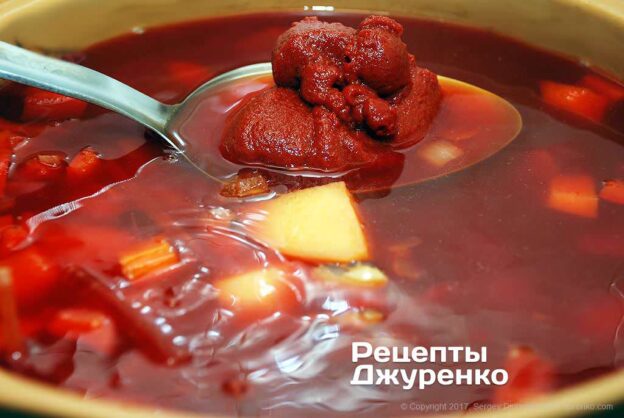
Let the tomato paste boil for at least 5 minutes. It will give the borscht an extra lovely red tint.
Cabbage
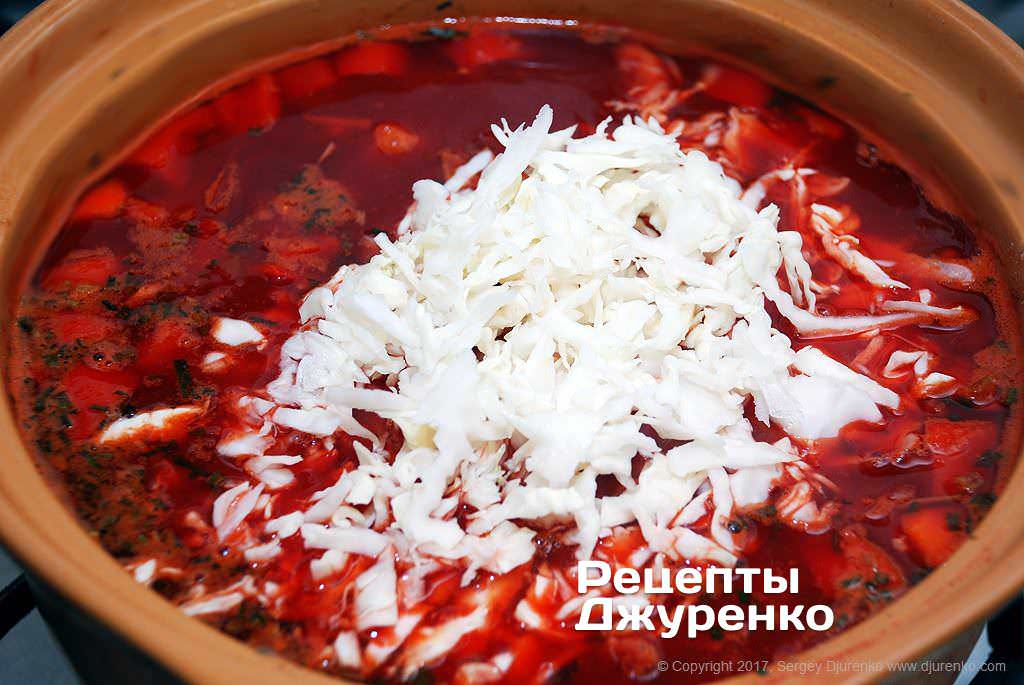
Add thinly shredded white cabbage! How much? Enough that the soup isn’t watery. Cabbage is irreplaceable here!
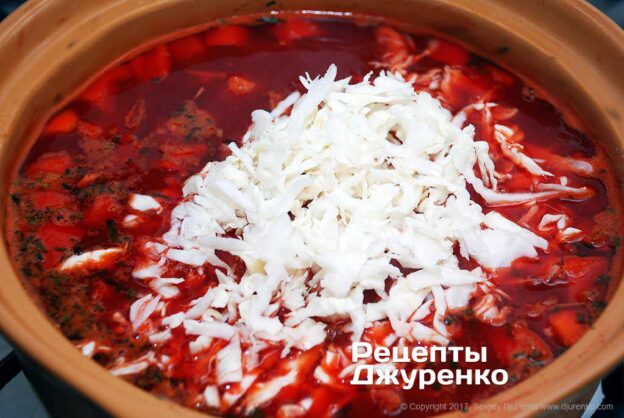
Many cooks add sauerkraut. Well, maybe. I don’t.
Cook the cabbage for no more than 5 minutes. I like the cabbage a little firm.
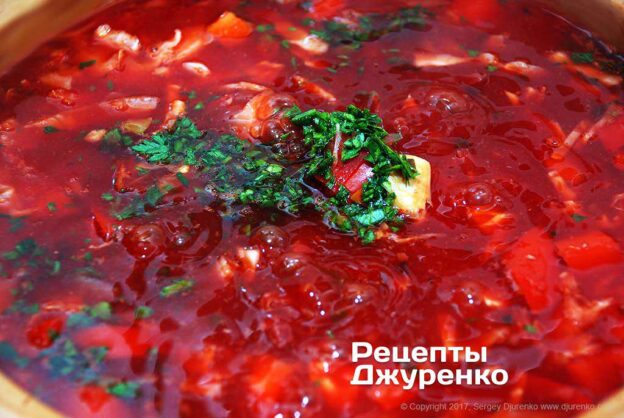
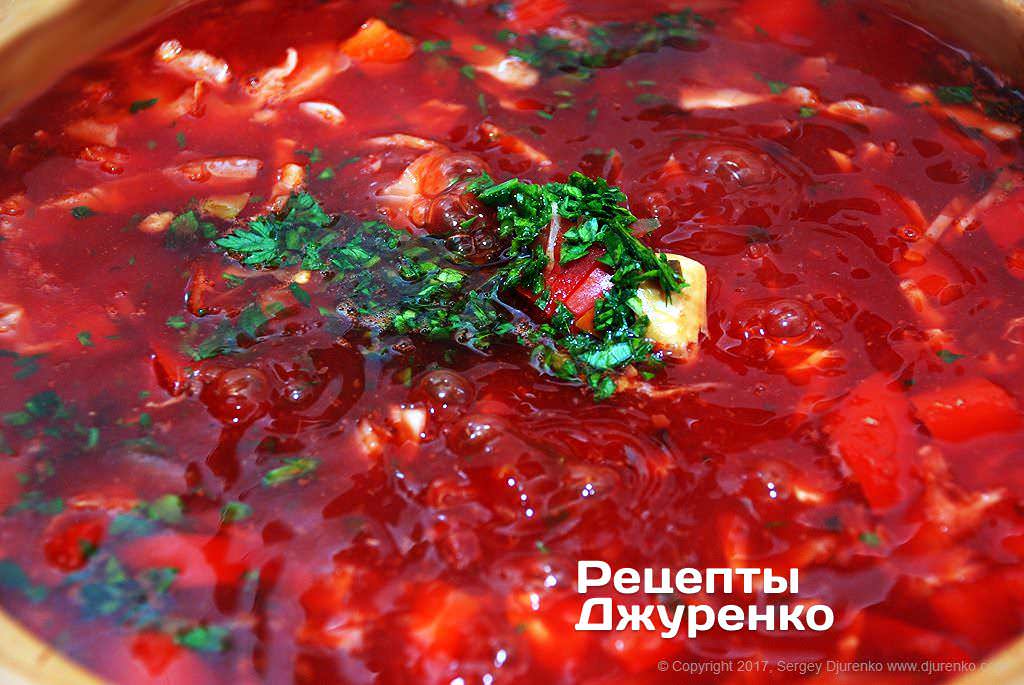
Be sure to season with salt and pepper to taste. Add finely chopped parsley and dill.
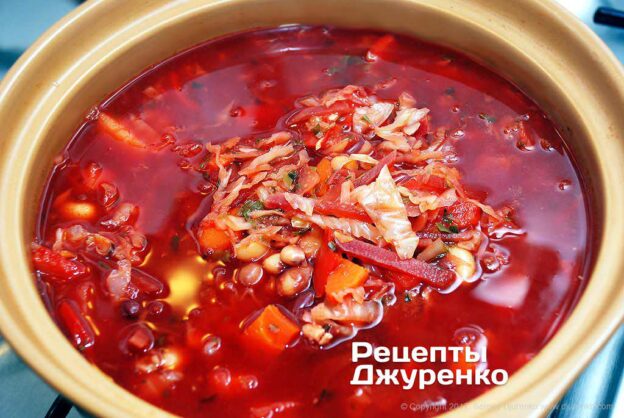
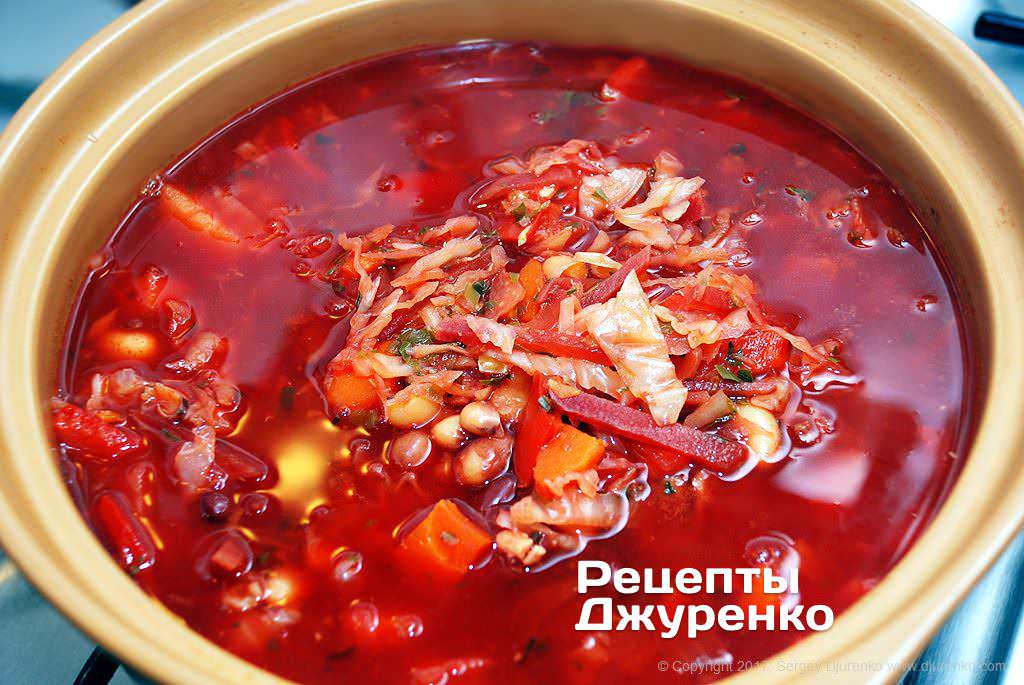
Turn off the heat right away and let it stand. How long? Until the next morning. I’m not kidding! Borscht is tastiest the day after!
Serving
Always serve it with sour cream. Not the fattiest kind. Homemade or 10–15% is ideal.
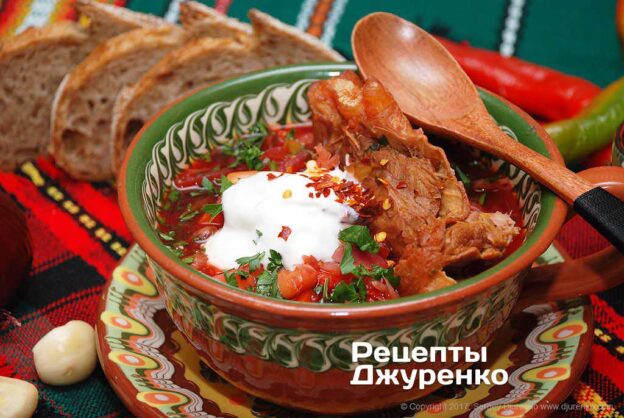
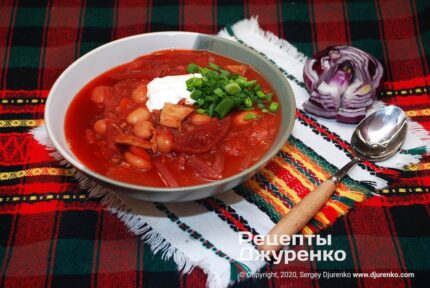
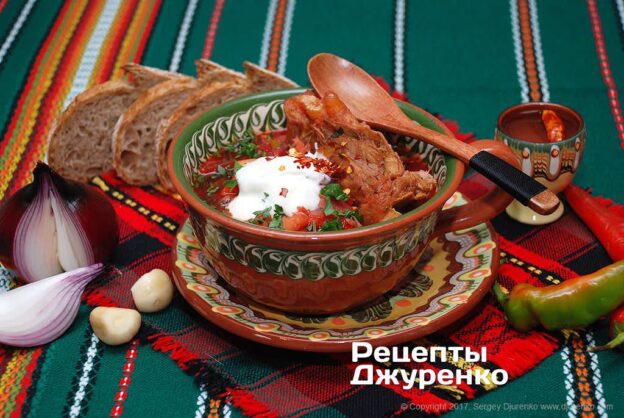
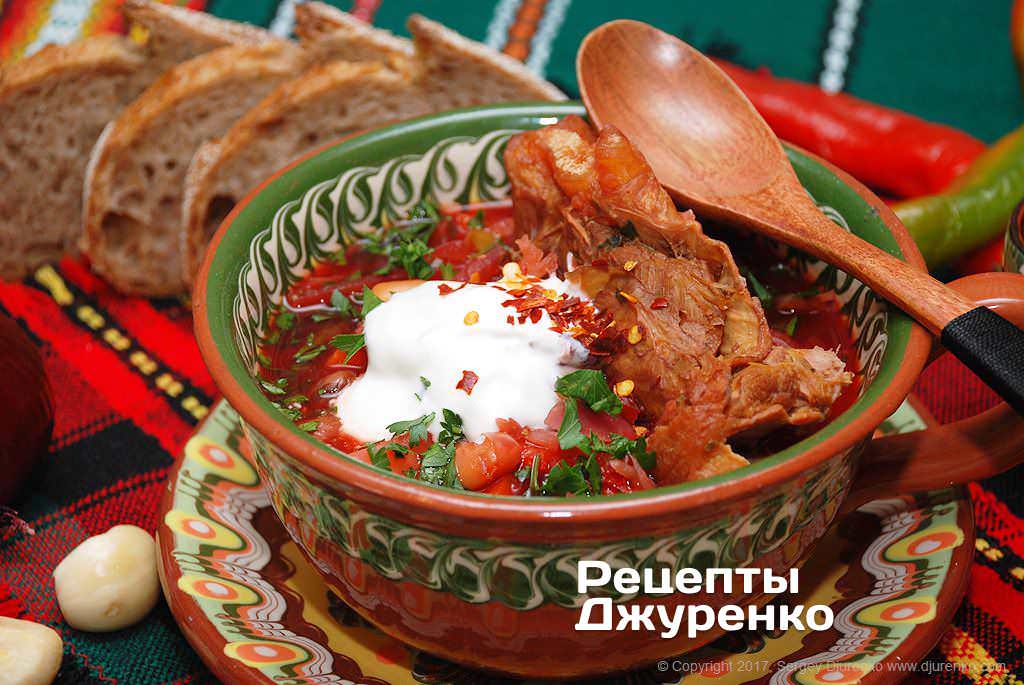
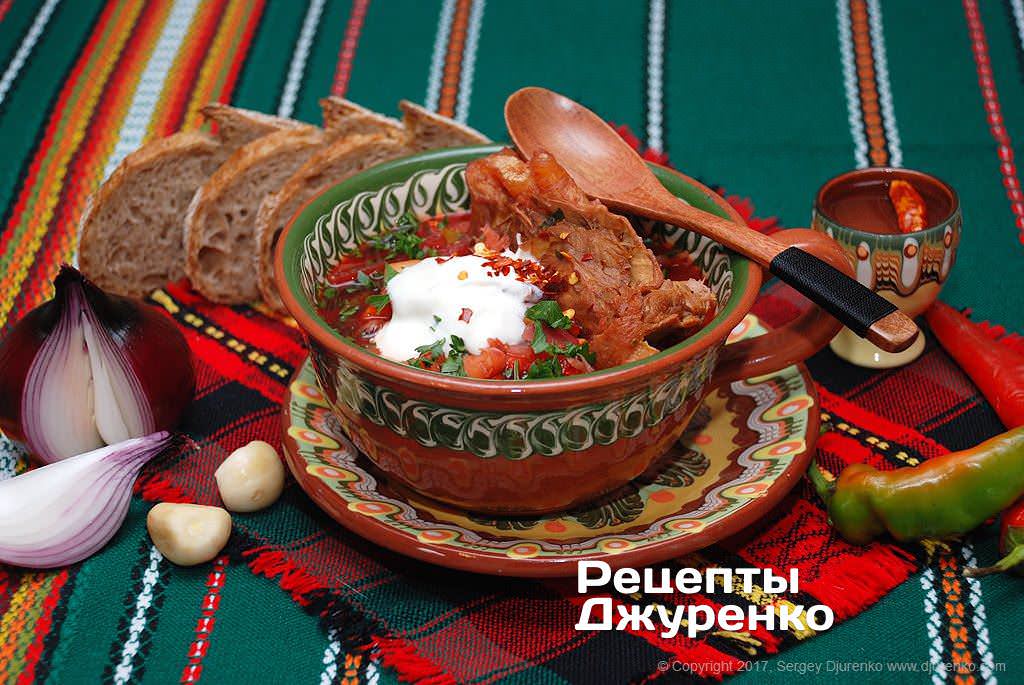
From here on, it’s like a fairy tale! A bowl of fiery red borscht! Sour cream!!! A halved onion! Garlic! Fresh bread, or, even better, pampushky garlic buns! Green onions and young garlic are the VIP guests.
Calories and macros
510 kcal
Serving ≈ 910 g
- Protein33 g28% of kcal
- Fat23 g45% of kcal
- Carbs30 g26% of kcal
100 g56 kcalProtein 3.6 gFat 2.6 gCarbs 3.3 g
Calculated from the recipe ingredients, excluding salt and spices. Data: USDA and Matvaretabellen.
To Get It Right
How much water
For borscht you need a 5–6 liter pot and about 3–3.5 liters of water: the vegetables and cabbage will take up the rest. I like my borscht very thick and never add liquid later; I adjust the thickness with the cabbage, which goes in last.
Salt in two goes
Salt the borscht a little at first, so the meat and vegetables get salted inside; at the end, to taste. You won’t get it right in one go: fresh cabbage soaks up salt like a sponge.
Instead of tomato paste
For borscht you need 3–4 times more homemade tomato juice than paste: 1 to 1½ cups for 6 liters. When the paste ran out, my grandmother dressed borscht with stewed overripe tomatoes rubbed through a sieve. Pretty, but it tastes better with paste.
Garlic and herbs
I add the garlic crushed, not minced: its job is to flavor the broth, not to make the borscht taste of garlic. I add the herbs just before turning off the heat; overnight they release their aroma. If you like bright fresh herbs, add another handful right into the bowl.
Have your own trick for this recipe?
Questions and answers
What goes into Ukrainian borscht?
A rich meat broth of pork and beef with a bone, beets, white cabbage, potatoes, carrot, onion and tomato paste. Our borscht also has beans, bell pepper, garlic and chili, and it’s served with sour cream and herbs.
How much tomato paste for 5 liters of borscht?
2–3 tablespoons. For 6 liters I use 3 heaping tablespoons, but it’s best to add it gradually and taste: the tomato should give just a hint of tang.
Do you need to fry the vegetables for borscht?
Not necessarily. That’s simply how it’s done where I come from: the vegetables aren’t fried, and frying makes almost no difference to the taste. If the beets are pale, you can fry them in butter before adding them to keep the color.
Can you add vinegar to borscht?
This recipe doesn’t need vinegar: the tomato paste gives the tang. In the villages, citric acid went into green borscht made with nettles or spinach.
Can you make borscht without beans?
Yes, borscht without beans is a classic too. It comes out a little lighter and not as thick, so you can add one more potato. Another option is canned beans: no soaking needed, just add them 5–10 minutes before the end.