
Spaghetti alla Chitarra with Meat Sauce
Ingredients
2 servings
For the meat sauce
- Beef 150 g
- Pork 150 g
- Bacon 100 g
- Tomato pulp 200 g
- Onion 1-2
- Carrot 1
- Celery stalks 1-2
- Dried Italian herbs 0.5–1 tsp
- Olive oil a little, if the bacon gives off too little fat
- Salt, black pepper to taste
- Chili (dried or fresh) optional
- Dry red wine half a cup, optional (100 ml)


For the pasta and serving
- Spaghetti alla chitarra 200 g
- Water for boiling the pasta 2 l
- Salt for boiling the pasta 14 g (7 g per 1 l of water)
- Grated cheese for serving, optional


Step-by-step recipe
Meat sauce
Compared with spaghetti Bolognese, this is a simpler dish. The spaghetti with meat sauce takes about two hours, and all the ingredients are easy to find. Spaghetti chitarra is sold in shops. It looks like thick spaghetti, but with a square cross-section and twice the length, about half a meter. In the package it is folded in half, and it separates easily into portions. In Abruzzo this pasta is considered “country” food and is often made at home by pressing the dough through a tool that looks like guitar strings, hence the name. If you like, replace it in the recipe with thick spaghetti or bucatini.

The meat ragù has plenty of vegetables and meat. Take lean pork, and beef too. It can be quite “old” beef, since it turns very soft when ground and cooked. Add lots of finely chopped vegetables: onion or shallot, celery stalks, carrot, and other juicy vegetables if you like. The tomato base is canned tomato pulp, chopped.

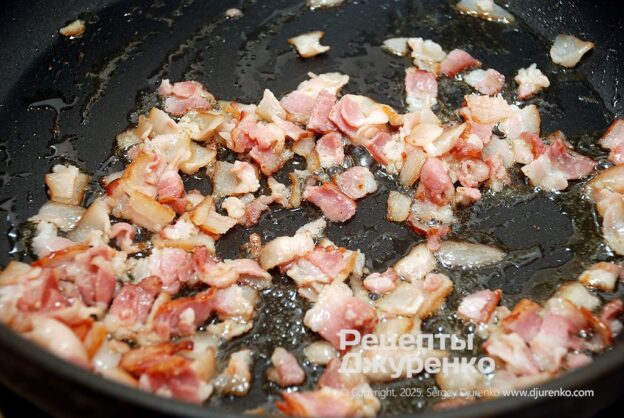
Render the bacon fat. For a good flavor in the meat ragù, it is best to fry the vegetables and meat in rendered bacon or pancetta fat, though other similar products will do. Dice the bacon and fry it in a dry frying pan over low heat until the pieces are golden. The aim is to render as much fat as possible. If there is too little, add a little olive oil to the pan. There is no need to flavor the fat with garlic and herbs, although this trick is widely used in other sauces.
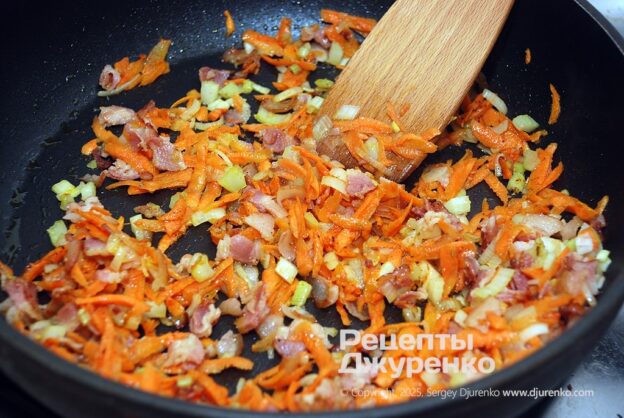
Fry the vegetables until soft. Peel the carrot, onion and any other vegetables you plan to stew with the meat. Grate the carrot, coarsely if you like, and cut the onion, celery and other vegetables into small cubes. Add the vegetables to the pan and fry over medium heat, stirring constantly, until soft. If some of the vegetables release liquid while frying, you don’t need to cook it off.
Make the ground meat and add it to the vegetables. Trim the beef and pork of bones and membranes, then grind through a meat grinder into a uniform mince. Add the mince to the vegetables, season with salt and ground black pepper, and add 0.5–1 tsp of dried herbs typical of Italian cooking: oregano, basil, savory, parsley and so on. Shops sell some decent mixes.
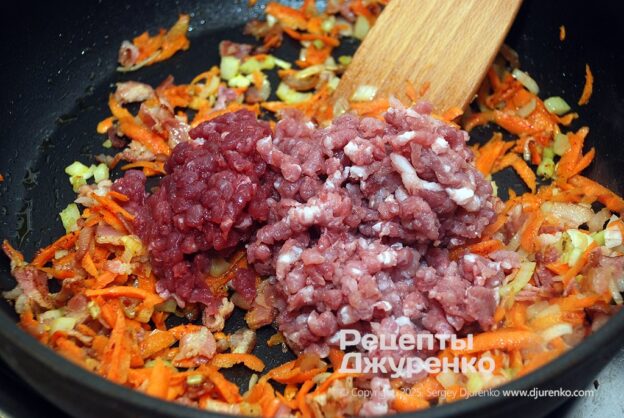
Fry the mince and add the tomatoes. Stirring often, fry the meat over medium heat until it turns pale and has no lumps. If you like, add a little dried or fresh chili to the meat. When the meat is browned, add the tomato pulp to the pan. If the tomatoes are whole, simply crush them with a fork or in your hand. You can also add half a cup of dry red wine (100 ml), which improves the flavor of the sauce. Note that no cream or milk is used.
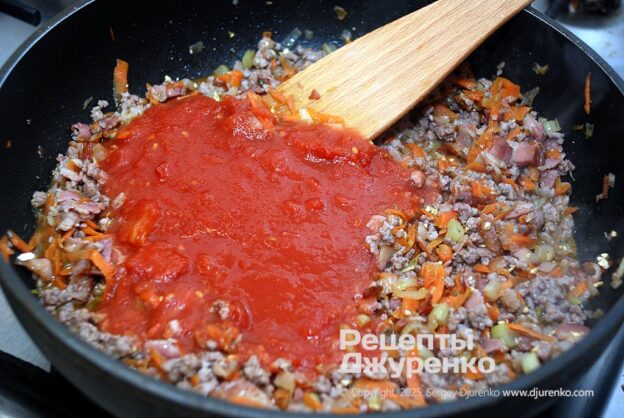
Simmer the sauce, covered, for at least 1 hour. Mix the meat and vegetables with the tomato and bring to a boil. Then reduce the heat to the minimum, cover the pan with a lid and simmer, stirring from time to time. We don’t usually add water to this kind of sauce, but if it seems too dry, add just a little. The finished sauce is fairly thick and uniform, and looks much like Bolognese.
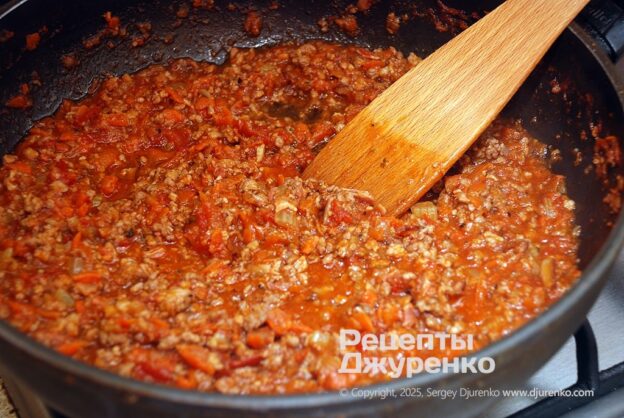
If you like, you can make the sauce ahead and keep it in the refrigerator for a few days. Before using, simply reheat it in a frying pan.


Pasta
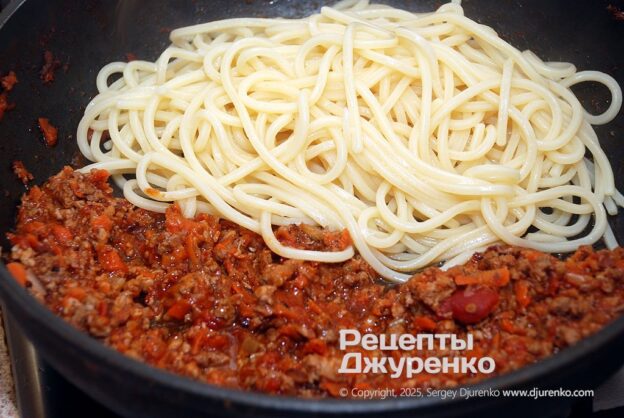
Cook the spaghetti chitarra when the sauce is almost ready. In a pot, bring 2 l of water with 14 g of salt (7 g per 1 l of water) to a boil over high heat, add the spaghetti and cook, stirring so it doesn’t stick together. This pasta takes longer to cook than traditional spaghetti, so follow the manufacturer’s instructions on the package. Drain the cooked spaghetti in a colander to let the water run off.
Toss the spaghetti with the meat sauce right in the frying pan.

Serving
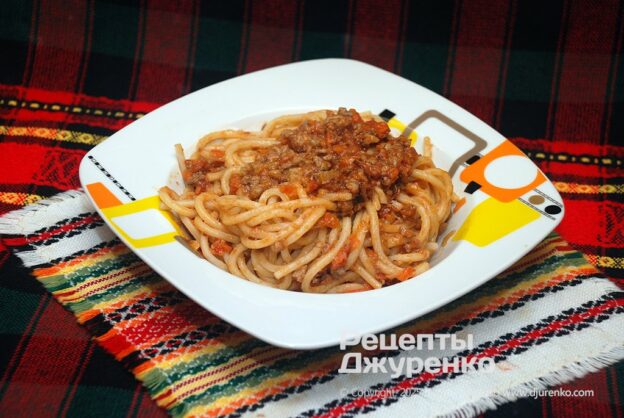
Divide the spaghetti and sauce among plates. Country food is usually sprinkled with grated cheese, but the flavor of the meat and tomatoes is enough, so it’s up to you. Serve the pasta hot.


How did you like this recipe?
I really want to know how the recipe turned out for you.
Calories and macros
1025 kcal
Serving ≈ 550 g
- Protein50 g20% of kcal
- Fat50 g46% of kcal
- Carbs83 g34% of kcal
100 g186 kcalProtein 9.1 gFat 9.1 gCarbs 15.2 g
Calculated from the recipe ingredients, excluding salt and spices. Data: USDA and Matvaretabellen.