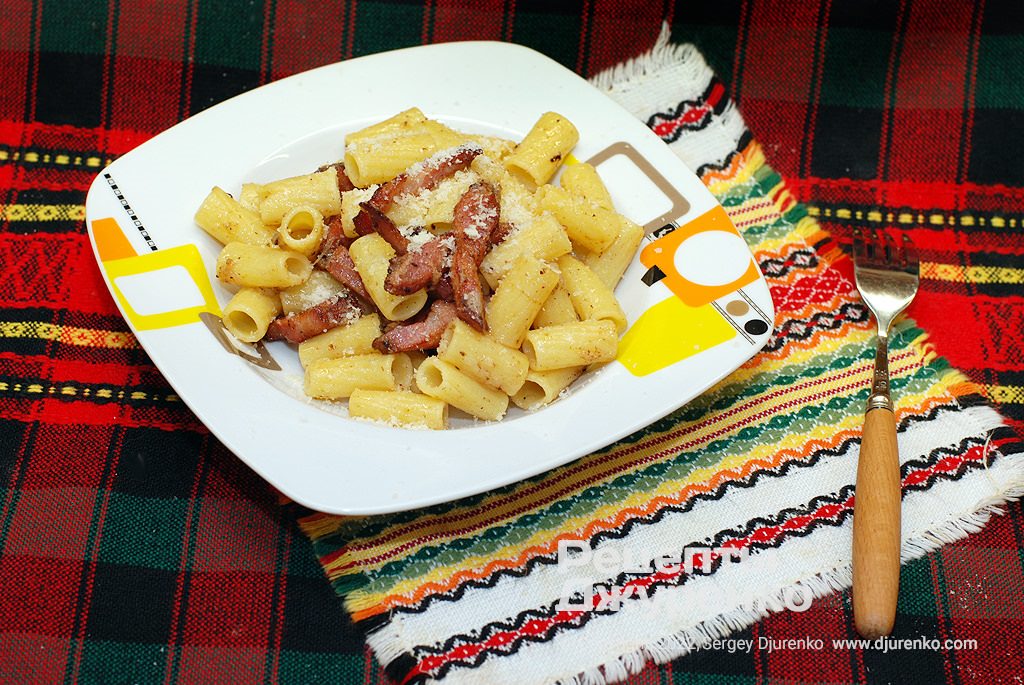
Pasta alla Gricia
Ingredients
2 servings
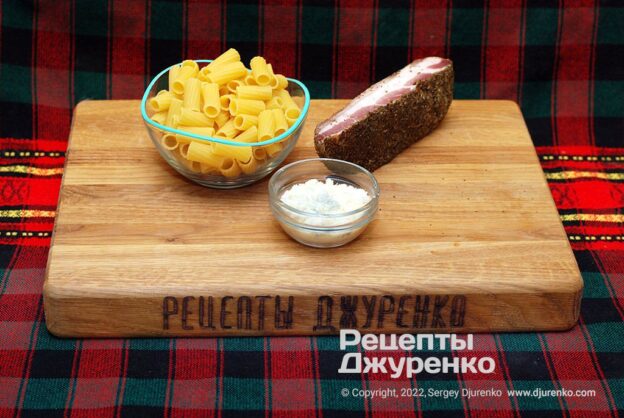
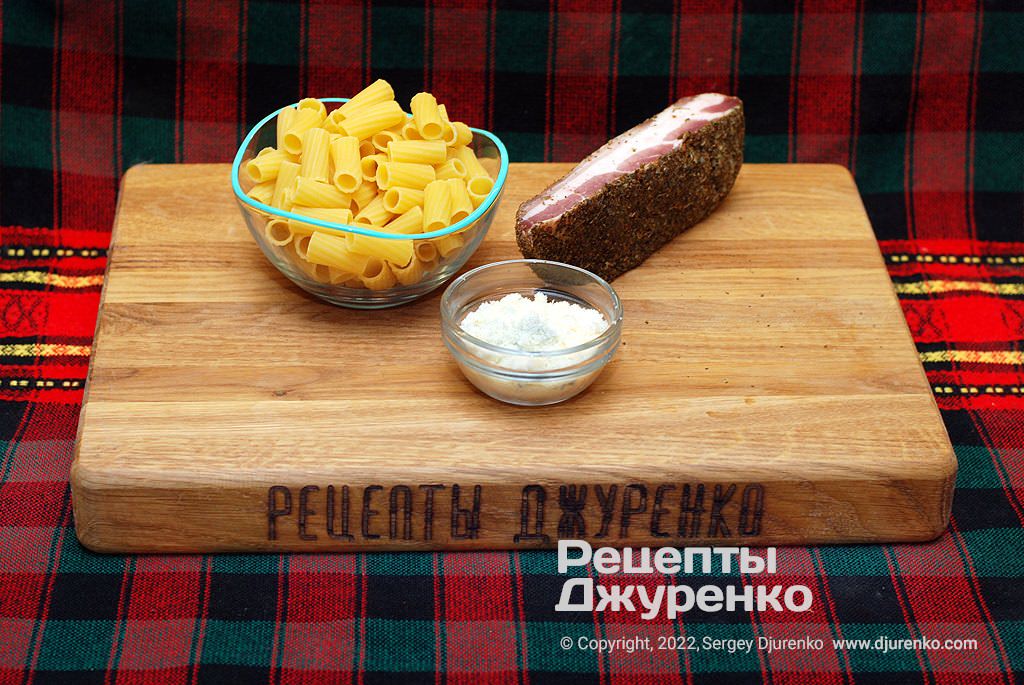
- Pasta (rigatoni, tortiglioni, penne) 200 g
- Water for cooking the pasta 2 l
- Salt for cooking the pasta 10 g (5 g per 1 l of water, since guanciale and Pecorino are salty)
- Guanciale (pancetta, dry-cured bacon) 150 g
- Grated Pecorino cheese (or Parmesan) 2 tbsp and a little more for serving (14 g)
- Olive oil or pork fat 1 tbsp, if the guanciale is lean
- Freshly ground black pepper to taste
Step-by-step recipe
Pasta and guanciale
Pasta alla Gricia is easy to make, but it is crucial to use high-quality ingredients. By the way, it is not that hard to find genuine guanciale; it is on sale. If you can, use short tube-shaped pasta rather than spaghetti. Pecorino can be replaced with Parmesan, which is more common. And one more thing: cook with freshly ground black pepper, which guarantees an unmatched aroma.
Put the pasta on to boil. It should be ready by the time you fry the pork and prepare the sauce. In a large pot, bring 2 l of water to a boil over high heat and add 10 g of salt, 5 g per liter of water, less than usual because guanciale and Pecorino are salty. Add the pasta to the boiling water and cook for the time the manufacturer recommends for al dente.
At the very end, ladle half a cup of the pasta water (100 ml) into a cup. You will need it for the sauce.
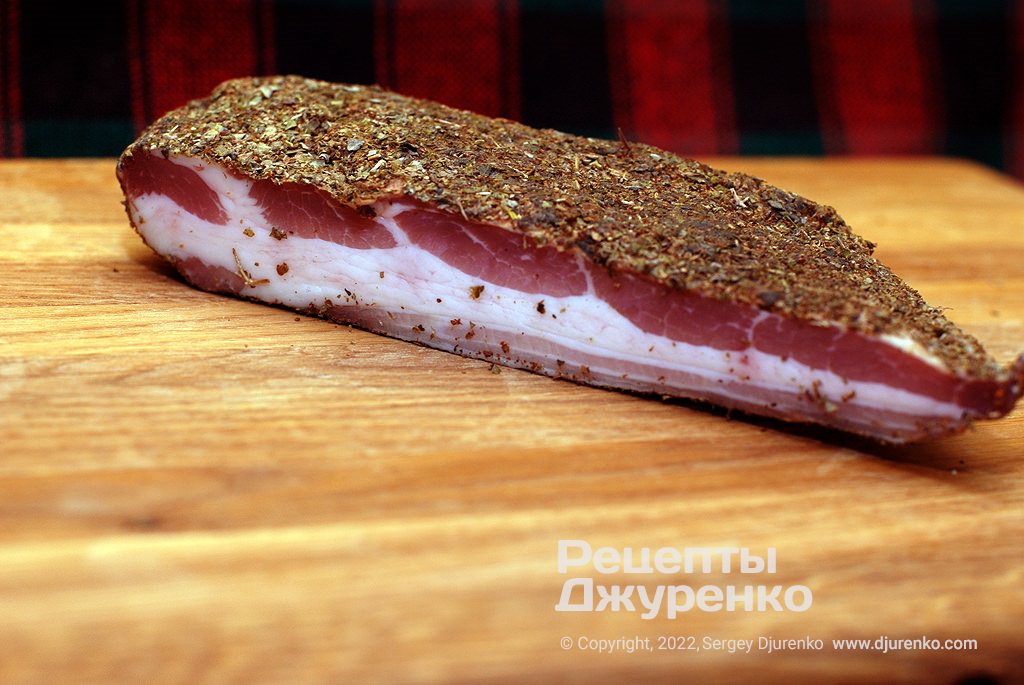
Prepare the guanciale. If the guanciale or bacon is coated with a layer of spices, remove it, and cut off the rind.
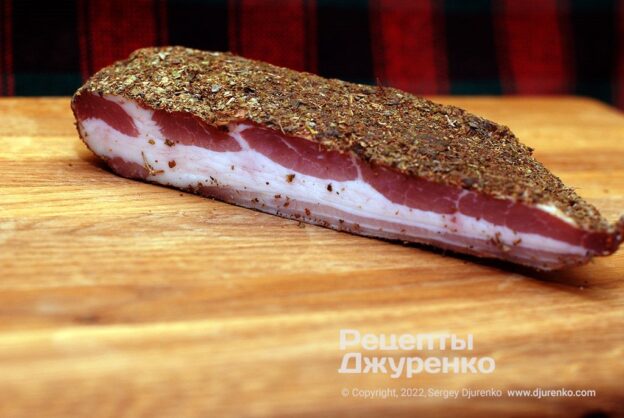
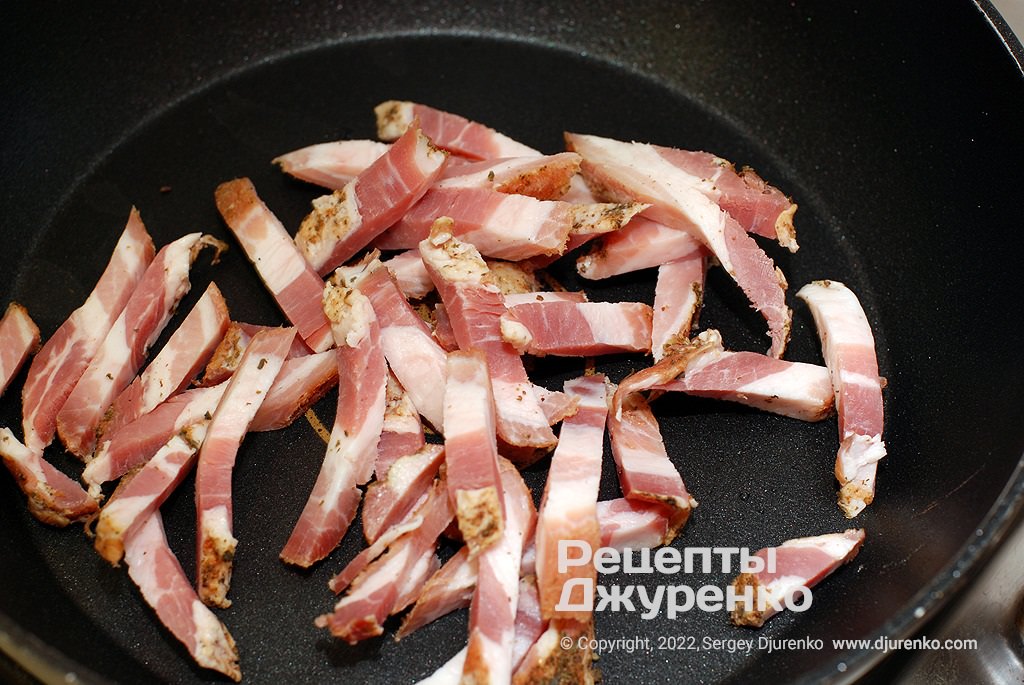
Cut the cured pork with fat into strips, then into sticks or cubes (less common). The size is up to you, but it is best if the pieces are about the length of the rigatoni.
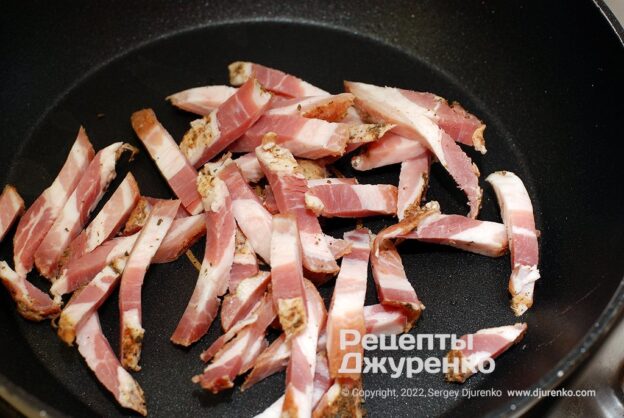
If the cut has very little fat, it may not render, and the pasta will turn out “dry”. In that case, add 1 tbsp of olive oil or pork fat for frying.
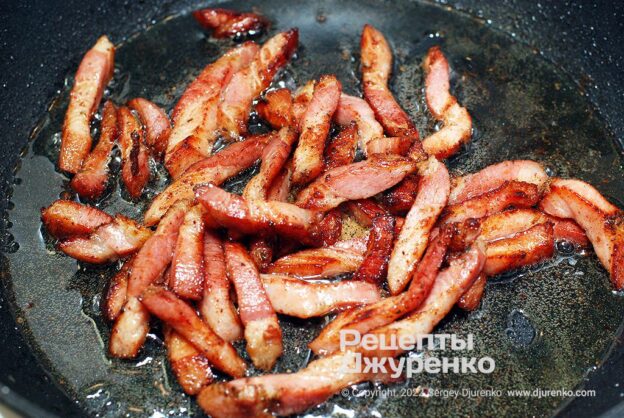
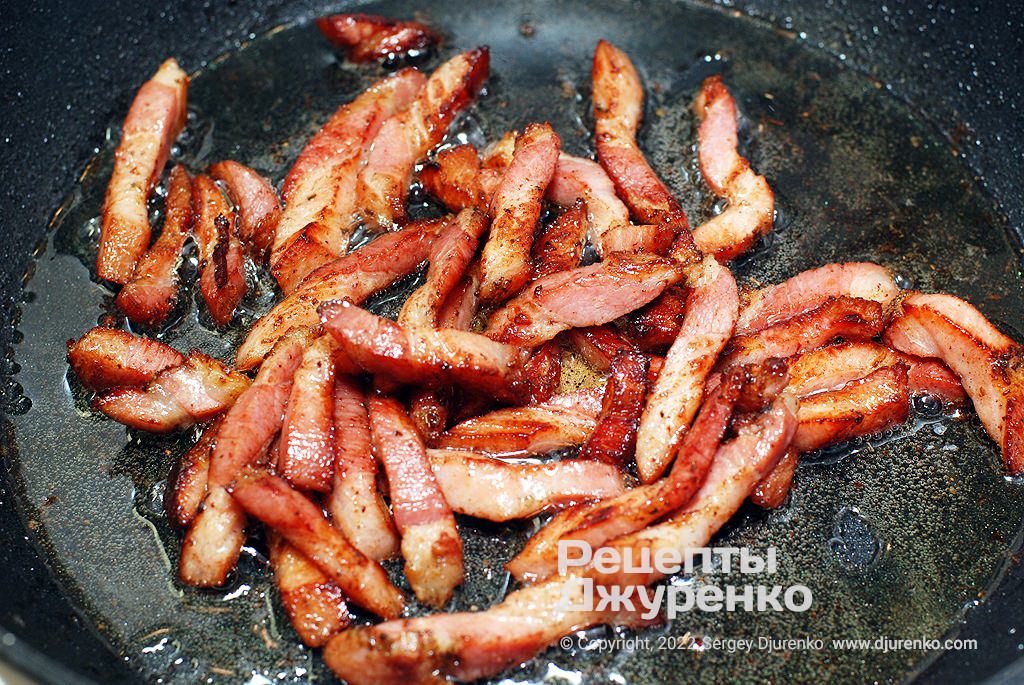
Fry the guanciale over medium heat, stirring, until the pieces are crisp and have rendered a lot of fat. This usually takes 10–15 minutes. Keep in mind that any spices left from curing can burn. Do not overcook the pork either: it should be very soft, even tender, with a light, noticeable crunch. Transfer the fried pieces to a separate dish, leave the fat in the pan and reduce the heat to low.
Sauce
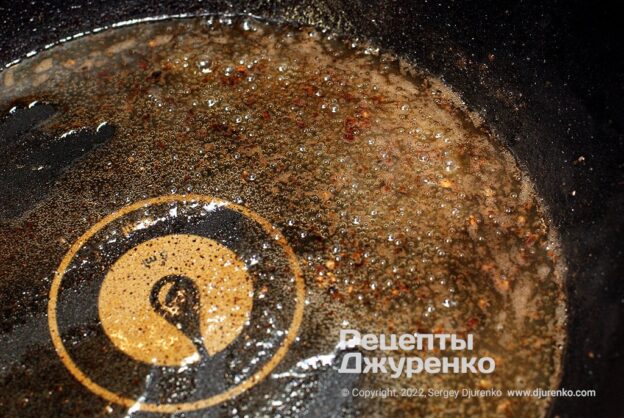
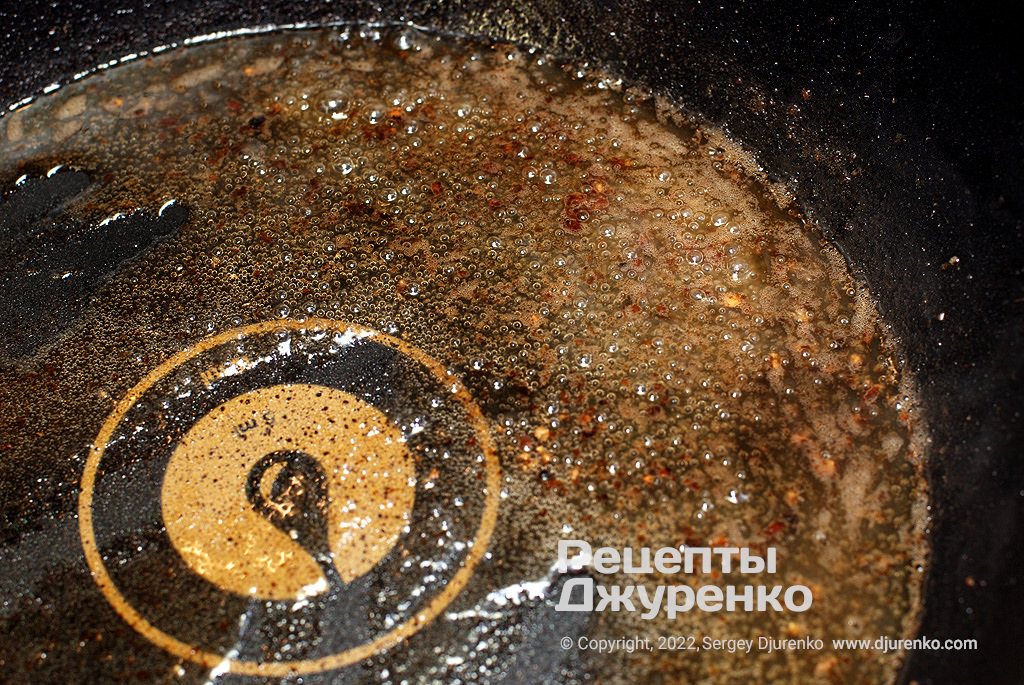
Make a sauce from the fat and water: add 2–3 tbsp of the liquid from the pasta pot to the pan. Be careful, it may splatter. Season the mixture generously with freshly ground pepper and stir vigorously until it emulsifies. You will get an opaque, even slightly thick “sauce”. Do not salt it: guanciale and similar products are usually salty enough.
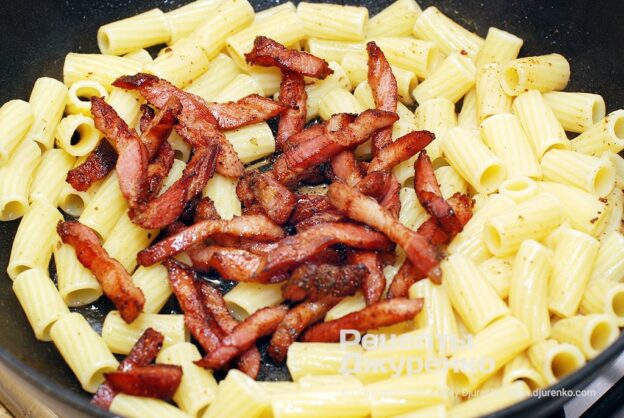
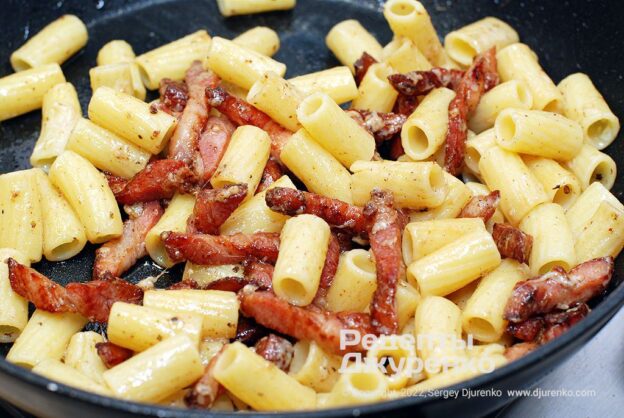
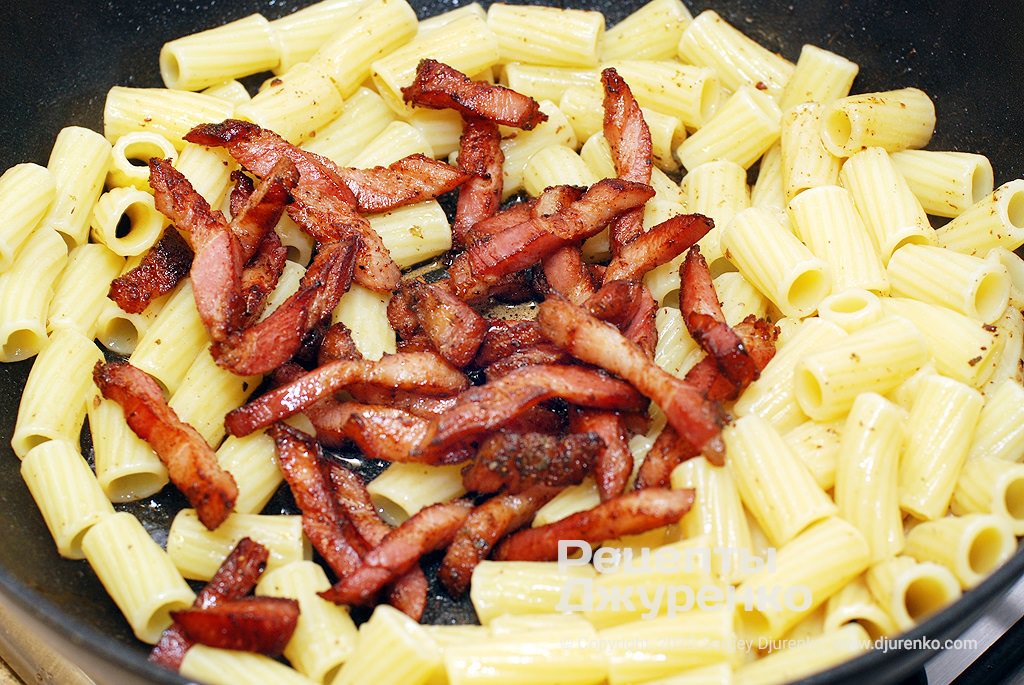
Combine the pasta and the sauce. Drain the cooked pasta in a colander, let the water run off and transfer it to the pan. Stir so the fat coats the pasta evenly, add the fried guanciale pieces and stir again. If the pasta and sauce seem a bit dry, add a little more liquid from the cup you set aside earlier. Stir until the pasta is uniform.
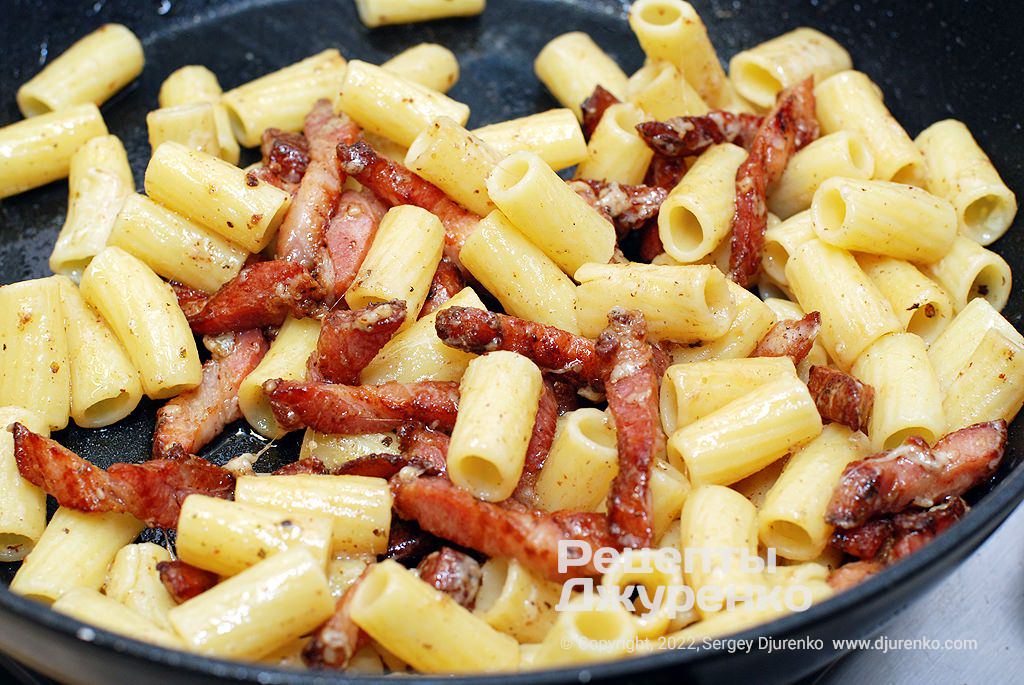
Melt the cheese into the sauce. Turn off the heat under the pan and add the grated cheese to the pasta. Pecorino is the ideal choice, but Parmesan will do in a pinch. Keep stirring the pasta until the cheese melts and blends with the sauce into a completely smooth, glossy mass. Ideally there will not be even a single melted clump.
Serving
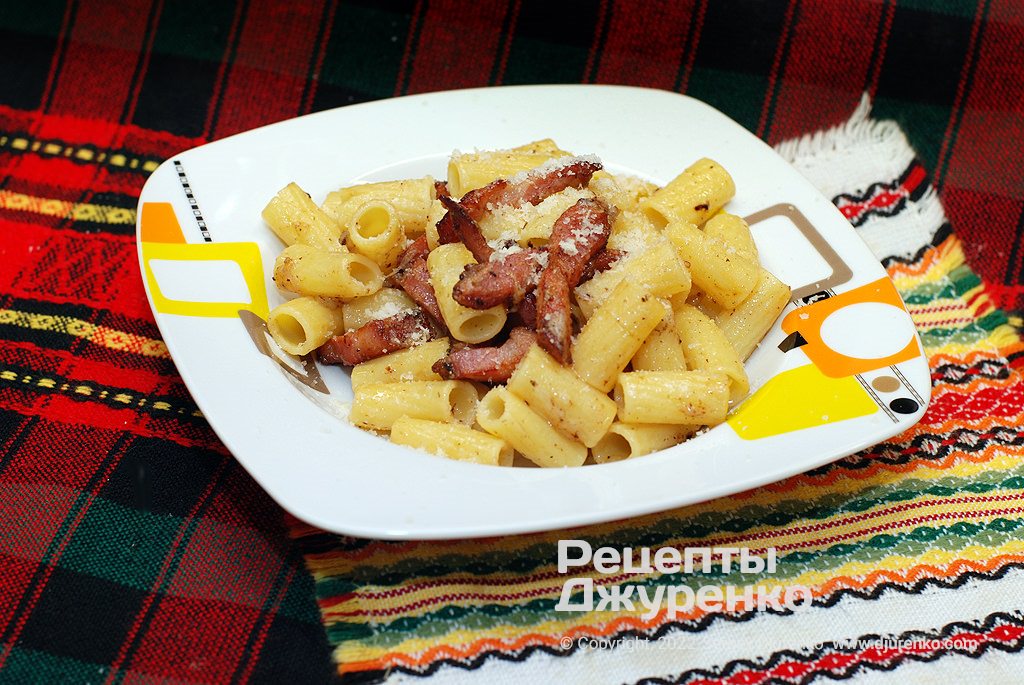
Transfer the pasta with guanciale to plates, preferably deep or rimmed ones. Sprinkle the dish with a little grated cheese and add more pepper. This is important; they say you should not be shy about it.
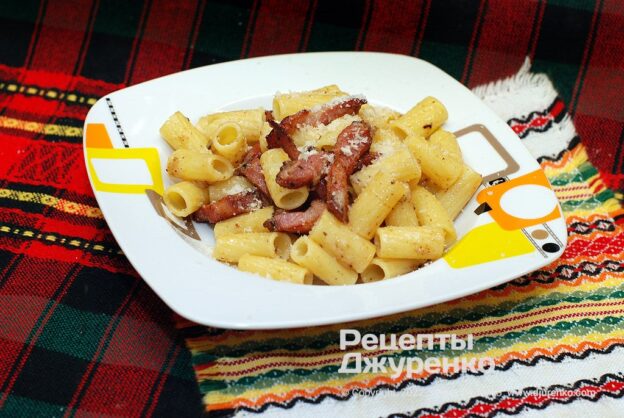
Serve the pasta immediately, hot, so the sauce does not set and the cheese does not curdle.
Calories and macros
665 kcal
Serving ≈ 300 g
- Protein23 g14% of kcal
- Fat29 g41% of kcal
- Carbs72 g44% of kcal
100 g226 kcalProtein 7.9 gFat 9.9 gCarbs 24.2 g
Calculated from the recipe ingredients, excluding salt and spices. Data: USDA and Matvaretabellen.