
Navy-Style Pasta with Beef

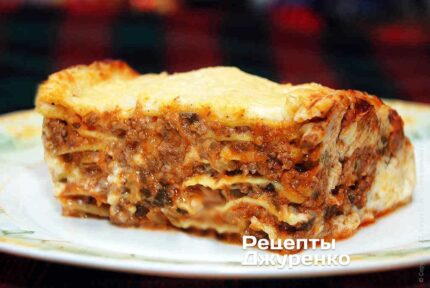


Ingredients
2 servings
Step-by-step recipe
How to boil the beef
First you need to boil the meat until fully cooked. Different recipes use pork, beef, even chicken. These are all variations; the dish calls for not-too-fatty beef. It can be part of the neck, leg or shoulder. The piece may include some bone, which is fine. For this dish I took a piece of shoulder on the bone with minimal fat.
Prepare the meat: wash the beef and remove any large pieces of fat.

Boil the beef until tender. Pour 2 l of cold water into a pot and bring it to a boil. We are not after a rich broth, so the beef should go into boiling water: the protein on the surface sets and forms a sort of crust that keeps all the juices in the meat while it boils. Do not add salt or spices. Cook at a low simmer until done and tender. If the beef is not too “old” and is cut thin, 40-45 mins is enough.

Textbook recipes recommend boiling the meat in bone broth. That makes some sense if the broth is later used for soups, especially in catering. In that case the cooking time can be several hours.
Let the cooked shoulder cool a little so you do not burn your fingers.


How to prepare the onion and the mince
In “classic” recipes all the ingredients of navy-style pasta are fried. But there is almost never a specific indication of the type of fat. It could even be the notorious “kombizhir”, a blend of various processed fats. I suspect that in those distant times beef fat or lard was used, since butter was, as an acquaintance of mine says, “too rich”. Which option to choose is up to you. But in my experience, butter or a mix of it with vegetable oil is very tasty.
Fry the onion. Peel the onion and cut it not too finely; diced or in strips both work. Heat part of the fat in a frying pan, the fat in which the mince will later be fried, and fry the onion over medium heat until soft and golden. Transfer the onion to a plate.
Fried onion is an essential ingredient of this dish, bringing an incomparable, slightly sweet note. I have come across recipes that used sugar to improve the flavor.

Grind the meat. Cut the boiled beef into pieces, remove all the bones and grind all the meat with a meat grinder. Beef absorbs little broth, so when ground it is almost dry and does not stick together. It is more like it pours, like grain.


How to combine the pasta and the mince
From this point you can start boiling the pasta. As I said, the type of dried pasta is your choice. I was not picky and bought Italian tortiglioni; of all that were available, it looks most like macaroni: large, not too long, with a wide opening.
Boil the pasta. Bring 2 l of water to a boil in a pot over high heat and add 14 g of salt (7 g per 1 l of water). Cook the pasta until done, following the time on the package. I recommend overcooking it very slightly, since al dente is not quite right for this dish.

Fry the mince with the onion. While the pasta is boiling, heat all the remaining fat in a frying pan. Fry the beef mince in it over higher than medium heat, stirring constantly. After 6-7 mins add the fried onion. Add a pinch of salt and pepper generously, since the taste of black pepper should be noticeable. Reduce the heat to medium and do not cover the pan with a lid.

Combine the pasta and the mince. As soon as the pasta is done, drain it in a colander and transfer it to the pan with the mince and onion. Sometimes people advise rinsing the boiled pasta with boiling water. Perhaps when such pasta was made from soft wheat flour, this made sense. Now things are different, and I do not rinse it.

Fry everything together. Mix thoroughly and, stirring, fry the navy-style pasta for 3-4 mins over medium heat. Never let the pasta stick to the bottom of the pan and burn. Try to mix the pasta pieces and the mince evenly so that the meat is distributed throughout.


Serving
Divide the finished dish into portions and serve immediately. And I do advise adding more pepper to the navy-style pasta.
Very old recipes advised serving grated cheese separately. In the days of Soviet catering this was an impermissible luxury, as was a sprinkle of fresh herbs.

If you use pasta that is not tubular or has a smooth surface, the bits of mince will not stick and hold well. That is one reason I chose large tubes. At the very least, choose ribbed shapes or ones with a complex surface, such as fusilli or shells.

Calories and macros
940 kcal
Serving ≈ 380 g
- Protein44 g19% of kcal
- Fat48 g48% of kcal
- Carbs75 g33% of kcal
100 g250 kcalProtein 11.6 gFat 12.8 gCarbs 20.1 g
Calculated from the recipe ingredients, excluding salt and spices. Data: USDA and Matvaretabellen.
 Meat tenderizerAliExpress
 Kitchen probe thermometerAliExpress
 Pull chopper for garlic and onionAliExpress
 Oil sprayerAliExpress
 Kitchen scale up to 5 kgAliExpress
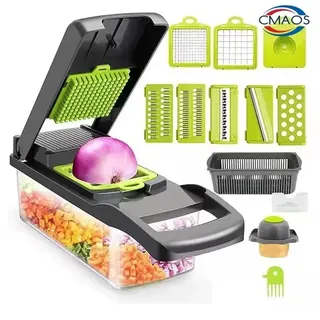 Vegetable chopper with handleAliExpress