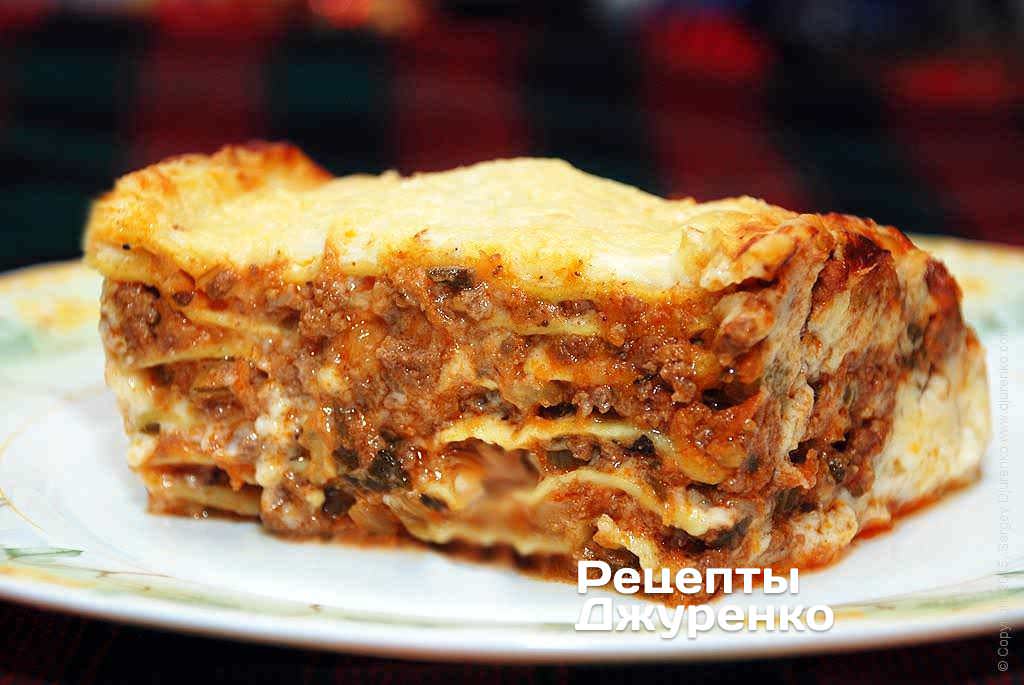
Classic Lasagna: Homemade Recipe with Beef Ragù and Béchamel
To me, lasagna has always been the pinnacle of the culinary arts. It's a fairly labor-intensive dish, not so much because it takes an enormous amount of time, but because you have to make several components that are tricky in their own right. My friend's wife once decided to treat him to something special. She spent half a day at the stove, then watched him wolf down the meat lasagna in the blink of an eye, and said simply: this is the first and last time. Or something like that.
The pasta itself can be store-bought, which is very convenient and makes life easier for the cook, or you can make it yourself. I've seen special kitchen gadgets for rolling lasagna dough into thin sheets. I'm definitely going to buy myself one of those machines.
There are an amazing number of lasagna fillings. Most often it's a thick meat sauce: Neapolitan, Bolognese or amatriciana, made with ground meat. It's also very good with artichokes or spinach. Most often lasagna is topped with béchamel or a similar sauce. What's interesting is that Italy may have certain canons and rules, but in the rest of the world cooks let their imagination run wild. I remember a wonderful lasagna with young nettles; it was something else. It's also usually sprinkled with grated cheese and baked in an oven.
Lasagne is a type of pasta. It's sold, or made at home, as thin, flat squares or rectangles. The dish made from this pasta, layered with filling and also called lasagna, is the calling card of Italian cuisine.
There's a lot of debate about where the word “lasagna” comes from. But most agree it was borrowed from the Greek “λάσανα,” hot plates. World cuisines have many very similar dishes that can differ quite a bit from Italian lasagna and still be just as delicious.
Without going into detail, here's a simple example: most of us probably remember grandma's crepe cake from childhood, thin crepes layered with all sorts of goodies. Sauces, homemade sausage or sprats. It's a little funny, but as a kid that was my favorite treat.
Homemade lasagna is tricky to make, but by the second time it's no trouble at all. I know from experience. The sauce is probably the hardest part. And if by some chance you have leftover meat lasagna, unlikely as that is, you can freeze it.
Ingredients
4 servings
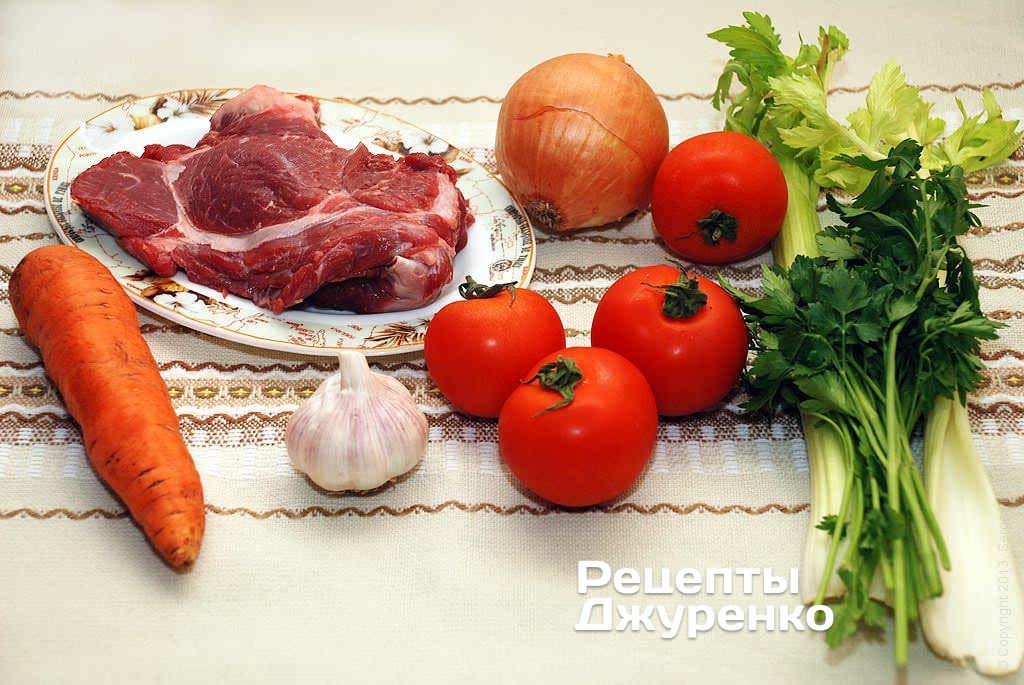
- Lasagna sheets (10×20 cm) 10-12
- Beef 300 g
- Ripe red tomatoes 4
- Carrot 1
- Garlic 2-3 cloves
- Onion 1
- Mixed herbs (parsley, celery stalks, dill) ½ bunch
- Olive oil 3 tbsp
- Butter 50 g
- Milk 0.5 l
- Heavy cream 100 ml
- White wine 100 ml
- Parmesan 100 g
- Salt, black pepper, dried aromatic herbs, nutmeg, sugar to taste
Step-by-step recipe
- On vacation in Italy, we tried lasagna everywhere. I can't remember a single time we didn't like it. It was always special and different. By the way, in restaurants this dish looks rather sloppy by our standards. Which doesn't affect the taste one bit.
- Making homemade lasagna with ground meat, assuming you've bought the pasta, can be roughly divided into three stages.
- The first stage is making the sauces. It takes quite a while. A good meat sauce cooks for a few hours and needs attention. Béchamel, or any creamy sauce you like based on flour and butter, is easy to make but takes a knack.
- The second stage is layering the pasta and sauces in a baking dish, carefully spreading every layer of pasta.
- The third stage is baking in the oven.
- Actually, there's also a fourth stage, the most enjoyable one: a dinner with lasagna as the main course.
- Step-by-step ground meat sauce
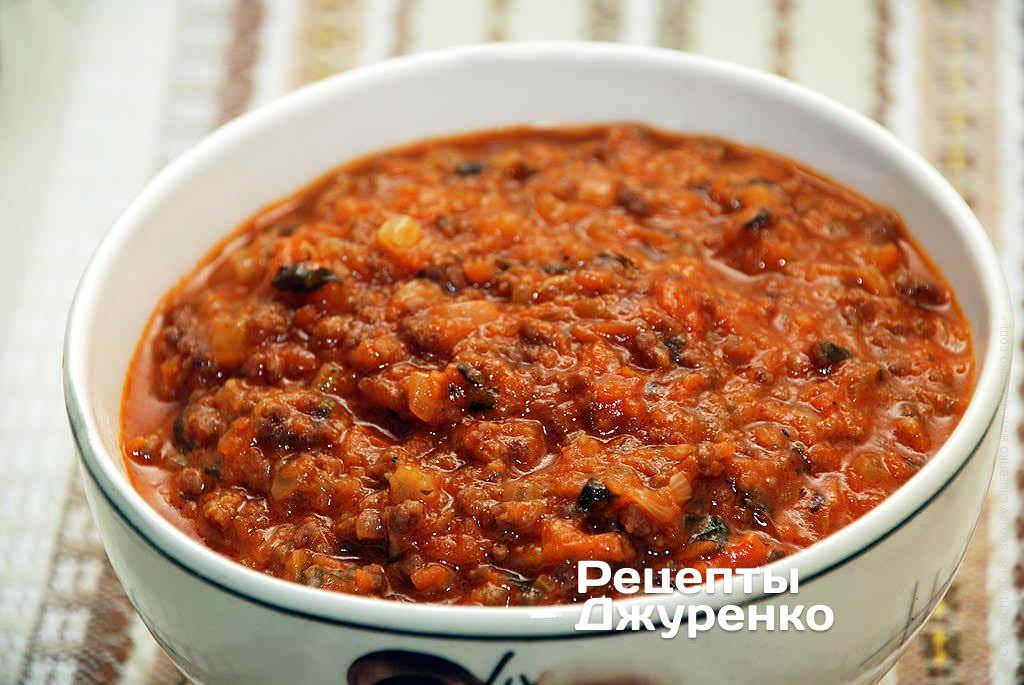
- If you know how to make Bolognese, amatriciana or any other meat sauce with tomatoes, go ahead and make it. Just make it thicker than you would for pasta.
- I made the sauce from what I had at home: a piece of boneless beef, an onion and a carrot, some mixed herbs, and tomatoes. I deliberately didn't use any animal fat in the sauce; the dish will be rich enough as it is.
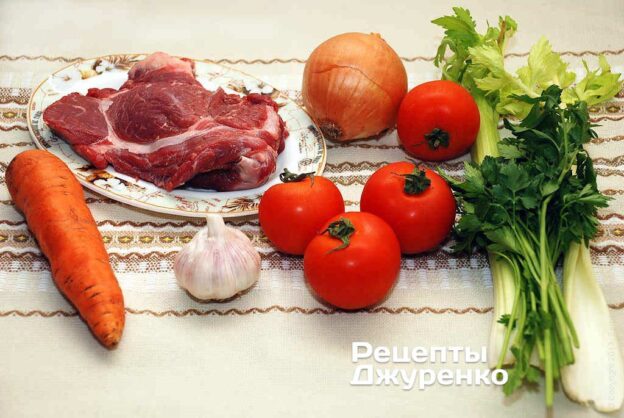
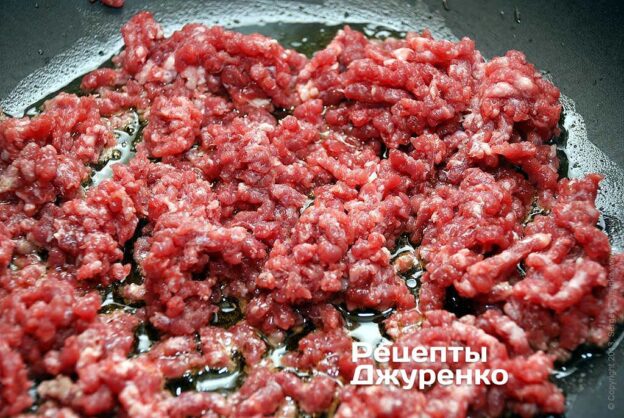
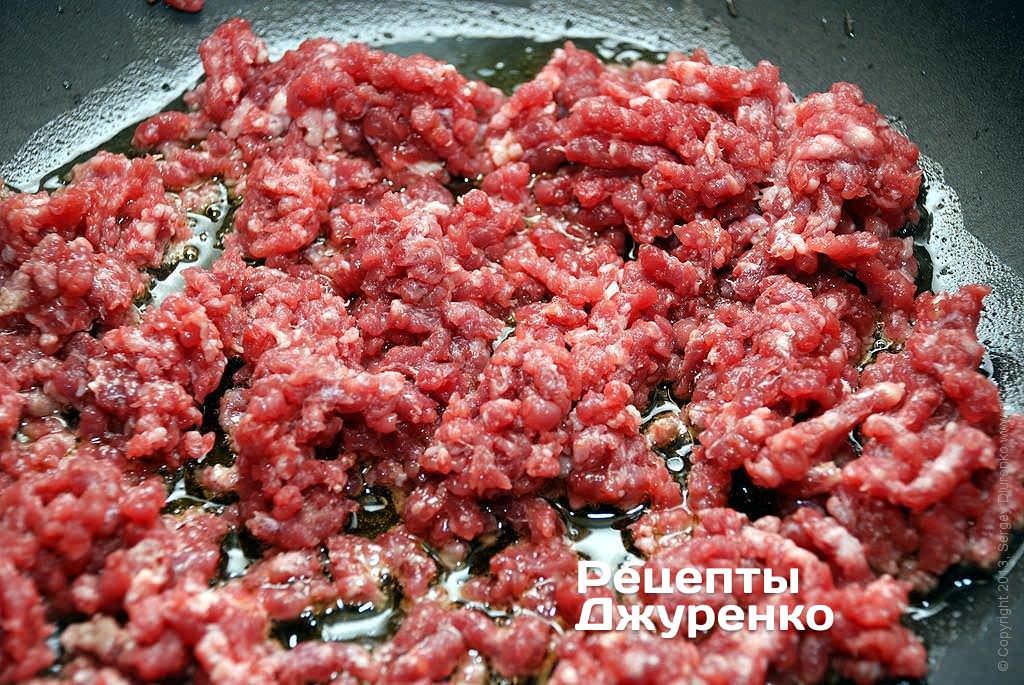
- Grind the beef in a meat grinder. Heat 3 tbsp olive oil in a deep sauté pan and let it get hot until it gives off its characteristic smell. Then fry the ground beef in the oil for 4-5 minutes, stirring.
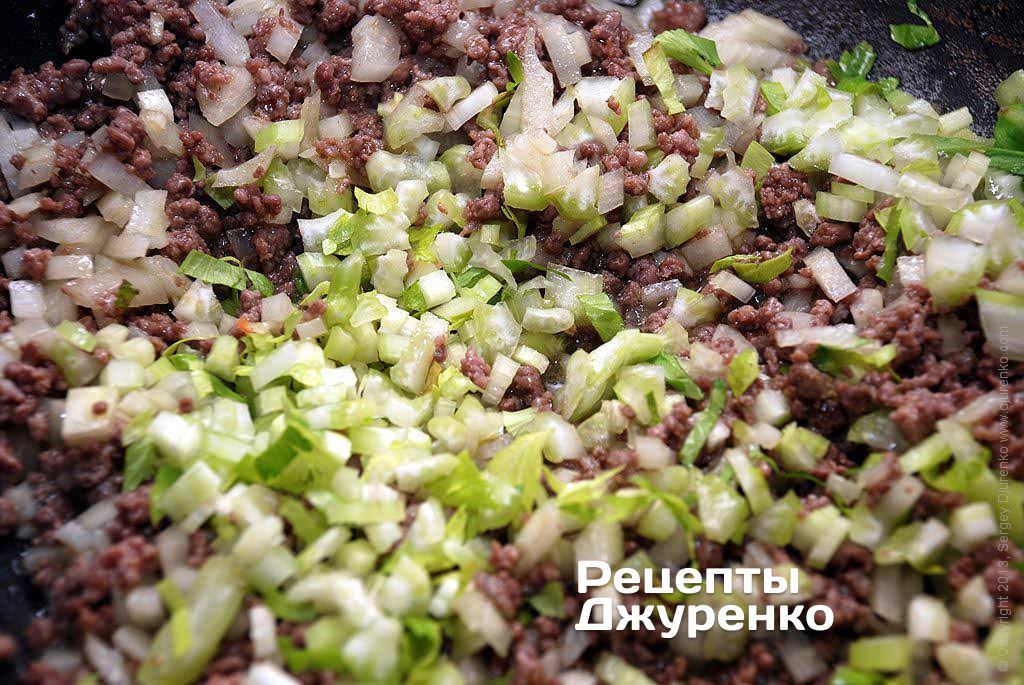
- Peel the onion, garlic and carrot. Grate the garlic finely and finely chop the onion with a knife. Add the onion and garlic to the meat and keep frying.
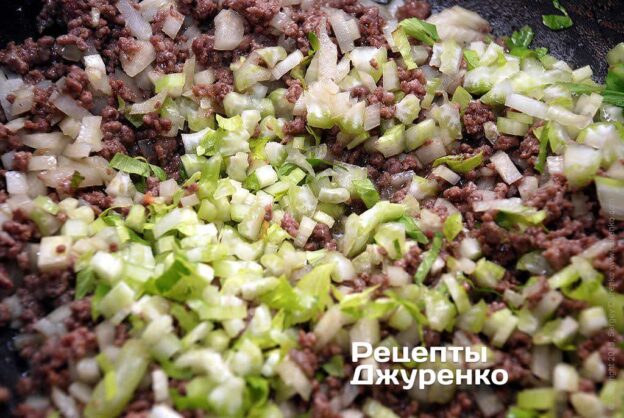
- Finely chop the celery stalks and add them to the pan. If celery stalks are hard to find, you can add finely chopped celery root, parsley root or parsnip.
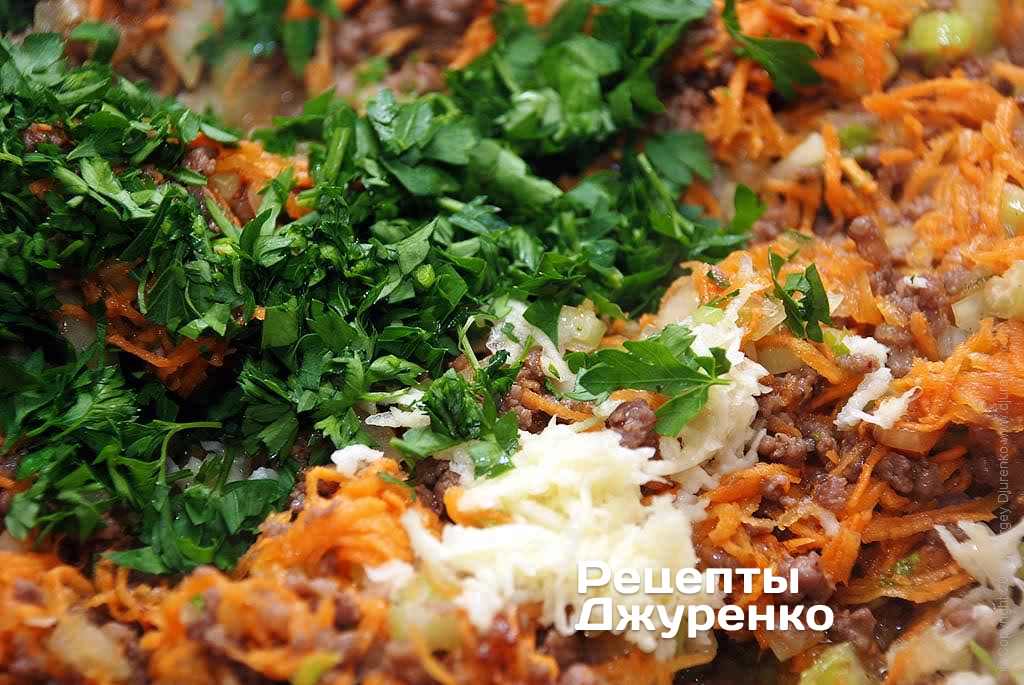
- Grate the carrot, not too coarsely. Add it to the pan, stir and fry for about 10 minutes.
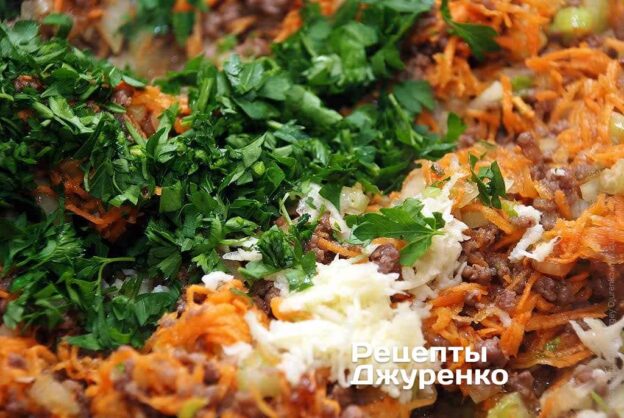
- Then add finely chopped parsley and season with a little salt and pepper. Add 2 tsp sugar, to taste. The sugar makes the sauce incredibly tasty, sweet and sour. Pour in half a cup of dry white wine. Bring to a boil, cover and leave to simmer over the lowest heat.
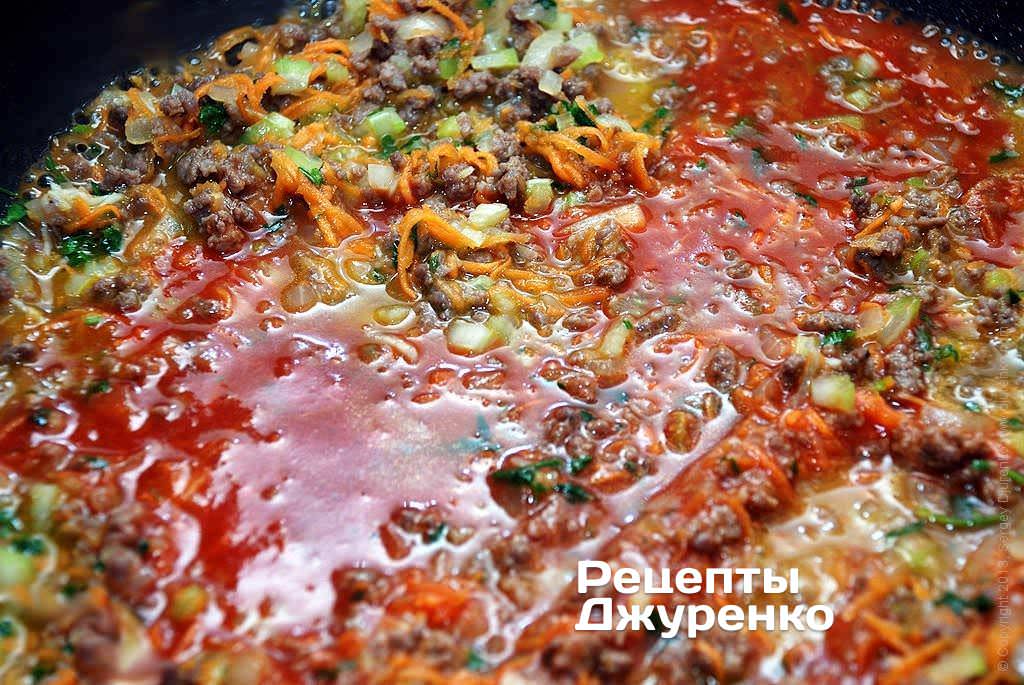
- Meanwhile, pour boiling water over the tomatoes and peel them. The tomatoes for lasagna should be as ripe as possible. Seed the tomatoes and purée them in a blender. If ripe tomatoes are hard to find, add half a can of canned tomatoes; they're sold in 400 g cans. Add the tomato purée to the pan and top up with a little hot water, half a cup at most.
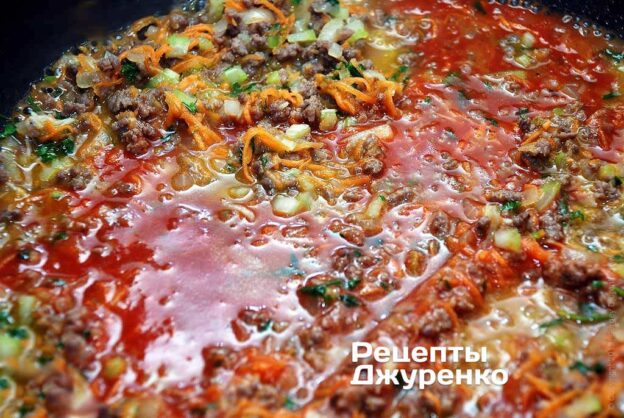
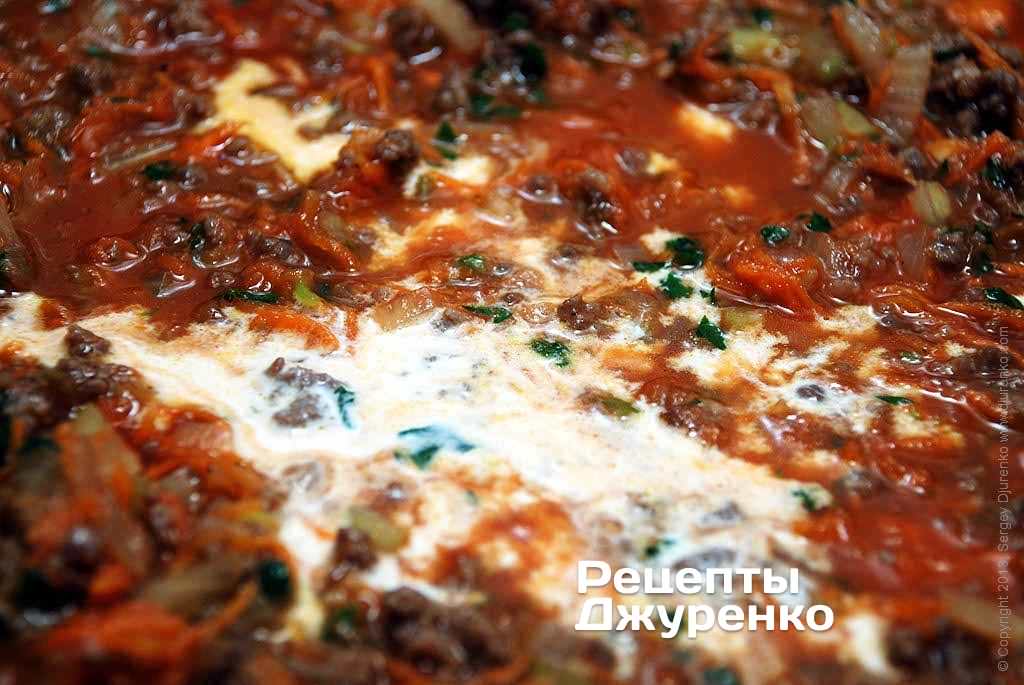
- As soon as the sauce comes to a boil, add dried aromatic herbs; a Mediterranean herb blend is ideal. Pour in half a cup of cream.
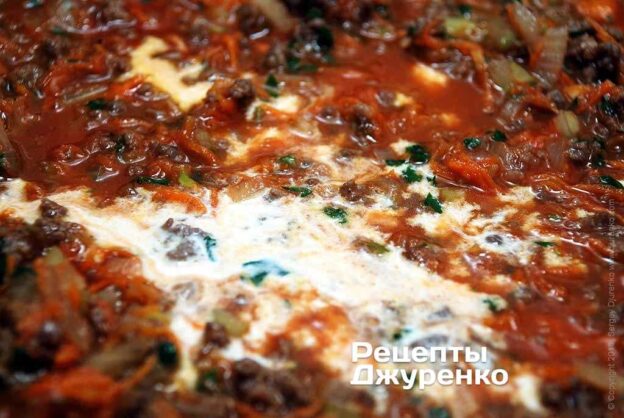
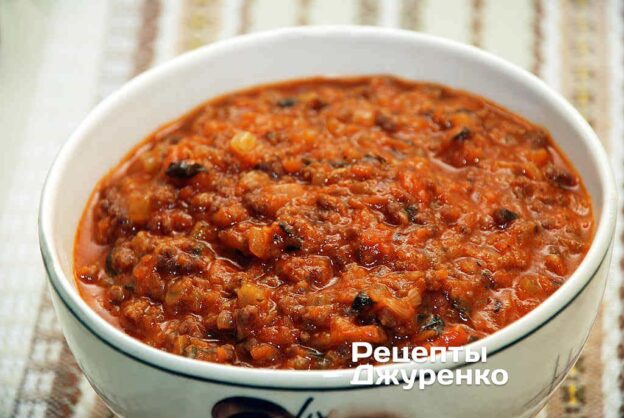
- Then comes a long process: the sauce simmers. Over the lowest heat, so it barely bubbles, literally just stewing. Stir it now and then, but not too often. The trickiest question is how long to cook it. A long time. At least 2 hours. The sauce should come out smooth and thick. Adjust the spices, salt and sugar to taste. For the consistency, picture store-bought zucchini spread. Something like that.
- Making the béchamel
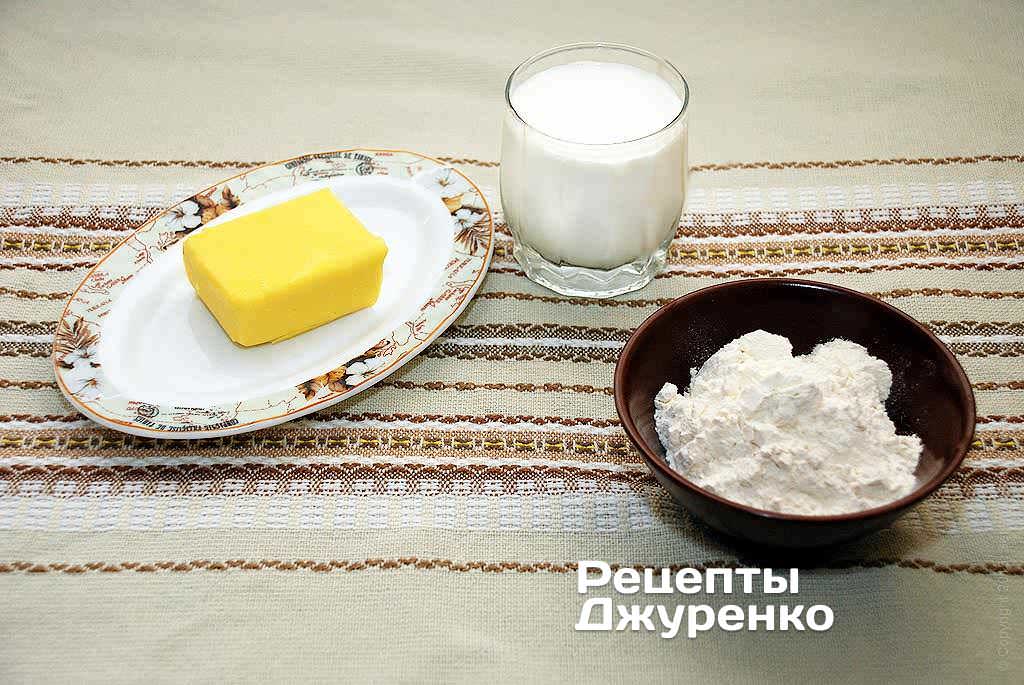
- If you know how to make béchamel, that's the best option. Just don't go overboard with the spices. Béchamel is a basic (mother) milk sauce. That is, other sauces are made from it, and they're often called béchamel too, despite having a pile of ingredients in them. In theory, béchamel is roux and milk. Roux is a mixture of flour and fat that's been cooked. The roux is thinned with room-temperature milk and brought to a boil. Add salt and spices and you have béchamel. Add other ingredients and you get a derivative sauce.
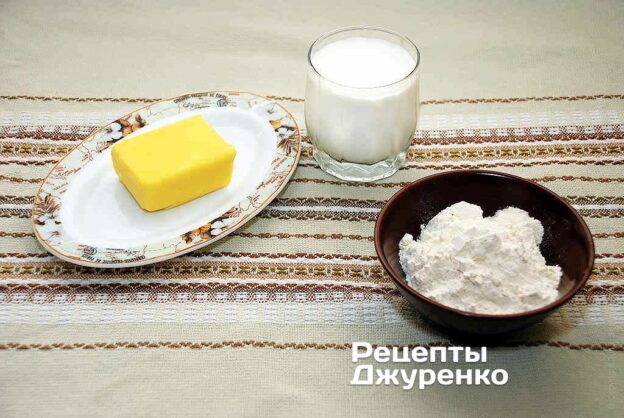
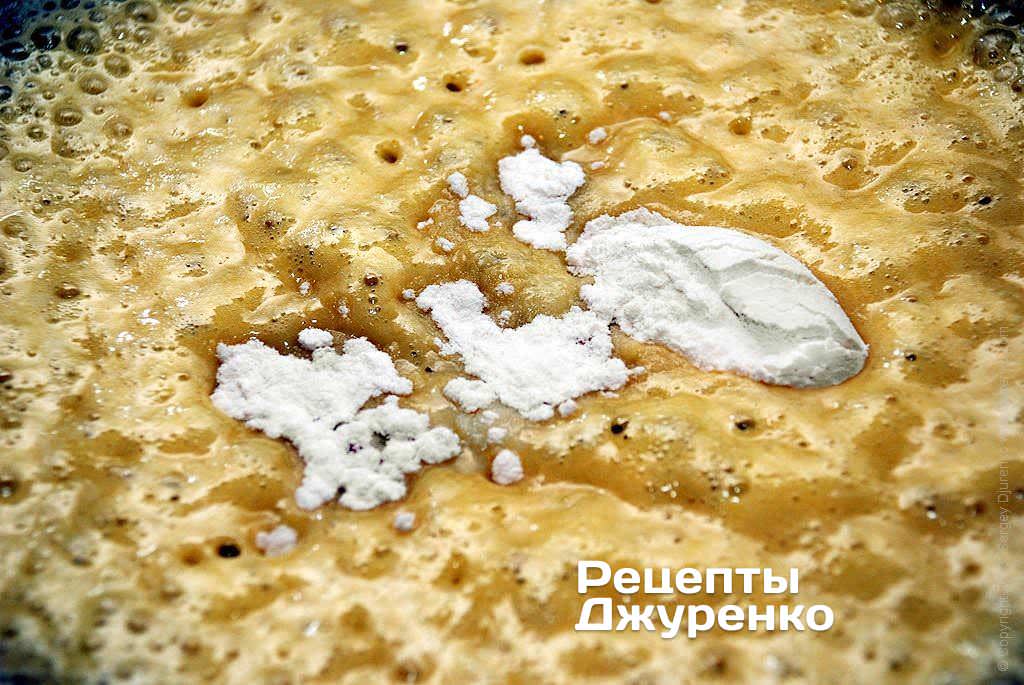
- But that's not so important. Melt the butter in a separate frying pan. Important: use butter, not spread or margarine. As soon as the butter melts and starts to bubble, add 1-1½ heaping spoonfuls of flour and immediately start stirring with a wooden spatula. The flour should combine with the fat and become very smooth. No lumps allowed.
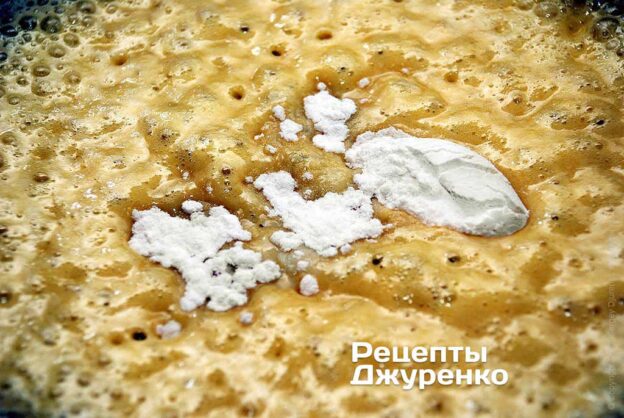
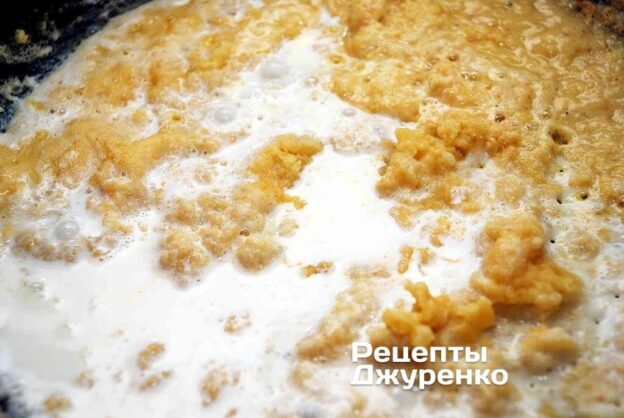
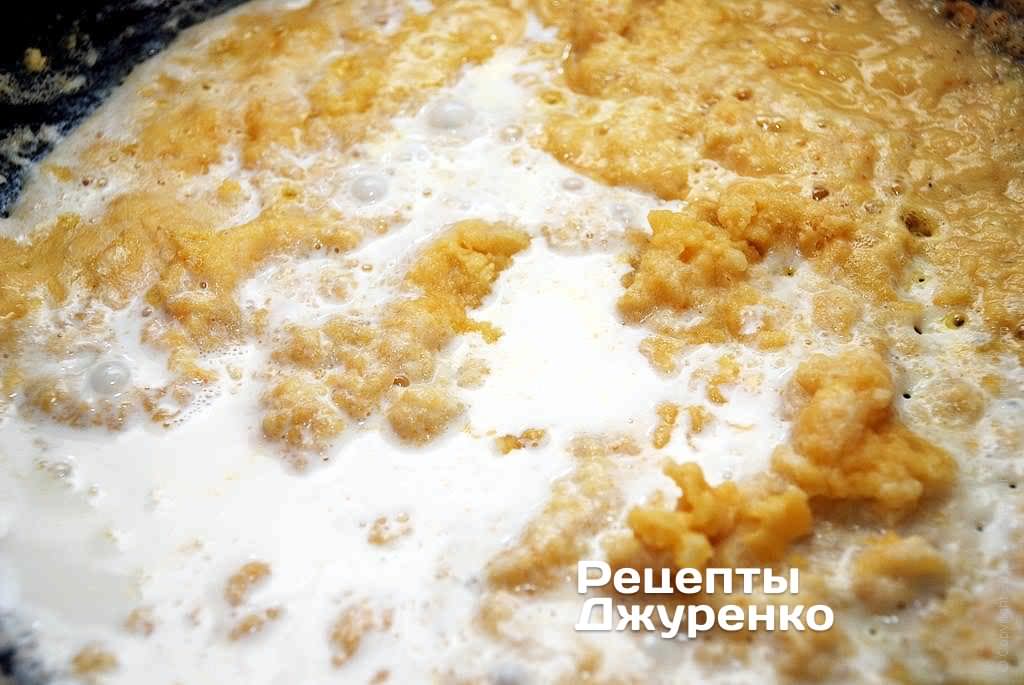
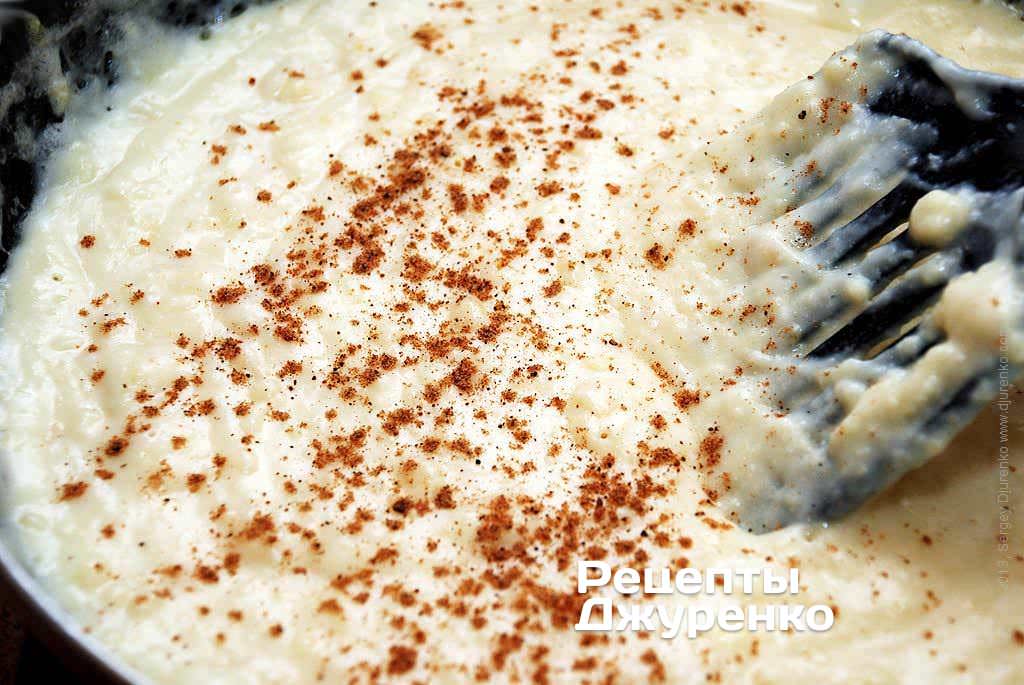
- Right away, stirring constantly, start pouring in cold milk in a thin stream, working out any lumps so the sauce is perfectly smooth. The amount of milk varies from time to time. The finished sauce should be slightly runny. Cook the sauce over the lowest heat for 10-12 minutes.
- Add a pinch of ground nutmeg and salt. By the way, a little black pepper also rounds out the flavor nicely.
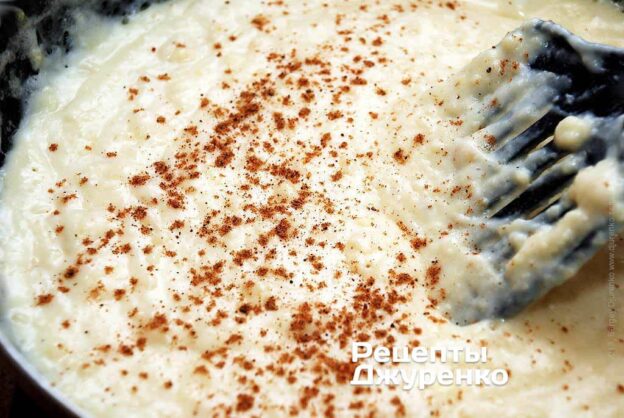
- If the sauce gets too thick, you can pour in a little hot milk. If it's too thin, those in the know recommend dropping a knob of butter rolled in flour into the finished sauce.
- How to layer lasagna
- The most interesting part of the whole process is layering it in the baking dish. Lasagna sheets come in all shapes and sizes. Get a ceramic or glass baking dish of the right size ready in advance. I specially bought a 20×20 cm square dish with high sides.
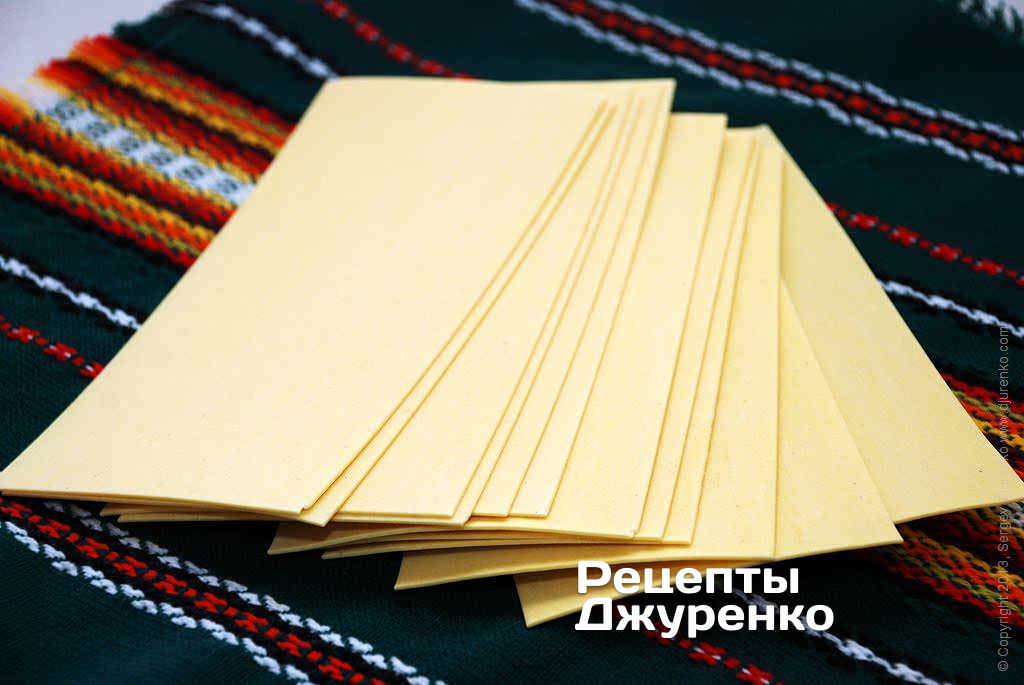
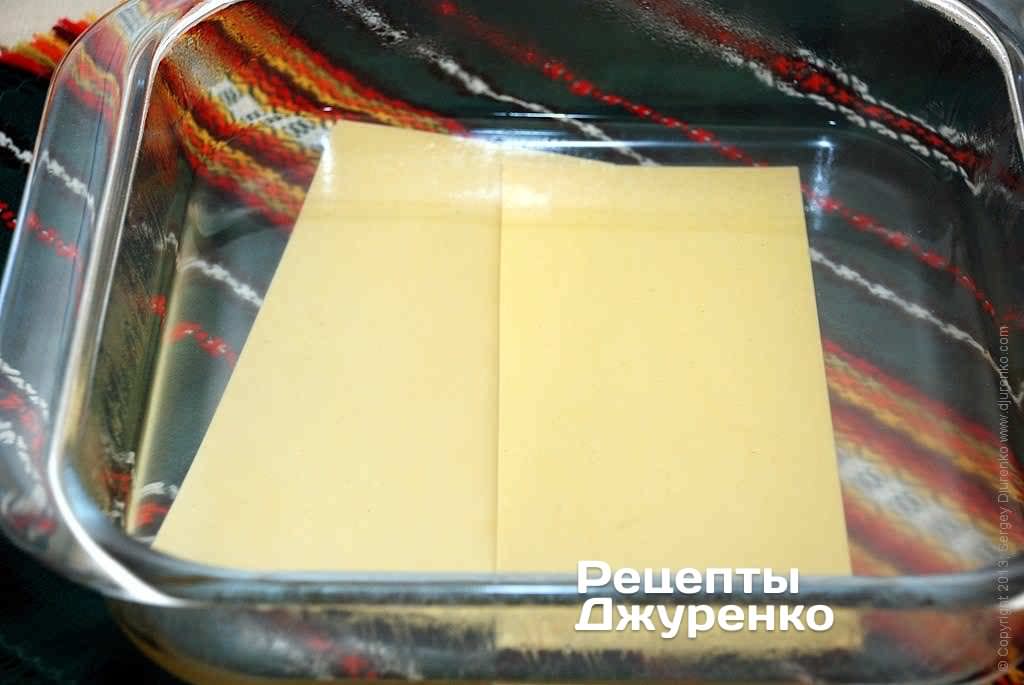
- Store-bought 10×20 cm sheets fit perfectly into a dish like that, two side by side. The pasta comes in two kinds. The first needs to be boiled beforehand. The second goes into the dish dry.

- I bought no-boil pasta, subito in forno. After a little thought, I decided to soak the lasagna sheets in hot water for a couple of minutes. As it turned out, though, that wasn't necessary.
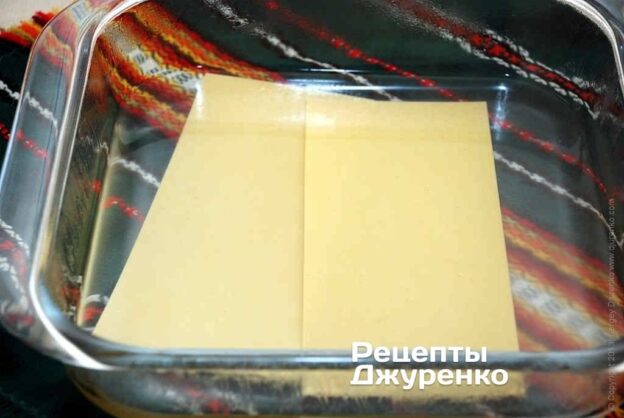
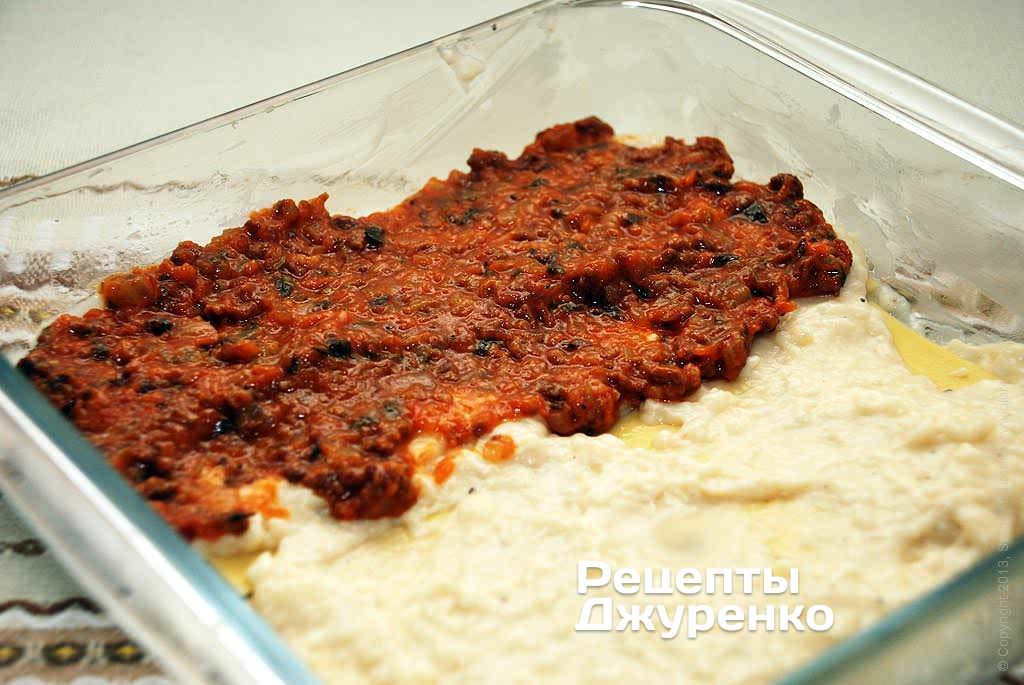
- Next, lightly grease the square dish with butter, especially the sides. Put 2 tbsp of the milk sauce on the bottom and spread it evenly over the whole surface. Lay two rectangular sheets side by side.
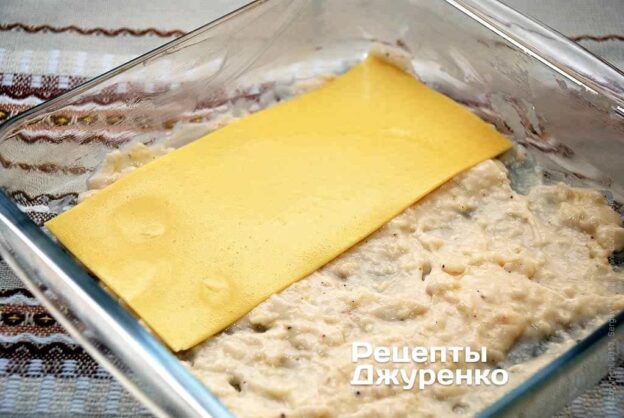
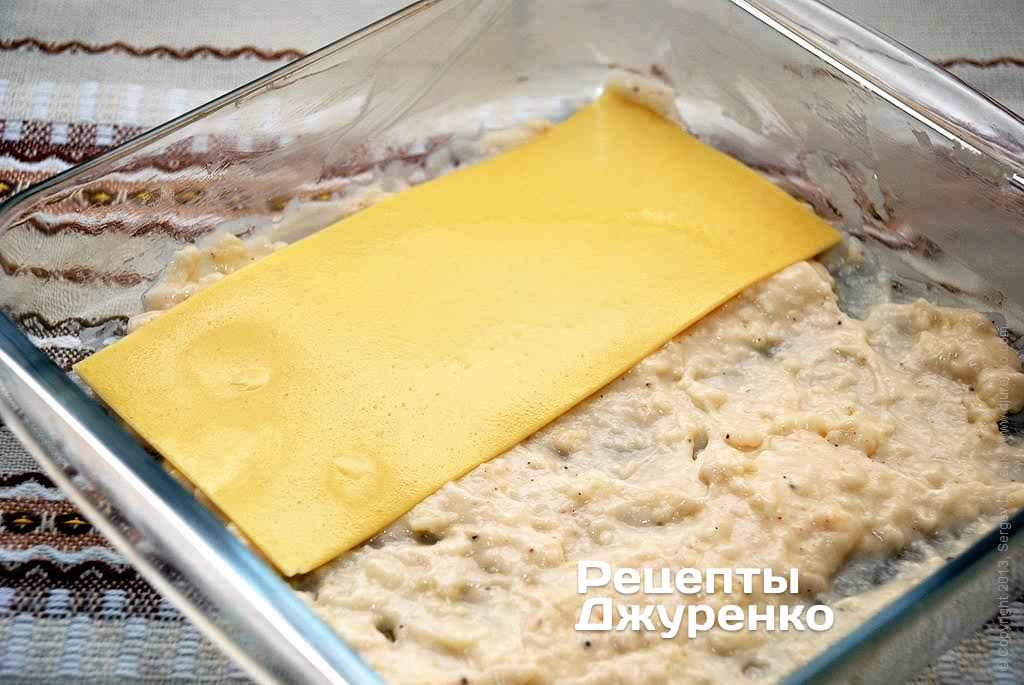
- Spread the pasta sheets with milk sauce. Spoon on some of the meat sauce. Important: lasagna usually has 5-6 layers of pasta, so the meat sauce has to stretch across 4-5 layers. Work out in advance how much meat sauce goes on each layer so there's enough. If some is left over, no big deal.
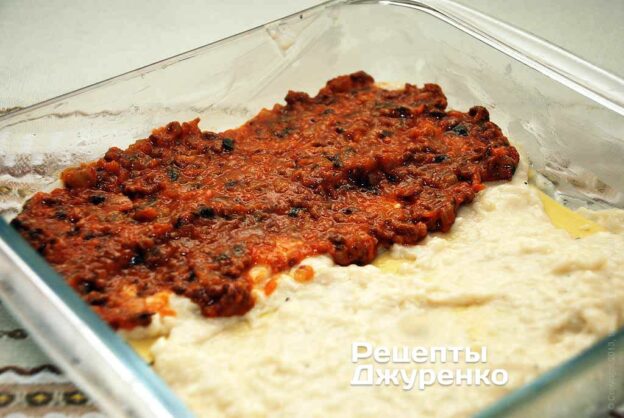
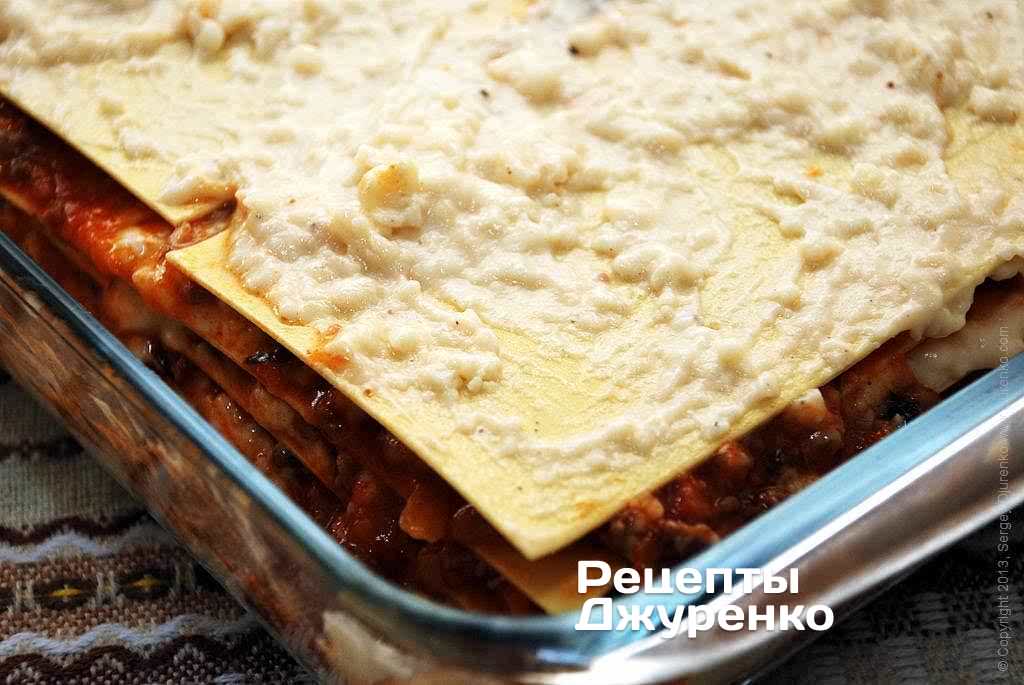
- Spread the meat sauce over the whole surface and cover the filling with two more pasta sheets. I recommend laying each layer of pasta perpendicular to the one before. And one more tip: the pasta swells quite a bit as it cooks. So don't lay the sheets too close together or right up against the sides. Leave a gap.
- From here, the routine is simple. Lasagna sheets, milk sauce, meat sauce, sheets, and so on. The last, topmost layer of pasta gets only milk sauce.
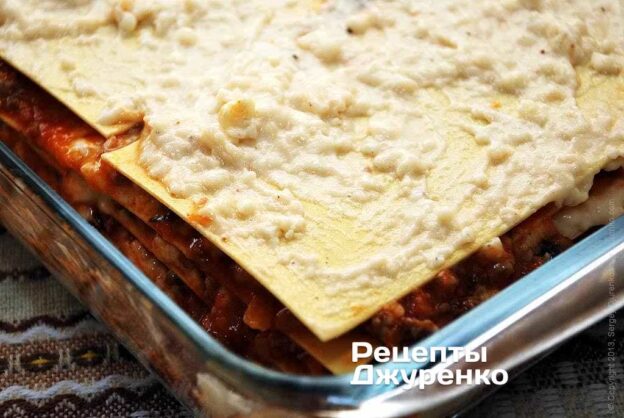
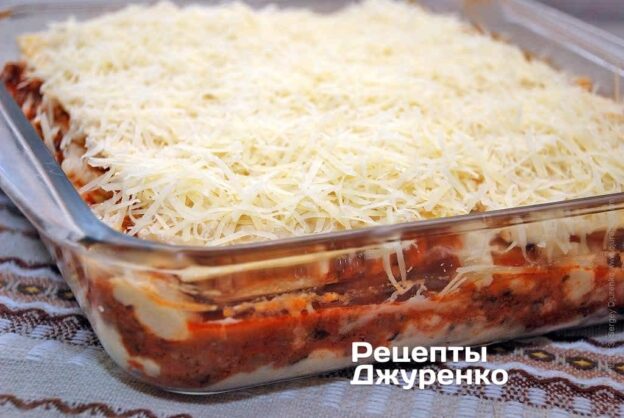
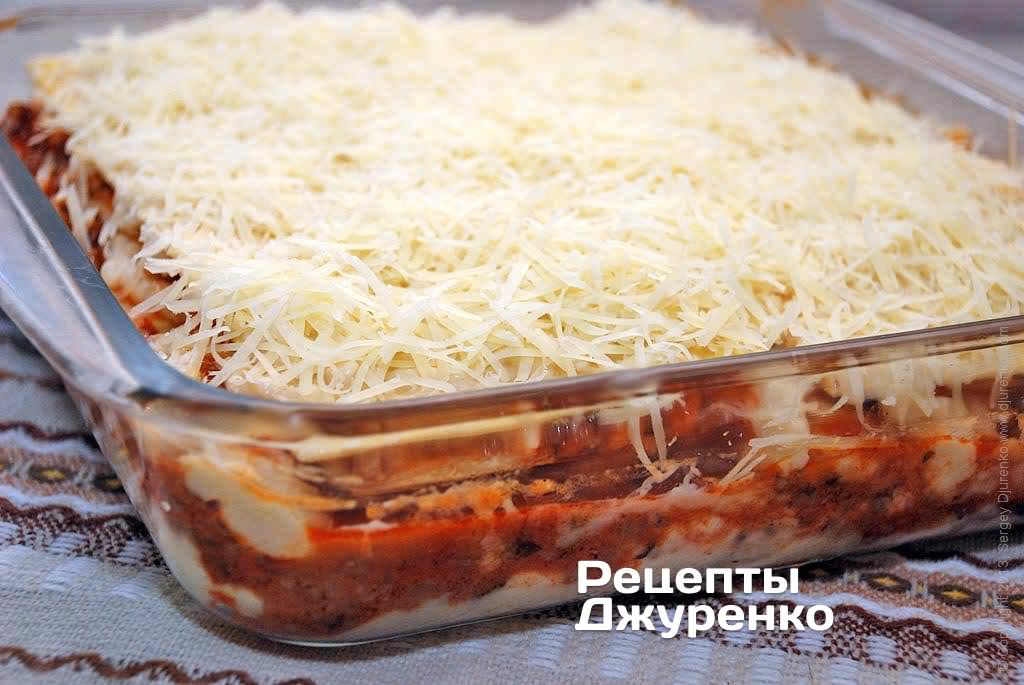
- Be sure to sprinkle with grated cheese. Parmesan goes best with meat sauce, although mozzarella and ricotta are used too.
- How to bake lasagna and how long it takes
- This part is dead simple. The pasta package gives the time and temperature. No need to reinvent the wheel, since only the pasta needs cooking. The sauces are completely ready to eat. Go ahead and set the temperature and put the lasagna in the oven for the time given. You can't go wrong!
- My lasagna baked for 40 minutes at 220°C.
- Cut the finished dish into 4 pieces right in the dish and carefully run a knife around the sides to loosen it. Notice that the pasta has swelled and filled the gaps along the sides. If you lay the pasta right up against the sides, it'll push up over the edges.
- Using a wide, flat spatula (or even two), transfer a portion of lasagna to a large plate, which you can warm a little beforehand.
- Serve hot, right away. Then again, it's also very tasty reheated.
- If the labor-intensive process didn't scare you off, lasagna will make you and your loved ones happy.
- Some time later, I tried to simplify this lasagna recipe, cutting the prep time down to 50 minutes. That recipe will come a bit later.
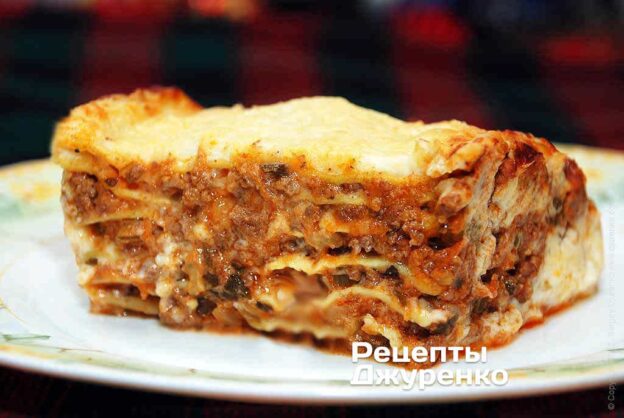
- One more thing. I don't claim this recipe is authentic. Any recipe is like sheet music that two musicians will play completely differently, and lasagna is no exception.
| Serves: | 4 servings |
| Calories: | 135 |
| Prep: | 3 h |
| Cook: | 1 h |
| Total: | 4 h |
| Category: | Main Dishes |
| Cuisine: | Italian cuisine |
| Rating: |
⭐
⭐
⭐
⭐
⭐
4.9
(4)
|