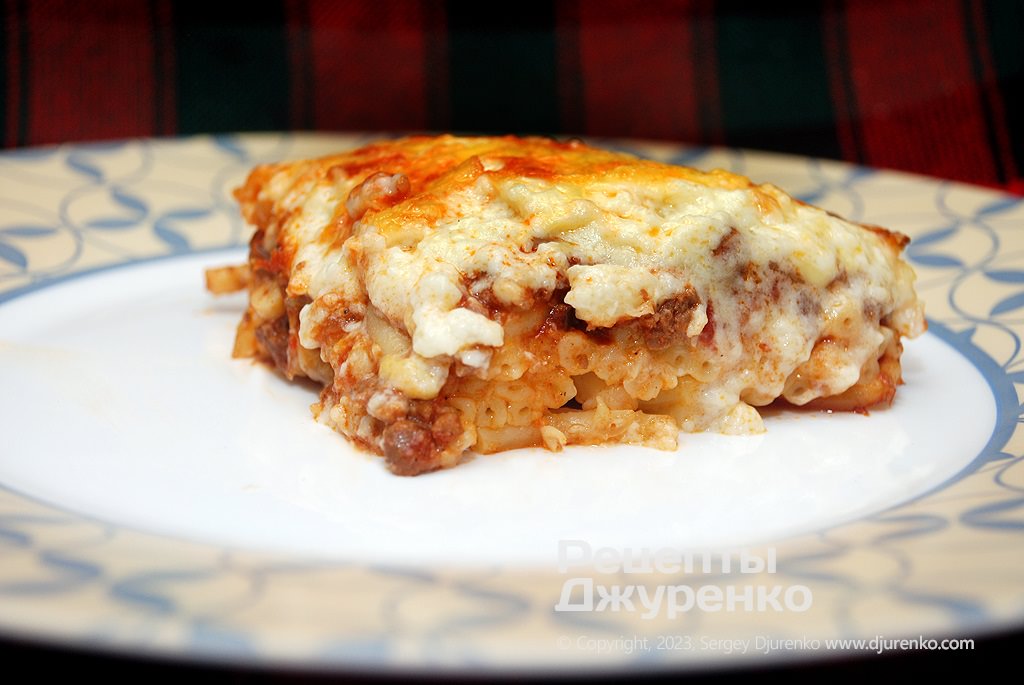
Pastitsio with Beef, Pasta and Béchamel Sauce
Ingredients
4 servings
- Macaroni (bucatini, penne) 200 g
- Water for boiling the pasta 2 l
- Salt for boiling the pasta 14 g (7 g per 1 l of water)
For the meat sauce
- Beef (lean) 400 g
- Onion 1
- Garlic 1-2 cloves
- Tomato paste 1 tbsp (17 g)
- Tomato pulp 200 g
- Butter 50 g
- Salt, black pepper, allspice, nutmeg to taste
For the béchamel sauce
- Butter 50 g
- All-purpose flour 1-2 tbsp (10–20 g)
- Milk 0.5 l
- Salt to taste
For baking
- Hard cheese (cheddar, Gouda) 100 g
- Black pepper to taste
- Butter for greasing the dish
For serving
- Lettuce leaves optional
Step-by-step recipe
Meat sauce
Greek pastitsio consists of a layer of cooked pasta with black pepper and cheese, a layer of meat sauce, and a béchamel topping. The top is often sprinkled with cheese, which I really like. You can make the sauces and prepare the pasta at the same time. Then all that’s left is to assemble the casserole and put it in the oven. The total cooking time rarely takes more than an hour.
For the meat sauce we use veal or beef, from the shoulder or the hind leg. This meat is lean and has little connective tissue. For meat sauces we traditionally use red onion.
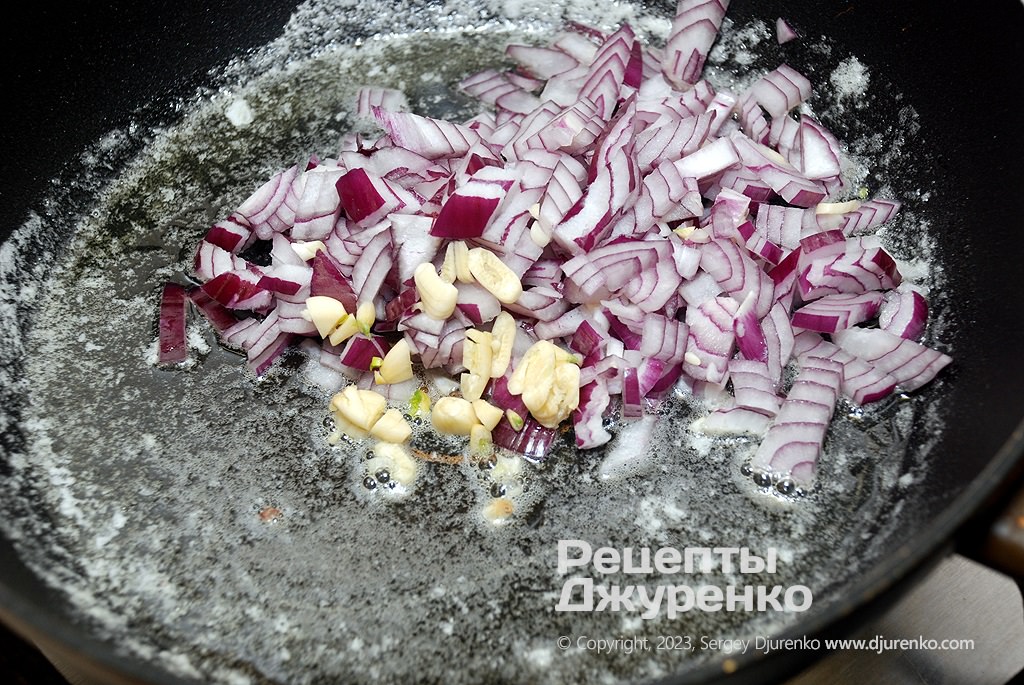
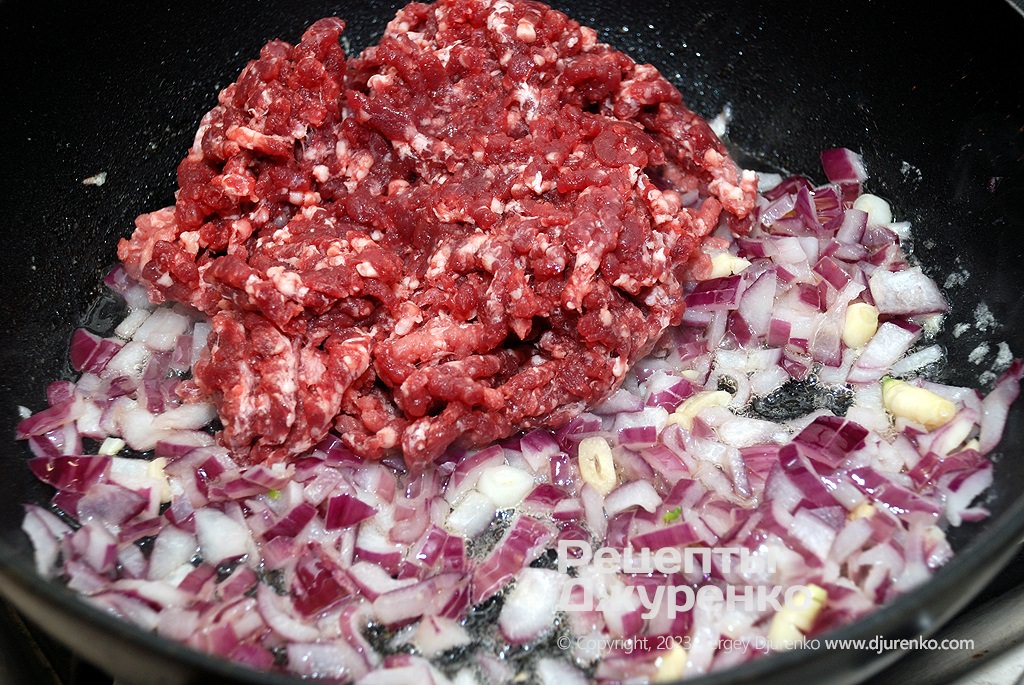
Prepare the ingredients: grind the beef through a meat grinder, twice if you like. Peel and finely chop the onion and garlic.
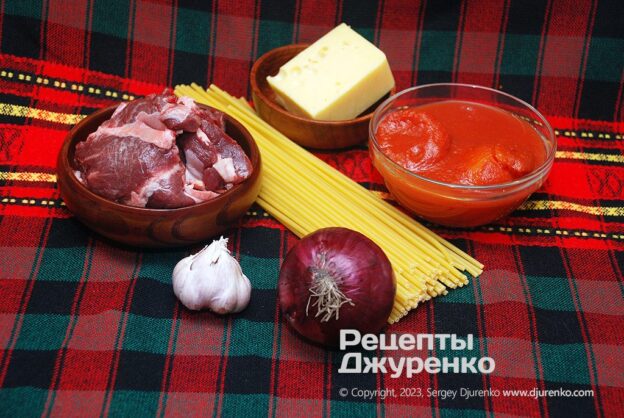
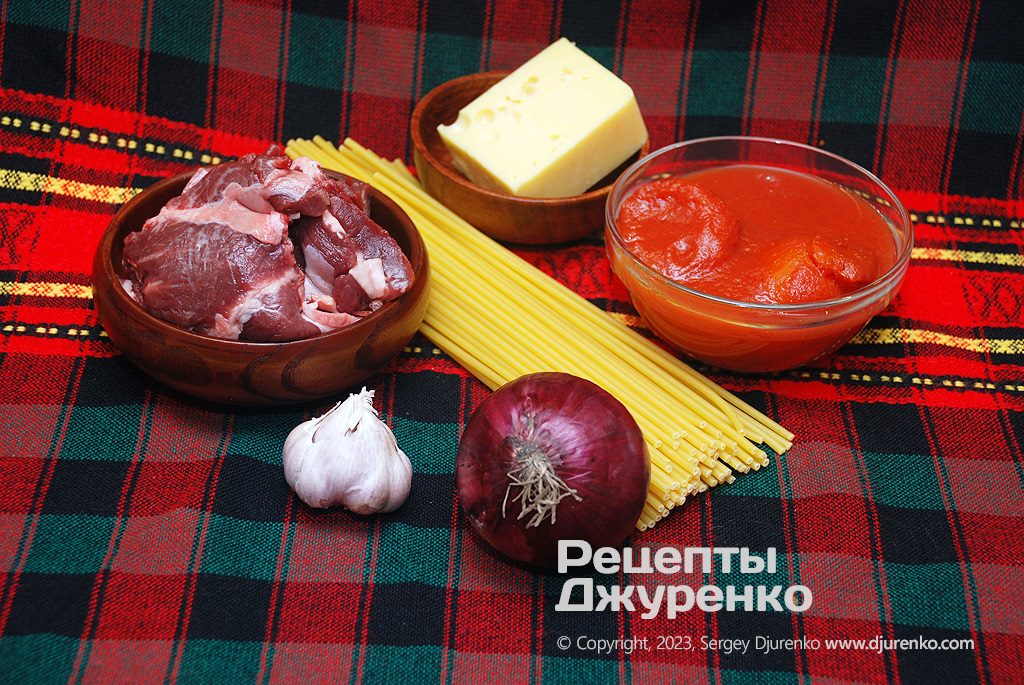
Fry the onion and garlic, then the ground meat with tomato paste. Melt the butter in a skillet over medium heat and fry the onion and garlic in it until soft.
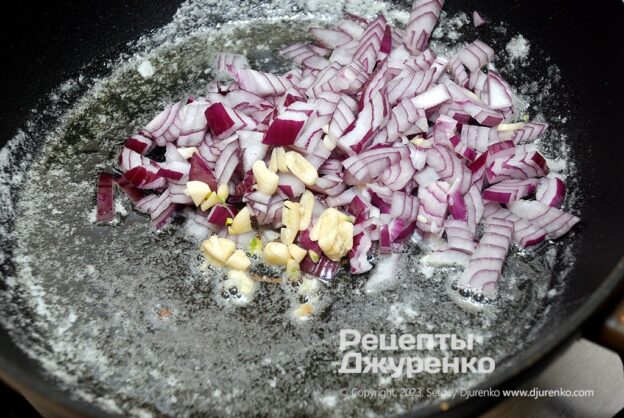
Next, add all the ground meat to the onion. Small bits of meat tend to stick together, so at the very beginning mix the onion and meat vigorously to get a more even mass. Fry the beef with the onion until the meat releases its juices and turns lighter.
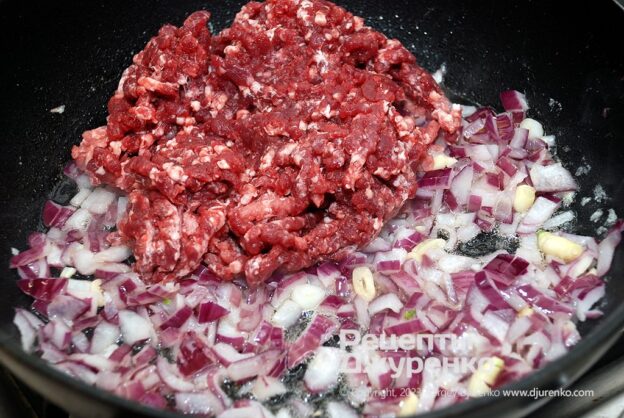
Add 1 level tbsp of tomato paste (17 g); it will noticeably deepen the flavor of the meat sauce. Fry the meat with the tomato for 2-3 mins.
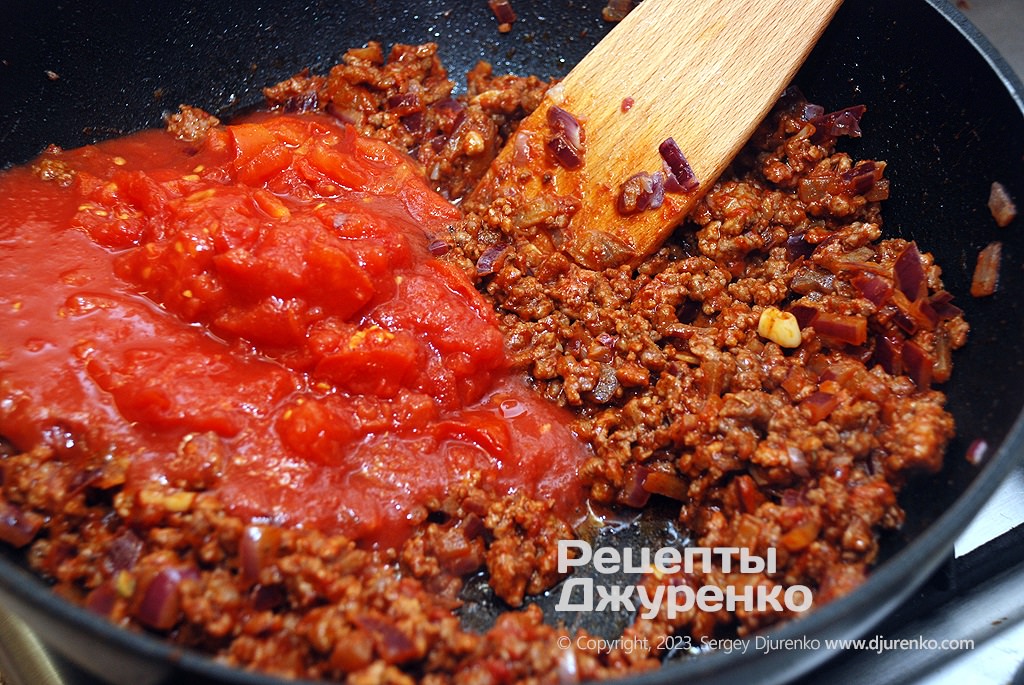
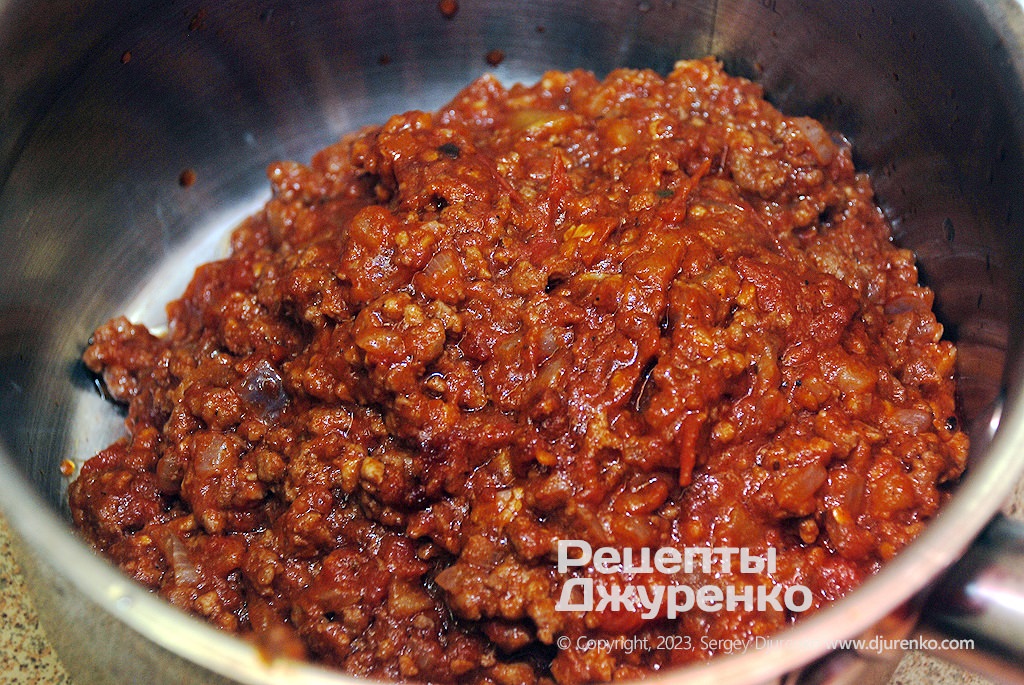
Season the sauce and add the tomatoes. Add a little salt and pepper. Also add ground allspice and nutmeg to taste. For this amount of ingredients, a pinch of spices on the tip of a knife is usually enough. Stir the meat and add the tomato pulp, pureed, fresh or canned. Don’t add water to the sauce. In fact, the sauce should be quite thick, otherwise the pastitsio will turn runny and won’t hold its shape.
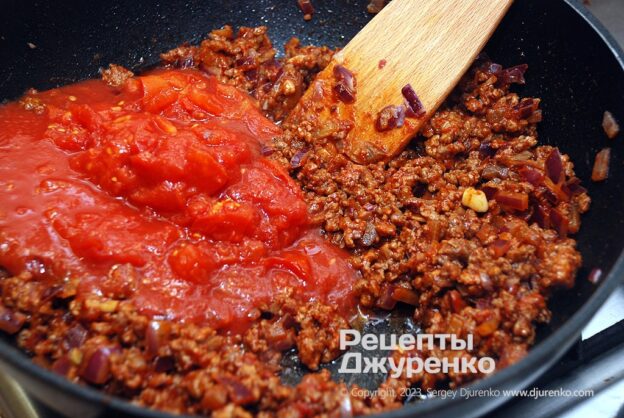
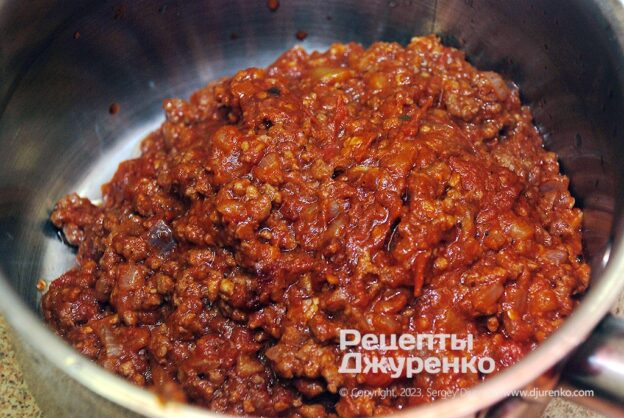
Stew the tomato and beef sauce over above-medium heat under a lid for 20 mins, until the meat is tender. If the sauce is too thin, at the very end turn up the heat and take off the lid so the excess moisture evaporates. Red wine is often added to the sauce, and there are many such variations; in that case you can’t avoid reducing the extra liquid. Take the finished sauce off the heat and let it cool until warm but not hot.
Pasta
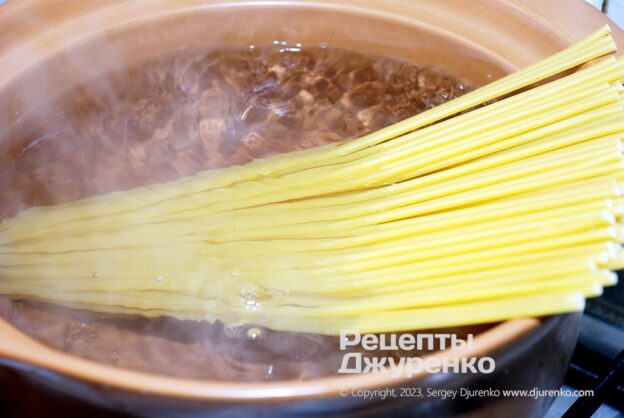
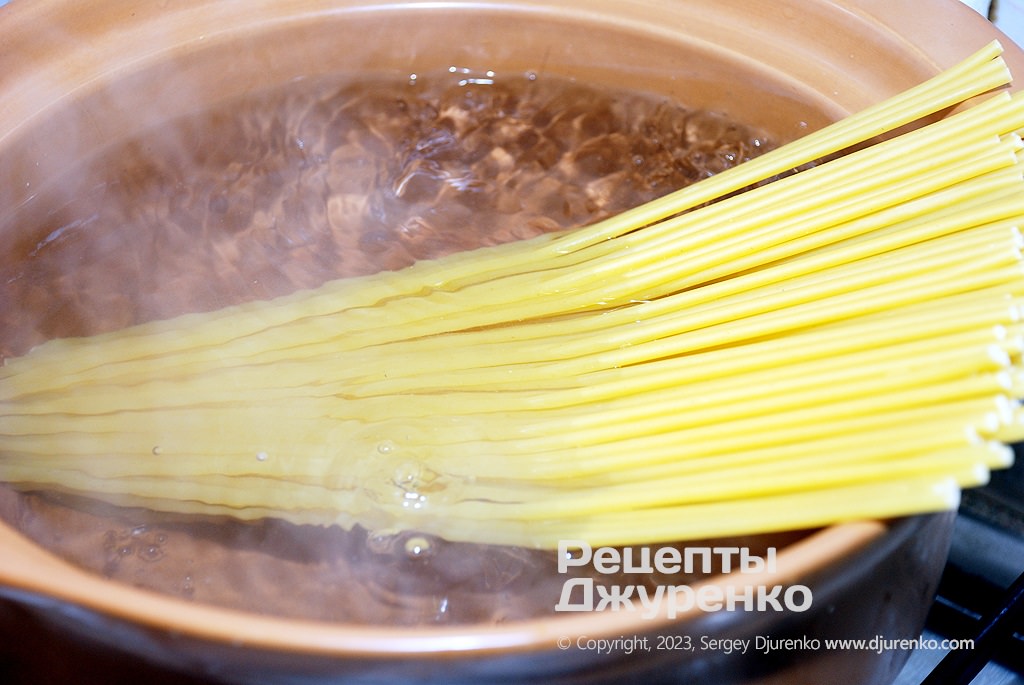
Bucatini, a tubular pasta, is best for this casserole. It looks like thick spaghetti (spaghettoni) with a hole running through the middle. Any tubular pasta will do, though, such as penne.
Boil the pasta in 2 l of salted water, with 14 g of salt (7 g per 1 l). The cooking time is on the package; the manufacturer guarantees al dente in that time. Drain the pasta in a colander and cover it with a towel or an upturned plate.
Béchamel sauce
There’s nothing complicated here; it’s no different from the one made for lasagna.
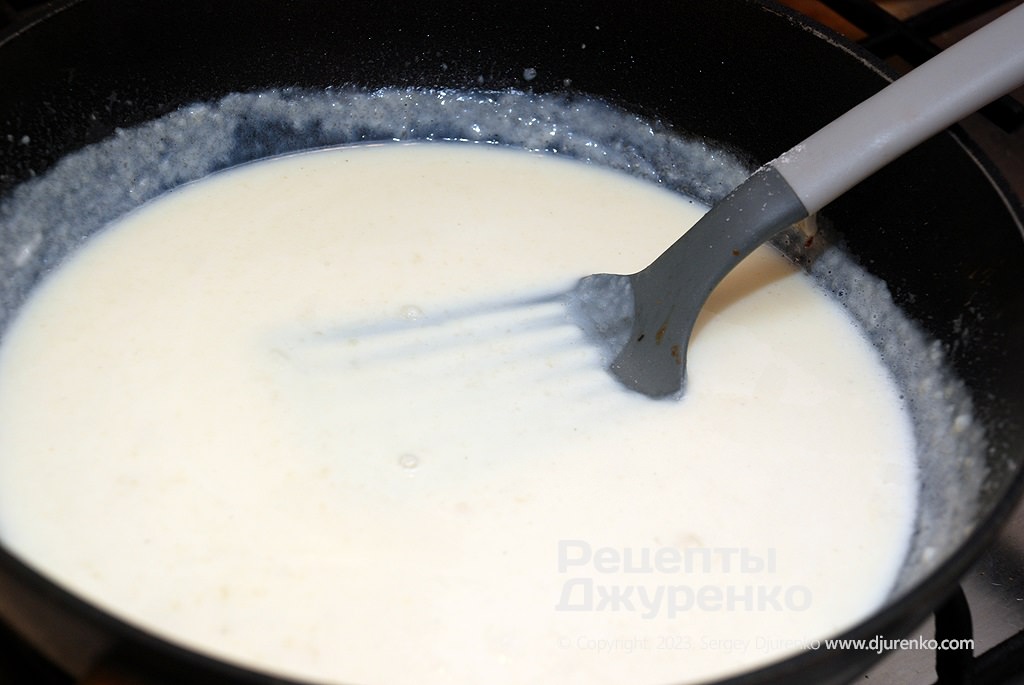
Make the base of the sauce. Melt the butter in a skillet. When it starts to bubble, sift in a full spoonful of flour through a sieve. Mix the fat and flour thoroughly; what you get is called a roux. Stirring constantly, add cold milk in small portions; ordinary store-bought milk with 2.5-3% fat works. It’s important that the milk is real, otherwise you’ll be unpleasantly surprised.
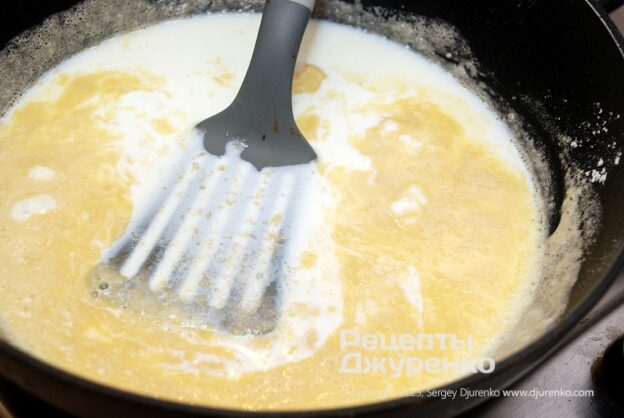
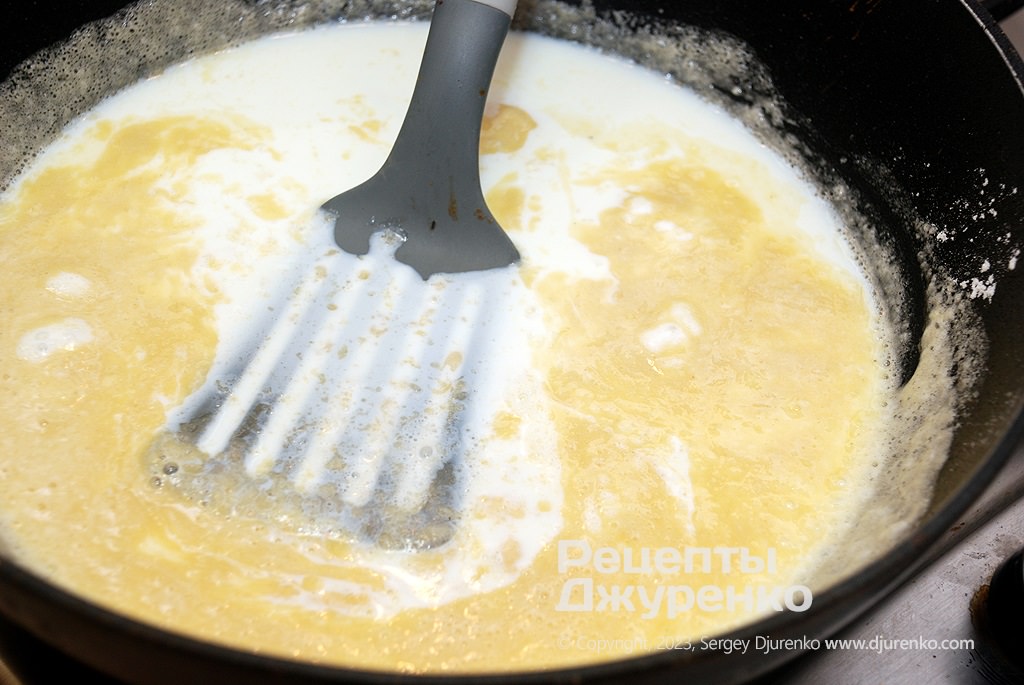
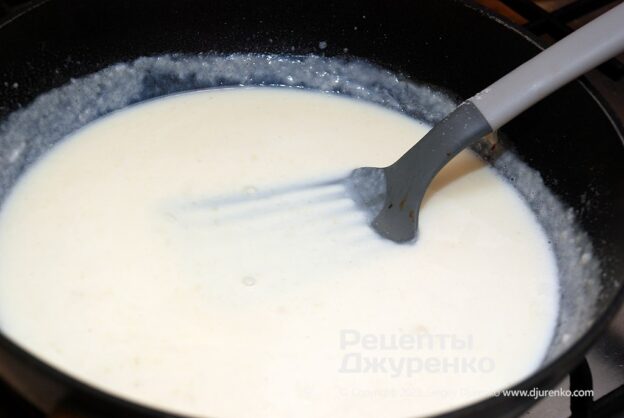
Bring the sauce to the right thickness. Add a little salt. If the béchamel is too thick, add milk until it’s about the consistency of slightly thick sour cream. If it’s too thin, add a little flour, or roll a piece of butter in flour and add it to the skillet. Let the sauce simmer for 2-3 mins, take it off the heat and let it cool slightly.
Assembling and baking
All that’s left is to assemble the casserole and put it in the oven. For the layers we use a square dish 20 cm wide and about 6 cm deep, which comfortably holds the amount of ingredients given.
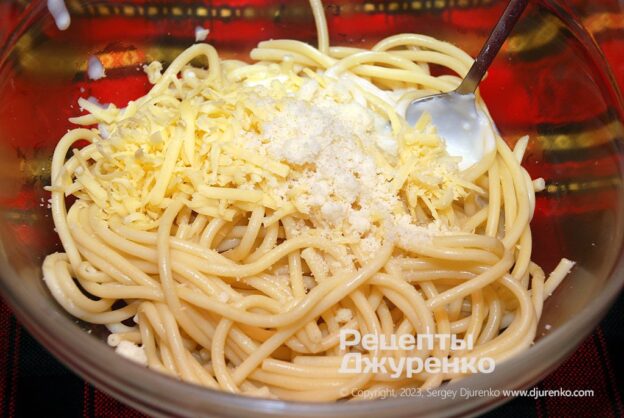
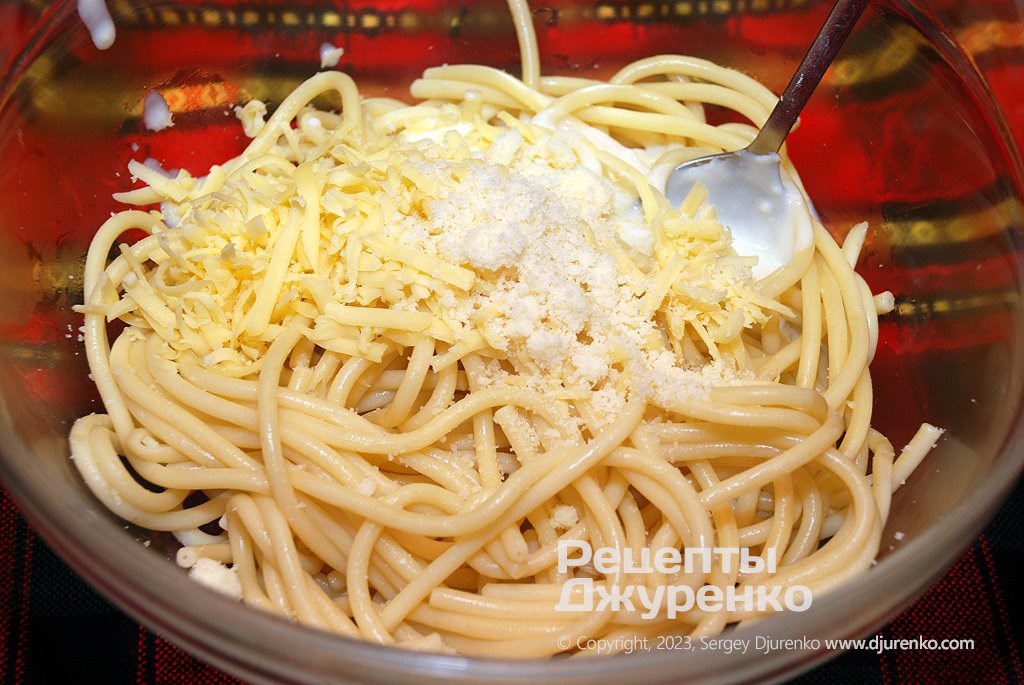
Put a layer of pasta in the dish. Grease the bottom and sides of the dish with a little butter. To the cooked pasta add black pepper, a third of the grated cheese and 1-2 tbsp of the finished béchamel. Mix the pasta, put it in the dish and press it down lightly with a spatula.
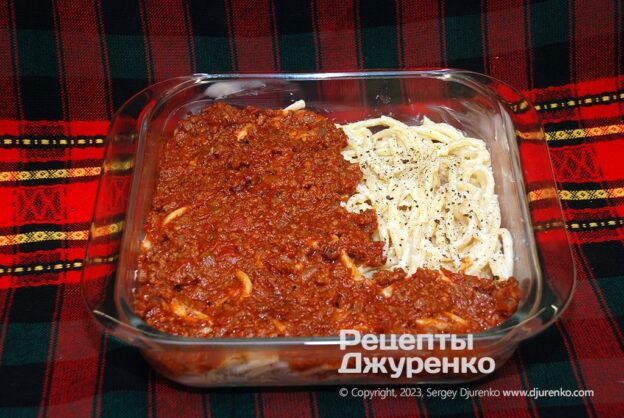
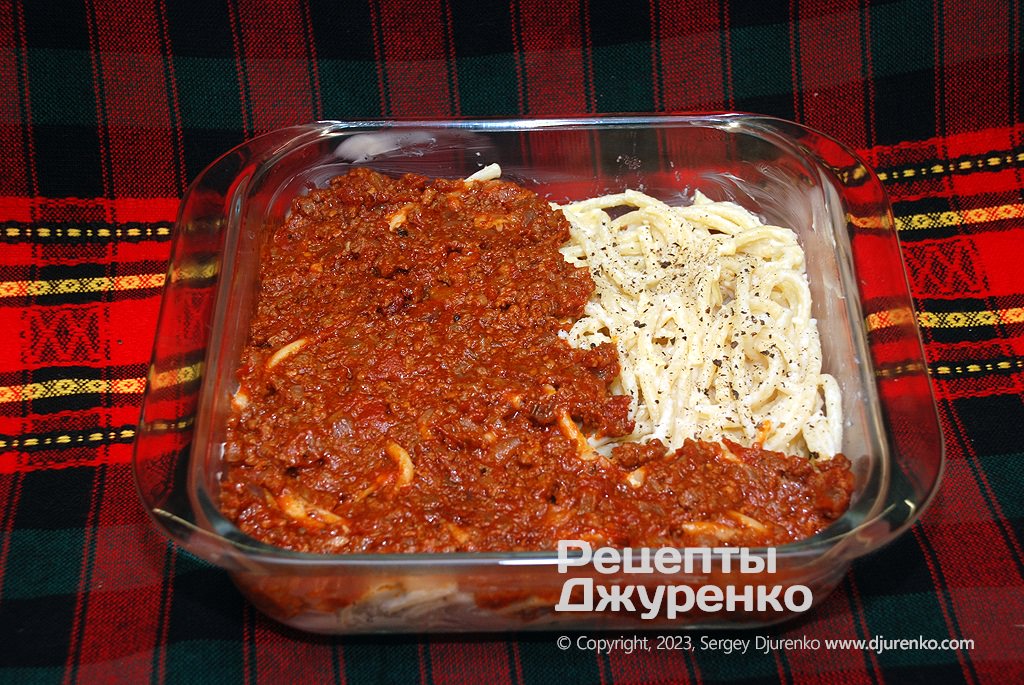
Spread all the finished meat sauce over the layer of bucatini, press it down lightly and level it.
If you’re making a large pastitsio, build two layers each of pasta and sauce, alternating. Increase the amount of ingredients proportionally.
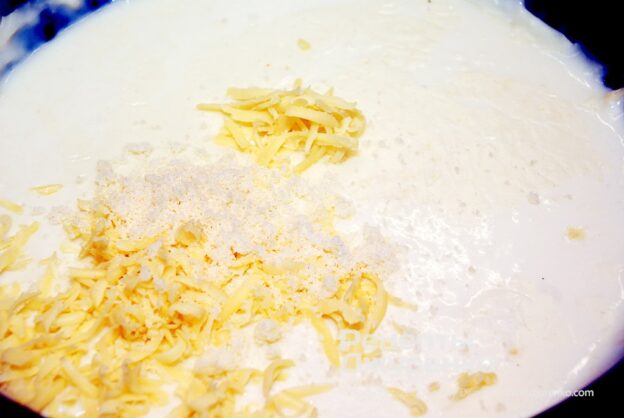
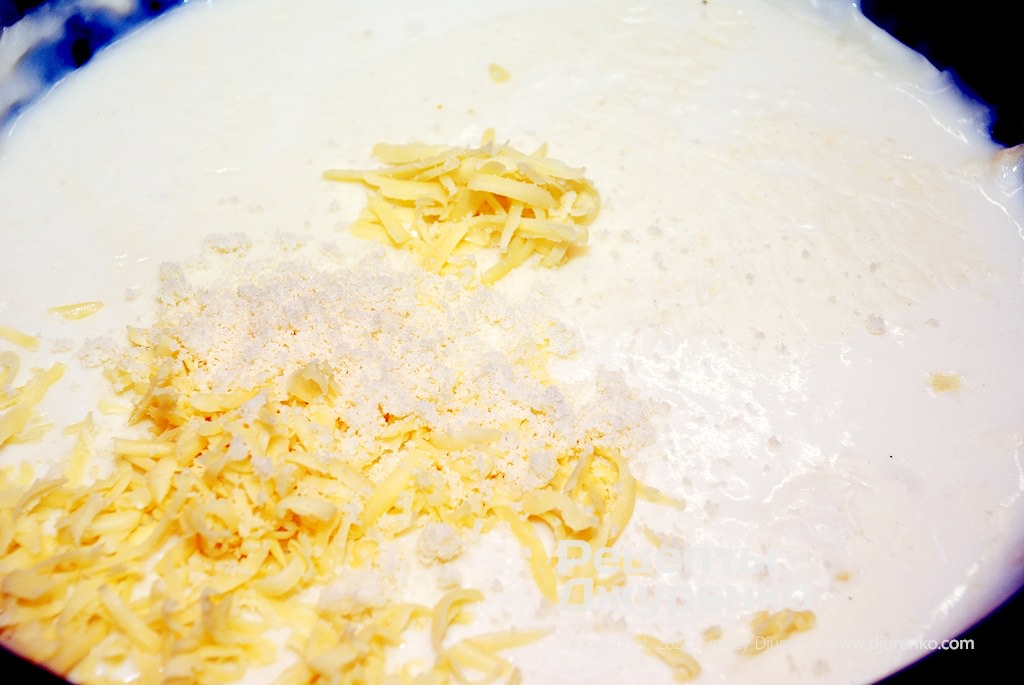
Cover the casserole with béchamel. Add a third of the grated cheese to the cooled béchamel and stir. Carefully spread a thick layer of the white sauce with cheese over the meat sauce. Level the surface. Often the casserole is finished at this point. I like a baked cheese crust, so I sprinkle all the remaining cheese over the top.
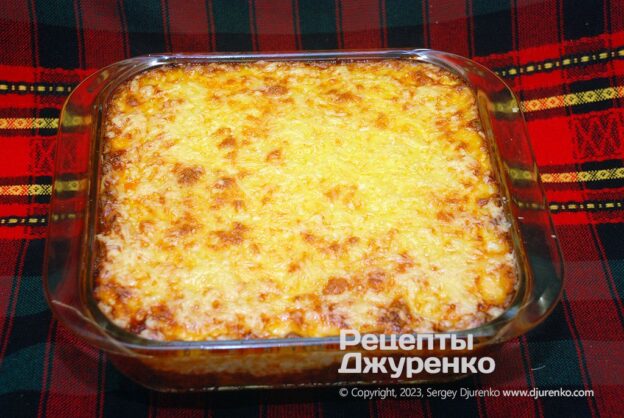
Put the dish in an oven preheated to 180-190°C. The casserole will be fully done in 25-30 mins. Go by the color of the sauce or cheese surface: it should start to turn golden. Take the dish out of the oven; be careful, it’s very hot.
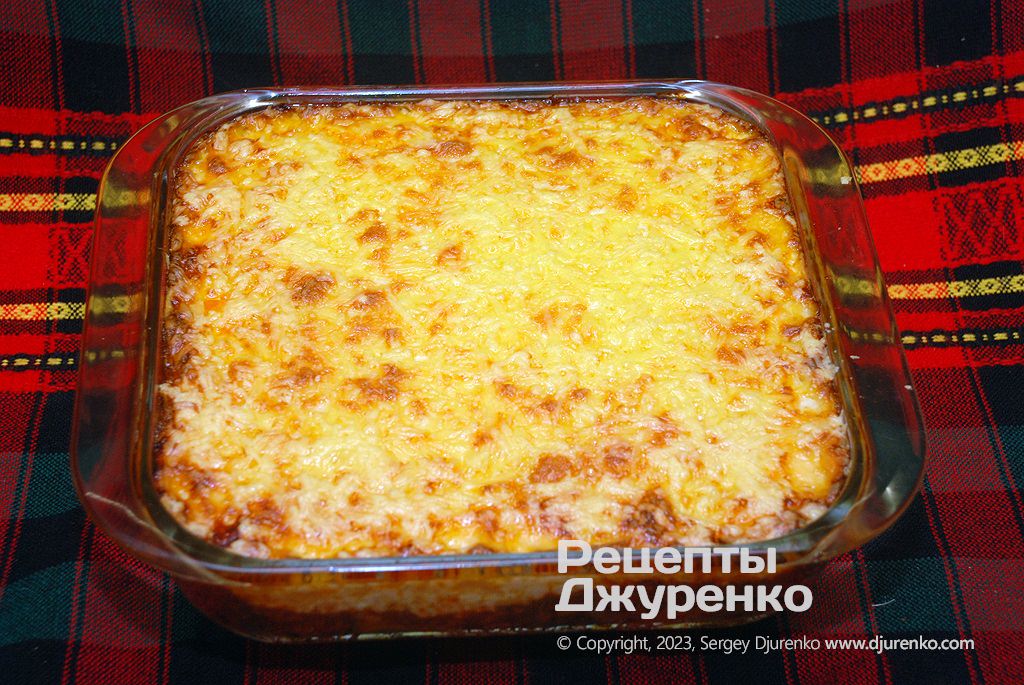
Serving
Cut the finished casserole into squares with a sharp knife. A small spatula makes it easy to move portions to a plate without losing the layers. Traditionally, this pasta and meat casserole is served with lettuce leaves, if you like.
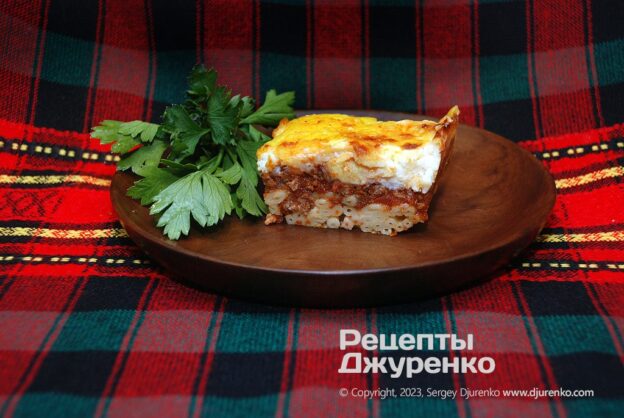
The sauce doesn’t always include meat; there are many vegetable versions, with broccoli, cauliflower, corn, carrots and other vegetables. There are meat sauce recipes without tomato. The filling often includes a lightly beaten egg, which makes a firmer casserole.
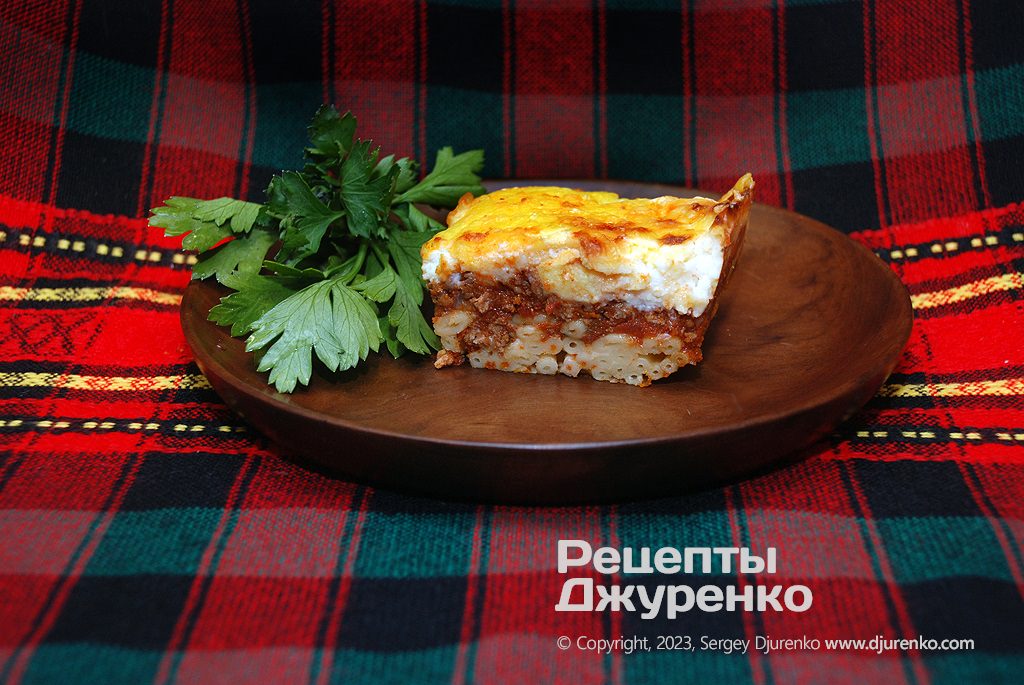
Calories and macros
785 kcal
Serving ≈ 310 g
- Protein38 g20% of kcal
- Fat47 g55% of kcal
- Carbs49 g26% of kcal
100 g253 kcalProtein 12.3 gFat 15 gCarbs 15.8 g
Calculated from the recipe ingredients, excluding salt and spices. Data: USDA and Matvaretabellen.