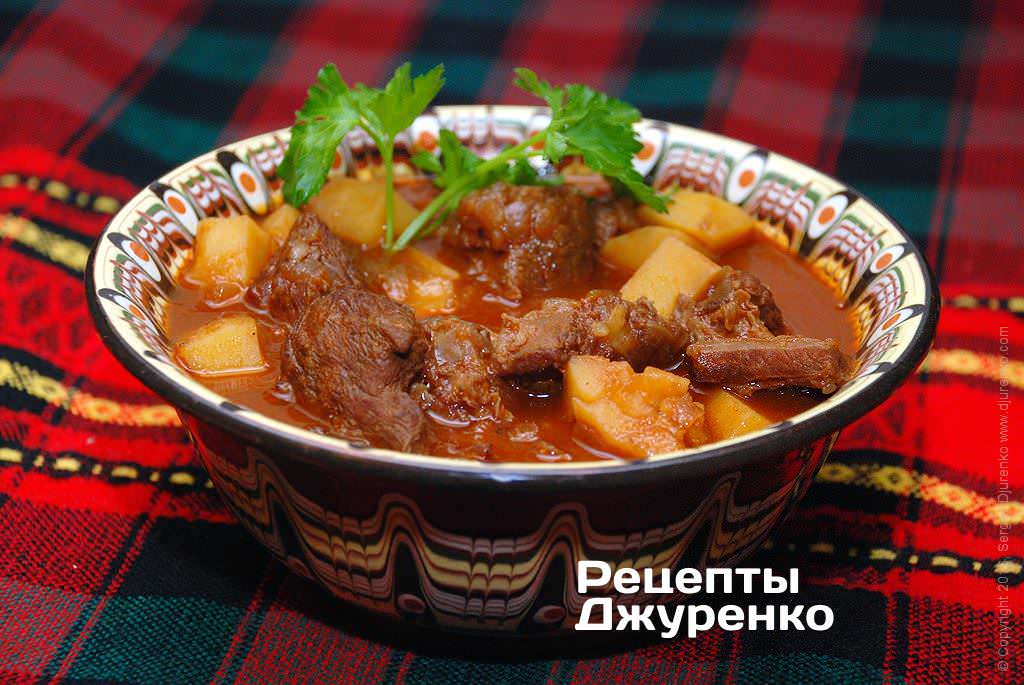
Hungarian Beef Goulash with Potatoes and Paprika - Recipe
Anyone who rereads Jaroslav Hasek's immortal novel “The Good Soldier Svejk” at every opportunity has come across a dish called goulash many times over.
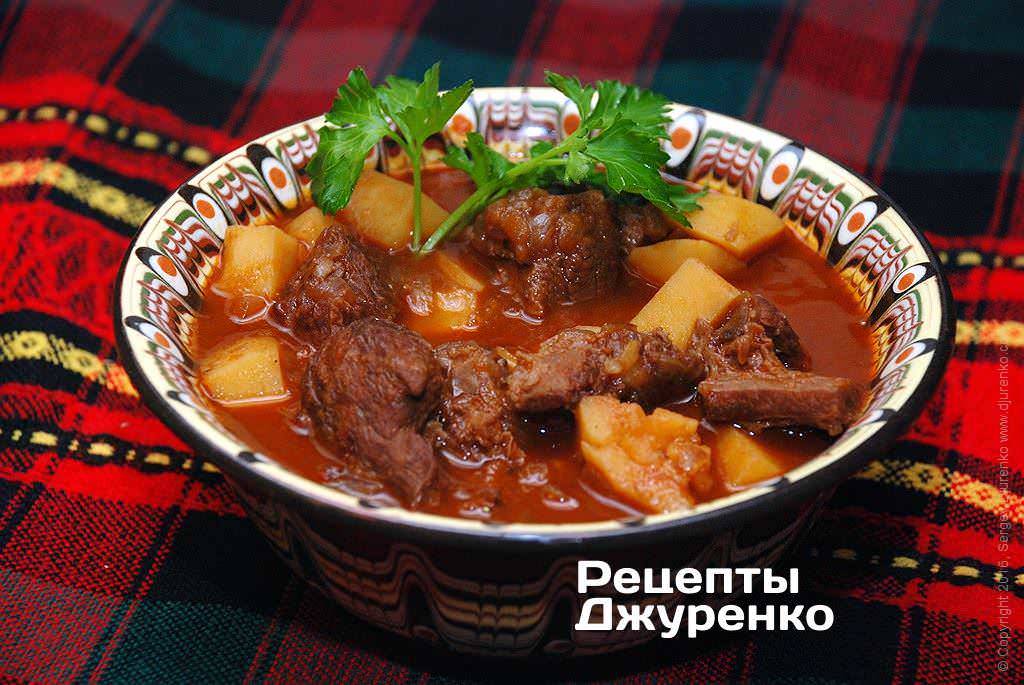
Goulash (Hungarian: gulyas) is the national dish of Hungary. It is a thick soup, a kind of meat stew: plenty of onion and paprika, potatoes, chunks of meat and tiny pinched dumplings called csipetke, which hardly anyone bothers to add.
It is a remarkable dish, and it can be cooked in just as many different ways. Karoly Gundel, the reformer of modern Hungarian cooking, gave only the general principles of goulash in the foreword to his book, noting that porkolt has more onion and is braised, tokany has less onion and paprika and the meat is cut into strips, paprikas is a dish similar to goulash but finished with a sour cream sauce, and so on.
Goulash is rarely cooked to an exact recipe; every cook has their own tricks and fine points. The finished dish depends a great deal on the quality and cut of the meat, on the method and, of course, on the paprika. Paprika is the dried and ground ripe pods of a mild pepper grown in Hungary and all over the world. As it happens, every thick meat dish seasoned with paprika is automatically called goulash around the world, which does the dish something of a disservice. Then again, there are as many recipes as there are cooks.
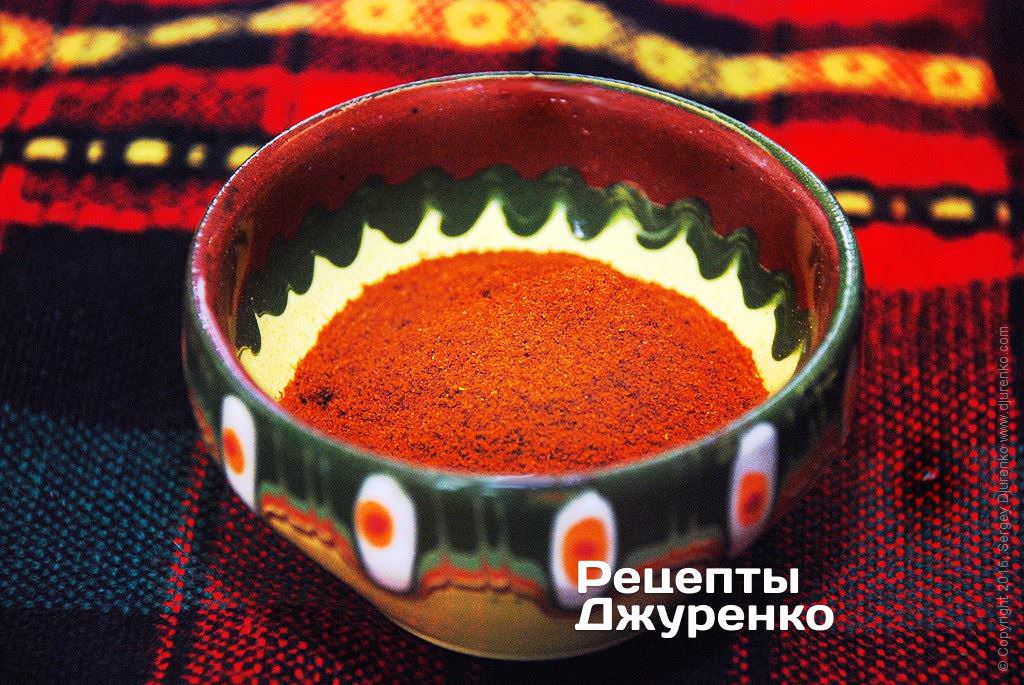
In cooking, the so-called noble and rose paprikas are used: bright red, with a pleasant spicy flavour and not hot at all, whatever many people think. Red does not mean fiery.
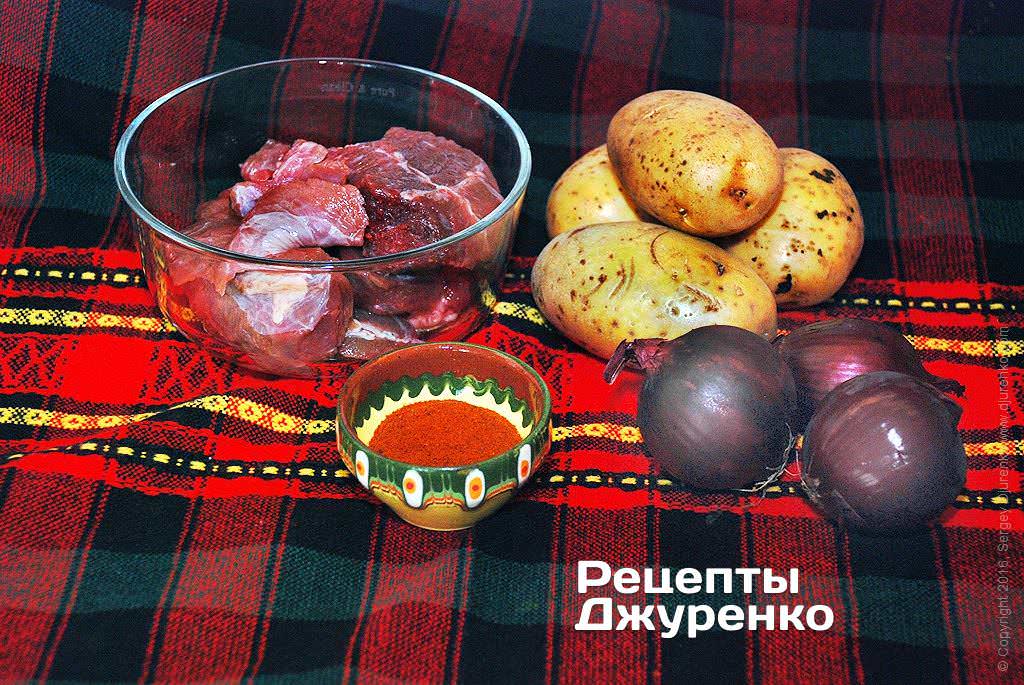
Since all goulash recipes look alike but are actually quite different, there is no point in overcomplicating this dish. Beef, onion, potatoes and paprika. Everything else is to taste.
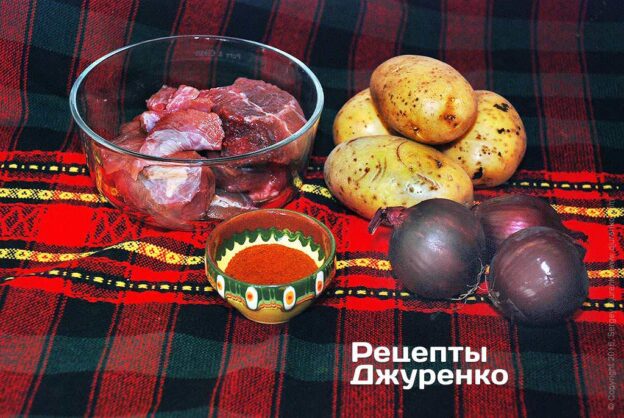
Ingredients
2 servings
- Beef 400 g
- Potatoes 2-4
- Onions 2-3
- Sweet ground paprika to taste
- Tomato optional
- Butter or a piece of pork fatback 30 g
- Salt to taste
Step-by-step recipe
- It is best to take young beef: boneless shoulder or a cut from the hindquarter. The dish turns out even better with meat from the loin. Shops often sell ready-cut beef labelled “goulash”: pieces already cut to 35-40 g each.
- Render the fat from the pork fatback in a deep saute pan. Or, as an alternative, melt a small piece of butter. By and large it makes no real difference, though many would argue with that.
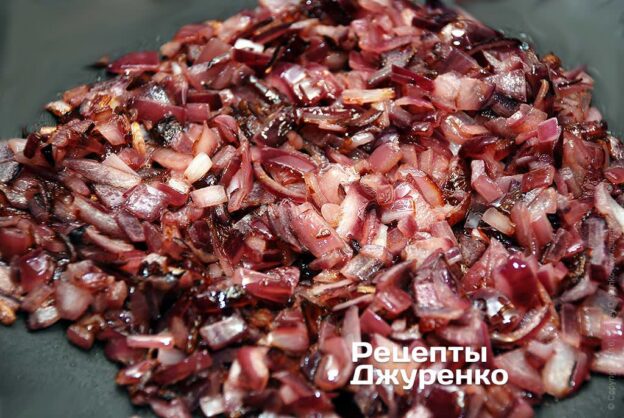
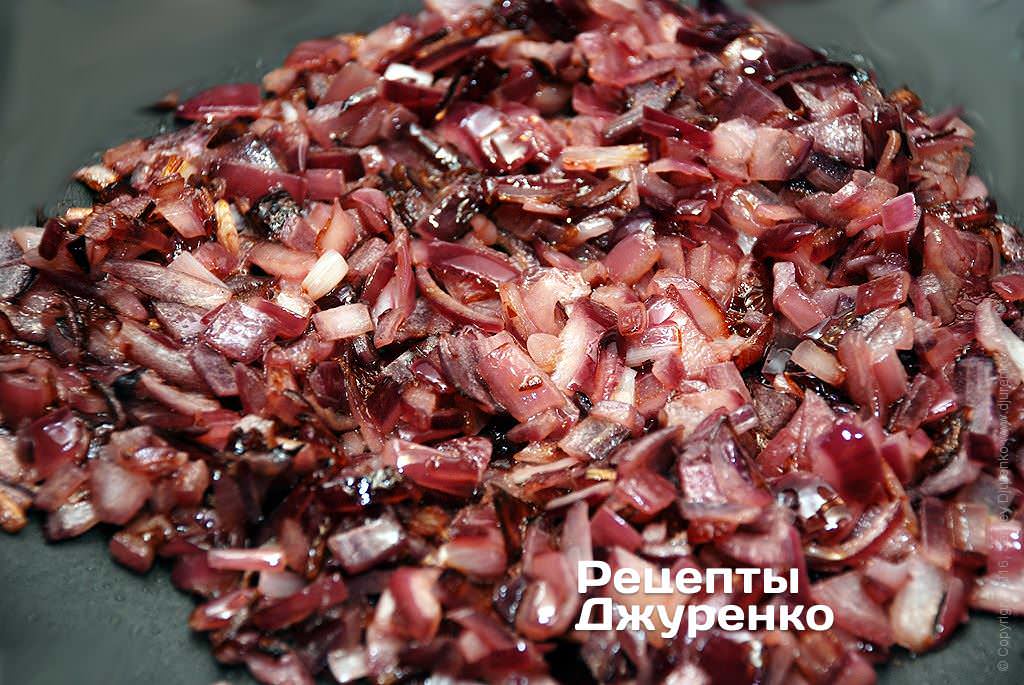
- Peel the onion and cut it into small dice. Put the chopped onion into the hot fat and fry it until soft, stirring vigorously.
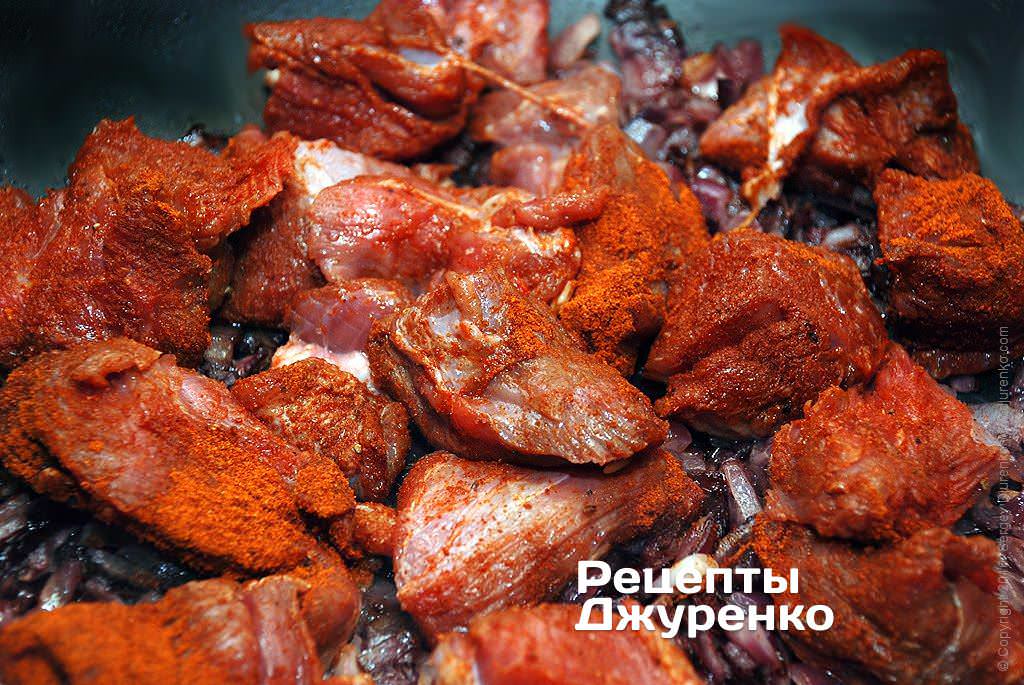
- Wash the beef thoroughly, removing any membranes, bits of bone and sinew, and cut it into pieces of 30-40 g. Salt the beef lightly and sprinkle it with sweet red paprika, up to 1 tsp.
- The amount of paprika is up to you, but keep in mind that the sweet paprika is what gives the finished goulash its colour.
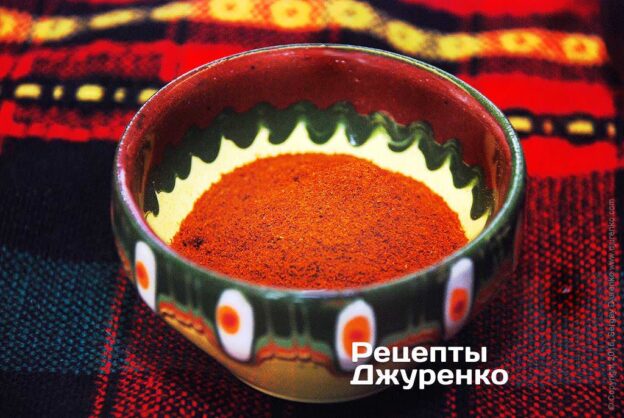
- Add the beef to the fried onion and keep frying everything for 2-3 mins. People often write that paprika must not be fried. Yes, that is quite right. Paprika, especially good paprika, contains a lot of sugars, which break down and caramelise when fried in fat. But a few minutes of frying cold meat will not spoil anything. By the way, when bograch is made, the sweet paprika simmers in the rendered fat right at the start.
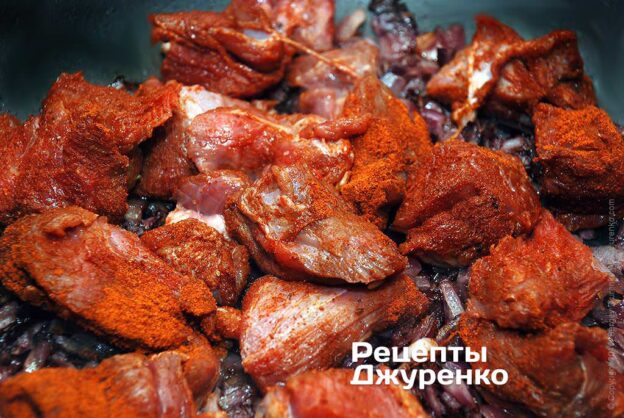
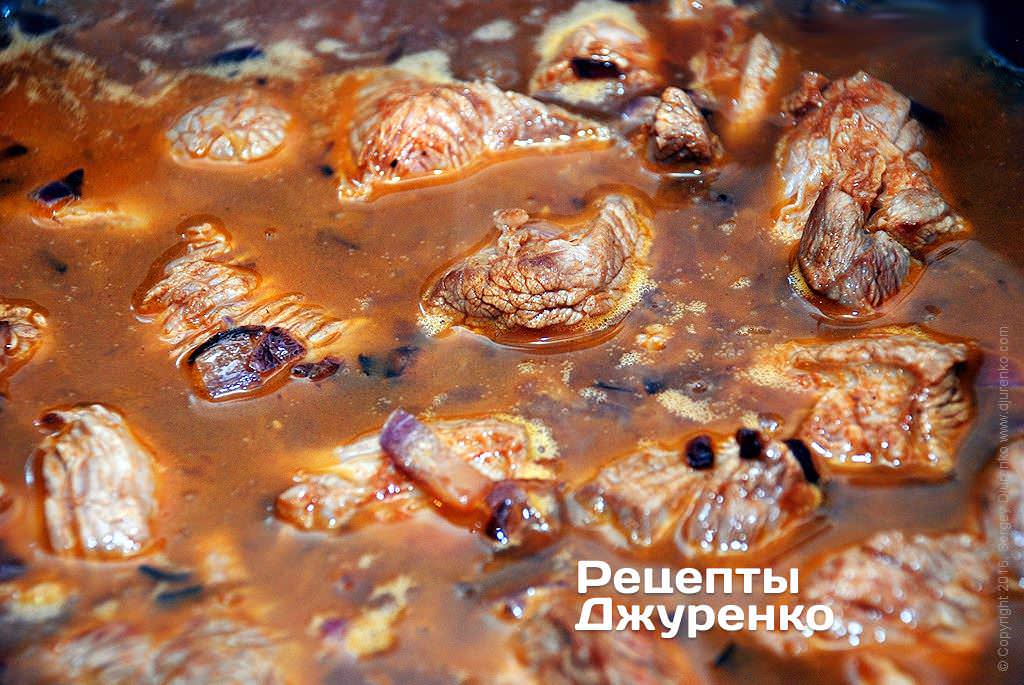
- Pour liquid over the onion and beef: water or stock. For this amount of beef 2 cups will be enough. The beef should stew over a low heat, barely simmering. Cover the pan with a lid and stew the beef until fully cooked, topping up the liquid as needed. How long the beef takes is anybody's guess. Sometimes good, tender beef is completely done in 30 mins. And sometimes even 1.5 hours is not enough. Only one thing matters: the beef must be cooked through.
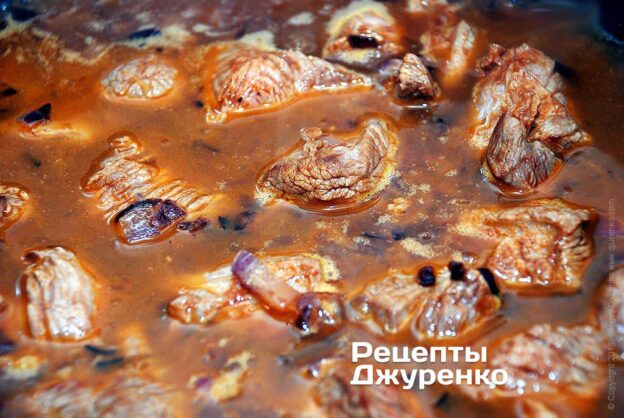
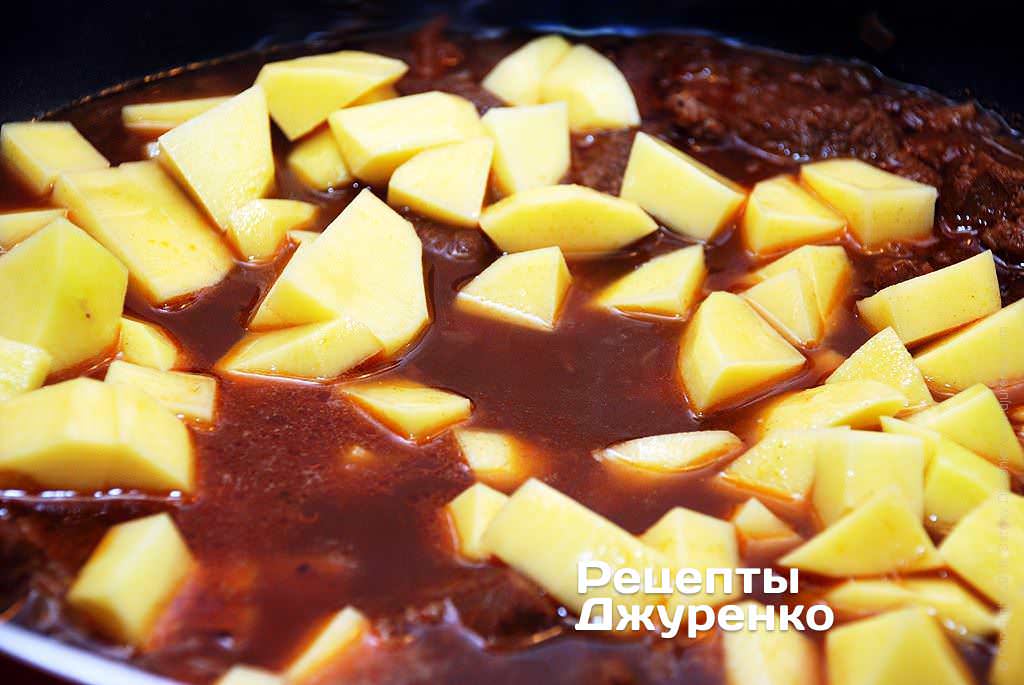
- Peel the potatoes and cut them into medium dice. Thick batons are fine too.
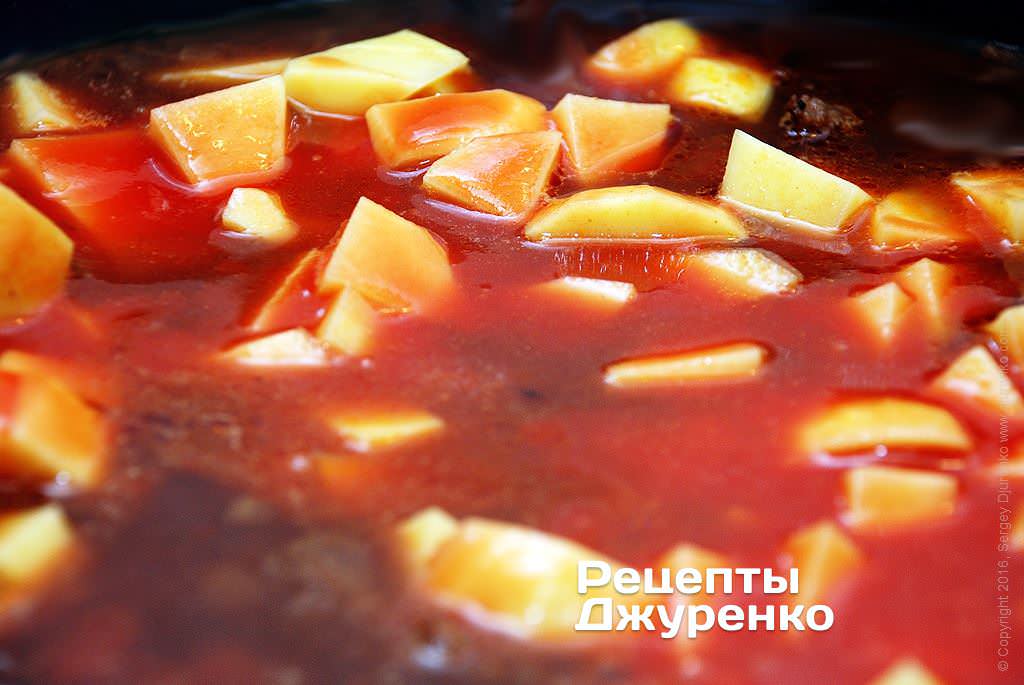
- When the meat is done, add the chopped potatoes. Add a little more liquid and, if you like, the tomato.
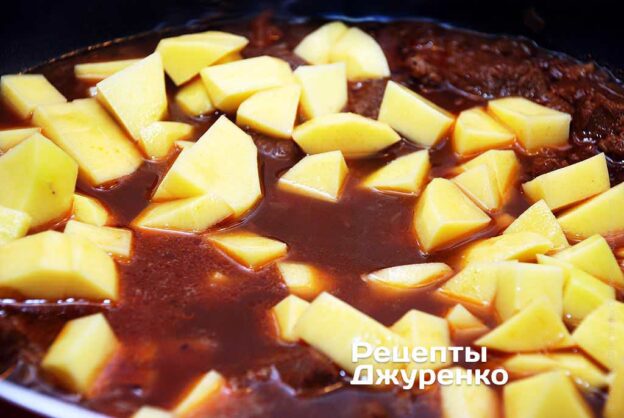
- A small, very ripe tomato is best, skinned and seeded, with only the finely chopped flesh going in. Out of season you can make do with 1 tsp of good tomato paste or 0.5 cup of tomato juice.
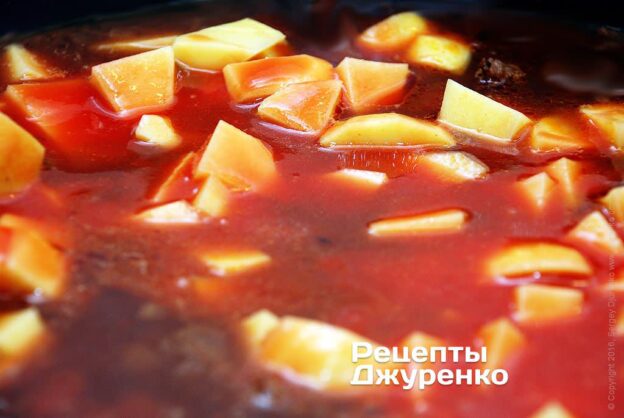
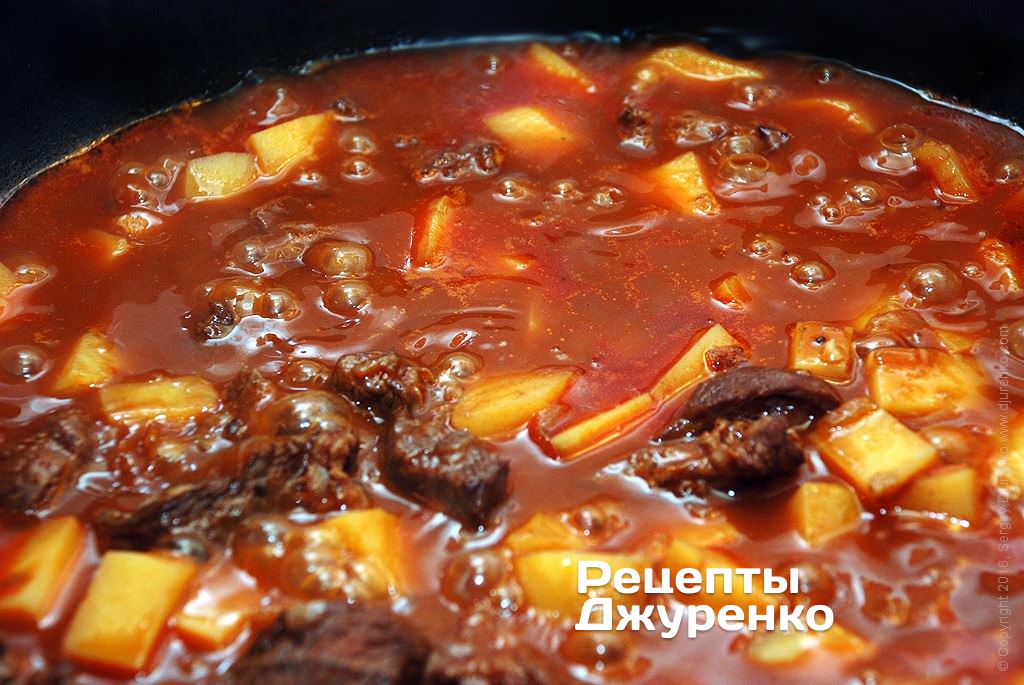
- Stew until the potatoes are fully cooked. Potatoes usually take 20-25 mins.
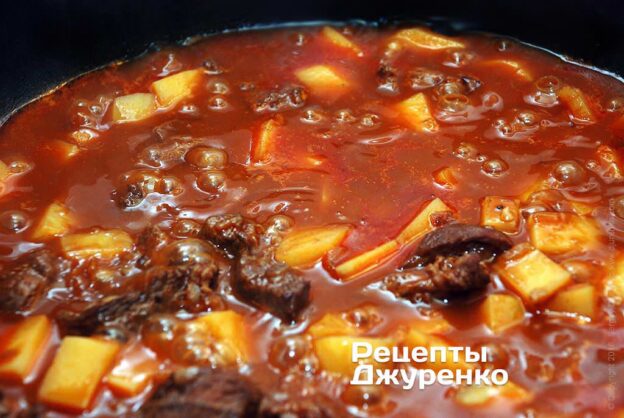
- Remember that beef goulash is a thick soup. Since the potatoes will soak up some of the liquid as they cook, add water until the goulash is as thick as you like. Ideally the potatoes have just started to break down and partly blend into the sauce, giving it a wonderfully tasty body.
- A separate word about csipetke, the little pieces of dough. They turn up often in original recipes. But people also write that this is a “poor man's” goulash, that nobody adds dough to meat when times are good. Still, if you want to, you can make the dumplings. Knead a dough from 1 cup of flour, an egg and a pinch of salt. Roll the dough out into a sheet 3-4 mm thick and cut it into small squares, which gives you little cubes of dough. Alternatively, just pinch off shapeless pea-sized bits of dough with your fingers. Cook the pieces of dough in the goulash.
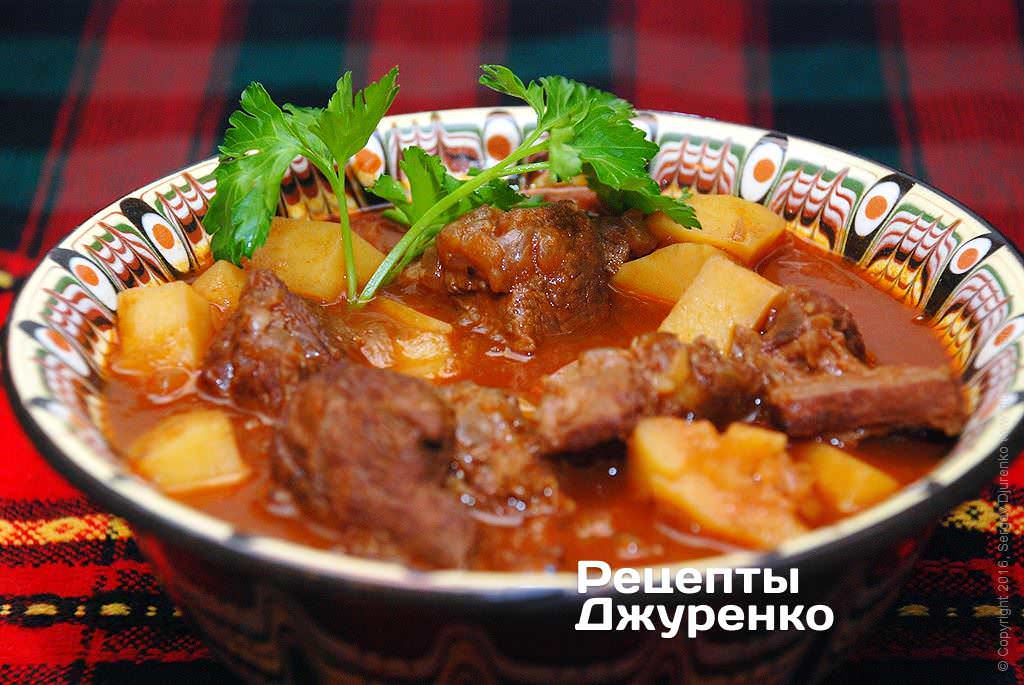
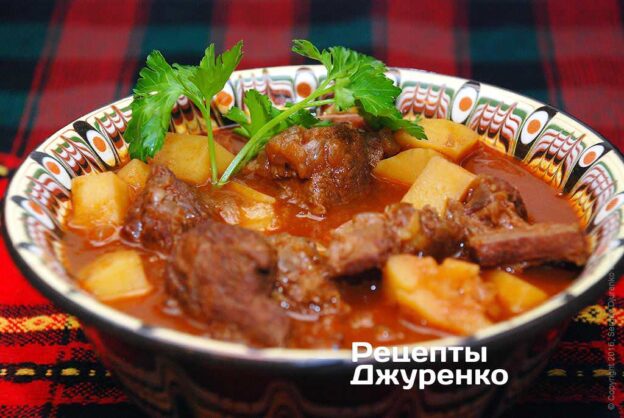
- Ladle the finished dish into soup bowls and serve hot.
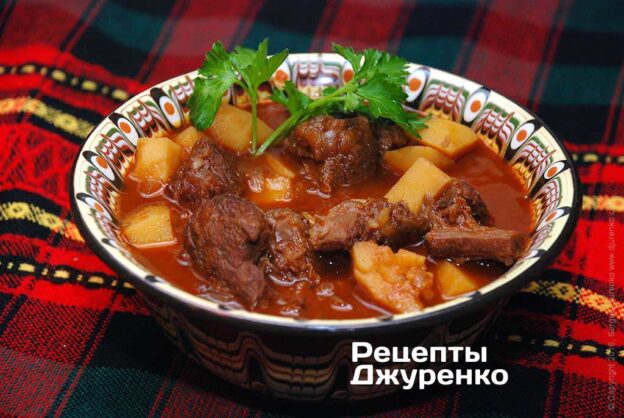
- Goulash is a tasty, filling dish, and it is perfect for cooking in a cauldron over a campfire for a crowd.
| Yield: | 2 servings |
| Calories: | 130 |
| Prep: | 30 mins |
| Cook: | 1 h 30 mins |
| Ready in: | 2 h |
| Category: | Main Dishes |
| Cuisine: | European |
| Rating: |
⭐
⭐
⭐
⭐
⭐
4.7
(5)
|