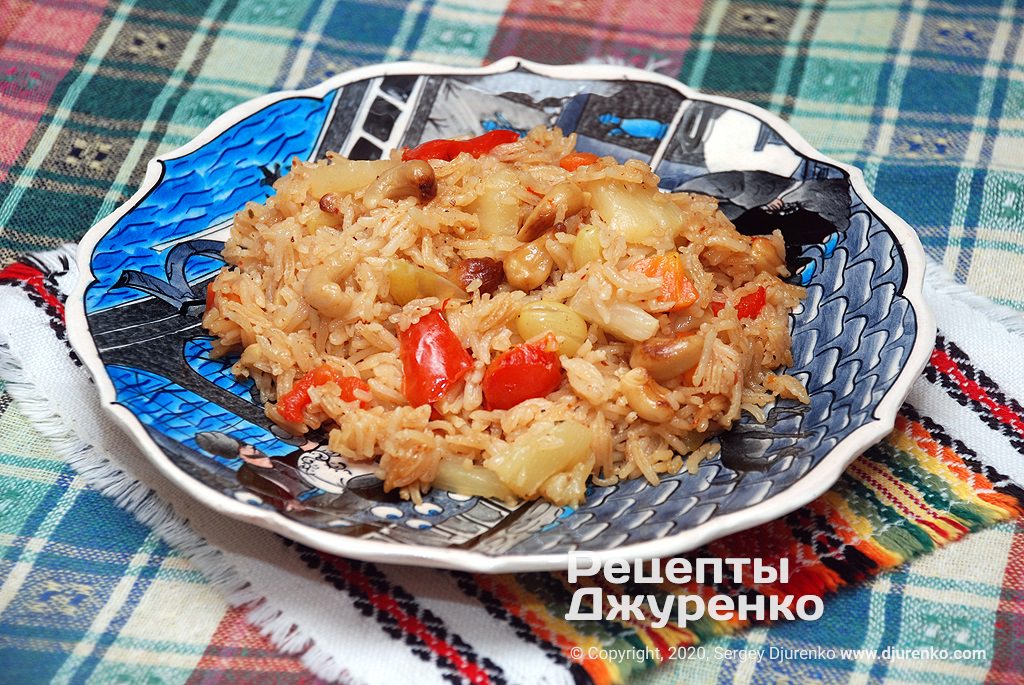
Meatless Pilaf with Vegetables and Fruit
Ingredients
4 servings
- Basmati rice 350 g
- Water or stock about 4 cups (twice the rice by volume) (800 ml)
- Vegetable oil 50 ml
- Cashews 75 g
- Carrot 1
- Bell pepper 2
- Canned pineapple 6-8 rings
- Seedless grapes 1 sprig
- Sweet paprika 0.5 tsp
- Salt, black pepper to taste
- Saffron or marigold petals for color
- Fresh chili pepper, dried herbs (oregano, basil, savory), pineapple syrup optional
Step-by-step recipe
Preparation
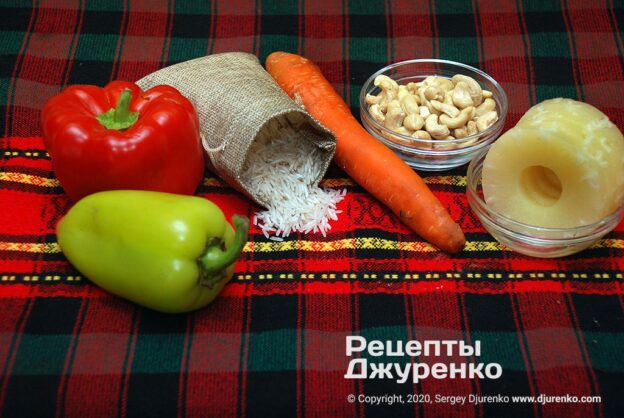
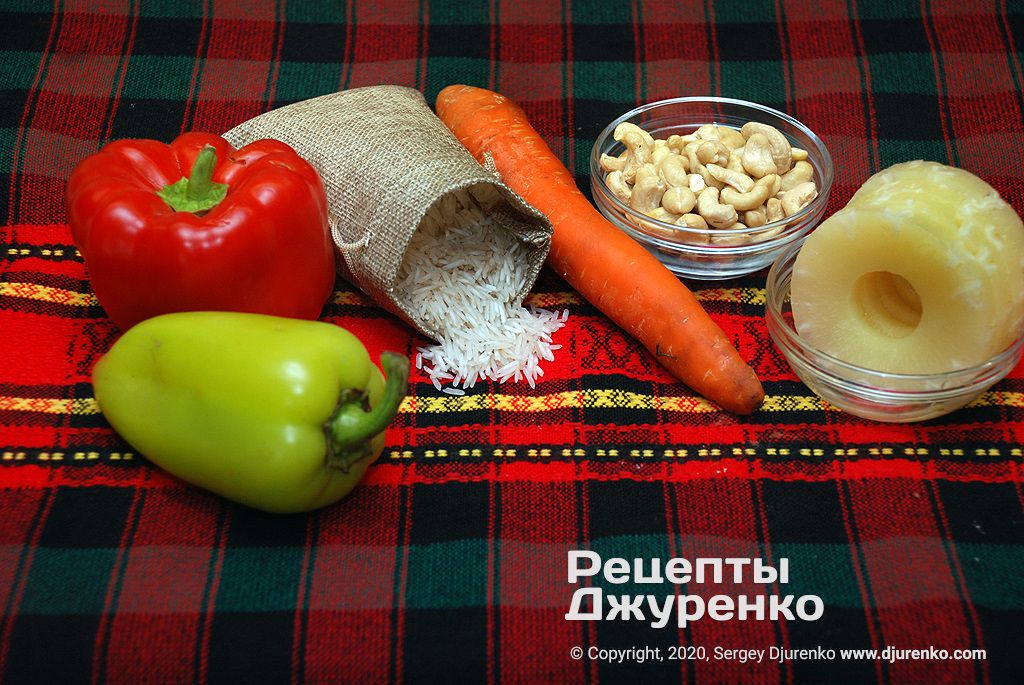
Prepare all the ingredients in advance: meatless pilaf cooks fairly quickly. You can use fresh or canned pineapple. We bought a small can of rings in syrup. If you like, you can add slices of mango or other sweet-and-sour tropical fruit. By the way, if you want the dish to be slightly sweet, do not drain the syrup, since you can add it to the pilaf.
Frying the vegetables and nuts
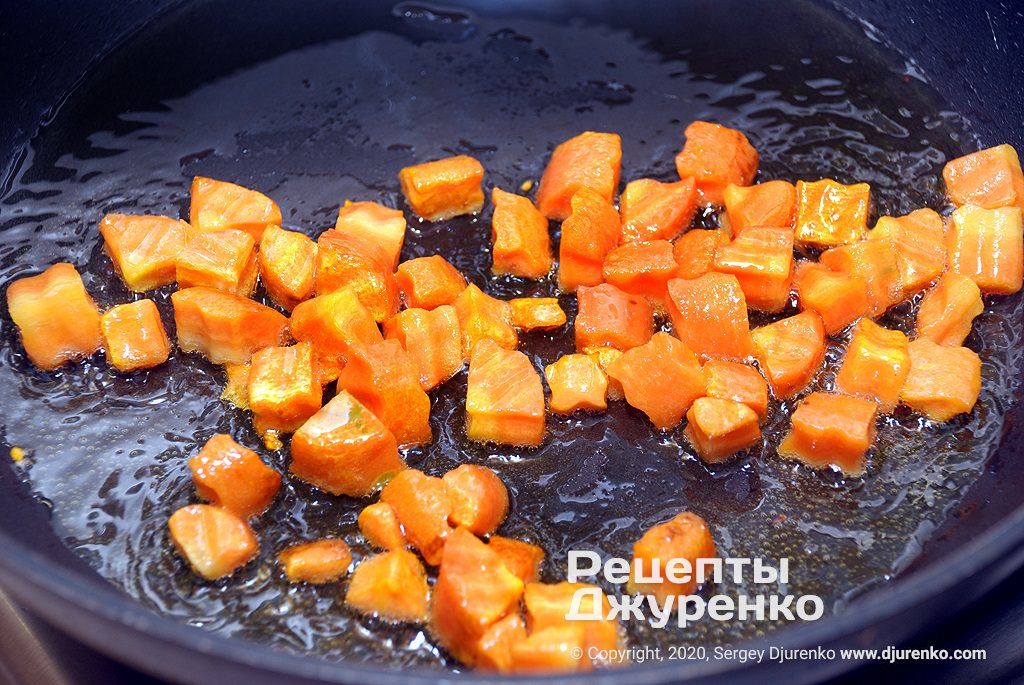
Fry the carrot until soft. Heat the vegetable oil over high heat in a large frying pan or Chinese wok. Odorless sunflower oil is best. Peel the carrot, dice it and fry until soft and starting to turn golden. Incidentally, carrot root contains a lot of sugars, which caramelize when fried.
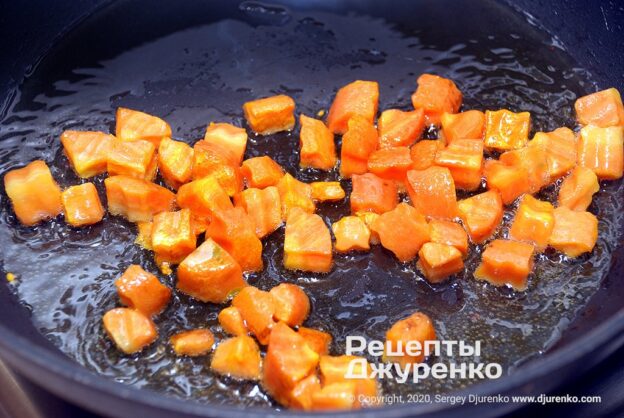
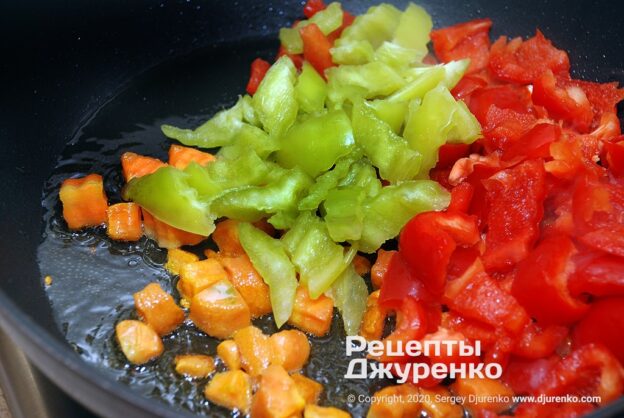
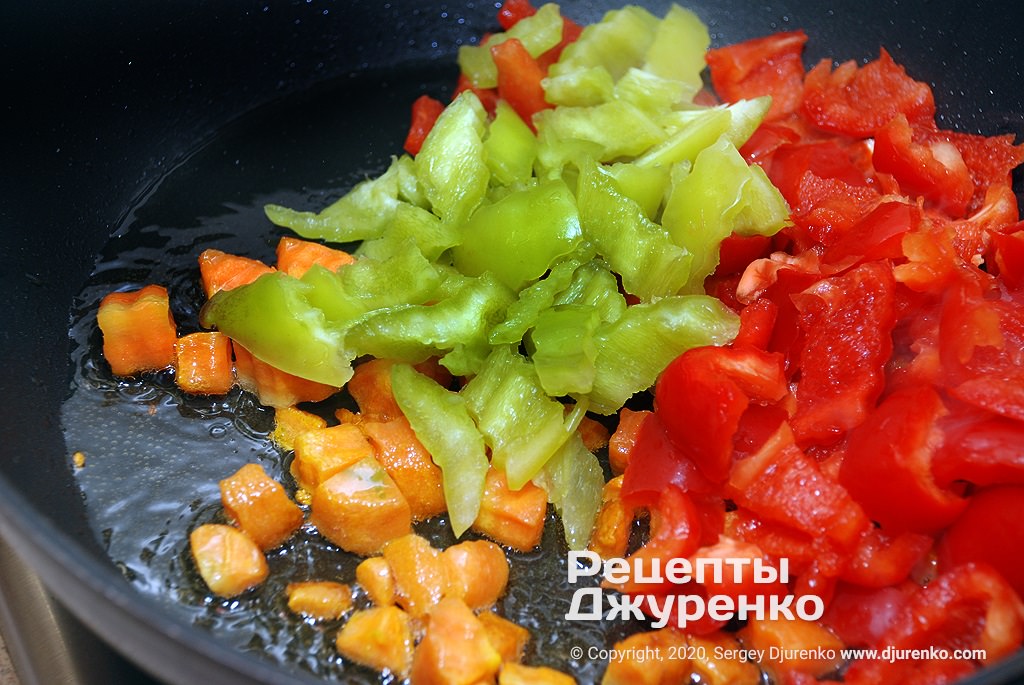
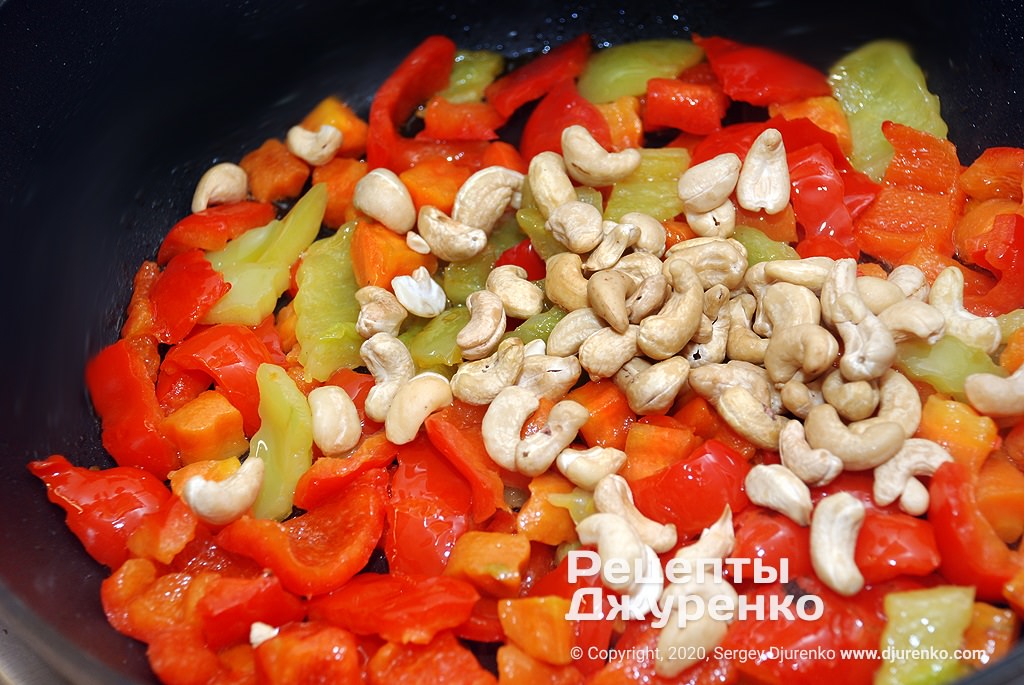
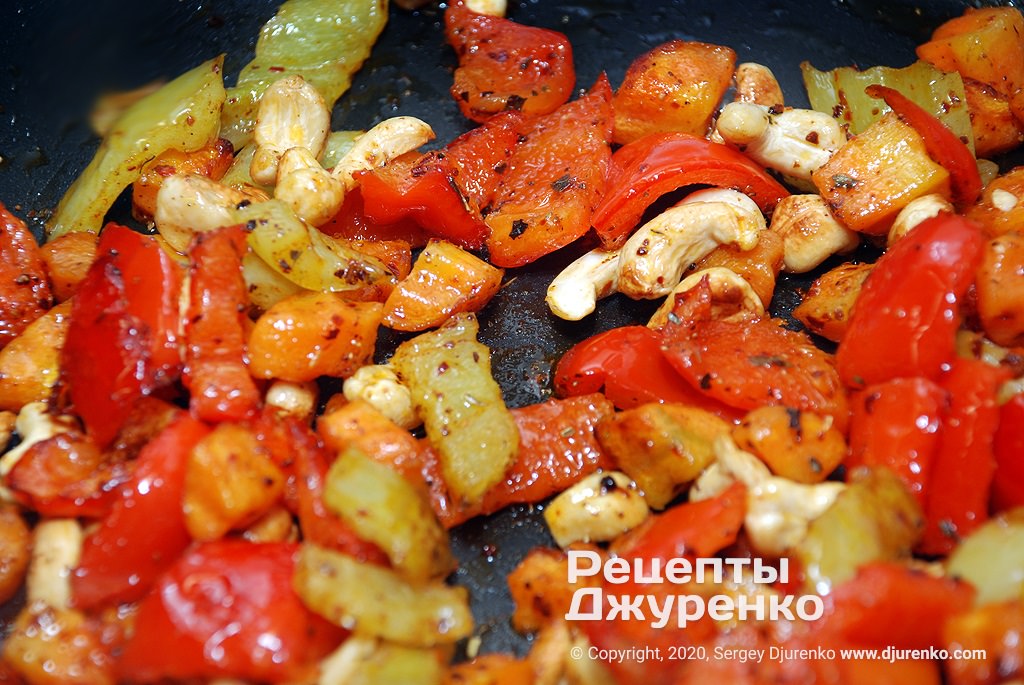
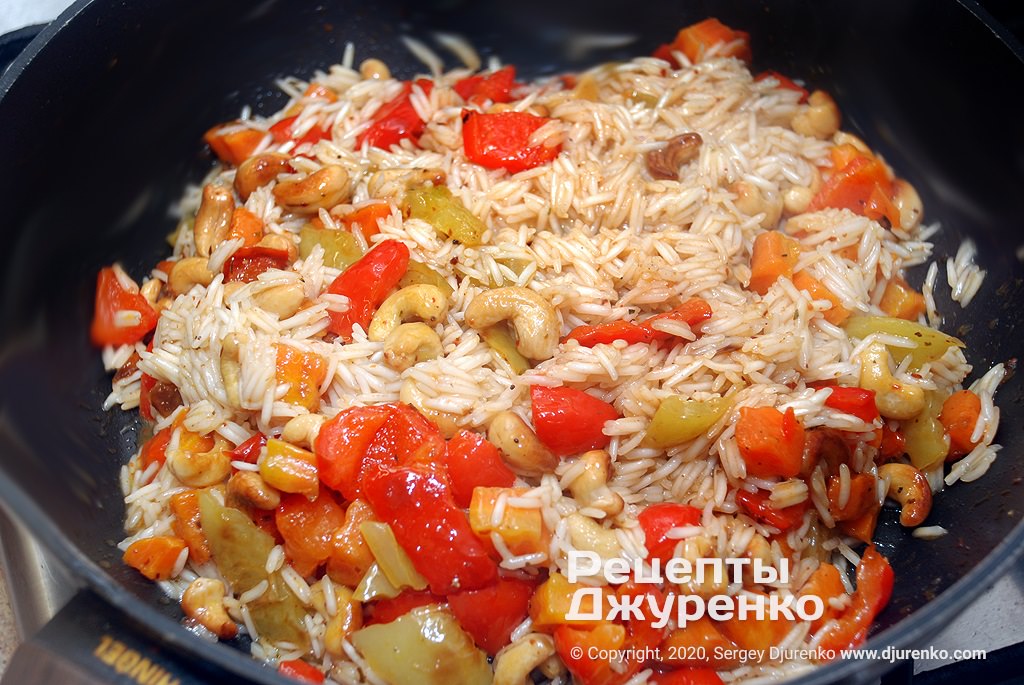
Add the bell pepper and fry for 4-5 mins. Remove the seeds and stem from the pepper and cut it into large slices. If you want the meatless pilaf slightly spicy, which is also delicious, add a little finely chopped fresh chili. Reduce the heat to medium and fry the carrot and pepper for 4-5 mins, stirring. In that time the pepper softens and begins to show signs of browning.
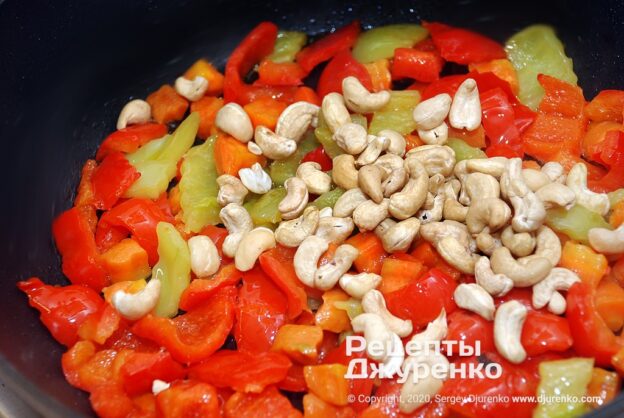
Add the nuts to the vegetables and fry everything together until the vegetables begin to lose moisture. Cashews can be used roasted or raw, and they need no preparation beforehand. Besides cashews, hazelnuts, pine nuts or almonds work well. Almonds are better blanched and peeled first.
Cooking the rice
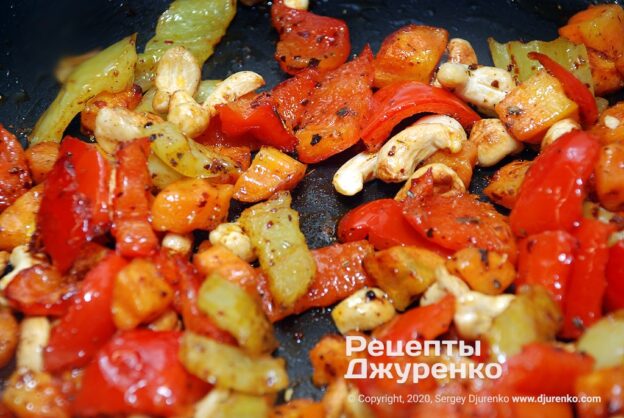
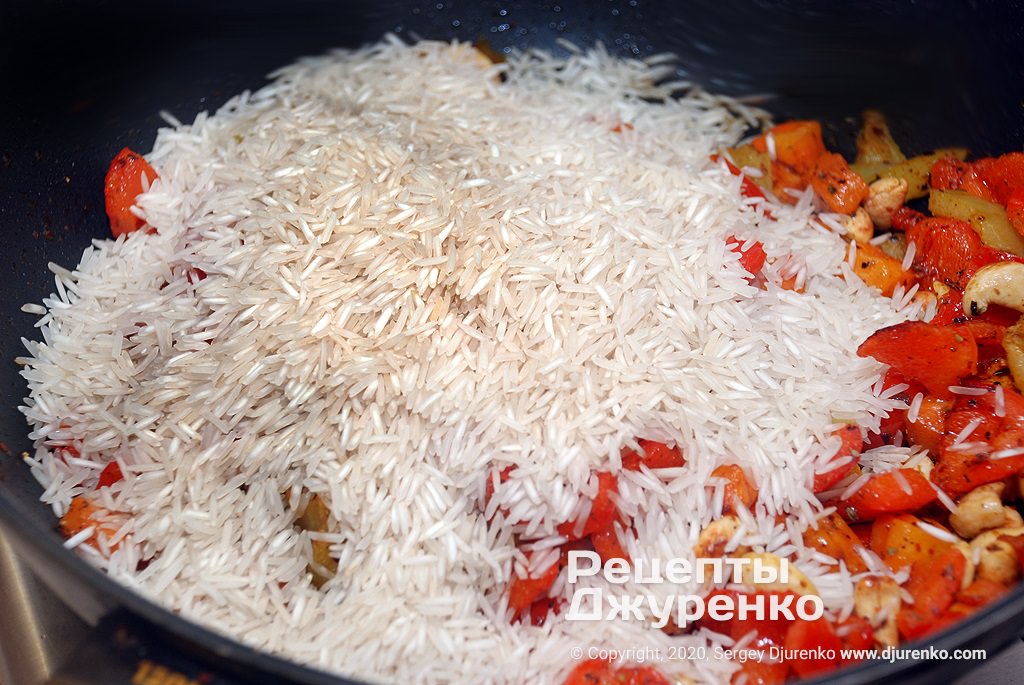
Add the spices and rice. Salt and pepper the vegetables and add 0.5 tsp of sweet paprika, preferably coarsely ground. If you like, you can add a little dried aromatic herbs typical of Mediterranean cuisines: oregano, basil, savory and so on. To give the rice a pleasant yellow-orange color, add saffron or a substitute such as marigold petals.
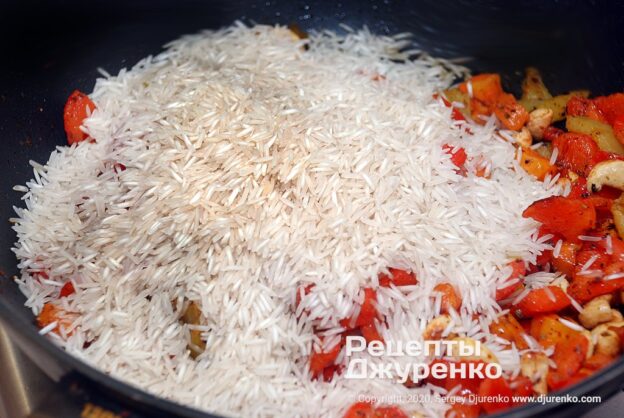
Add the rice to the fried vegetables and stir well. We used aromatic basmati rice. As a rule, high-quality rice does not need rinsing: it is well polished and free of rice flour.
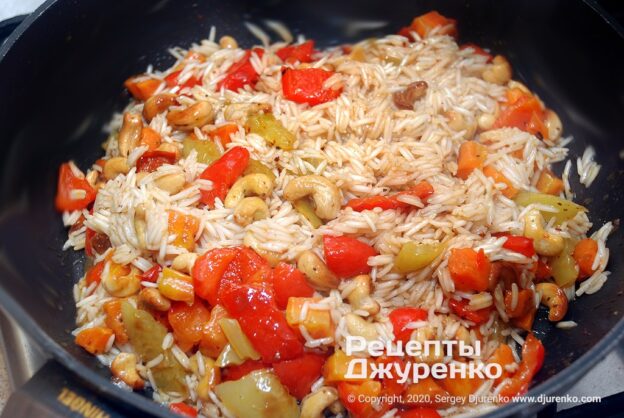
Pour the liquid (about 4 cups) over the vegetables and rice, bring to a boil and cover the pan with a lid. For basmati rice we usually add 1.5 cups of water (300 ml) per 1 cup of rice (180 g). When making meatless pilaf we increase the ratio to roughly 1:2, allowing for the steaming of the nearly finished dish. You can use chicken or vegetable stock if you have it. Part of the liquid can be replaced with the syrup from the can of pineapple, if you like.
Cook the pilaf covered over the lowest heat. It should literally simmer, and many people believe rice should be stewed rather than boiled. Gradually the grains absorb all the liquid, which takes about 15 mins. By the time all the liquid is absorbed, the rice should be almost done, literally al dente, as in vegetable risotto.
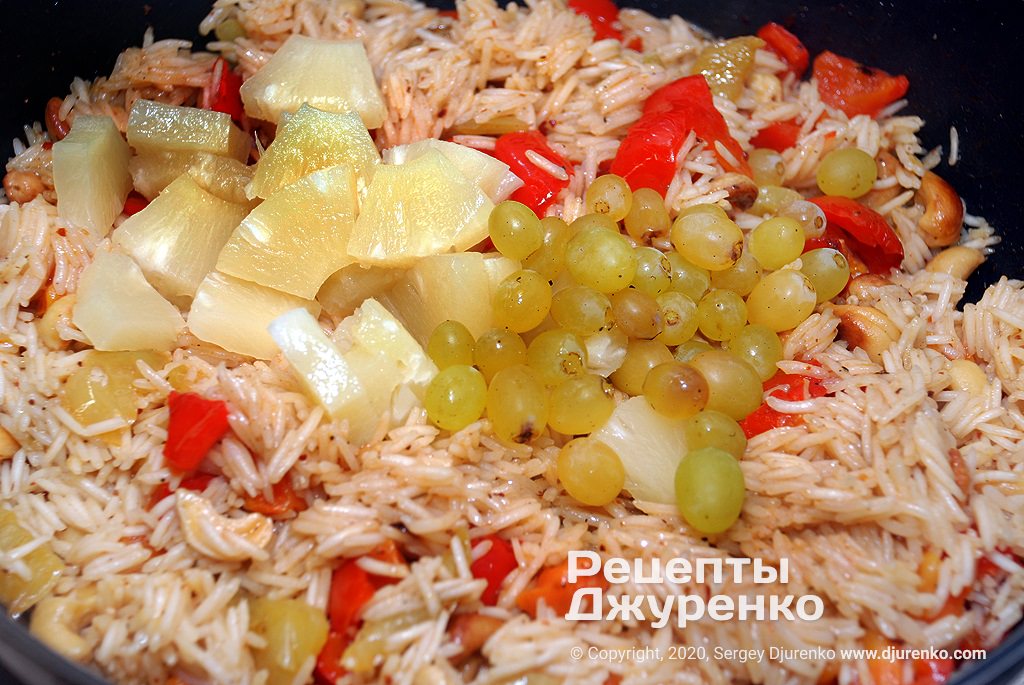
Add the fruit and steam the pilaf for 30 mins. Cut the pineapple rings into 6-8 pieces, since they should not be large. Pull the grapes off their stems and throw out any spoiled or unripe ones. Add the fruit to the meatless pilaf and stir. This is the start of the second stage, steaming. Leave the covered pan on the lowest heat you can manage (electric stoves sometimes have a warming zone). Or simply take the pan off the heat, wrap it in a warm blanket and let the rice sit for half an hour.
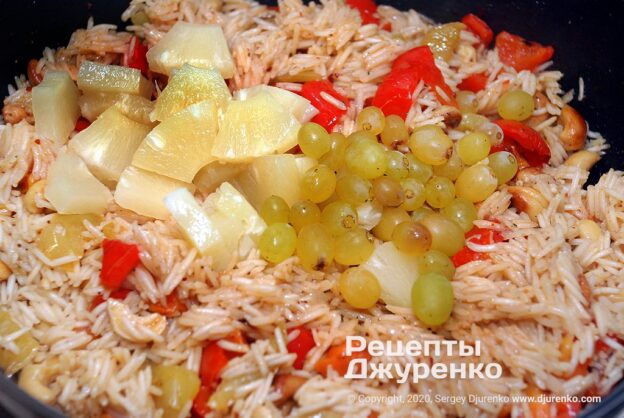
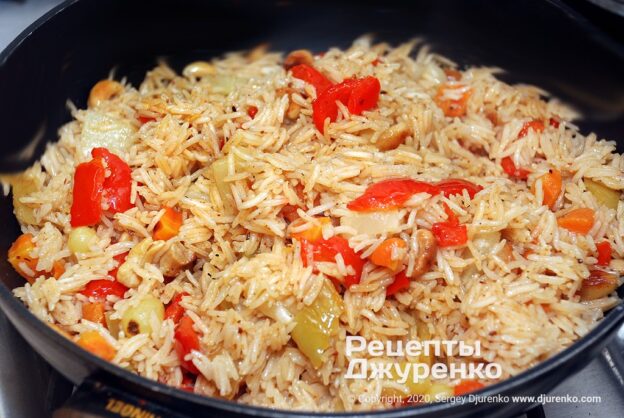
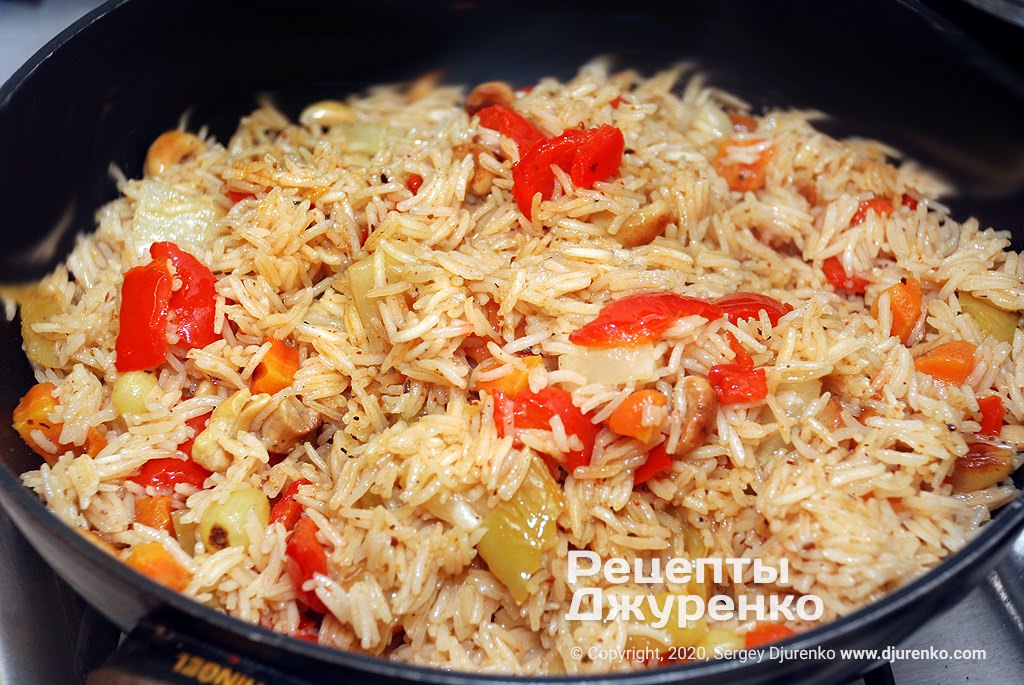
Steaming is an important stage. After cooking, the rice grains are slightly sticky and can clump together. Steaming separates them, and the rice becomes not just fluffy but truly loose. Even with a good amount of fat, you can simply shake it out of the pan. Because of the saffron or marigold petals, the rice takes on a pleasant yellowish tint.
Serving
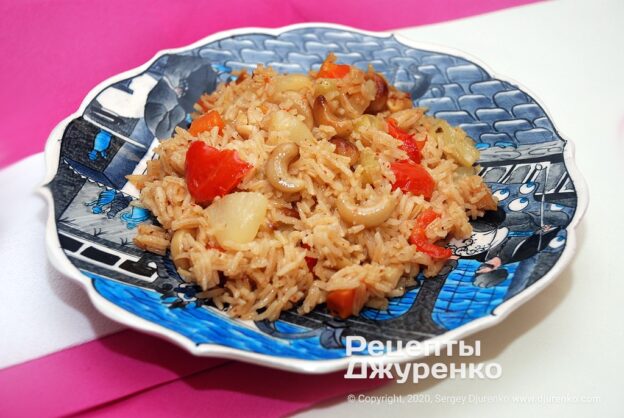
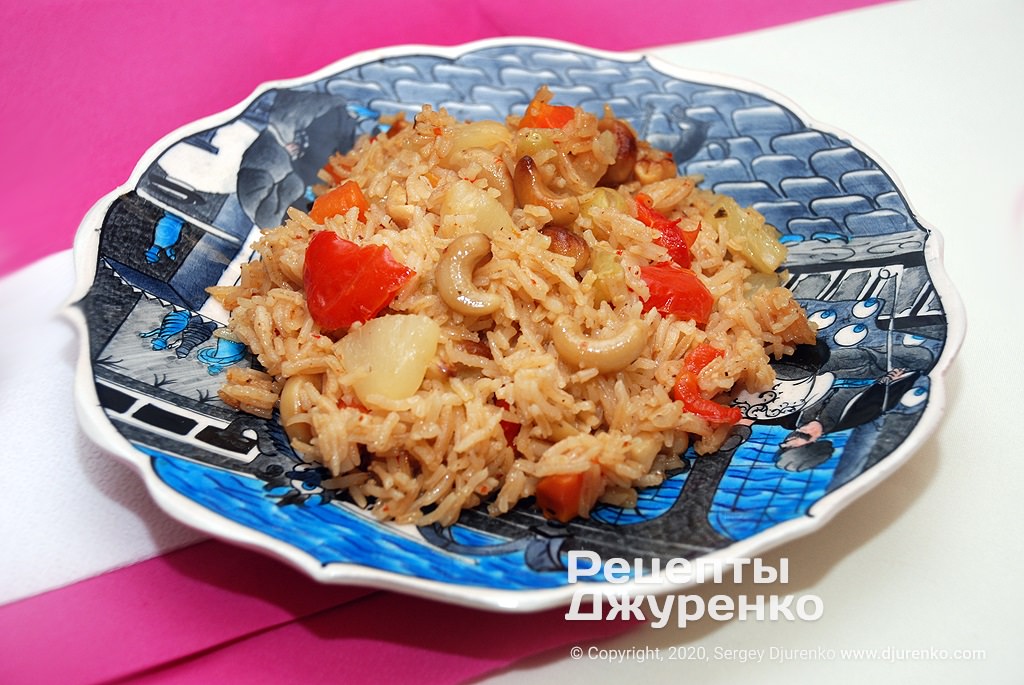
Transfer the pilaf to large plates and serve as a dish on its own. The finished meatless pilaf is very aromatic, the rice grains are practically dry, and the vegetables are well fried and slightly sweet. If you use the pilaf as a side dish, put a piece of baked chicken or a cutlet on top of the side.
If you like, you can replace the rice with bulgur. Frankly, we often eat bulgur, since we like it more and it has fewer calories. It is even easier to get it fluffy because it contains no gluten. A decent result can also be had with ordinary pearl barley.
Calories and macros
630 kcal
Serving ≈ 460 g
- Protein11 g7% of kcal
- Fat21 g30% of kcal
- Carbs98 g63% of kcal
100 g136 kcalProtein 2.4 gFat 4.5 gCarbs 21.2 g
Calculated from the recipe ingredients, excluding salt and spices. Data: USDA and Matvaretabellen.