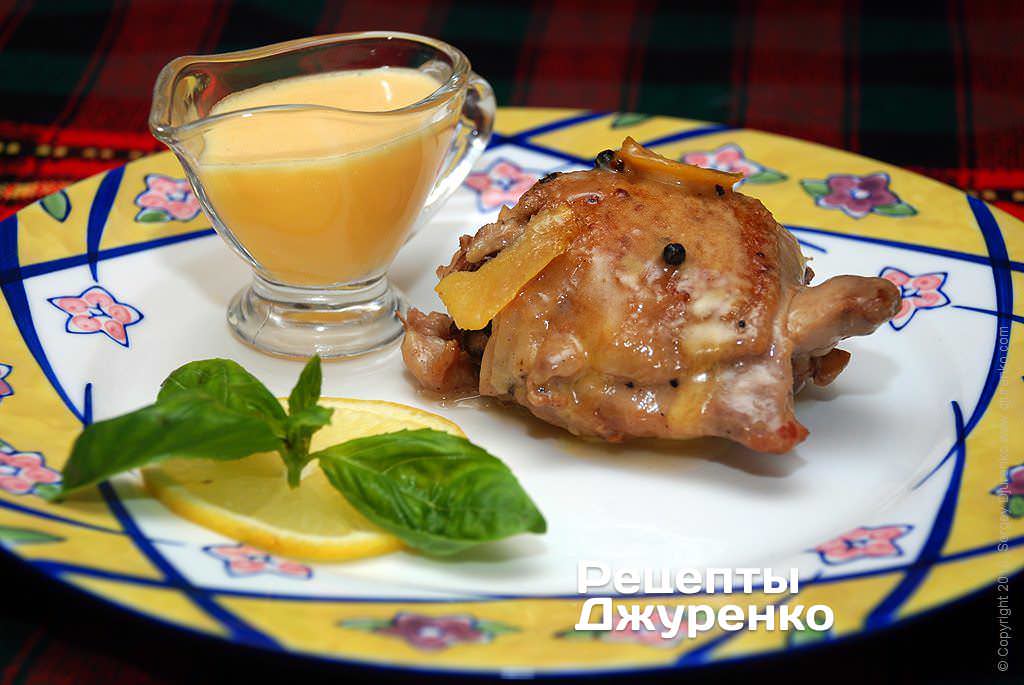
Lemon Sauce for Chicken
Ingredients
2 servings
For the chicken
- Chicken thighs 2
- Lemon 1 (for the marinade, sauce and serving)
- Olive oil 1 tbsp
- Water 2 cups (400 ml)
- Oregano, salt, ground black pepper to taste
- Black peppercorns 6-8


For the sauce
- Eggs 2 (yolks only)
- Butter 50 g
- Lemon juice 1-1.5 tsp
- Salt a pinch


For serving
- Herbs a sprig

Step-by-step recipe
How to prepare the chicken
Chicken in lemon sauce can be made from a whole chicken, or from several thighs, drumsticks and even wings. For convenient portioned cooking, it is better to use meaty, evenly sized pieces. Cooking the chicken with lemon and making the butter-and-egg sauce are two parallel processes.
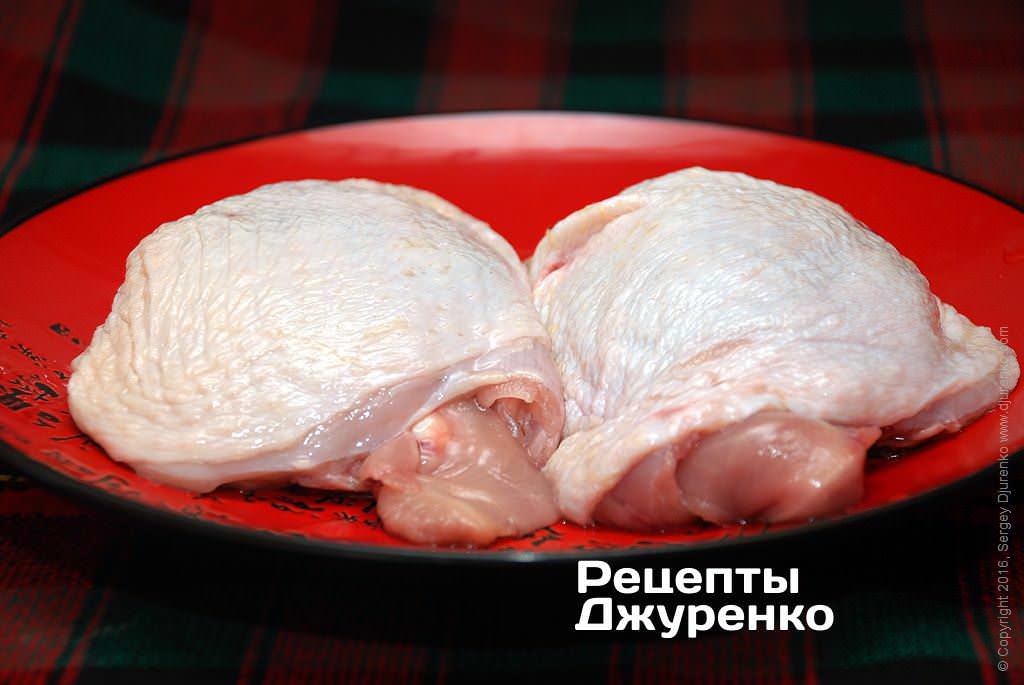
Marinate the chicken: season the chosen pieces with salt and pepper and sprinkle with dried oregano rubbed between your fingers.
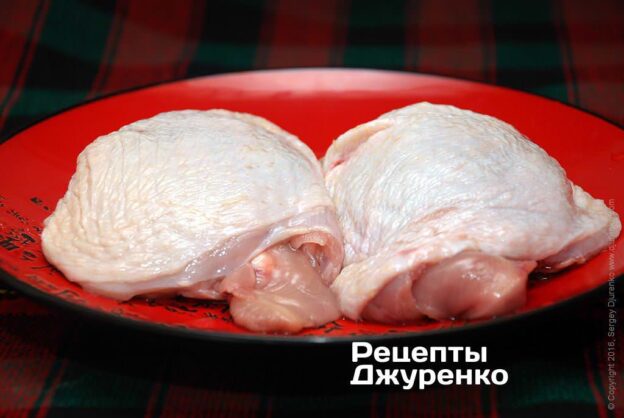
Season to taste, but don’t over-salt: chicken in lemon sauce is made with only a little salt. Sprinkle the chicken with lemon juice, 1 tsp is enough. Leave the chicken for 10-15 mins.
How to make the lemon sauce
While the seasoned chicken marinates, make the sauce from egg yolks and butter.
Whisk the yolks with lemon juice. Put 2 egg yolks into a small bowl, separating the whites carefully and keeping out any shell.
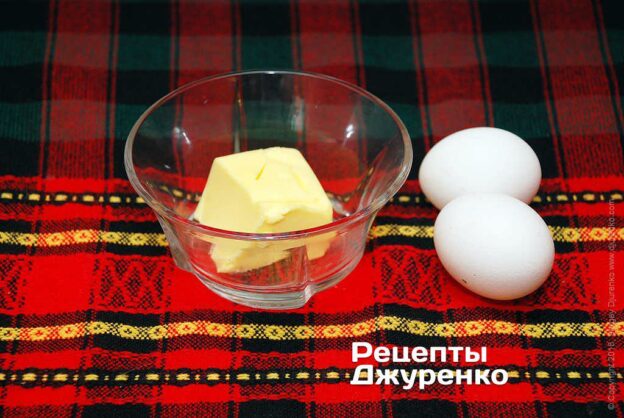
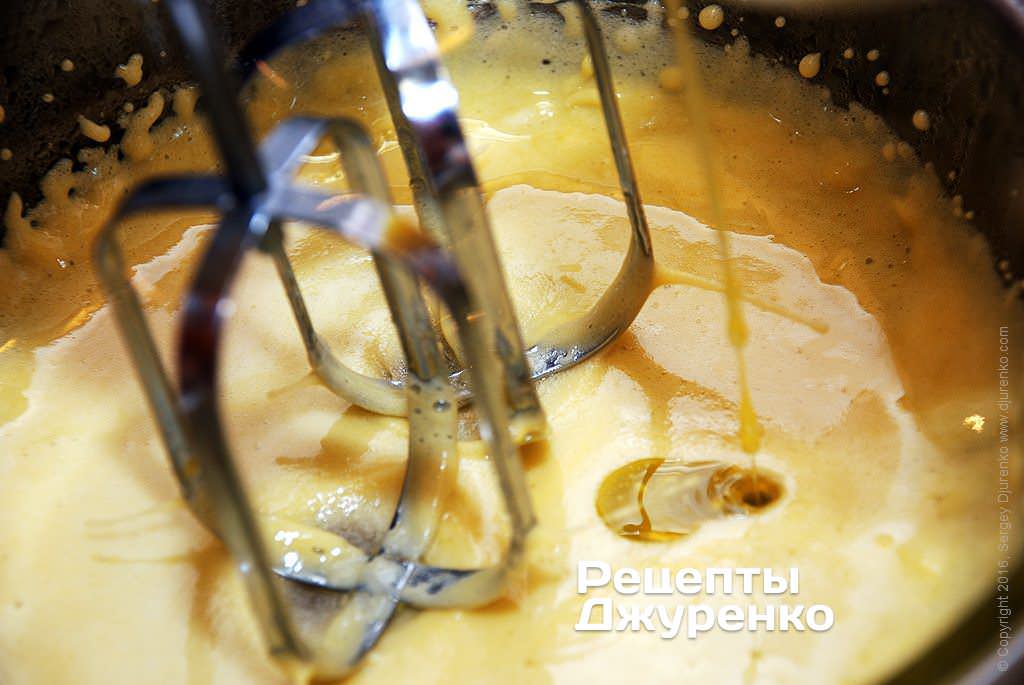
Salt the yolks with a pinch of fine salt and add 1-1.5 tsp of lemon juice. Whisk the yolks with a mixer until foamy.
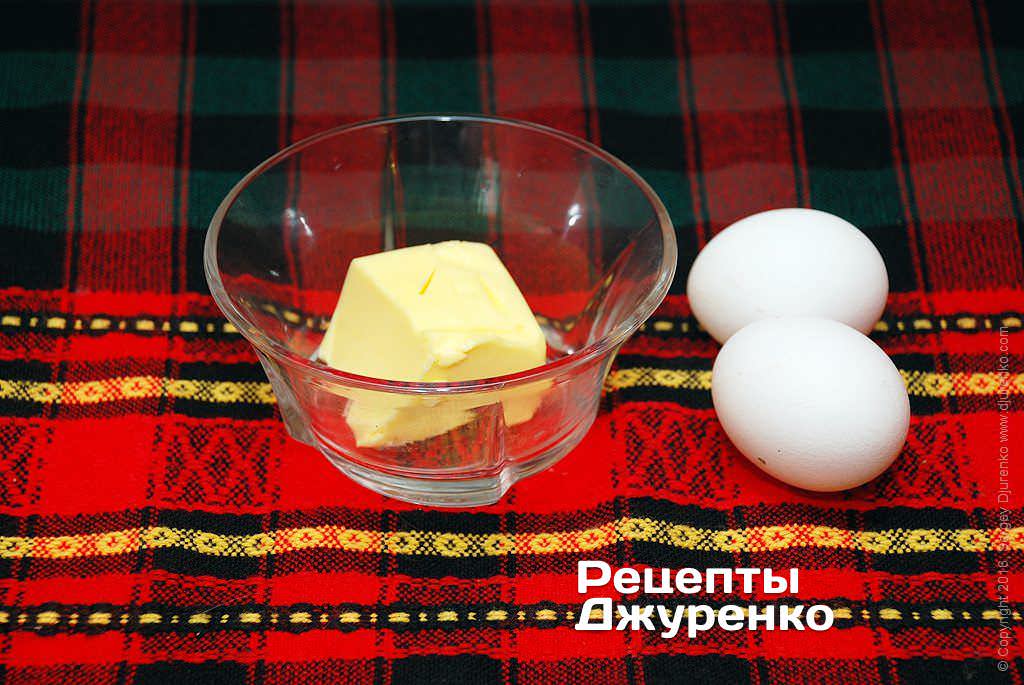
Melt 50 g of butter, in the microwave if you like. The butter should cool down but not set.
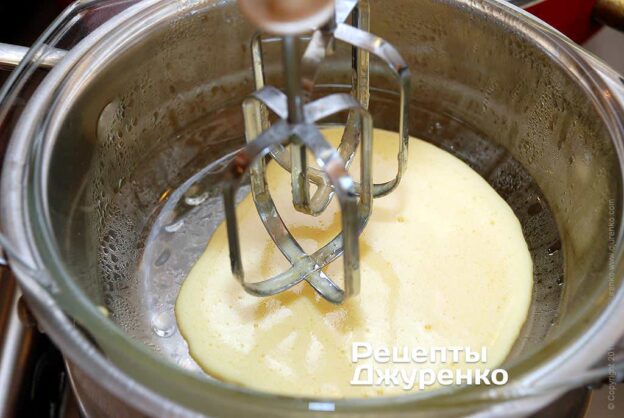
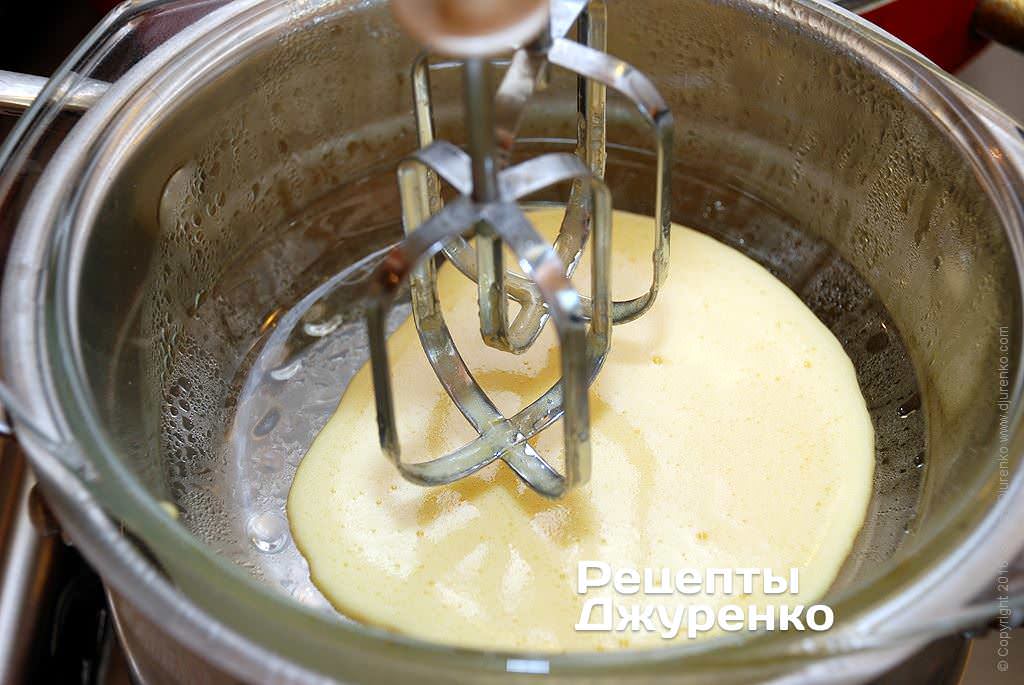
Combine the yolks and butter over a water bath. Pour the whisked yolks into a bowl and set it over a water bath on low heat. It is crucial never to overheat the yolks, or they will curdle instantly. Ideally the bowl is heated not by hot water from below but by steam, meaning the bottom of the bowl sits above the surface of the water. With the bowl over the water bath, keep whisking the yolks and pour in the cooled liquid butter in a very thin stream. You end up with a perfectly smooth egg-butter mixture of a pleasant yellow color.
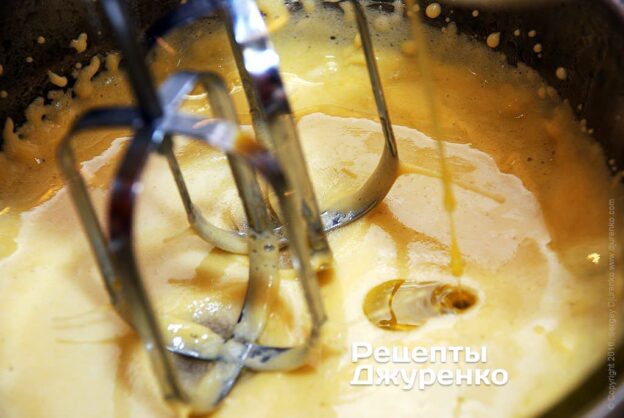
If you have trouble making the sauce, you can mix the whisked yolks with the butter first and only then heat the sauce over the water bath, watching that the yolks don’t curdle. You can add other spices to taste. It is important that the sauce contains lemon or another food acid, for example balsamic vinegar. In my experience, after the second or third time the egg-butter sauce comes out without a hitch.
Pour the finished sauce into a sauce boat and let it cool to room temperature. If everything was done right, the sauce doesn’t separate.
How to cook the lemon chicken
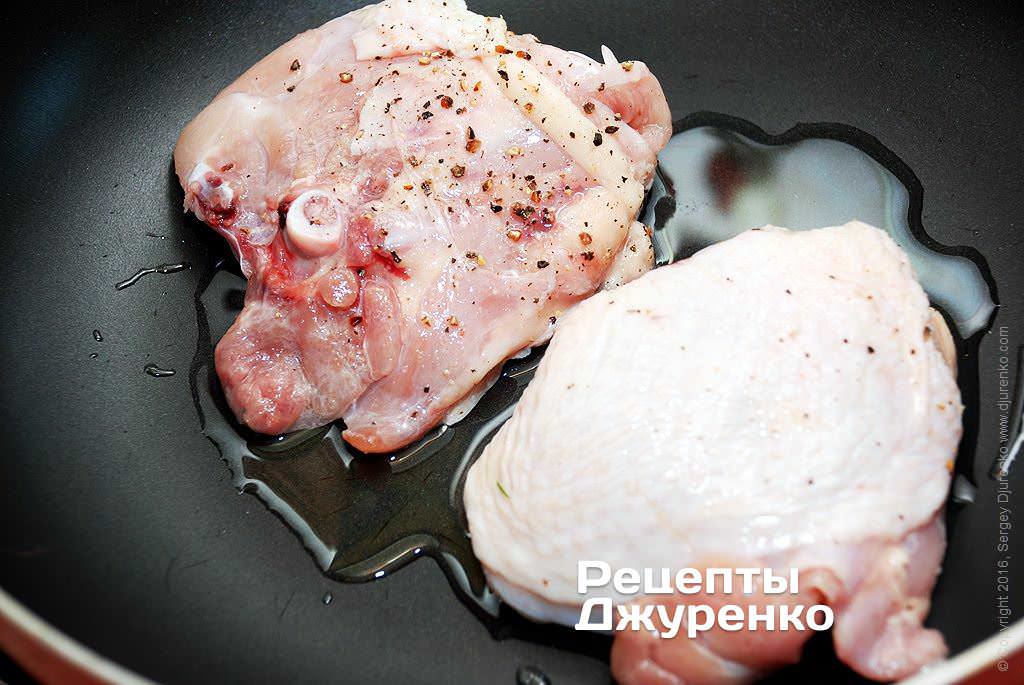
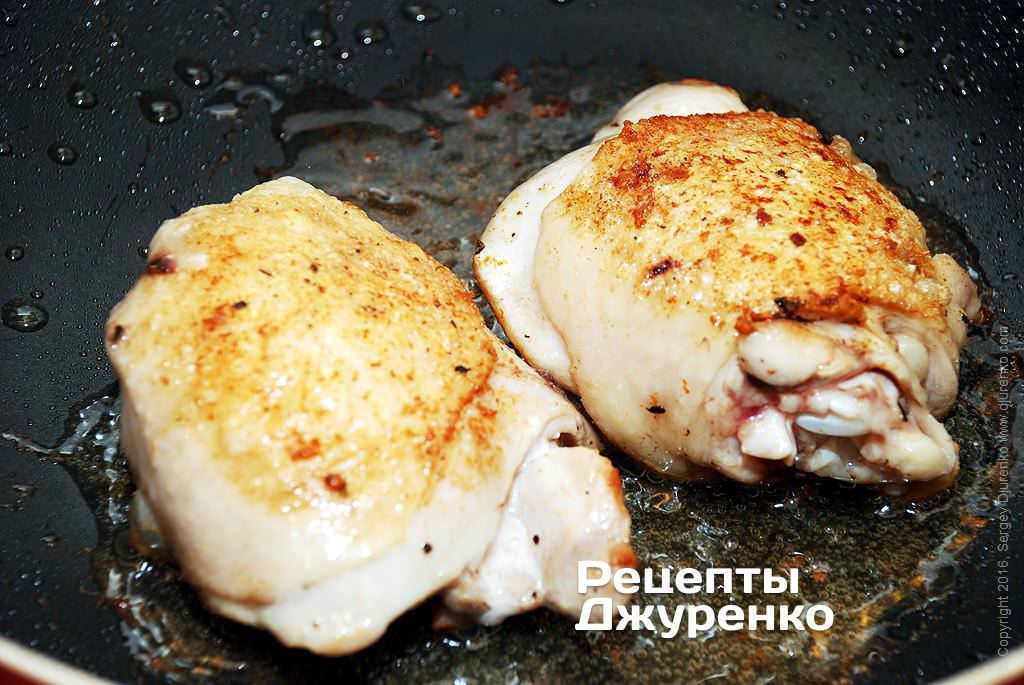
Fry the chicken. Heat olive oil in a sauté pan over medium heat and add the prepared, lightly marinated chicken.
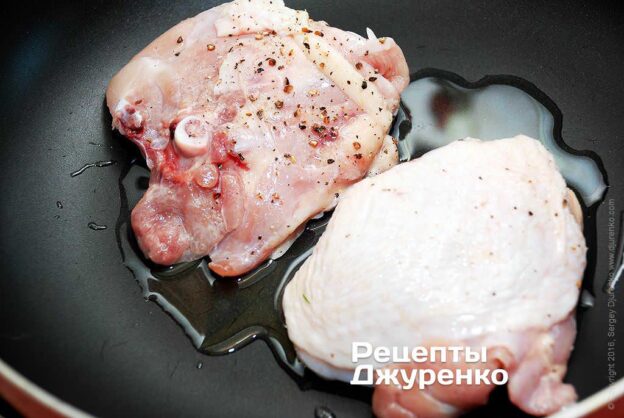
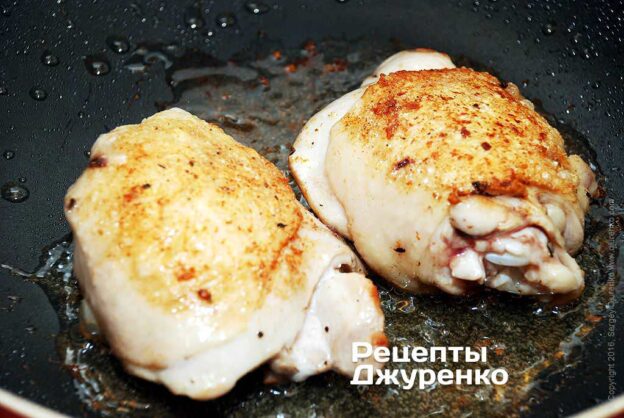
Fry the pieces on all sides until a golden crust forms. There is no need to fry them until fully done, because the chicken in lemon sauce will still be simmered.
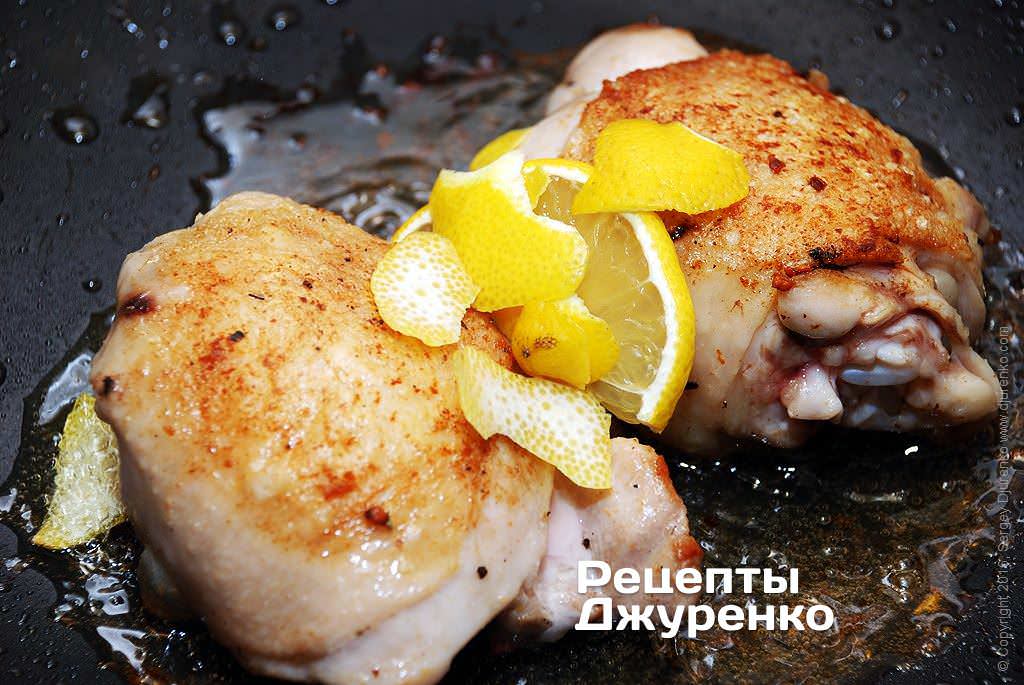
Simmer the chicken with zest and lemon. Add 6-8 black peppercorns to the fried chicken, salt lightly and add the zest cut with a knife from half a lemon. The size and shape of the zest pieces don’t matter, but leave as little of the white pith as possible. Add a small lemon slice, a wedge.
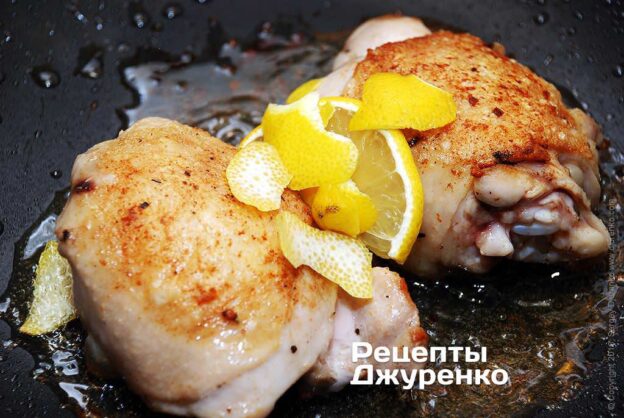
Pour in 2 cups of water (400 ml) from a kettle, bring the liquid to a boil, then reduce the heat to medium-low and cover the chicken with a lid. Simmer the chicken, turning it from time to time, for 20 mins. In that time the liquid almost completely evaporates and the sauce thickens. If the sauce is too thin, remove the lid and let the excess liquid boil off. The chicken is done when clear juices run out as you pierce it.
Serving
Chicken in lemon sauce is served not very hot but very warm. Hot chicken with lemon will instantly curdle the egg sauce, which is not acceptable.
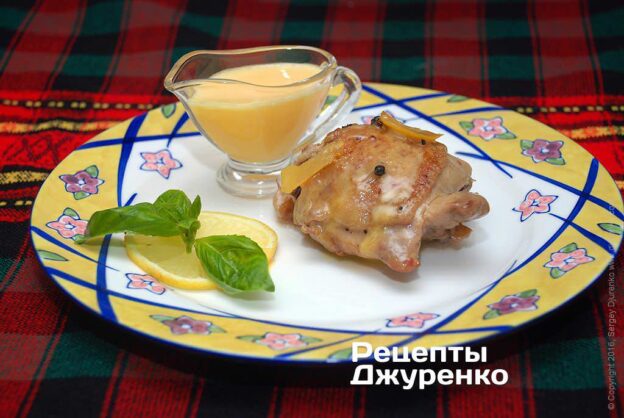
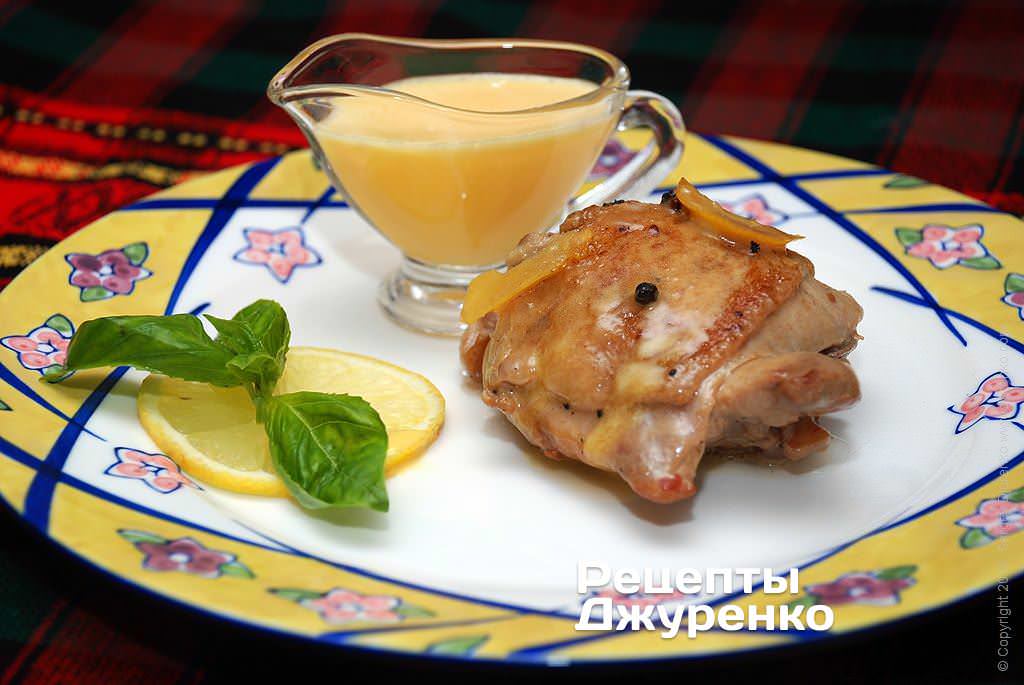
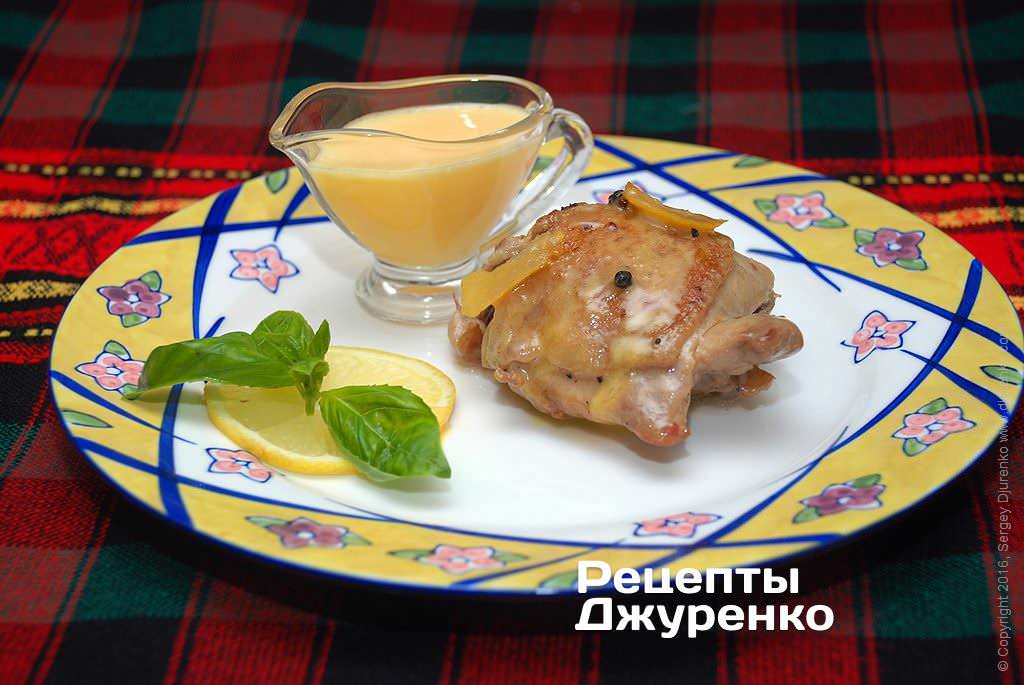
Put the cooked chicken pieces on plates and spoon 1 tsp of the cooled lemon egg-butter sauce over them. Pour the rest of the sauce into a small sauce boat and set it on the plate next to the chicken. Be sure to add a lemon slice and a sprig of herbs for garnish.
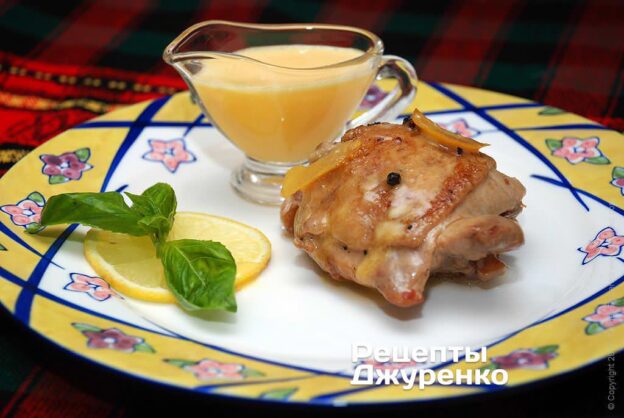
Chicken in lemon sauce goes very well with fresh wheat bread and a platter of fresh tomatoes and cucumbers.

How did you like this recipe?
No one has rated it yet — be the first.
Calories and macros
620 kcal
Serving ≈ 340 g
- Protein29 g19% of kcal
- Fat54 g79% of kcal
- Carbs3 g2% of kcal
100 g184 kcalProtein 8.6 gFat 16.1 gCarbs 0.9 g
Calculated from the recipe ingredients, excluding salt and spices. Data: USDA and Matvaretabellen.