
Vegetable Lasagna


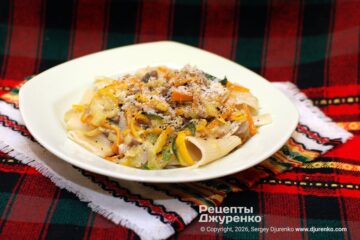
Ingredients
2 servings
- For the vegetable sauce
- Zucchini 1
- Bell pepper 2
- Ripe tomato 3
- Carrot 1
- Garlic 1-2 cloves
- Onion 1-2
- Olive oil 3 tbsp
- Vegetable oil, for the pepper a few drops
- Dill, parsley 2-3 sprigs
- Dry white wine 50 ml
- Boiling water 1/2 cup (100 ml)
- Sugar 1 tsp (5 g)
- Dried herbs (basil, oregano, savory) 2-3 pinches
- Salt, ground black pepper to taste
- For the sheets
- Lasagna sheets 12
- Water 2 l
- Salt 14 g (7 g per 1 l of water)
- For the béchamel
- Butter 1 tbsp
- Flour 1 heaped tsp (5 g)
- Milk 1 cup (200 ml)
- Nutmeg a pinch on the tip of a knife
- Salt, black pepper to taste
- For the dish and serving
- Butter, for the dish a small piece
- Hard cheese 50 g
Step-by-step recipe
Preparation
Vegetable lasagna is made with store-bought dry pasta, so go by the type of lasagna sheets you have. If the pasta does not need to be boiled first, that is the easiest option. This time I used store-bought pasta that needs preparing. There is nothing hard about it: you just boil the pasta while the sauce cooks.
Vegetable lasagna is, first of all, a good thick vegetable sauce, and believe me, it is not hard.
Peel all the vegetables. Even if the zucchini is very young, it is better not to use it with the skin.

Bring 2 l of water to a boil in a pot and salt it: 14 g of salt (7 g per 1 l of water). Boil the lasagna sheets according to the package instructions.
The sheets do not stick together, so you can boil them all at once, separating them from time to time so the water reaches both sides.
Lay the cooked sheets out on plates until the sauce is ready.
By the way, an important point: pasta grows in size when boiled, so the lasagna dish should actually be 15-20% bigger than the dry pasta.


Vegetable sauce
Finely chop the onion and fry it in olive oil until soft. It is best done over medium heat, stirring.
Since the vegetable stew will cook for a while, do not fry the onion until golden.

Brush the bell pepper with a drop of vegetable oil, pierce it with a knife and roast it in the microwave for 5-6 minutes at full power.
You can use the pepper raw, but I personally do not like finding bits of skin in a dish, so it is better to remove it right away. The best way is to roast the pepper and peel it: the skin then comes off like a plastic film.
Grate the peeled carrot and add it to the onion. Also add 1-2 cloves of chopped garlic. Fry everything over medium heat for a few minutes.

While the onion is frying, scald the tomatoes, peel them, and remove the seeds and the stem end. Finely chop the flesh with a knife.
Peel the roasted pepper and finely chop the flesh as well.
Add the pepper and tomato flesh to the pan, then add salt, ground black pepper, 1 tsp sugar (5 g) and 2-3 pinches of a dried herb mix: basil, oregano, savory.

Pour in the dry white wine, add finely chopped dill and parsley, and simmer covered over low heat for 10-15 minutes.

Cut the peeled zucchini into cubes and add it to the vegetable stew.

Add about 1/2 cup of boiling water (100 ml) and keep simmering the stew under a lid for about 30 minutes. There should be no visible liquid in the finished vegetable sauce.


Béchamel and assembly
Like meat lasagna, our vegetable lasagna is made with béchamel. But the pasta layers are not brushed with it: the vegetable sauce is very moist, so here béchamel is only an underlayer for the cheese on top.
Melt 1 tbsp butter in a separate pan. Add 1 heaped tsp flour (5 g) and fry it quickly.
Add cold milk in small portions, stirring constantly and breaking up lumps.
Add salt and grated nutmeg on the tip of a knife. Add pepper too, if you like. Let the sauce simmer for 3-4 minutes over low heat.
The sauce should be about as thick as not-too-thick sour cream.

Lightly grease a suitably sized ceramic (or heatproof glass) dish with a piece of butter and spread 2 tbsp of the vegetable sauce over the bottom so the lasagna does not stick.
Lay two boiled lasagna sheets over the sauce. Divide all the sauce roughly (by eye) into 5 parts: that is how many layers of sauce there will be.
Layer the sauce, covering each layer with two sheets of pasta.
If the pasta has swelled a little from boiling and does not quite fit in the dish, that is fine. You can fold it a bit or lay it in a “wave”; the dish allows for this.

Cover the sauce completely with the last layer of pasta and smooth it carefully.
Brush the top of the lasagna with milk sauce, thoroughly and leaving no gaps. The milk sauce layer should be more than 5 mm thick. It is better to have a little too much than too thin.
Sprinkle the lasagna with grated hard cheese.


Baking and serving
Put the lasagna dish in an oven preheated to 220°C and bake for 25-30 minutes, the time given on the pasta package.
From experience, I’d say this time may not be enough, because the vegetable dish has to heat through and cook. It usually takes a little longer. The cheese also has to bake. I actually go by the cheese.

Cut the finished vegetable lasagna into portions, carefully separating the layers from the walls of the dish.

Arrange on plates and serve right away.


Calories and macros
785 kcal
Serving ≈ 1400 g
- Protein21 g11% of kcal
- Fat32 g38% of kcal
- Carbs96 g51% of kcal
100 g56 kcalProtein 1.5 gFat 2.3 gCarbs 6.8 g
Calculated from the recipe ingredients, excluding salt and spices. Data: USDA and Matvaretabellen.
 Pull chopper for garlic and onionAliExpress
 Oil sprayerAliExpress
 Kitchen scale up to 5 kgAliExpress
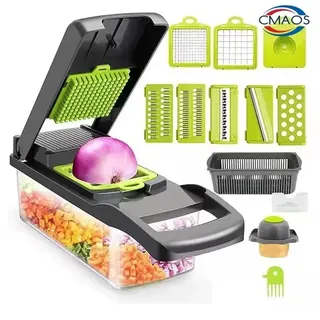 Vegetable chopper with handleAliExpress
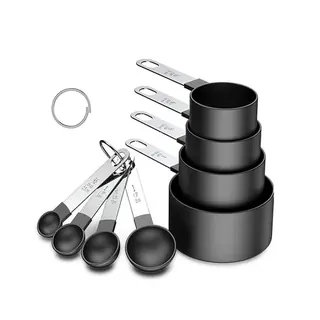 Measuring cups and spoonsAliExpress
 Peeler with wooden handleAliExpress