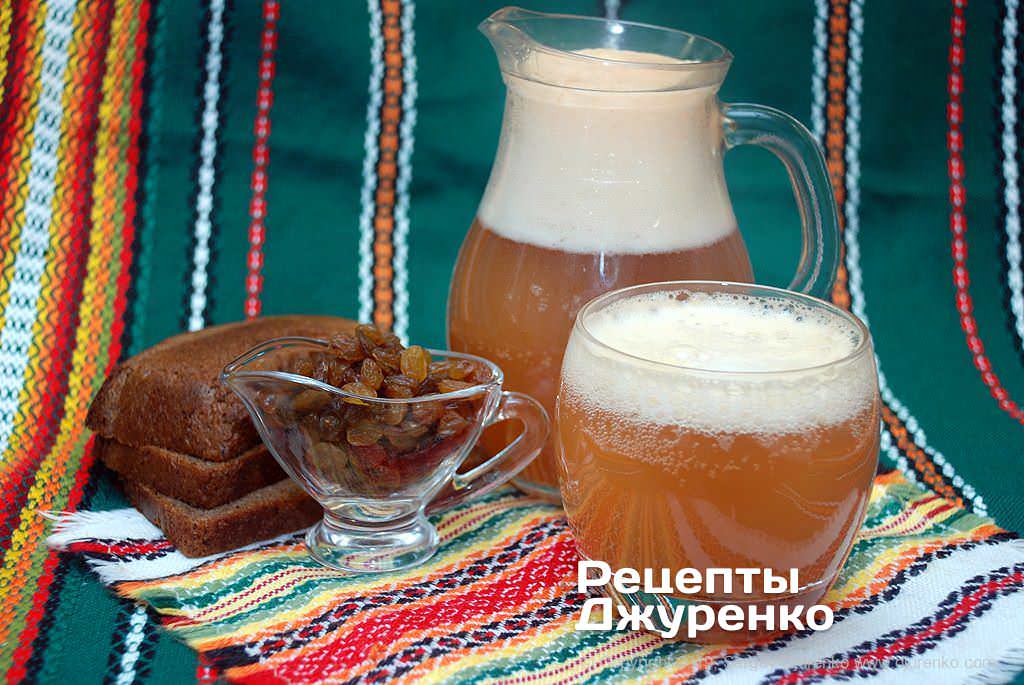
Homemade Kvass from Rye Bread for Okroshka
Homemade kvass made from rye bread and malt, with a few raisins and fragrant herbs, is genuinely easy to make. Many people, short on time or experience, prefer to buy it at the store, where the drink is rarely of decent quality. Not long ago “live” kvass appeared on the shelves, and it comes close to what kvass should be, but it is still better to make it yourself.
Bread kvass is a traditional drink of the Slavs and the Baltic peoples, especially loved in Ukraine, and it has ancient roots. It is a sour, low-alcohol drink produced by natural fermentation or by adding yeast. The main ingredient is dried rye rusks, or rye flour with malt. You will sometimes come across similar drinks made from birch sap, beets, fruit and berries.
It is not only a drink but also a cooking ingredient. Bread kvass for okroshka is made more sour, naturally carbonated and barely sweet. Kvass is also used for marinating and soaking meat that is roasted in one piece, such as buzhenina. Besides okroshka with kvass, it goes into a whole range of cold and chilled soups, and it is added to borscht as a souring agent.
In old books you may come across the term “kislye shchi” (sour shchi). It is not the soup, although a soup with the same name does exist. It is an old bottled drink made the same way as kvass and quite similar to it. Because it finishes fermenting in the cold right in the bottles, it becomes strongly fizzy. Kislye shchi is mentioned in the works of Gogol and Gilyarovsky, and in some fairy tales and proverbs.
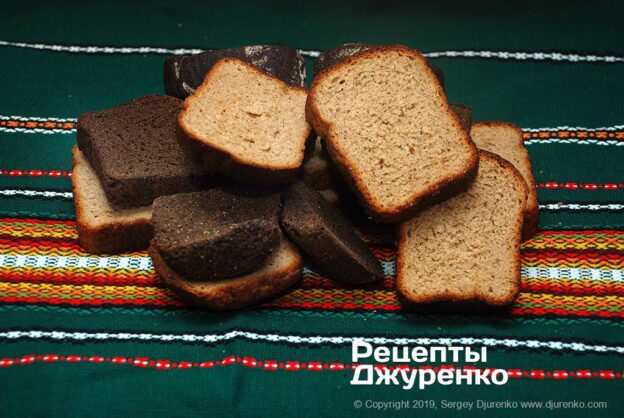
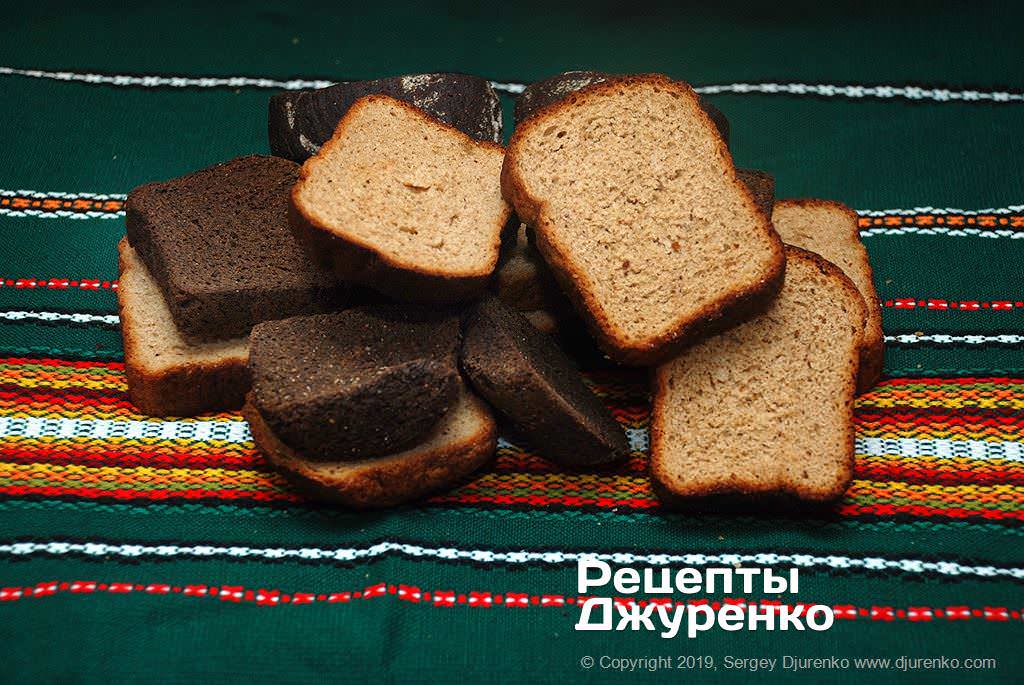
rye rusks are usually used to make the drink. Rye bread is not black but rather dark, closer to brown in color. For aroma and a richer flavor, you can add some “malt” bread.
Industrial fermentation usually uses flour, malt, sugar and yeast, plus various flavorings. The fermentation is combined – lactic and alcoholic. The first gives the drink its pleasant sour taste, the second provides an alcohol content of up to 2%. Homemade kvass is usually made in small batches of 5-10 l, using rusks, sugar and yeast. In the end you can get sour kvass for okroshka, slightly spicy kvass thanks to additions, or a sweet one.
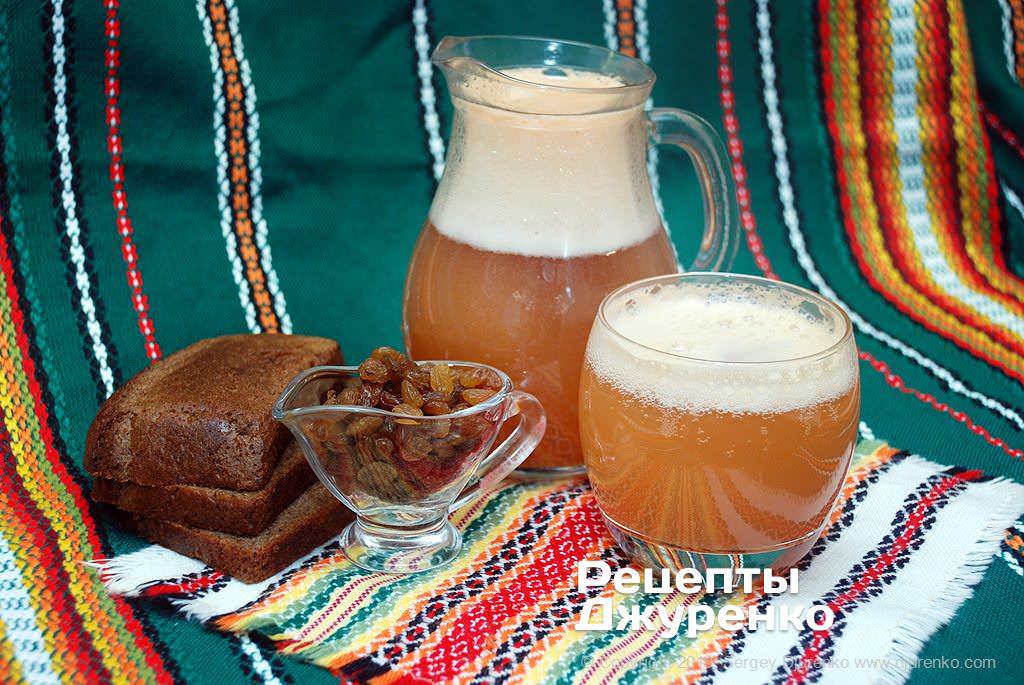
Ingredients
3 l
- Rye bread 800 g
- Malt bread 400 g
- Water 5 l
- Fresh yeast 10-12 g
- Sugar 1 cup
- Raisins 30 g
Step-by-step recipe
- Our goal was to make homemade kvass for okroshka with kvass (see the recipe here) that would be moderately fizzy and not too sweet, yet slightly sour with a pronounced bread flavor. We based it on an old recipe once used to make kislye shchi. For the starter we took a loaf of good rye bread and added half a loaf of dark malt bread – it is a little sweet but has a wonderful bready taste. Cut the loaves into slices and dry them in the oven. The bread should become completely dry and even very lightly toasted.
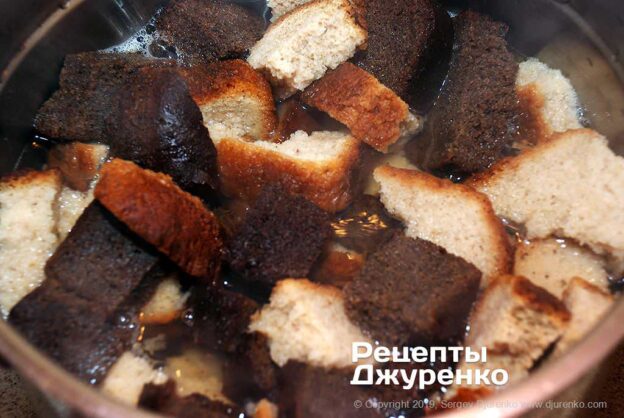
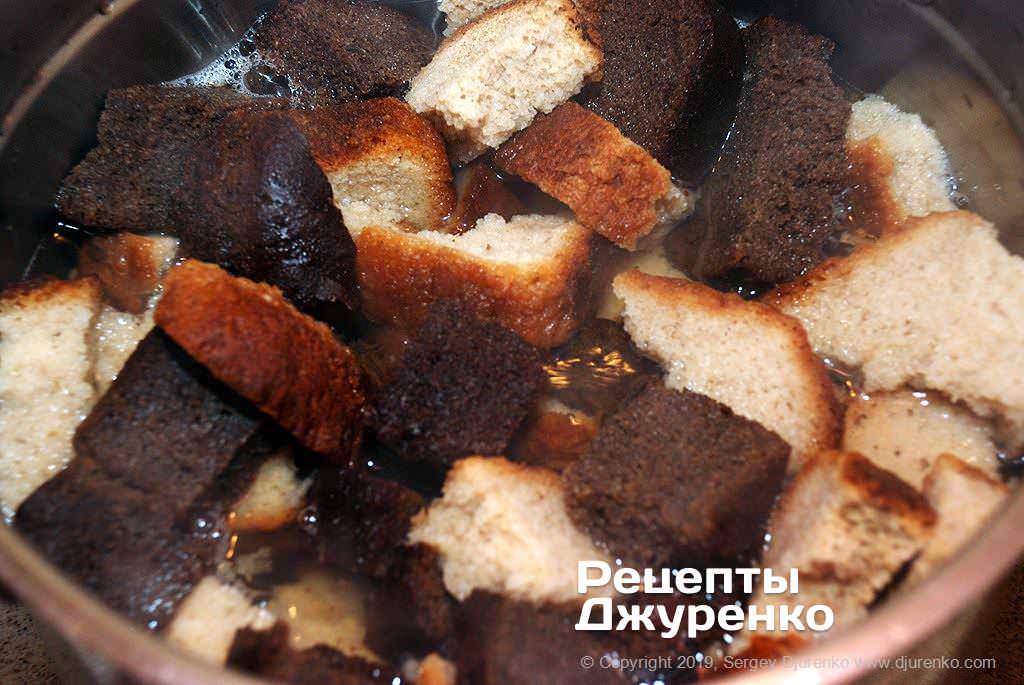
- Break the dried rye bread into pieces and put them in a large pot or bucket. Bring 2-2.5 l of clean water to a boil and pour the boiling water over the rye rusks. The rusks need to steep in the boiling water for 3-4 hours. The water will turn cloudy, a pleasant brownish-amber color, with a strong smell of bread. Let the infusion cool – it should be warm but not hot. A temperature of 40-45°C is just right.
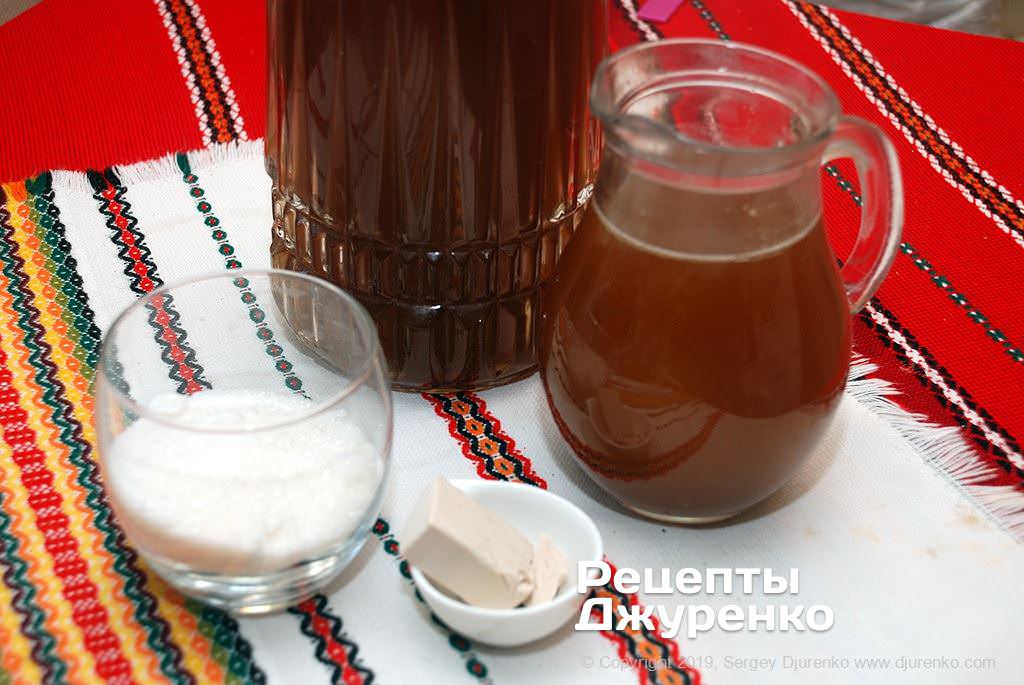
- Take all the soaked rusks out of the infusion and squeeze some of the liquid out of them. Strain the infusion through a thick cloth, even twice. Then pour the infusion into a large pot. Add 1 cup of sugar to the bread infusion and wait until it dissolves. Top up with boiled water so that the total volume of liquid is about 4 l.
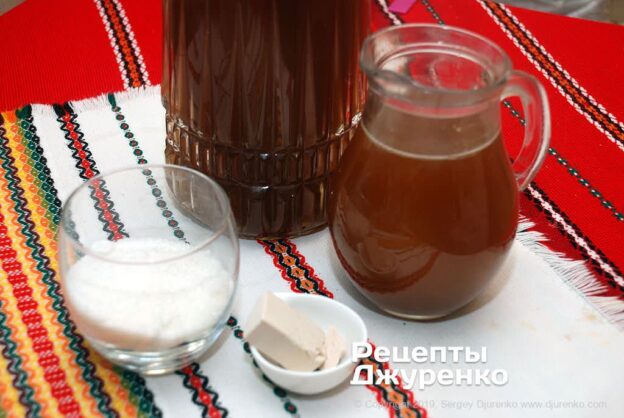
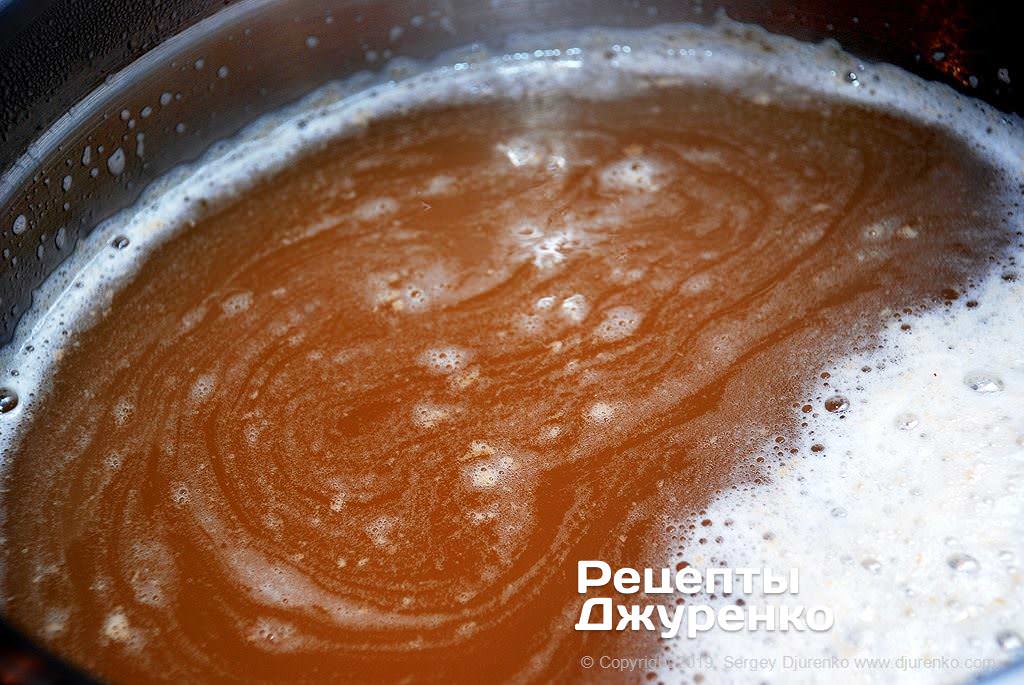
- There are options when it comes to yeast. Many people dislike yeast for various reasons. Homemade kvass without yeast is somewhat simpler, but in this case it is important not to miss the moment fermentation starts from “wild” yeast, or from the bread, water and sugar beginning to ferment. Pour the liquid into 1.5-2 l plastic bottles and leave in a warm place for 6-12 hours. The start of fermentation is easy to see: the liquid turns cloudy and the characteristic foam appears. After that, seal the bottles tightly and put them in the fridge for a day.
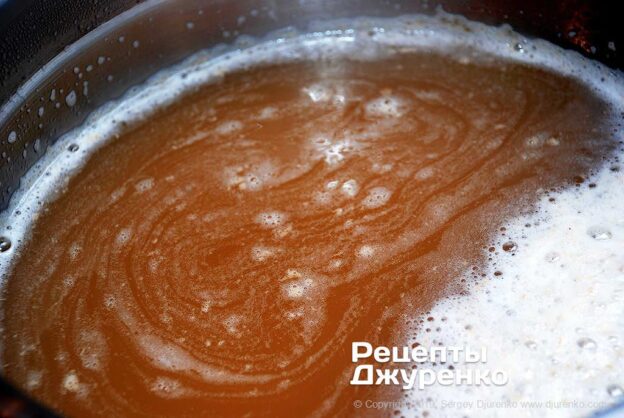
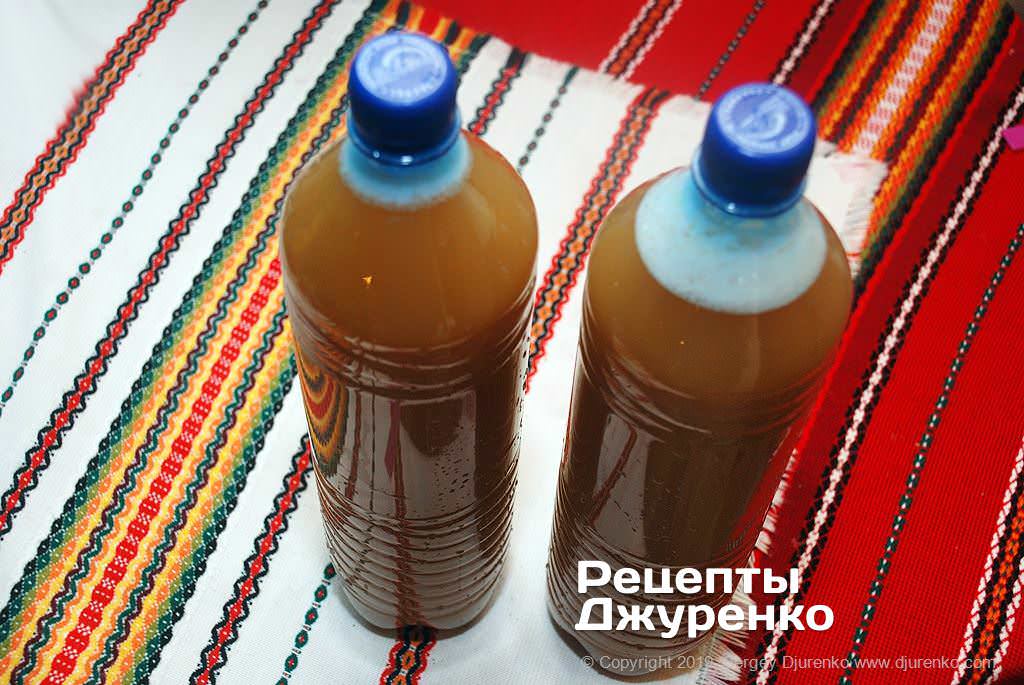
- The version with fresh yeast is a little simpler, and the homemade kvass turns out well. Dilute the fresh yeast with a small amount of the bread infusion. Mash the yeast so there are no lumps. Pour the yeast into the bread infusion through a small strainer. Leave at room temperature for 12 hours. Fermentation will start very quickly. After that, trying not to stir up the bread kvass, pour it into bottles, add a few raisins, seal them tightly, then put them in the fridge.
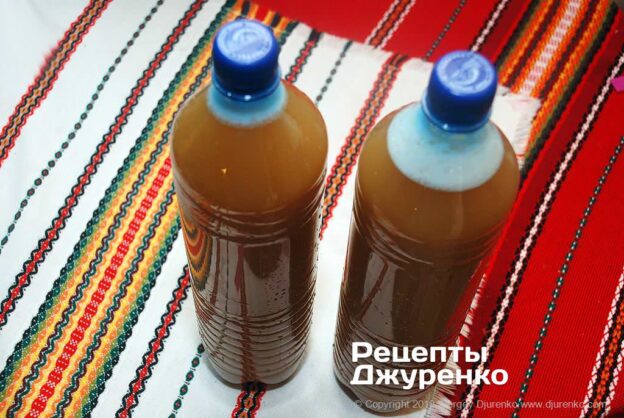
- After a day, the kvass is ready in both versions. There will be sediment in the bottles. Do not shake it up. It is very important that the kvass does not over-sour or mix with the sediment. If you have a lot of the drink, very carefully pour it off the sediment into clean bottles. Small amounts are best poured straight into a serving carafe. If the drink is too sour for your taste, you can sweeten it with sugar. For okroshka kvass you can add a piece of horseradish root – as it steeps, it will pick up a noticeable heat.
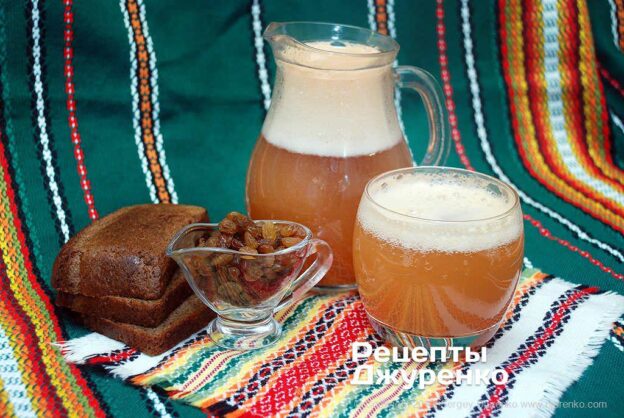
- Serve homemade kvass as a drink chilled. Pour it into glasses and you will get the characteristic foam. If the kvass is too sour, it is perfectly fine to add a little sugar. But if the bread kvass has not over-fermented, it will be sweet-and-sour and very “bready”. For okroshka and other dishes, let the drink stand so the foam settles.
| Yield: | 3 l |
| Calories: | 25 |
| Prep: | 12 h |
| Cooking: | 1.5 days |
| Ready in: | 2 days |
| Category: | Desserts and Drinks |
| Cuisine: | European |
| Rating: |
⭐
⭐
⭐
⭐
⭐
4.6
(5)
|