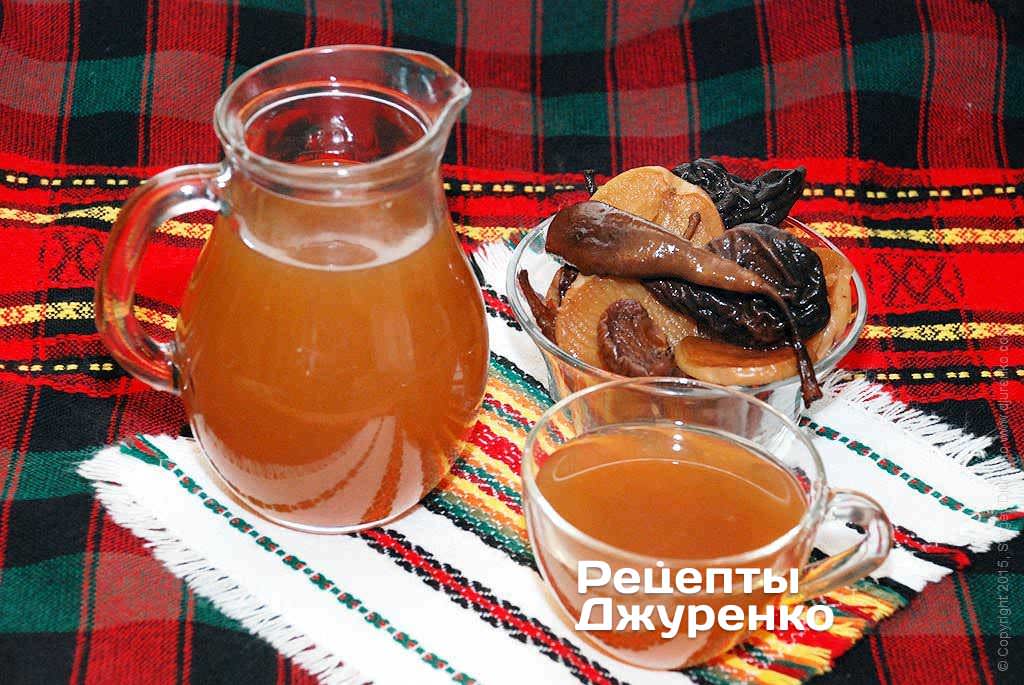
Dried Fruit Compote (Uzvar)
How long do you boil dried fruit compote?
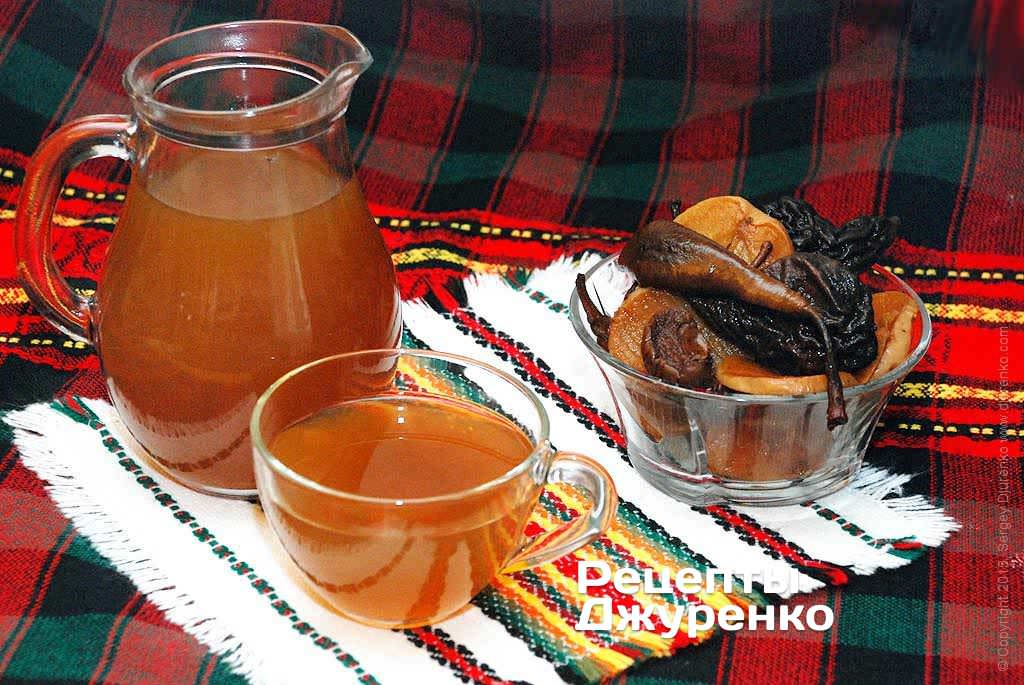
Uzvar, the Ukrainian dried fruit compote, does not need boiling: the washed dried fruit, 0.5 kg per 6 l of water, goes into boiling water, is brought back to a boil and taken off the heat straight away. The covered pot is then wrapped in a blanket for 4–5 hours while the uzvar steeps and cools. After that it goes into the fridge overnight, where the fruit settles to the bottom and the drink turns clear.
Ingredients
6 l of uzvar
- Dried fruit mix 0.5 kg
- Water 6 l
- Natural honey to taste


Step-by-step recipe
Dried fruit
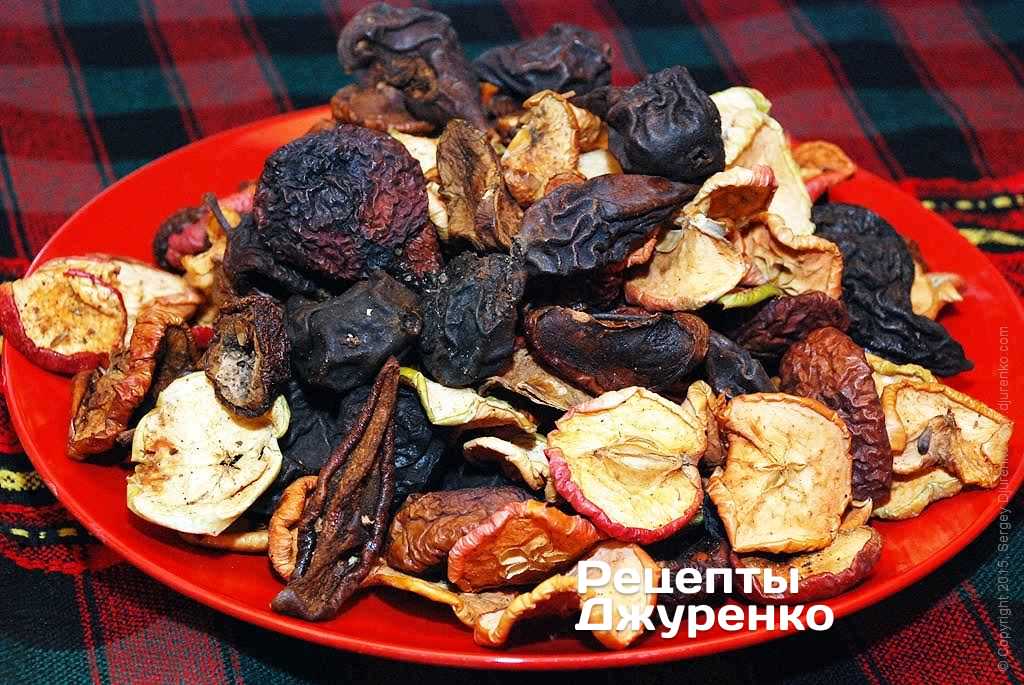
Get the dried fruit mix ready. To make uzvar compote, people rarely gather many kinds of fruit and berries. Most often it is apples cut into wedges or slices, small sweet pears and Hungarian (Italian prune) plums. The plums are sometimes lightly smoked, and then the compote gets an amazing aroma.
Since dried fruit is dried outdoors in the shade, it needs to be washed free of dust before making the drink. It is best done in two stages.
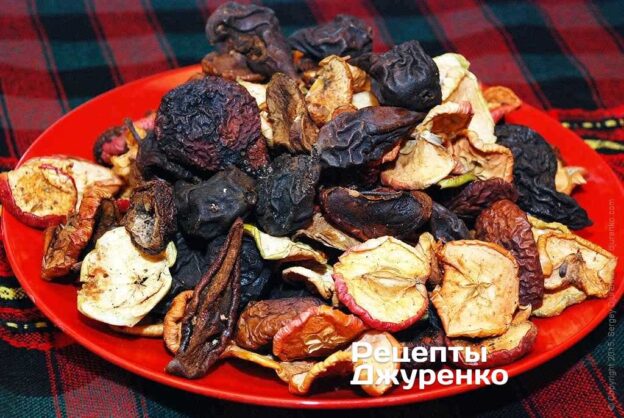
First, put the dried fruit mix in a large deep bowl and cover it with lukewarm water.
After 2–3 minutes, gently stir the fruit in the water with your hands. Drain the water.
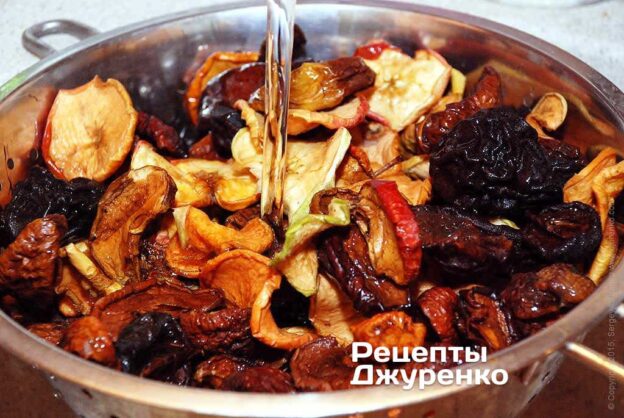
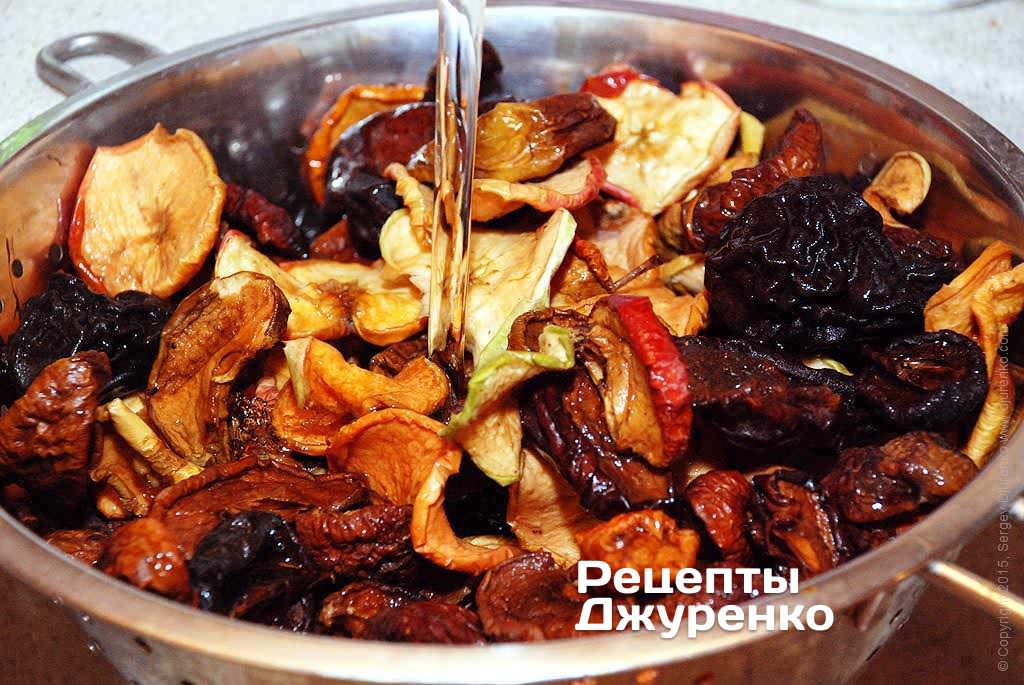
Then transfer the dried fruit to a large colander and rinse under cold running water.
Sort through the dried fruit, removing anything clearly spoiled and any unexpected finds. Once, quite by accident, I found an unknown coin, about the size of a Soviet “Olympic” ruble, in a dried fruit mix bought at the market.
Brewing the uzvar
Since most people probably don’t have a wood stove at home, I suggest a regular large pot and a stovetop. A large ceramic pot is ideal: it holds heat beautifully for a long time, steeping the compote to perfection. But, as it turned out, an ordinary stainless steel pot copes with the job just fine.
Pour 6 l of filtered, well or spring water into the pot.
The cleaner the water, the tastier and richer the flavor. I remember that as children we were sent to fetch water for compote from one particular well, because the water there tasted better. Strictly speaking, you can use more water; I say 6 l because that is my biggest pot.
Bring the water to a boil over high heat and drop in the washed dried fruit, all at once.
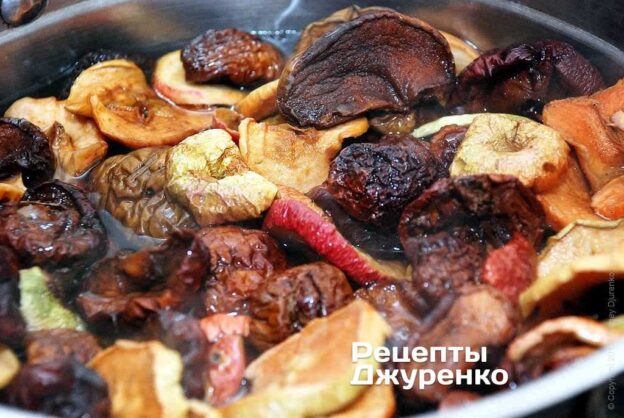
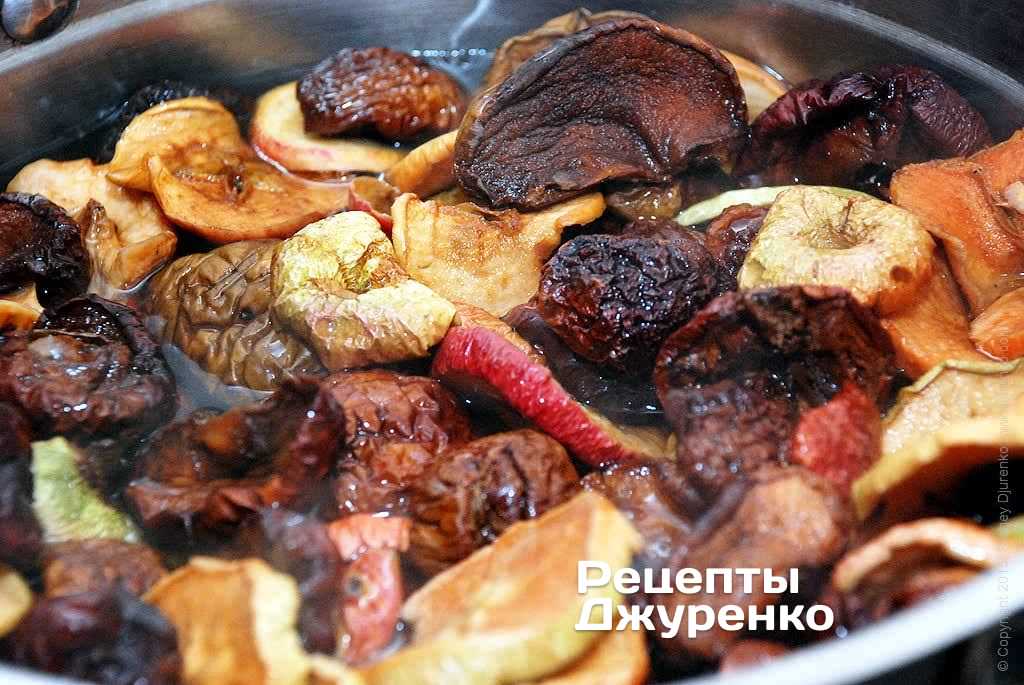
Without covering the pot, bring the water back to a boil and immediately take the pot off the heat.
Dried fruit compote does not need to be boiled: it must not simmer, it has to steep.
If the compote is still not quite sweet enough for your taste, add honey. Put the honey in a cup, dilute it with a little compote and pour the mixture into the pot.
Steeping and chilling
Cover the pot with a lid, wrap it in a quilted or wool blanket and leave it until the compote has steeped and cooled to room temperature. This usually takes 4–5 hours.
In principle, the compote is now ready to drink. But uzvar should be cold.
Put the pot of compote in a cellar or the fridge. Ideally, overnight.
The dried fruit will settle to the bottom, and the drink itself will clear and taste its best.
Serve the uzvar cold. The fruit pulp is a dessert in its own right, many will agree with me.
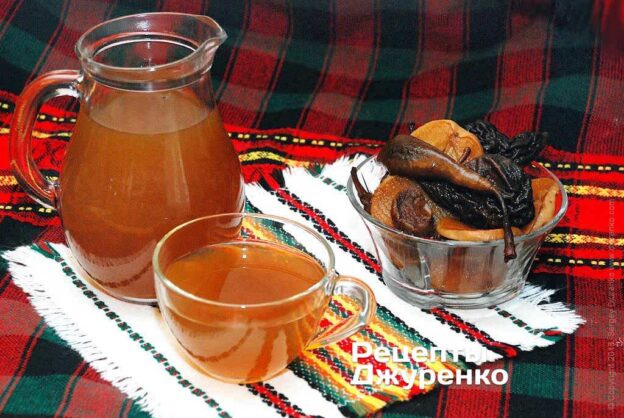
No fizzy soft drink can compare to uzvar.

How did you like this recipe?
No one has rated it yet — be the first.
Calories and macros
2 kcal
100 g
- Protein0 g4% of kcal
- Fat0 g3% of kcal
- Carbs0.5 g93% of kcal
Calculated from the recipe ingredients, excluding salt and spices. Data: USDA and Matvaretabellen.