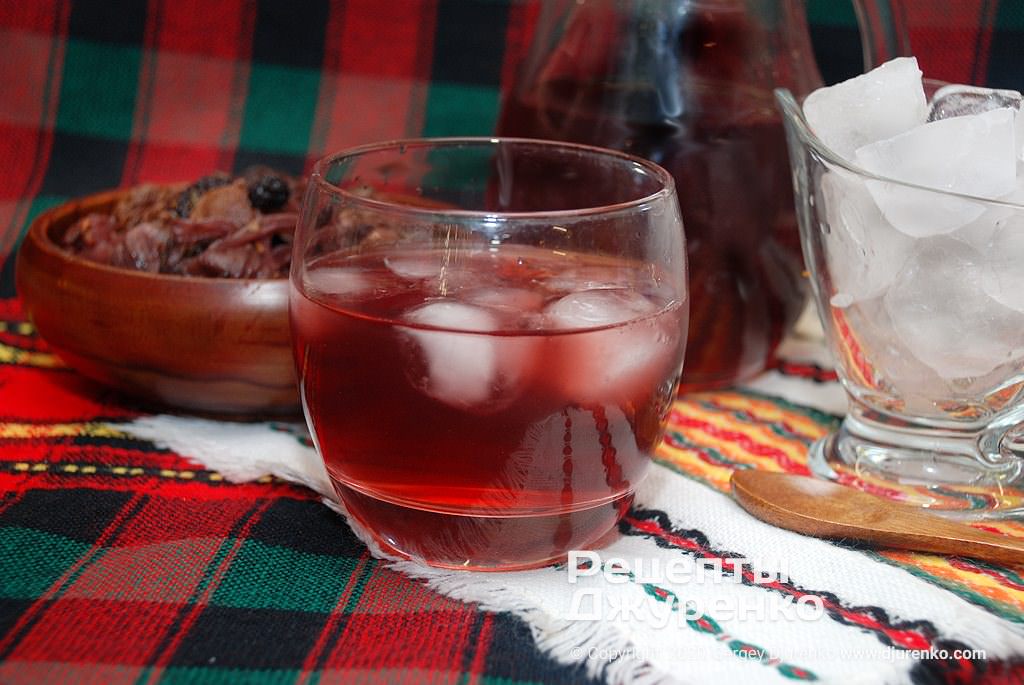
Chinese Prune Compote (Suanmeitang)
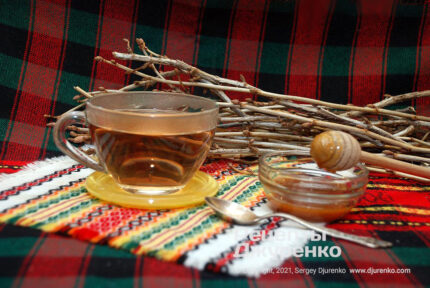


Ingredients
3 l
- Dried sour prunes 100 g
- Dried tangerine peel 1-2
- Hibiscus 2 tbsp
- Dried mulberries (optional) 2 tbsp
- Hawthorn berries 2 tbsp
- Licorice root 1 tsp
- Tea rose buds or petals 2-3 tbsp
- Dried mint 1-2 sprigs
- Osmanthus flowers 1 tsp
- White or brown sugar (or powdered sugar) 2 tbsp (to taste)
- Water 3.5 l
Step-by-step recipe
Gathering the components
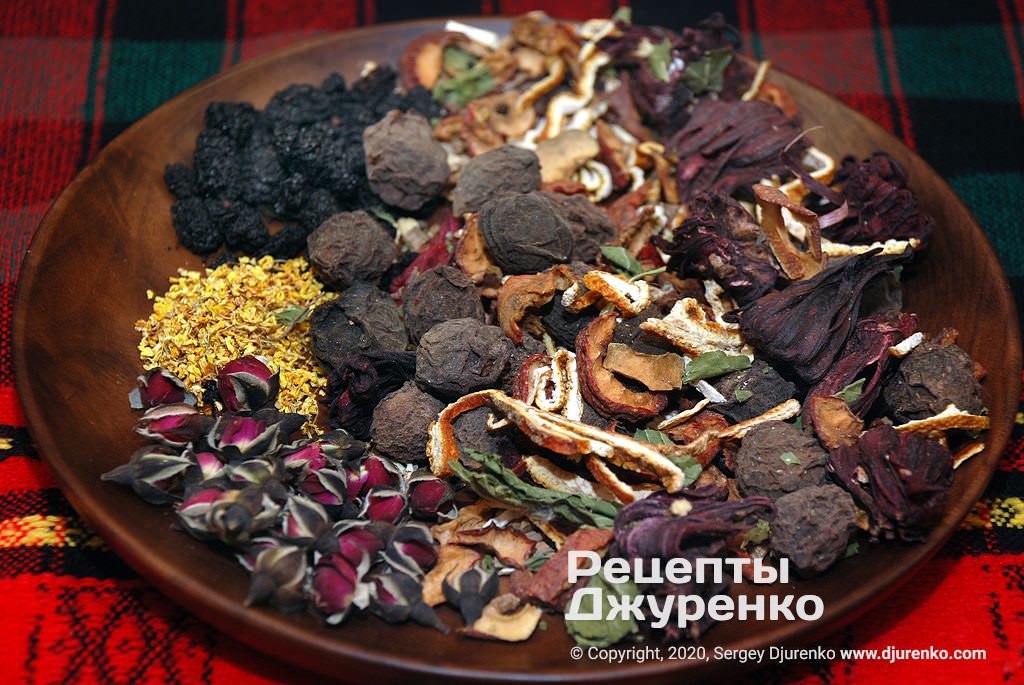
Of all the ingredients that go into prune compote, osmanthus is probably the most exotic. It is sold in tea shops. It is worth using without fail, as it gives the main aroma and the slightly sweet taste of the drink. Sometimes you can find it in the tea sections of big stores. It is best to buy dried sour plums at the market, where you can taste them. Hibiscus, rose buds or petals, sugar and mint are available in any store. For licorice and hawthorn, go to a pharmacy. Tangerine peel can be replaced with orange or lime peel. Dried mulberries are optional, and they can also be bought at the market or replaced with rose hips.
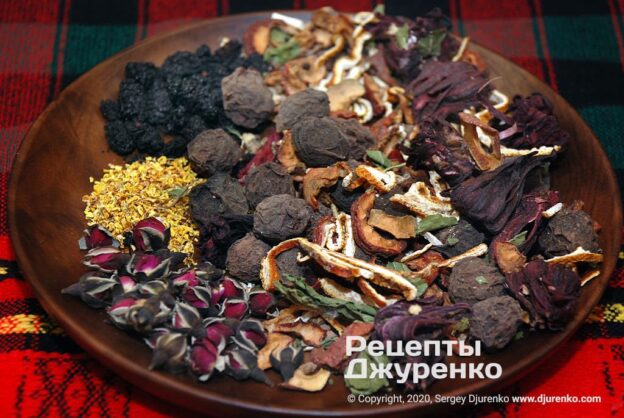
If you are missing some ingredients, try replacing them with similar ones, close in taste and aroma. By and large, what matters are the sour plums, osmanthus, citrus peel and licorice.
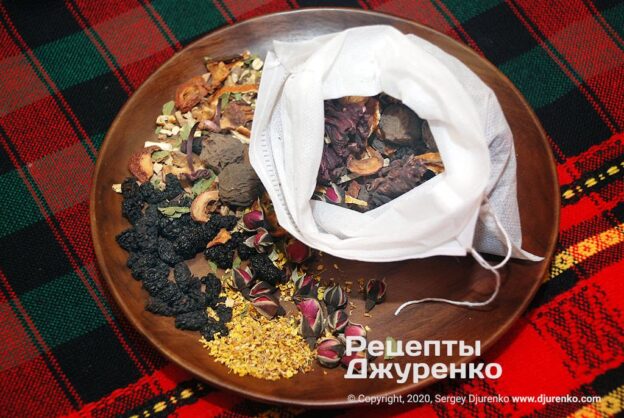
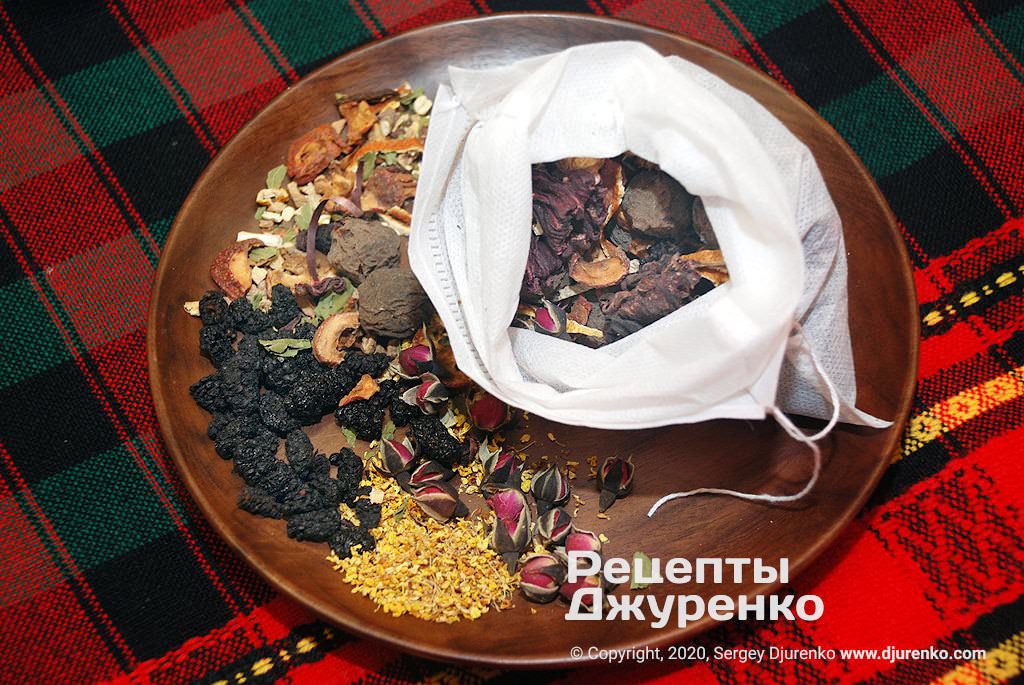
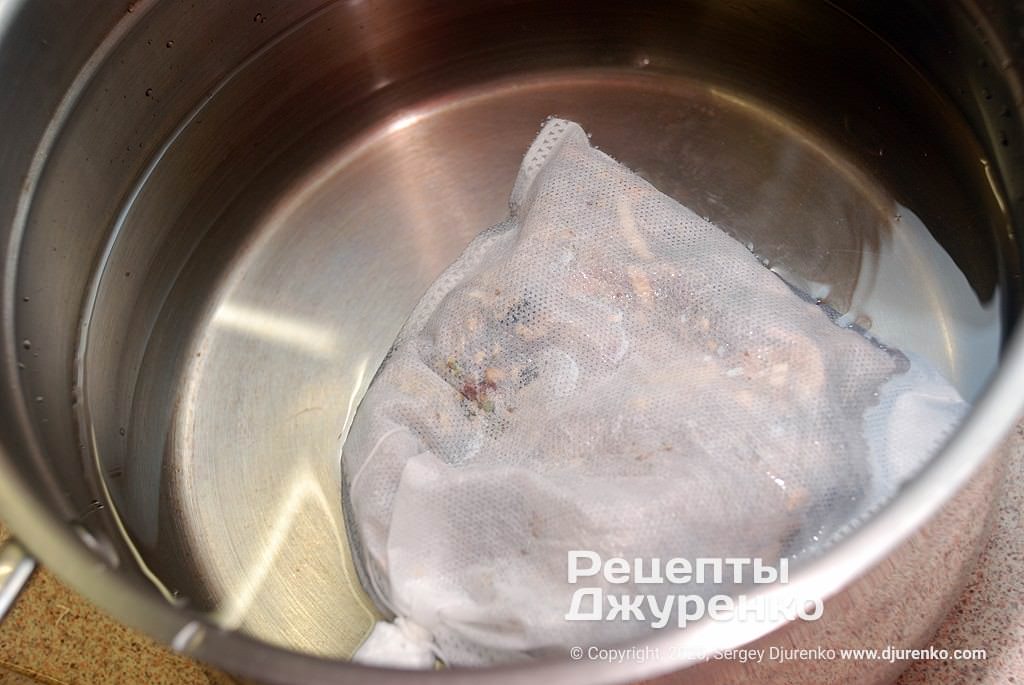
Put all the dry components except the sugar into a cloth bag or sachet. We soak and cook all the components at the same time, and in a bag they don’t “float around” in the drink. Alternatively, you can put everything on a piece of clean cloth and tie it in a knot.
Soaking and cooking
Soak the components. Pour 3.5 l of clean cold water into a pot, put the bag of dry components in it and leave the pot without heat for 1.5-2 hours. This is needed to soak and rehydrate them, especially the dried prunes. Authentic recipes recommend spring water. By the way, hibiscus also infuses very well in cold water, which is how hibiscus drink is often made.
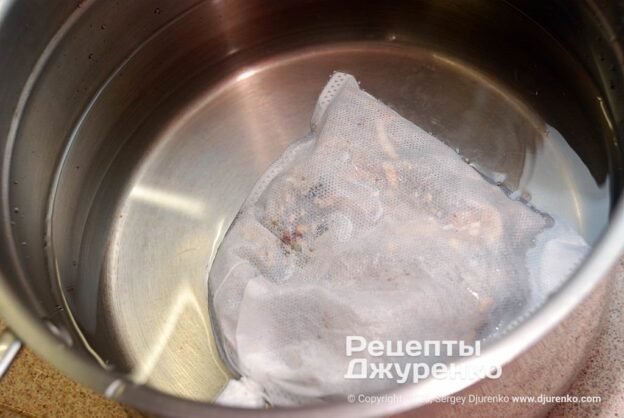
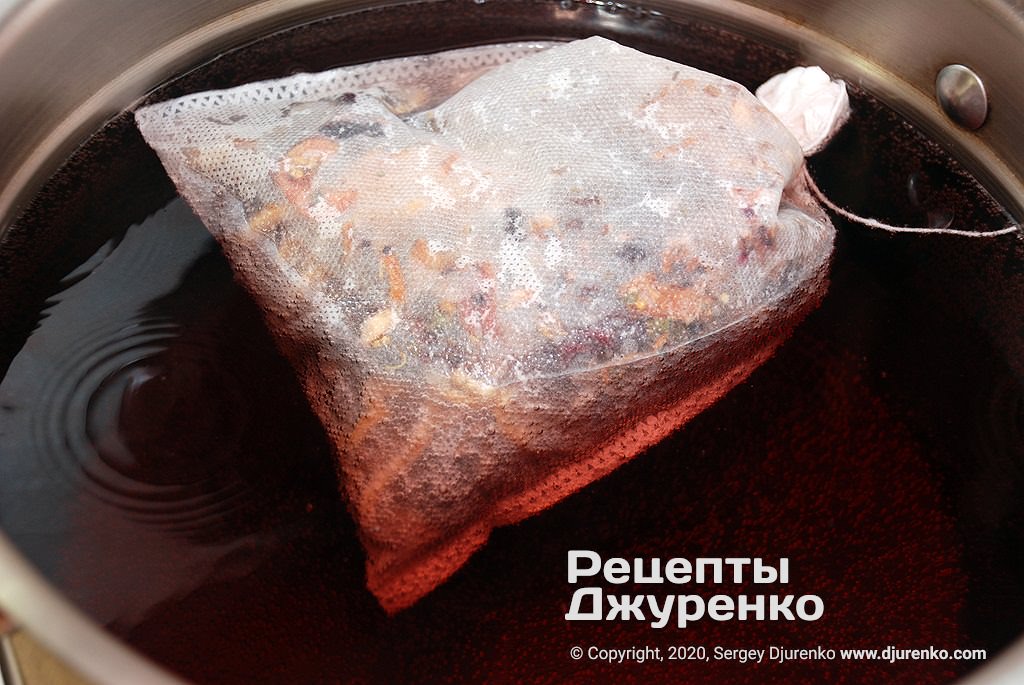
Cook the decoction. Put the pot on the heat, bring to a boil, reduce the heat and simmer over low heat. I cooked it for 20 mins, taking care not to let the liquid boil hard. The cooking time varies greatly from recipe to recipe: it can be short or go up to 1 hour.
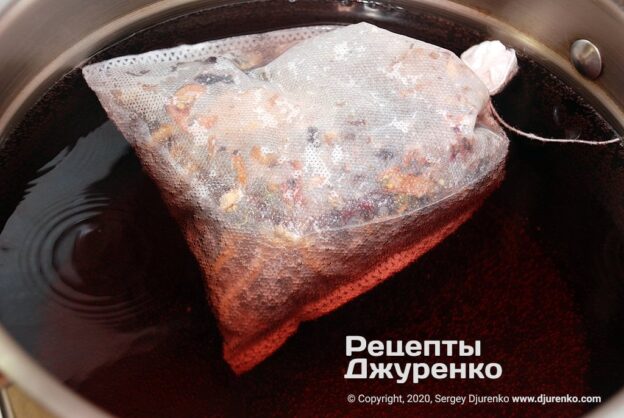
During this time the decoction takes on a pleasant color, mostly thanks to the hibiscus. The taste is distinctly sour, which is important, since dried prunes are the main ingredient. The aroma comes from the osmanthus, licorice and mint. The prune compote stays clear.
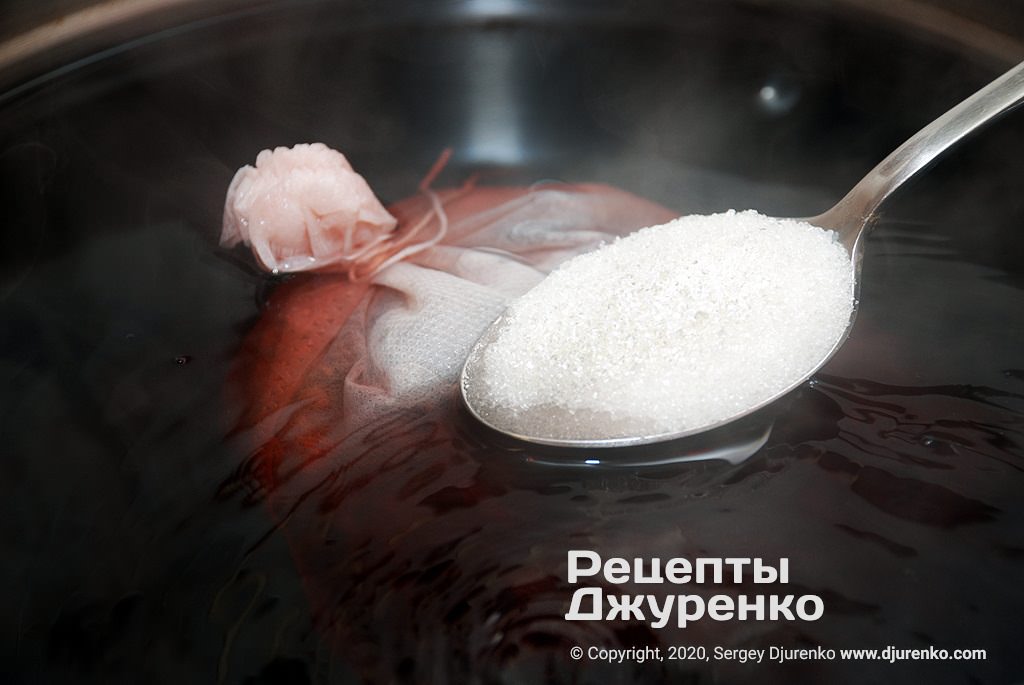
Add sugar or powdered sugar to taste, if needed. I added 1 tbsp of sugar (14 g) to keep the sour taste of the plums.
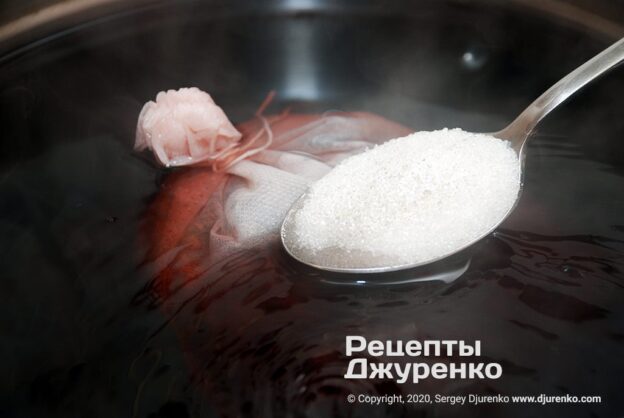
Cool and strain. Once the sugar has dissolved, take the pot off the heat and let the drink cool. During this time it keeps infusing with the plums and the other ingredients. When it has cooled, you can throw the bag away. It is best to strain the infusion through a thick cloth. Put the prune compote in the cold.
Serving
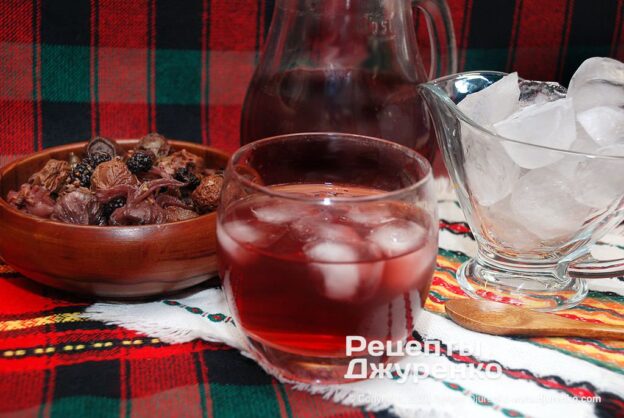
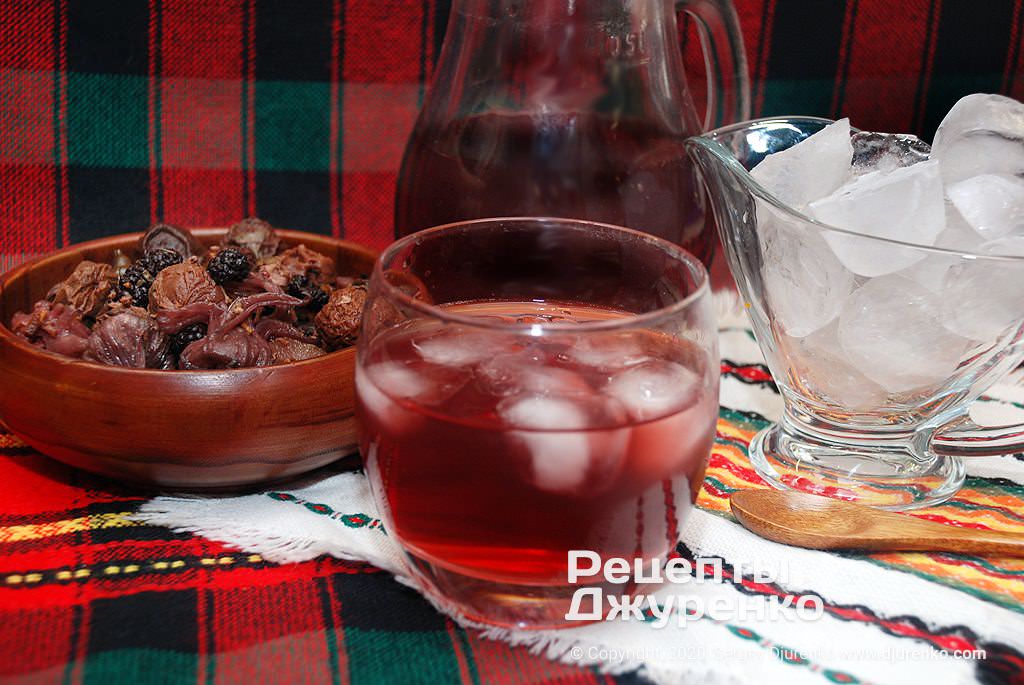
It is best to pour the drink into a small pitcher or straight into cups: without refrigeration it quickly turns sour unless preservatives are used. In hot weather, serve the drink with ice cubes.
Petals of various flowers, lotus seeds and green tea are often used as additional components. But the main taste and the noticeable smoky aroma come from the dried prunes.
Calories and macros
10 kcal
100 g
- Protein0.1 g3% of kcal
- Fat0 g1% of kcal
- Carbs2.4 g95% of kcal
Calculated from the recipe ingredients, excluding salt and spices. Data: USDA and Matvaretabellen.