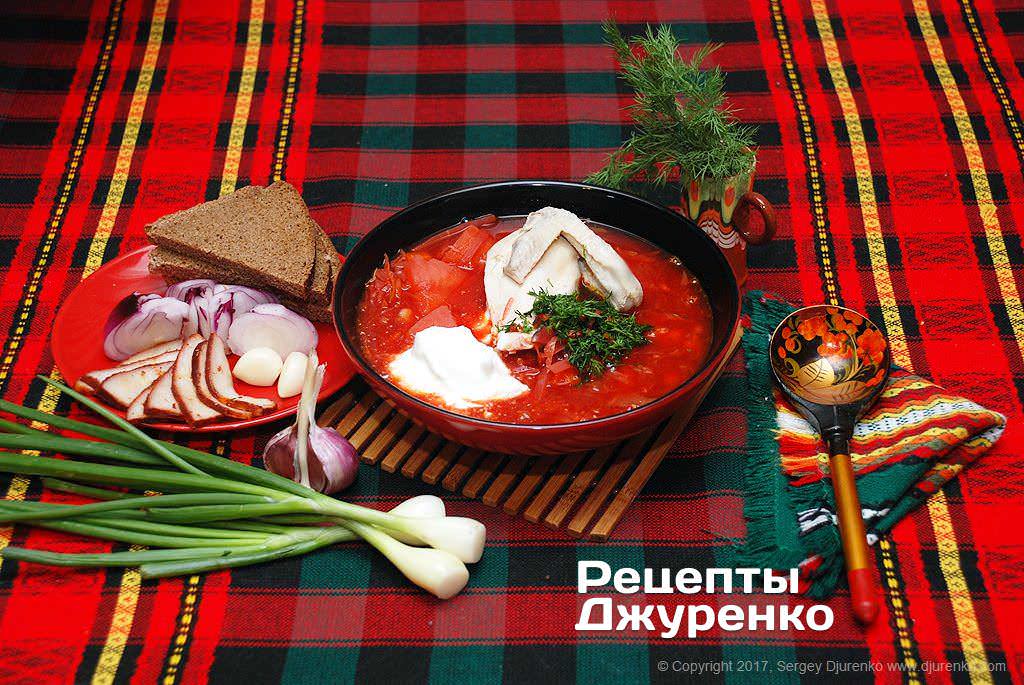
Chicken Borscht: Ukrainian Red Borscht with Chicken and Beans
Red borscht with chicken is a variety of the traditional Ukrainian dish that is the main soup of the national cuisine. Borscht is generally considered a vegetable dish cooked in a broth made from meat, poultry, mushrooms and so on. It is a complex dish: different borscht recipes can include as many as 20–25 ingredients.
By and large, every single borscht is unique. There is no fixed recipe, set of ingredients or cooking method. Borscht often differs from region to region, from village to village. And, surprisingly, two neighbors will make completely different borscht. Each of them is as sure of her own borscht as she is that the sun rises in the morning and sets in the evening – and is even ready to fight over it.
No more than half a century ago, for certain “special” reasons, borscht with meat was a fairly rare dish in Ukrainian villages. I still remember how scarce meat was. Far more often my grandmother made borscht with salted pork – people cured it themselves and used it as needed. Chicken borscht, on the other hand, was made much more often. Chickens, those ubiquitous creatures, ran around the yard and the vegetable garden and served as a source of meat whenever it was needed.
When there was no meat, borscht was made with mushrooms and beans. It is, by the way, an absolutely superb soup. I love slippery jacks in borscht – I prefer them to all the other forest mushrooms used for borscht. When certain foods could not be eaten for religious reasons, my grandmother usually made a thick lenten borscht from vegetables only.
Chicken borscht, like any Ukrainian borscht, always contains beets – in Ukraine they are called “buryak”. You can make borscht with chicken broth but no meat, no beans, no potatoes – but beets are a constant, unchanging ingredient, and so is sour cream. In Ukraine, only green borscht with sorrel is usually made without beets.
We make homemade red chicken borscht from a small homegrown or store-bought chicken, and the chicken is taken out of the broth before the vegetables go in. Only just before serving is a big piece of boiled chicken added to each bowl – I don't like chicken stained with beets. Chicken borscht always includes beans, cabbage and hot pepper, and dill and garlic are added just before serving.
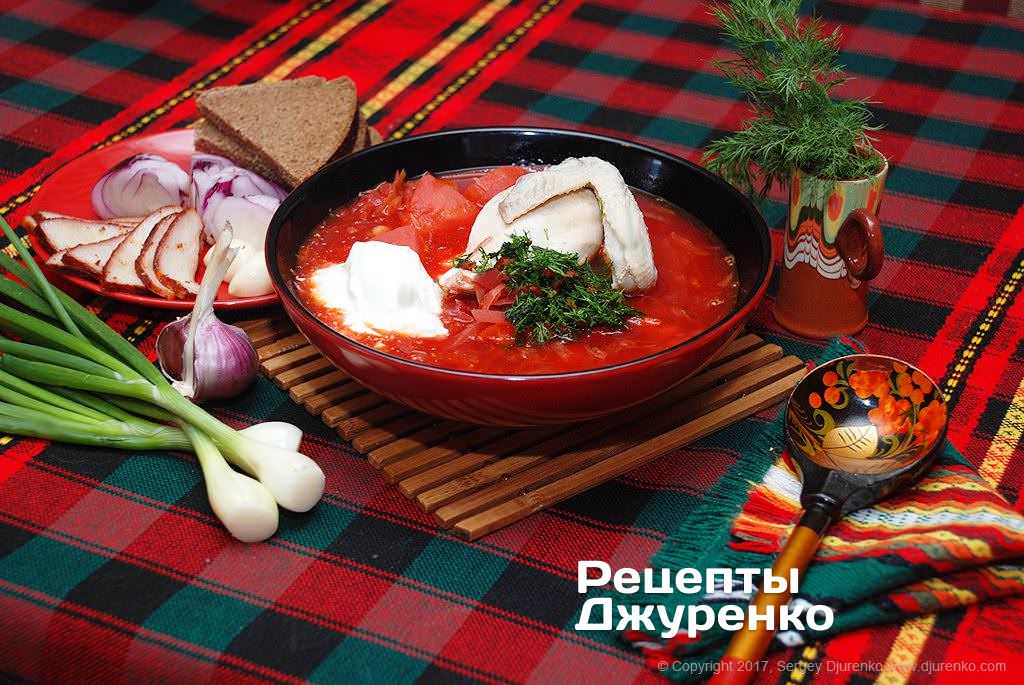
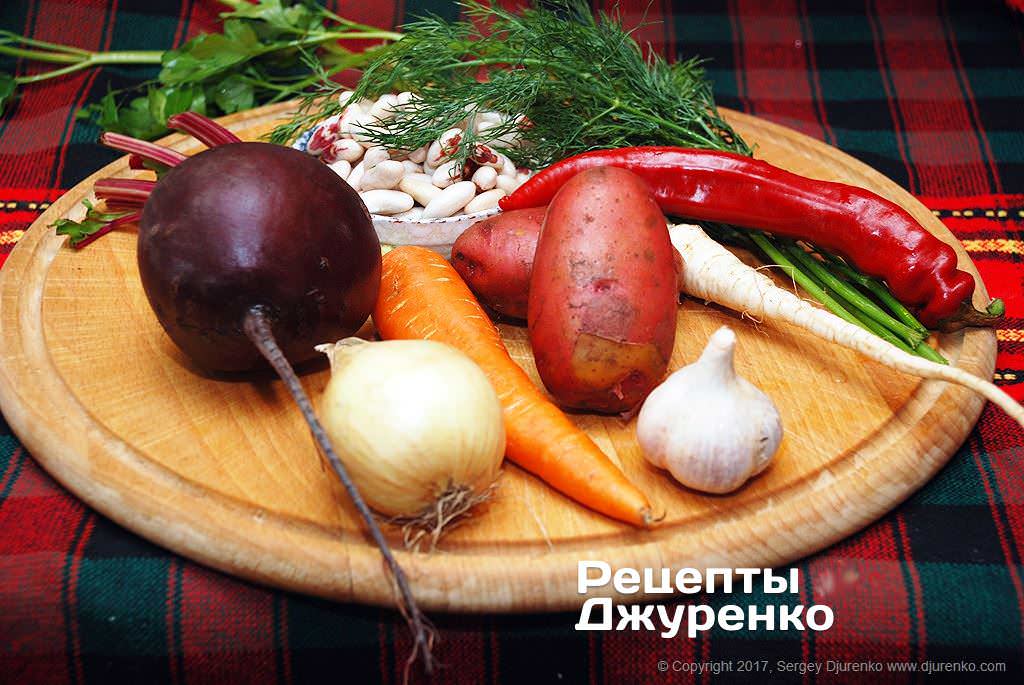
Ingredients
4 servings
- Chicken 1
- White beans 0.5 cup
- Red beets 1
- White cabbage 0.5 head
- Carrot 1
- Onion 1-2
- Potatoes 2-3
- Garlic 1 head
- Dill 0.5 bunch
- Parsley root 1
- Red hot chili pepper 1
- Vegetable oil 2 tbsp
- Tomato paste 2-3 tbsp
- Sour cream to taste
- Salt, black pepper, bay leaf to taste
- Bell pepper, celery root, ripe tomatoes, flour, a piece of aged salo optional
- Black or white bread, green onions, onion, salt with pepper, fresh or smoked salo, garlic, pampushky, and a tasty, healthy drink with a hot pepper in a frosted decanter for serving
Step-by-step recipe
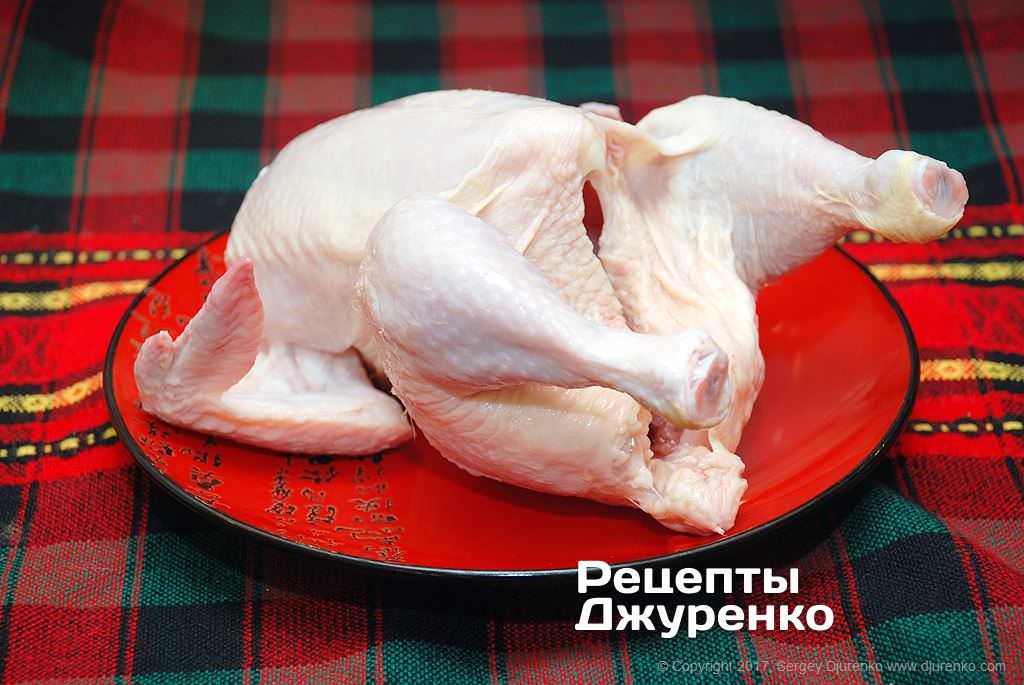
- Ideally, borscht is made from a whole homegrown chicken. There was a time when a homegrown chicken was not such a rarity. Unlike the “bluish” store-bought chickens, grandma's hens, raised on wheat, were tastier and of better quality. In times of total food shortages, buying a chicken in a shop was a problem. I understand that most people buy chicken at the store, so just buy a chicken. For a big pot of chicken borscht, one medium bird of 1–1.2 kg is enough.
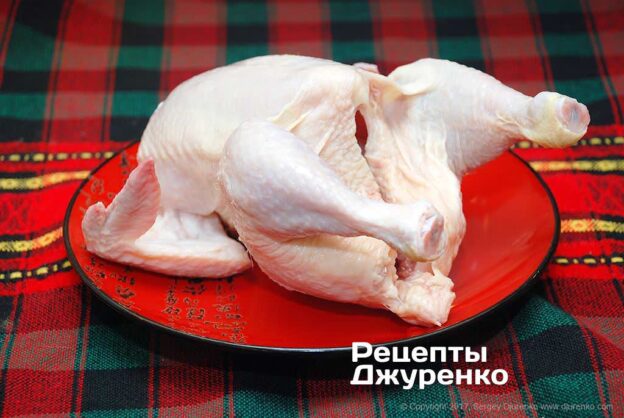
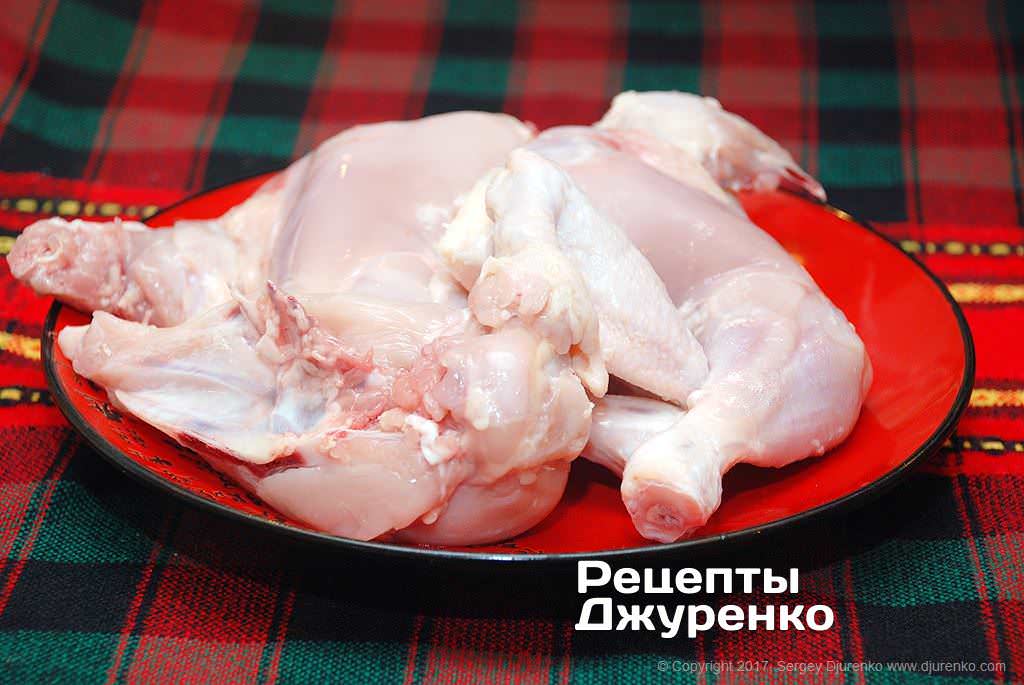
- For borscht made with chicken broth, it is better not to use the skin and chicken fat. Wash the chicken and remove any remaining feathers from the wings. Cut the chicken into four pieces – one per planned serving of borscht. You can cut it into more pieces if you like; it doesn't really matter.
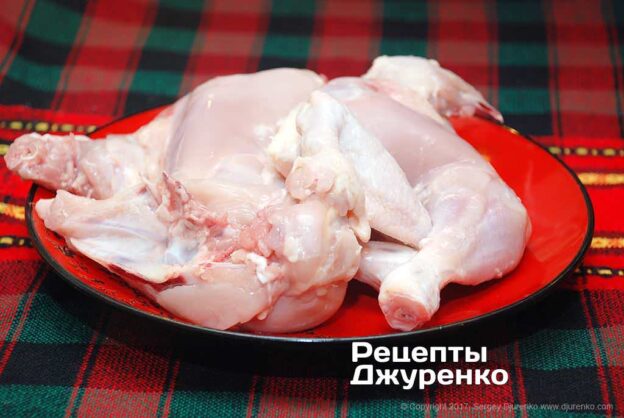
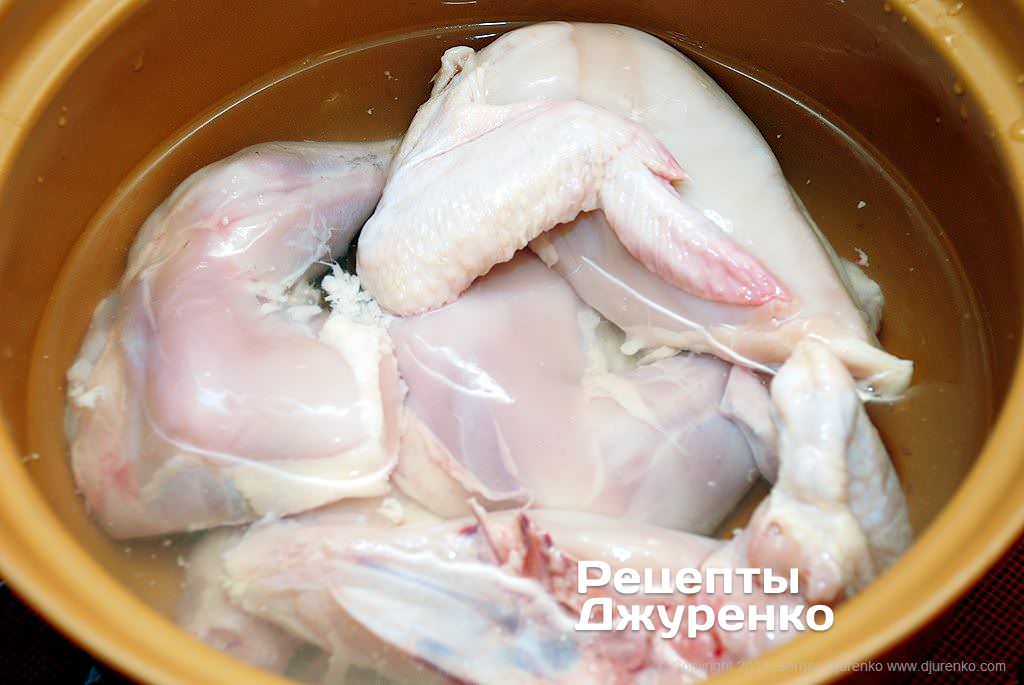
- Trim all visible fat from the chicken pieces and remove all the skin. Usually skin remains only on the wings. Remove any leftover giblets. Put the chicken pieces in a pot and cover them with water. Factory-farmed chicken is fed compound feed with various “healthy” additives, so for chicken broth it is worth parboiling the pieces first. Bring the water to a boil, and as soon as a lot of foam forms and the water turns cloudy, drain the liquid and rinse the chicken. Unfortunately, this may not be quite the right way, but it is a necessary measure.
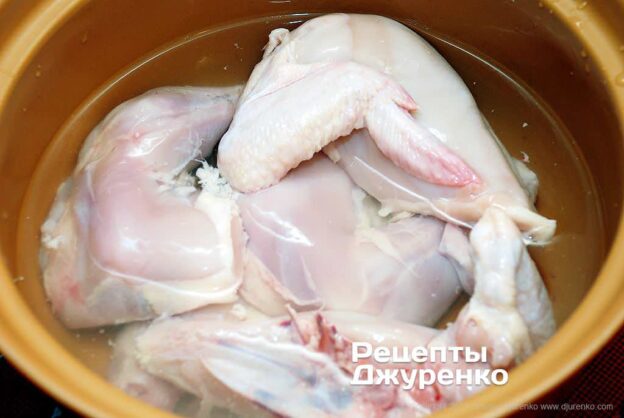
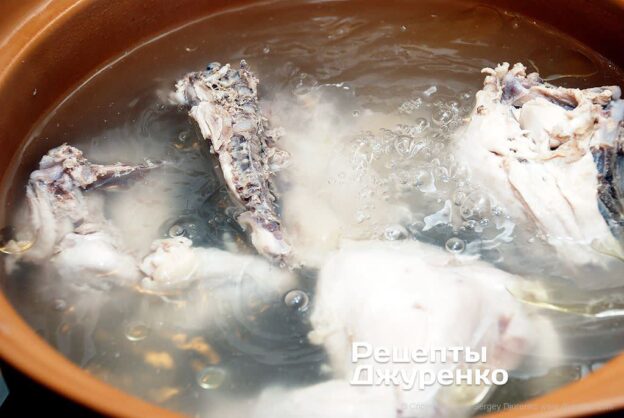
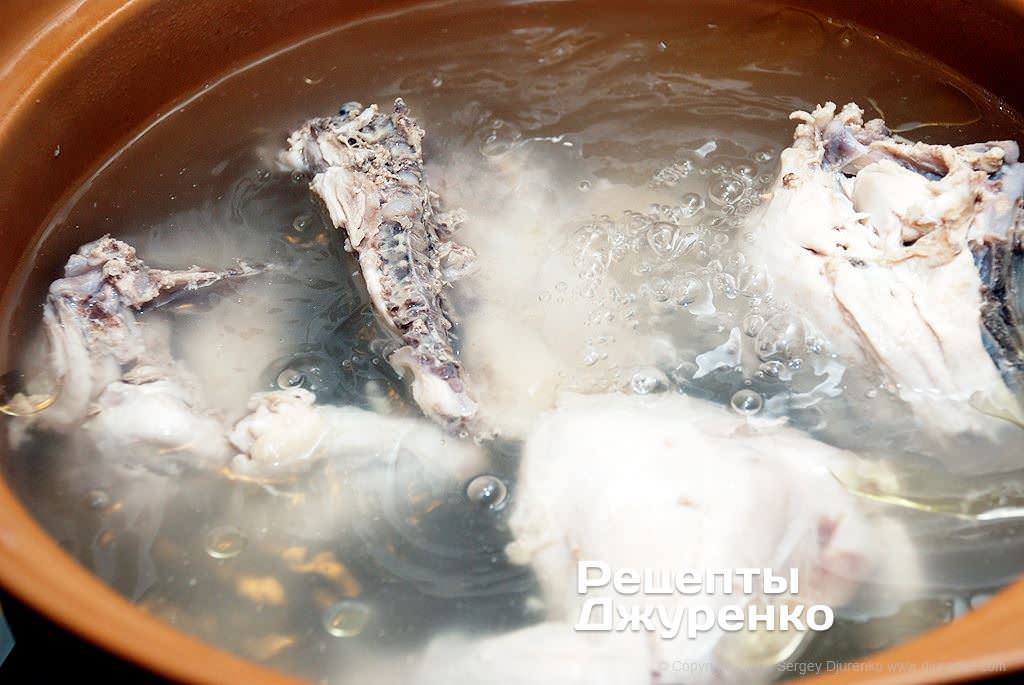
- Put the parboiled chicken pieces in the pot and pour in 2 liters of cold water. That much liquid (a little will boil off) is enough for a family of 4. Bring the broth to a boil and add a pinch of salt. Simmer the broth over low heat so that the liquid doesn't bubble. Try to keep the heat as low as possible while the broth is still visibly simmering. Cook the chicken for 45–60 mins. The broth will turn out rich and clear, even with store-bought chicken.
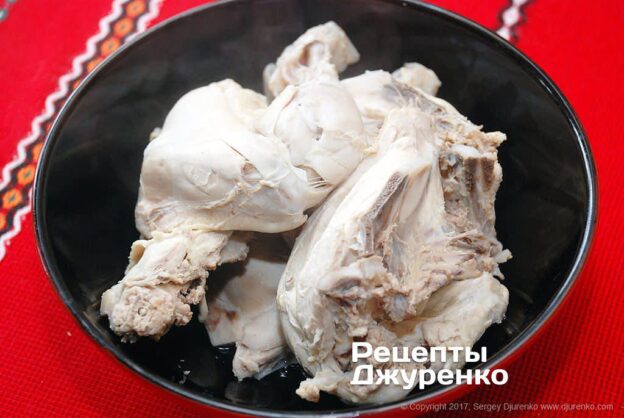
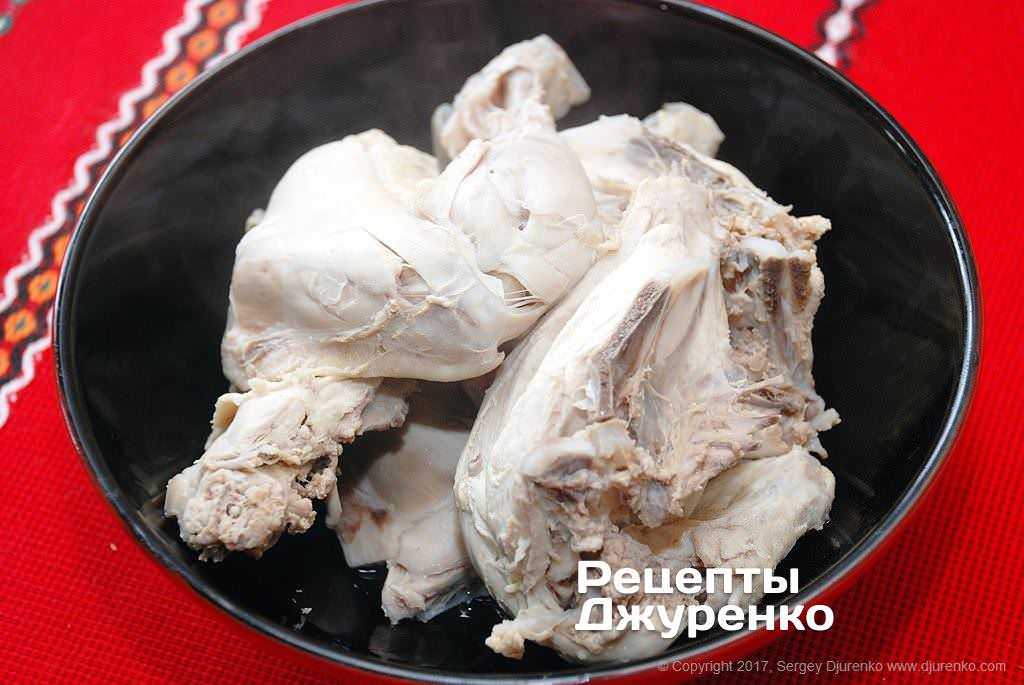
- Take the boiled chicken pieces out of the broth, put them on a plate and cover with an upturned bowl so the meat doesn't dry out. From here on, the borscht is cooked in the chicken broth.
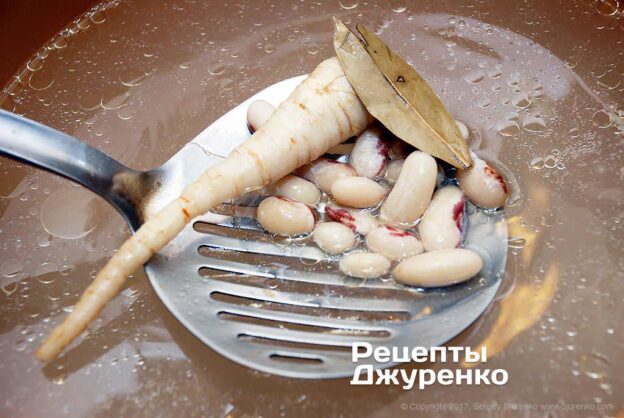
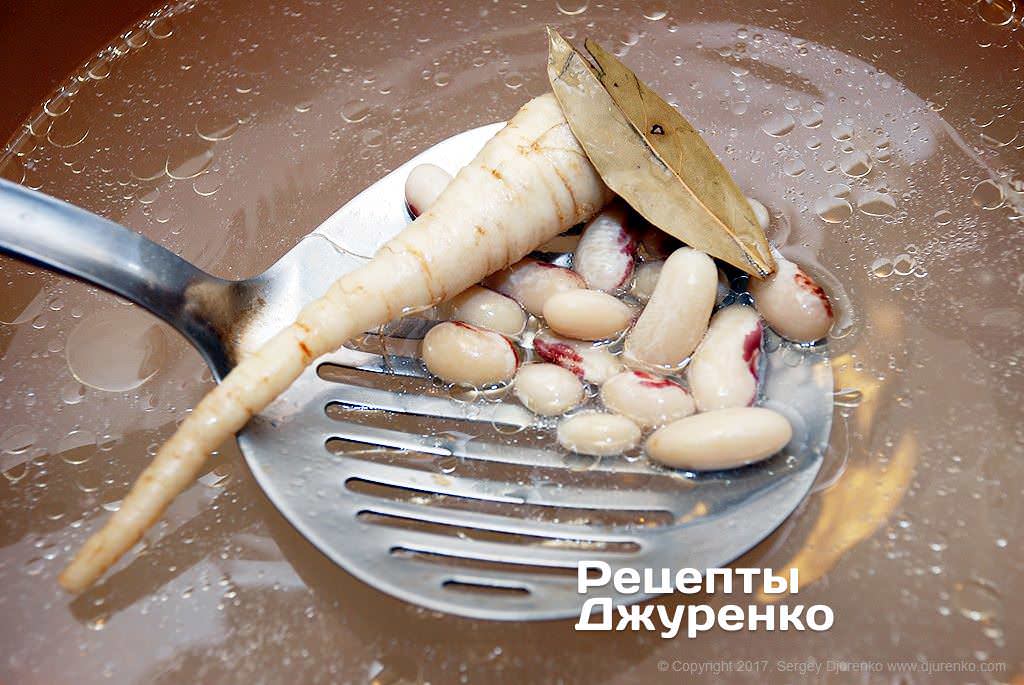
- Add a well-washed, unpeeled parsley root, 2–3 bay leaves and a pinch of salt to the broth. If you like, you can add a piece of celery root and a whole sweet bell pepper, which can be taken out after cooking and eaten separately. Also add the beans soaked the day before. White beans are best: they don't get stained in borscht and stand out nicely. Bring the broth to a boil and simmer over low heat until the beans are half-cooked. Discard the parsley root and bay leaves – they have done their job of flavoring the broth for the chicken borscht.
- When we make borscht with meat at home, we usually add the vegetables raw and unprepared – that's just how it has always been done. For this recipe we will prepare the vegetables by lightly frying them first. Peel all the vegetables: beets, carrot, onion, garlic.
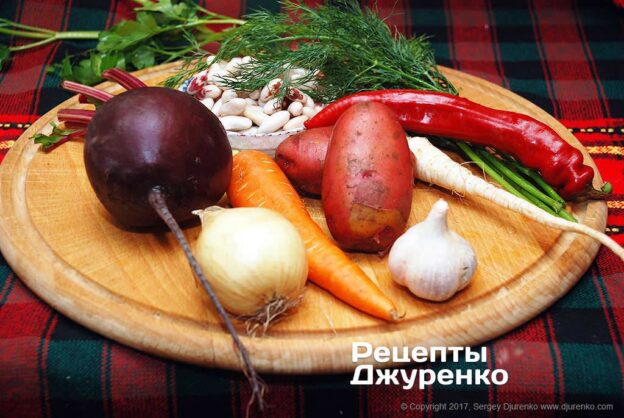
- The vegetables need to be fried or, as they say, sautéed. By the way, I don't think it's quite right to call frying vegetables sautéing. The goal of sautéing is a more uniform mass, whereas when frying, the pieces stay whole. Sautéing comes down to briefly cooking vegetables in some kind of fat. The fat takes on the color of the vegetables, and the vegetables soften. Frying produces a barely noticeable golden crust, and the vegetables stay whole.
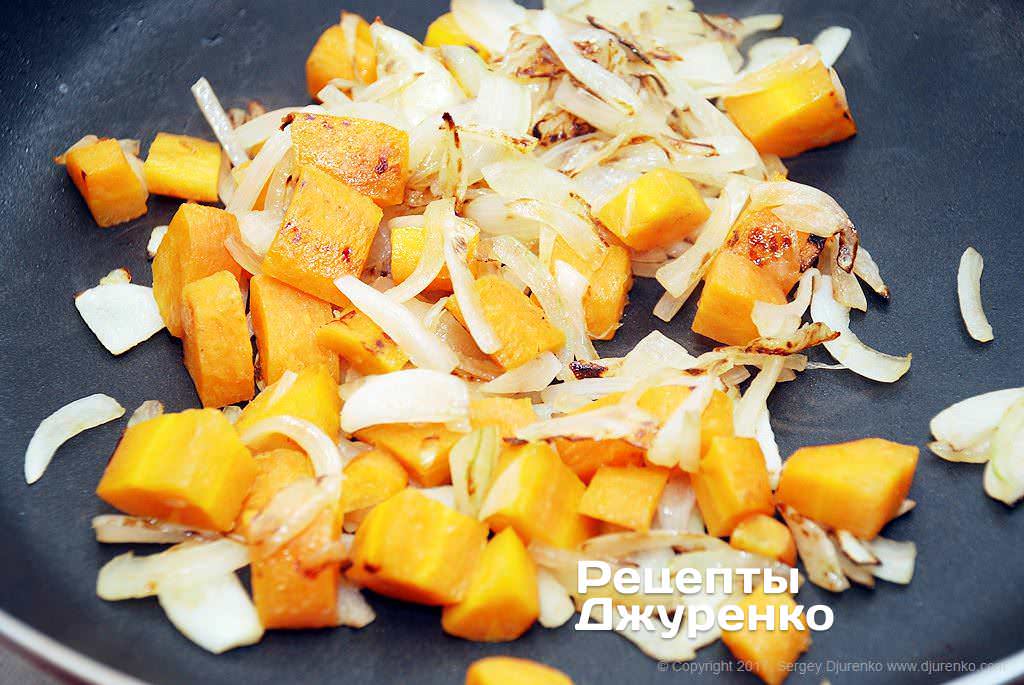
- Peel and wash the onion and carrot. Cut the onion into thick strips and the carrot into fairly large cubes. Heat 1 tbsp of vegetable oil in a sauté pan. Many will say you should fry in pork fat. It's a matter of taste – that's probably the way to go for borscht with pork. For this borscht, vegetable oil is enough. Put the sliced onion and carrot into the hot oil at the same time and fry for 4–5 mins, stirring often. The onion will start to brown, and the carrot cubes will soften and begin to fry.
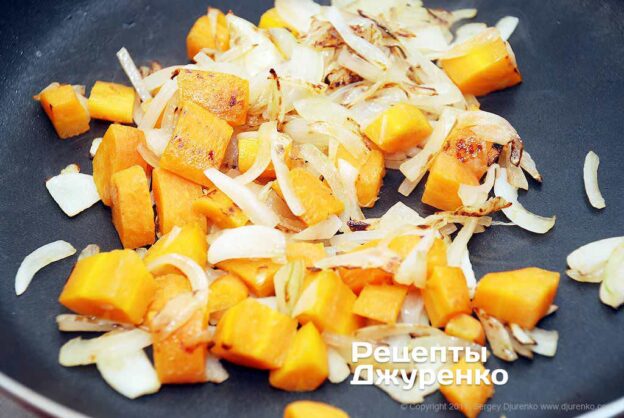
- Add the fried onion and carrot to the broth. The broth should be at a gentle simmer. Peel one garlic clove, crush it and add it to the broth. The fried base for borscht is often made with salo, lard or any pork fat, and all the vegetables are fried together with grated tomato pulp or tomato paste and hot pepper. I've even seen packets of ready-made seasoning in stores with complicated, scary ingredient lists – of the “just add boiling water” kind.
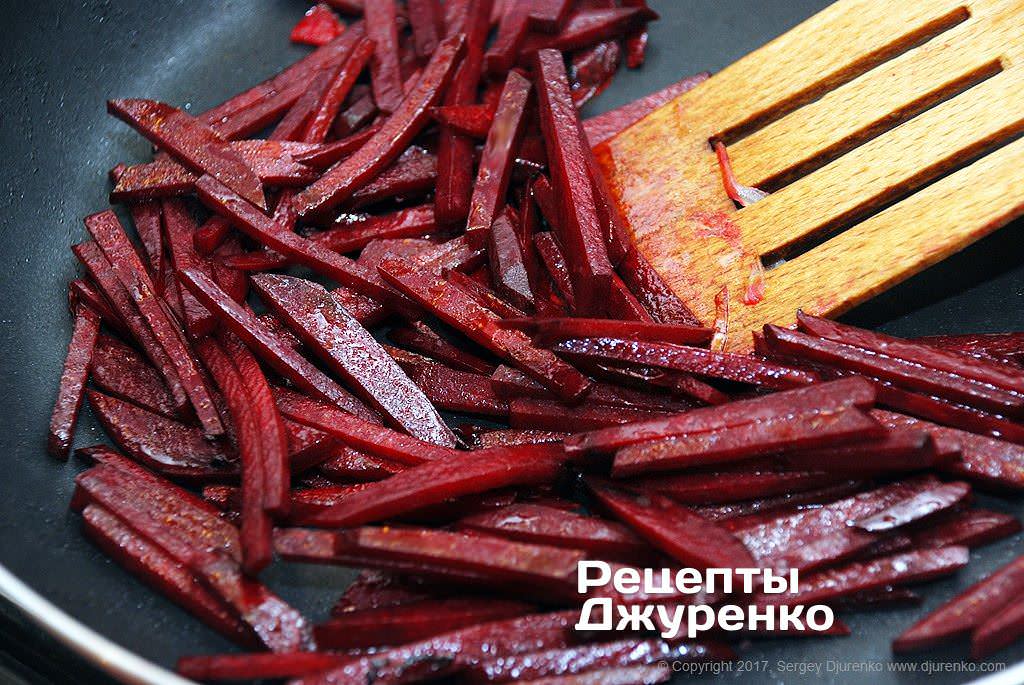
- The red beets need to be fried separately. Peel good, dark beets and cut them into strips. How big to cut the beets is a matter of taste. After frying, the size hardly matters – the borscht will take on just the right color. Fry the sliced beets in 1 tbsp of vegetable oil until they are soft and start to brown a little. This is important. Add 2–3 tbsp of broth from the pot to the beets. If the beets aren't very dark, a little vinegar, kvass or a pinch of citric acid is often added to improve the color of the borscht. To be honest, I haven't seen that done in a very, very long time. Beets these days are almost black and color borscht beautifully without any additions.
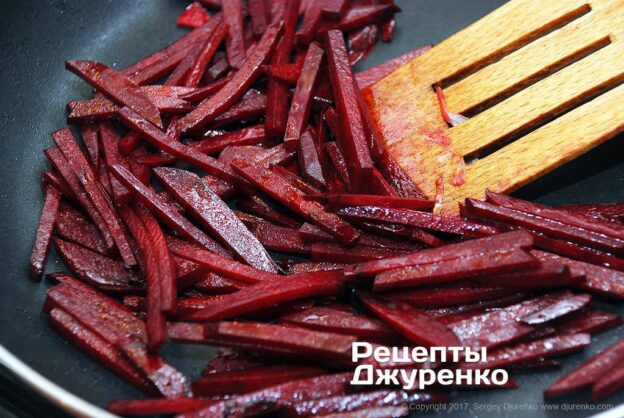
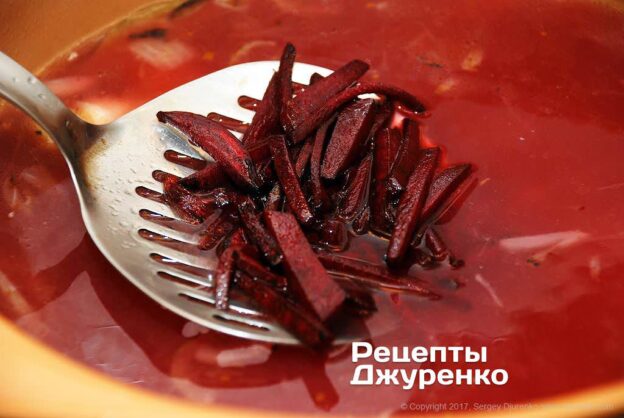
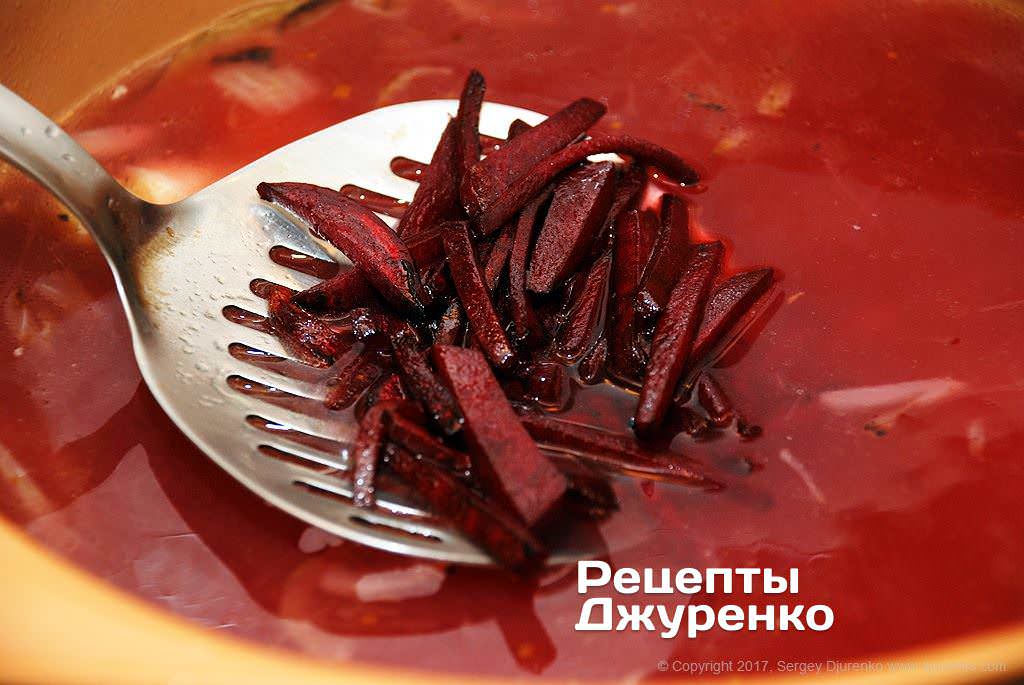
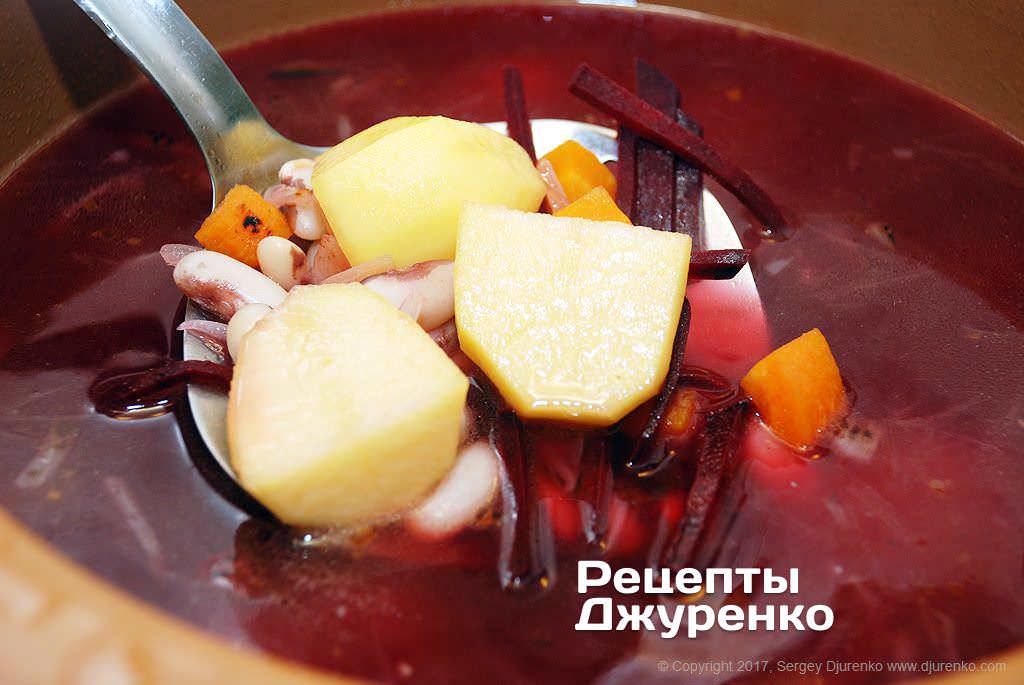
- Braise the beets with the liquid, covered, for 3–4 mins over low heat. Add the prepared beets to the borscht pot and bring the liquid to a gentle simmer.
- Peel the potatoes and cut them into large pieces – 4–6 pieces each. Potatoes are often added whole and then mashed with a spoon right in the borscht once it's ready. After adding the vegetables, cook the borscht until they are almost fully done.
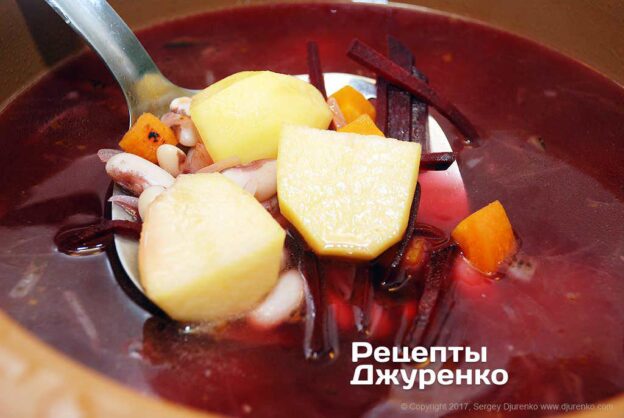
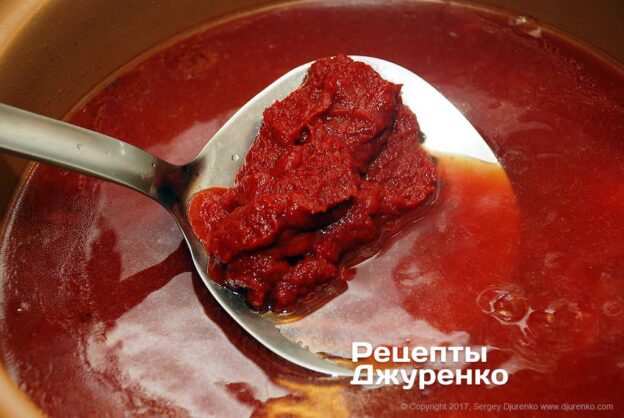
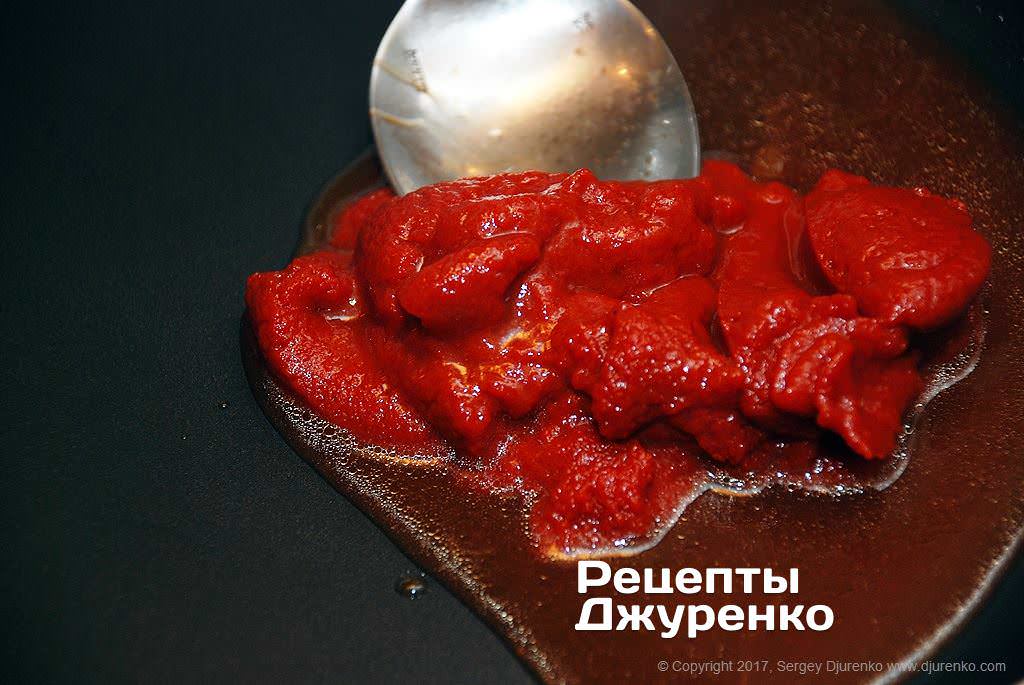
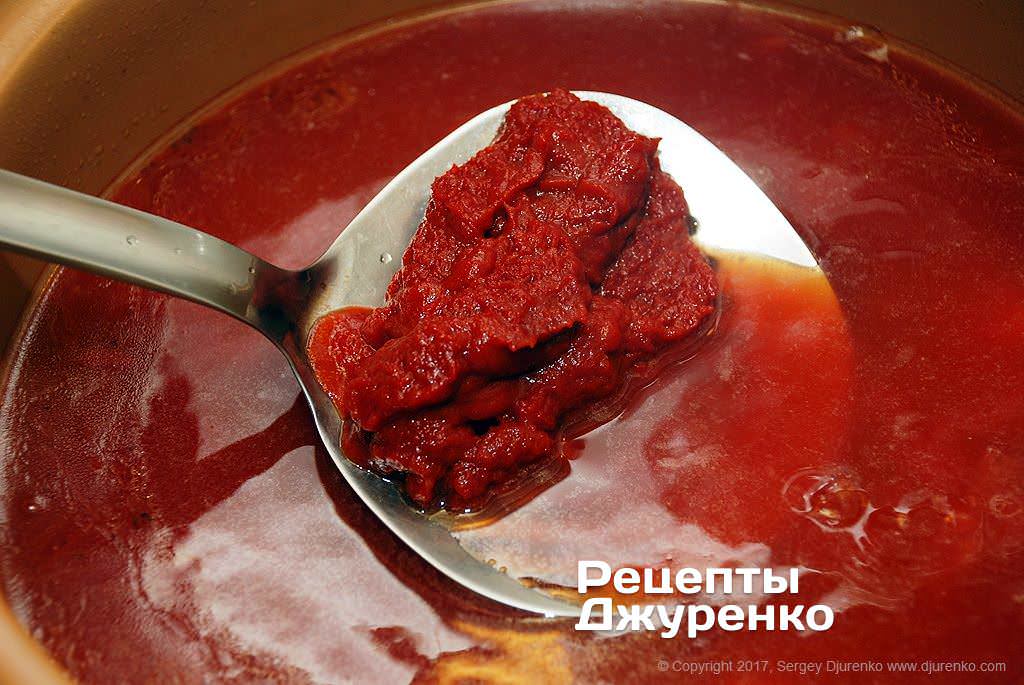
- In a sauté pan, mix the tomato paste with 2–3 tbsp of broth. Simmer the tomato paste for 2–3 mins and add it to the borscht pot. If the potatoes are still noticeably raw, it's better to add the tomato paste a little later – potatoes don't cook well with tomato. Along with the tomato, add half a hot chili pepper, finely chopped, with the seeds and white membranes removed first. The amount of hot pepper is strictly to taste. If you're wary, just add a pinch of chili flakes or coarsely ground dried red pepper.
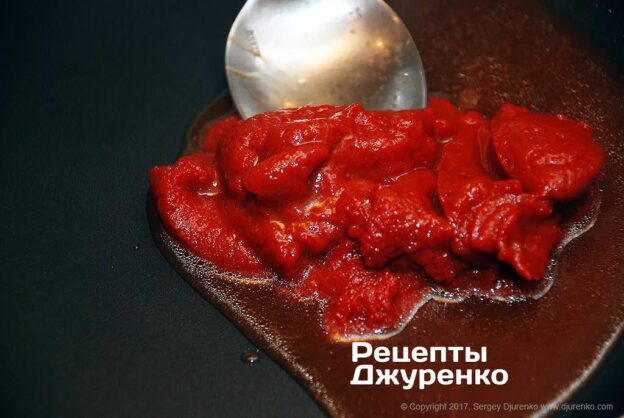
- Once the tomato is in, the chicken borscht can be salted for the last time and peppered to taste. Flour fried and thinned with broth is often added to borscht at the final stage to thicken it. But given the large amount of vegetables, that is hardly necessary.
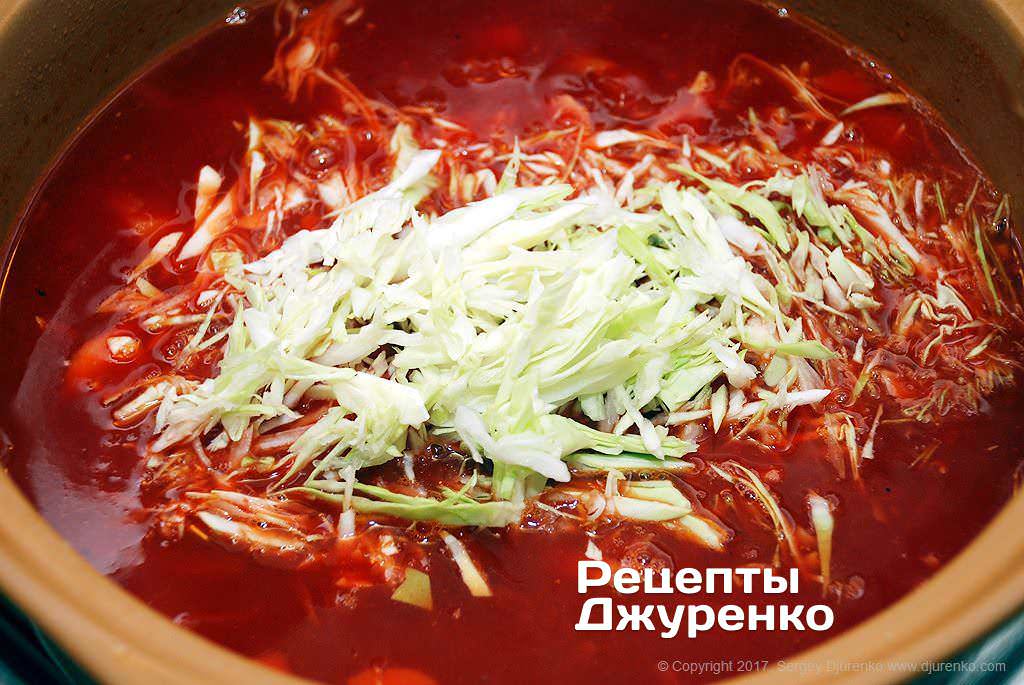
- Finely shred half a small head of white cabbage. Don't shred the tougher inner parts of the head – ideally, use only the outer leaves. Add the shredded cabbage to the borscht, bring to a boil and simmer, covered, over low heat.
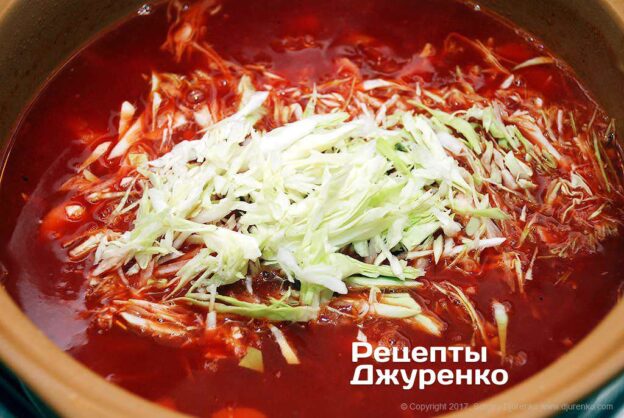
- A separate word about how long to cook the cabbage. In many recipes, cabbage goes in at the very beginning of cooking and ends up overcooked. Or they recommend cooking it for at least 20–30 mins. My father loved half-raw cabbage in borscht that clearly stood out. We rarely cook cabbage in borscht for more than 8–10 mins.
- Once the cabbage is in, cook the borscht for 7–8 mins. If it needs more salt, go ahead. But remember – oversalting is bad. A few minutes before it's done, borscht is quite often seasoned with a piece of aged yellow salo pounded with salt and garlic cloves – salo that has yellowed in a wooden box, not in the cold. This suits borscht with meat better. But who knows, maybe you'll like it.
- But the chicken borscht isn't ready yet. It needs to rest – this is important. When borscht is cooked in a masonry oven in villages, at the final stage the pot is simply moved to a cooler part of the oven and left for a while – at least half an hour, or longer. Return the boiled chicken pieces to the borscht and turn the heat down to the minimum. Alternatively, you can wrap the pot in a wool blanket to keep it warm. Then leave the borscht alone for 20–30 mins.
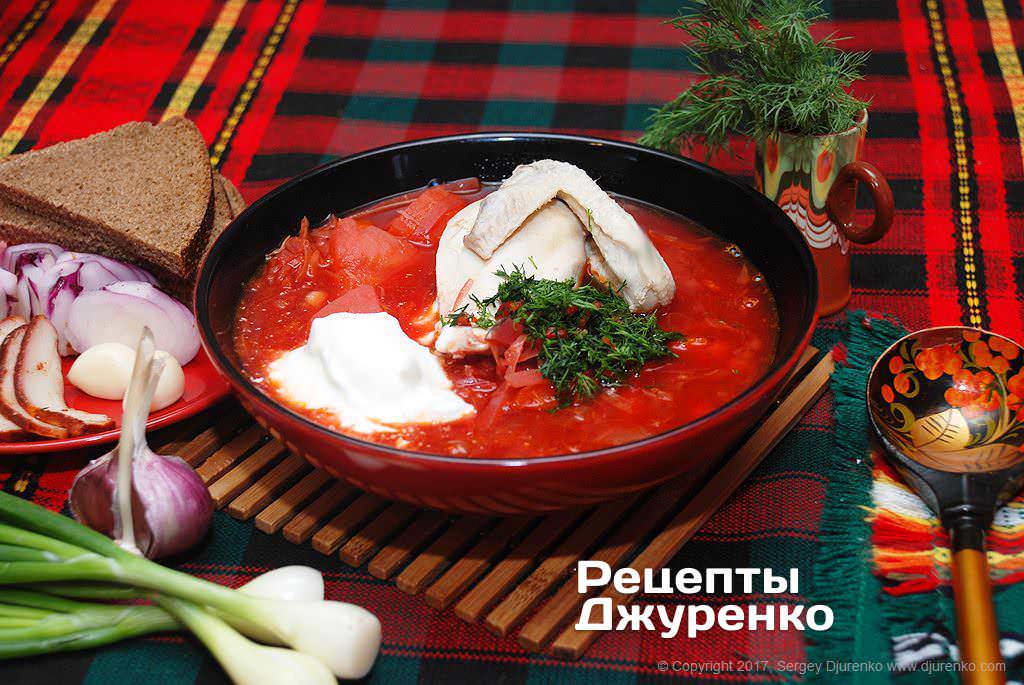
- Next comes the most important stage – lunch or dinner. I don't know why, but any borscht, chicken borscht included, is served with remarkable imagination and love. Put a piece of chicken from the borscht into each bowl. Divide the borscht evenly between the bowls. By the way, the bowls should be big, or you'll have to hand out second helpings to everyone.
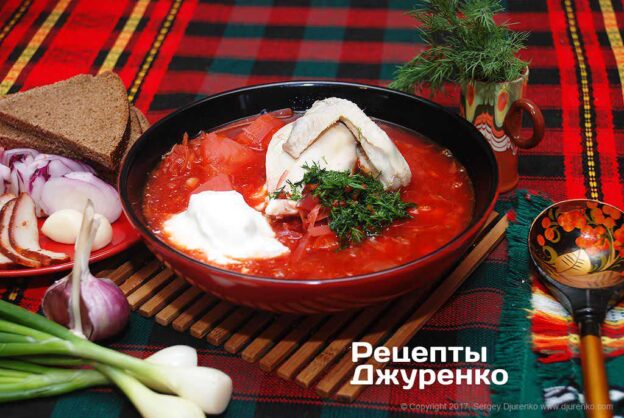
- Add sour cream to the bowls – a spoonful or three, to taste. Finely chop the dill together with a garlic clove and some red hot chili pepper. Add the herb mixture to the bowls.
- Borscht is traditionally served with pertsivka, pepper-infused vodka, if that's appropriate for whatever reasons. Fresh or smoked salo, or salo with garlic, thinly sliced, is very welcome. Be sure to offer fresh green onions, a sweet onion cut into several pieces and peeled garlic. It's also worth putting a little coarse salt on a small saucer. Chicken borscht is impossible without bread, preferably Ukrainian. And if you can bake garlic pampushky, that's the height of mastery!
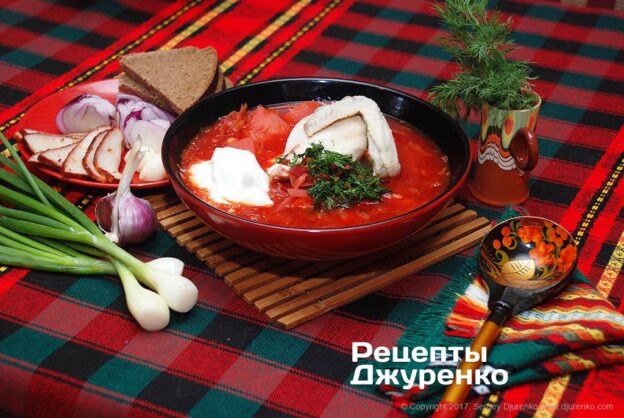
- Depending on your wishes and your own take on it, you can always vary borscht by adding different ingredients and changing their amounts and the order in which they go in. Chicken borscht will never be like any other – not even like one you've made before. Every time it's a new discovery.
| Yield: | 4 servings |
| Calories: | 45 |
| Prep time: | 30 mins |
| Cook time: | 2 h |
| Total time: | 2 h 30 mins |
| Category: | Soups |
| Cuisine: | Ukrainian cuisine |
| Rating: |
⭐
⭐
⭐
⭐
⭐
4.3
(5)
|