

Shchetka Salad with Cabbage and Beet
For Shchetka salad I cut cabbage, carrot, raw beet and white onion into thin strips; the beet can be sprinkled with 1–2 tsp of lemon juice. I add green onion, parsley, pepper and a pinch of oregano, and pour 2–3 tbsp of oil in only once it's in the salad bowls. We served it with trout steak.
Shchetka (“the brush”) is a hugely popular vitamin salad among fans of healthy eating and all sorts of weight-loss diets. At heart it is simply a salad of fresh, low-calorie vegetables. It really is good for you and has very few calories, so all its reputed benefits are genuine.
It’s interesting that different groups see different virtues in it. Health-food fans talk about wholesome eating, dieters about lightness, perpetual weight-watchers about weight loss, and detox enthusiasts about cleansing. Perhaps that is the uniqueness of this vegetable mix: it is good for everything and suits almost everyone.
I once read that the salad used to be called “Metelka” (“the broom”) and appeared more than two centuries ago. There are many theories about its origin, and some credit doctors in Europe who worked in dietetics. Personally, I think mixes of simple garden vegetables have existed ever since people invented the vegetable garden.
There are also many theories about the name, whether “brush” or “broom”. Perhaps it stands for the process of cleansing, sweeping all the waste out of the body. Or, more likely, the very thin matchstick cut of the vegetables resembles bristles. The cut should be so fine that it doesn’t even get stuck in your teeth. It occurs to me that many people love counting calories, so there is a bit of wordplay in there too.
The base of the salad is cabbage, preferably young. You also need root vegetables: carrot and beet. Onion is usually included, either green onion tops or a sweet, mild onion. And, of course, plenty of fresh herbs. The dressing is plain vegetable oil.
Although the salad is sometimes treated as a cure-all, it is simply a good vegetable salad that isn’t loaded with calories and contains lots of vitamins, trace elements and dietary fiber. Shchetka is quite often made with fruit, such as apples, prunes and lemon juice. Richer versions with olives are not unusual either. You can also vary it with other vegetables: celery, kohlrabi, bell pepper.
Ingredients
2 servings
- Cabbage (young) 0.5 head
- Juicy sweet carrot, small 1
- Beet, raw 1
- White onion 1
- Green onion tops 2–3
- Parsley 3–4 sprigs
- Vegetable oil (olive or odorless sunflower) 2–3 tbsp
- Black pepper, freshly ground to taste
- Fine salt just a little, optional
- Dried oregano a pinch
- Lemon juice 1–2 tsp, optional
- Cilantro, dill, basil optional
- Olives for garnish, optional


Step-by-step recipe
Cabbage and herbs
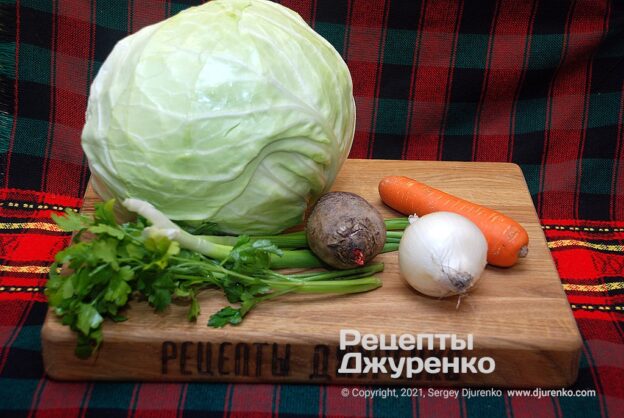
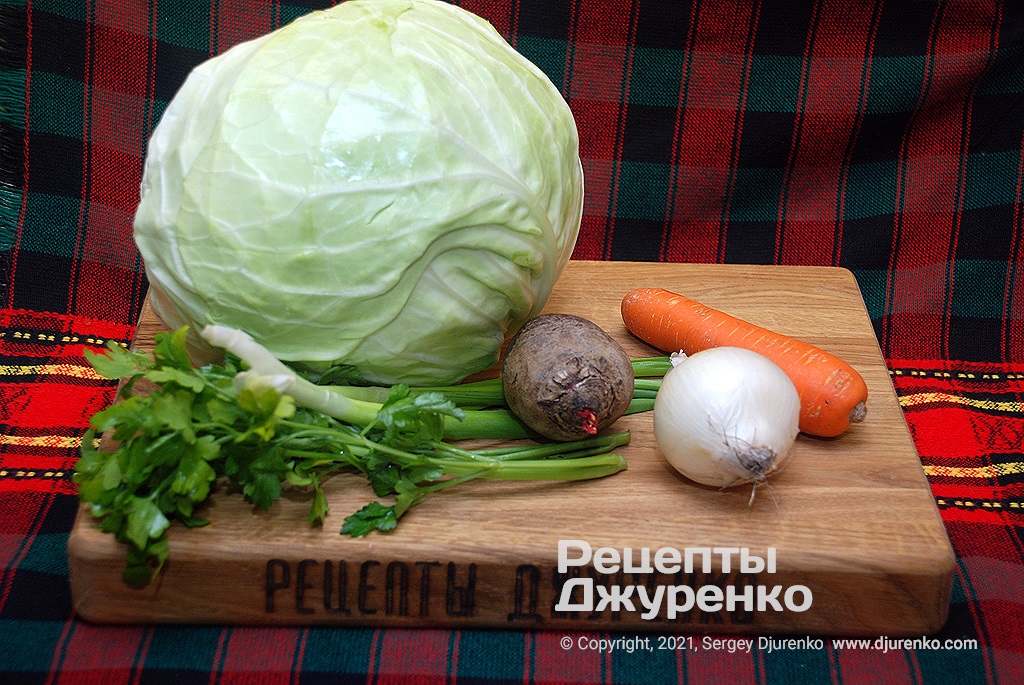
The best Shchetka is made with young cabbage. It’s surprising that it used to be sold only in season, while now you can buy it even in winter. It makes the dish much tastier and juicier. Raw beet is an important ingredient; avoid a root with a fibrous texture. White onion is sweet and not too sharp, which suits this dish well. Be generous with the herbs too.
Get the vegetables and herbs ready.
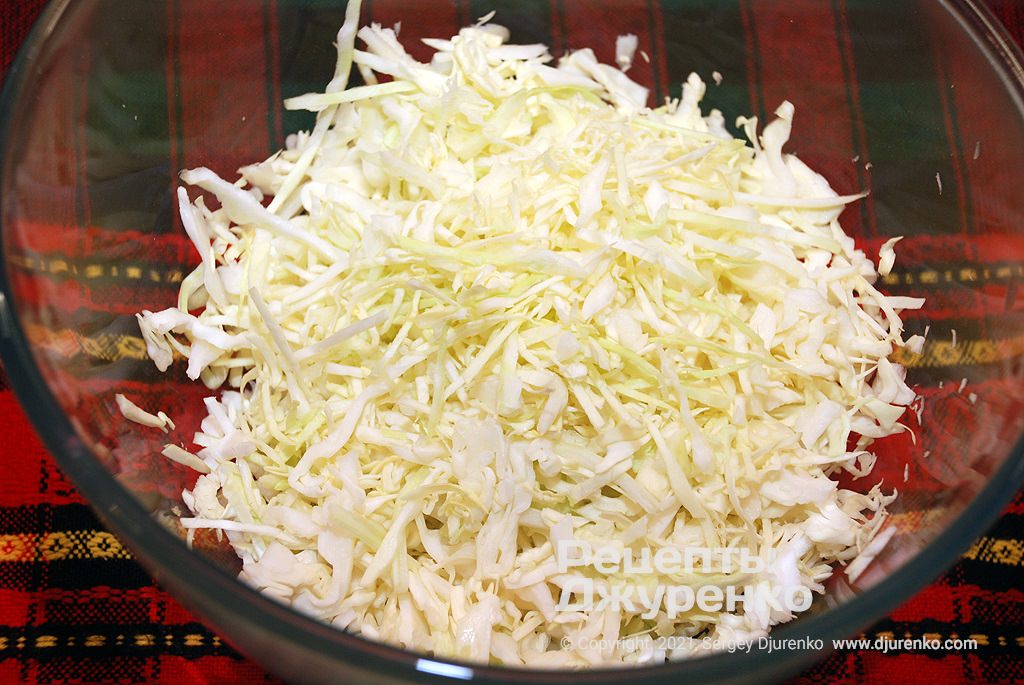
Shred the cabbage thinly, into long, slightly springy and crunchy strands.
How much cabbage to shred is up to you. The result is best if cabbage makes up at least two thirds of the volume. Almost every kitchen has a shredder, but most people are used to shredding cabbage with a knife.
Unlike the vitamin salads made at home in summer, the cabbage is not squeezed by hand to release juice, so Shchetka always stays light and crisp.
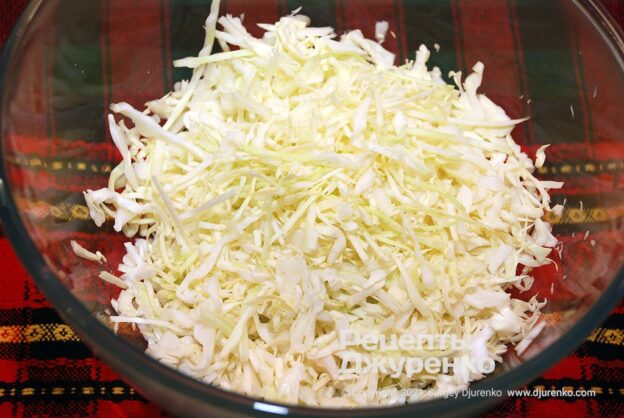
Put the cabbage strands into a large salad bowl.
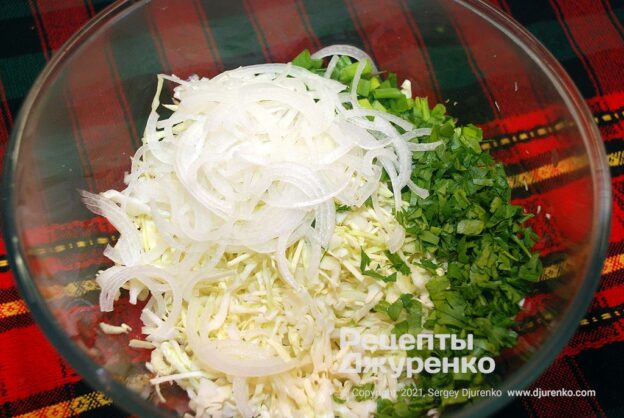
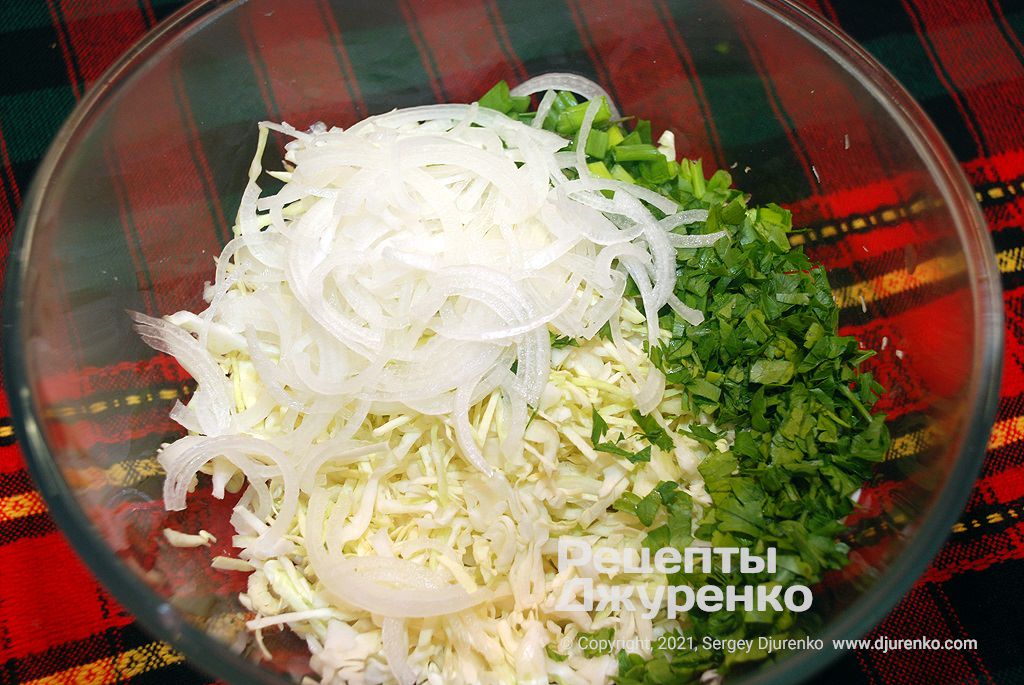
Slice a little green onion, tops only; it improves the flavor and adds a light bite.
Pull the leaves off the parsley sprigs and chop them. If you like, add cilantro, dill or a little basil.
Peel the white salad onion and cut it into thin, almost translucent strips.
Carrot and beet
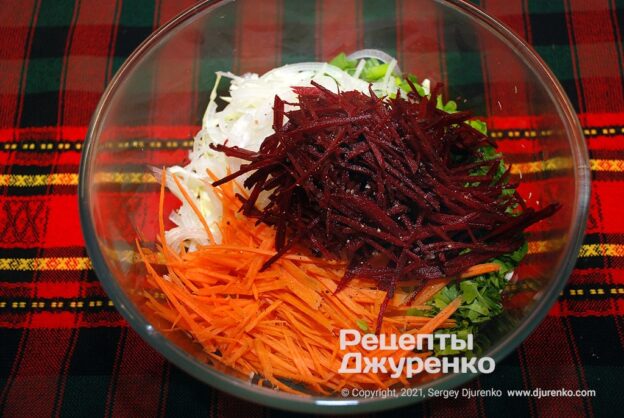
Peel a small sweet carrot and a beet.
Beets are often fibrous, so don’t use those, and don’t use a large, slightly greenish carrot that tastes of tops: it will ruin the salad. In season you can use young vegetables.
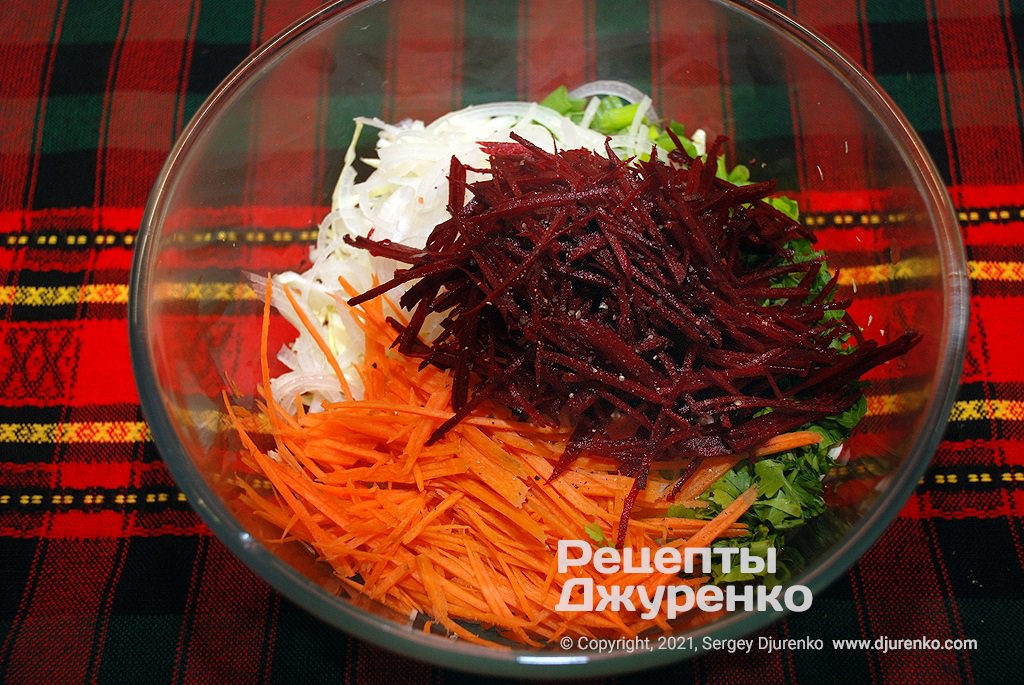
Shred the carrot and beet into very thin strips, as for the well-known Korean carrot appetizer. There are special graters for this.
If you like, pour 1–2 tsp of lemon juice over the shredded beet and mix.
Dressing
Beet stains all the vegetables, so mix everything just before serving.
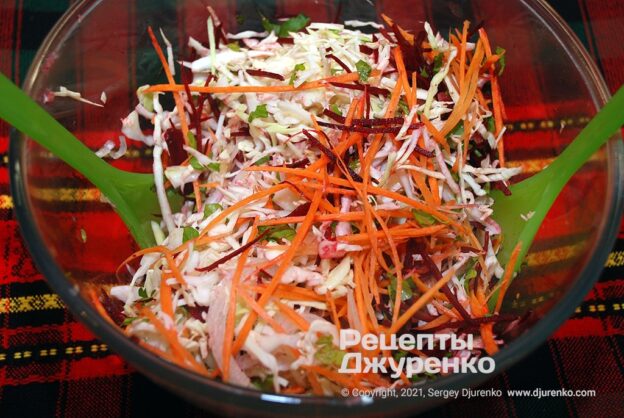
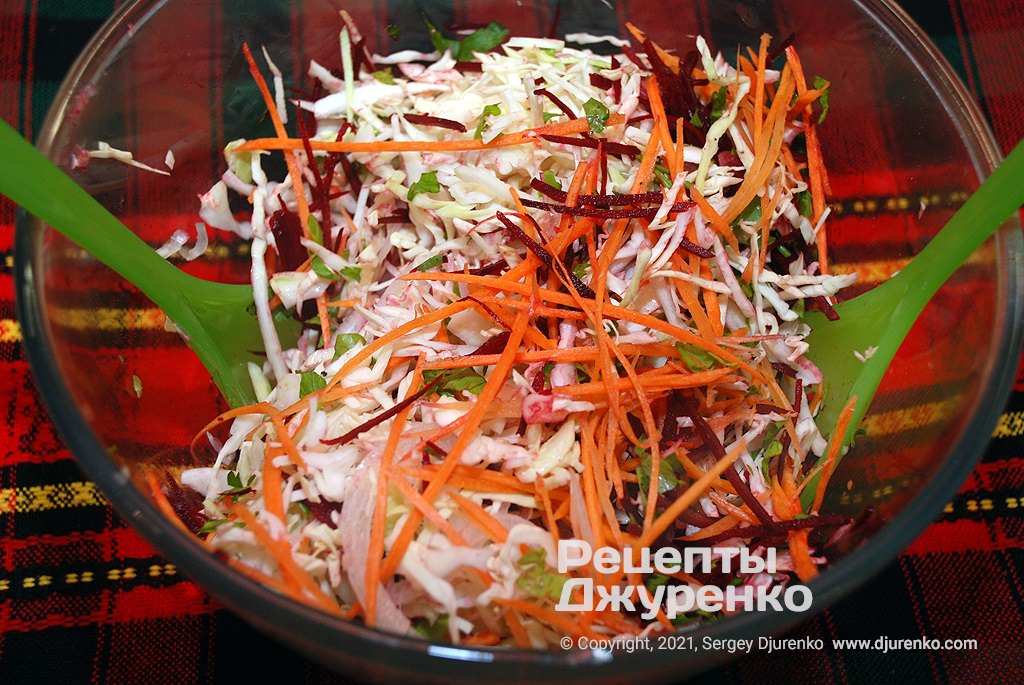
Mix all the vegetables in the salad bowl. Season with freshly ground black pepper, and a pinch of dried oregano tastes very good too.
The salad doesn’t really need salt, but if you think it does, add just a little fine salt.
Serving
Toss the vegetables and divide them straight away between small serving bowls.
Dress the salad with 2–3 tbsp of vegetable oil; olive oil or odorless sunflower oil both work. Toss the salad right at mealtime.
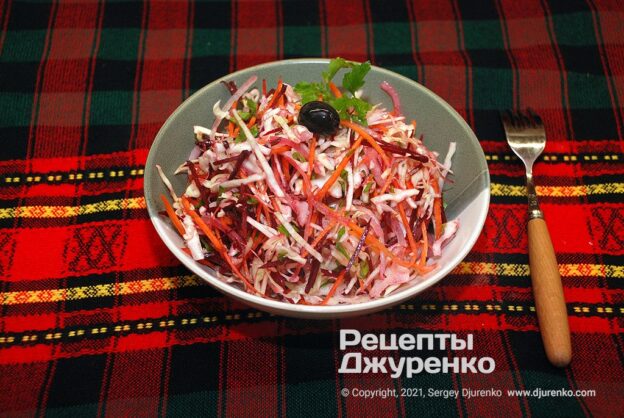
For garnish, you can add a sprig of parsley and an olive.
It turned out that the salad is very tasty, despite some initial dryness. It simply has a different texture from the appetizers we are used to. It is rich in vitamins and dietary fiber, which is very good, especially for cleansing the body. We served it as a side to a grilled trout steak cooked without spices. Fish with omega-3 fatty acids and fresh vegetables made a superb and healthy lunch.


How did you like this recipe?
Rate it with one tap.
Calories and macros
330 kcal
Serving ≈ 590 g
- Protein8 g10% of kcal
- Fat18 g55% of kcal
- Carbs26 g35% of kcal
100 g55 kcalProtein 1.3 gFat 3 gCarbs 4.4 g
Calculated from the recipe ingredients, excluding salt and spices. Data: USDA and Matvaretabellen.