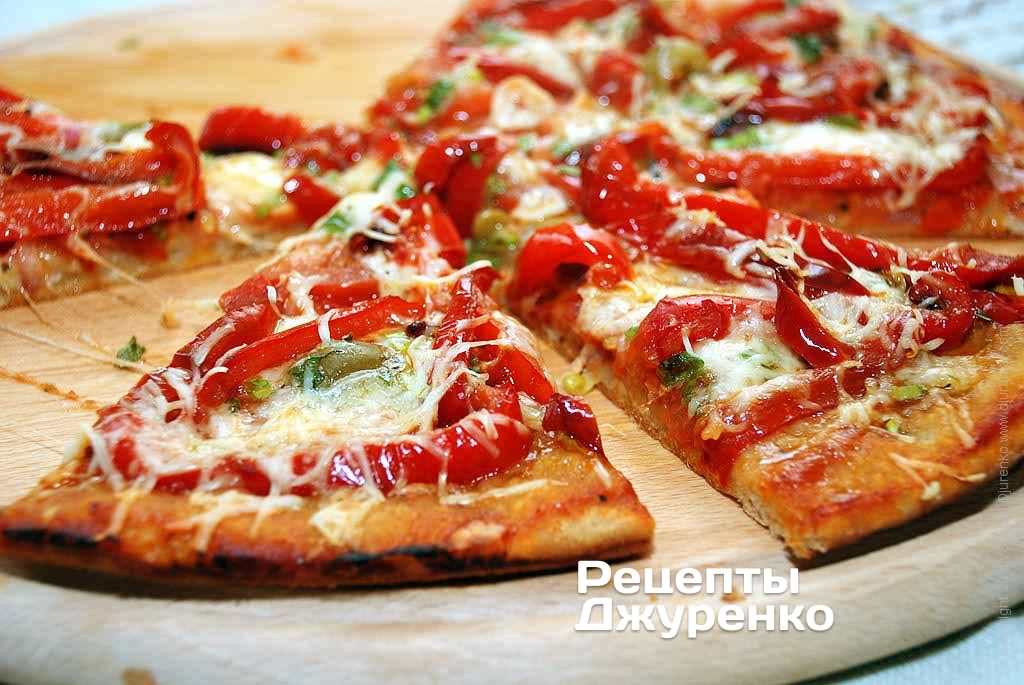
Pizza with Peppers
Ingredients
34 cm pizza
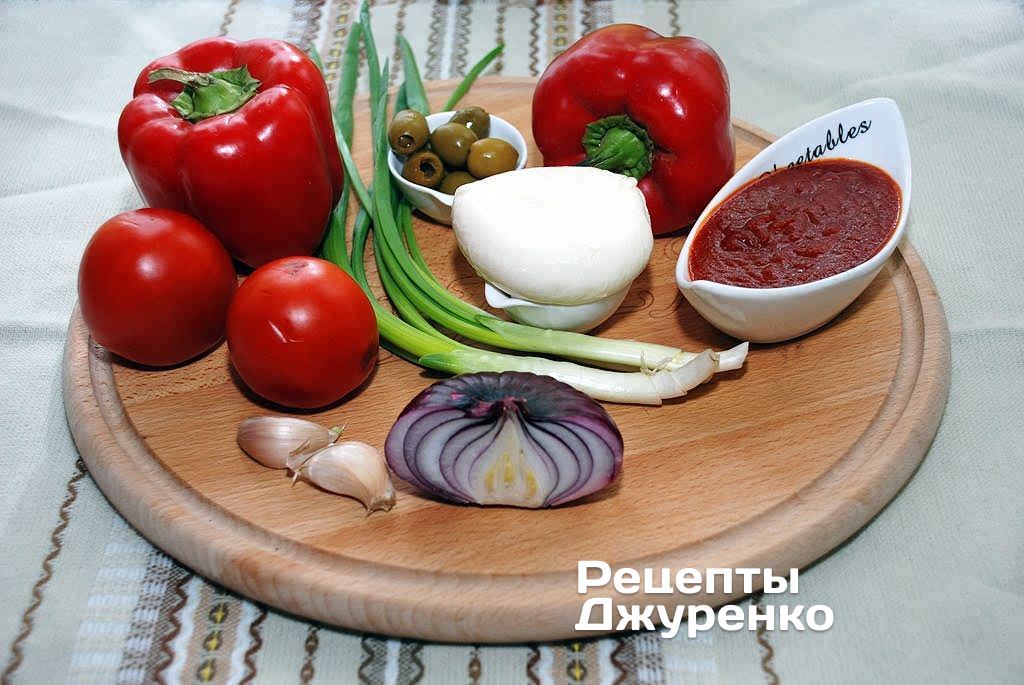
- Pizza dough 400 g
- Bell pepper 1-2
- Tomatoes 2
- Tomato sauce 2-3 tbsp
- Tomatoes for the sauce 2 (or 0.5 cup of tomato juice)
- Green onion 2-3 sprigs
- Parmesan 50 g
- Mozzarella 150 g
- Onion 1
- Green olives 8
- Garlic 1-2 cloves
- Wine vinegar 1 tbsp
- Olive oil 2 tbsp (plus more for greasing the pan)
- Dried oregano a couple of pinches
- Ground black pepper optional, for serving


Step-by-step recipe
Onion, sauce and pepper
First, prepare the tomato sauce, pickle the onion and fry the pepper.
Pickle the onion. You need only a little onion, so peel it. If the onion is large, half is enough. A sweet “Yalta” onion is ideal. Cut the onion into thin, short strips, mix with 1 tbsp of wine vinegar and leave to marinate for half an hour. Then pour boiling water over the onion for a few minutes and rinse under running water to wash off the excess vinegar.
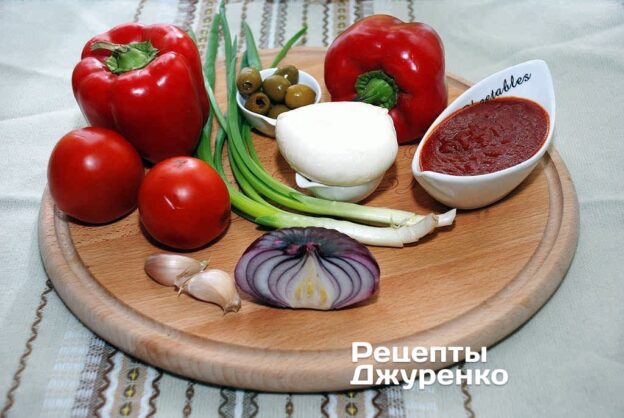
Make the tomato sauce (God forbid, ketchup). It is easy. You need 2–3 tbsp of sauce, no more: a couple of ripe tomatoes or half a cup of natural tomato juice (100 ml), spices and 10 minutes of your time. Tomato sauce recipe salsa di pomodoro is very simple.
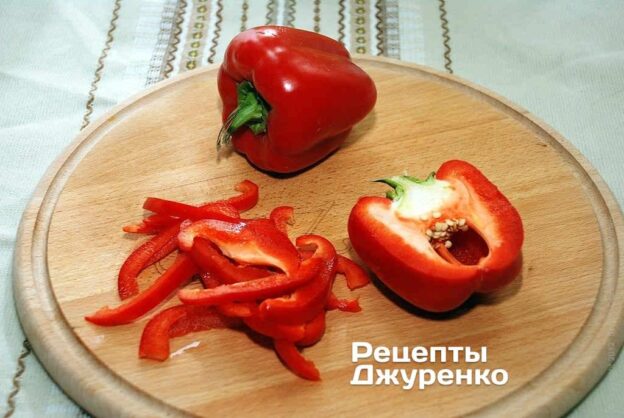
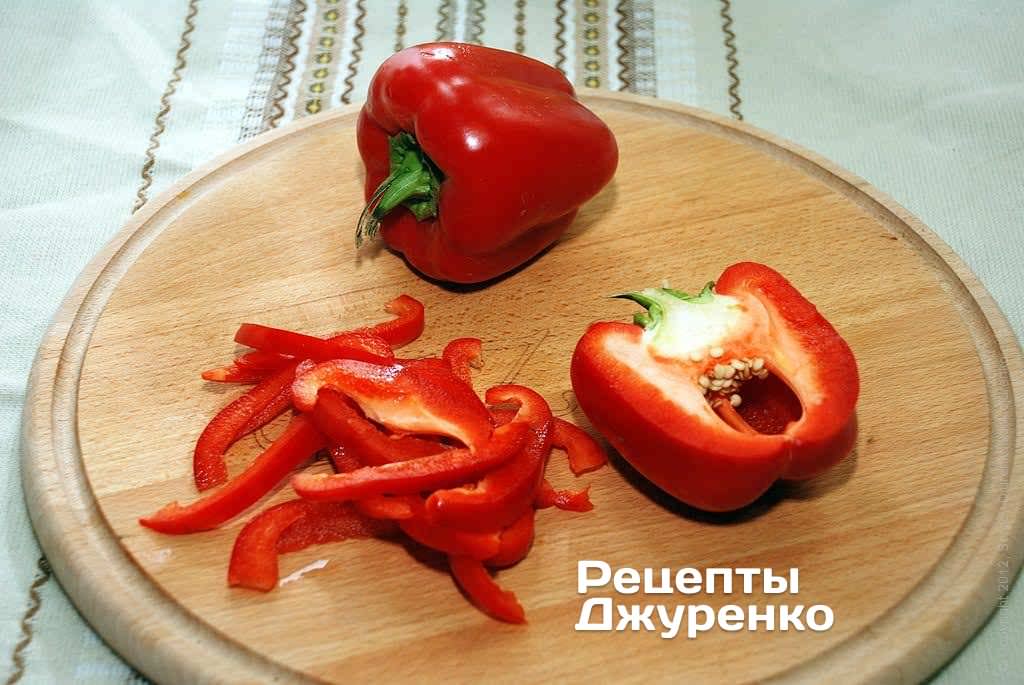
Cut the red bell pepper, preferably with almost cube-shaped, meaty fruits. Wash it and remove the seeds. Cut each pepper lengthwise into thin strips. The width of the strips should match the thickness of the walls, so that you end up with strips of almost square cross-section.
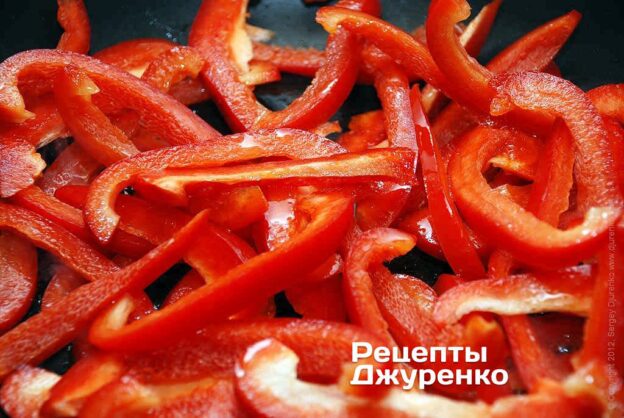
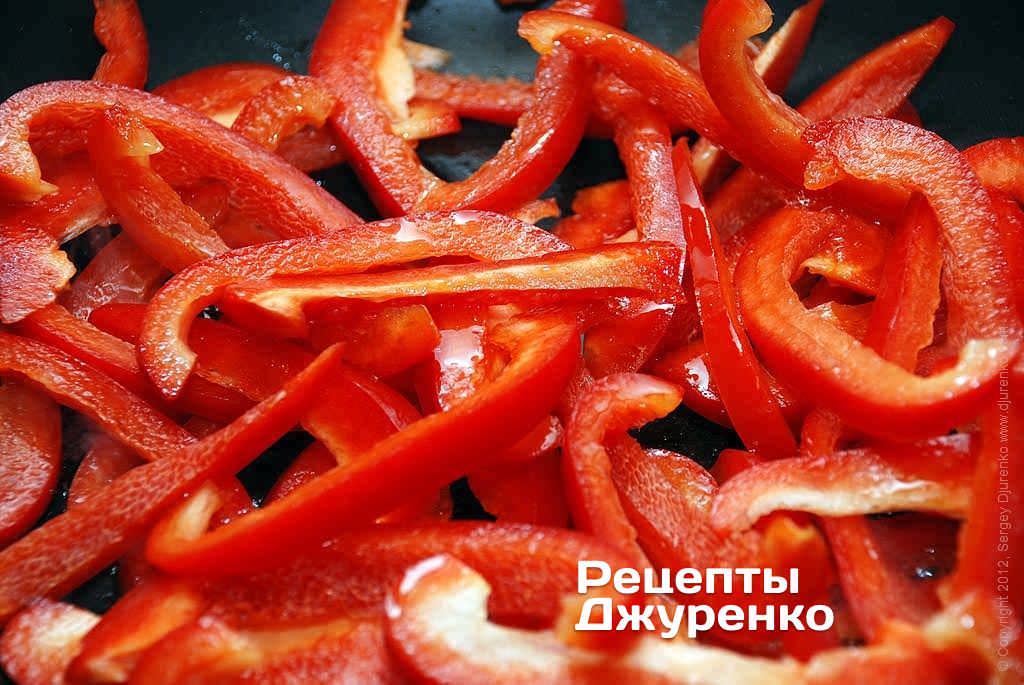
Fry the pepper until soft. Heat 2 tbsp of olive oil in a frying pan and fry the cut pepper over medium heat until soft. Then lower the heat and simmer the pepper covered for 15 minutes. Stir the pepper from time to time so that it doesn’t burn. By the way, fried pepper like this, with spices and salt added, is already a great appetizer.
The dough base
Make the dough using my recipe. It is simple and accessible, we have taken it as our main one and recommend it to everyone. So far nobody has complained, except out of spite. Read “Pizza dough: guaranteed result”. It is all very simple there.
Roll out the finished dough and place it on a pan greased with olive oil. Be sure to prick the dough with a fork.
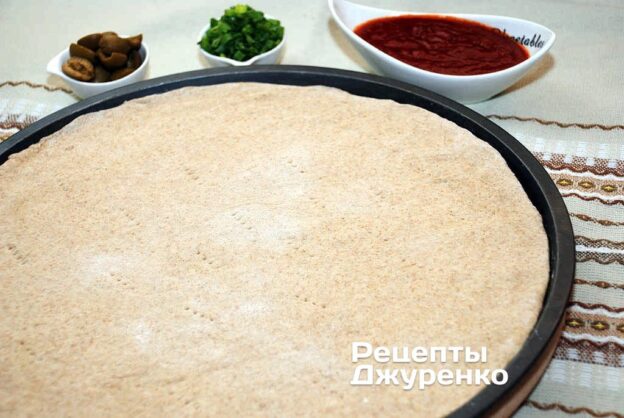
Spread the dough with tomato sauce. Coat the rim especially thoroughly: it usually gets little topping, and tomato sauce makes the dough tasty on its own.
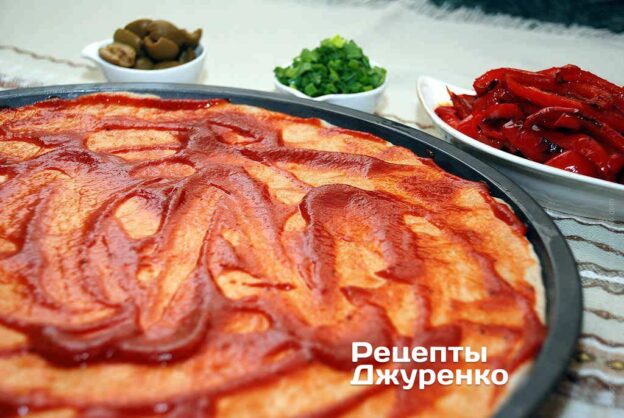
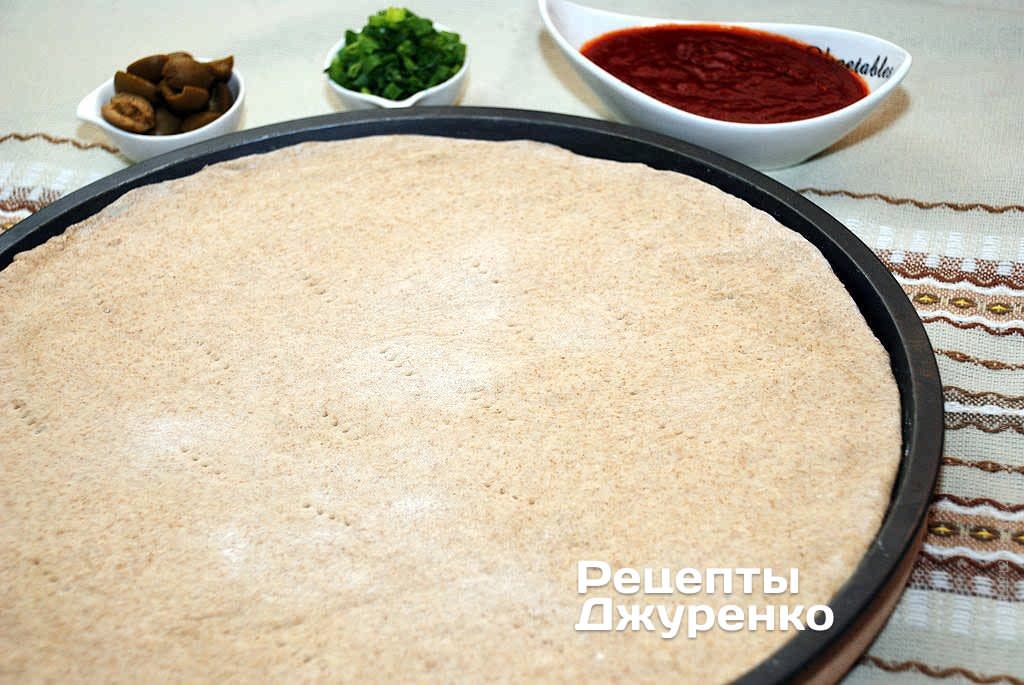
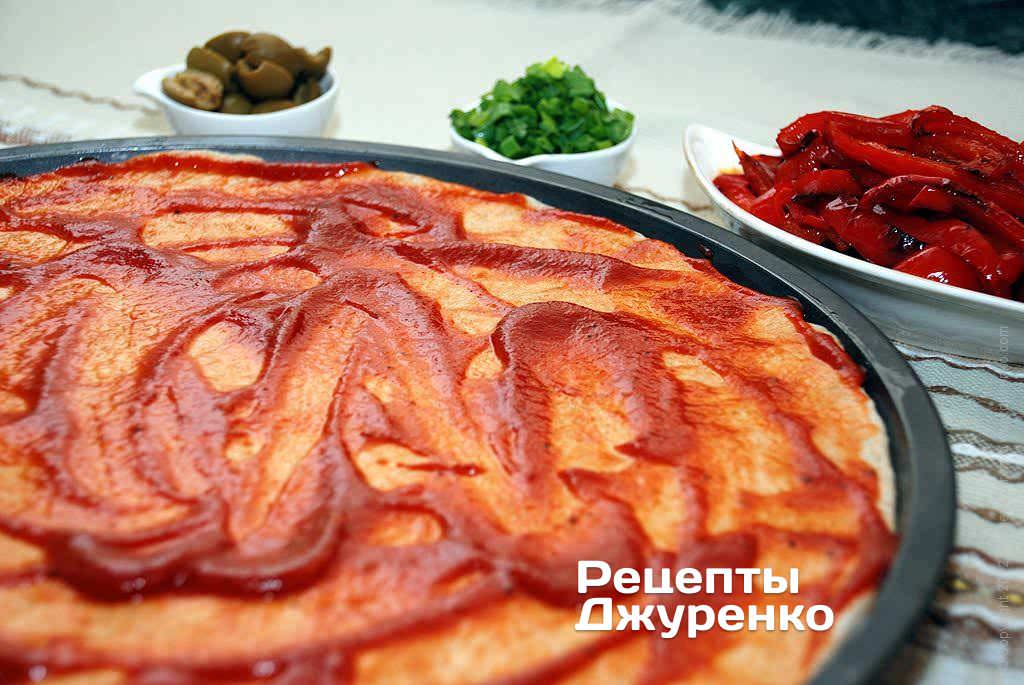
Topping
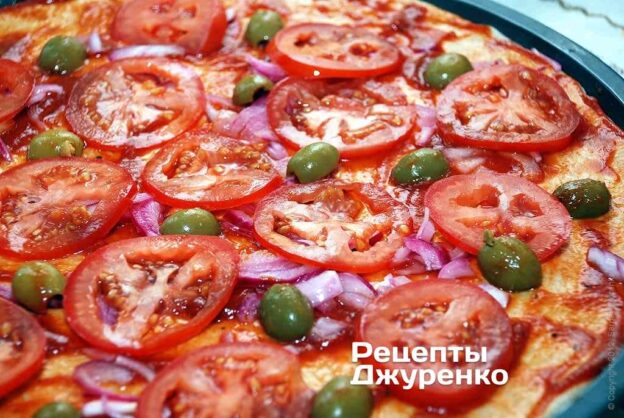
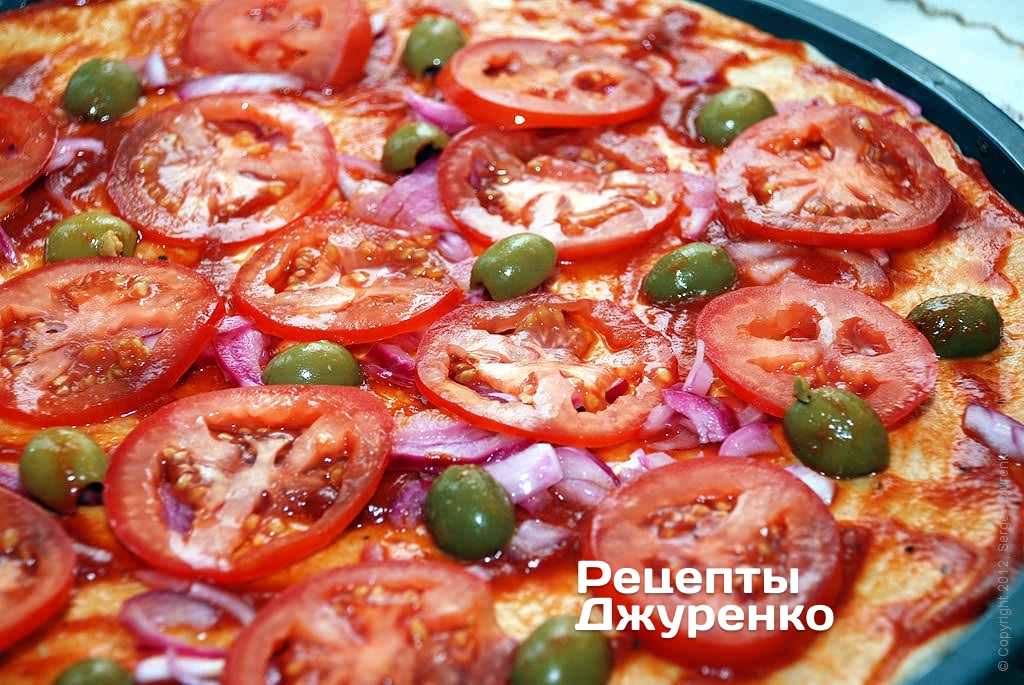
Arrange the pickled onion, tomatoes and olives. Put the onion on the dough and sprinkle with a couple of pinches of dried oregano. Cut the tomatoes into very thin rounds and arrange them over the whole surface of the pizza, spreading them evenly. Cut the green olives in half, remove the pits if there are any, and arrange them.
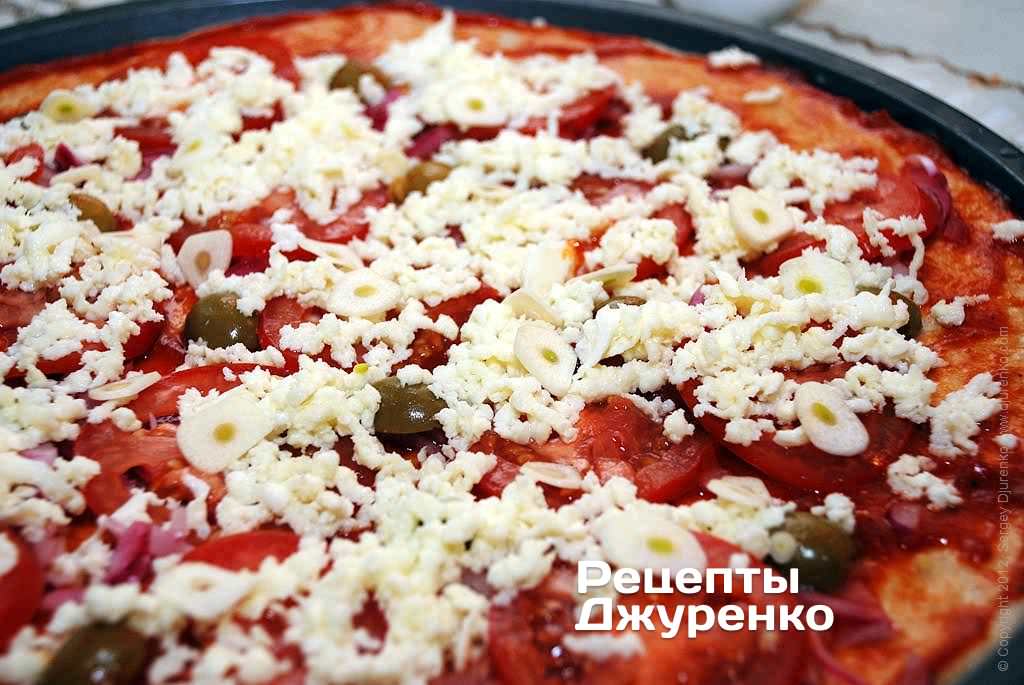
Sprinkle the pizza with grated mozzarella, garlic and green onion. Grate the mozzarella and spread it over the pizza. It is often suggested to slice the mozzarella into thin plates and lay them on top of the pizza. That works too. I am more used to grating it: it spreads more evenly and pulls into fewer strings after baking. Arrange the garlic, cut into very thin slices.
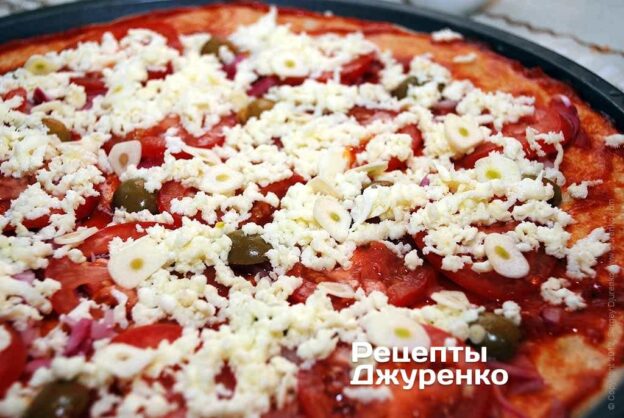
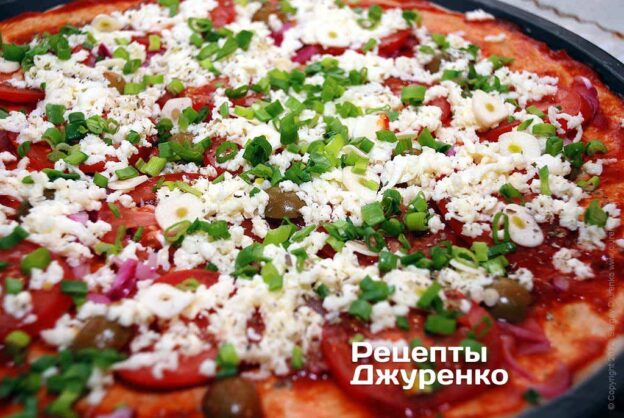
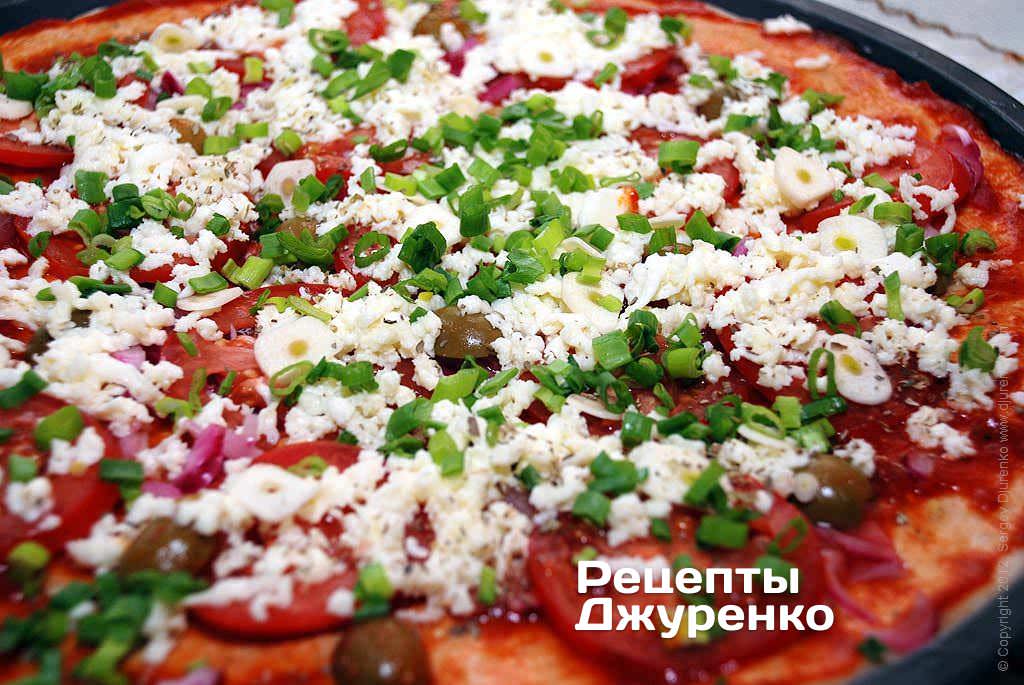
Finely chop the green onion tops and sprinkle them over the pizza. In principle you could add fresh basil, but it is too aromatic and would drown out the smell of the fried pepper. Green onion adds a piquant note to the pizza.
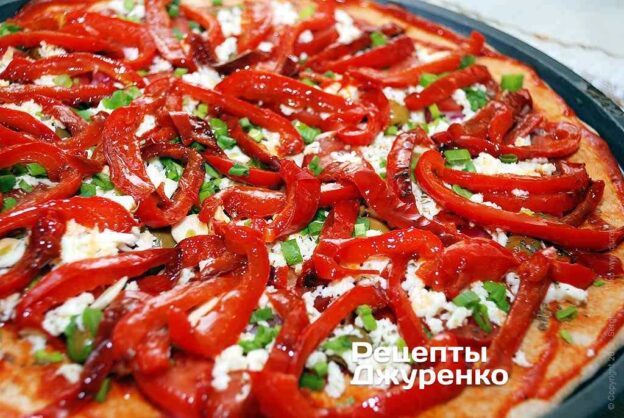
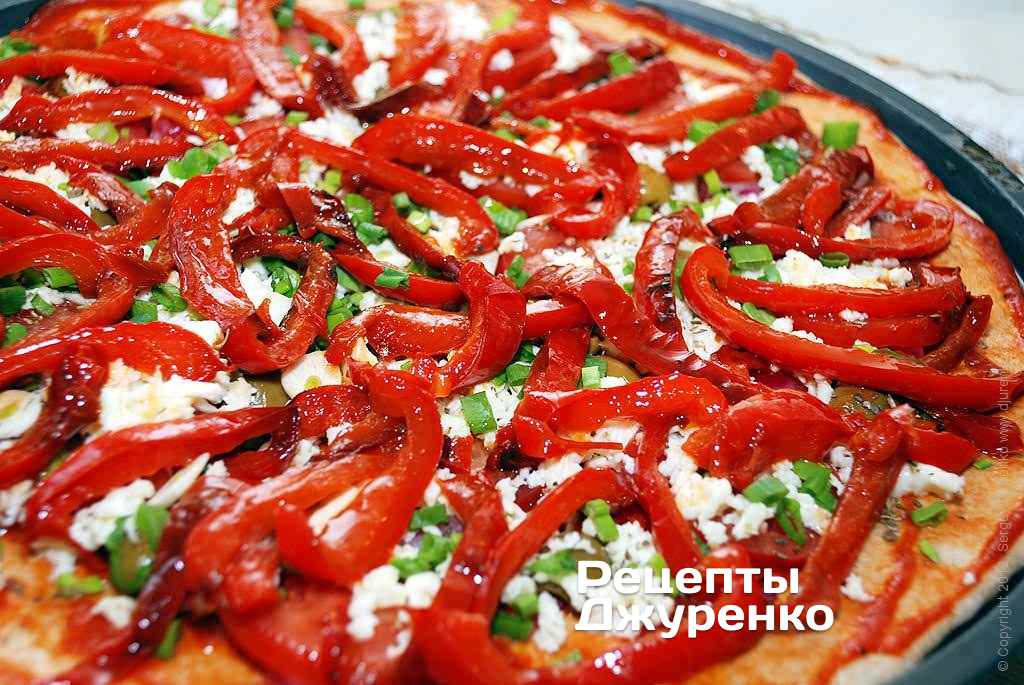
Arrange the fried pepper, first draining off any remaining liquid. There will be quite a lot of pepper, so don’t be stingy.
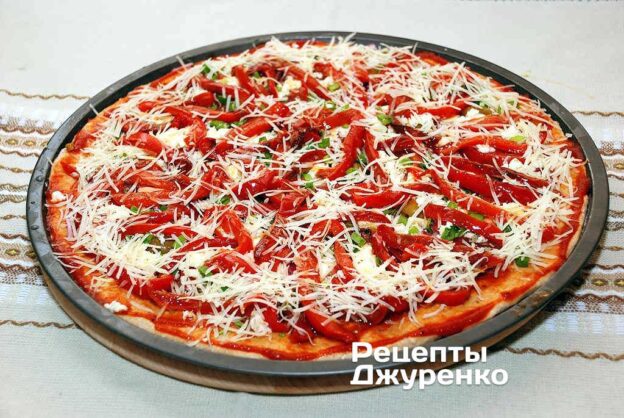
Press the topping down lightly with your palms and sprinkle with Parmesan. Pack it down a little, but not too much. Sprinkle the pizza with grated Parmesan, putting most of it around the edge along the rim and the rest in the center.
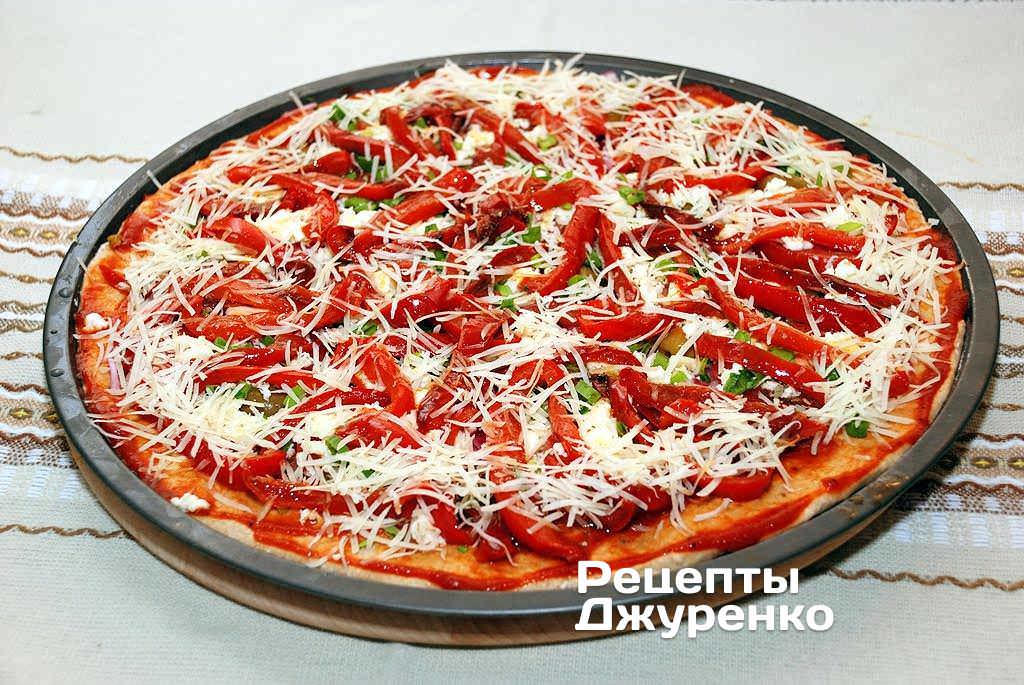
Baking
Let the pizza rest for 15 minutes so the dough rises a little.
Bake the pizza in an oven preheated to 200°C. Baking time is up to 20 minutes. After 16–17 minutes, lift the dough with the edge of a knife to check if it is done. As soon as the dough starts to turn golden, the pepper pizza is ready.
Serving
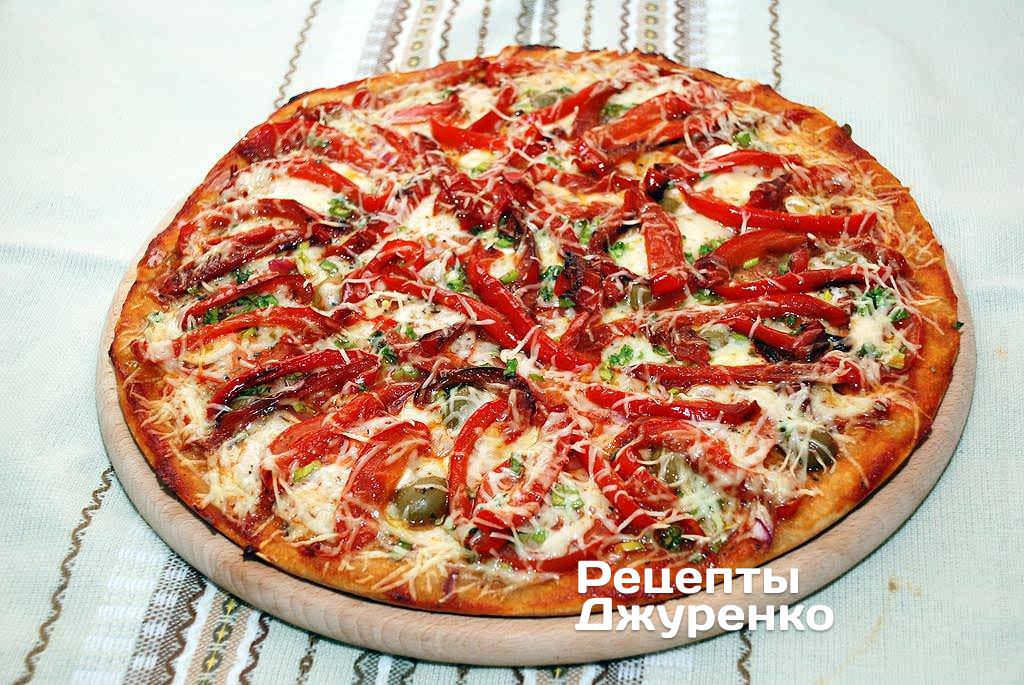
Put the pizza on a wooden board, which is very convenient for cutting and serving at the table, and cut it with a roller knife into 6–8 slices.
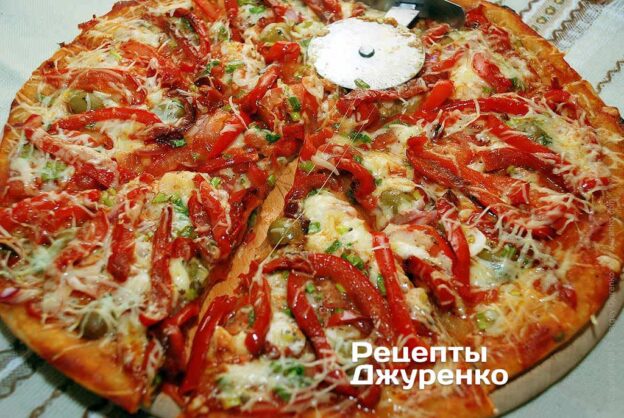
Pepper pizza is served hot. By the way, my wife tried seasoning the finished pizza with a little ground black pepper and claims it makes the pizza even tastier.
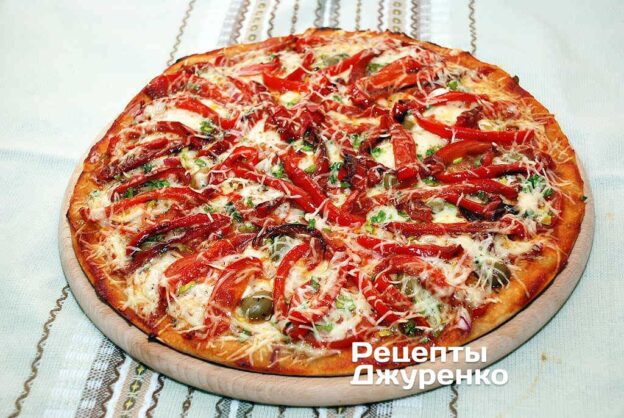
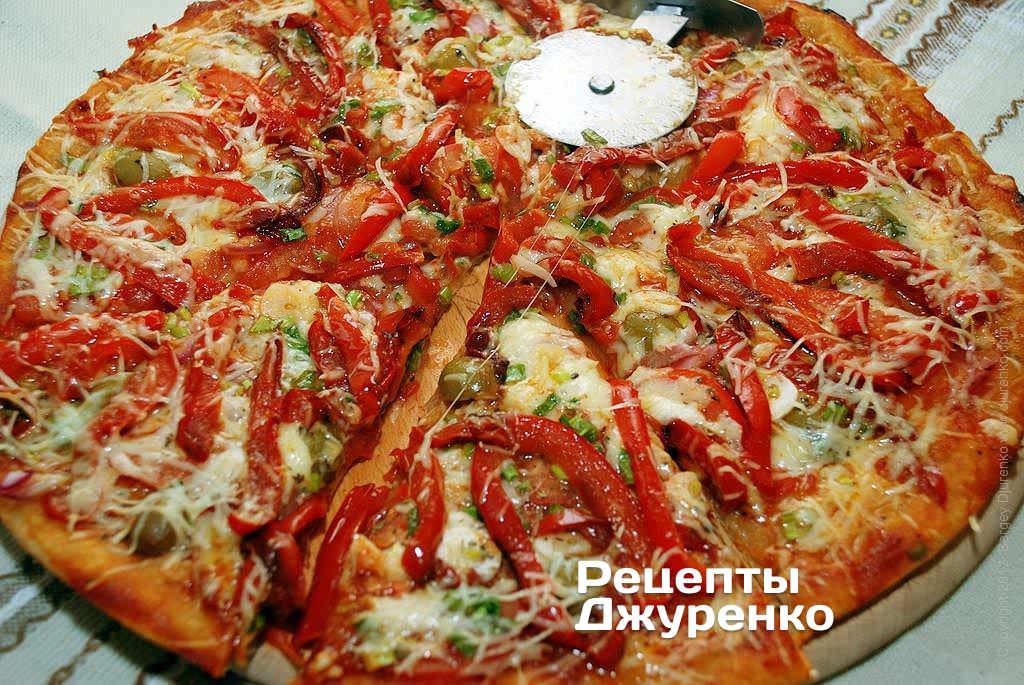

How did you like this recipe?
I really want to know how the recipe turned out for you.
Calories and macros
161 kcal
100 g
- Protein6.4 g16% of kcal
- Fat7.4 g42% of kcal
- Carbs16.1 g41% of kcal
Calculated from the recipe ingredients, excluding salt and spices. Data: USDA and Matvaretabellen.