
Baked Mac and Cheese


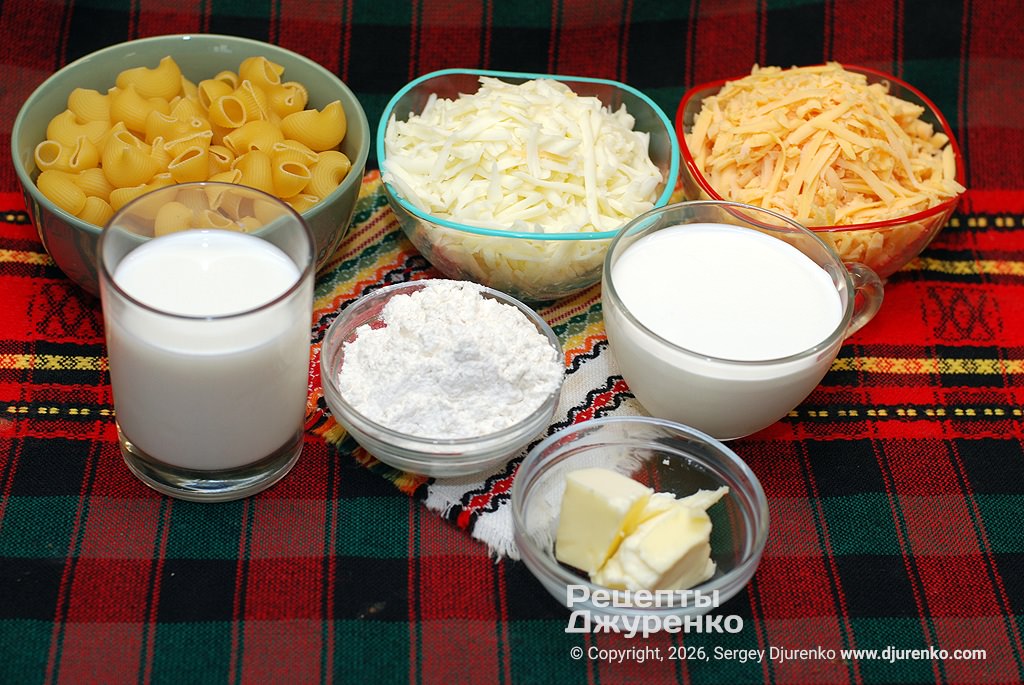
Ingredients
2 servings
- For the pasta
- Short tube pasta 200 g
- Water for cooking the pasta 2 l
- Salt for the pasta water 14 g (7 g per 1 l of water)
- For the sauce
- Butter 2 tbsp (plus a little for greasing the dish)
- Plain flour 1-2 tbsp (10–20 g)
- Milk (2.5% fat) 1-1.5 cups (200–300 ml)
- Cheddar 100 g
- Cream (20% fat) 150 ml
- Salt, white pepper, nutmeg to taste
- For the crust
- Low-moisture mozzarella 100 g
Step-by-step recipe
Pasta and cheese sauce
Although mac and cheese is simple to make, the ingredients need to be chosen carefully, above all for quality. As a rule, short pasta with a hollow or channel inside is used – pipe, maccheroni, penne, trofie and so on. The pasta should be good quality and made from durum wheat, otherwise it will swell and stick together as it cooks. The cheese for the sauce is cheddar: it is soft, melts beautifully and gives the dish a good texture. Low-moisture mozzarella is perfect for the crust on top.

Boil the pasta until al dente. Bring 2 l of water to the boil in a pot, salt it (14 g of salt – 7 g per 1 l of water) and cook the pasta for the time given on the package. Don’t overcook it: the pasta should be al dente. You can boil the pasta while you make the cheese sauce.
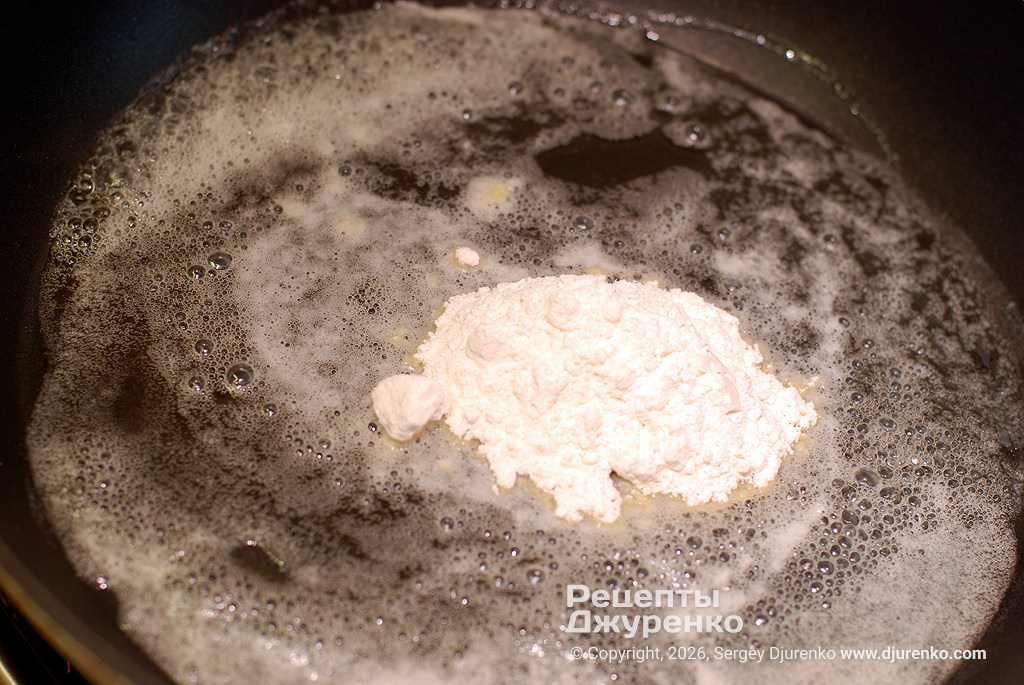
Cook the flour in butter. Meanwhile, melt a knob of butter in a frying pan over medium heat and add 1 tbsp of flour (10 g). Stirring thoroughly and often, cook the flour for 2 min without letting it darken.

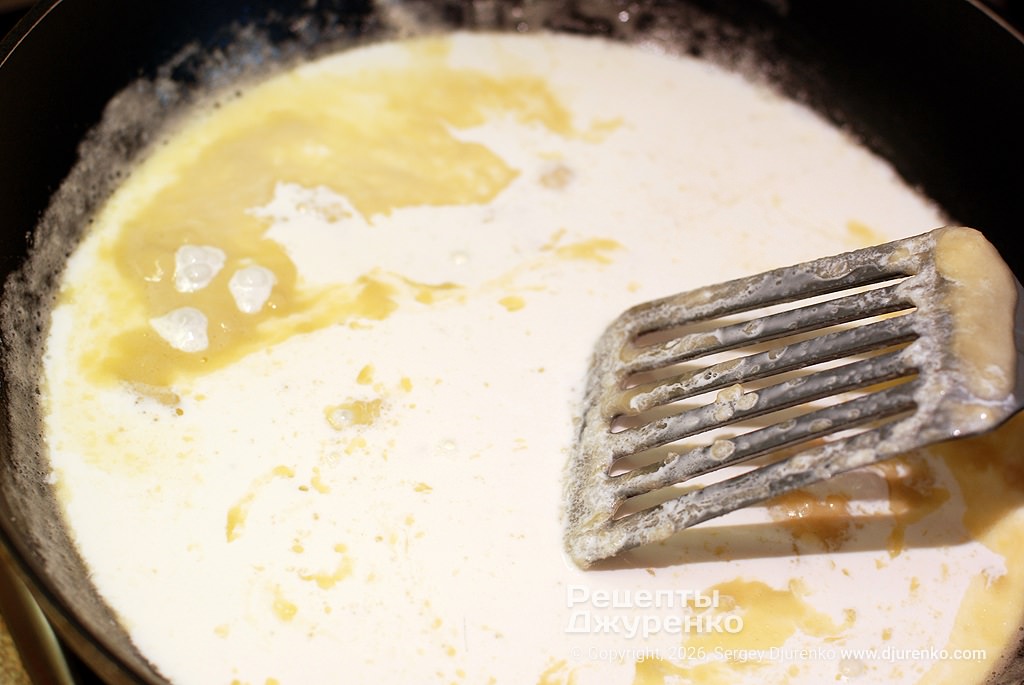
Make the béchamel. Pour in cold milk in a thin stream, stirring, until the sauce is about as thick as drinking yogurt. You may need more milk: the sauce should be fairly runny. Season the béchamel with a little salt and add ground white pepper and nutmeg to taste. Let the sauce simmer over the lowest heat for a few minutes.

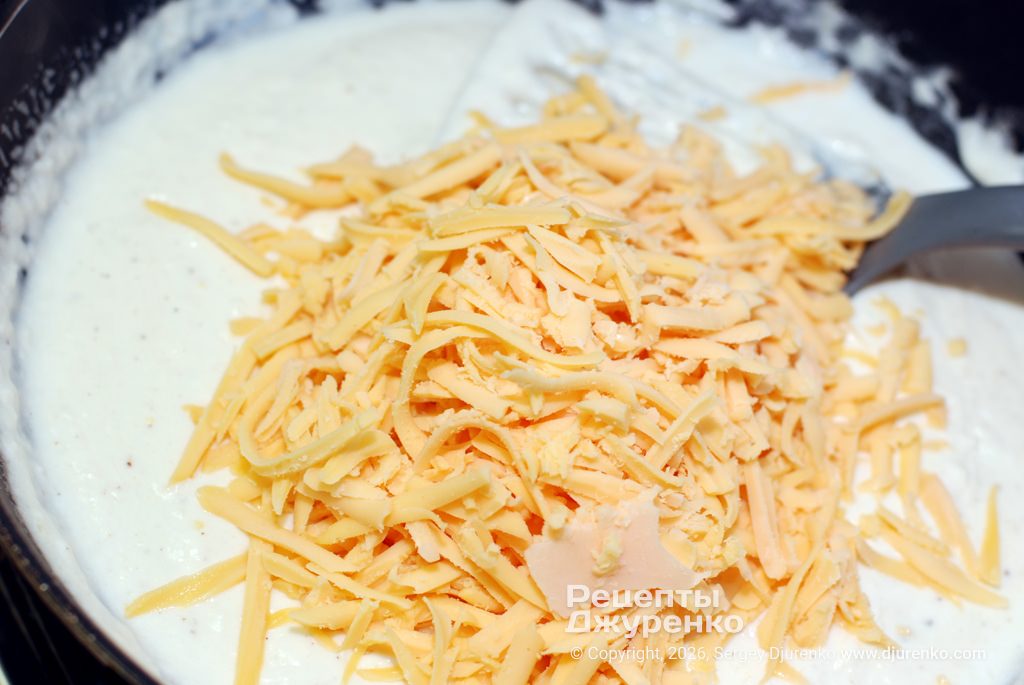
Melt the cheddar into the sauce. Grate the cheese – coarse or fine, it doesn’t matter. Add it to the hot sauce and stir until it has completely melted into the béchamel. Add cream to make the sauce semi-liquid. The finished sauce should be thick enough to coat the cooked pasta well and fill the hollows inside it.
In classic cooking, this combination of béchamel and cheese is called Mornay sauce.

Baking
Make sure the oven is switched on in advance and well heated. Bakes like this are usually cooked at 180°C, since all the ingredients are already cooked.
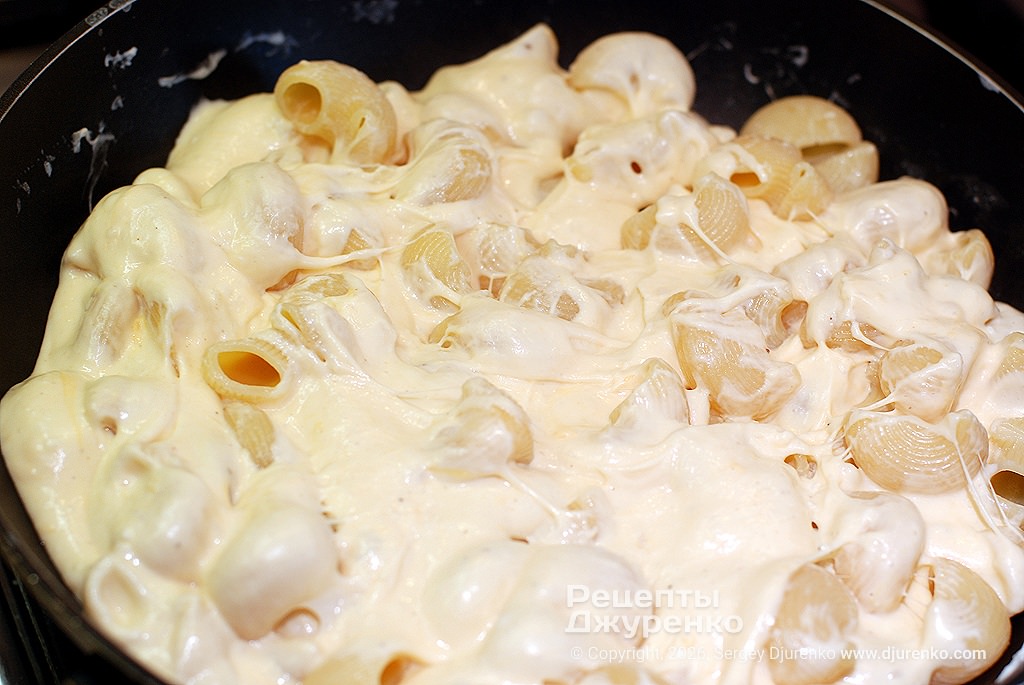
Mix the pasta with the sauce. As soon as the sauce is ready, drain the pasta in a colander and mix it with the sauce right in the frying pan. Stir thoroughly so there are no lumps and the pasta doesn’t stick together.

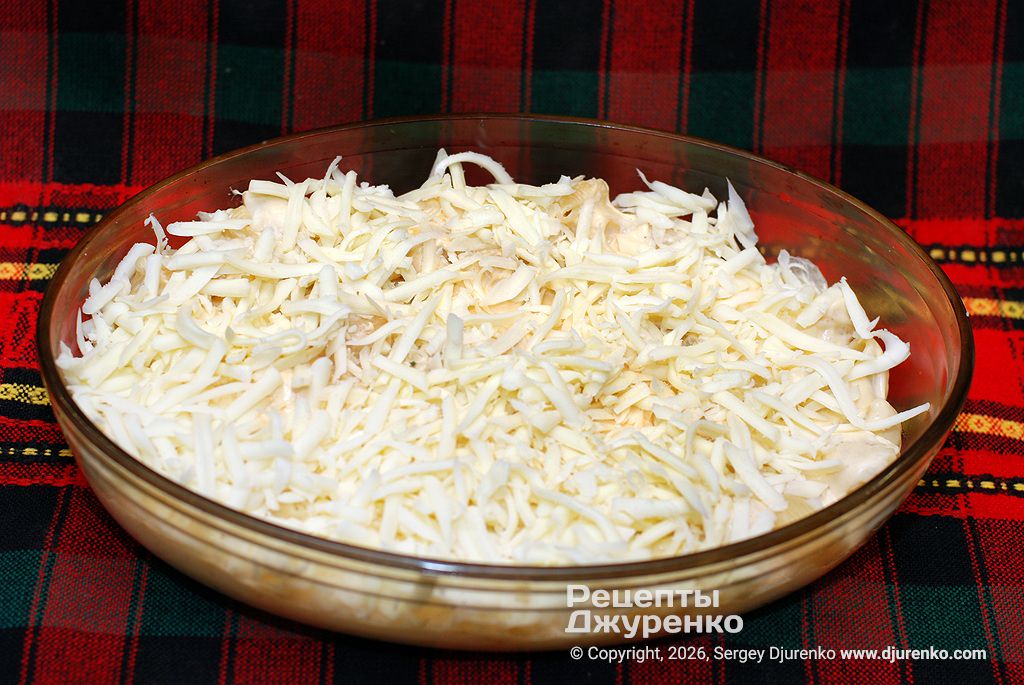
Transfer to a dish and top with mozzarella. Get a baking dish ready – ceramic or ovenproof glass is best – and grease the bottom and sides with a small knob of butter. Carefully transfer the pasta and sauce to the dish, level it with a spatula and press it down very lightly. Grate the low-moisture mozzarella, sprinkle it over the whole surface and press it down lightly too.

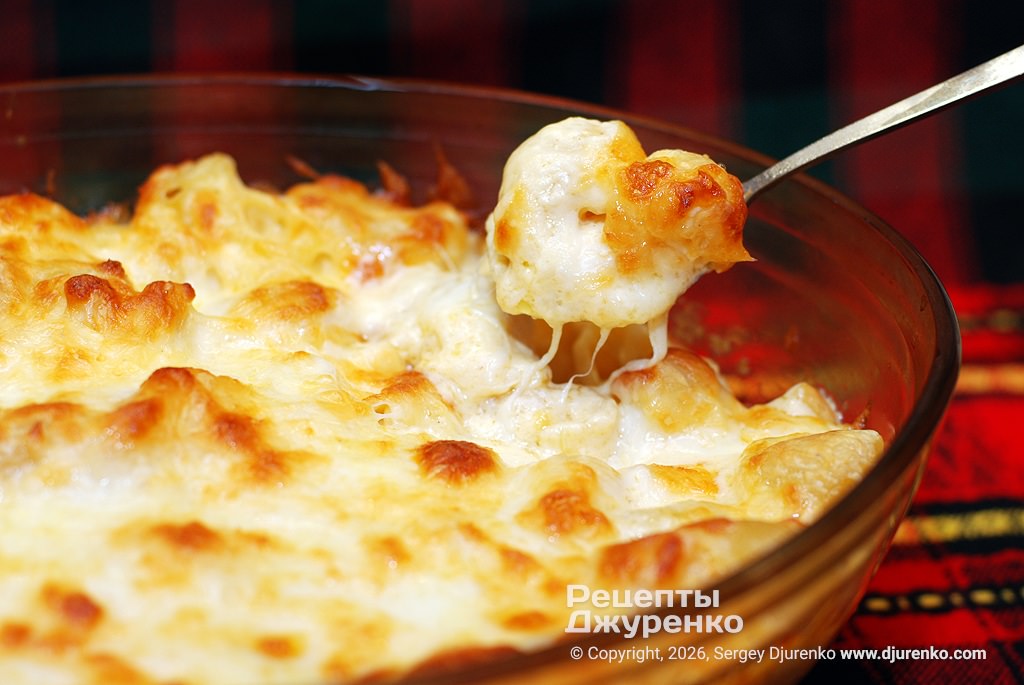
Bake in the oven preheated to 180°C for 25 min, until a golden cheese crust forms on top. Since the ingredients are already cooked, the baking time is simply the time it takes for the crust to form. If you want it even more golden, put the dish under a hot grill for a few minutes.
The steam that forms inside is unlikely to lift the bake, but if it does, just carefully pierce the bubble with the tip of a knife.
Serving
Let the bake rest and serve it in the dish. Careful, it is very hot: put the dish on a trivet and let it cool for 5 min. Bring it to the table right in the dish, and everyone can help themselves to as much as they like.

Instead of a cheese crust, the dish is often topped with béchamel and breadcrumbs, but I prefer cheese. Besides the cheeses above, Swiss cheeses such as Emmental or Gruyère work well, and Parmesan or Gouda are often used too. Dried onion and garlic or mustard powder are common additions to the spices.
Calories and macros
1075 kcal
Serving ≈ 500 g
- Protein43 g16% of kcal
- Fat59 g50% of kcal
- Carbs88 g33% of kcal
100 g217 kcalProtein 8.7 gFat 11.9 gCarbs 17.8 g
Calculated from the recipe ingredients, excluding salt and spices. Data: USDA and Matvaretabellen.