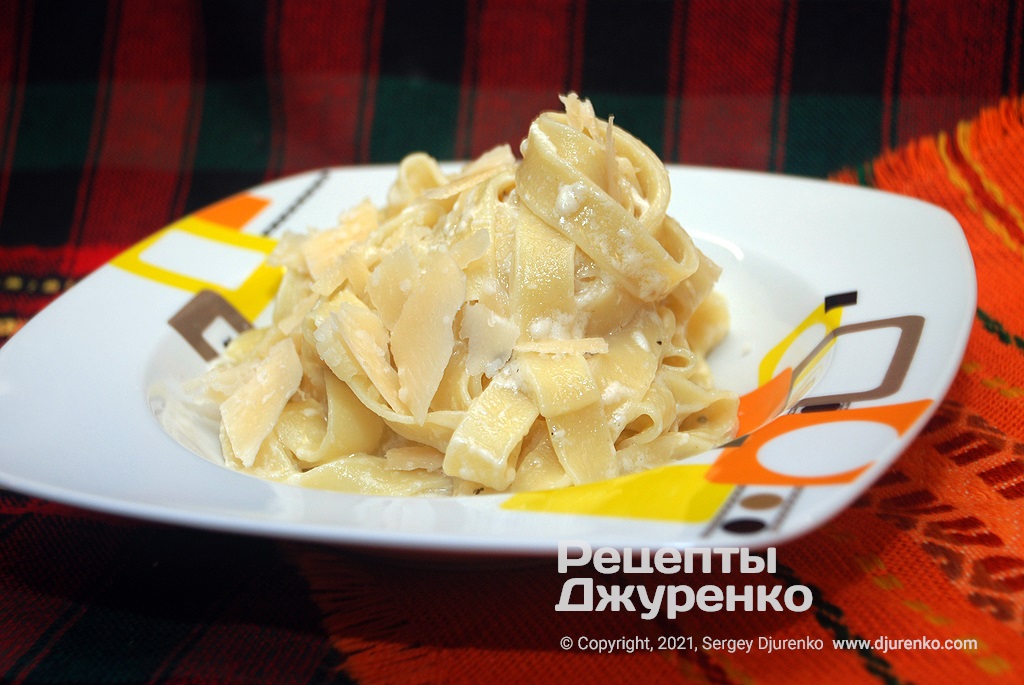
Fettuccine Alfredo
How long to cook fettuccine for Alfredo?
Fresh homemade fettuccine cooks in about 5 minutes, and dried store-bought pasta for the time on the package, which gives an al dente texture. For 180 g of pasta use 1.8 l of water, ten times the volume, and stir the ribbons right away so they do not stick. The sauce itself takes 5–6 minutes, so put the water on to boil ahead of time.
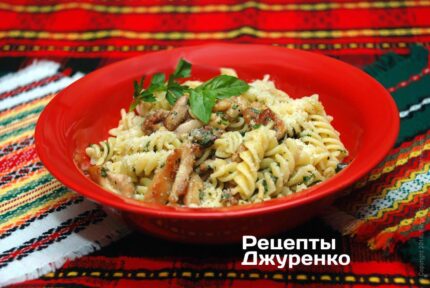
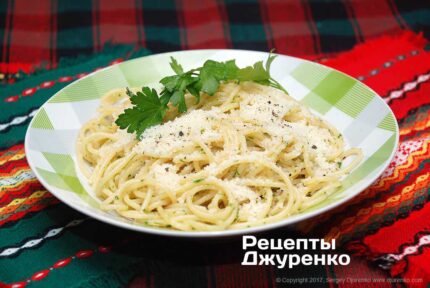
Ingredients
2 servings
- For the sauce
- Butter 30 g
- Cream (20–30%) 100 ml
- Parmesan 100 g (some for serving)
- Salt, black pepper to taste
- For the pasta
- Fettuccine (dried) 180 g
- Water for cooking the pasta 1.8 l
- Salt for the pasta water 9 g
Step-by-step recipe
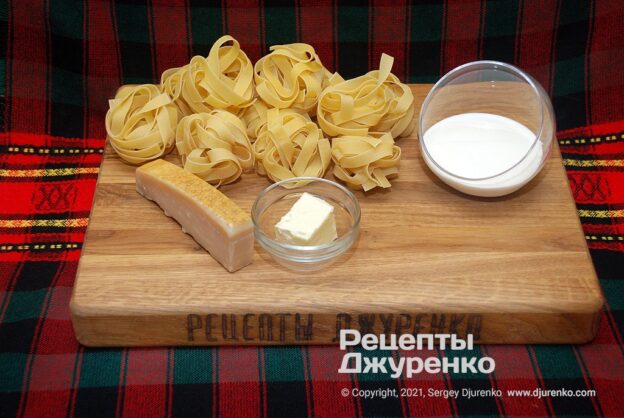
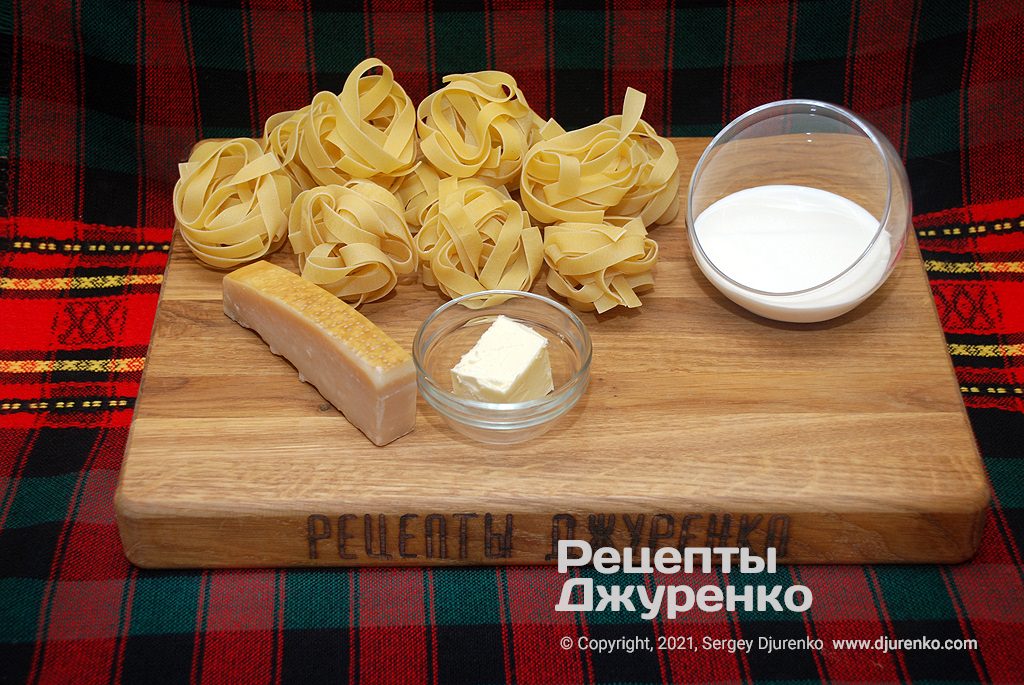
Ingredients
If you’re going to make fettuccine Alfredo with fresh pasta, you’ll need durum wheat semolina – semola di grano duro. It’s been easy to find in stores for a long time now. The usual dough: equal amounts of semolina and regular flour, 4–5 eggs for every 500 grams of the mix, and a little warm water. Knead a firm, springy dough, roll it out and cut it into strips. Let the fettuccine strips dry a little before boiling. The simpler option is to buy a pack of good-quality pasta.
The butter must be perfectly fresh. And real butter, of course! The sauce takes only 5–6 minutes, so it’s handy to put the pasta water on the heat ahead of time.
Finely grate the Parmesan. By the way, I recommend real Parmesan – its original name is Parmigiano Reggiano, and that’s branded on the rind. The edge of a piece is uneven, crumbly and slightly grainy. The cheese has a noticeable savory flavor and aftertaste, which comes through nicely in fettuccine Alfredo. To get the cheese really fine, you can also pulse it in a blender – that way it melts better.
Sauce
Melt the butter in a hot frying pan or saucepan over medium heat.
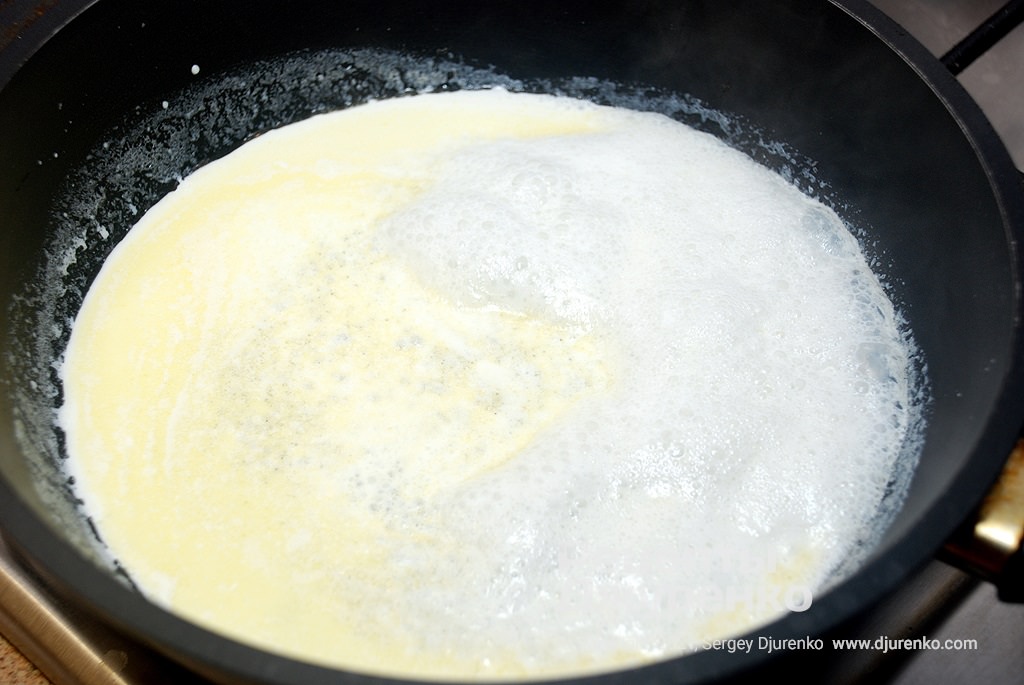
Add the cream. We usually use 20% cream for the sauce, though you can also use so-called “double” cream with over 30% fat – what matters is that it’s real cream.
Bring the cream and butter just to a boil and turn down the heat. Let the cream mixture simmer for 2–3 minutes.
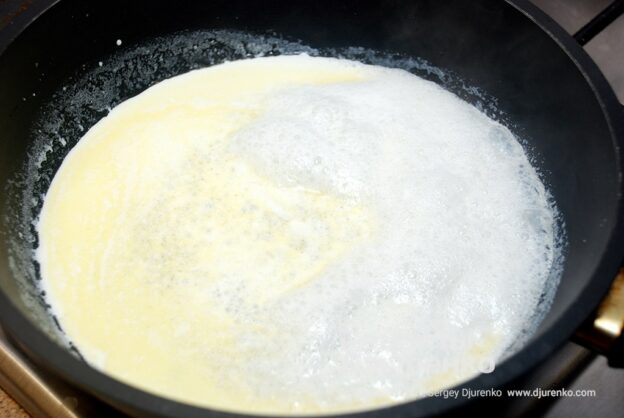
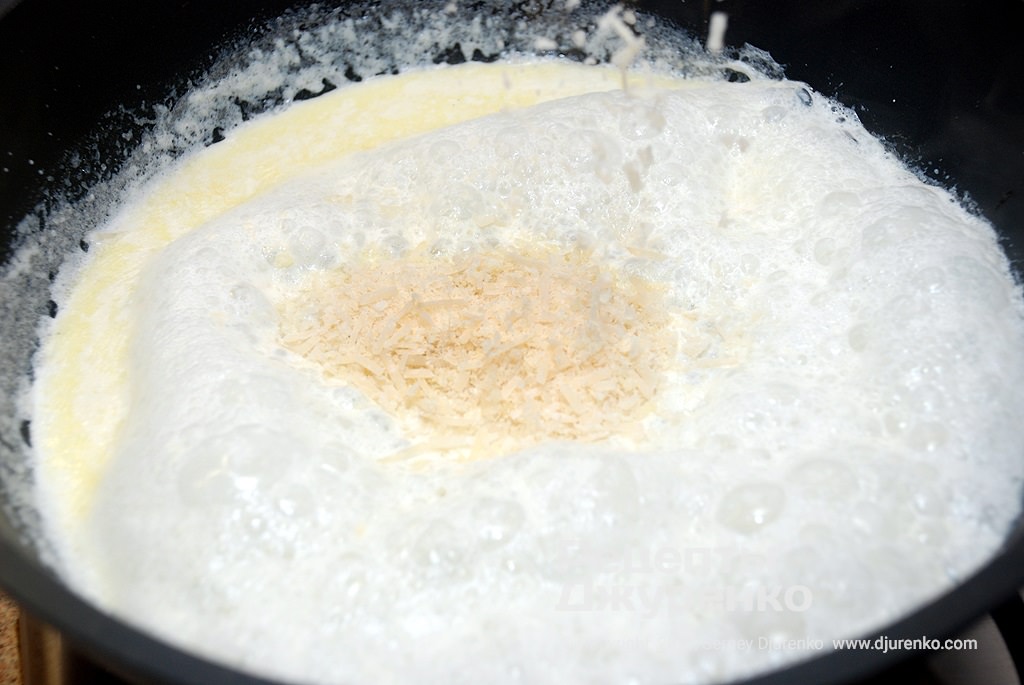
Add the grated Parmesan, keeping a little back for serving.
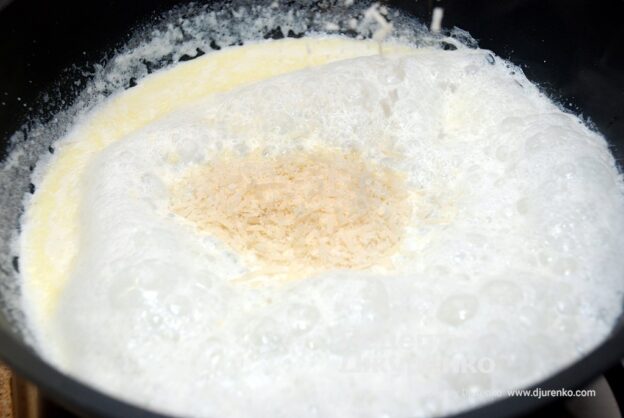
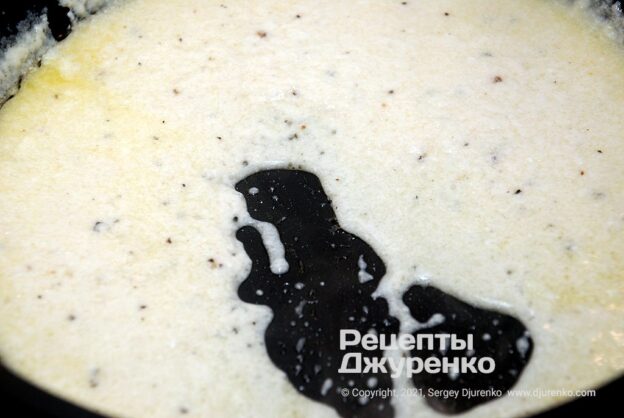
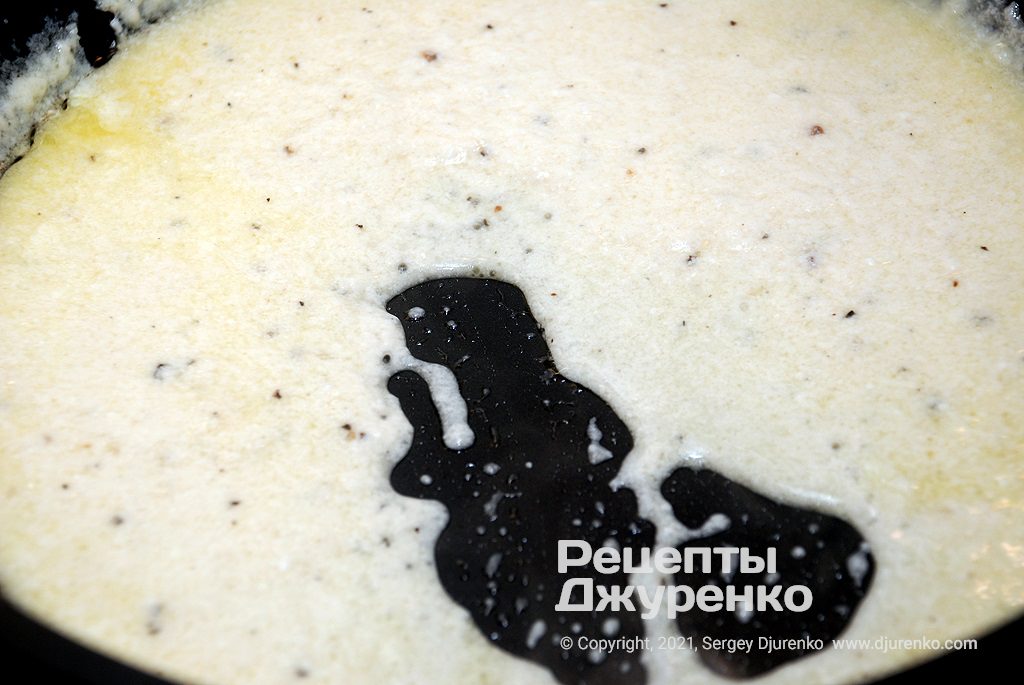
Season the sauce with a little salt and ground black pepper. Stirring, cook the sauce for 1–2 minutes until the cheese melts and combines with the cream into one. The sauce should turn glossy and smooth.
Turn off the heat and cover the pan with a lid. If the fettuccine is already cooked by then, you can simply turn the heat under the pan right down.
Pasta
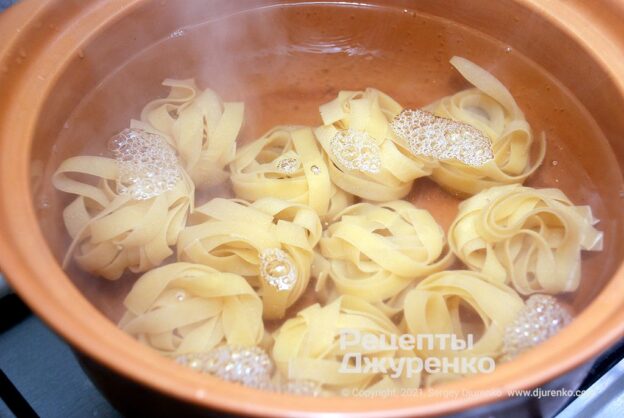
Pour water into a pot. The usual rule is ten times as much water as pasta (1.8 l for 180 g), with 5 grams of salt per liter. Bring the water to a boil over high heat.
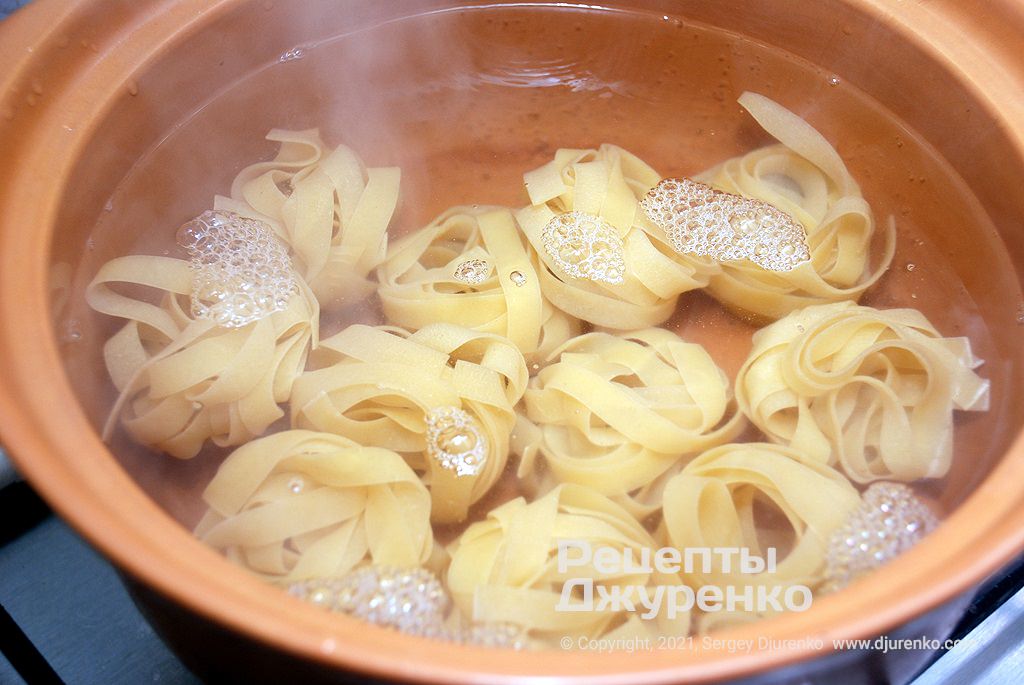
Drop the pasta into the boiling water and stir right away so the ribbons don’t stick together. Freshly made pasta cooks in about 5 minutes. Store-bought dried pasta cooks for the time given on the package – the manufacturer guarantees it will be al dente by then.
Drain the fettuccine in a colander and let the water run off. You can save a little of the pasta cooking water – it comes in handy for the sauce.
Serving
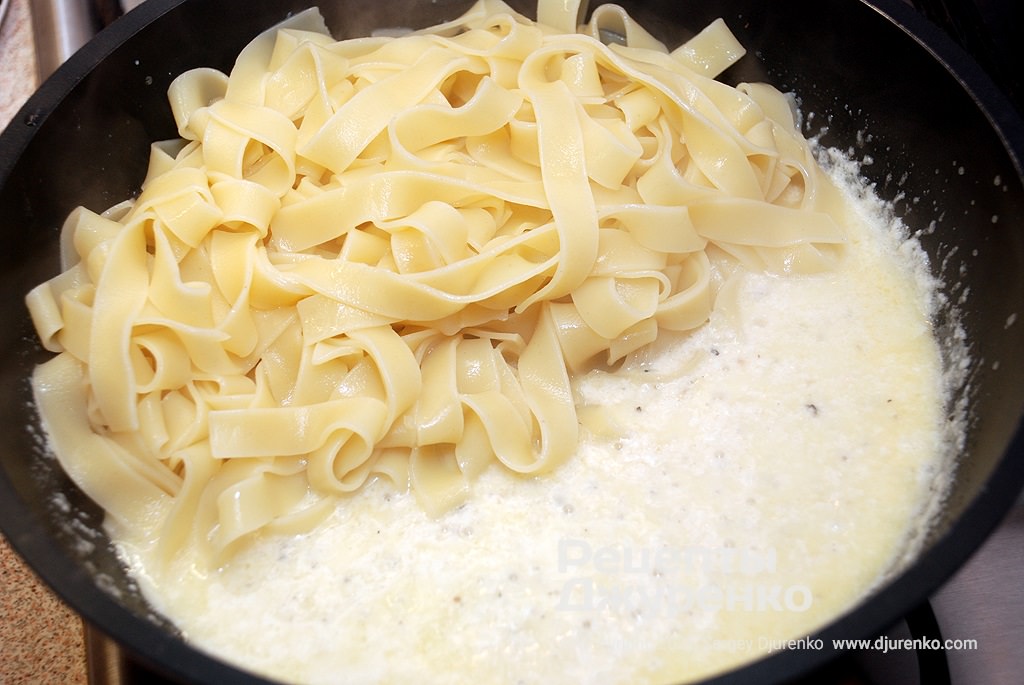
If you turned off the heat under the pan, turn it back on at the lowest setting. Transfer the cooked pasta to the sauce and toss gently until the fettuccine is coated. When making a large batch of sauce, it’s fine to add some of the pasta cooking water to make it smoother.
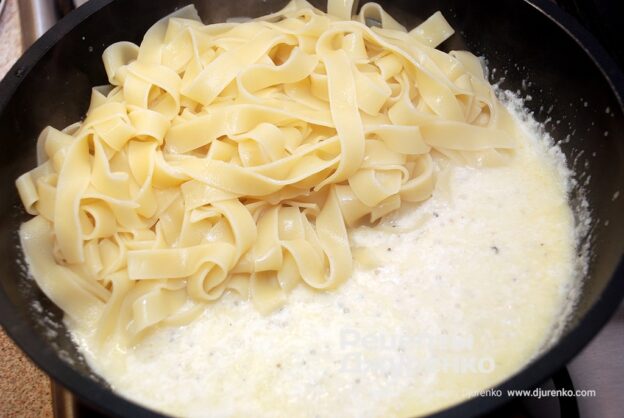
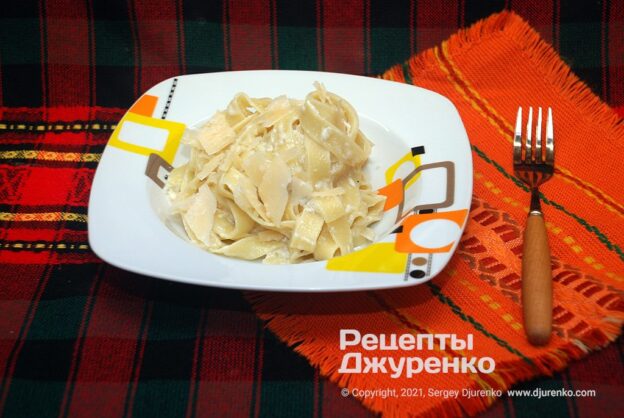
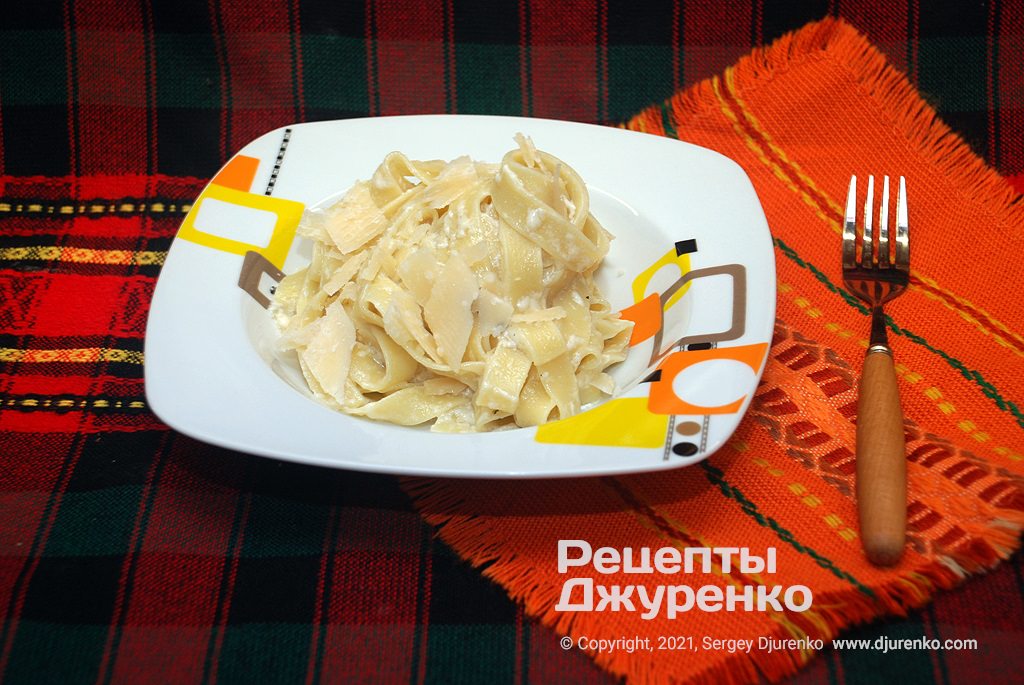
Divide the fettuccine Alfredo among plates and serve hot right away. Before serving, you can also sprinkle it with grated or shaved Parmesan. It doesn’t need any extra add-ons or garnishes. Freshly grated Parmesan is often served on the side. Sometimes garlic salt and Romano cheese are added to the sauce.
They say the recipe for pasta with butter and cheese goes back to the 15th century. It has changed many times since then, and nowadays everyone makes it with their own “secrets”.
Calories and macros
540 kcal
Serving ≈ 160 g
- Protein13 g10% of kcal
- Fat23 g39% of kcal
- Carbs66 g50% of kcal
100 g348 kcalProtein 8.6 gFat 14.9 gCarbs 42.7 g
Calculated from the recipe ingredients, excluding salt and spices. Data: USDA and Matvaretabellen.