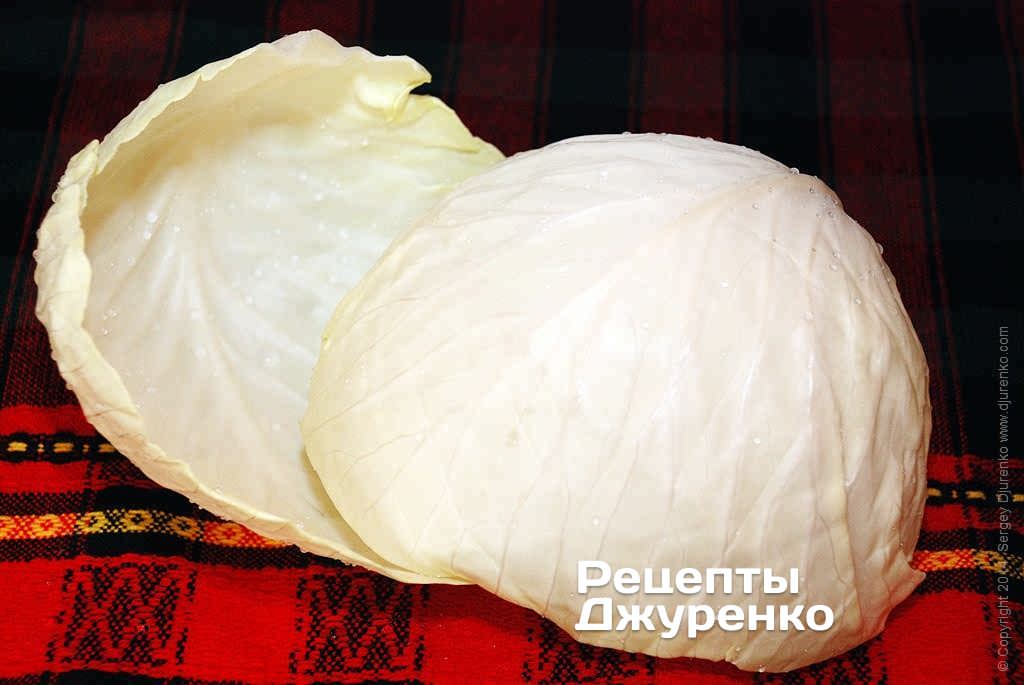
How to Remove Cabbage Leaves for Cabbage Rolls Without Boiling
When making cabbage rolls, the most laborious part is probably preparing the cabbage leaves. Ever since early childhood I remember my mom saying you need “soft” cabbage for cabbage rolls, because it comes apart into separate leaves more easily. Nowadays all the cabbage in the shops is hard as granite, and the old methods don't really work.
For some reason I remember how mom would cut the core out of the head, pour boiling water from the kettle inside the cabbage, and then the cabbage would come apart into separate leaves. So taking a cabbage apart for cabbage rolls was a bit of a problem, to some extent.
There are many similar dishes whose essence is minced meat wrapped in leaves. Widespread in the East, the Balkans and the Caucasus is a dish where minced meat, a rice mixture (and all sorts of other combinations) is wrapped in a grape leaf. The name varies, and the details of the recipe differ. The dish is called dolma, dulma, tolma, sarma, sărma. So that it can be made at any time of year, national cuisines have various ways of preserving grape leaves: salting, freezing, pickling.
Here, since grapes don't grow well, cabbage rolls are more popular. It is an ancient dish, mentioned as far back as 2,500 years ago in Aristophanes' comedy “The Acharnians”, where a character asks: “Bring me pork in cabbage leaves”.
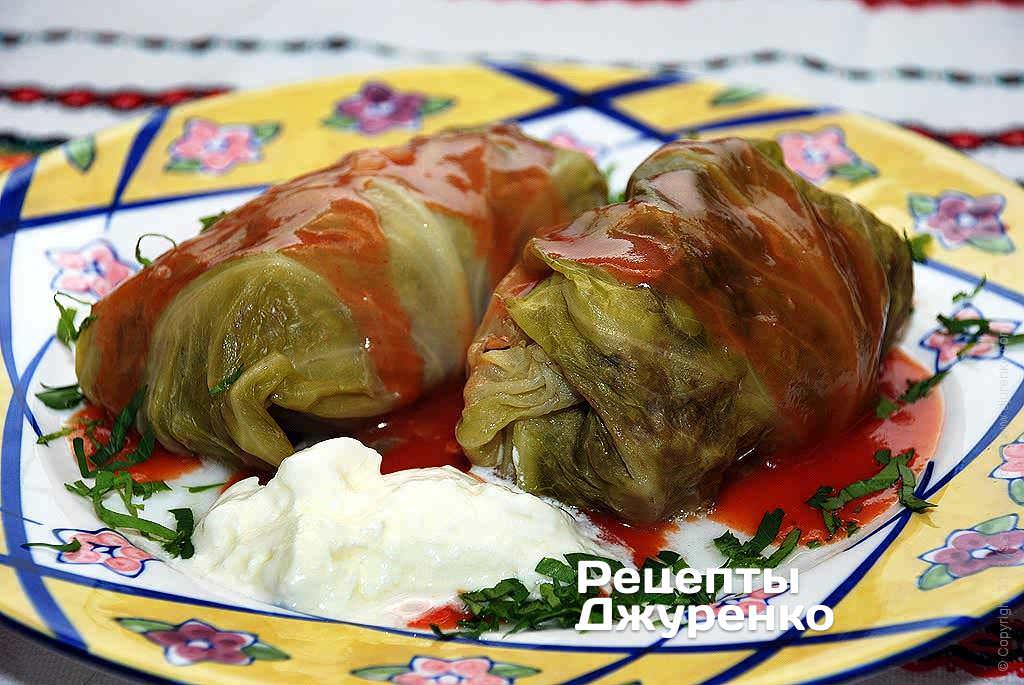
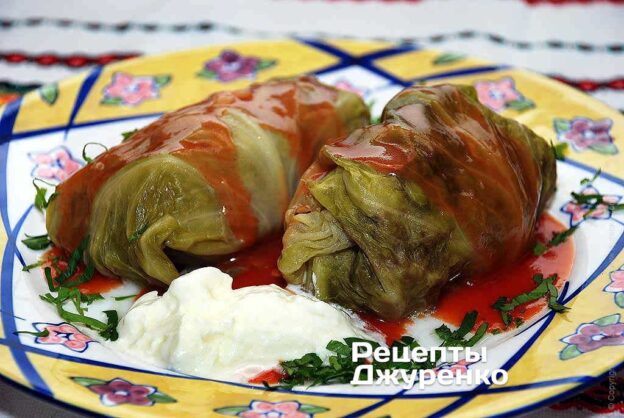
Cabbage rolls with pork and rice filling in tomato gravy with sour cream. This is straight from childhood. I remember that at home they always tried to make very small cabbage rolls. For some reason big cabbage rolls were considered wrong. But I always loved huge ones, filling the whole plate.
There is an explanation for this, though: I was always too lazy to roll small cabbage rolls, there are simply always so many of them. But over time I started making my cabbage rolls medium-sized, even smallish. No wider than a palm. If a cabbage leaf is too big, you can cut it in two, but then it's a bit harder to shape neat-looking cabbage rolls.
Cabbage in general is a very interesting vegetable. No one will argue that cabbage is low in calories and hugely good for you. In villages, cabbage is fermented in huge barrels; I've done it myself. At home we keep it simple and ferment cabbage in jars.
Cabbage keeps perfectly in a cellar all winter. So getting hold of such an in-demand ingredient for cabbage rolls as the cabbage leaf is no longer a problem.
Ingredients
plenty of cabbage leaves
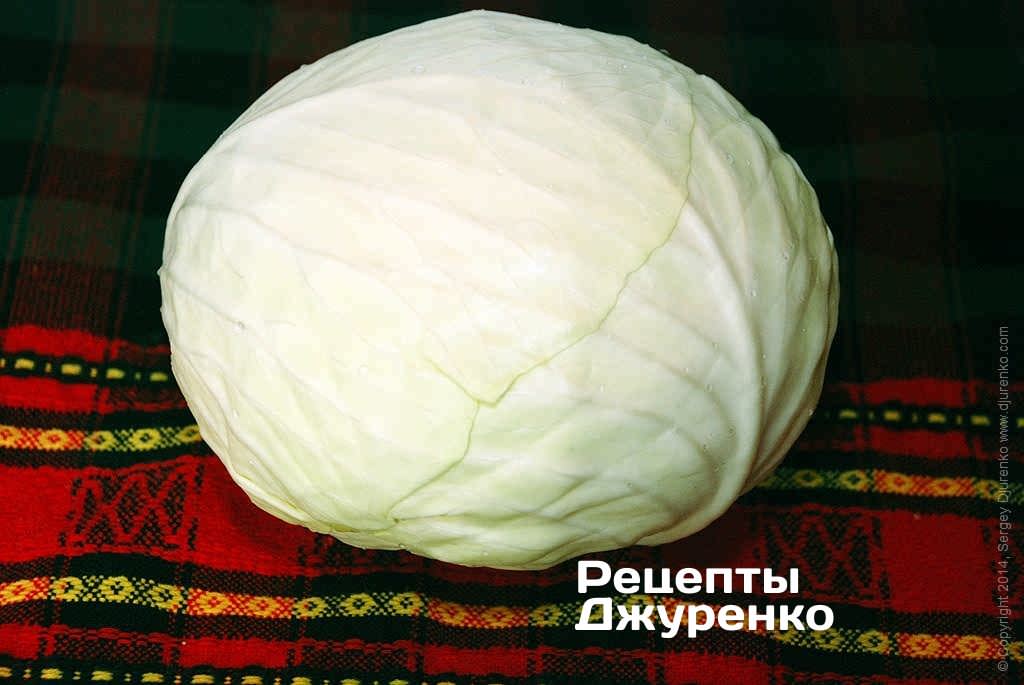
- White cabbage 1 head
Step-by-step recipe
- Believe it or not, today I dreamed of homemade cabbage rolls… After waking up, I made the filling very quickly: boiled half a glass of rice and made the minced meat. For a while I just stood there, actively too lazy to take the cabbage apart. How do you remove cabbage leaves? Quickly and without fuss, when the cabbage for cabbage rolls is quite hard.
- Suddenly… You'll laugh, but it's really simple. The cabbage for the rolls was hard as granite. I removed 10 outer leaves from a 2 kg cabbage in 2 minutes. No heating, boiling or other extremely tedious procedures. And the leaves were not only undamaged, they weren't even scratched. It's hardly a secret know-how, it's just too simple. But… your cabbage for cabbage rolls will be just the way it should be.
- To remove the leaves from a head of cabbage you need a knife, cold tap water and, of course, the cabbage for the rolls. I recommend having 1-2 large dinner plates ready, as the cabbage leaves will be wet. One more thing: the leaves come off perfectly if they are not crinkled, like in the very middle of the head, where the leaves are uneven and intertwined. So only the outer leaves are worth removing.
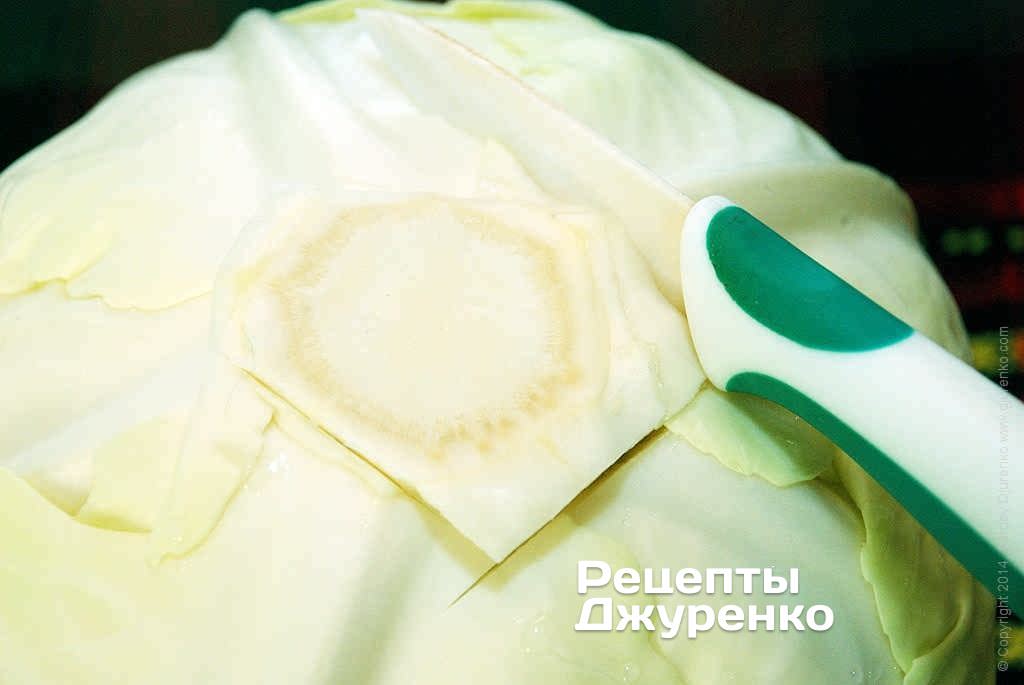
- Look carefully at the head of cabbage. A simple test of observation: work out on which side of the core the outermost cabbage leaf grows. Cut this leaf away from the core with a knife. Cut it off completely, so that the leaf isn't attached to the core by even a single fiber. This is important!
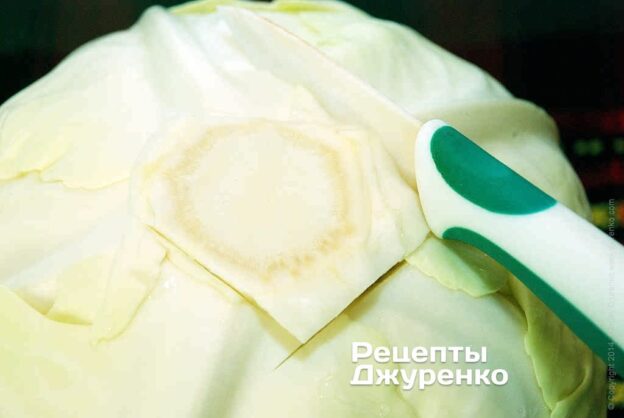
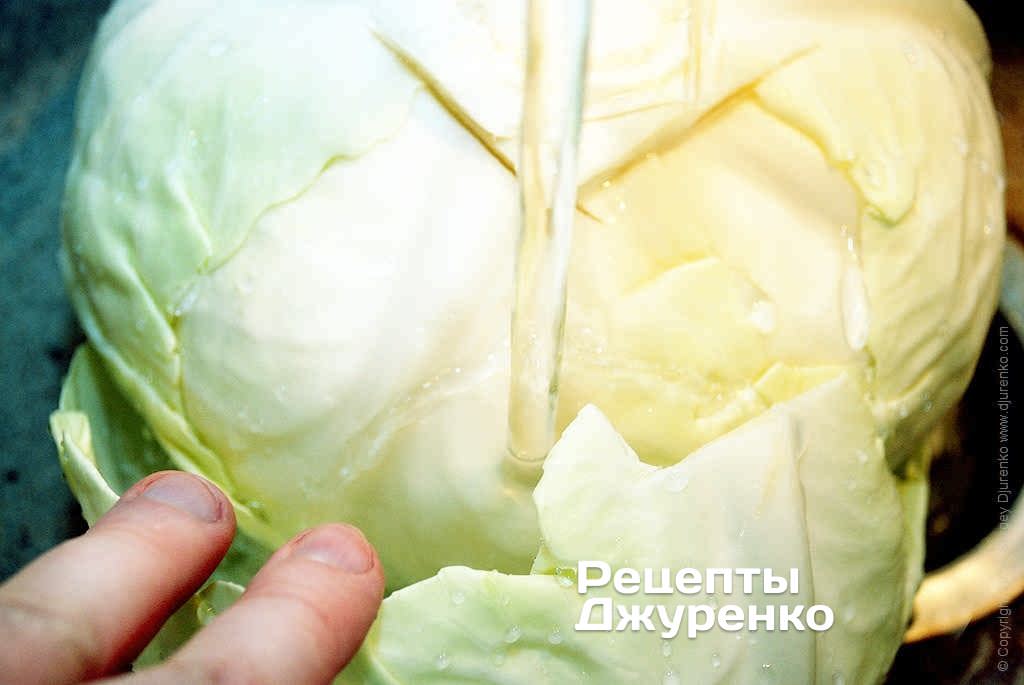
- Put the head of cabbage in the kitchen sink and turn on the cold water. The stream should be medium, so the water doesn't splash all over the kitchen.
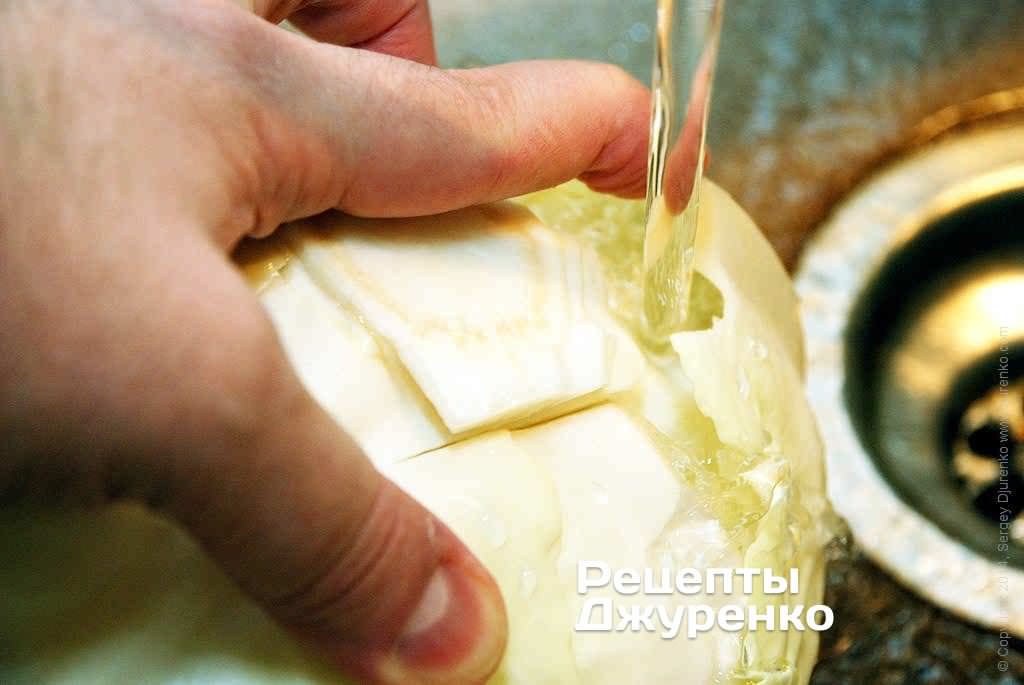
- Hold the head of cabbage under the stream so the water falls on the cut, and lift the stem of the cabbage leaf slightly with your finger so the water runs under the leaf.
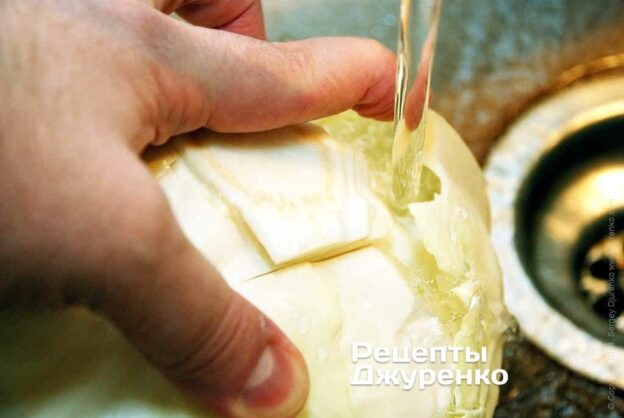
- Water getting under the outer cabbage leaf acts as a lubricant. By gently rocking the stem with your fingers and gently pressing from the core along the head, you can easily separate the leaf from the head of cabbage. Don't force it. The leaf comes off very easily; the only important thing is that the stream of water gets under the leaf.
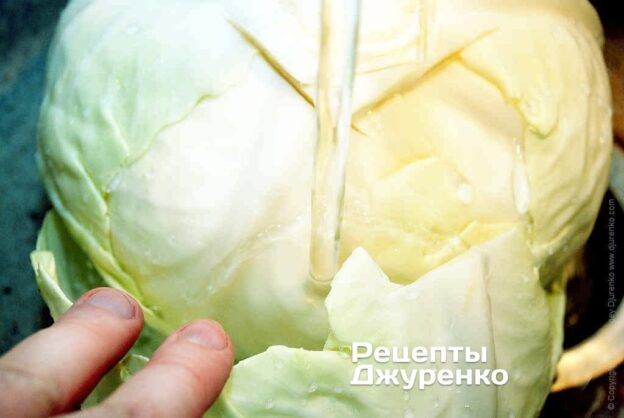
- Just 2-3 seconds and the cabbage leaf peels away. Absolutely no damage or cracks. You get perfect cabbage leaves for cabbage rolls. Repeat the process until you have enough leaves.
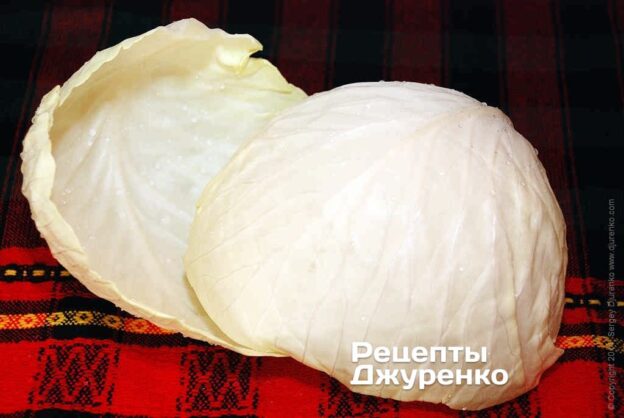
- But raw cabbage leaves are very brittle, and wrapping filling in them is quite tricky. Usually cabbage leaves are boiled: you boil water, pour it over from the kettle, or cook them in a pot. That process makes me miserable.
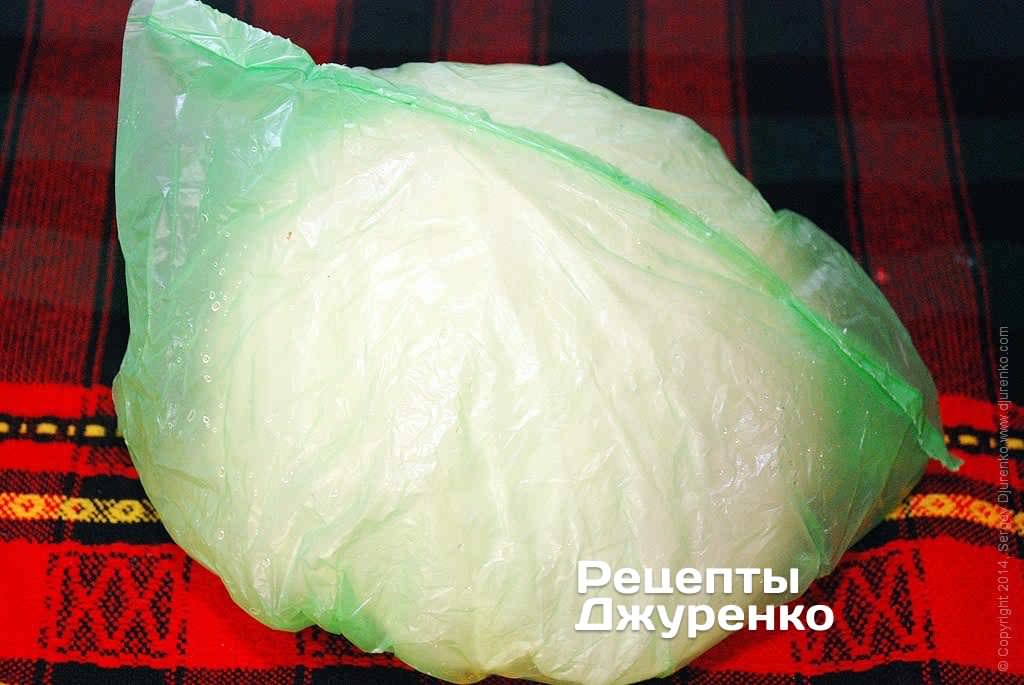
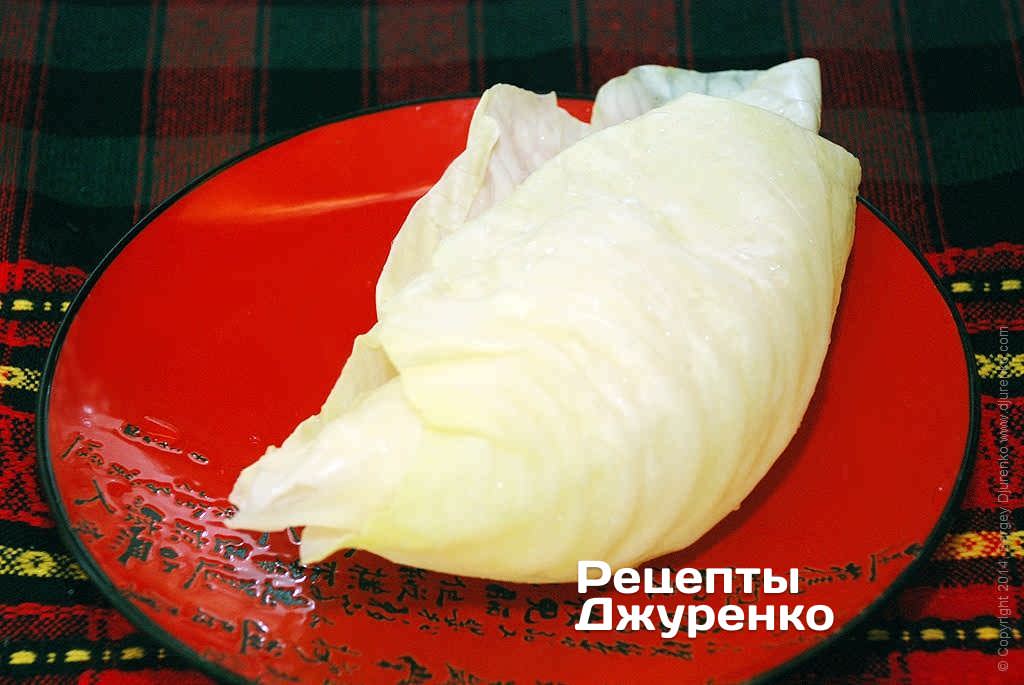
- So. Take an ordinary plastic bag. Put the removed fresh cabbage leaves into the bag. Tie the bag, but not airtight: leave a very small opening. Put the bag of cabbage leaves in the microwave and heat on full power for 1-3 minutes. The cabbage leaves turn soft very quickly. Start with 1 min, then check how soft they are and add 30-60 sec at a time.
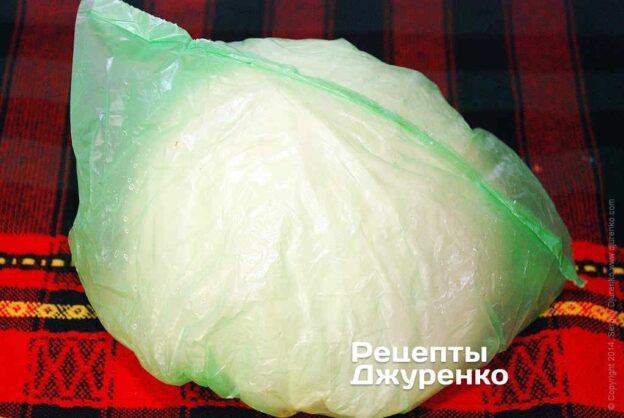
- Cool the cabbage leaves under cold running water. Use a sharp knife to trim off the protruding part of each leaf's stem.
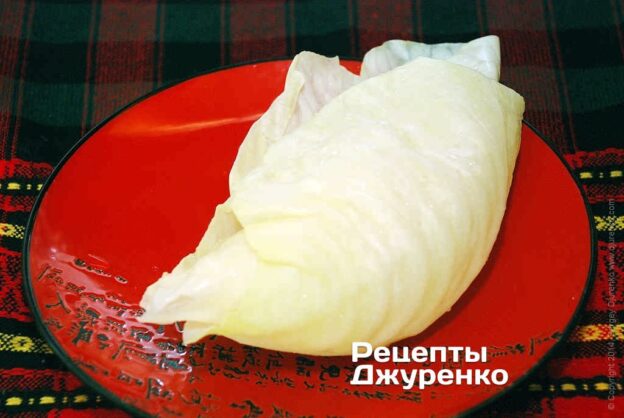
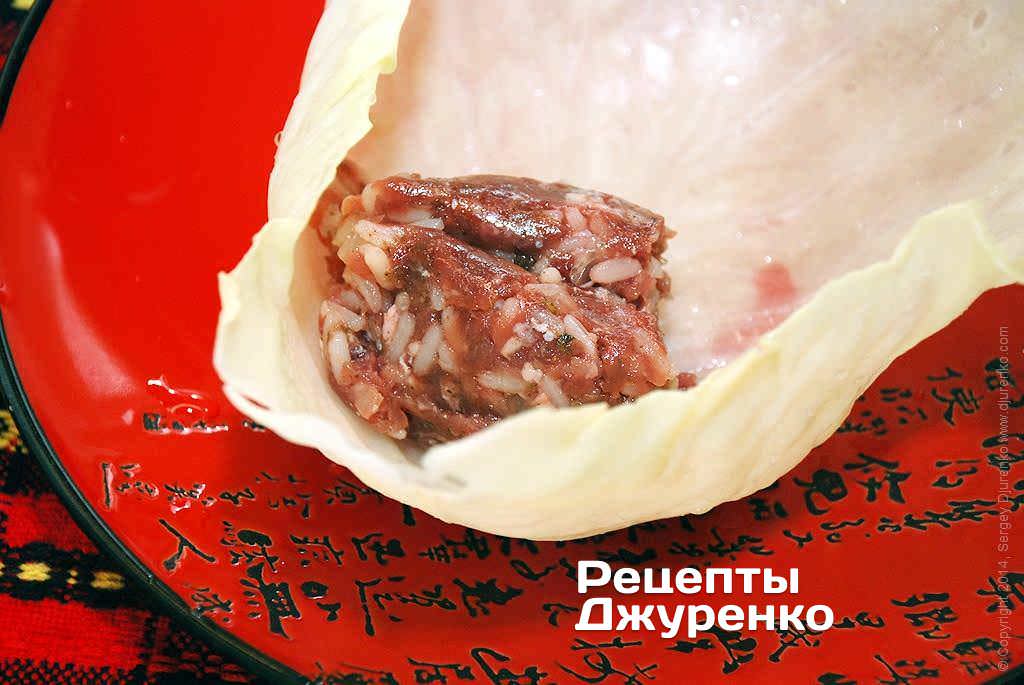
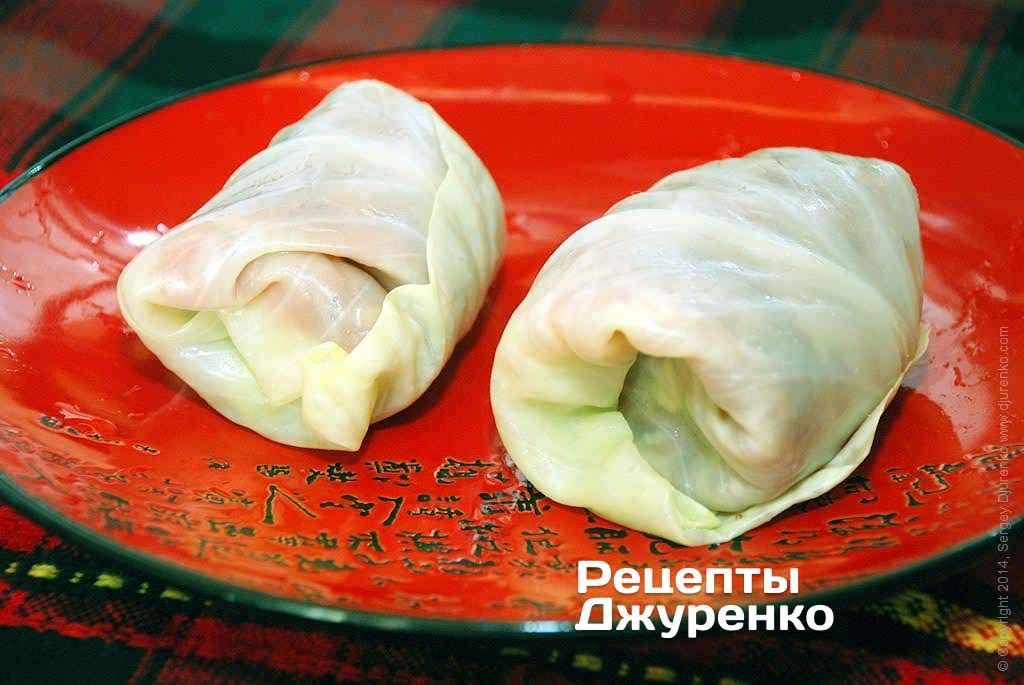
- Then place the filling on the prepared cabbage leaves and roll up the cabbage rolls.
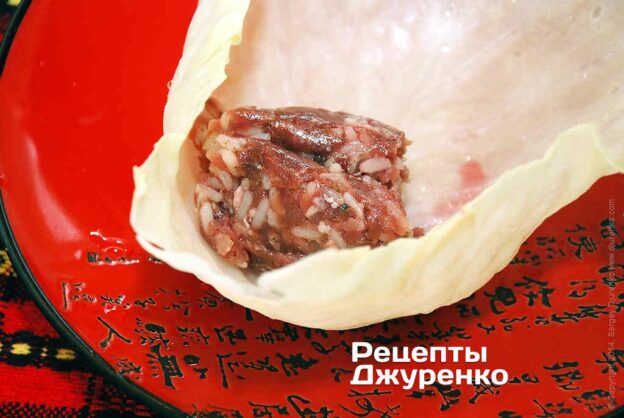
- Cook the rolled cabbage rolls any way you know and like.

- The rest of the head, left over after preparing the cabbage for the rolls, can be used to make bigos. And note: the remaining head hasn't been heat-treated, so it will keep in the fridge for quite a long time.
| Yield: | Plenty of cabbage leaves |
| Calories: | 27 |
| Prep: | 10 mins |
| Cooking: | 5 mins |
| Ready in: | 15 mins |
| Category: | Main Dishes |
| Cuisine: | European |
| Rating: |
⭐
⭐
⭐
⭐
⭐
4.7
(1)
|