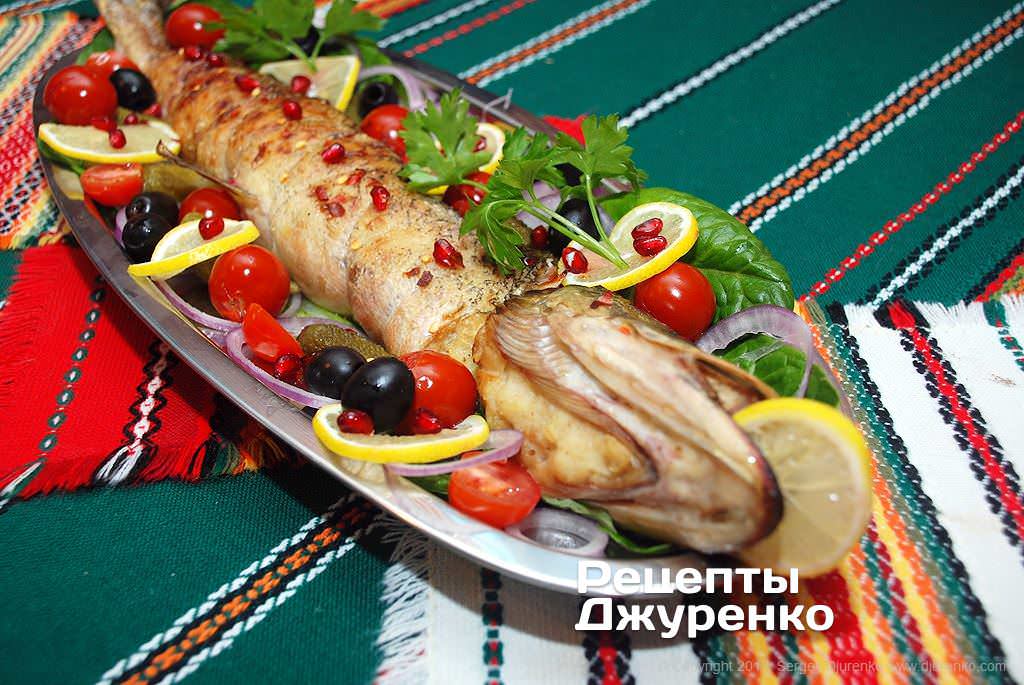
Stuffed Pike
Ingredients
4 servings
For the pike and filling
- Pike 1–1.2 kg
- Onions 2
- Stale white loaf 2–3 slices
- Vegetable oil 3–4 tbsp
- Milk (optional) 1 cup (200 ml)
- Cold boiled water 2 tbsp
- Salt, black pepper, coriander, cloves, allspice to taste


For poaching (option one)
- Onion skins a handful
- Carrot and beetroot 1 each
- Bay leaf 1
- Dried soup roots 1–2 tbsp (5–9 g)
- Black peppercorns, allspice berries, cloves a few
- Salt 0.5 tsp (3 g)


For serving
- Parsley, lettuce, lemon, pomegranate, olives, pickled gherkins, cherry tomatoes to taste

Step-by-step recipe
Preparing the pike
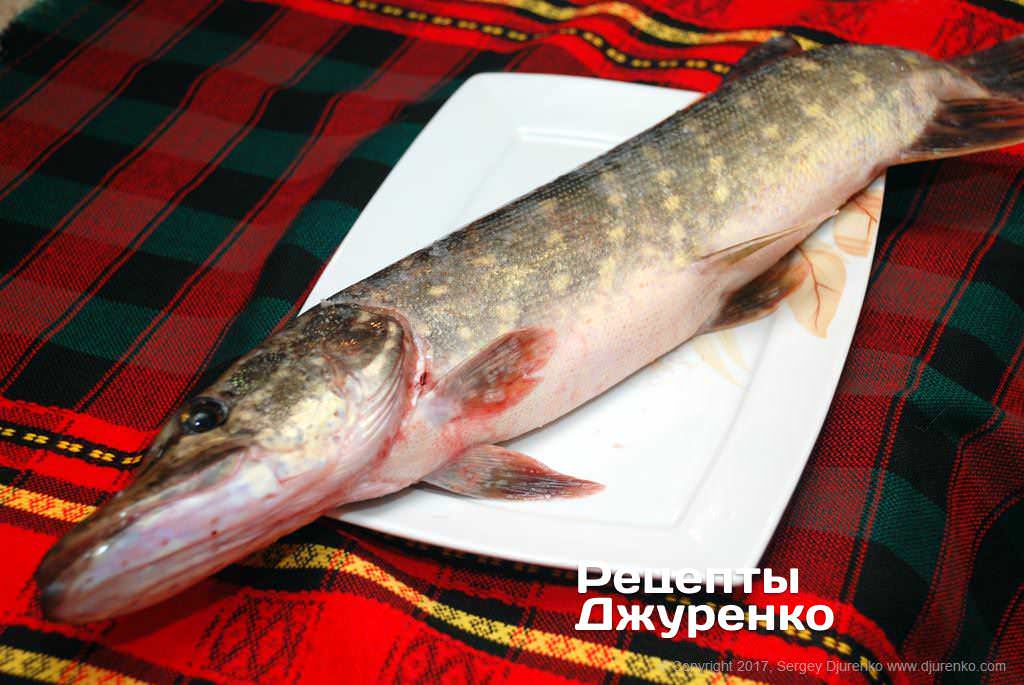
For a small family, a modest fish is enough – one kilogram or a little more. First, it is quite a challenge to find a serving dish that a whole stuffed pike will fit on. Second, a larger fish is hard to poach or bake in the oven. A pike weighing 1.2–1.5 kg is usually about half a metre long, and it is perfectly possible to cook it whole.
Scale the pike.
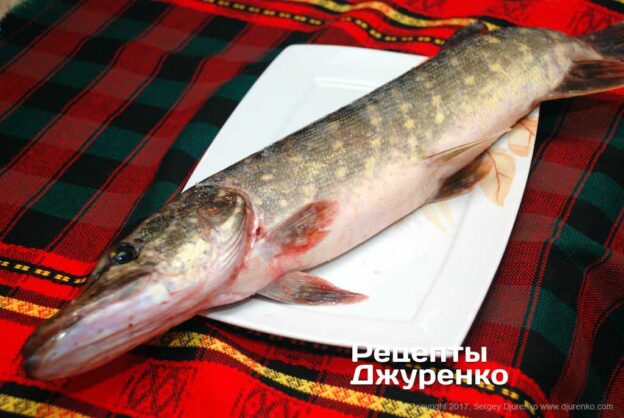
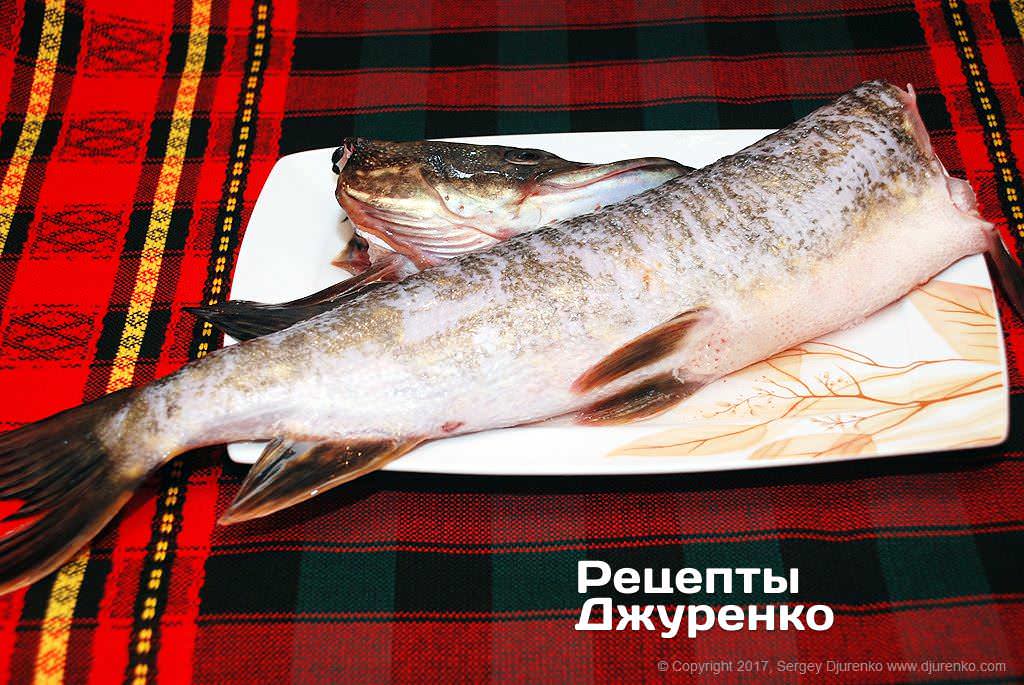
With a sharp knife, cut off the head right behind the gill covers. Remove the gills and pull out the innards without cutting the belly open. Do not slit the belly under any circumstances – the skin has to stay intact, so that the filling doesn’t fall out through any tears when you stuff the fish. Leave the fins in place as well.
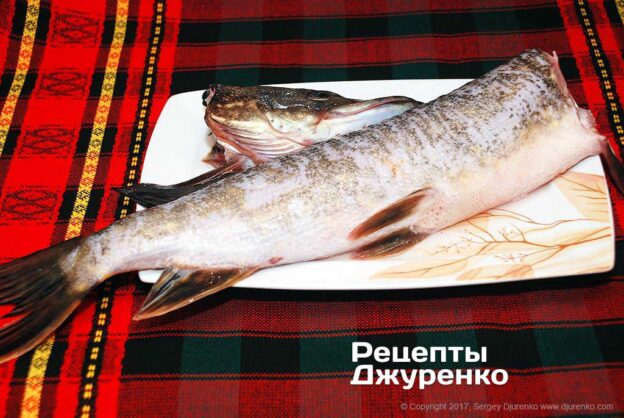
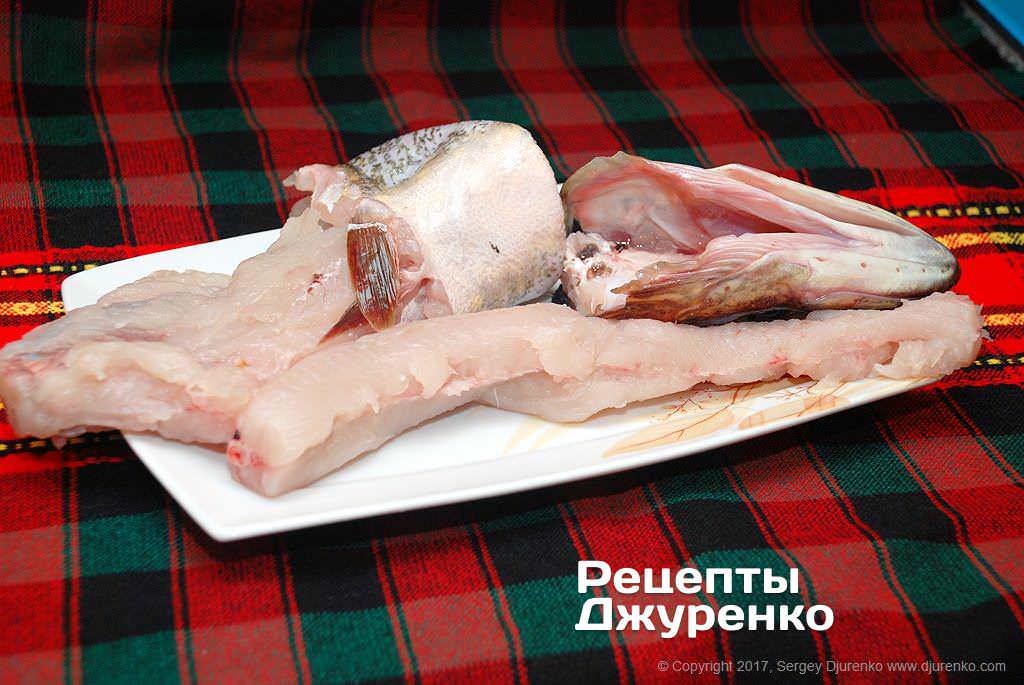
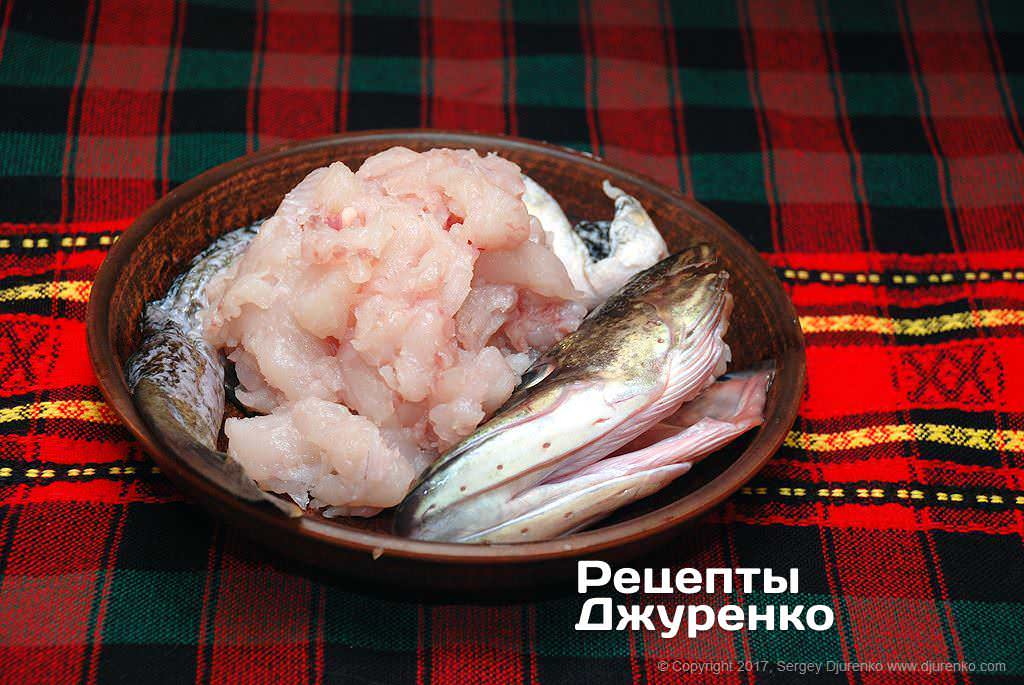
Using a sharp knife and kitchen scissors, take the skin off the fish in one piece, like a stocking. Carefully cutting the flesh away under the skin all the way round, pull the skin down to the tail fin. Cut through the backbone as close to the tail fin as you can. Cut all the flesh off the bones and the skin. The skin is thick and strong, and the flesh scrapes off easily. But it is important not to damage the skin. You should end up with a stocking with fins and a plate of pike flesh.
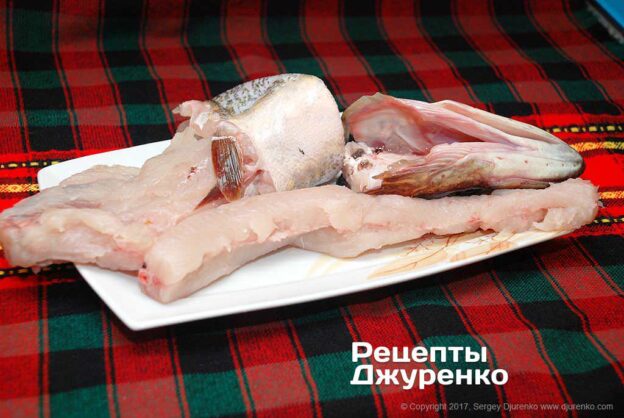
Filling and stuffing
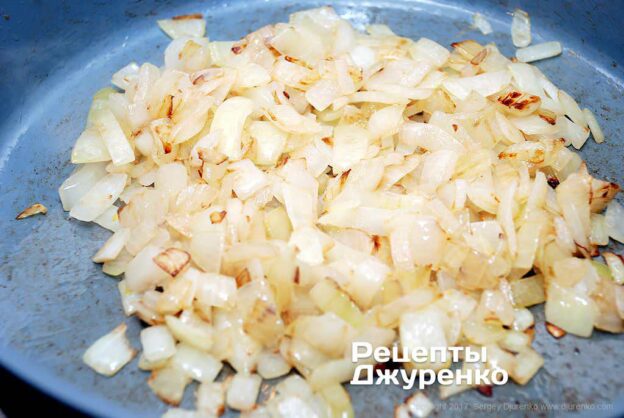
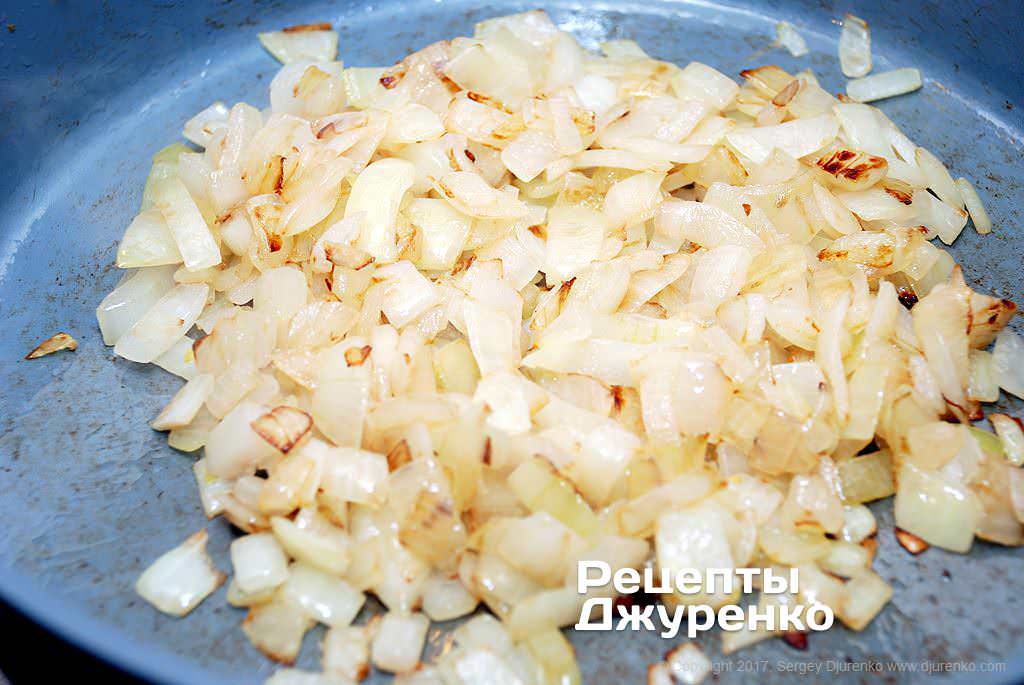
Peel a few onions and chop them fairly coarsely. Fry the onion in vegetable oil until nicely golden.
Soak the stale white bread or loaf in milk. If for some reason milk doesn’t suit you, replace it with boiled water. Put the pike flesh through the mincer twice. An important point: after the first pass, take out the mincer blade and remove the small bones that have collected there. All the larger bones gather in front of the mincer plate – a remarkable feature of this kitchen tool, by the way.
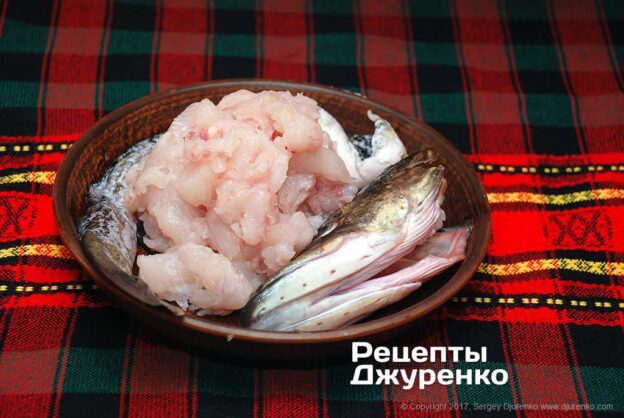
After the second pass, mince the soaked and well-squeezed white bread.
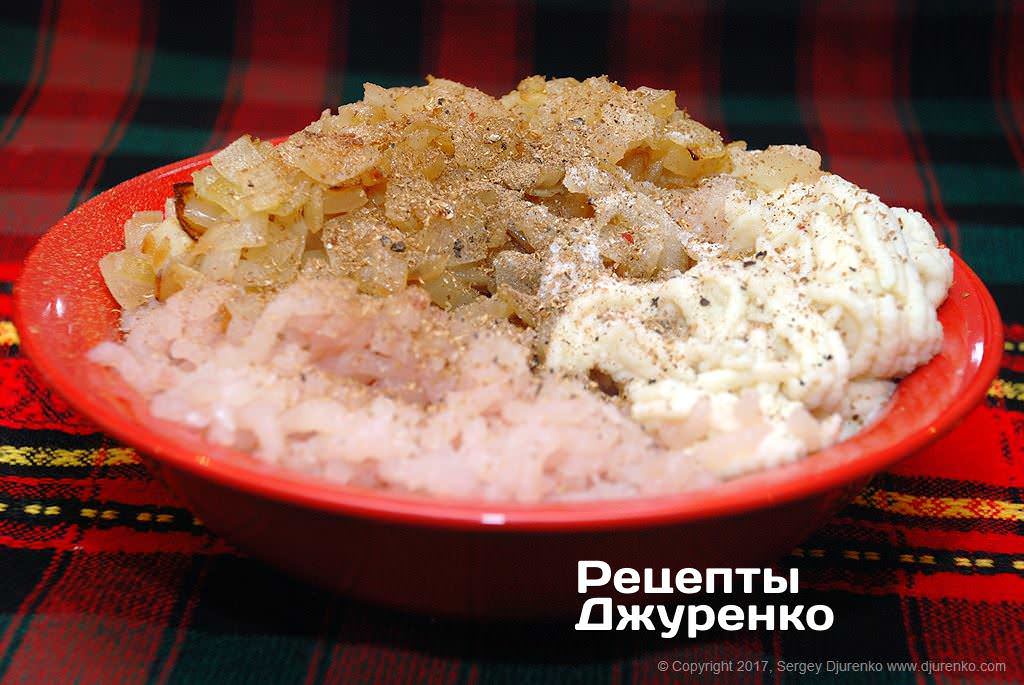
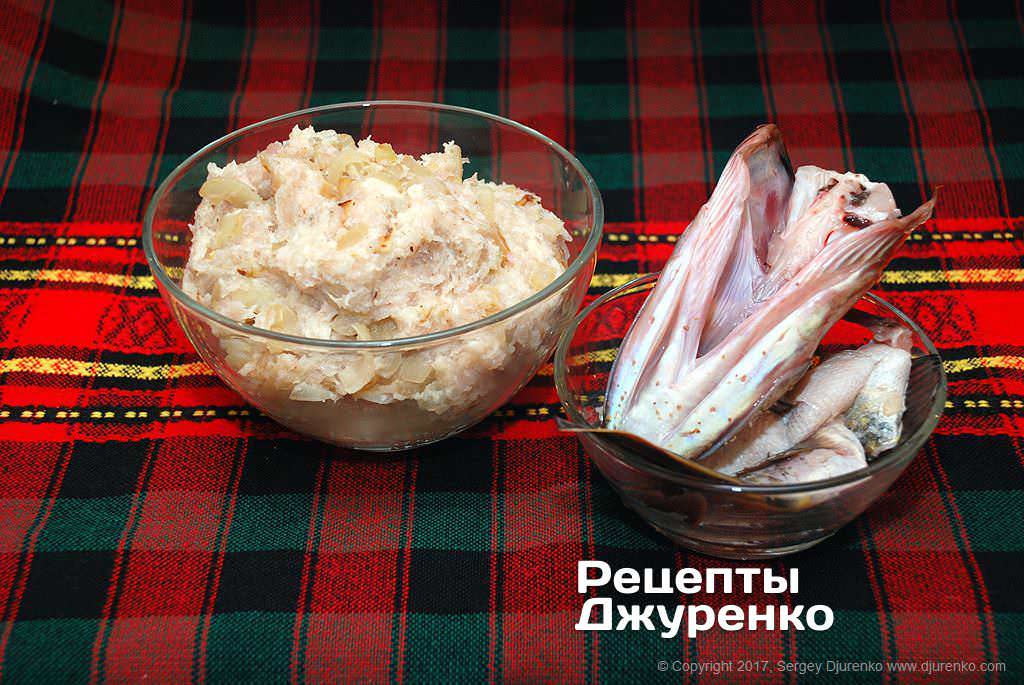
In a bowl, combine the minced pike, the minced white bread and all the fried onion. You can also add a finely grated raw onion if you like. Season the mince with salt and pepper to taste. I recommend adding, if you wish, 1–2 pinches of ground coriander, plus one clove and one allspice berry ground to a powder. Add 2 tbsp of cold boiled water. Mix the filling and knead it very thoroughly until completely smooth.
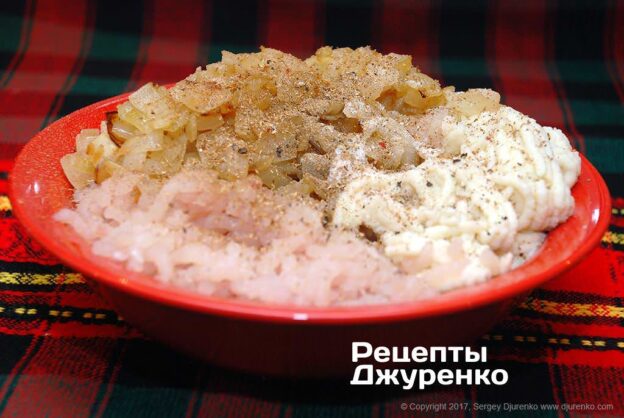
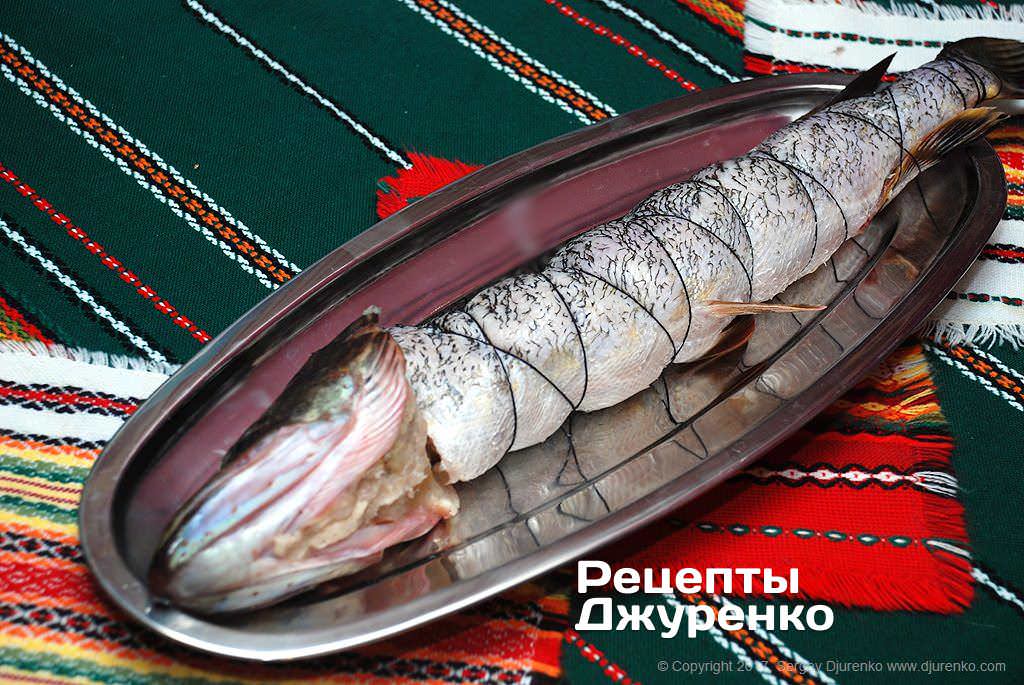
Stuff the pike skin with the filling, giving it the shape of a fish. Wet your hands with cold water so the filling doesn’t stick to them. Don’t pack it too tightly, or the skin may burst during poaching or baking. It makes sense to prick the skin with a toothpick in several places. Fill the pike’s head with the remaining mince. The pike is now ready for cooking.
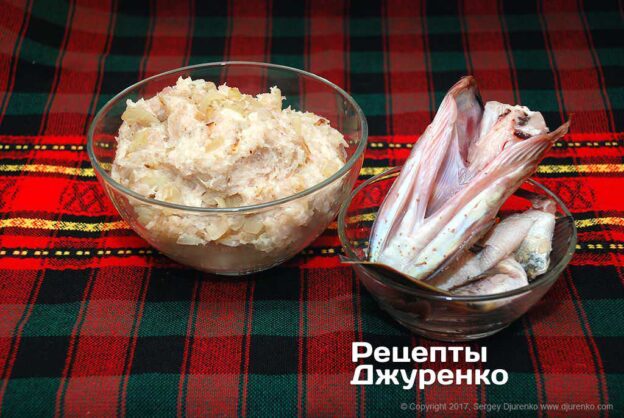
If you are not sure the pike will stay whole and undamaged, tie the fish with thick cotton thread – this lowers the risk of the fish splitting and makes it easier to turn and move.
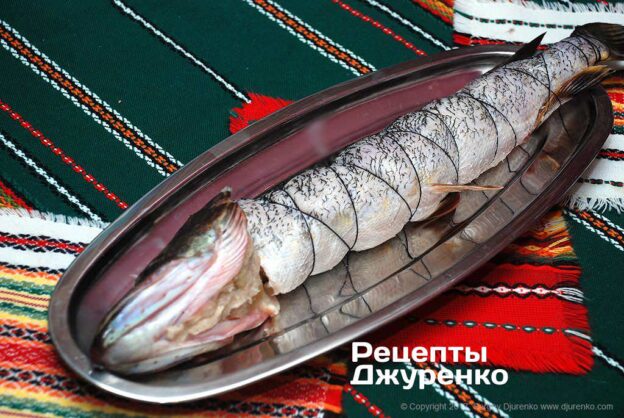
Poaching or baking
There are two ways to cook stuffed pike.
Option one: poaching the pike in a stock of bones and vegetables. It is not difficult. Put all the pike bones – the ribs and the backbone – into a large fish kettle. Scatter in a handful of washed onion skins, and a raw carrot and beetroot cut into pieces. Add a bay leaf and dried soup roots – 1–2 tbsp. (5–9 g) Lay the stuffed fish and the head on top. Drop in a few black peppercorns and allspice berries, some cloves, and add 0.5 tsp of salt (3 g). Cover the fish with cold water – not hot, or the skin will burst instantly.
Set the pan on the heat and slowly (!) bring the water to a boil. Reduce the heat and cook for 45 mins on a very low flame, so the liquid barely simmers. When the pike is done, carefully pour off the liquid.
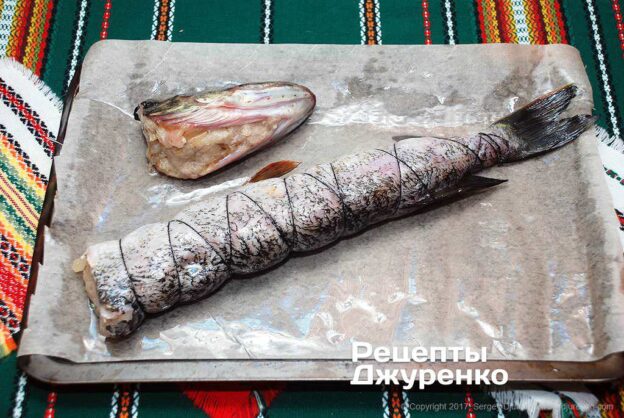
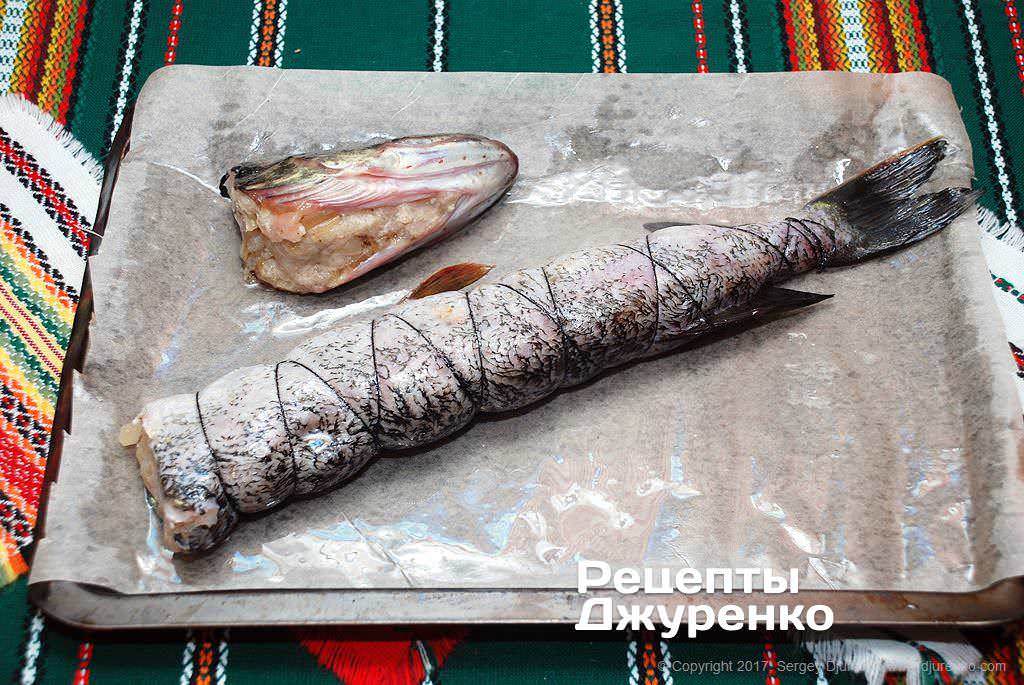
Option two: baking. Grease a baking tray of a suitable size with vegetable oil, or line it with baking paper, and lay the pike on it. Brush the whole fish thoroughly with fat – vegetable oil or butter. Put the fish in the oven and switch it on. The fish should heat up together with the oven. Bring the oven to 180°C. Bake the stuffed fish for about 1 hour. Counting the time the fish needs to warm up, that will be enough. From time to time, baste the surface of the fish with fat or with the juices that run onto the tray. Also keep an eye on the pike so its surface doesn’t burn – the fish can be turned over.
Serving
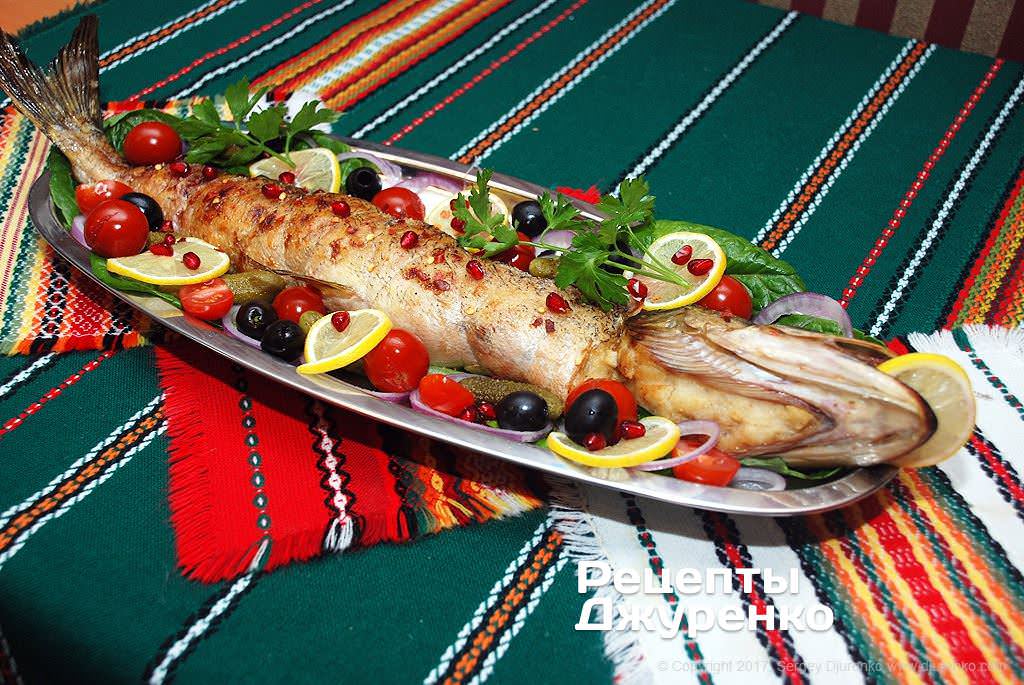
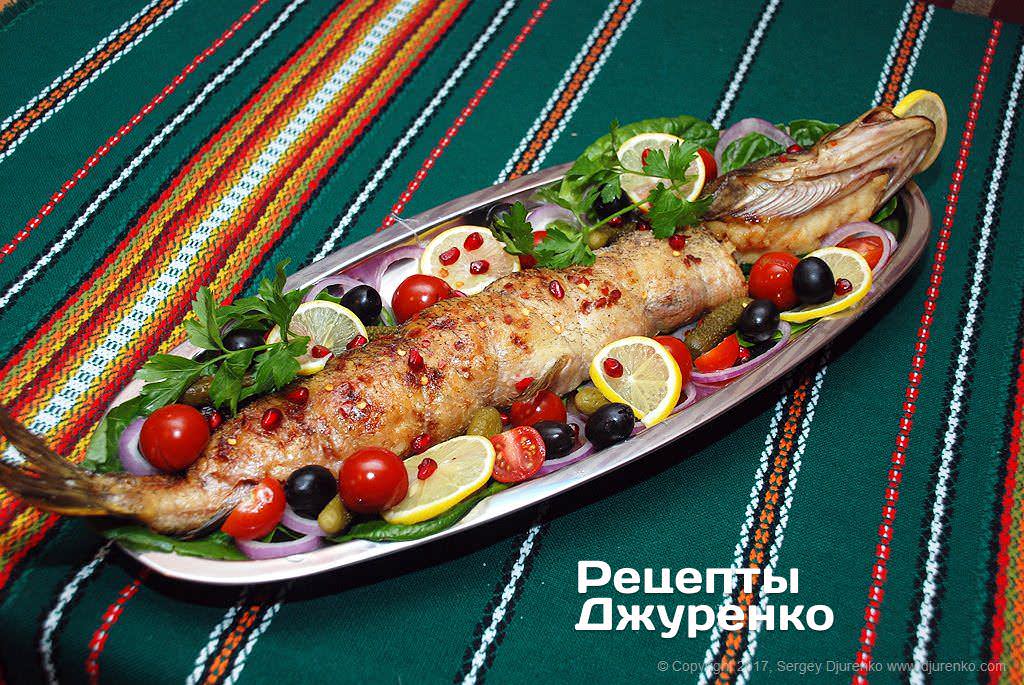
Line a serving dish long enough for the fish with a few green lettuce leaves (lettuce, romaine, endive). Lift the fish out of the pan or off the tray and transfer it to the dish, trying not to damage it. If the pike was tied with thread before cooking, this will be easy. Cut the thread off only once the fish is on the dish. Place the head next to the fish on the dish to make it look like a whole fish. Ideally, you will manage to recreate the look of a real pike.
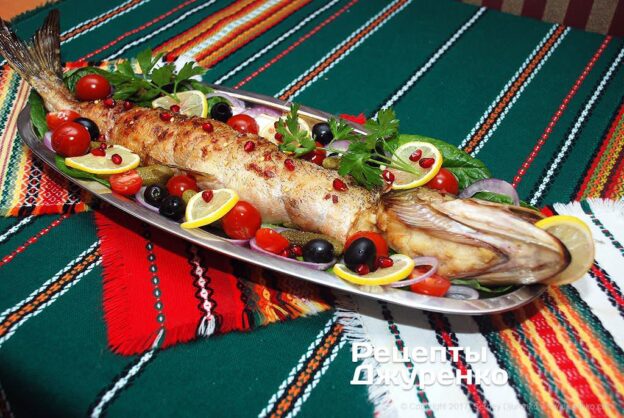
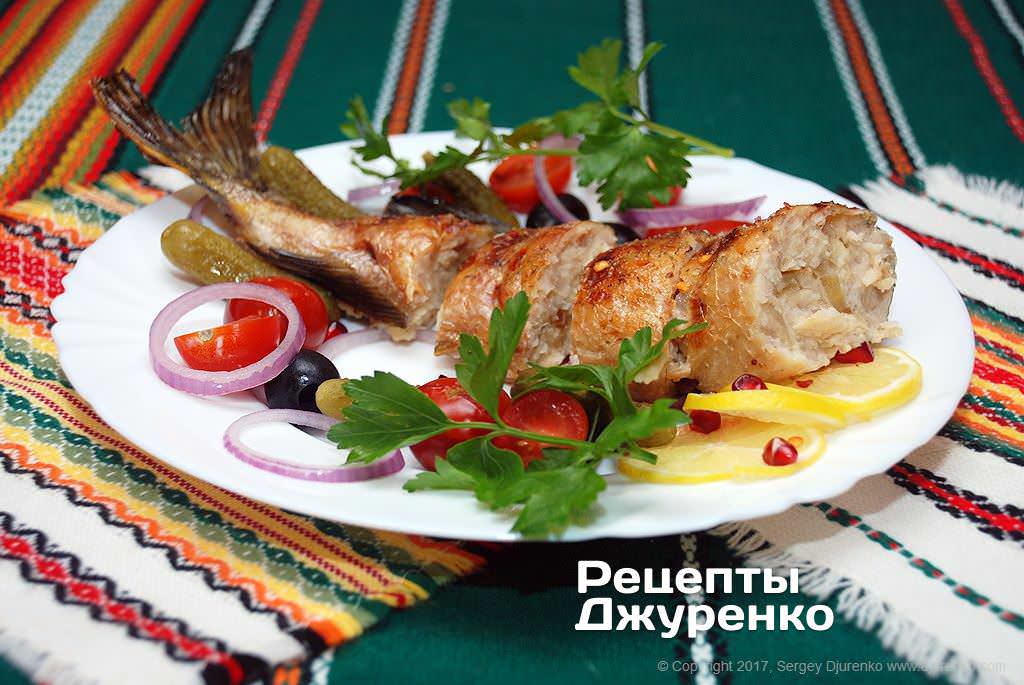
Stuffed pike can be cut into portions before serving. But you can also do that right at the festive table. Decorate the dish with lemon slices, pickled gherkins and cherry tomatoes, olives, parsley – use your imagination. It looks very pretty when the stuffed pike is decorated with thin lines of mayonnaise in a lattice pattern, just a very little of it.
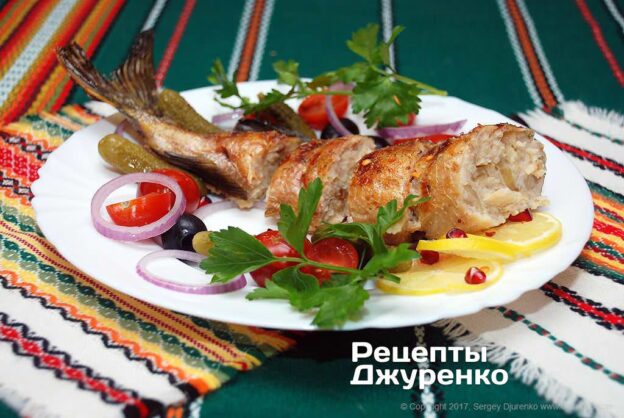
Stuffed pike is served chilled, although it is just as good hot. If the pike was poached, you can add the boiled vegetables, spoon 2–3 tbsp of the poaching liquid over it, and put the dish in the fridge to cool. Thanks to the substances from the bones, the stock will set, and the pike will be in a clear jelly.
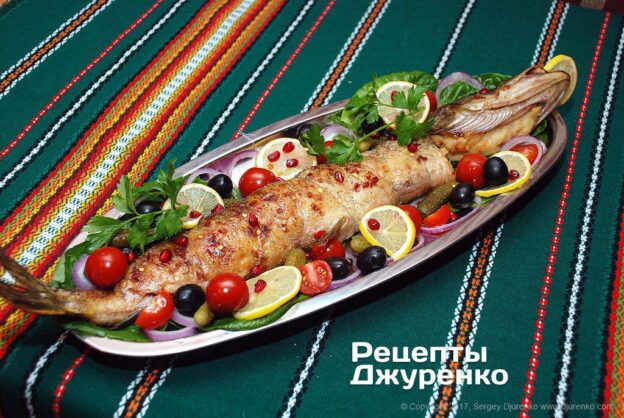
Although stuffed pike is served cold, nobody lets it cool down. It is more than we can bear – it gets eaten while still hot. Ideally, serve the fish with hot mustard or homemade horseradish – the best condiment for fish and meat.

How did you like this recipe?
No one has rated it yet — be the first.
Calories and macros
350 kcal
Serving ≈ 240 g
- Protein33 g39% of kcal
- Fat15 g41% of kcal
- Carbs17 g20% of kcal
100 g149 kcalProtein 14.1 gFat 6.6 gCarbs 7.1 g
Calculated from the recipe ingredients, excluding salt and spices. Data: USDA and Matvaretabellen.