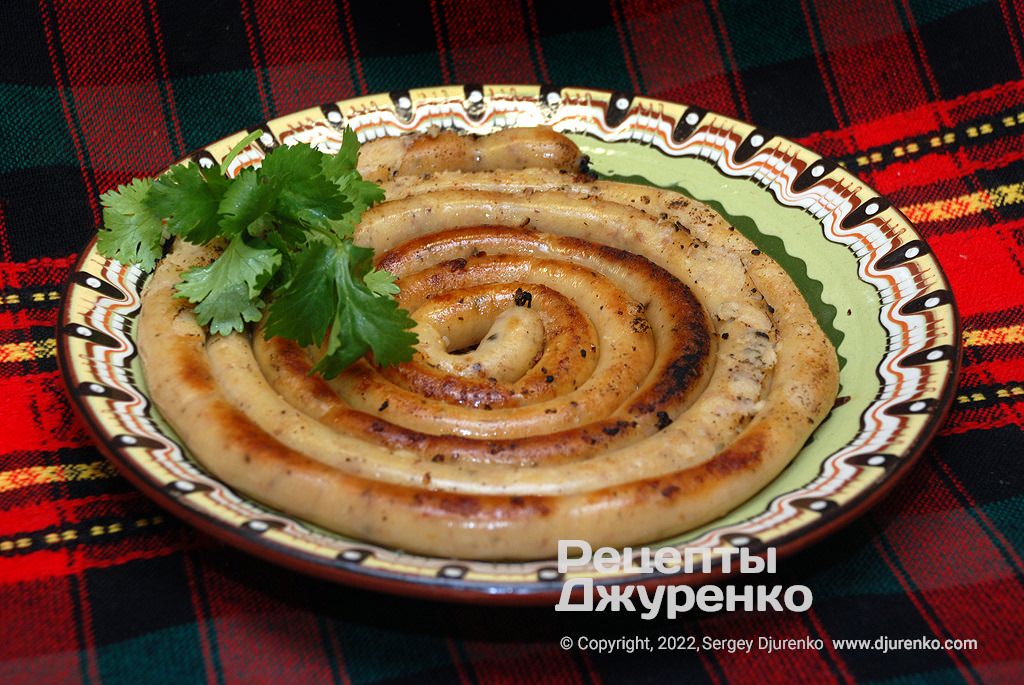
Potato Sausage with Cracklings in Natural Casing
Homemade potato sausage is made from mashed potatoes mixed with a generous amount of fried pork (belly and fatback) and pork fat. It uses natural hog casing of any diameter. Usually the finished sausage is fried in rendered lard until cooked through and a nice dark golden color, or, if the casing is wider, we bake it in the oven.
The more starch the potatoes have, the better they cook down, and the softer and more even the mash turns out. Purely for looks, it’s better to choose potatoes with yellow flesh.
Sausages like this, by the way, are very common in Germany: the famous Kartoffelwurst, which are made there with imagination and taste great. The pork content of the filling is said to be 50-70%. Onion and plenty of spices are added as well. After frying, it can be stored: a special method is to cover the sausages with hot pork fat, which acts as a preservative once it sets.





Ingredients
1 kg
- For the filling
- Potatoes 800 g
- Pork belly 250 g
- Pork fatback 200 g
- Salt to taste
- Freshly ground black pepper to taste
- Water for boiling the potatoes
- For the sausage
- Prepared natural casing 2-3 m
- Cotton thread for tying
Step-by-step recipe
Mashed potatoes
Homemade potato sausage is a simple dish. The filling is made from basic ingredients: potatoes, pork belly, and fatback for cracklings and pork fat. Natural casing is sold in supermarkets, already cleaned and ready to use. Casings come in different diameters, from 10 mm and up. Choose one that fits the sausage stuffing attachment you have.
Rinse the casing and check that there are no tears.

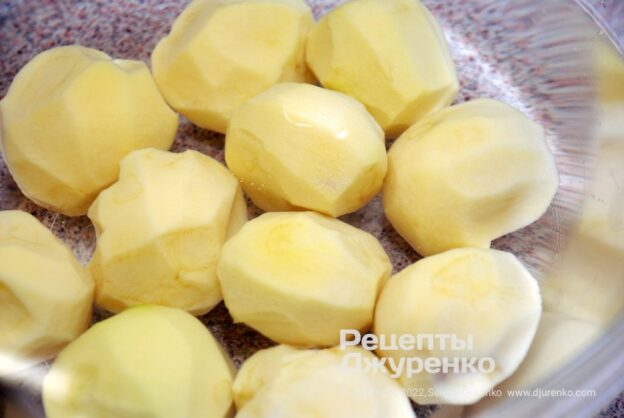
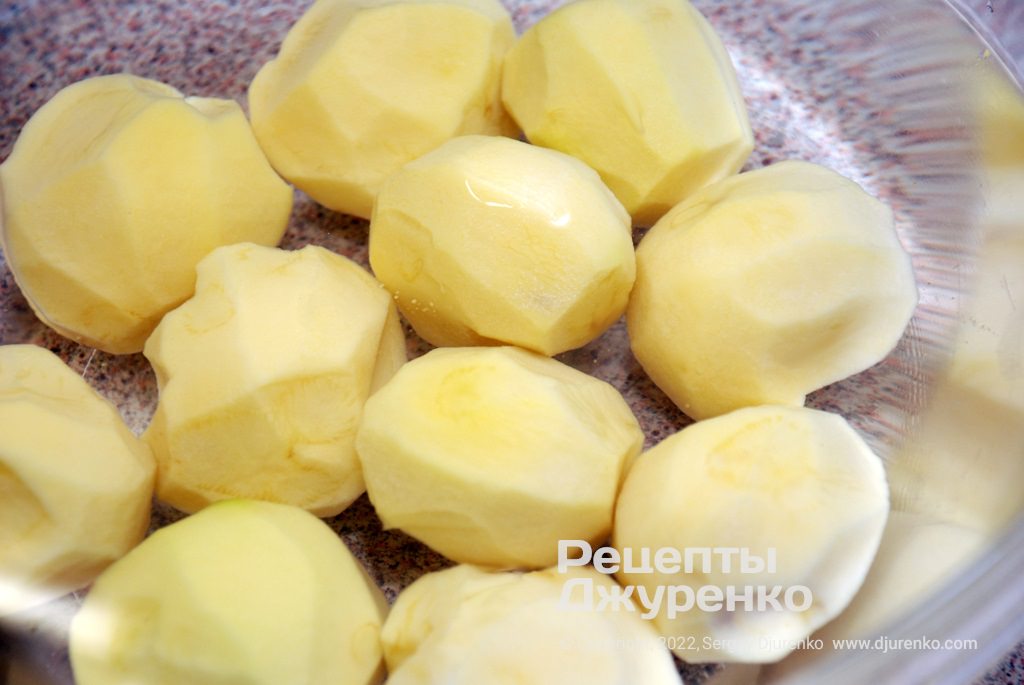
Peel the potatoes and cut them into large wedges. This helps them cook evenly and mash up smoothly.
Put the wedges in a pot, cover with water and bring to a boil over high heat.
Cover the pot and lower the heat so the water simmers visibly but doesn’t bubble hard. Potatoes usually cook in 20-25 minutes; check doneness by piercing them: a knife should go in easily.
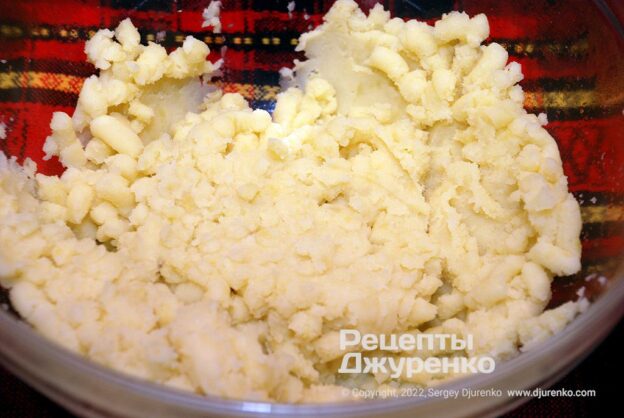
Drain the water, transfer the boiled potatoes to a large bowl and mash them. A hand potato ricer is very handy for this: the mash comes out smooth and lump-free. For the best result, put the mash through the ricer 2-3 times.
Let the potatoes cool to room temperature.

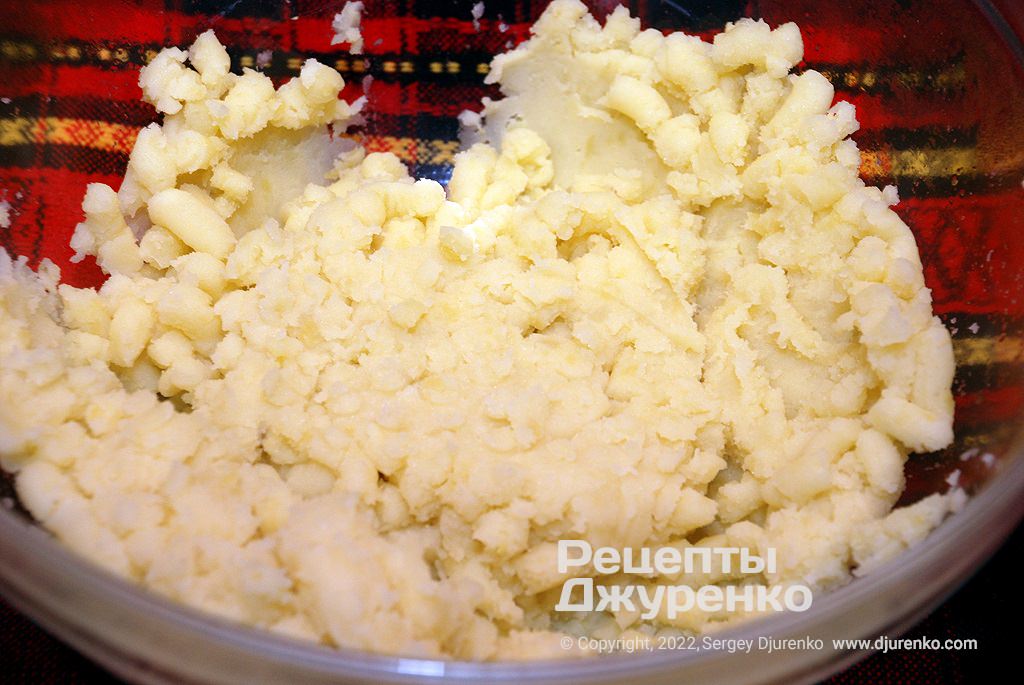
Cracklings and filling
You will need a skillet with a thick bottom, which makes it easier to render the fat out of the fatback.
Remove the rind from the fatback and cut it into slices.
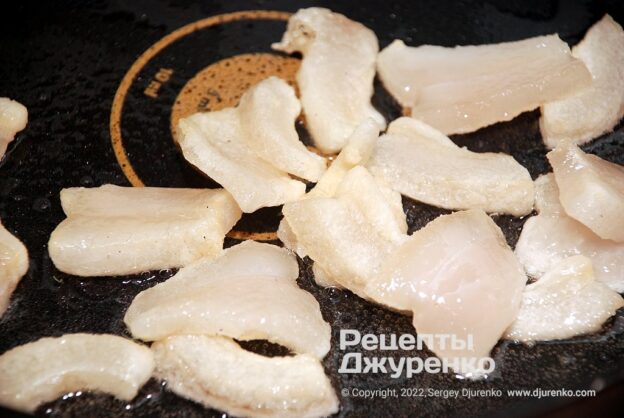
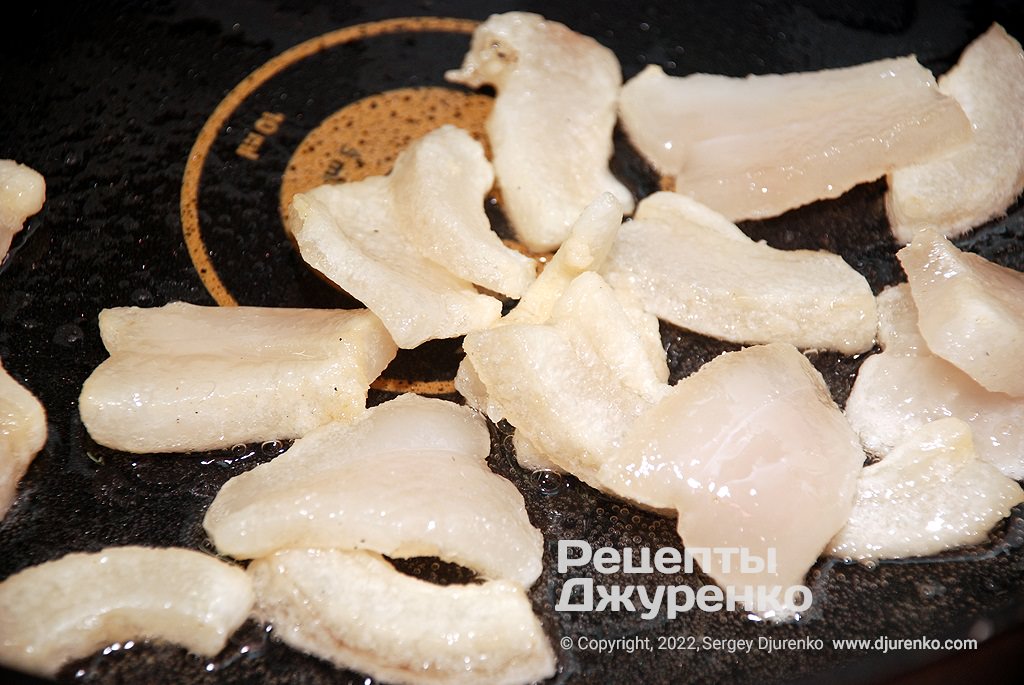
Heat the skillet, lower the heat to low and lay the slices in it.
Turn them often and fry until as much fat as possible has rendered out and the cracklings are crisp. Move the cracklings to a saucer. Don’t pour off the fat: the potato sausage will be fried in it later.
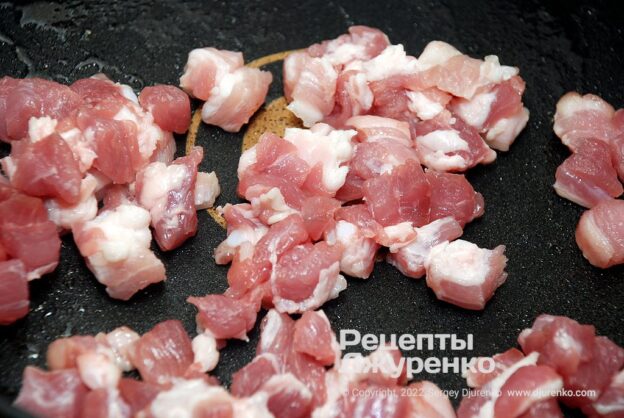
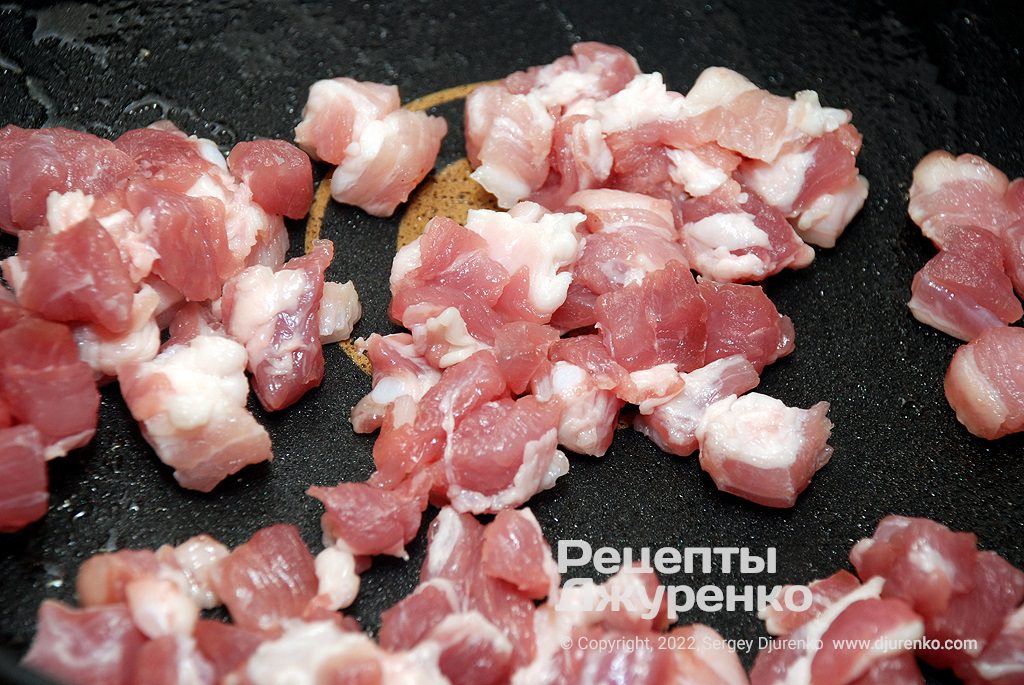
Cut the pork belly into cubes, about the size you’d cut vegetables for vinegret (Ukrainian beet salad).
Fry the belly cubes in the pork fat over medium heat until browned, then move them to a separate saucer too.
Once the cracklings have cooled, chop them with a knife and mix with the diced belly.
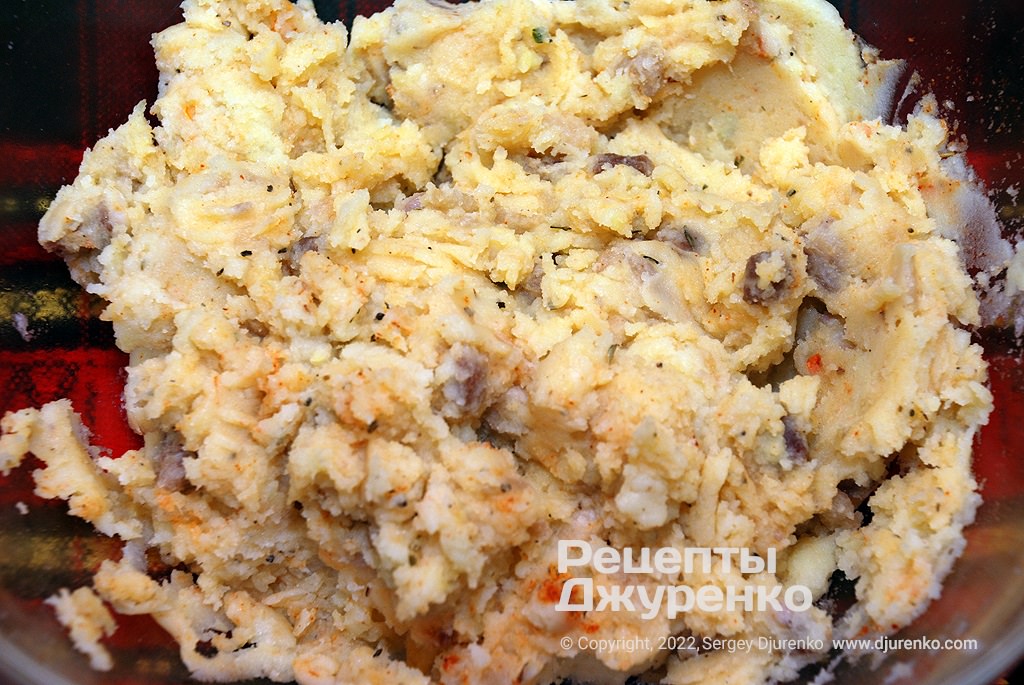
Add the belly and cracklings to the bowl of cooled mashed potatoes. Season the mash well with salt and freshly ground black pepper. Mix thoroughly with a fork.
Add pork fat from the skillet a little at a time until the filling is very even and soft and spreads well inside the casing. Keep some of the fat for frying.

Stuffing the casing
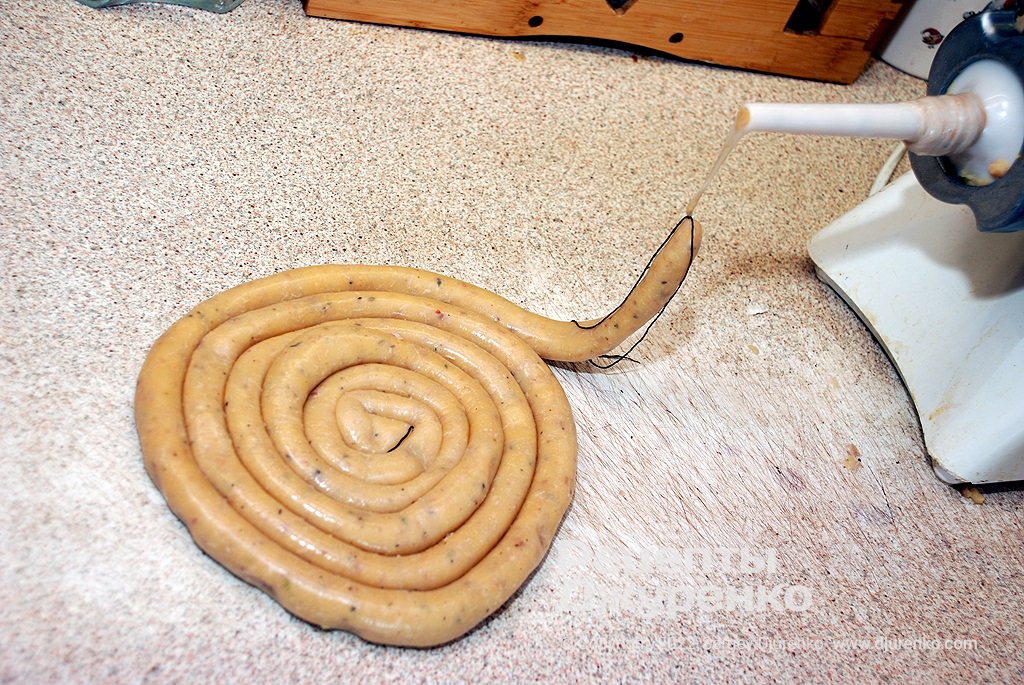
The most interesting and fun stage of making potato sausage is stuffing the casing. Long ago we did it by hand, using a simple wire-loop gadget and pushing the soft filling into the casing with our fingers or a spoon. Today there are plenty of attachments for home meat grinders, and I recommend buying a set.
Stuff the casing, but not too tightly, or it will definitely burst. Use your hands to spread the potato inside the casing and control how full it gets.
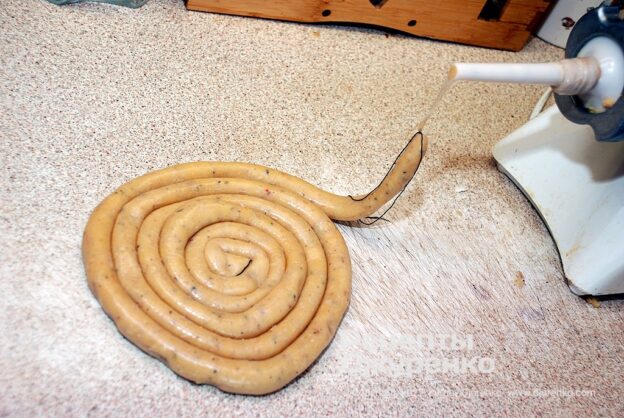
Tie the ends of the casing with cotton thread. Note that the thread must be pure cotton: any synthetic fibers will burn during cooking. If the casing has a tear, it makes sense to tie it off there with thread.
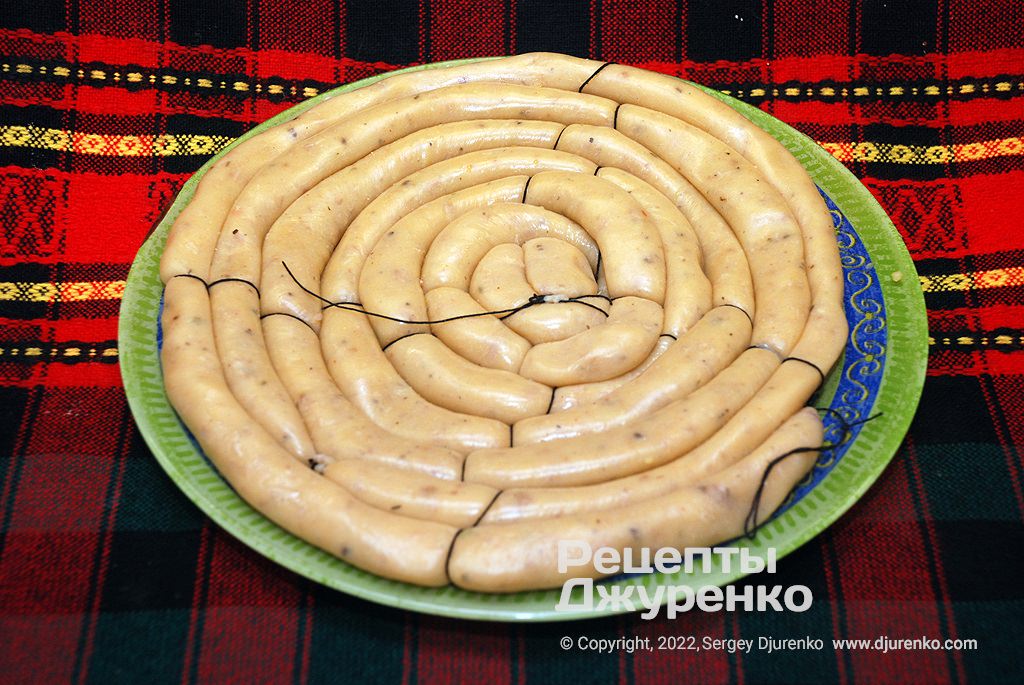
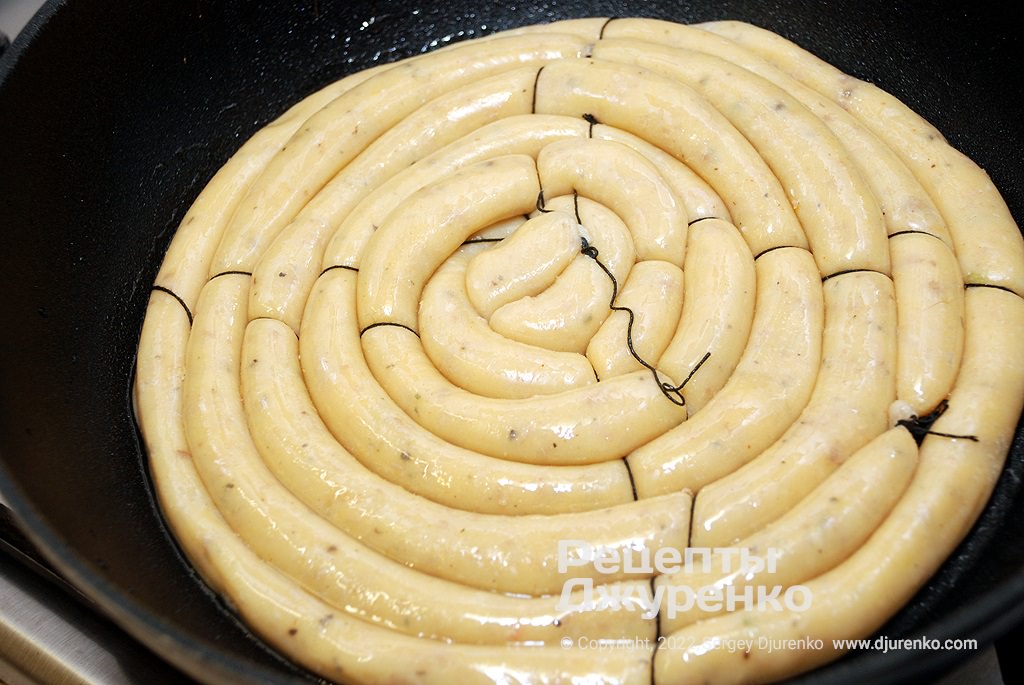
Coil the sausage into a “snail” and tie it with cotton thread in four directions, otherwise it will be very hard to turn while frying. Slowly lift the coils and pass the thread between them back and forth, so the thread holds the coils together.
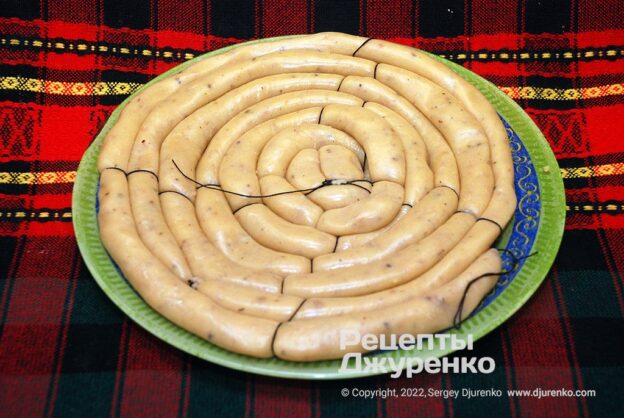
Use a toothpick to carefully prick the casing along its whole length at 5-6 cm intervals.
You absolutely must prick homemade sausage before boiling or frying. The potato filling is quite moist, and when heated it produces steam, whose pressure will almost certainly burst the casing.
Frying and serving
Since the casing is narrow, we don’t poach the sausage with potato and cracklings before frying.
Set the skillet with the pork fat left from rendering the fatback over the heat. When the fat is properly hot, add the sausage coiled into a spiral. You can lift it by the thread, by the way: it doesn’t fall apart and the spiral holds its shape well.
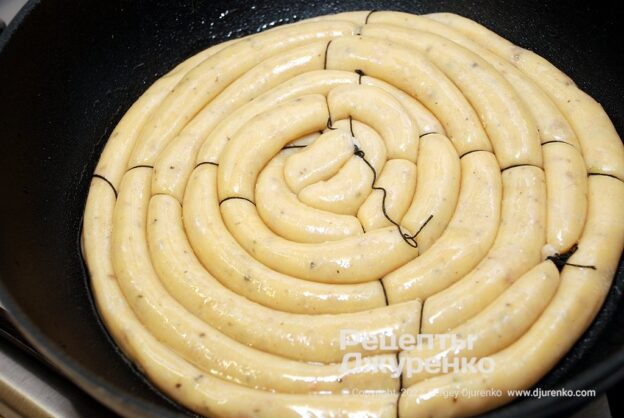
Fry the sausage over medium heat, turning it often, until it is golden on both sides. It helps to brush the sides of the casing with a silicone brush: if there isn’t much fat, it will fry a little worse. If the casing cracks in places, that’s fine.
As an alternative, you can bake the sausage in the oven: place it on a baking sheet, first generously greasing both the casing and the sheet with fat. Bake at 180°C for about 40 minutes, turning often, until golden. You can also occasionally brush the top of the sausage with fat from the baking sheet.

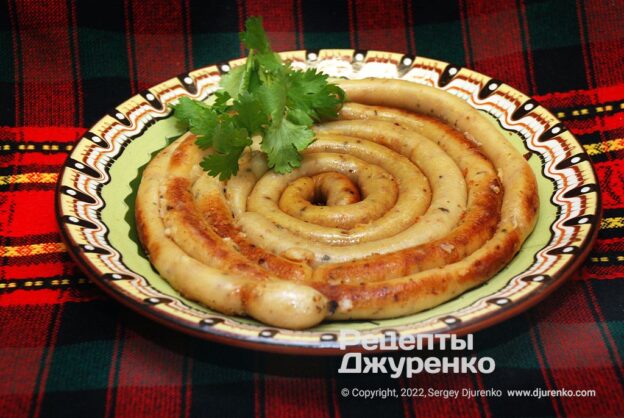
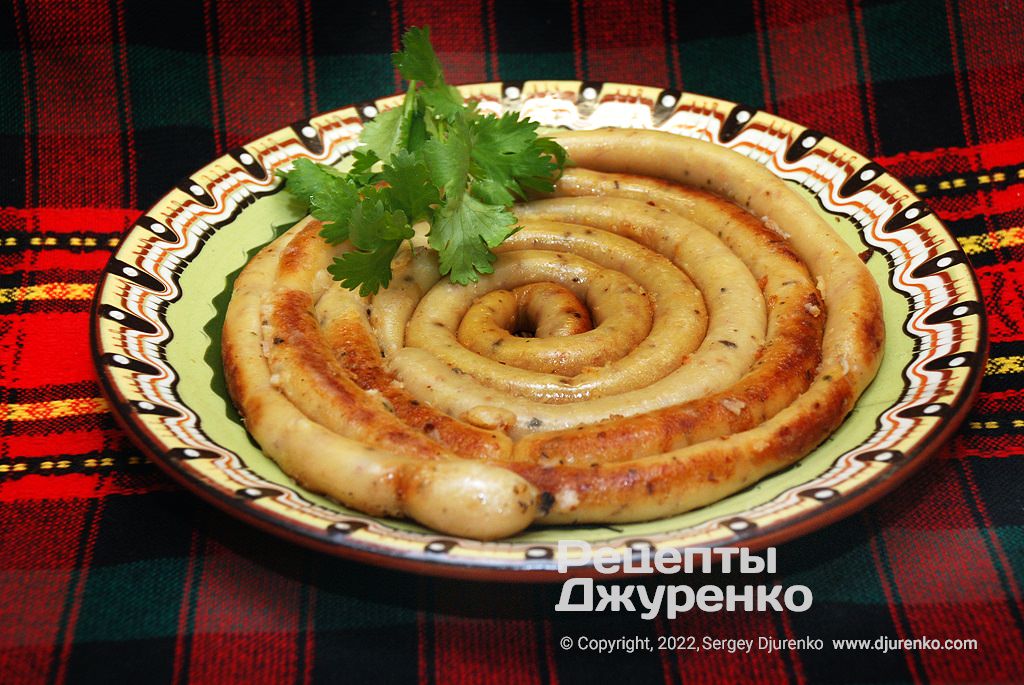
Transfer the sausage to a platter or large plate and carefully cut off all the cotton thread.
Serve very hot, with fresh bread and drinks to suit the occasion.

Calories and macros
283 kcal
100 g
- Protein3.6 g5% of kcal
- Fat24.9 g81% of kcal
- Carbs9.9 g14% of kcal
Calculated from the recipe ingredients, excluding salt and spices. Data: USDA and Matvaretabellen.
 Meat tenderizerAliExpress
 Kitchen probe thermometerAliExpress
 Adjustable mandoline slicerAliExpress
 Peeler with wooden handleAliExpress
 Pull chopper for garlic and onionAliExpress
 Oil sprayerAliExpress