
Pasta with Ramsons (Wild Garlic)
Ingredients
2 servings
For the sauce
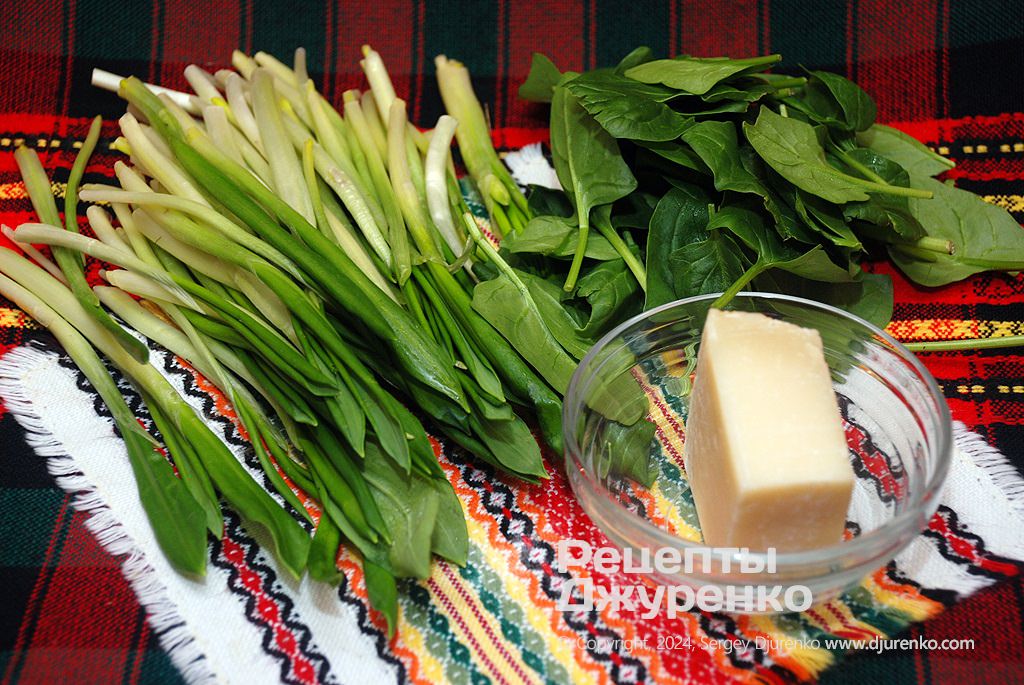
- Wild garlic (ramsons) 1 bunch
- Spinach 1 bunch
- Parmesan (grated) 2 tbsp (14 g)
- Olive oil 2-3 tbsp
- Balsamic vinegar 2-3 drops
- Salt a pinch
- Black pepper to taste


For the pasta
- Pasta (short) 200 g
- Water for boiling the pasta 2 l
- Salt for boiling the pasta 14 g (7 g per 1 l of water)


For serving
- Fresh basil 2-3 sprigs

Step-by-step recipe
Sauce
It’s worth saying that pasta with ramsons is seasonal: after a week or two the wild garlic is gone. For a sauce for two servings you need only a little of the garlic itself, literally a few stems. The rest of the sauce can be spinach. As with pesto, add grated cheese to the sauce. It thickens it slightly and makes it tastier.
Prepare the greens: for the sauce it’s better to use only the green part of the wild garlic stem, because the white part is quite tough and doesn’t chop well. Tear the stems off the spinach, as they are tough too.

By the way, leftover ramsons can be stewed or added to a vegetable stir-fry, and it turns out great.
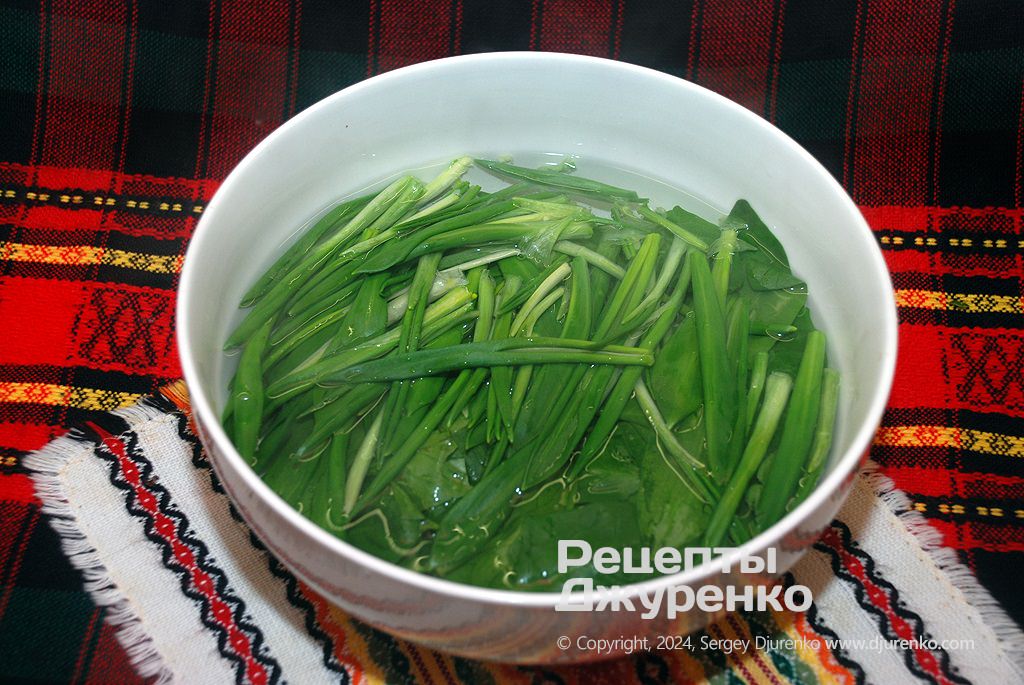
Blanch the greens: put the green parts of the ramsons and the spinach in a deep bowl and pour boiling water from the kettle over them for exactly one minute. Then rinse under cold water and squeeze out the moisture thoroughly.

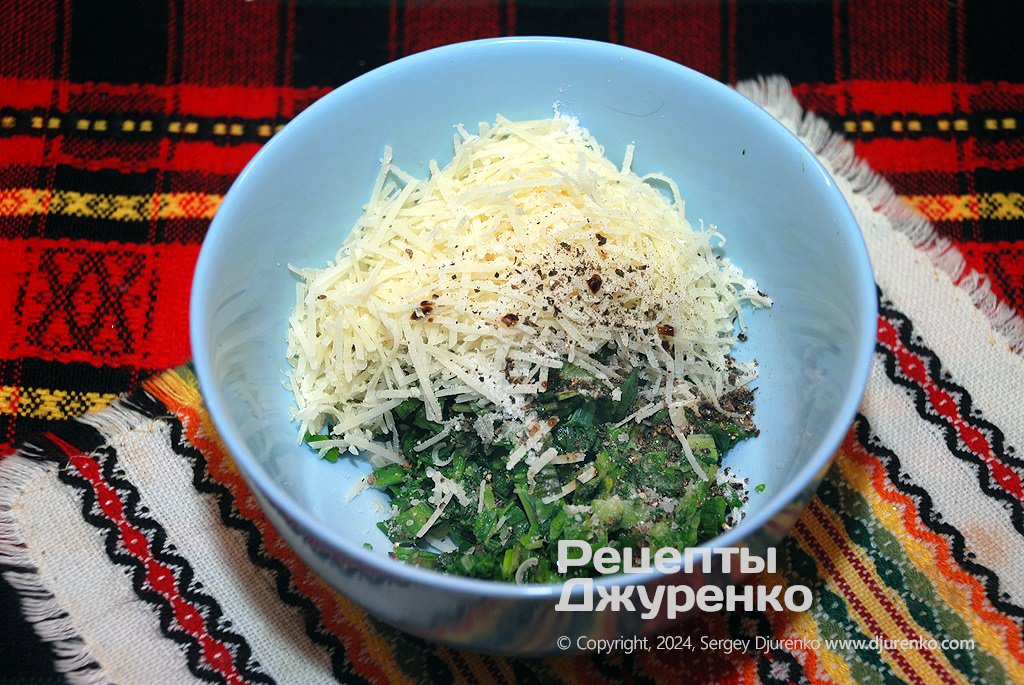
Chop the greens with a knife, which helps them break down better, and put them in the blender bowl. Add grated cheese (Grana Padano, Pecorino or Parmesan), season with a pinch of salt and plenty of freshly ground black pepper. Add 2-3 drops of balsamic vinegar to bring out the flavor. It’s better not to add lemon juice, as the taste is too sharp. If you want a strong garlic flavor in the sauce, you can add a clove of regular garlic.

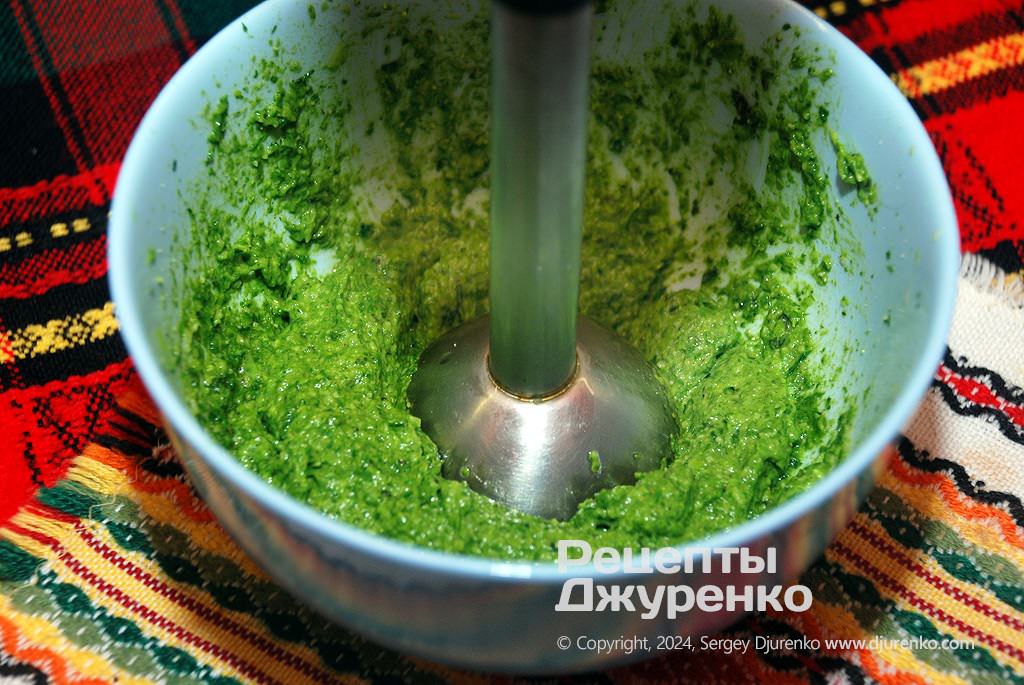
Blend the sauce with the oil: a handheld immersion blender makes this very easy. Work the greens and cheese into as fine a paste as possible, so that there are as few visible pieces as you can manage, and the ramsons pasta looks uniform, without flecks. Then, while continuing to blend, add the best olive oil you have in small portions. When the sauce reaches a consistency you like, there is enough oil. Usually 2-3 tbsp of olive oil is enough to make the sauce look like very thick sour cream.

Pasta
We usually use short pasta such as penne, fusilli or tortiglioni. A thick sauce coats it well and clings to it.
Cook the pasta until al dente: bring 2 l of water with 14 g of salt (7 g per 1 l of water) to a boil over high heat, add the pasta and cook uncovered for the time given on the package. Before draining, ladle a little of the water into a cup, as you may need it for the sauce. Drain the cooked pasta in a colander to let the water run off.
Put the pasta in a bowl, add the finished sauce and toss thoroughly. You can add a little of the pasta cooking water to the sauce to thin it and use less olive oil.
Serving
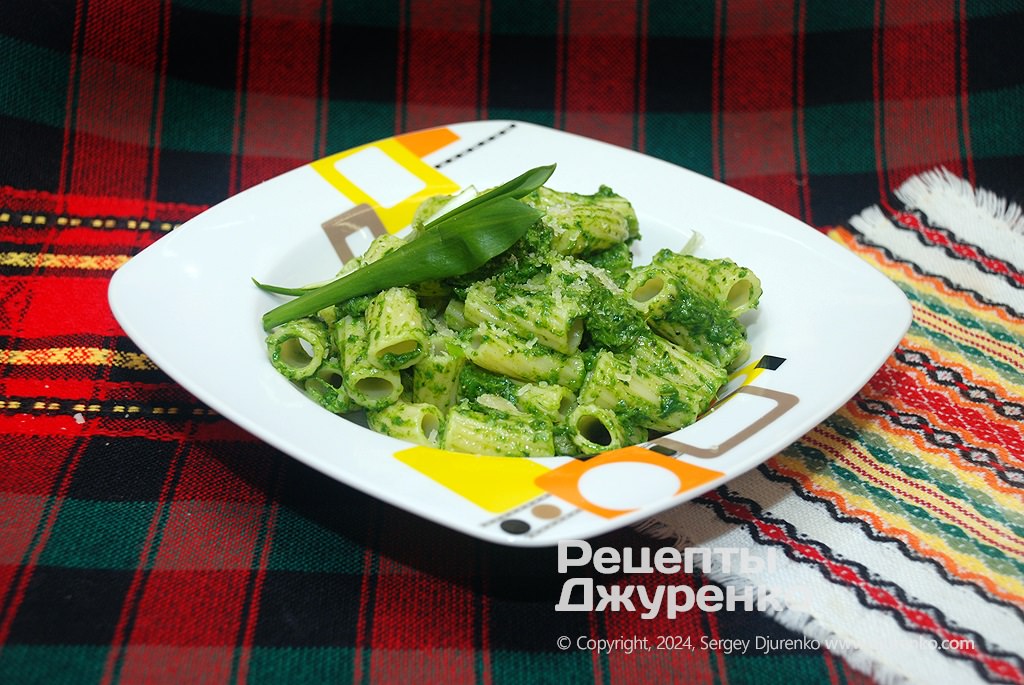
Divide the pasta among plates. Before serving you can sprinkle it with extra grated cheese and add a few sprigs of basil.

The dish is very tasty, with a delicate aroma. Surprisingly, half an hour after breakfast the smell is completely gone, but a light aftertaste remains.

How did you like this recipe?
I really want to know how the recipe turned out for you.
Calories and macros
570 kcal
Serving ≈ 320 g
- Protein17 g13% of kcal
- Fat21 g34% of kcal
- Carbs74 g54% of kcal
100 g179 kcalProtein 5.5 gFat 6.5 gCarbs 23.2 g
Calculated from the recipe ingredients, excluding salt and spices. Data: USDA and Matvaretabellen.