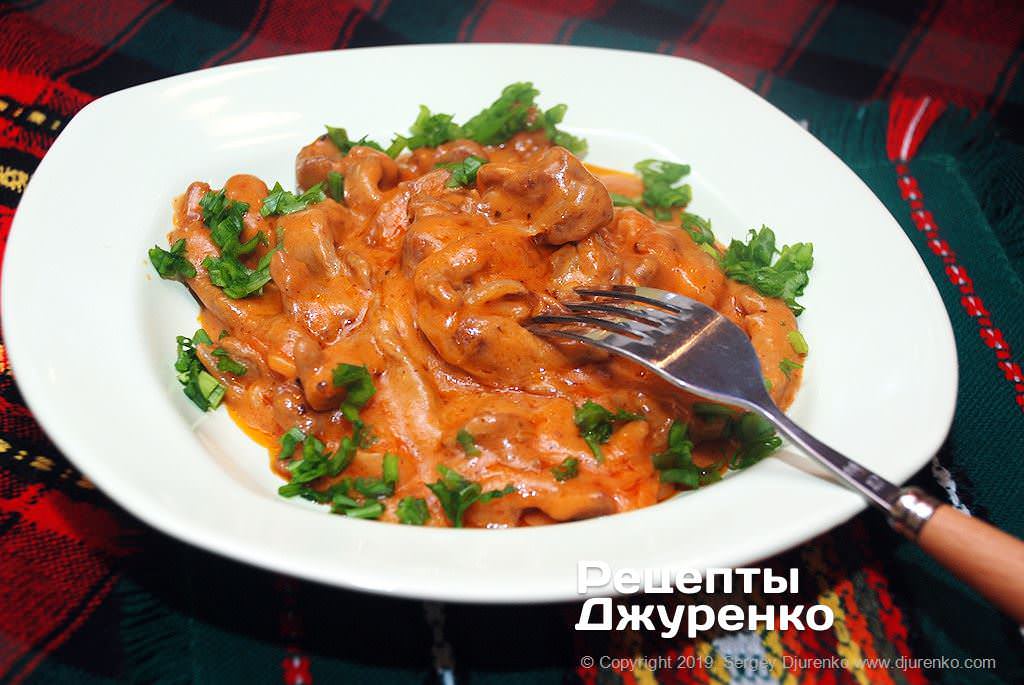
Beef Stroganoff with Homemade Sour Cream
Ingredients
4 servings
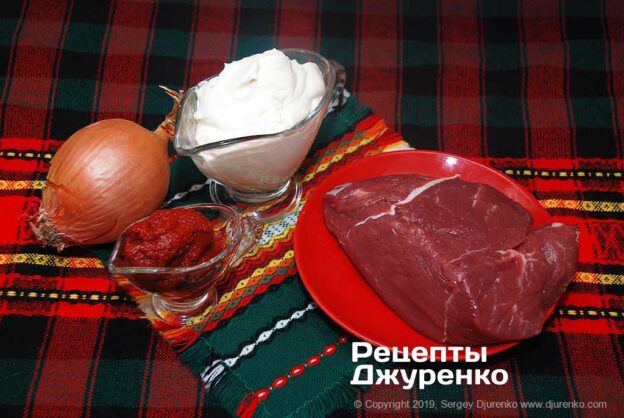
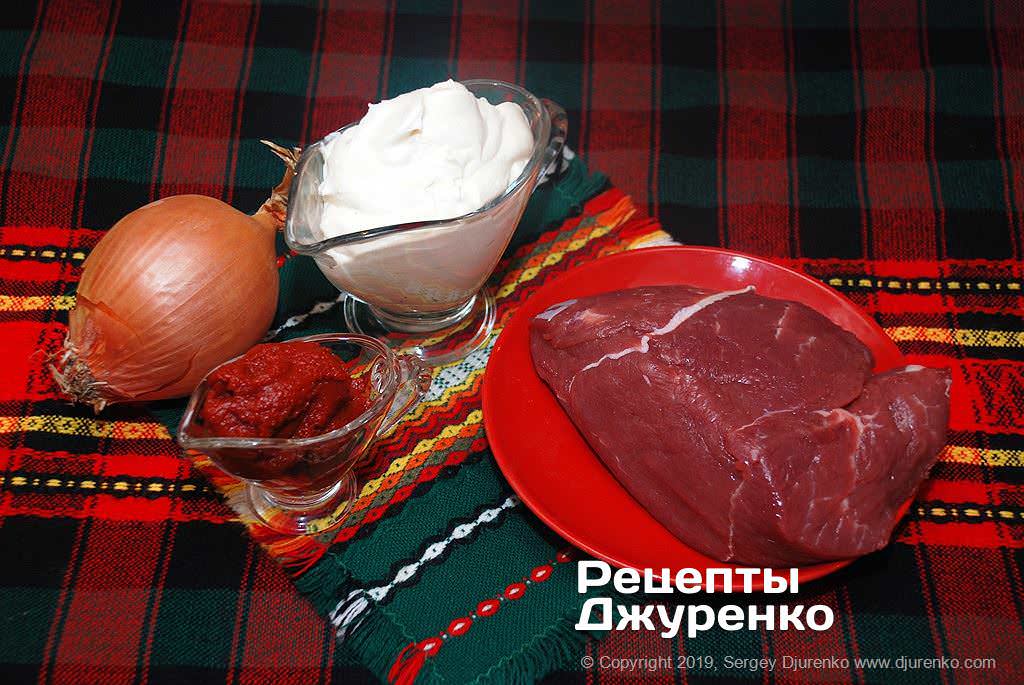
- Beef (boneless) 1 kg
- Homemade sour cream 2 cups (400 g)
- Onion 1–2
- Tomato paste 2 tbsp (33 g)
- Butter 50 g
- Wheat flour 1 level tbsp (10 g)
- Water up to ½ cup (if the sour cream is thick) (100 ml)
- Madeira 1–2 tbsp (optional)
- Salt, black pepper to taste
- Dill, parsley, green onion for serving


Step-by-step recipe
Cutting the meat
For this dish take lean boneless beef – a piece of meat without bones, sinew or fat. Fillet, rump or almost any cut from the back of the carcass will do nicely. You need homemade sour cream. Store-bought sour cream, even a high-quality one, usually curdles when heated and forms grains that spoil the dish. Rich homemade sour cream always stays smooth and makes an excellent sauce.
With a sharp knife cut thin slices from the piece of meat, across the grain. This is roughly how meat is cut for minute steaks.
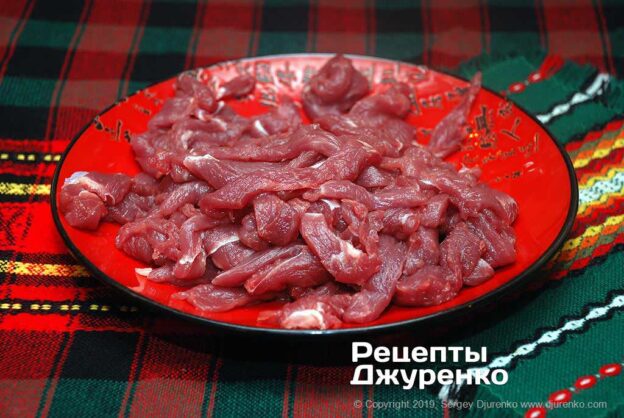
Pound the slices lightly. Cut them into strips. Recipes often suggest cutting the meat into small squares, which are then lightly pounded once more. Strips feel more familiar to me, and you see them more often. It makes no real difference to the taste or the look of the dish, so do it the way you like.
Season the meat with pepper and salt, just a little, then toss so the seasoning is evenly spread.
There are several ways to prepare the meat for frying. In very old recipes the meat is simply fried in butter, and only then are the flour, onion and so on added. I decided not to dredge the pieces in flour before frying.
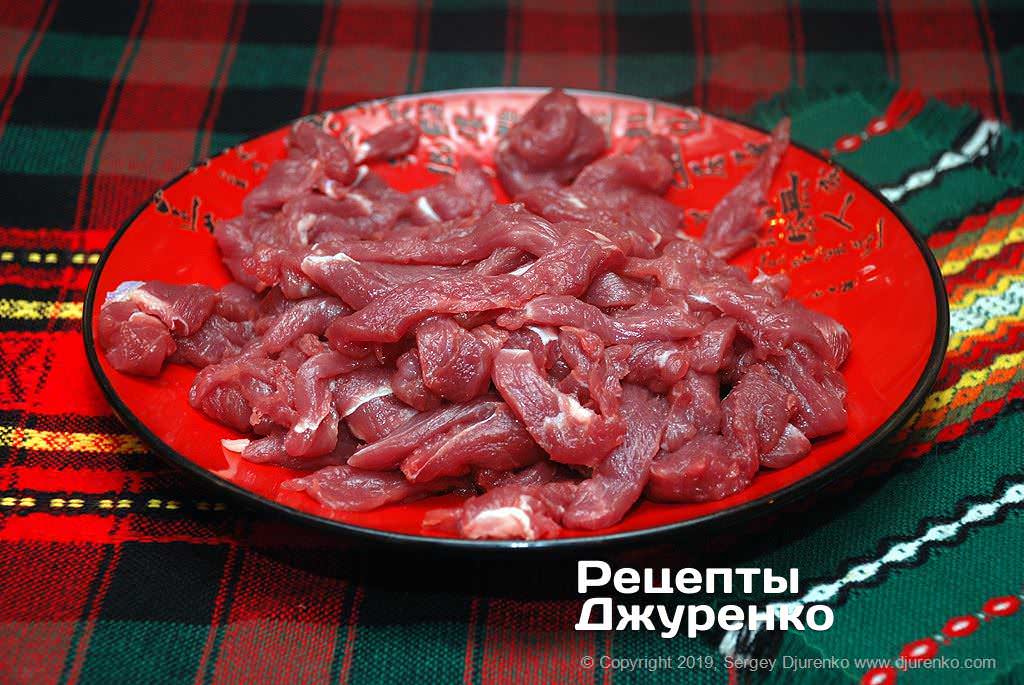
Frying the meat and onion
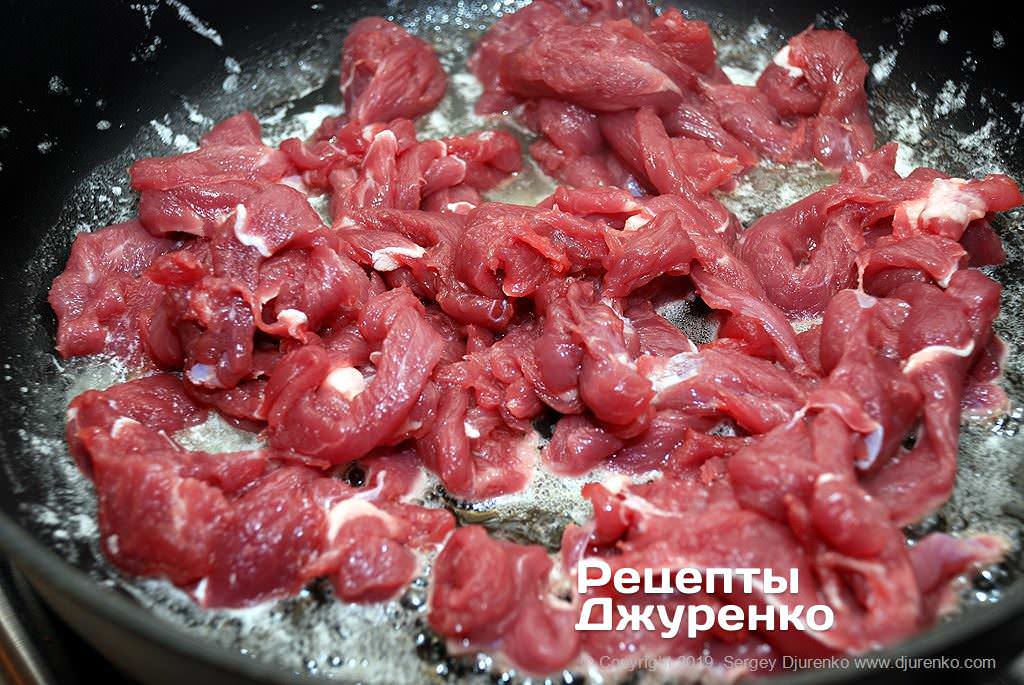
Melt a knob of butter in a frying pan. You can mix butter and olive oil and fry the beef in that mixture. Put the pieces of meat into the hot fat.
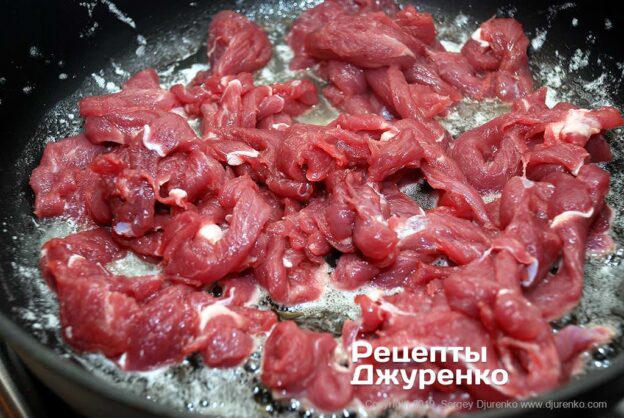
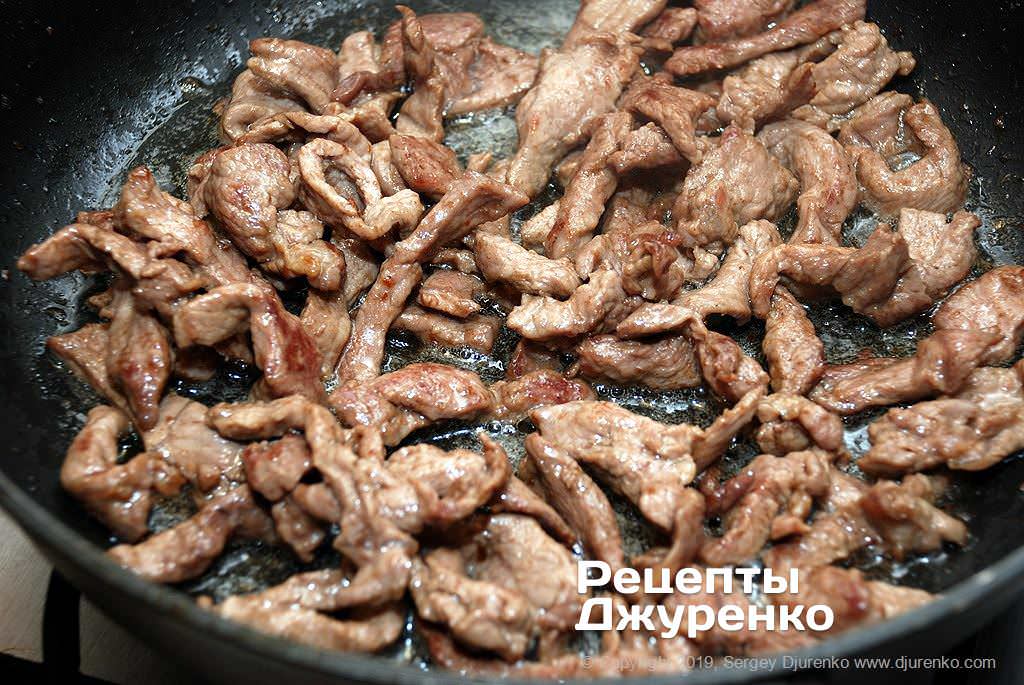
Fry the meat, separating the strips, for about 6–7 mins over high heat. The beef should brown a little, but no meat juices should collect in the pan. Liquid is not welcome during frying. For the same reason I did not add the onion at the very start or while the meat was frying.
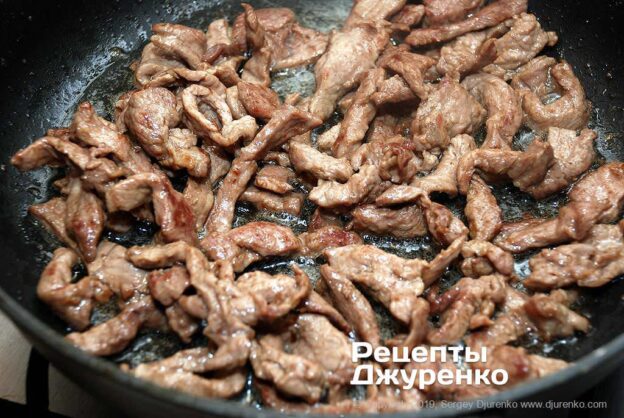
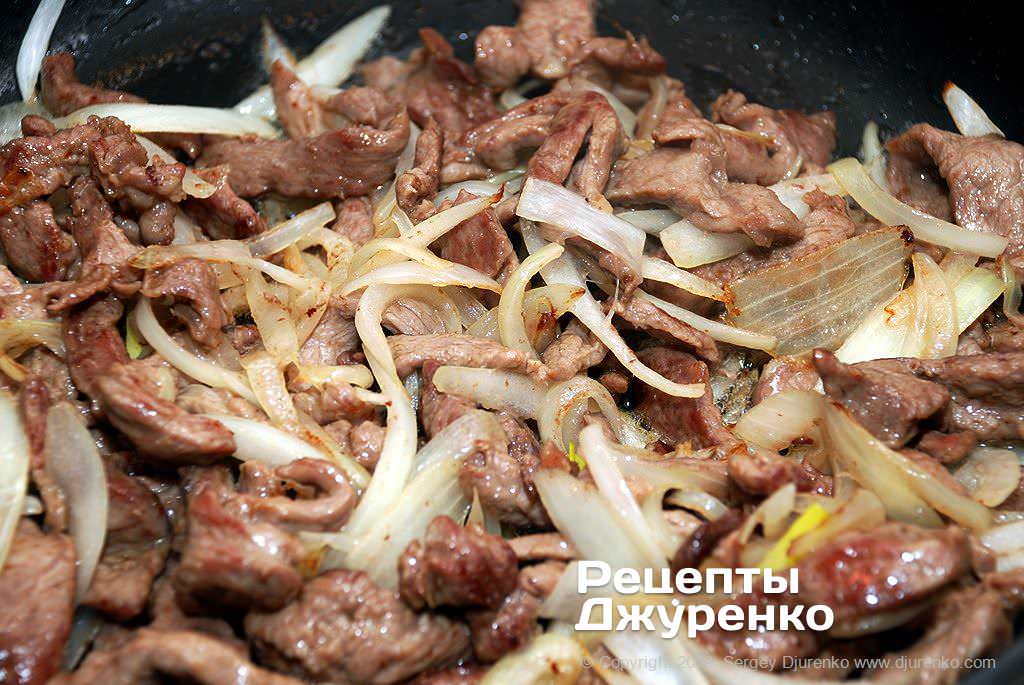
Peel the onion and cut it into strips – better lengthwise, so it is less likely to fall apart into mush. Add the sliced onion to the meat and fry until it is soft and starts to take on a nice golden color. The onion usually takes 5–6 mins, but keep an eye on it. Do not overcook the onion.
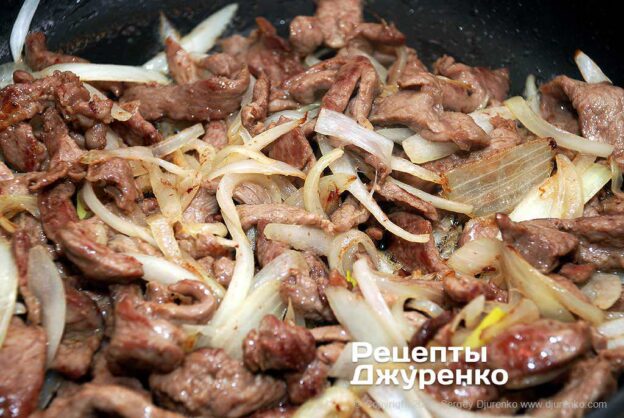
Making the sauce and braising
Next we add the flour, which thickens the sauce. French cuisine has the concept of roux. It is a mixture of fat and flour that has been fried or otherwise cooked. There are many variations, and roux is an essential part of the mother sauces – béchamel, velouté, espagnole. Adding flour to the fat in which the beef and onion are frying is, by and large, making a roux for the sauce.
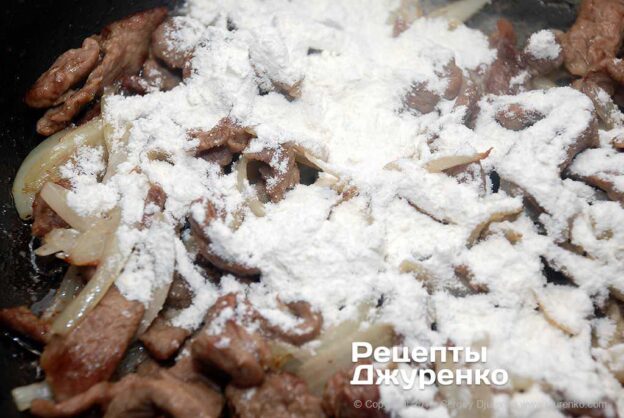
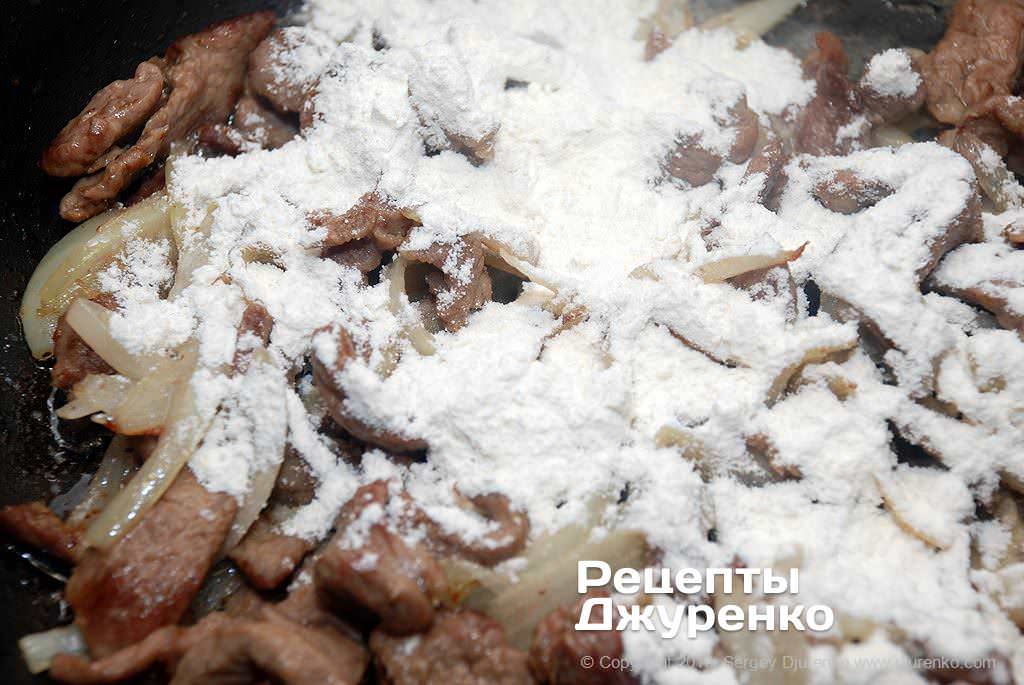
Add 1 level tbsp of flour (10 g) to the pan and stir thoroughly so there are no lumps. Stirring, fry the flour with the meat for 2–3 mins.
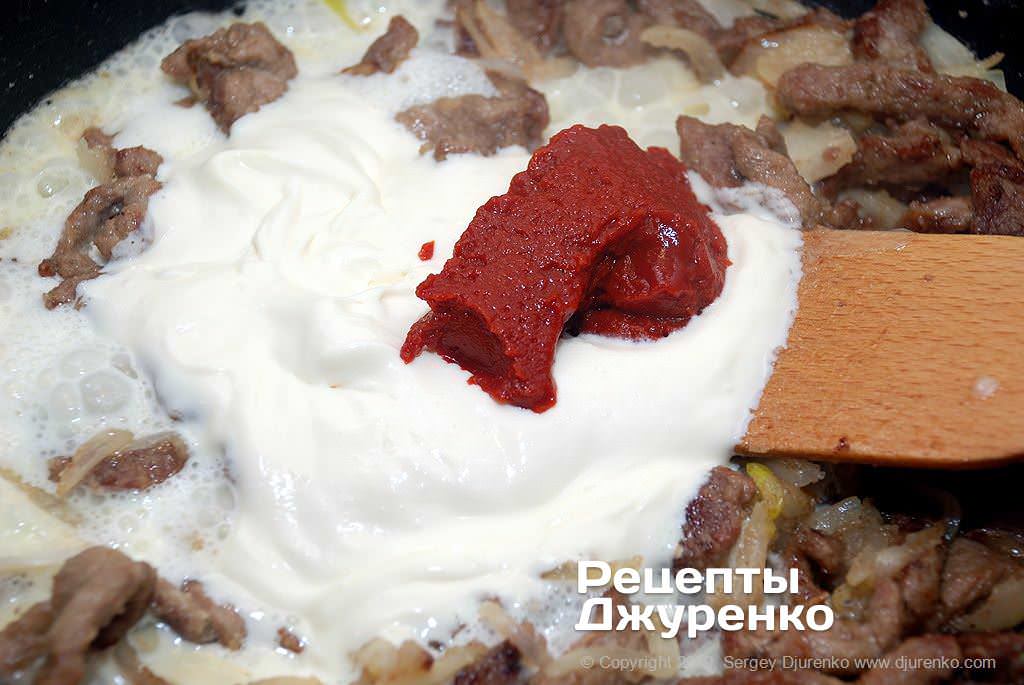
When béchamel is made, milk is added to the roux. In our case we add sour cream. Add the rich homemade sour cream and the tomato paste.
By the way, the proportions of sour cream and tomato are quite flexible. The tomato is often left out of the sauce altogether, but then the sauce turns out pale and light brown.
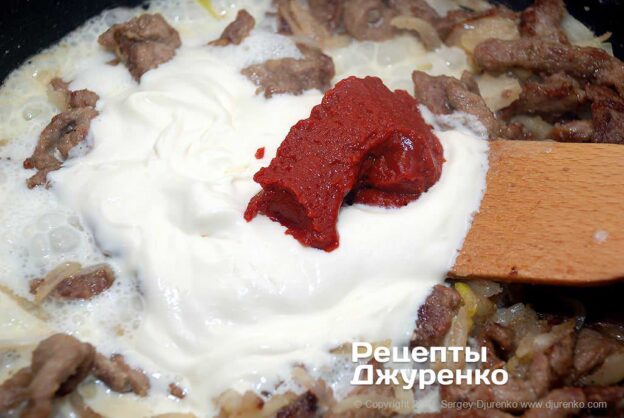
Stir the beef and sour cream together thoroughly. Season the sauce with salt and pepper to taste. If the sour cream is thick, you can add a little water, literally half a cup.
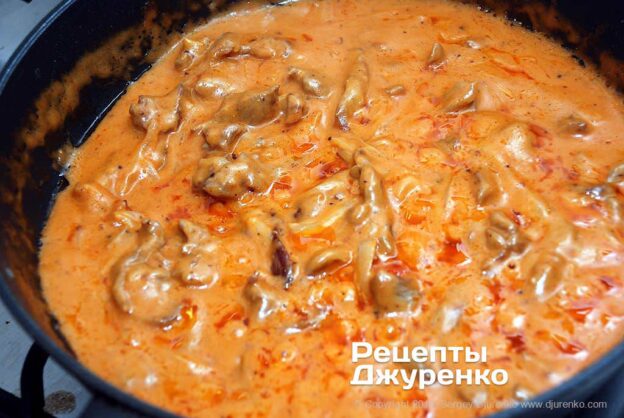
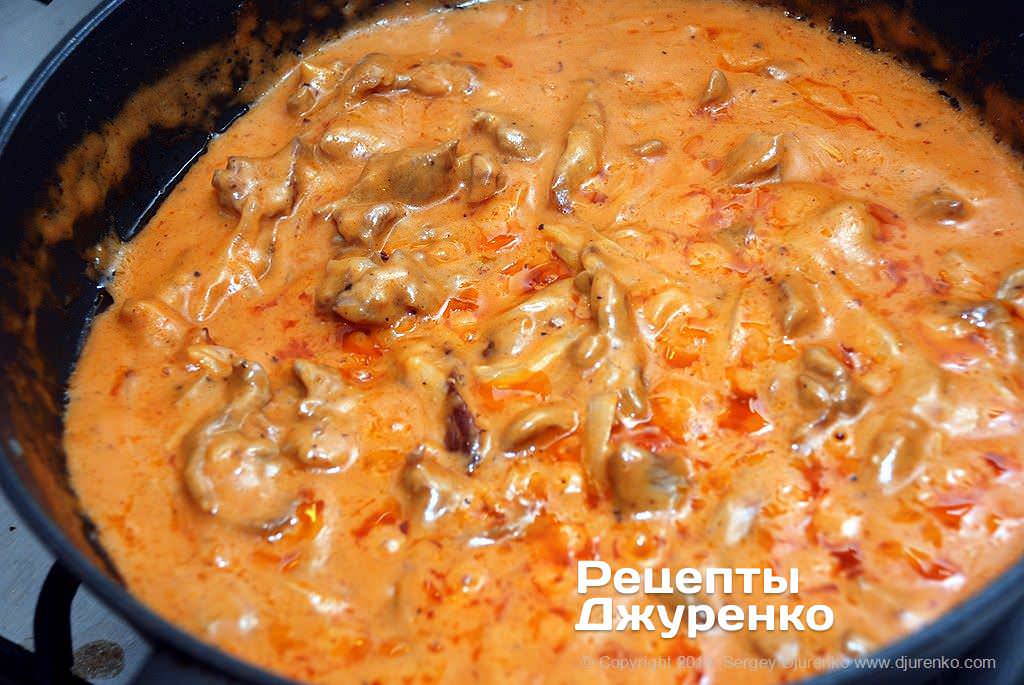
Stirring, bring the sauce to a boil and turn the heat down to the lowest setting at which it still barely simmers. Braise the beef Stroganoff under a lid until the pieces of meat are tender. This can take anywhere from 20 mins to 1 hour, depending on the meat itself.
Serving
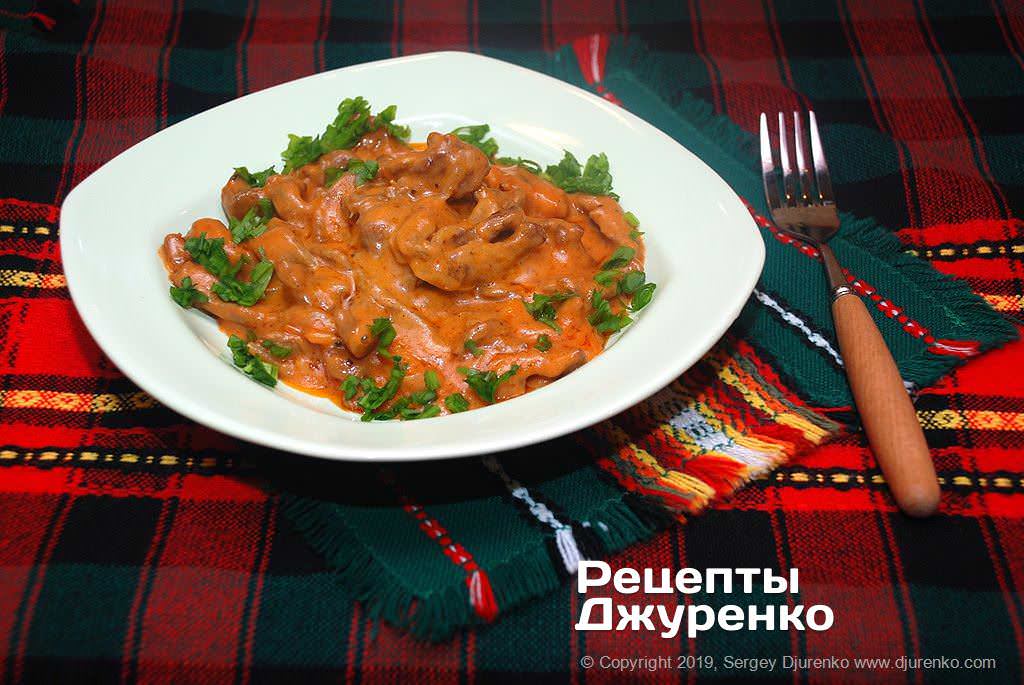
When the dish is ready, you can add 1–2 tbsp of Madeira to the sauce, as old recipes advise. We serve the meat without a side dish, simply spooned into a rimmed plate. You can sprinkle it with finely chopped dill, parsley and green onion. If you want a side dish, fry some potatoes cut into large slices or wedges.
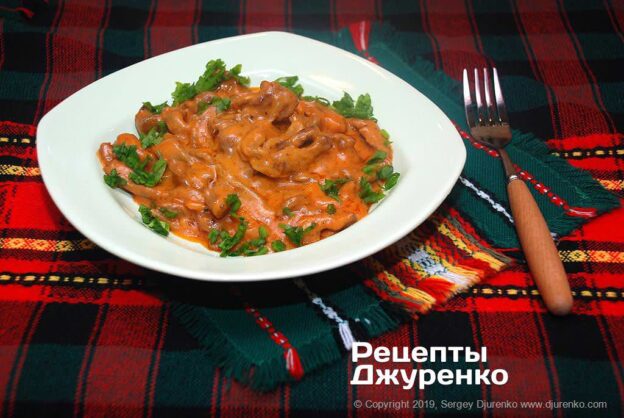
Serve the dish only hot, because as it cools it loses a lot of its flavor and the sauce sets. It does not reheat well, so it is best to serve it for lunch or dinner right away and eat it all.

How did you like this recipe?
No one has rated it yet — be the first.
Calories and macros
785 kcal
Serving ≈ 330 g
- Protein58 g30% of kcal
- Fat56 g65% of kcal
- Carbs10 g5% of kcal
100 g237 kcalProtein 17.4 gFat 17.1 gCarbs 2.9 g
Calculated from the recipe ingredients, excluding salt and spices. Data: USDA and Matvaretabellen.