
Saury Soup


Ingredients
2 servings
- Natural saury in oil 1 can
- Cold water 5-6 cups (1–1.2 l)
- Carrot 1
- Onion 1
- Large ripe tomato 1 (or tomato paste, 1 heaped tsp)
- Potatoes 2-3
- Garlic 1 clove
- Oil from the saury can, or vegetable oil a little, for frying the tomato
- Parsley and dill 0.5 bunch
- Bay leaf 1-2
- Dried hot chili pepper 1 pod, optional
- Salt, black pepper to taste
Step-by-step recipe
Vegetable broth
Saury soup is especially tasty and light when the broth is made from young vegetables. But that is only in season. Even so, winter vegetables work perfectly well for the soup. Vegetables are an important part of any soup, so it is worth taking the best you can find. You can use other vegetables too, for example celery root and parsnip, maybe parsley root. It is even better to take a slightly overripe tomato for the soup.
Prepare the herbs and vegetables. The herbs are not cooked in the soup, so put them in cold water ahead of time to make them crisp. Peel the onion, carrot and potatoes. Dice all the vegetables into pieces of the same size, roughly twice as large as for a vinaigrette salad.

Make the vegetable broth. Pour 5-6 cups of cold water (1–1.2 l) into a pot. Add the diced vegetables to the water at the same time, salt with a pinch of salt, add 1-2 bay leaves and, if you like, a pod of dried chili. Bring to a boil and simmer for about 30 minutes, which is enough: the potatoes and carrot should be soft. Then discard the bay leaf.


Saury and tomato
Prepare the saury. Drain the oil from the opened can of fish; you won’t need it. You may keep a small amount for frying the tomato. Set aside a few pieces of saury for serving. Mash the remaining pieces of fish with a fork into a rough mixture with visible chunks of fish. There is no need to mash it too finely.

While the broth is cooking, prepare the tomato. Peel the tomato with a knife and cut it into pieces. Carefully remove the white parts, the stem area and all the seeds. Puree the tomato with a blender. Heat just a little vegetable oil in a saucepan (you can take it from the can of saury) and fry the tomato in it over medium heat until it is uniform and has thickened slightly.
If you don’t have fresh tomatoes, you can make saury soup with ordinary tomato paste, literally 1 heaped tsp. But fresh tomato tastes better.


Finishing the soup
Combine the broth with the tomato and fish. When the vegetable broth is ready, add the prepared and fried tomato puree and a finely chopped clove of garlic. Stir and bring to a boil. Add the mashed saury to the soup. Stir, then season with salt and pepper to taste. By the way, I advise adding even more black pepper than usual. Fish soups go well with freshly ground black pepper.

Bring the saury soup to a boil and cook over low heat for 3-4 minutes. Don’t let the soup bubble hard, only a gentle simmer.

Serving
Ladle the soup into bowls. Put the vegetables from the soup into the bowls and place the reserved pieces of fish in the center on top. Pour hot soup into the bowl. This kind of first course is best served at about 70°C. Simply put, let it cool a little so that it doesn’t burn your tongue.

Right before serving, sprinkle the soup with finely chopped dill and parsley, dried beforehand. By the way, you don’t want the bay leaf to end up in the bowl if you forgot to take it out. You can serve the soup with croutons of fried white bread or seasoned rusks.

Calories and macros
375 kcal
Serving ≈ 1030 g
- Protein23 g26% of kcal
- Fat14 g35% of kcal
- Carbs35 g40% of kcal
100 g37 kcalProtein 2.2 gFat 1.3 gCarbs 3.4 g
Calculated from the recipe ingredients, excluding salt and spices. Data: USDA and Matvaretabellen.
 Fish scaler with lidAliExpress
 Fish bone tweezersAliExpress
 Pull chopper for garlic and onionAliExpress
 Oil sprayerAliExpress
 Kitchen scale up to 5 kgAliExpress
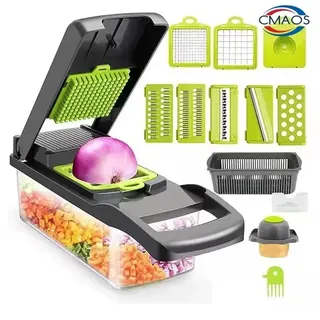 Vegetable chopper with handleAliExpress